
Street Eats In California That Locals Guard Like Secrets
Street food in California isn’t polite, it isn’t fancy, and it definitely isn’t made for tourists clutching guidebooks. It’s loud, messy, and unapologetically addictive—the kind of food you track down in alleys at midnight or wait in line for with locals who guard their favorite spots like state secrets.
Forget white tablecloths and overpriced cocktails; this is real California flavor, dripping salsa down your arm, sizzling on a griddle, and served from trucks, shacks, and carts that care more about taste than trends.
If you want to eat like a Californian, get ready to chase the smoke, follow the crowds, and maybe break a sweat—because the best bites in the Golden State don’t come easy.
Taco Trucks That Define L.A.’s Flavor
Mariscos Jalisco in Boyle Heights changed my life the first time I bit into their crispy shrimp tacos. The truck’s signature taco dorado de camarón comes with shrimp folded inside a corn tortilla that’s fried to golden perfection, then topped with slices of avocado and their secret salsa roja.
Locals line up before noon, knowing these heavenly creations often sell out by 2 PM. I once drove 45 minutes in L.A. traffic just to satisfy my craving!
What makes this spot special isn’t just the food—it’s watching Don Raul carefully prepare each taco with techniques perfected over 20 years. No wonder neighborhood regulars whisper the location to trusted friends only. The truck moves occasionally, so follow their social media for current locations.
San Francisco’s Mission District Burrito Legends
El Farolito sits unassumingly on 24th Street, a fluorescent-lit haven I stumbled upon at 1 AM after a concert years ago. Their super carne asada burrito—stuffed with perfectly seasoned beef, cheese that melts into the meat, rice that soaks up all the flavors, and fresh guacamole—weighs nearly two pounds and costs less than $15.
The magic happens behind the counter where cooks work with hypnotic efficiency, wrapping these massive creations in seconds flat. Cash only, no frills, just pure burrito perfection.
My San Francisco friends swore me to secrecy before revealing this spot. Though guidebooks occasionally mention it, locals still consider El Farolito their personal treasure. Pro tip: skip the primetime dinner rush and go during off-hours to avoid the inevitable line.
Hidden Hot Dog Carts With Late-Night Lines
Danger Dogs—bacon-wrapped hot dogs grilled with onions and jalapeños—saved me countless times after late nights in downtown L.A. My favorite cart appears mysteriously outside concert venues and nightclubs around 11 PM, operated by a woman who remembers regular customers and their preferred toppings.
The sizzle of bacon hitting the makeshift grill creates an irresistible aroma that cuts through the night air. These street vendors operate in a legal gray area, which explains their now-you-see-them, now-you-don’t presence.
For $5, you’ll get a hot dog that puts fancy restaurant appetizers to shame. Look for the crowd and follow your nose—the best carts have the longest lines and the most creative condiment selections. Just don’t expect to find them before sunset; these nocturnal food wizards only emerge after dark.
Seafood Shacks Along The California Coast
Morro Bay’s Tognazzini’s Dockside sits right on the water, where I watched fishermen unload their catch while devouring the best fish tacos I’ve ever tasted. The family-run operation serves whatever was caught that morning—sometimes rockfish, other days local halibut—grilled simply and tucked into corn tortillas with homemade slaw.
Unlike tourist traps with frozen seafood, this weathered shack proves authenticity with its daily-changing menu scrawled on a chalkboard. The seagulls know it’s the real deal too, hovering hopefully nearby.
Locals time their visits to avoid weekend crowds, typically arriving for late lunch on weekdays. I learned about this spot from a surfer who made me promise not to post it on social media. The outdoor seating isn’t fancy—just picnic tables with a million-dollar view of Morro Rock rising majestically from the harbor.
Farmers’ Market Stalls Serving Gourmet On The Go
Tucked between organic produce vendors at Santa Barbara’s Saturday farmers’ market, Emilio’s wood-fired pizza cart produces Neapolitan pies that rival anything I’ve eaten in Italy. The owner built his mobile oven by hand, achieving the perfect 800-degree heat that creates that characteristic leopard-spotted crust in just 90 seconds.
His seasonal specials showcase whatever’s freshest that week—summer brings heirloom tomato and burrata pies, while fall features roasted squash with sage. The limited production means he makes only about 100 pizzas each market day.
Market regulars know to place their orders first thing, then shop while their pizza cooks. I discovered this gem when I noticed a group of chefs from local restaurants lining up before the market officially opened. The $12 price tag for a personal pizza seems too good to be true until you realize it’s a direct farm-to-pizza operation.
Fusion Street Eats That Could Only Happen In California
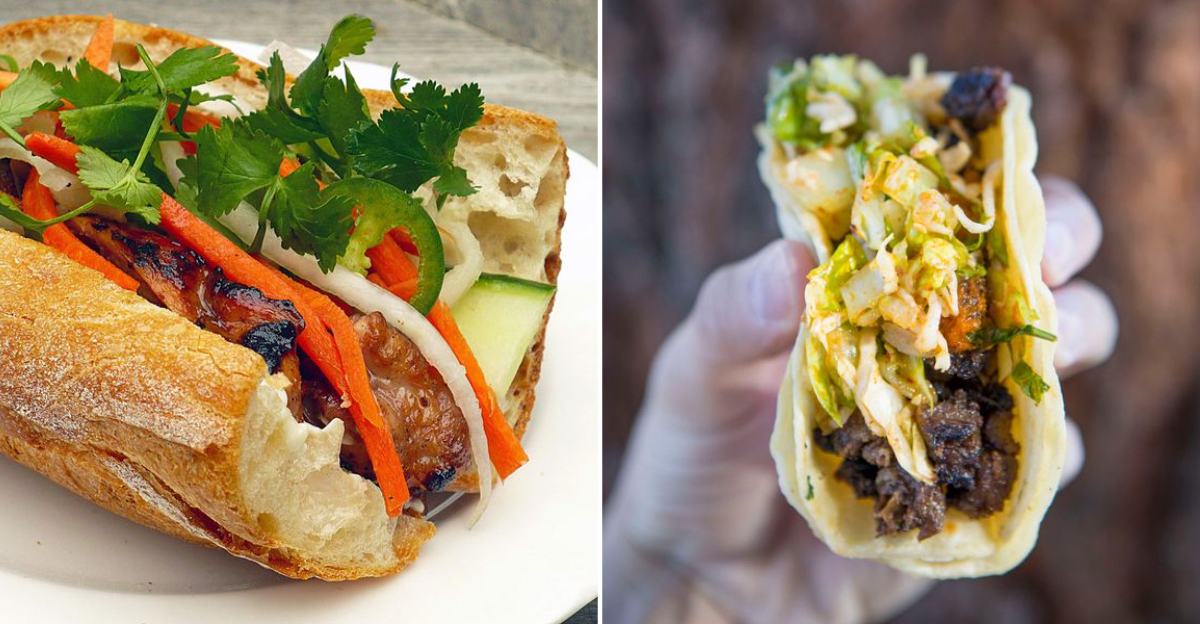
Kogi BBQ revolutionized Los Angeles street food when chef Roy Choi started merging Korean and Mexican flavors in 2008. I still remember my first Kogi short rib taco—caramelized Korean BBQ beef topped with salsa roja, cilantro-onion-lime relish, and a cabbage slaw tossed in Korean vinaigrette, all nestled in a corn tortilla.
Though Kogi has gained fame, tracking down their rotating trucks remains part of the adventure. The original blue truck still parks in different neighborhoods each night, announced only via social media.
Locals have their favorite Kogi specialties beyond the famous tacos—the kimchi quesadilla has a cult following, and the spicy pork sliders disappear fast. For the full experience, join the diverse crowd of college students, office workers, and food enthusiasts who gather around the truck’s ordering window, swapping recommendations while waiting for their names to be called.
Dessert Carts Locals Don’t Want Tourists To Find
Wandering through San Diego’s Barrio Logan one summer evening, I heard the distinctive bell of a paletero—a Mexican ice cream cart. Following the sound, I discovered Mateo’s handmade paletas (popsicles) in flavors I’d never imagined: cucumber-chile, tamarind with chamoy, and my personal addiction, creamy avocado-lime.
Unlike commercial frozen treats, these paletas contain chunks of real fruit and are made daily in a nearby kitchen I later visited. Mateo learned the craft from his grandfather in Michoacán, Mexico, the birthplace of these artisanal frozen desserts.
His cart appears in different neighborhoods throughout the week, with locations shared only by word of mouth. Neighborhood kids track his movements like seasoned detectives. For just $3, these paletas offer a perfect cooling respite from Southern California heat. My local friends were reluctant to share this find, worried that Instagram would transform their beloved cart into a tourist hotspot.
Oakland’s Underground Dumpling Masters
My obsession with Chef Wong’s handmade dumplings began when a coworker brought a mysterious container of them to our office lunch. Operating from an unmarked kitchen in Oakland’s Chinatown, Wong takes orders only via text message, with pickup times assigned the day before.
His xiao long bao (soup dumplings) feature paper-thin wrappers that somehow contain rich pork broth without breaking. The shengjianbao—pan-fried pork buns with crispy bottoms and fluffy tops—sell out within minutes of becoming available.
Finding Wong requires insider knowledge: look for a red door between two established restaurants and a small paper menu taped to the window. No website exists, and payment is cash only. Regular customers bring their own containers and speak in hushed tones about their favorite varieties. When I asked Wong why he doesn’t open a proper restaurant, he simply replied, “This way, I only cook for people who appreciate good food.”
Central Valley Taco Stands Worth The Detour
Driving through California’s agricultural heartland, I nearly missed the roadside taco stand outside Fresno that changed my understanding of authentic Mexican food. Tacos El Campesino operates from a converted bus parked permanently at the edge of a farm, serving workers and lucky travelers who spot their hand-painted sign.
Their specialty—tacos al pastor—features pork marinated for 24 hours, then sliced from a vertical spit topped with pineapple. The juices drip down, caramelizing the meat as it rotates beside an open flame. Homemade tortillas come from masa ground fresh each morning.
The family running this stand harvests many ingredients from their own small plot behind the bus. I discovered them after getting lost on a road trip and following a line of farm trucks. For $1.50 per taco, this might be California’s best food value. They open at dawn to serve breakfast to farmworkers and close when they run out, usually by mid-afternoon.
Vietnamese Banh Mi Shops Hidden In Plain Sight
Sandwiched between electronics stores in San Jose’s Little Saigon district, Banh Mi Oven doesn’t look special from outside. I found it through a Vietnamese colleague who noticed my sad desk lunch and took pity on me. Their grilled pork banh mi combines crackling-crisp baguettes (baked hourly) with house-made pâté, pickled daikon and carrot, fresh cilantro, jalapeño slices, and perfectly marinated meat.
The family matriarch guards her marinade recipe fiercely—rumor says it contains over 20 ingredients and takes three days to prepare. Each sandwich costs just $6 but easily satisfies the hungriest appetite.
What makes this place special is the balance of flavors and textures in every bite. Silicon Valley tech workers in the know call in orders ahead, but the shop keeps a low profile, preferring to serve regular customers rather than expand. Look for the yellow awning with faded lettering and the line of Vietnamese grandmothers who know where to find the best food.