
8 Stunning Cave Hikes In Illinois With Incredible Rock Formations
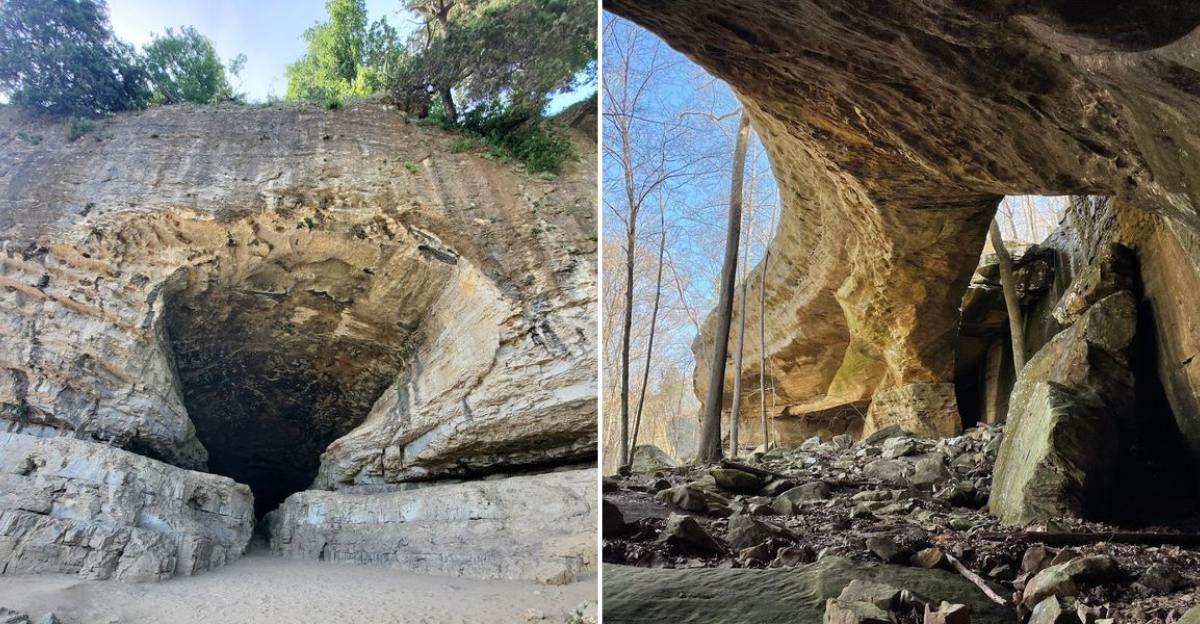
Illinois rarely gets credit for caves or dramatic rock country. That assumption falls apart fast in the southern part of the state.
Sandstone cliffs rise out of quiet forests and massive overhangs loom over narrow trails. These hikes deliver the kind of scenery most people expect hundreds of miles farther west. Southern Illinois hides a surprising amount of geology in plain sight.
Short trails lead to giant natural arches. A few paths even end at caves that stare straight out over river valleys.
Each place on this list left a lasting impression after exploring it firsthand. Some are easy walks, while others reward hikers willing to wander deeper into the woods.
Miss them, and an entire side of Illinois stays invisible.
1. Cave-In-Rock State Park, Hardin County
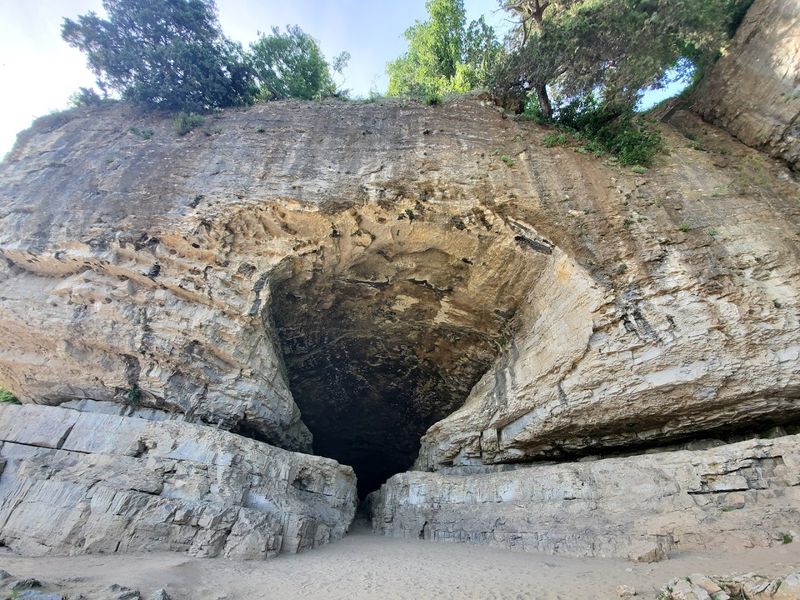
Carved by water and time into a limestone bluff above the Ohio River, Cave-In-Rock is one of the most dramatic natural features in all of Illinois. The cave is about 55 feet wide at its mouth and opens dramatically in the limestone bluff above the Ohio River.
Visiting this place feels cinematic in the best possible way.
The park is located near the small town of Cave-In-Rock in Hardin County, right along the Illinois-Kentucky border. Trails wind through the surrounding forest and along the bluffs, giving hikers multiple angles to appreciate both the cave and the river landscape.
The short walk to the cave entrance is accessible for most fitness levels, making it a solid choice for families with younger kids.
Historically, the cave served as a shelter for river pirates in the late 1700s, which adds a genuinely fascinating backstory to every visit. Rangers at the park are usually happy to share stories about its colorful past if you ask.
The cave’s interior walls show centuries of geological layering that rock enthusiasts will find endlessly interesting. Spring and fall are the best seasons to visit, when temperatures are mild and the surrounding hardwood forest puts on a colorful show.
Summer weekends can get crowded, so arriving early in the morning gives you a much quieter experience. Pack a picnic and enjoy lunch with a river view that most people never even know exists in Illinois.
2. Rim Rock National Recreation Trail, Pope County
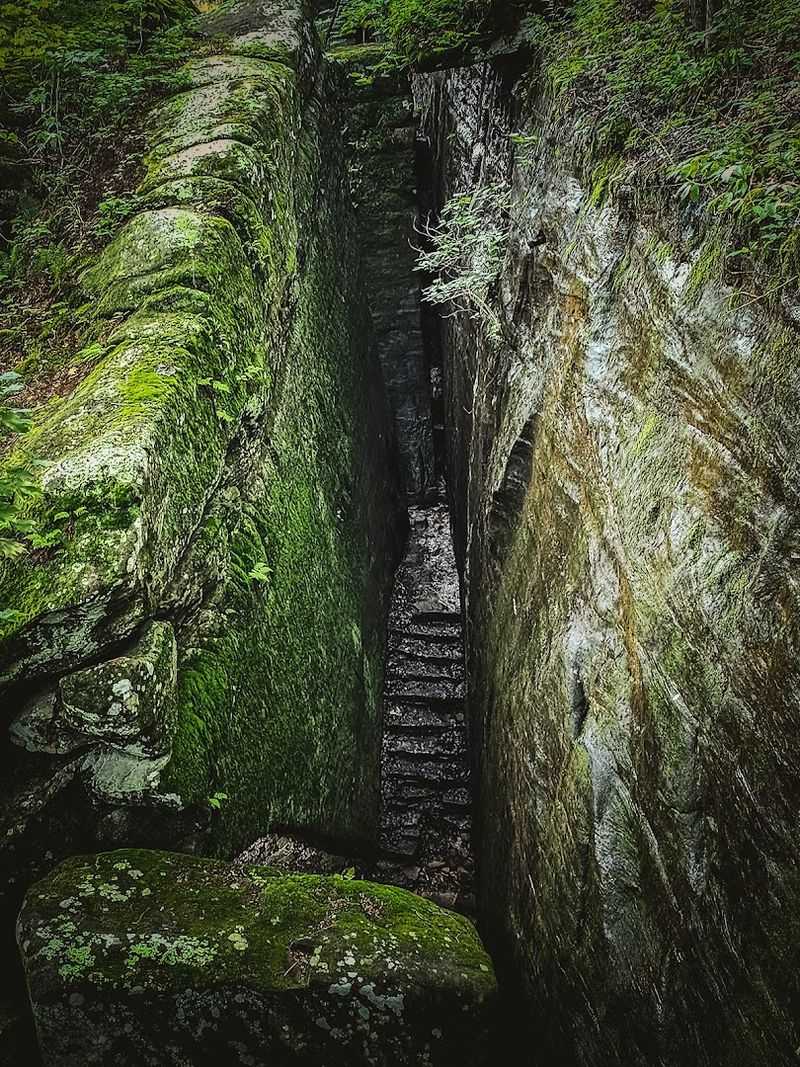
Few trails in Illinois pack as much geological drama into such a short distance as Rim Rock National Recreation Trail in the Shawnee National Forest.
This trail system in Pope County includes a short upper loop of about 0.8 miles with additional connecting paths that wind along towering sandstone bluffs. The contrast between the wooded valley below and the open rock ledges above is genuinely striking.
The trail passes along Pounds Escarpment, an area with evidence of prehistoric Native American presence and interpretive signs explaining the region’s cultural history. Interpretive signs along the route explain both the human history and the geological story of these formations, so you are learning while you hike.
That combination of education and scenery makes the experience feel richer than a typical woodland walk. One of the highlights is a section where the path squeezes between two massive sandstone walls, creating a narrow passage that feels almost like a natural hallway.
Rock climbers also use parts of this area, so do not be surprised to see ropes and gear on busier weekends. The trail surface includes wooden boardwalks, stone steps, and packed dirt, so sturdy shoes with ankle support are strongly recommended.
Autumn is arguably the best time to hike Rim Rock, when the oak and hickory canopy turns gold and rust above the gray sandstone.
3. Hawk’s Cave Trail, Union County
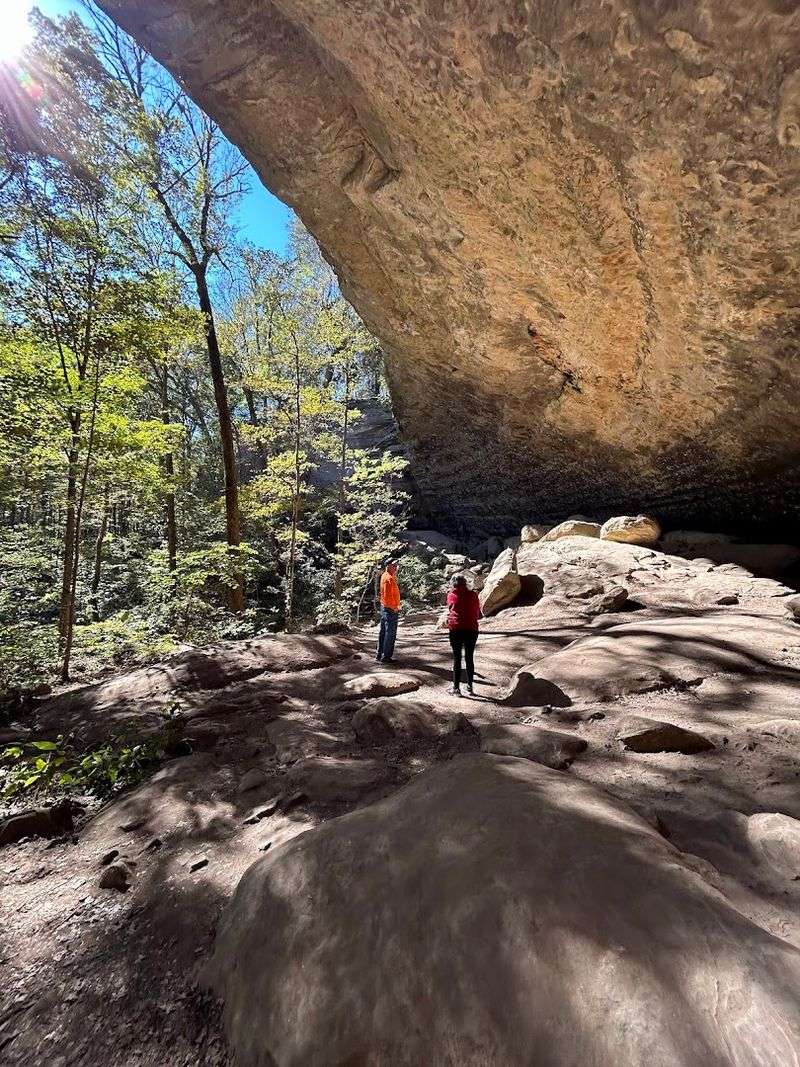
Not every great cave hike requires a permit, a headlamp, or a guide, and Hawk’s Cave Trail in Union County proves that point beautifully. This relatively easy trail leads through a forested landscape before revealing a large sandstone rock shelter that arches overhead like a natural amphitheater.
The cave is wide enough that a small group can stand inside comfortably while taking in the mossy walls and layered stone ceiling.
The trail is located within Ferne Clyffe State Park in Johnson County, a scenic park in southern Illinois known for its waterfalls, cliffs, and large sandstone shelters.
Interpretive panels near the trailhead acknowledge this history, giving the hike an emotional and cultural dimension beyond its natural beauty. It is worth pausing to read them before heading into the woods.
The rock formations along the route include rippled sandstone surfaces, small alcoves, and overhanging ledges that shelter patches of fern and wildflower even in drier months.
Photographers especially love the soft, diffused light inside the cave shelter, which creates a naturally flattering backdrop for portraits and landscape shots. Early morning visits produce the most interesting light angles.
Johnson County sits in southern Illinois, about 120 miles southeast of St. Louis and near the town of Goreville. The nearest town with services is Jonesboro, so fill up on snacks and fuel before heading out.
Trail conditions can be muddy after rain, so waterproof boots are a smart investment for a visit here.
4. Bell Smith Springs Recreation Area, Pope County
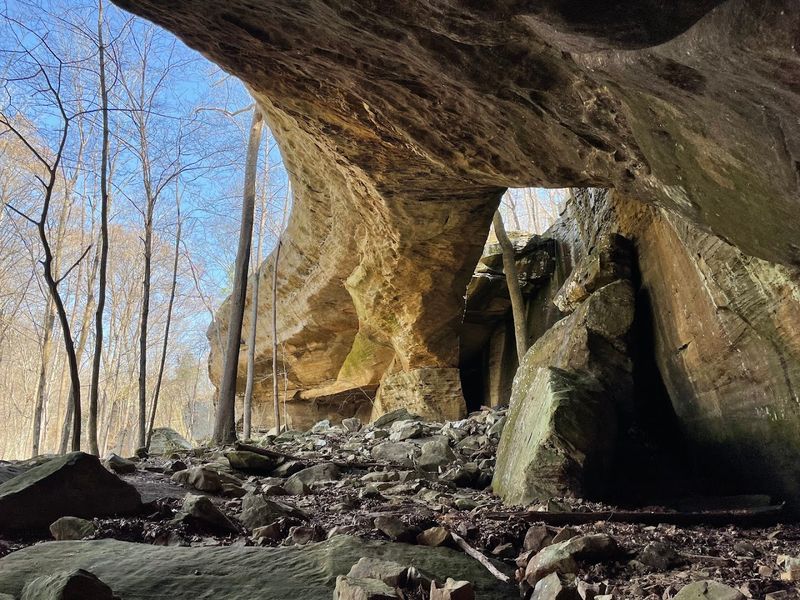
Bell Smith Springs Recreation Area is the kind of place that makes you reach for your camera every few steps.
Located in Pope County within the Shawnee National Forest, this stunning area features a natural stone arch, deep canyon walls, clear spring-fed streams, and sandstone overhangs that drip with ferns and moss. The recreation area includes roughly eight miles of interconnected trails, allowing hikers to explore several different canyon and bluff routes.
The natural arch at Bell Smith Springs is one of the most photographed geological features in Illinois, and for good reason.
It spans a narrow creek gorge with an elegance that feels almost architectural, and the surrounding canyon walls amplify every sound, from bird calls to flowing water. Standing beneath it for the first time genuinely earns a moment of quiet appreciation.
Cave-like overhangs are scattered throughout the trail system, and several of them are large enough to walk under while staying completely dry during a light rain shower.
The creek crossings along the lower trail add a playful, adventurous element to the hike, especially in spring when water levels are higher. Sandals are not suitable here since the terrain shifts between slick rock, tree roots, and creek beds.
There is a small camping area nearby for those who want to extend the adventure into an overnight trip. Weekday visits offer a far more peaceful experience than busy summer weekends.
5. Panther Den Wilderness, Pope County
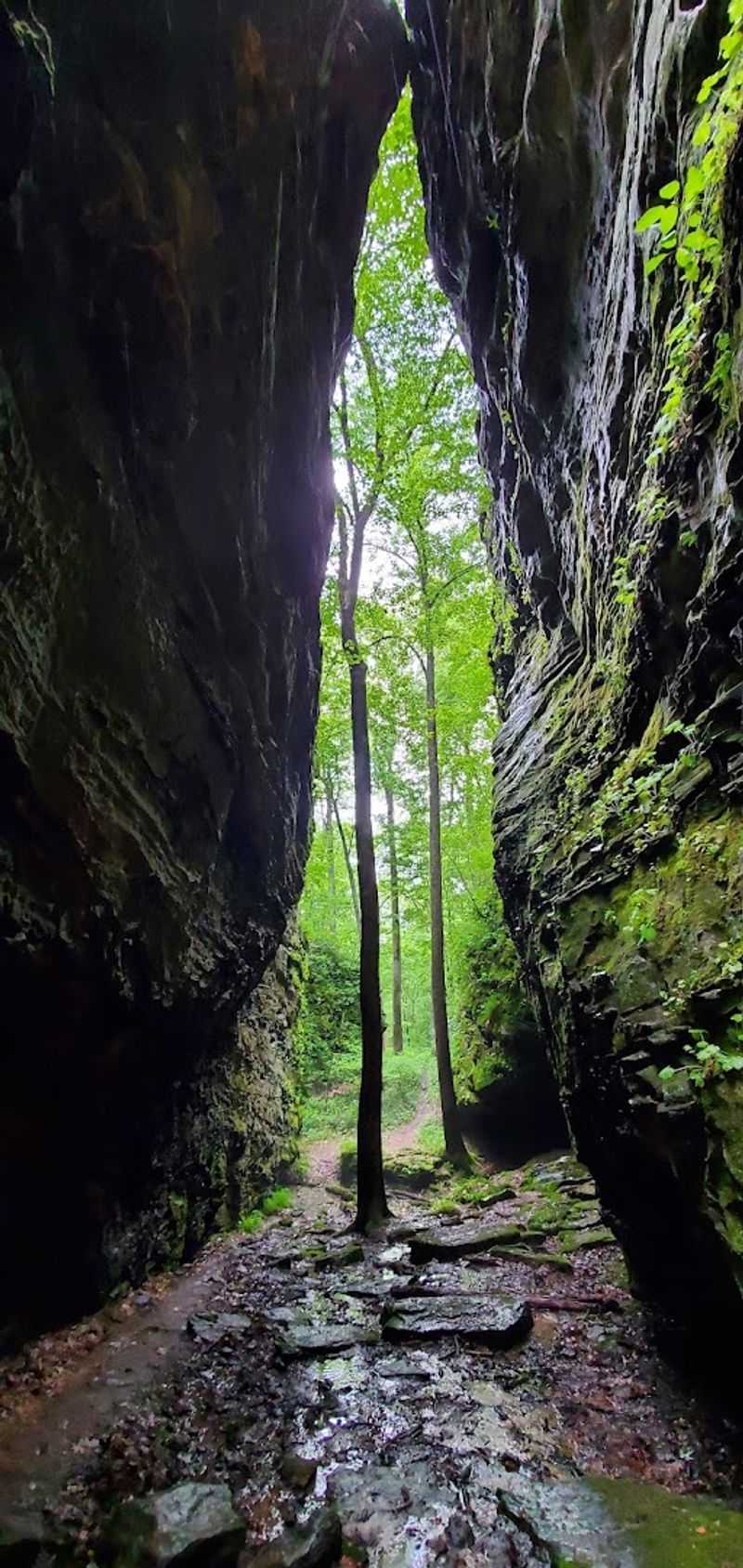
Panther Den Wilderness sits within the Shawnee National Forest in Pope County and offers one of the most raw, unpolished hiking experiences in the state.
Unlike more developed recreation areas, Panther Den feels rugged and remote, with a marked primary trail system and minimal facilities. That challenge is precisely what draws experienced hikers back again and again.
The wilderness area is named for the mountain lions that once roamed this part of Illinois, and the landscape still carries that sense of untamed wildness.
Massive sandstone boulders are scattered across the forest floor, and narrow crevices between rock formations create natural passageways that feel genuinely exploratory. Some of these crevices are deep enough to require careful squeezing and maneuvering to pass through.
Rock shelters and small cave-like formations appear throughout the area, offering cool, shaded resting spots during warmer months.
The combination of dense hardwood canopy and mossy sandstone surfaces gives Panther Den a primeval atmosphere that is hard to find elsewhere in the Midwest. Wildlife sightings, including deer, wild turkey, and various raptors, are common throughout the year.
Because the trail network can be confusing in places, carrying a detailed map or GPS track is recommended before exploring the area. The wilderness area is accessible via Forest Road 447 near the town of Eddyville in Pope County.
Plan for a half-day minimum if you want to explore the core boulder fields and rock formations without feeling rushed.
6. Pomona Natural Bridge Trail, Jackson County
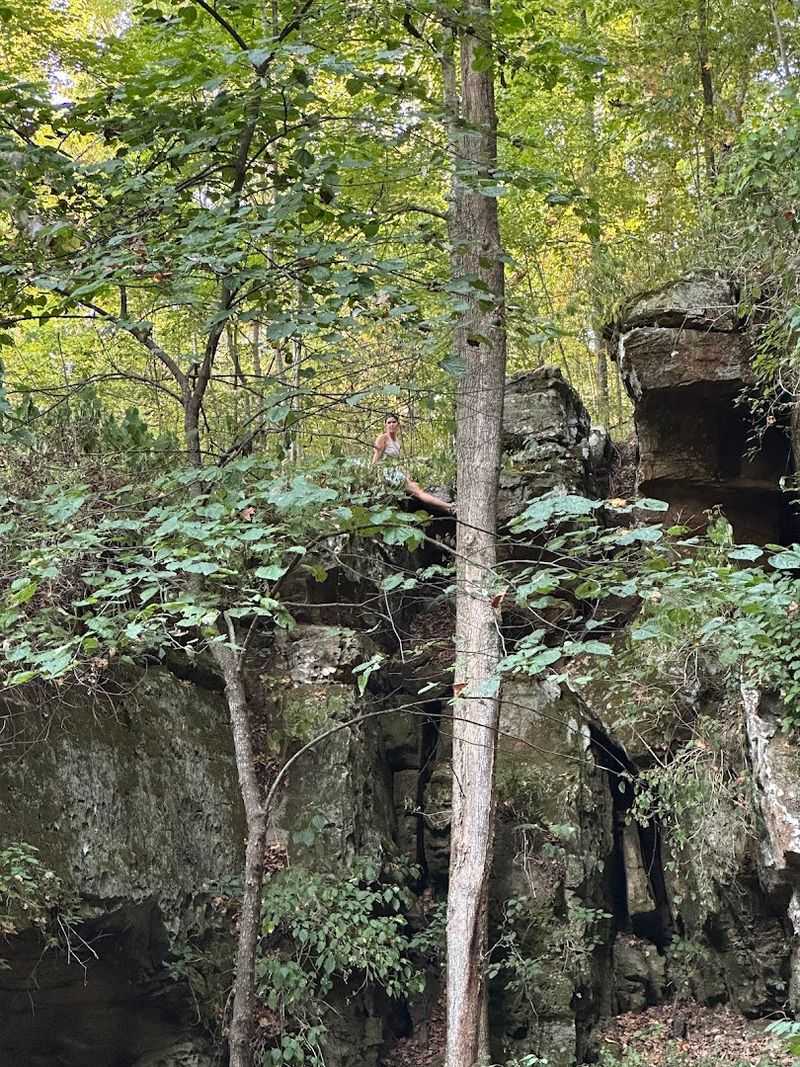
Standing beneath the Pomona Natural Bridge for the first time is a reminder that geology operates on a timescale that makes human history feel brief.
This massive sandstone arch in Jackson County spans roughly 90 feet and rises about 25 feet above the forest floor, making it one of the most impressive natural rock bridges in southern Illinois. The short trail leading to it is about 0.3 miles long, making it an easy walk with a dramatic geological payoff.
The trail is part of the Shawnee National Forest system and is located near the small community of Pomona in southern Illinois.
Despite its relatively easy access, the bridge feels genuinely remote once you are standing beneath it, surrounded by quiet forest and the subtle sounds of wind moving through the sandstone. The arch formed over millions of years as water slowly dissolved and eroded the softer layers of stone beneath a harder caprock layer.
Small cave-like alcoves and overhanging ledges flank the main arch along the trail, providing additional geological interest beyond the centerpiece formation. Wildflowers bloom along the path in spring, and the fall color display in this part of the Shawnee forest is consistently spectacular.
The combination of a short distance and dramatic scenery makes this an ideal stop for hikers of all ages and experience levels.
7. Giant City State Park, Union and Jackson Counties
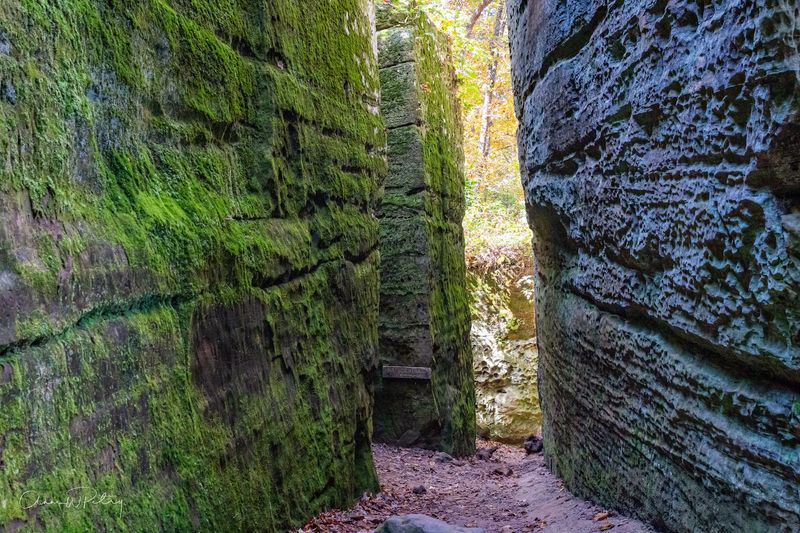
Giant City State Park earns its bold name with a trail system that winds between towering sandstone blocks so massive and closely spaced that they create the impression of walking down city streets, only the buildings here are made of 300-million-year-old rock.
The park covers over 4,000 acres across Union and Jackson Counties in southern Illinois and offers a range of trails from casual strolls to more demanding ridge hikes.
The Giant City Nature Trail is the signature route, a 1-mile loop that passes through the iconic stone corridors that give the park its name. The sandstone walls along this section rise up to 60 feet high and are covered in thick layers of lichen, moss, and small ferns that add rich texture to every photograph.
Some of the rock faces show dramatic cross-bedding patterns that tell the story of ancient sand dunes preserved in stone.
Beyond the nature trail, the park includes Shelter 1, a historic stone structure built by the Civilian Conservation Corps in the 1930s, which is worth a look for its craftsmanship and historical context.
Rock climbing is permitted in designated areas, and the park also has a lodge, cabins, and a swimming pool for those planning a longer stay. The variety of amenities makes Giant City a strong choice for both day hikers and overnight visitors.
8. Rock Cave Nature Preserve, Ogle County
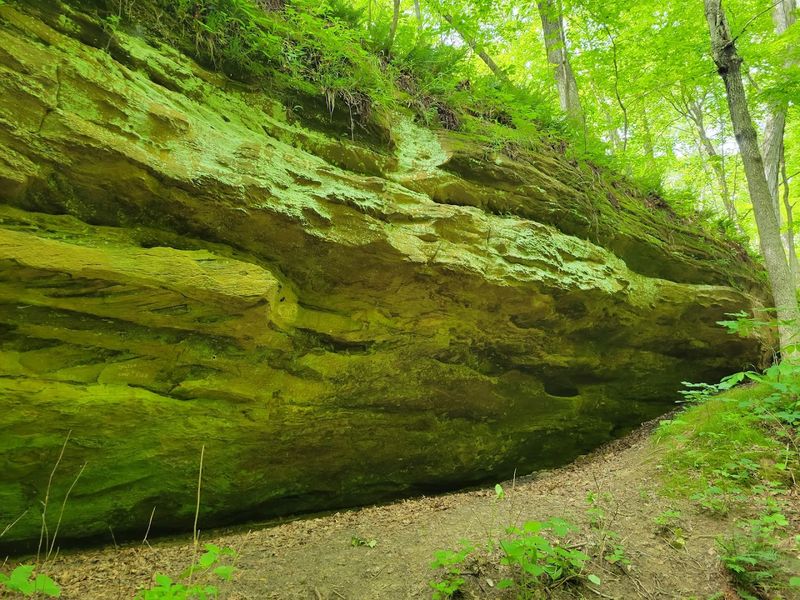
Most people associate dramatic cave landscapes with southern Illinois, so Rock Cave Nature Preserve in Effingham County offers an unexpected geological stop in central Illinois.
This Illinois Nature Preserve features sandstone rock formations and a small rock shelter tucked into a wooded ravine. That contrast is a big part of what makes it so memorable.
The preserve is managed by the Illinois Nature Preserves Commission and protects a rare example of dolomite cliff and cave habitat in a part of the state where such features are uncommon.
The cave itself is small but clearly defined, with a noticeable cool air current flowing from its entrance even on warm summer days. That natural air conditioning is a welcome feature during July and August hikes.
The trail through the preserve is informal and relatively short, making it suitable for a morning outing rather than a full-day adventure.
Wildflowers and native grasses grow along the rocky ledges, and the surrounding woodland provides habitat for woodland songbirds that are active throughout the spring migration season. Birdwatchers often combine a visit here with other natural areas along the Rock River corridor.
Rock Cave Nature Preserve is located near Beecher City in Effingham County, roughly 90 miles east of St. Louis. Access is limited and the preserve is managed to protect sensitive habitat, so staying on the designated path is important.