
10 Stunning Desert Landscapes To Visit In Arizona This Year
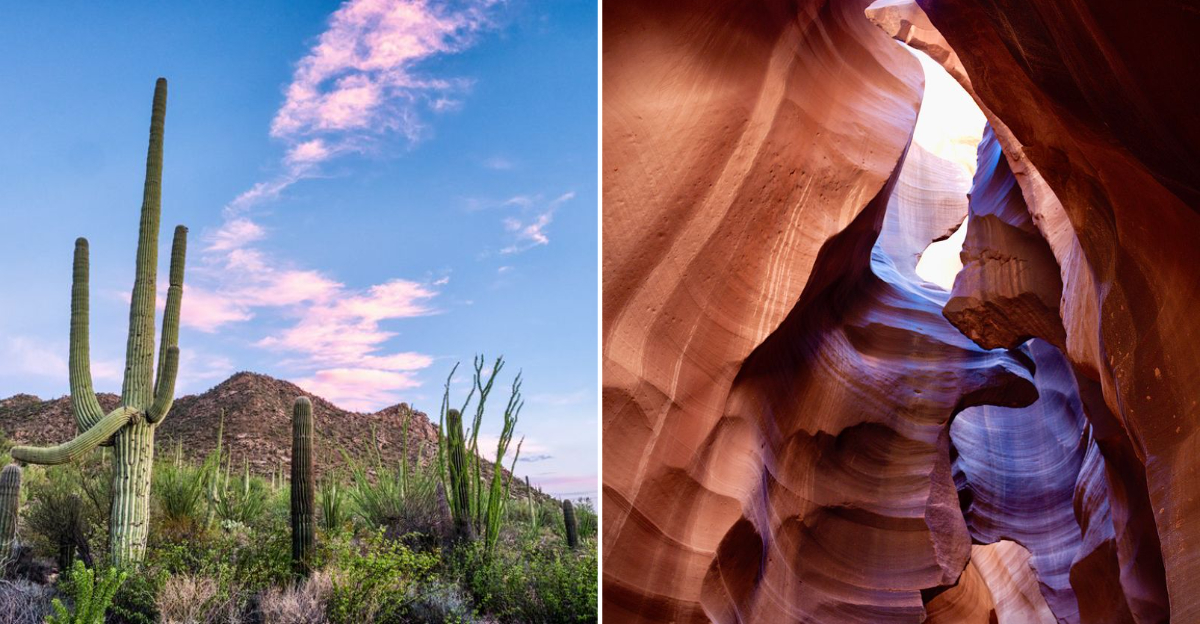
Arizona transforms into a wonderland of rust-colored canyons, towering cacti, and endless horizons that look like they belong on another planet.
The desert here is not just sand and sun, it is a living gallery of geological masterpieces carved over millions of years.
Whether you crave adventure, photography opportunities, or simply a moment of jaw-dropping awe, these landscapes deliver experiences you will never forget.
Get ready to explore ten of the most breathtaking desert destinations Arizona has to offer this year.
1. Grand Canyon National Park (South Rim)
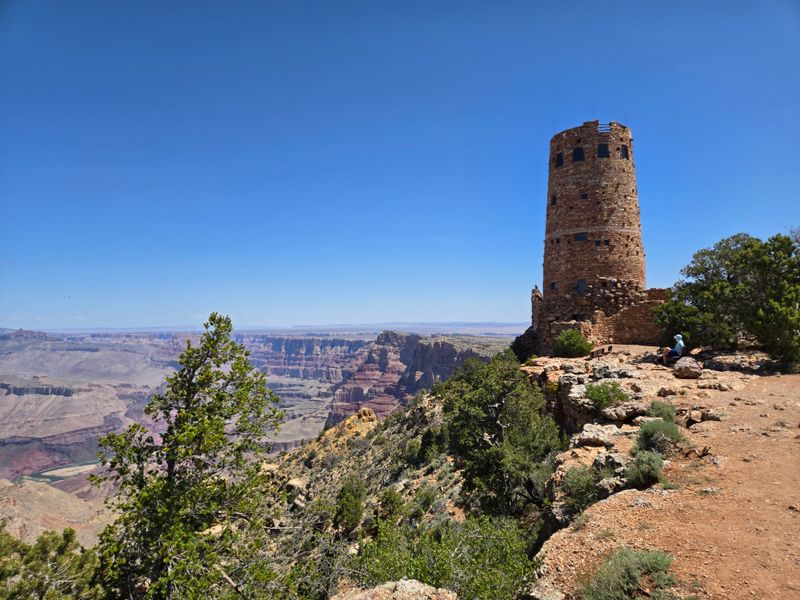
Standing at the edge of the Grand Canyon feels like peering into the Earth’s autobiography, written in layers of ancient rock that stretch back nearly two billion years.
Grand Canyon National Park, South Rim, located at 20 South Entrance Road, Grand Canyon, AZ 86023, offers some of the most accessible and spectacular viewpoints in the entire park system.
Mather Point greets most visitors first, and boy, does it know how to make an entrance—the sheer drop and endless expanse will steal your breath faster than a sprint up a staircase.
The South Rim is generally open year-round, though visitor services, lodging, or facilities may experience temporary closures or restrictions, so it’s wise to check current National Park Service alerts before visiting.
Yavapai Point and Geology Museum sits nearby, offering exhibits that explain how the Colorado River spent millions of years carving this masterpiece one grain of sand at a time.
Sunrise and sunset transform the canyon into a living painting, with shadows dancing across ridges and colors shifting from pink to purple to fiery orange.
Photographers camp out at popular spots like Hopi Point, tripods at the ready, hoping to capture that perfect moment when light and landscape collide.
Even if geology is not your thing, the sheer scale of this place humbles everyone who visits.
Pack layers because temperatures can swing wildly, and bring plenty of water—desert air is drier than a stand-up comedian’s wit.
2. Saguaro National Park
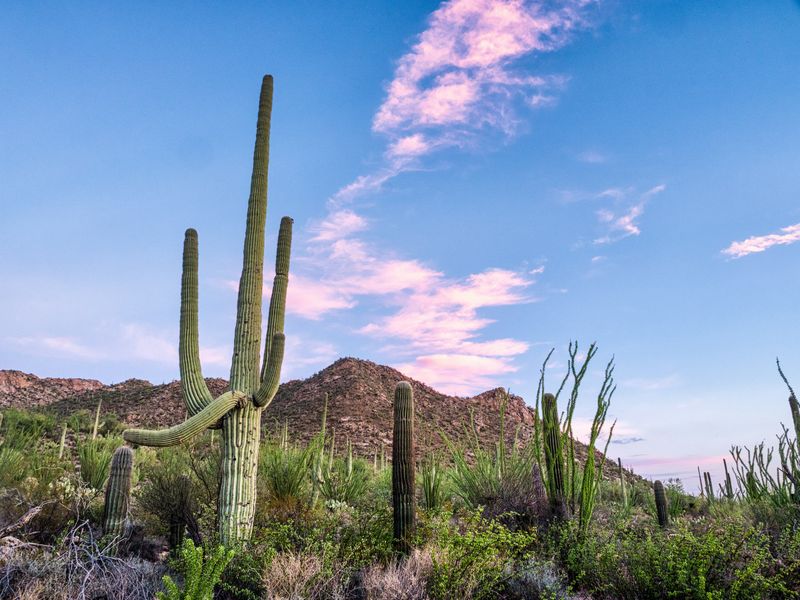
Nothing says Arizona quite like a saguaro cactus striking a pose with its arms raised high, as if perpetually celebrating life in the Sonoran Desert.
Saguaro National Park, split into two districts flanking Tucson, protects thousands of these iconic giants that can live over 150 years and grow taller than a four-story building.
The Rincon Mountain District (East) sits at 3693 South Old Spanish Trail, Tucson, AZ 85730, while the Tucson Mountain District (West) is located at 2700 North Kinney Road, Tucson, AZ 85743.
Walking through a saguaro forest feels like strolling through a crowd of friendly giants, each one with its own personality expressed through quirky arm configurations.
These cacti typically begin growing arms after many decades, often around 75 to 100 years, making every multi-armed specimen a true senior citizen of the desert.
Spring brings a bonus show when creamy white flowers bloom atop the saguaros, followed by ruby-red fruit that local wildlife devours with enthusiasm.
The parks offer excellent hiking trails ranging from easy nature walks to challenging mountain climbs, all showcasing the incredible biodiversity of the Sonoran Desert.
Golden hour here is absolutely magical—the setting sun bathes the cacti in warm amber light, creating silhouettes that photographers dream about.
Remember to stay on marked trails because desert plants are tougher than they look, and many come equipped with impressive defensive weaponry.
3. Organ Pipe Cactus National Monument
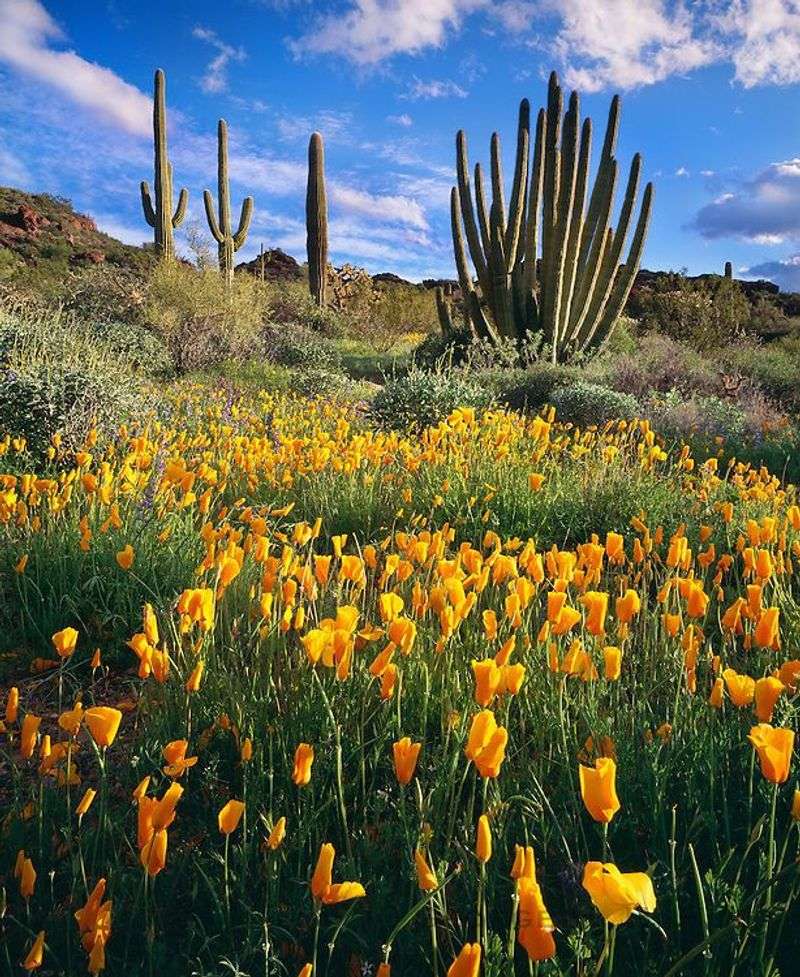
Organ Pipe Cactus National Monument, located at 10 Organ Pipe Drive, Ajo, AZ 85321, protects one of the most remote and pristine chunks of Sonoran Desert you will ever encounter.
This place earns its name from the organ pipe cactus, a rare species that grows multiple stems from a central base, resembling the pipes of a church organ designed by a particularly creative architect.
Unlike its famous cousin the saguaro, organ pipe cacti are picky about where they live, thriving only in the warmest parts of the Sonoran Desert along the Mexican border.
The monument sprawls across more than 330,000 acres of wilderness, offering solitude that feels increasingly rare in our crowded world.
Two scenic drives—Ajo Mountain Drive and Puerto Blanco Drive—wind through landscapes so dramatically beautiful they could serve as movie sets for Western films.
Spring transforms this seemingly harsh environment into a wildflower wonderland, with poppies, lupines, and brittlebush painting the desert floor in brilliant yellows, purples, and oranges.
The monument also shelters 28 other cactus species, making it a botanical treasure chest for anyone who appreciates spiky plants with attitude.
Night skies here are so dark and star-filled that the Milky Way stretches overhead like a cosmic river, reminding visitors just how small we really are.
Summer temperatures can climb brutally high, so plan visits between October and April when the weather cooperates with human comfort levels.
4. Petrified Forest National Park
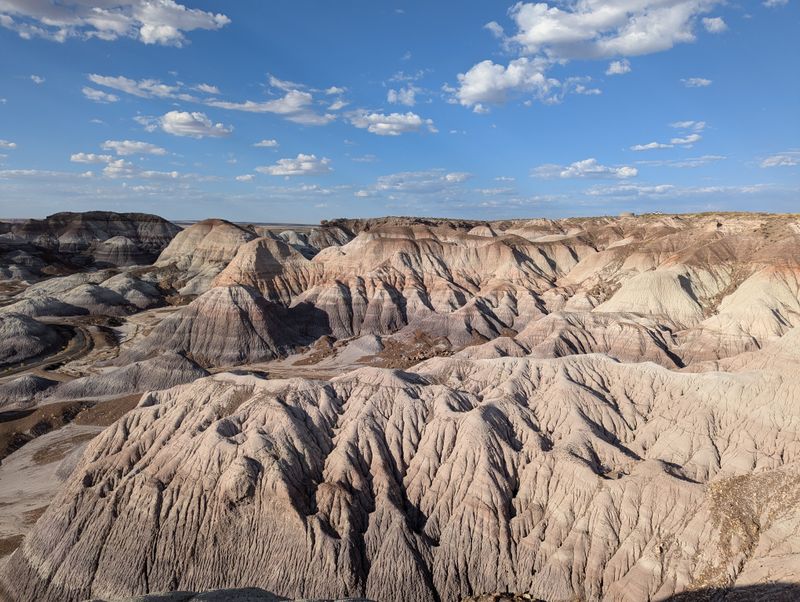
Petrified Forest National Park, located in northeastern Arizona between Holbrook and Chambers, with visitor access points along I-40 and US-180, offers a time-travel experience where you can touch trees that turned to stone 225 million years ago.
Back when these trees were alive, dinosaurs roamed the Earth, and Arizona looked nothing like the desert we know today—it was actually a lush, tropical forest near the equator.
Volcanic ash buried fallen trees, and over millions of years, minerals replaced the wood cell by cell, creating stunning rainbow-colored logs that now litter the landscape like ancient treasure.
The Painted Desert section of the park steals the show with badlands striped in shades of lavender, rose, cream, and rust that shift dramatically depending on the time of day and weather conditions.
Blue Mesa Trail takes you down into these colorful badlands, surrounding you with hills that look like they have been tie-dyed by a very talented artist with a geological palette.
Crystal Forest Trail showcases some of the most spectacular petrified logs, many sparkling with quartz crystals that catch sunlight like natural gemstones.
The park also contains over 600 archaeological sites, including ancient pueblos and petroglyphs left by people who called this area home long before European contact.
Photography enthusiasts should plan for sunrise or sunset when the low-angle light ignites the Painted Desert in colors so vivid they almost seem unreal.
Take only photos, leave only footprints—removing even tiny pieces of petrified wood is illegal and carries hefty fines.
5. Monument Valley Navajo Tribal Park
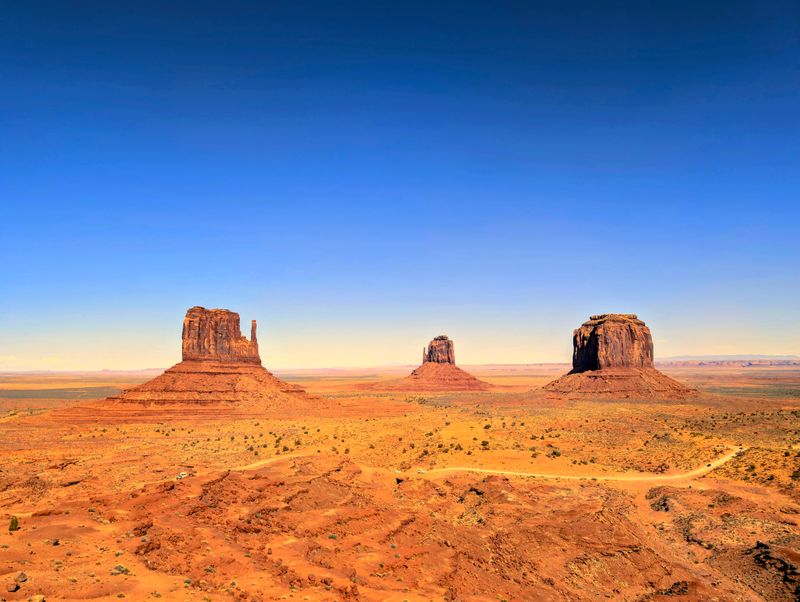
Monument Valley Navajo Tribal Park, located along US Highway 163 on the Arizona-Utah border near the town of Oljato-Monument Valley, AZ 84536, defines the American Southwest in the collective imagination.
Those towering sandstone buttes—with names like Mittens, Merrick Butte, and Elephant Butte—have starred in countless Western films, car commercials, and desktop wallpapers around the world.
Director John Ford fell in love with this landscape and filmed multiple classic Westerns here, essentially introducing Monument Valley to global audiences through the silver screen.
The valley sits entirely within the Navajo Nation, and visiting here means stepping onto sovereign tribal land rich with cultural significance and spiritual meaning.
A 17-mile unpaved loop road winds through the valley floor, offering stopping points where you can gaze up at these geological giants that rise as high as 1,000 feet above the desert.
Guided tours led by Navajo guides provide access to restricted areas and share stories, legends, and perspectives you would never get driving solo.
Sunrise here is absolutely transcendent—the first light hits the eastern faces of the buttes, setting them ablaze in shades of orange and red while the valley floor remains in cool shadow.
The View Hotel offers rooms with balconies facing the monuments, giving guests front-row seats to one of nature’s greatest shows without leaving their accommodations.
Respect posted signs and stay on designated roads, as this sacred landscape deserves our care and reverence.
6. Antelope Canyon
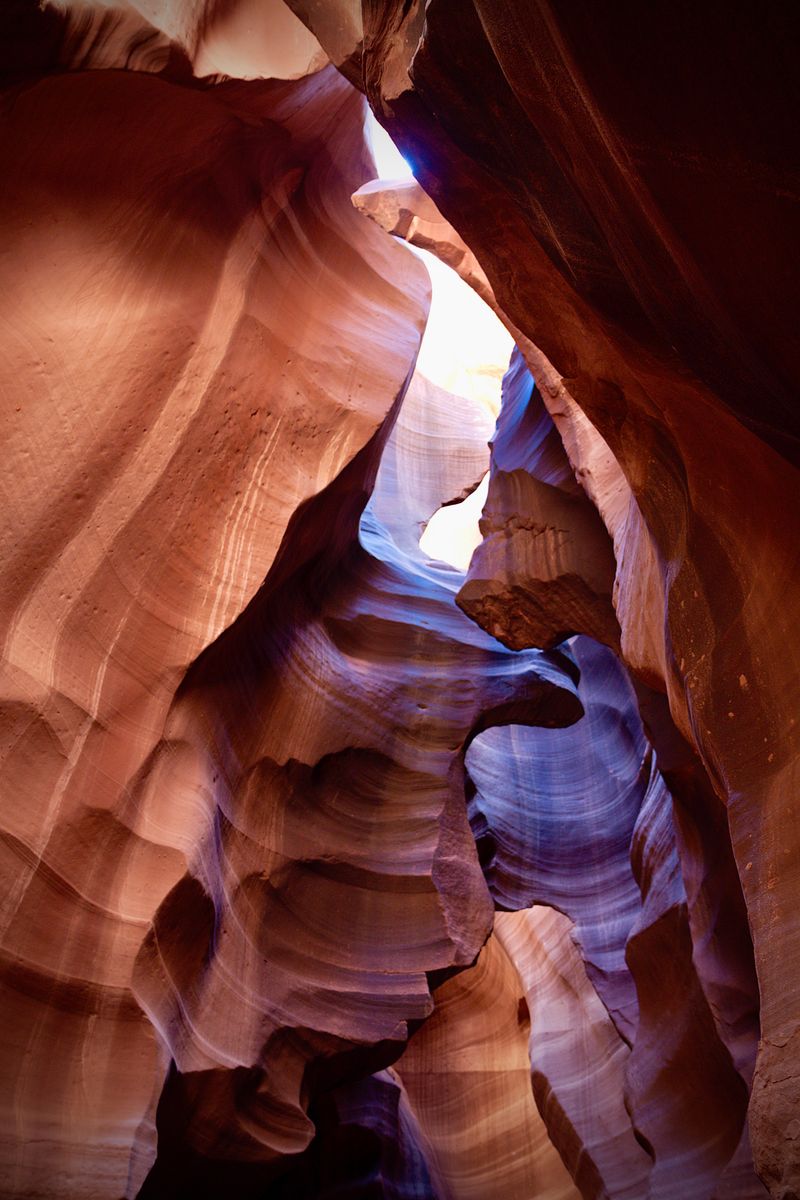
Antelope Canyon, located near Page, Arizona on Navajo land (access requires guided tours booked through authorized operators), represents nature’s ability to create art through nothing but water, wind, and time.
Flash floods carved these narrow slot canyons through Navajo sandstone, sculpting walls so smooth and curvy they look like frozen waves or flowing fabric turned to stone.
Upper Antelope Canyon, known as “The Crack” by locals, sits at ground level and allows easier walking, making it the more popular choice for visitors with mobility concerns.
Lower Antelope Canyon requires climbing stairs and navigating steeper passages, but rewards adventurers with equally stunning formations and typically smaller crowds.
The famous light beams that photographers obsess over occur only during specific months when the sun angle allows direct beams to penetrate the narrow openings above.
Peak season runs from March through October, with midday offering the best chance to witness those ethereal shafts of light illuminating the canyon interior like natural spotlights.
Colors inside the canyon shift constantly as sunlight plays across the undulating sandstone, creating a kaleidoscope of oranges, reds, purples, and golds.
Navajo guides lead all tours, sharing not only geological facts but also cultural stories and the spiritual significance of these sacred spaces.
Book tours well in advance because this bucket-list destination fills up quickly, especially during prime photography season when every shutterbug on the planet wants that perfect shot.
7. Horseshoe Bend
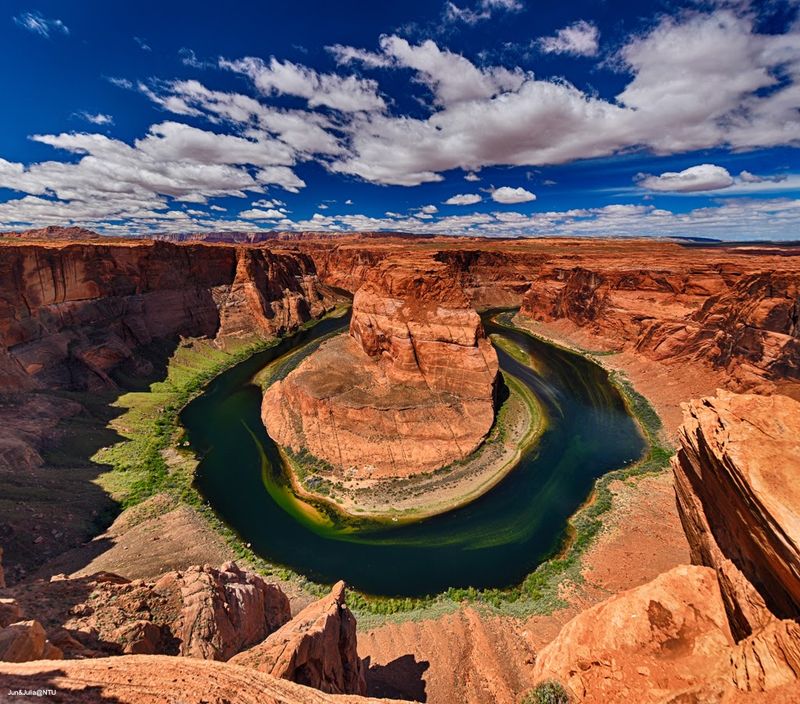
Horseshoe Bend, accessible from a parking area off US Highway 89 near Page, Arizona (approximately at milepost 545), offers one of the most photographed viewpoints in the American Southwest.
The Colorado River carved a perfect horseshoe-shaped meander through Navajo sandstone, creating a 1,000-foot drop that makes your stomach do backflips just looking at it.
A three-quarter-mile hike from the parking lot leads to the overlook, crossing sandy terrain that feels like walking through a giant litter box under the Arizona sun.
Bring water, wear sunscreen, and start early or go late because the trail offers zero shade and summer temperatures can cook visitors like eggs on a griddle.
The main viewing platform includes safety railings, but large sections of the surrounding rim remain unfenced, so watch your step and keep children close.
Wide-angle lenses work best for photography here, allowing you to capture the entire sweep of the bend in one frame.
Sunset transforms the scene into a masterpiece of color, with the river turning deep blue while the surrounding cliffs glow orange and gold.
Drone photography is prohibited here, so leave your flying cameras at home and rely on traditional ground-based perspectives.
Despite the crowds that flock here daily, something about standing at the edge of this natural wonder still feels humbling and awe-inspiring.
The view reminds us that rivers are patient sculptors, carving masterpieces one grain of sand at a time over millions of years.
8. The Wave (Coyote Buttes North)
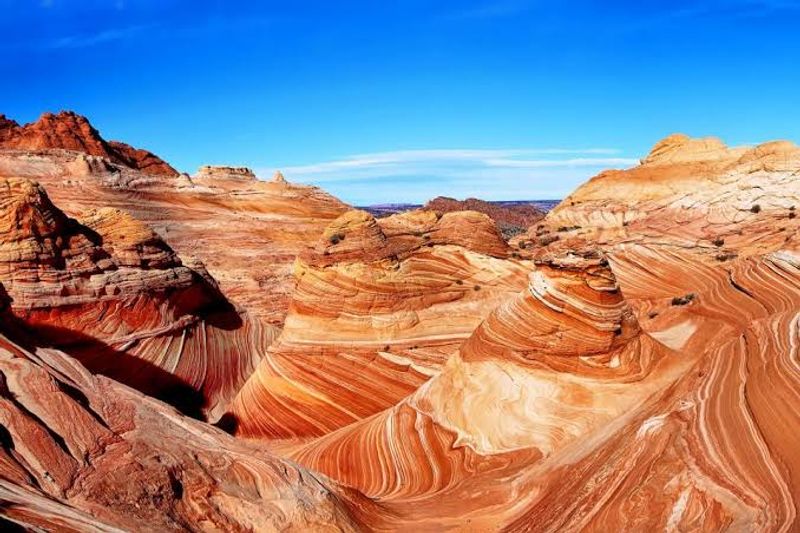
The Wave, located in the Coyote Buttes North area of the Vermilion Cliffs Wilderness near the Arizona-Utah border, ranks as one of the most exclusive natural wonders in America.
Only 64 people per day receive permits to visit this geological marvel, awarded through an advance online lottery four months ahead and a daily lottery held two days before the hiking date via Recreation.gov.
Those lucky enough to score permits encounter a landscape that looks like it belongs on an alien planet—undulating sandstone formations striped in shades of orange, pink, cream, and red that flow like frozen ocean waves.
Jurassic-age sand dunes turned to stone over 190 million years ago, and erosion has slowly revealed the crossbedding patterns that create those mesmerizing wavy stripes.
No marked trail leads to The Wave, so visitors must navigate using maps, GPS coordinates, and photos while crossing several miles of trackless desert terrain.
Getting lost is a real possibility, and the remote location means help is far away if things go wrong, so preparation is absolutely critical.
Bring more water than you think you need, download offline maps, start early to avoid midday heat, and tell someone your plans before heading out.
The surrounding area contains numerous other spectacular formations with names like Top Rock, Melody Arch, and Second Wave, all worthy of exploration if time allows.
Photography here is outstanding any time of day, though overcast conditions often produce the best colors by eliminating harsh shadows.
9. Red Rock State Park (Sedona)
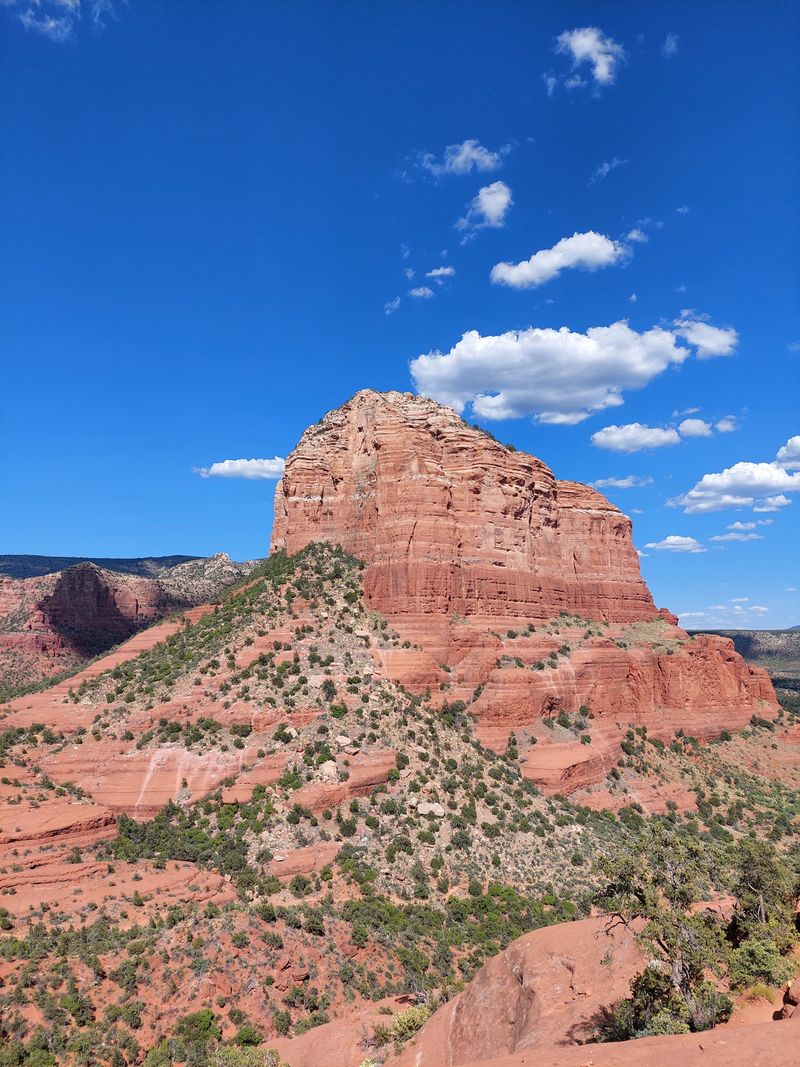
Red Rock State Park, located at 4050 Red Rock Loop Road, Sedona, AZ 86336, provides an easily accessible introduction to the stunning red rock landscape that made Sedona famous worldwide.
This 286-acre nature preserve sits along Oak Creek, creating a lush riparian habitat that contrasts beautifully with the towering red sandstone cliffs rising all around.
Five miles of well-maintained trails wind through the park, ranging from easy creek-side strolls to moderate climbs that reward hikers with panoramic views of Cathedral Rock and other iconic formations.
The Visitor Center offers exhibits explaining the geology, ecology, and human history of the area, plus ranger-led walks that enhance understanding and appreciation.
Unlike many heavily trafficked Sedona sites, Red Rock State Park often feels more tranquil thanks to managed access and its strong focus on environmental education.
Birdwatchers flock here year-round, as the park’s diverse habitats support a wide variety of bird species, including hummingbirds, raptors, and wading birds.
The park prohibits swimming and pets (except service animals), and bikes are restricted to designated routes, helping preserve its quiet, natural atmosphere.
Photographers love how the red rocks glow during golden hour, especially when reflected in the creek’s calm pools.
Many visitors report feeling a special energy in Sedona, with some claiming the area contains powerful vortexes that promote healing and spiritual awakening.
Whether you buy into the metaphysical aspects or not, the sheer beauty of these red rock formations certainly creates a sense of wonder and peace.
10. Lost Dutchman State Park
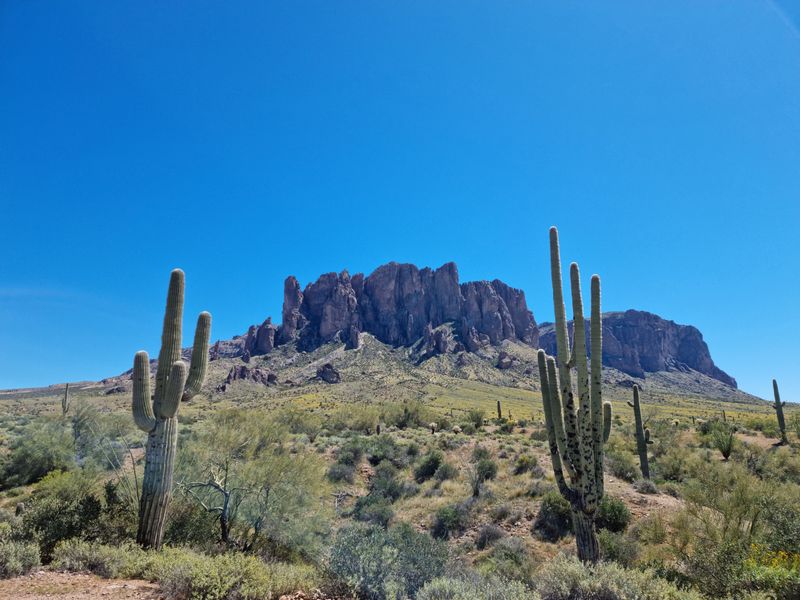
Lost Dutchman State Park, situated at 6109 North Apache Trail, Apache Junction, AZ 85119, sits at the base of the legendary Superstition Mountains where treasure hunters have searched for over a century.
The park takes its name from the Lost Dutchman’s Gold Mine, a legendary mother lode supposedly hidden somewhere in these rugged peaks by a German immigrant named Jacob Waltz in the 1800s.
Nobody has ever found conclusive evidence of the mine, but the legend persists, drawing modern prospectors and adventure seekers who hope to succeed where countless others have failed.
The Superstitions themselves are geological wonders formed from volcanic tuff and lava flows that erupted around 30 million years ago, creating dramatic cliffs, deep canyons, and knife-edge ridges.
Hiking trails range from easy nature walks to challenging climbs up to Flat Iron, a prominent rock formation that rewards summit-seekers with breathtaking 360-degree views.
Spring wildflower displays here rival any in Arizona, with poppies, lupines, and brittlebush carpeting the desert floor in brilliant colors that contrast beautifully with the dark volcanic peaks.
The campground offers excellent facilities for both tent camping and RVs, making it a perfect base camp for exploring the Superstitions and nearby attractions.
Sunrise over the Superstitions is pure magic, with the first light painting the jagged peaks in shades of gold and orange while the desert below slowly awakens.
Remember to carry plenty of water, watch for rattlesnakes, and let someone know your hiking plans before venturing into these wild mountains.