
10 Stunning Stops Along Michigan’s Lake Huron Coastal Road Trip
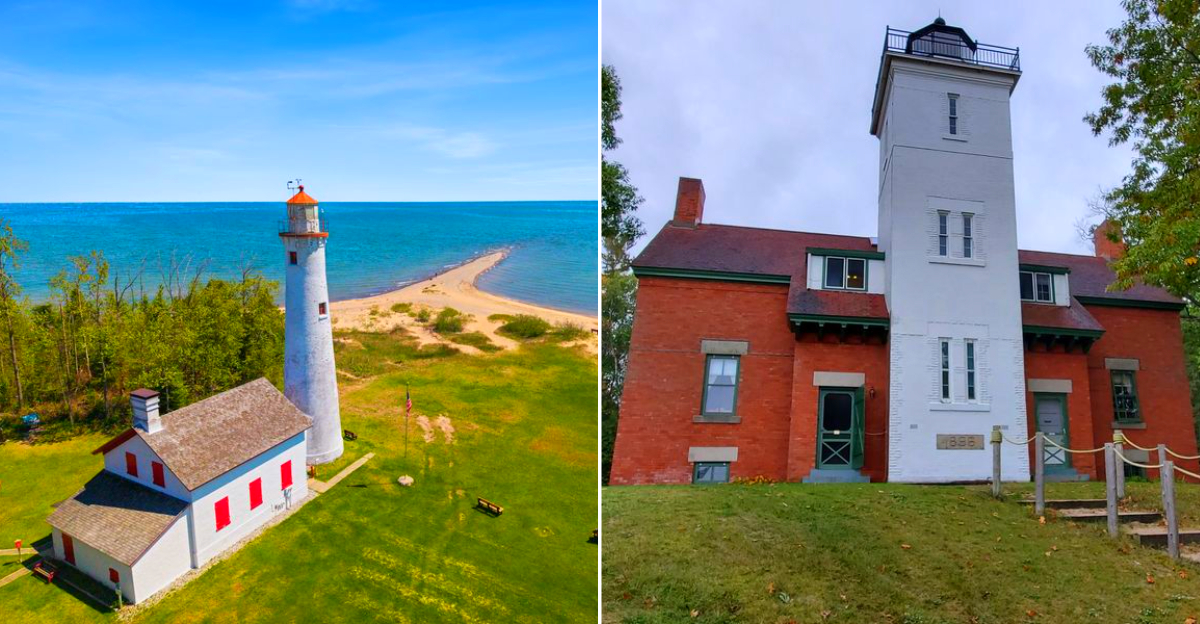
Pull over. That is what this stretch of Great Lakes shoreline keeps making you do. I started out planning a quick drive and ended up stopping at every mile marker along the way. Historic lighthouses caught my eye first.
Then came a museum that brought shipwreck stories to life in ways I never expected. A recreation area offered me a cave I could walk right through. I found a dark sky park where the stars look close enough to touch on a clear night.
One stop required a ferry ride to an island where cars are banned and horses still deliver the mail. Each destination offers something completely different from the last.
I could have spent weeks exploring every side road and trail. If you love waterfront drives that mix history, nature, and small-town charm, this Michigan route belongs at the very top of your list of must-do road trips.
10. Tawas Point State Park
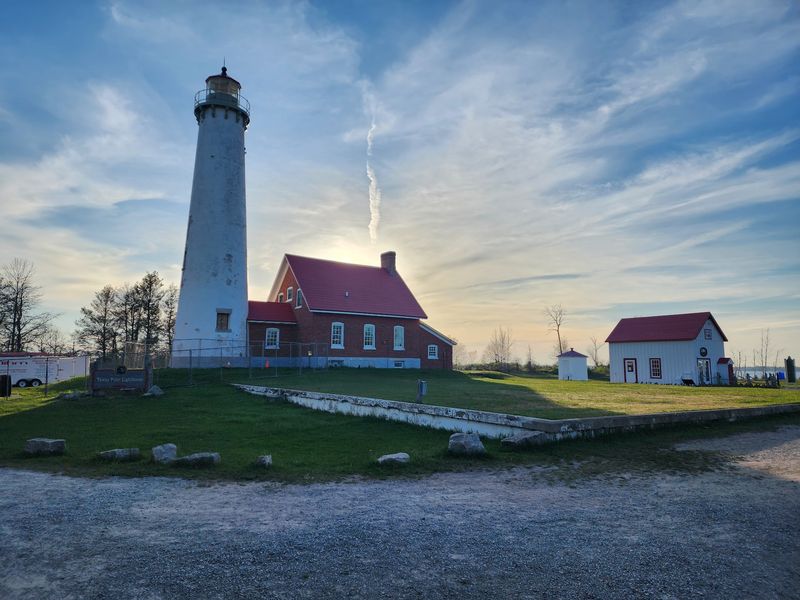
Lake Huron feels unusually gentle at Tawas Point, where a narrow sandy spit reaches into the water and creates a broad stretch of shallow shoreline. The park is one of those places that can satisfy several completely different road-trip moods at once, from swimming and beach walking to birding and lighthouse history.
The historic Tawas Point Lighthouse is the obvious landmark. The current tower dates to 1876, and in 2026 the site is celebrating its 150th anniversary.
Summer visitors can tour the lighthouse and keeper’s quarters, while the surrounding park remains a favorite stopover for migrating birds in spring and fall.
I would bring binoculars even outside peak migration. The open water, beach grasses, and changing shoreline attract enough activity to make slow walking worthwhile, especially early in the morning before the day-use area becomes busy.
Water shoes help along sections of shore, and a Michigan Recreation Passport is required for vehicle entry. Leave time for the lighthouse rather than treating it as a photograph from the parking lot.
Tawas Point works best when you alternate between history and the beach, letting the lake decide how long the stop should last. It is one of Michigan’s gentlest coastal pauses today.
9. Oscoda Beach Park
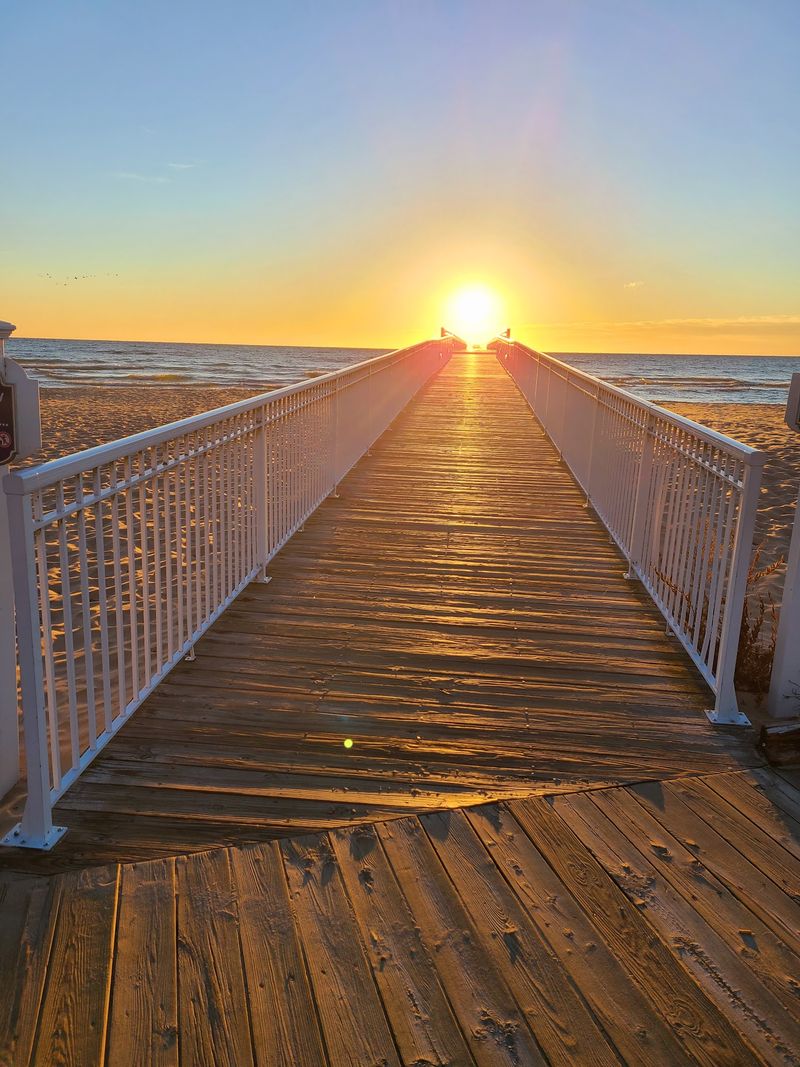
Soft sand and an open Lake Huron horizon make Oscoda Beach Park an easy place to lose more time than planned. The park sits close to downtown Oscoda, so it works equally well as a quick leg-stretch or a longer stop built around swimming, fishing, and an evening walk.
A universally accessible pier reaches into the lake and gives anglers and sightseers a better look at the shoreline. Back on land, the park includes a boardwalk, sunbathing deck, playground equipment, skate ramps, picnic areas, and an accessible bathhouse.
The Rotary Bandshell adds another reason to stay later, with free Thursday evening concerts scheduled through much of summer.
I like arriving late in the afternoon, when the beach begins to cool but there is still enough daylight to walk the pier. Families can split up without anyone feeling stranded because so many activities sit within the same compact park.
Bring a towel, sunscreen, and something warmer for after sunset. Lake Huron breezes can erase a hot afternoon fast.
Oscoda Beach Park does not need a complicated plan. Swim, wander, listen to music when the schedule lines up, and let the shoreline handle the rest.
Downtown stays conveniently close throughout it all.
8. Lumberman’s Monument

The Lake Huron road trip bends inland here, but the detour earns its place almost immediately. Lumberman’s Monument overlooks the Au Sable River from a high bluff, combining a huge river view with the history of the logging industry that transformed northern Michigan.
The bronze monument honors lumber workers, while the visitor center adds photographs, tools, displays, and hands-on exhibits that make the era easier to understand. Outside, short trails lead to overlooks and forest scenery.
The most memorable route drops toward the river on a long stairway of 272 steps, where visitors can see a replica wanigan, the floating cook shack that once followed logging crews during river drives.
That staircase is optional, and the climb back up deserves respect on a hot day. I would explore the visitor center first, then decide how much energy remains before heading down.
Bring water and shoes with decent grip. The overlook alone is worth the stop if mobility or time rules out the stairs.
What makes Lumberman’s Monument work so well is the contrast between the peaceful river below and the demanding history being remembered above it. The landscape looks calm now, but the exhibits explain how intensely it once worked.
7. Sturgeon Point Lighthouse
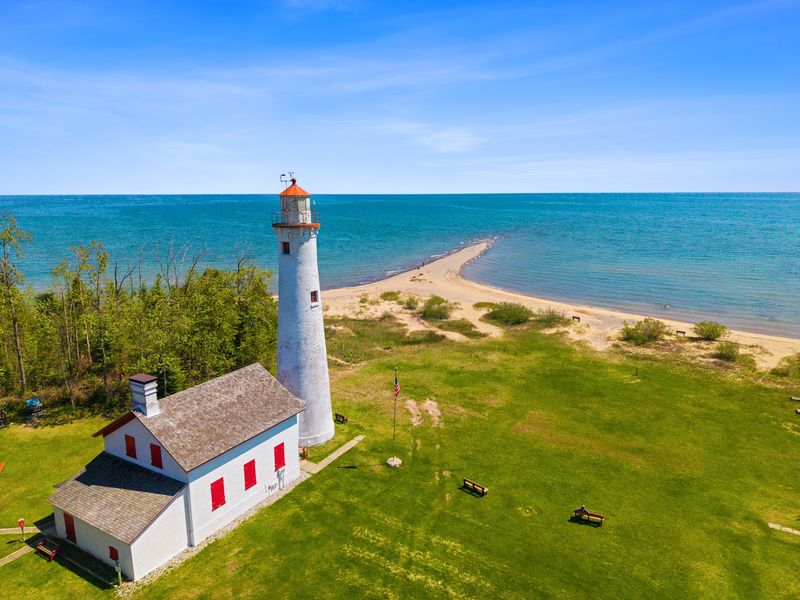
Sturgeon Point Lighthouse rises from a quiet stretch of Lake Huron shoreline with the clean proportions people imagine when they picture a Great Lakes light station. Built in 1869 and first lighted in 1870, the roughly 70-foot tower was positioned to warn ships away from a dangerous reef extending far into the lake.
The original 3.5-order Fresnel lens, made in Paris, remains one of the site’s most impressive details. The lighthouse still functions as an aid to navigation, while the restored keeper’s house operates as a maritime museum under the care of the Alcona Historical Society.
Summer is the best time to see the interior, but the grounds remain open year-round. I would pair the museum with a slow shoreline walk rather than arriving only for the tower.
The point has enough open water, stones, and wind to make the setting feel as important as the building.
Check current museum and tower hours before driving, since seasonal access can vary. Bring a light layer even on warm days.
Sturgeon Point has a calm, almost spare beauty, and the longer you stay, the more the lighthouse begins to feel like part of the coast rather than an object placed beside it.
6. Great Lakes Maritime Heritage Center
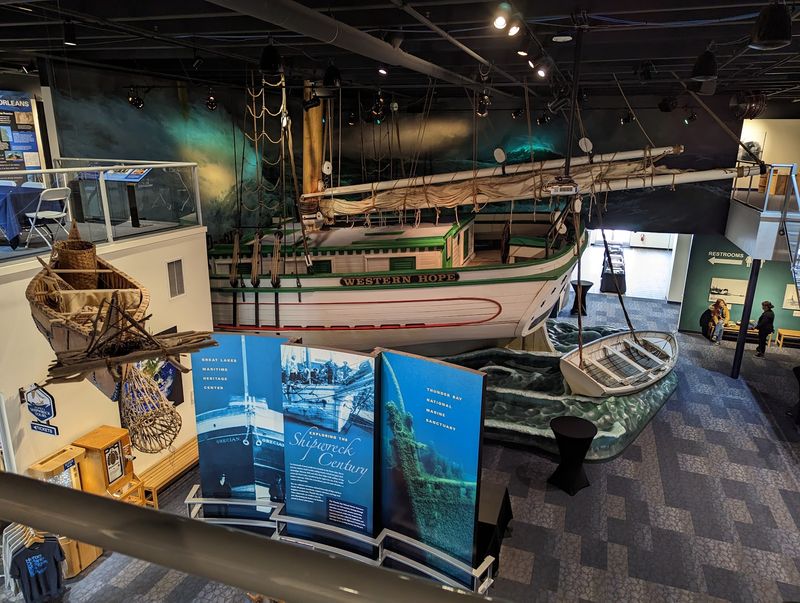
A Lake Huron storm feels different after you have walked across the deck of a life-size schooner indoors. Alpena’s Great Lakes Maritime Heritage Center is the visitor center for Thunder Bay National Marine Sanctuary, and it turns shipwreck history into something immediate rather than distant.
The center offers more than 10,000 square feet of exhibits focused on Great Lakes navigation, archaeology, storms, shipbuilding, and the people who worked these waters. Interactive displays let visitors experience a recreated schooner deck and look beneath the surface at wreck sites without getting wet.
Admission is free, and the center is open year-round.
Thunder Bay National Marine Sanctuary protects nearly 100 known historic shipwrecks, so the museum also serves as an introduction to a much larger underwater landscape. Glass-bottom boat tours depart nearby during the operating season, with ticketing available inside the center.
I would visit before taking a cruise rather than afterward. Learning what you are looking at makes the wrecks much more compelling once they appear beneath the boat.
This is also the strongest rainy-day stop on the route. Nothing about it feels like a compromise.
You leave with a better understanding of why Lake Huron earned such a complicated maritime reputation.
5. Rockport State Recreation Area
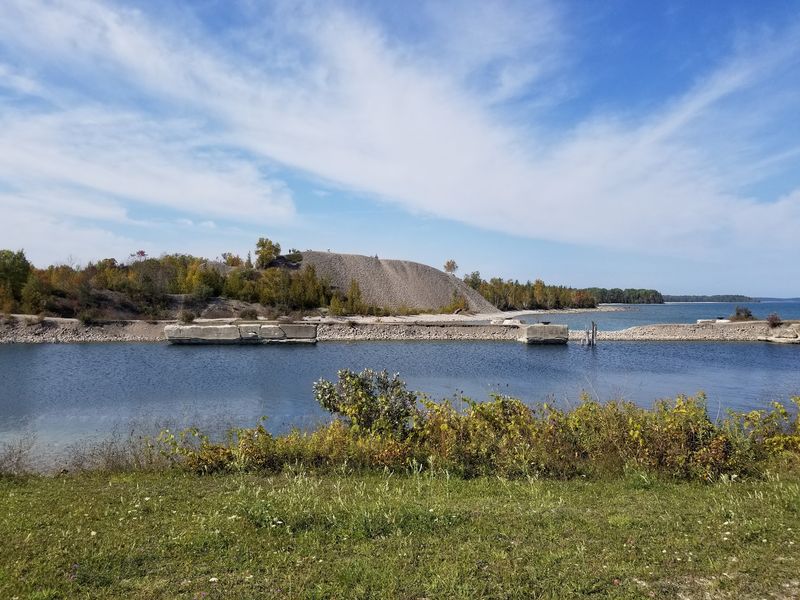
Rockport feels less like a conventional beach park and more like someone opened a geology cabinet along Lake Huron. The recreation area includes a former limestone quarry, rocky shoreline, sinkholes, forest, and enough unusual terrain to make sturdy shoes more useful than flip-flops.
Fossil hunting is one of the signature activities. Visitors can search designated areas for Devonian fossils, while trails lead through quarry remnants and natural sections that feel different from the sandy parks farther south.
The site is also a designated dark sky preserve, which gives patient travelers a strong reason to remain after sunset.
I would arrive with enough daylight to explore before deciding whether to stay for stars. The quarry can feel exposed during hot weather, so water, sun protection, and shoes with good traction matter.
This is not the place to rush across uneven ground while staring at the sky.
Rockport rewards people who like odd landscapes. One minute you are looking at limestone underfoot, and later the entire horizon becomes the attraction.
Few Lake Huron stops move so naturally between ancient geology and astronomy. Give it several hours if possible, because the park becomes more interesting each time the scenery changes around another bend.
4. Old Presque Isle Lighthouse
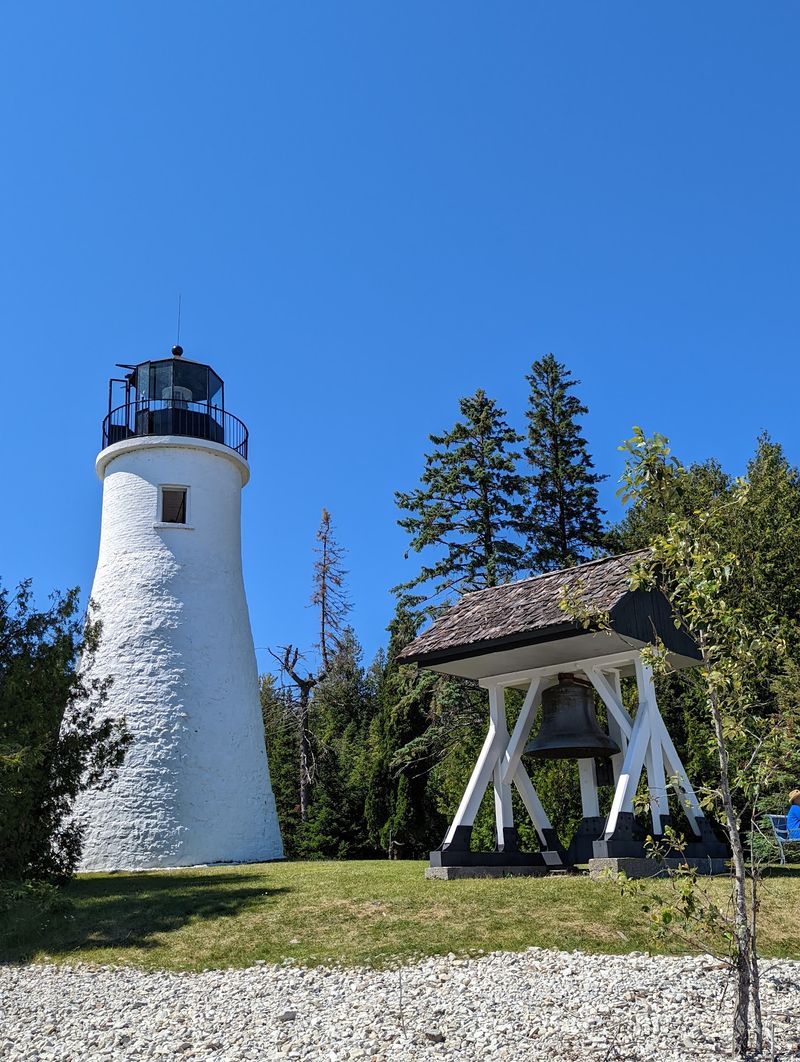
Old Presque Isle Lighthouse has the compact, weathered character that newer landmarks often spend years trying to imitate.
Built in 1840 near Presque Isle Harbor, the small tower is among the oldest surviving lighthouses in the Great Lakes region and remains open to visitors during the seasonal museum schedule.
The tower is only about 30 feet tall, but climbing it still feels intimate because the structure is so old. The keeper’s dwelling adds maritime exhibits, while the surrounding harbor gives the entire stop a quiet sense of scale.
In 2026, the lighthouse is open daily through September 7, with additional Friday-through-Monday dates continuing into October.
I would visit this light and the New Presque Isle Lighthouse on the same afternoon. One is compact and early, the other much taller and more commanding, and seeing them together makes changes in lighthouse design immediately obvious.
Admission to the museums is free, although tower climbs require a fee. Check height and age rules before promising children a climb.
Old Presque Isle also carries plenty of ghost lore, but it does not need supernatural help to feel atmospheric. The worn steps, harbor air, and small rooms already make the past feel unusually close here.
3. New Presque Isle Lighthouse
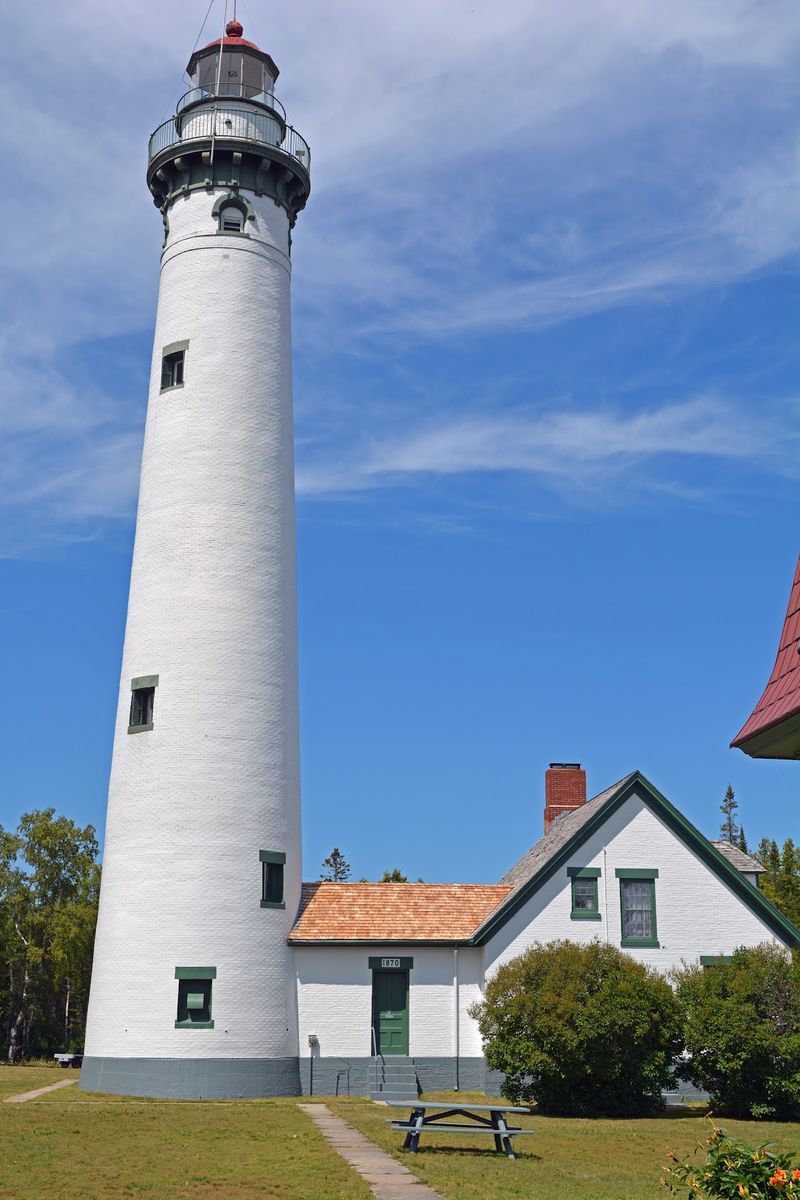
New Presque Isle Lighthouse announces itself from a distance. Rising above the trees near Lake Huron, the 1870 tower is the tallest lighthouse in Michigan that visitors can climb, making it a physical stop on this coastal route.
The tower replaced the smaller 1840 lighthouse nearby and reflects the work of engineer Orlando M. Poe.
Inside, a spiral staircase leads upward toward broad views of Lake Huron and the surrounding Presque Isle landscape. The site also includes keeper-related exhibits and the restored 1905 keeper’s house museum.
For the 2026 season, both Presque Isle lighthouses are open daily through September 7, then Friday through Monday on selected fall dates. The museum buildings are free to enter, while one climb ticket covers both lighthouse towers.
Height restrictions apply, and children under twelve must be accompanied by an adult.
I would climb the New Light before lunch if possible. The tower feels much longer when heat builds inside, and earlier hours make the experience more comfortable.
Do not rush back to the car afterward. The grounds and nearby shoreline deserve time too.
After more than 150 years guiding mariners, the tower dominates the landscape, but the quieter details below make the stop complete.
2. Ocqueoc Falls
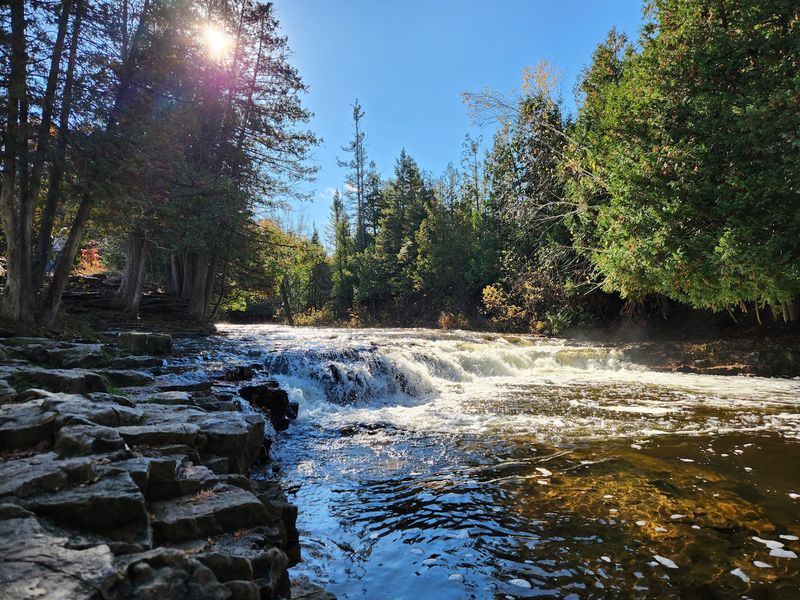
Ocqueoc Falls is the inland surprise that keeps this Lake Huron route from becoming a repeating sequence of beaches and lighthouses.
Water tumbles over exposed limestone ledges in a series of low cascades, creating the largest waterfall in Michigan’s Lower Peninsula and a popular summer swimming spot.
The site is especially notable for accessibility. Improvements completed in 2012 made Ocqueoc Falls the first waterfall area in the nation designed for full universal access.
A paved route leads from the parking area toward the falls, with accessible picnic areas and benches nearby.
On warm days, people wade and cool off around the lower cascades, while the surrounding forest provides hiking options for anyone who wants a longer stop. Conditions can become slippery around wet rock, so shoes with traction are much safer than smooth sandals.
Bring a towel, water, and insect repellent, then give yourself more time than the word “falls” might suggest. This is not one towering drop viewed from a distant railing.
The pleasure comes from being close to the river and hearing water move across the rock.
It is a refreshing break from the shoreline, and the forested detour makes returning to Lake Huron feel new again. Nearby.
1. 40 Mile Point Lighthouse
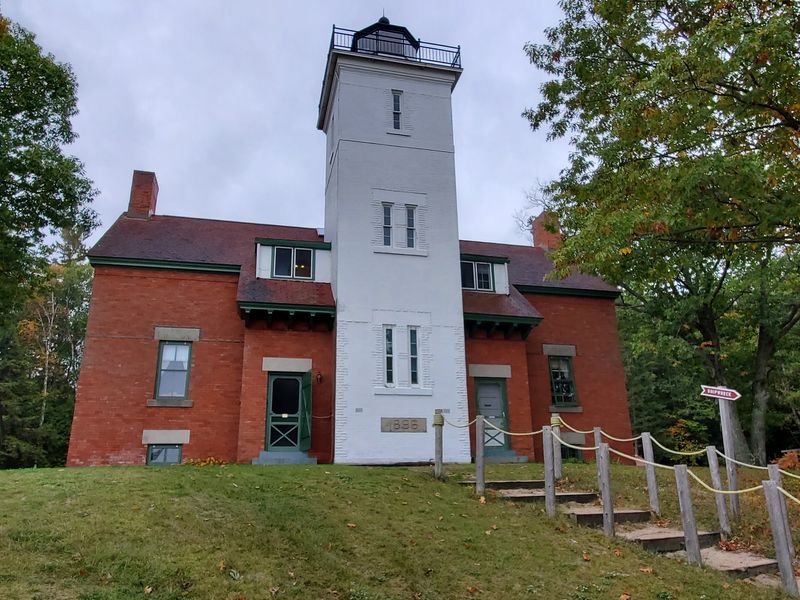
Forty Mile Point Lighthouse combines two Great Lakes obsessions in one stop: a working historic light and a shipwreck you can see from shore. The station stands north of Rogers City in Lighthouse Park, where Lake Huron meets a stony beach and open sky.
Completed in 1896 and first lighted in 1897, the lighthouse still uses its fourth-order Fresnel lens as an active navigational aid. During the summer season, visitors can explore the museum, climb the tower, visit the restored pilothouse from the steamer Calcite, and walk the surrounding grounds.
Admission to the museum is free.
The sight waits down the beach. Portions of the wooden freighter Joseph S.
Fay, wrecked during a storm in 1905, remain partly buried in the sand and shallow water. Watch your footing because pieces can be hidden beneath shifting beach material.
I would tour the lighthouse first, then walk toward the wreck while there is plenty of daylight. Sturdy shoes make the rocky shoreline easier.
The grounds are open year-round, while the lighthouse museum follows seasonal hours. Forty Mile Point feels like a fitting northern finale because the building and wreck tell opposite sides of the same Lake Huron story: guidance and disaster. Together.