
12 Surprising Facts You Didn’t Know About Maine
What kind of place hides record-breaking geography, ancient fossils, and unusual food laws in plain sight? Maine rarely grabs the spotlight, yet it holds a surprising number of stories waiting to be uncovered.
This northeastern state blends rugged coastlines, deep forests, and a history that stretches back hundreds of millions of years. Time spent exploring Maine often reveals far more than expected, with each discovery adding another layer of intrigue.
Its reputation barely scratches the surface of what it offers. Curious details, little-known facts, and unexpected highlights give Maine a character that feels both distinctive and quietly captivating.
Keep reading, because these insights may completely reshape how you see the Pine Tree State.
1. Maine Is The Only State With Just One U.S. Neighbor
Pull out a U.S. map and look closely at the upper right corner. Maine sits in a geographic position unlike any other state in the country, sharing its only American border with New Hampshire.
Every other U.S. state touches at least two other states, making Maine a true geographic oddity in the Lower 48.
To the north and northwest, Maine shares its border with the Canadian provinces of Quebec and New Brunswick. To the east and south, the Atlantic Ocean takes over.
This unusual layout means Maine functions almost like a peninsula of the United States, which has shaped its culture, economy, and identity in fascinating ways.
That sense of geographic isolation has actually worked in Maine’s favor. Communities here developed strong self-reliant traditions because help from neighboring states was not always easy to come by.
The state’s unique position also makes it a natural gateway for travel between the northeastern U.S. and Atlantic Canada, giving it a cross-border character that feels distinct from the rest of New England.
2. Maine’s Coastline Is Much Longer Than It Looks
At first glance on a map, Maine’s coast looks like a modest stretch of Atlantic shoreline. The truth is wildly different.
When you account for every cove, inlet, tidal river mouth, and island shoreline, Maine’s coast can measure up to about 3,500 miles depending on how it is calculated, making it one of the longest coastlines of any state in the contiguous U.S.
The reason for this dramatic difference comes down to the coastline’s deeply jagged character. Glaciers carved the landscape thousands of years ago, leaving behind a maze of rocky peninsulas, protected harbors, and narrow sea channels.
Walking from one point to another in a straight line tells you almost nothing about how much shoreline actually exists between those two spots.
That complex geography is part of what makes Maine so rewarding to explore. Each small harbor town along the coast has its own personality, its own fishing traditions, and its own relationship with the sea.
Places like Pemaquid Point, Quoddy Head, and the Bold Coast offer scenery that feels completely different from one another, even though they are all technically part of the same coastline. Maine’s edge is anything but simple.
3. Maine Has Over 2,000 Coastal Islands
Most people picture a single stretch of beach when they think of a coastal state, but Maine rewrites that expectation entirely.
Off its rugged shores sit more than 2,000 islands, ranging from tiny exposed ledges barely above the waterline to larger inhabited islands with year-round communities, schools, and ferry services.
Some of the most well-known include Monhegan Island, celebrated by artists and hikers for its dramatic cliffs and creative energy. Vinalhaven is one of the largest and supports a working lobster fishing community that has operated for generations.
The Cranberry Isles near Acadia National Park offer breathtaking scenery accessible by a short ferry ride from Northeast Harbor.
Many of these islands remain completely undeveloped and are protected as wildlife refuges or state preserves. Puffins nest on islands such as Seal Island National Wildlife Refuge and Matinicus Rock, drawing birdwatchers from across the country each summer.
Island hopping in Maine is a genuinely underrated travel experience that most visitors never even consider.
Renting a kayak or booking a ferry and exploring even a handful of these islands gives you a completely different perspective on what makes Maine so persistently captivating to those who know it well.
4. Maine Has The Largest Moose Population In The Lower 48
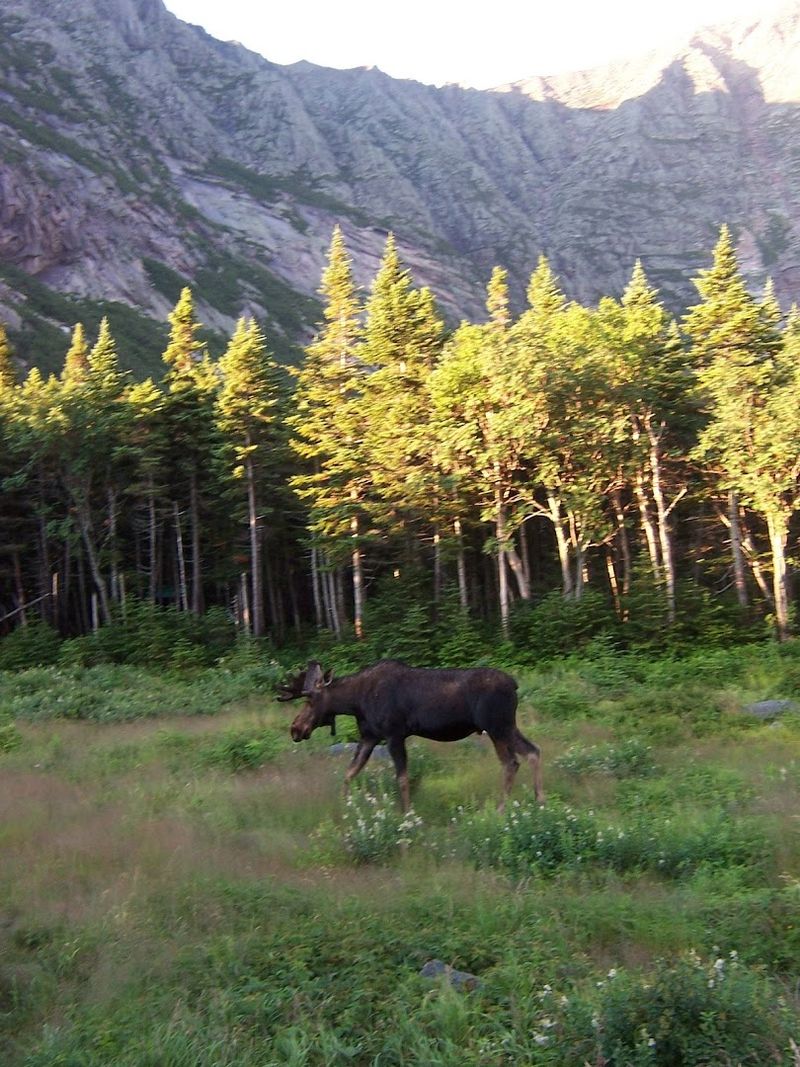
Seeing a moose in the wild is one of those experiences that stops you completely in your tracks. In Maine, your chances of having that moment are better than anywhere else in the continental United States.
The state is home to an estimated 60,000 to 75,000 moose, far more than any other state in the Lower 48 states.
Northern Maine, particularly the vast forested regions around Baxter State Park, the Allagash Wilderness Waterway, and Moosehead Lake, offer some of the best moose-spotting opportunities on the continent.
Early morning and dusk are the prime times to catch these enormous animals wading in ponds or crossing rural roads. Moose Alley, a stretch of Route 6 near Jackman, is practically legendary among wildlife enthusiasts.
At up to 1,500 pounds, a bull moose is an awe-inspiring sight up close, though it is worth keeping a respectful distance since they can be unpredictable. Guided moose safaris and canoe trips through the North Maine Woods regularly deliver unforgettable sightings.
The moose has become so central to Maine’s identity that it appears on the state’s license plates, and rightfully so.
5. You Can See The First Sunrise In The U.S. Here
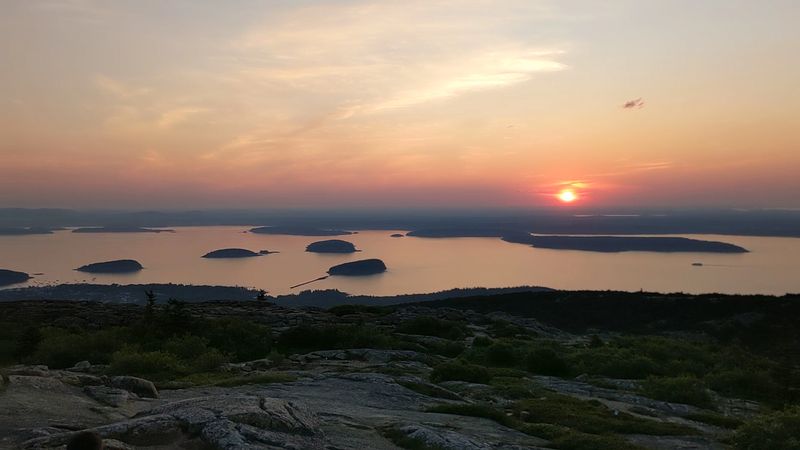
For a portion of the year, the very first sunrise in the entire United States happens in Maine, specifically on the summit of Cadillac Mountain in Acadia National Park.
At 1,530 feet, Cadillac Mountain is the highest point on the eastern seaboard, and from early October through early March, it is among the first places in the United States to see sunrise, while other locations in Maine such as West Quoddy Head take that distinction during the rest of the year.
Acadia National Park is located primarily on Mount Desert Island near the town of Bar Harbor. The park itself is one of the most visited in the National Park System, drawing millions of visitors each year who come for hiking, cycling the famous carriage roads, and watching the ocean from its granite peaks.
But the sunrise experience on Cadillac Mountain is something else entirely.
Arriving before dawn and watching the sky shift from deep purple to gold while the Atlantic stretches out below you is a genuinely moving experience. Rangers often note that visitors who make the early effort to reach the summit are consistently among the most enthusiastic park guests of the day.
Reservations are now required for the summit road during peak season, so planning ahead is essential for catching that first light.
6. Lobster Dominates Maine’s Fishing Industry
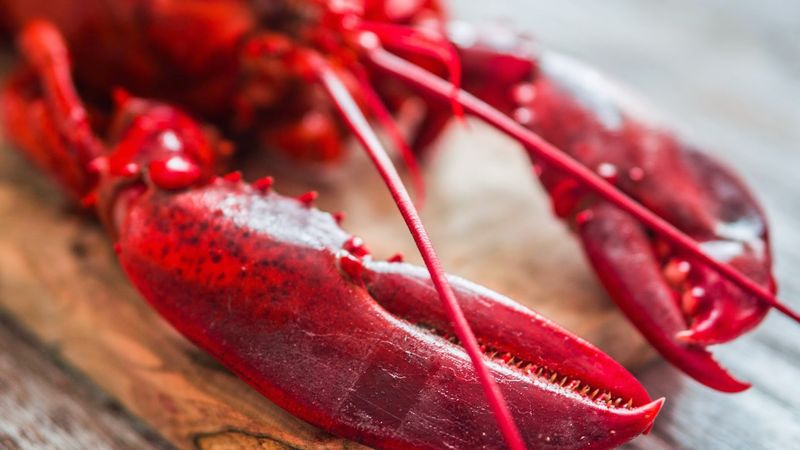
Few things are more synonymous with Maine than lobster, and the numbers behind the industry are genuinely staggering. Maine consistently lands more lobster than any other state in the U.S., typically harvesting over 100 million pounds per year.
The industry generates hundreds of millions of dollars annually and supports thousands of fishing families along the coast.
Maine lobstermen follow a carefully managed system of rules designed to protect the population long-term. Undersized lobsters must be returned to the water, as must egg-bearing females, which are notched to identify them as breeders.
This conservation-minded approach has helped Maine maintain a thriving lobster fishery even as other fishing industries around the world have struggled with overharvesting.
Eating a fresh lobster roll at a roadside shack in a town like Rockland, Boothbay Harbor, or Stonington is a rite of passage for anyone visiting Maine.
The Maine Lobster Festival in Rockland each August draws tens of thousands of visitors and celebrates the fishing culture that has defined coastal life here for centuries.
Whether you prefer yours with butter or mayo, one thing is certain: Maine lobster has earned every bit of its legendary reputation.
7. Maine Has A Smaller Population Than Many Major Cities
Maine covers about 35,380 square miles, making it the largest state in New England by a significant margin. Yet despite all that land, the entire state has a population of just around 1.4 million people.
To put that in perspective, the city of San Diego, California, has a larger population than the entire state of Maine.
Cities like Philadelphia, Phoenix, and San Antonio all hold more residents than Maine’s total headcount. Even some individual neighborhoods in New York City contain populations that rival Maine’s smaller counties.
This makes Maine one of the least densely populated states east of the Mississippi River, a fact that surprises most people who assume the Northeast is uniformly crowded.
For travelers, that low population density is actually a massive draw. Maine’s roads outside of Portland and Bangor are refreshingly uncrowded.
Trails in Acadia and Baxter State Park feel genuinely peaceful compared to similar parks in more populated states. Small towns like Castine, Blue Hill, and Rangeley retain an unhurried pace of life that feels increasingly rare in modern America.
If breathing room is what you are after, Maine delivers it in abundance.
8. One County Is Bigger Than Two States Combined
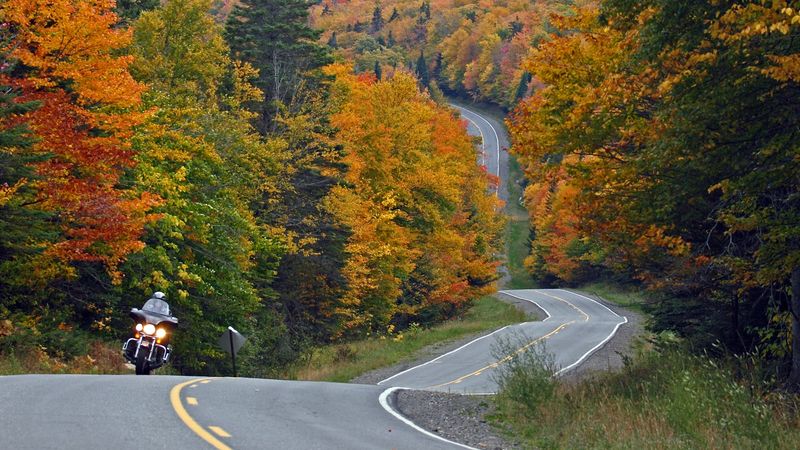
Aroostook County in northern Maine is so large that it genuinely defies expectation. Covering approximately 6,829 square miles, Aroostook is nearly as large as the states of Connecticut and Rhode Island combined.
It is actually larger than several countries, including Luxembourg and Cyprus, and it holds the distinction of being the largest county east of the Mississippi River.
Despite its enormous size, Aroostook County has a population of only around 67,000 people, spread across small agricultural towns, dense forests, and wide-open farmland.
The county is often called simply “The County” by Mainers, a nickname that captures both its scale and its singular identity within the state.
Potato farming is the cornerstone of life in Aroostook, and the county produces a huge portion of Maine’s potato crop.
During harvest season in the fall, local schools have historically given students time off to help bring in the potato harvest, a tradition that speaks to how deeply agriculture is woven into daily life here.
The landscapes are dramatic in their own quiet way: rolling fields, birch forests, and skies that seem wider than anywhere else in New England. Aroostook rewards the curious traveler who ventures off the beaten path.
9. Blueberry Pie Is The Official State Dessert

Every state has its quirks, and Maine’s decision to crown blueberry pie as its official state dessert is one of the most delicious official designations in American government.
The honor was made official in 2011, and it reflects just how central wild blueberries are to Maine’s agricultural identity and culinary culture.
Maine wild blueberries are smaller and more intensely flavored than the cultivated variety found in most grocery stores.
That concentrated flavor makes them exceptional in baked goods, and a properly made Maine wild blueberry pie, with a flaky butter crust and a filling that balances sweet and tart, is a genuinely transcendent experience for anyone who loves fruit desserts.
Bakeries, diners, and farm stands throughout the state take blueberry pie seriously, and regional competitions over who makes the best version are a beloved local tradition.
The town of Machias in Washington County hosts the Wild Blueberry Festival each August, where pie is very much the star of the show.
If you find yourself in Maine during summer or early fall, tracking down a fresh slice of wild blueberry pie is not optional. Consider it mandatory research into what makes this state so wonderfully itself.
10. Maine Produces Nearly All U.S. Wild Blueberries
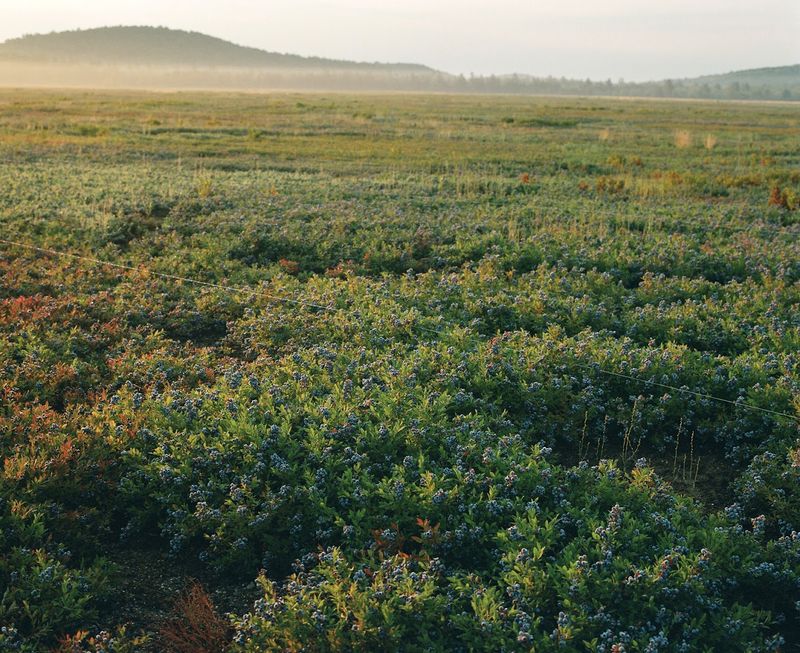
Wild blueberries are not something you can grow just anywhere, and Maine has cornered the market in a way that is hard to overstate.
The state produces approximately 99 percent of all wild blueberries harvested in the United States, with Washington County in Downeast Maine serving as the epicenter of this extraordinary agricultural output.
Unlike cultivated blueberries that grow on tall bushes, wild blueberries grow on low-lying plants that spread naturally across barrens and open fields. They have been part of the Maine landscape for thousands of years and were a staple food for the Wabanaki people long before European settlers arrived.
The harvest season typically runs from late July through August, and the fields turn a spectacular red and orange in autumn after the berries are picked.
The wild blueberry industry in Maine is worth hundreds of millions of dollars annually and supports a network of farms, processing facilities, and seasonal workers across the state. You can find Maine wild blueberries frozen in grocery stores year-round, which is actually the best way to preserve their flavor.
But nothing compares to eating them fresh from a roadside stand in Downeast Maine during peak harvest season, still warm from the summer sun.
11. Maine Passed One Of The First Prohibition Laws
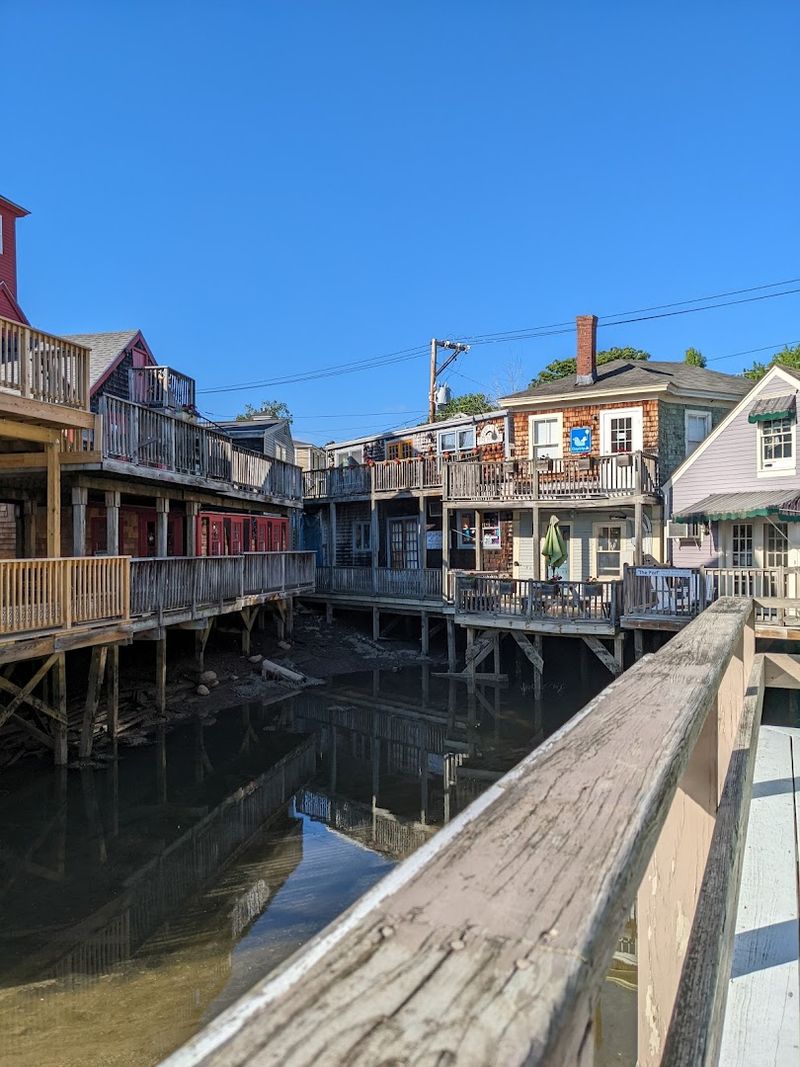
Long before the national Prohibition era of the 1920s, Maine was already making bold legislative moves around the issue of temperance. In 1851, Maine passed what became known as the Maine Law, one of the earliest statewide prohibition statutes in American history.
The law banned the manufacture and sale of certain beverages and inspired similar legislation in more than a dozen other states within just a few years.
The driving force behind the Maine Law was Portland mayor Neal Dow, a passionate temperance advocate who believed that restricting access to certain products would reduce poverty and improve public health.
His efforts earned him the nickname “Father of Prohibition” and made Maine a nationally recognized leader in the temperance movement decades before it became a federal issue.
Maine’s prohibition law was eventually repealed and reinstated multiple times throughout the 19th century, reflecting ongoing tension between reformers and those who opposed government regulation of personal choices.
The story is a fascinating window into Maine’s history as a state that has never been afraid to take a strong public stance on social issues.
That independent, sometimes contrarian spirit remains a recognizable thread in Maine’s character even today.
12. Maine’s State Fossil Is Nearly 400 Million Years Old
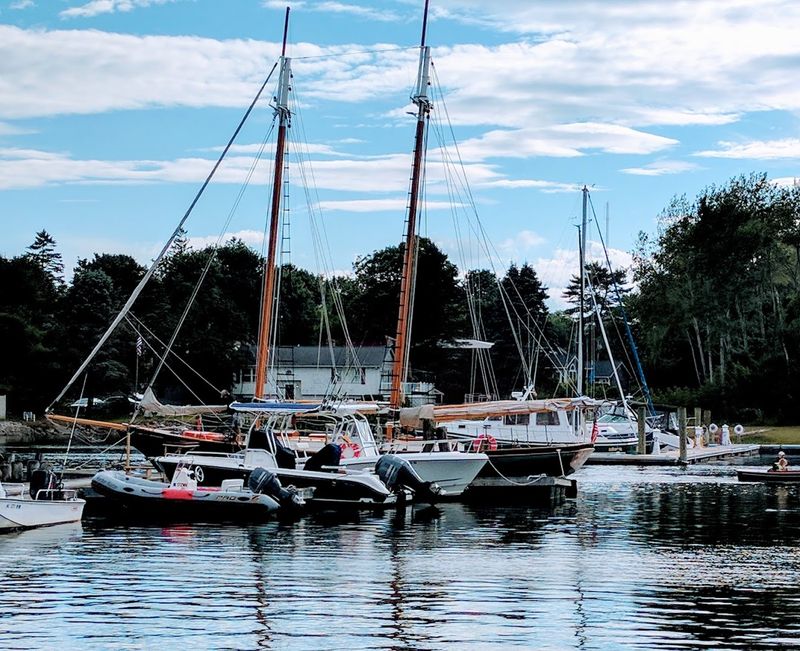
Maine’s official state fossil is Pertica quadrifaria, an ancient plant that lived approximately 390 to 400 million years ago during the Devonian period.
Fossils of this species were first discovered in Aroostook County, and the plant represents an early example of complex land vegetation from the Devonian period. Maine designated it the state fossil in 1985.
Pertica quadrifaria looked nothing like any plant alive today. It was a primitive vascular plant that stood only a few feet tall, with no leaves as we know them, just branching stems that captured sunlight in an entirely different way than modern plants do.
Its discovery gave scientists important clues about how plant life first colonized land environments hundreds of millions of years ago.
The fact that Maine’s state fossil is a plant rather than a dinosaur or a sea creature sets it apart from most other states and reflects the genuine scientific significance of the fossils found here.
The Maine State Museum in Augusta has information and exhibits that help visitors understand Maine’s deep geological history.
For anyone fascinated by prehistoric life, Maine offers a surprisingly rich story that stretches back far beyond the lobster boats and lighthouse postcards that dominate the tourism brochures.