
12 Tennessee Stories Behind The Places That Made This State Famous
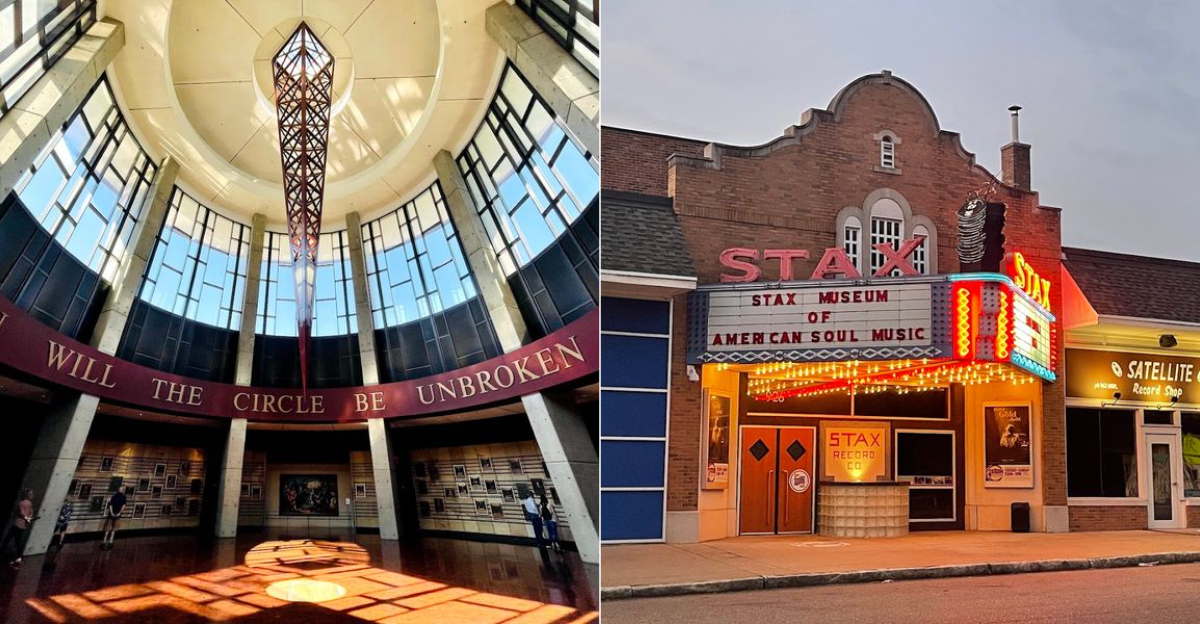
Tennessee didn’t just make history. It gave America a soundtrack.
From the first guitar notes echoing through legendary studios to moments that changed the nation’s story forever, this state has a habit of leaving a bigger mark than its size suggests.
It’s where voices found an audience, where movements found momentum, and where ordinary buildings became places people travel thousands of miles to experience. But the best stories aren’t always written on plaques outside the attractions.
They’re hidden in the unexpected details. The late-night recording sessions, the bold decisions, the people who refused to be forgotten, and the moments that changed everything.
These Tennessee landmarks are more than stops on a map.
They’re pieces of the story that helped shape American music, culture, and identity.
1. Ryman Auditorium
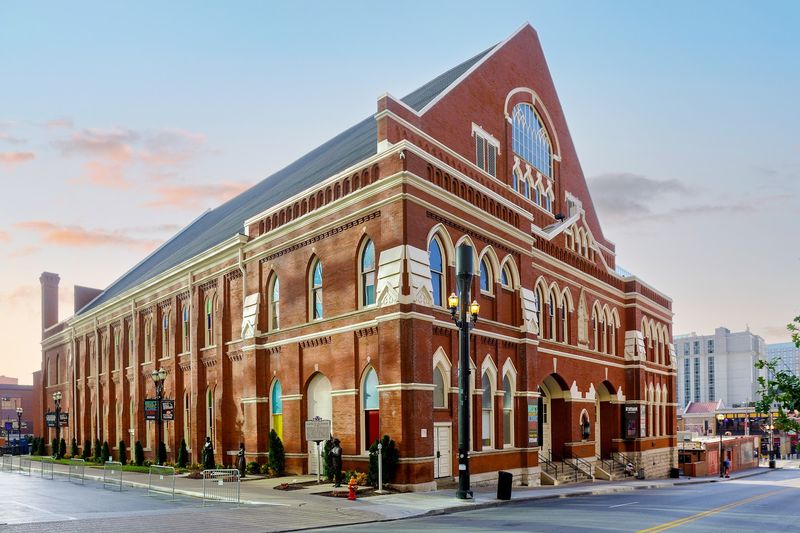
Walk through the doors of Ryman Auditorium and you can almost hear the ghost of Hank Williams still warming up backstage.
Located at 116 Rep. John Lewis Way North, Nashville, this building started life as a place of worship, not entertainment.
Captain Thomas Ryman built it in 1885 as the Union Gospel Tabernacle after attending a revival that changed his life.
The transformation from church to concert hall happened gradually, and beautifully. By 1943, it became the permanent home of the Grand Ole Opry.
Legends like Patsy Cline, Johnny Cash, and Dolly Parton graced its stage over the following decades.
The wooden pews are still there. Audiences sit exactly where revival crowds once sat, which gives the whole experience a deeply layered feeling.
People call it the Carnegie Hall of the South, and honestly, that title is earned. The acoustics are extraordinary, shaped by high ceilings and decades of musical history soaked into every wall.
If country music has a heartbeat, it started right here on this stage.
2. Graceland
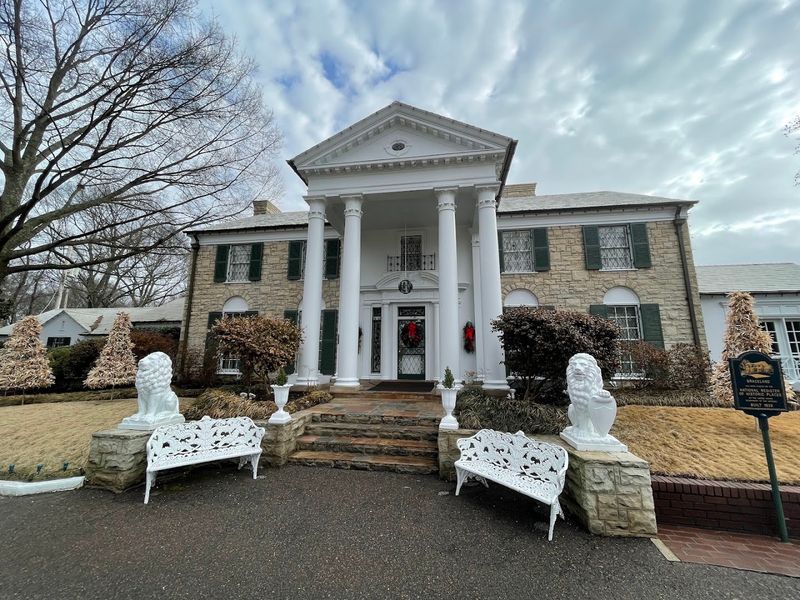
There is something almost surreal about standing at the gates of Graceland, knowing that Elvis Presley once lived, laughed, and made history behind those walls.
Sitting at 3764 Elvis Presley Boulevard, Memphis, this two-story Colonial Revival home was built in 1939 and purchased by Elvis in 1957 for around $103,000.
That number feels almost impossible today.
Elvis named nothing about the property. The house was already called Graceland, named after the original owner’s aunt, Grace Toof.
He simply moved in, added his personality, and turned it into a cultural landmark that draws over 600,000 visitors every single year.
The estate is a time capsule of the most fascinating kind. The Jungle Room, with its green shag carpet and waterfall furniture, tells you everything about Elvis’s bold taste.
His private planes, his costumes, his gold records are all here.
After his passing in 1977, the property opened to the public in 1982, and it has never stopped buzzing with energy. Graceland is not just a museum.
It is proof that one person’s passion can outlive everything.
3. Sun Studio
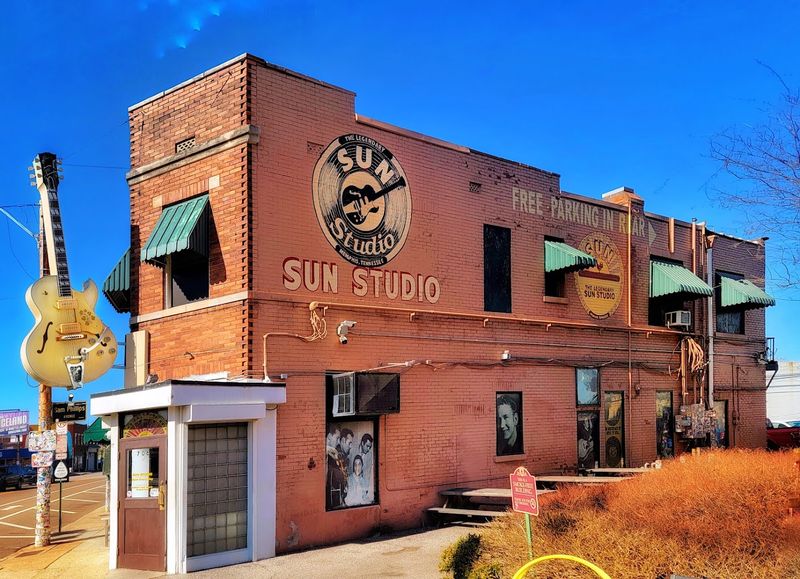
Some buildings hold history. Sun Studio created it.
Tucked at 706 Union Avenue, Memphis, this unassuming brick building is where Sam Phillips opened Memphis Recording Service in 1950, which he later rebranded as Sun Records in 1952.
What happened inside those walls changed music forever.
The first rock and roll song is widely credited to a recording made right here. Jackie Brenston and his Delta Cats laid down Rocket 88 in 1951, and the world was never quite the same.
Then a teenager named Elvis Presley walked in to record a birthday gift for his mother, and the rest became the stuff of legend.
The most magical moment in studio history might be December 4, 1956, when Elvis, Jerry Lee Lewis, Carl Perkins, and Johnny Cash ended up jamming together spontaneously. Journalists called it the Million Dollar Quartet, and no one planned a single note of it.
Roy Orbison also recorded here, cementing Sun Studio as a launching pad for genre-defining talent. The original microphone still hangs in the center of the room.
You can stand beneath it and feel the electricity that never left.
4. National Civil Rights Museum
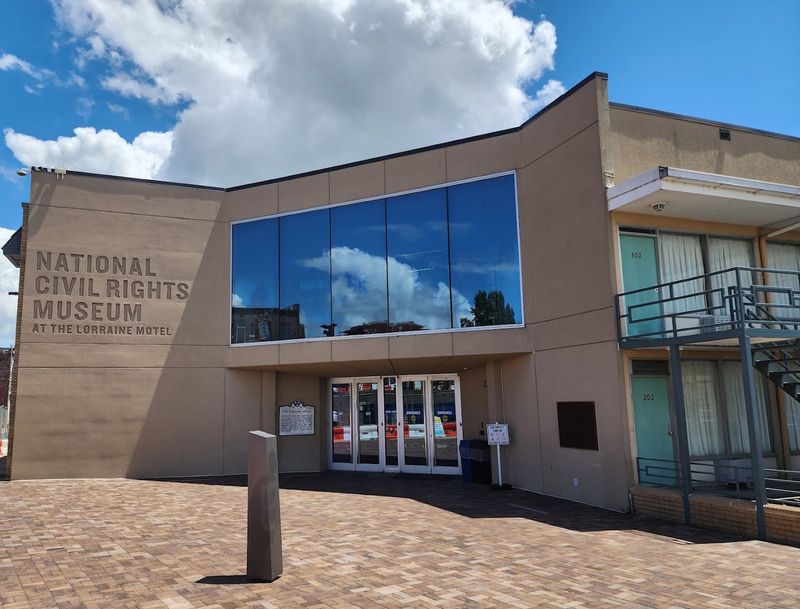
Standing outside the National Civil Rights Museum feels like stepping into a chapter of history that still matters deeply today.
Built around the former Lorraine Motel at 450 Mulberry Street, Memphis, this museum traces the entire arc of the American civil rights movement with honesty and purpose.
The exhibits pull no punches. Visitors move through recreations of the Montgomery Bus Boycott of 1955, the student sit-ins of 1960, and the freedom rides of 1961.
Each display is designed to make history feel immediate, not distant. Room 306, where Dr. Martin Luther King Jr. stayed, is preserved exactly as it was.
The museum also features a replica of Rosa Parks’ bus, a replica sanitation truck honoring the Memphis sanitation workers’ strike, and thousands of artifacts that bring these pivotal moments to life. What makes this place extraordinary is that it does not just document history.
It asks visitors to carry something forward. The building itself, with its preserved motel facade and vintage cars parked outside, is a powerful visual statement before you even walk through the door.
This museum earns its place on every serious traveler’s list.
5. Grand Ole Opry House
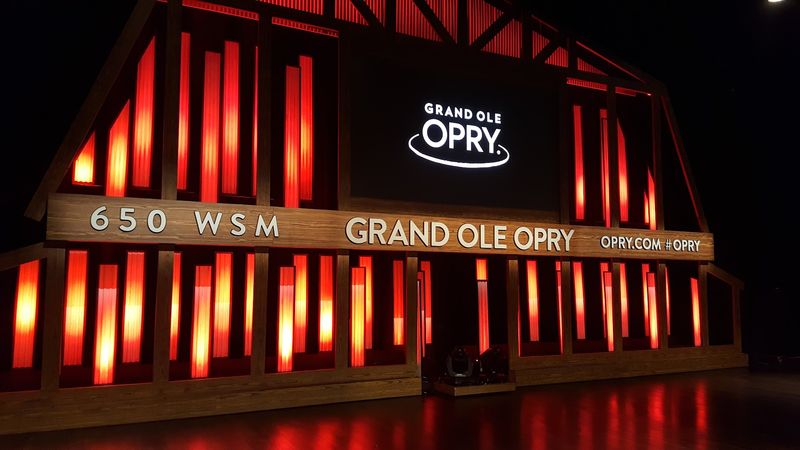
The Grand Ole Opry is the longest-running live radio program in American history, and that is not a small thing.
Now housed at 600 Opry Mills Drive, Nashville, the Grand Ole Opry House has been the official home of this legendary show since 1974. But the story started much earlier, in a radio studio in 1925.
Back then, it was called the WSM Barn Dance. By 1927, it had been renamed the Grand Ole Opry, partly as a cheeky contrast to a classical music program that aired just before it.
The name stuck, and so did the show. For nearly three decades, the Ryman Auditorium hosted the broadcast before this purpose-built venue took over.
Here is the detail that gives you chills: a circle of wood from the original Ryman stage was cut out and embedded into the new Opry House stage.
Every performer who stands in that circle is literally standing where country music history was made. President Richard Nixon attended the very first performance at this location in 1974, which tells you everything about how significant the moment felt.
The Opry is not just a show. It is a living tradition.
6. Country Music Hall Of Fame And Museum
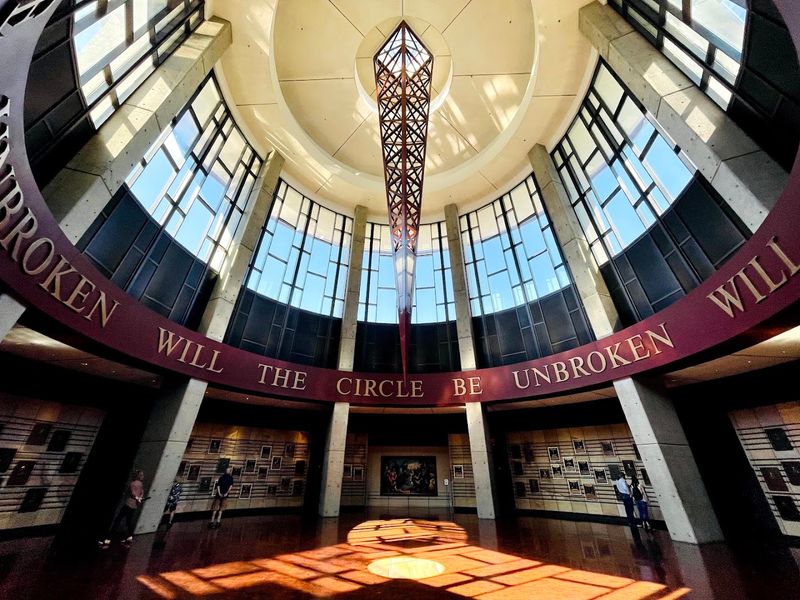
If country music were a religion, the Country Music Hall of Fame and Museum would be its cathedral. Located at 222 Rep.
John Lewis Way South, Nashville, this is one of the largest music museums in the entire world. The building itself is architectural brilliance, designed to look like piano keys and a broadcast tower from above.
Inside, the permanent exhibition called Sing Me Back Home takes visitors on a journey through country music’s full evolution.
From pre-commercial roots to modern chart-toppers, every era gets its moment. Artifacts like Mother Maybelle Carter’s iconic Gibson L-5 guitar and handwritten lyrics to Me and Bobby McGee sit behind glass, telling stories without saying a word.
The Hall of Fame Rotunda is where it gets emotional. Bronze plaques honor inductees in a circular room that feels sacred and celebratory at the same time.
The museum also connects to Historic RCA Studio B, where countless country legends recorded their biggest hits.
Rotating exhibits keep things fresh for repeat visitors, covering everything from specific artists to regional sounds. This is not just a museum for country fans.
It is a museum for anyone who believes music shapes culture.
7. Stax Museum Of American Soul Music
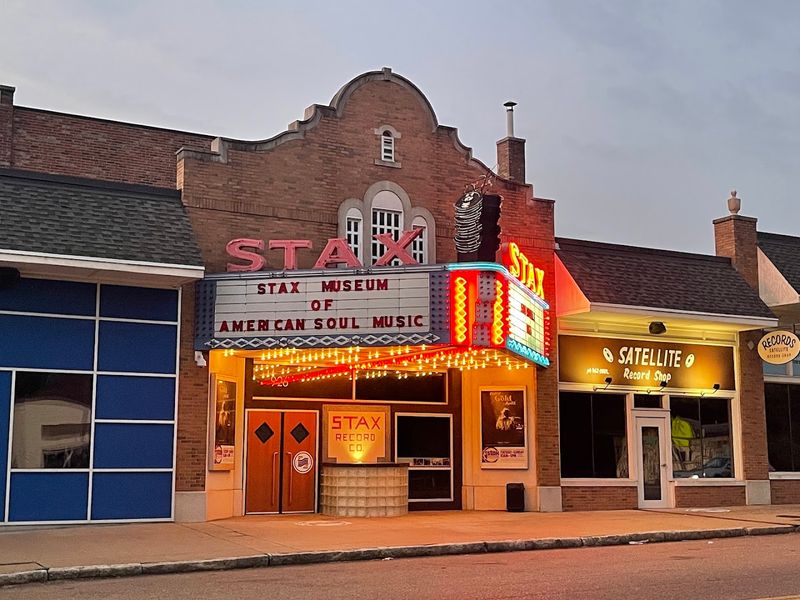
Soul music did not just happen. It was built, note by note, at a record label in South Memphis that refused to let barriers get in the way of great sound.
The Stax Museum of American Soul Music stands at 926 East McLemore Avenue, Memphis, right on the original site of Stax Records, which operated from 1960 to 1974.
What made Stax extraordinary was not just the music. It was the people making it.
At a time when the country was deeply divided, Black and white artists worked side by side in that studio, creating something bigger than any one of them.
Otis Redding was discovered here in 1962 during an impromptu audition that was never even planned.
Inside the museum, Isaac Hayes’ gold-trimmed 1972 Cadillac Eldorado stops everyone in their tracks.
There is also a reconstructed circa-1906 Mississippi Delta church inside the building, tracing gospel’s roots in soul.
The recreation of Studio A lets visitors feel the intimacy of where Booker T. and the M.G.’s, Sam and Dave, and the Staple Singers made magic. Stax did not just record music.
It proved that creativity is the most powerful force in any room.
8. Dollywood
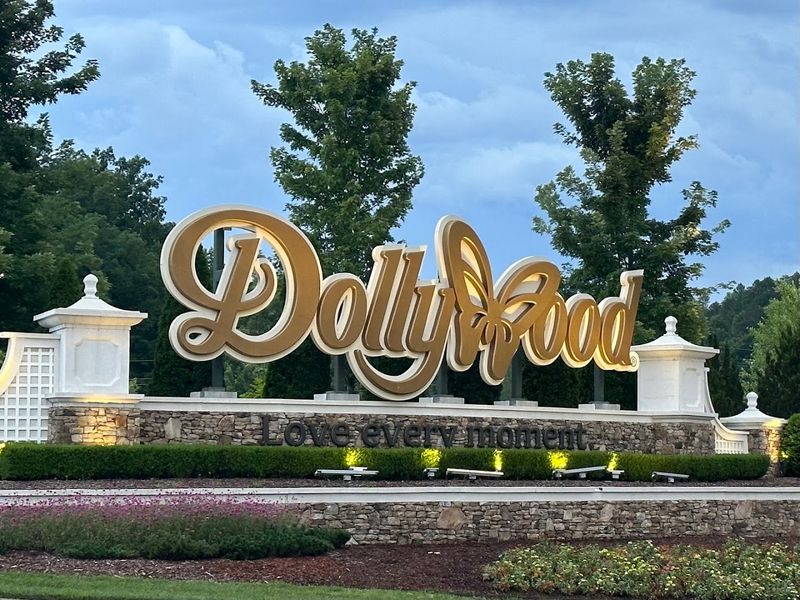
Dolly Parton once said she had to be rich to sing like she was poor, and Dollywood is the physical embodiment of that journey. Nestled at 2700 Dollywood Parks Boulevard, Pigeon Forge, this beloved theme park sits right at the foot of the Great Smoky Mountains.
It is equal parts thrill park, cultural celebration, and love letter to Appalachia.
The land has a longer history than most people realize. It started as Rebel Railroad in 1961, became Goldrush Junction in 1970, and was later known as Silver Dollar City.
In 1986, Dolly Parton partnered with the Herschend family to take over and rename the park, pouring her personality and pride into every corner of it.
The Robert F. Thomas Chapel inside the park is named for the doctor who delivered Dolly herself, which is the kind of personal touch that makes this place feel genuinely warm.
The grist mill produces real cornmeal, and the cinnamon bread baked fresh there has become legendary in its own right.
Dollywood hosts world-class festivals throughout the year and features some of the most celebrated roller coasters in the South. It is a place that manages to feel both thrilling and deeply personal at the same time.
9. Bristol Motor Speedway
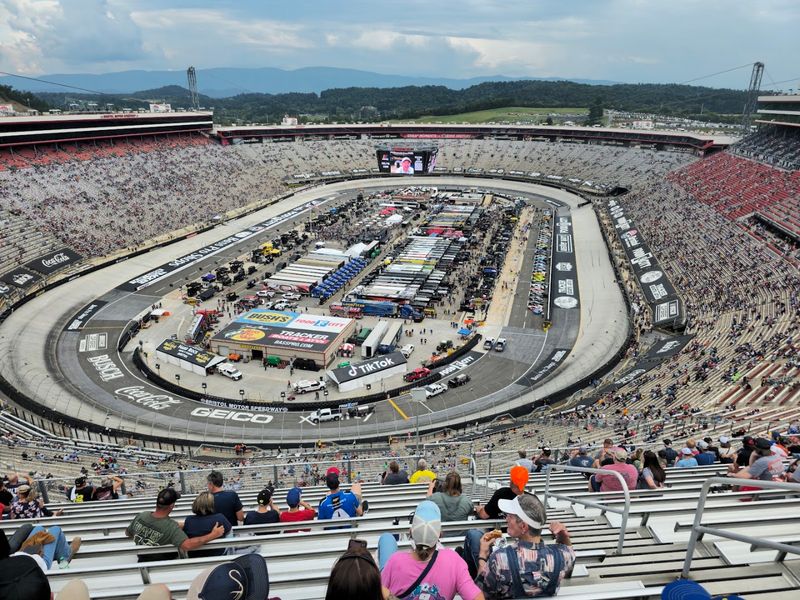
Bristol Motor Speedway does not ease you in gently. From the moment you see those steep concrete banks looming over you, you understand why they call it the Last Great Colosseum.
Located at 151 Speedway Boulevard, Bristol, this half-mile oval has been hosting high-octane NASCAR action since 1961, when Jack Smith won the very first Cup Series race held here.
The track’s steep 28-degree banking makes passing nearly impossible and contact almost inevitable. That tension is exactly what makes Bristol one of the most electric venues in all of motorsports.
Fans pack into the grandstands and create a noise level that has been compared to standing inside a jet engine.
Kyle Busch achieved something no other driver has ever done here, sweeping all three major NASCAR races in a single weekend. He did it not once but twice, in 2010 and 2017, cementing Bristol as the proving ground for true racing greatness.
The track is also famous for producing moments that become instant NASCAR folklore, the kind of racing drama that gets replayed on highlight reels for decades.
Bristol is not just a racetrack. It is a pressure cooker where legends are either made or humbled, and the crowd absolutely loves every second of it.
10. Ruby Falls
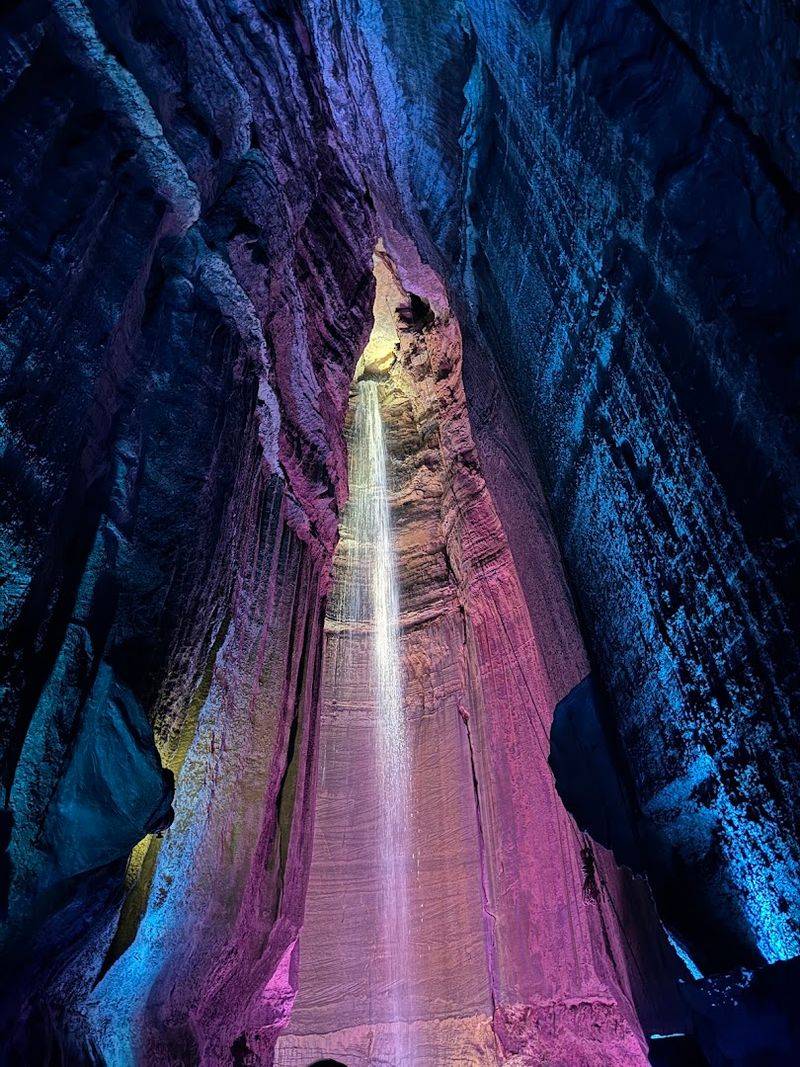
Somewhere deep inside Lookout Mountain, 1,120 feet below the surface, a waterfall has been falling for longer than anyone can fully comprehend.
Ruby Falls sits at 1720 South Scenic Highway, Chattanooga, and holds the remarkable distinction of being America’s deepest commercial cave and its largest underground waterfall open to the public.
The falls drop 145 feet in a dramatic cascade that is lit with colorful lights, turning the entire cavern into something that feels more like a dream than a geological formation.
The story of its discovery is equally captivating. In 1928, a man named Leo Lambert was drilling an elevator shaft to reopen the historic Lookout Mountain Cave when his team broke through into an undiscovered passage.
After crawling through narrow tunnels for hours, Lambert and a small group reached the waterfall. He named it Ruby Falls after his wife, Ruby.
The attraction opened to the public in 1930 and became so trusted as a secure underground space that it was designated a Civil Defense fallout shelter in the 1960s.
The cave stays at a constant temperature year-round, making it a refreshing escape in summer and a cozy wonder in winter. Ruby Falls is one of those places that reminds you the Earth still has surprises left to offer.
11. The Lost Sea Adventure
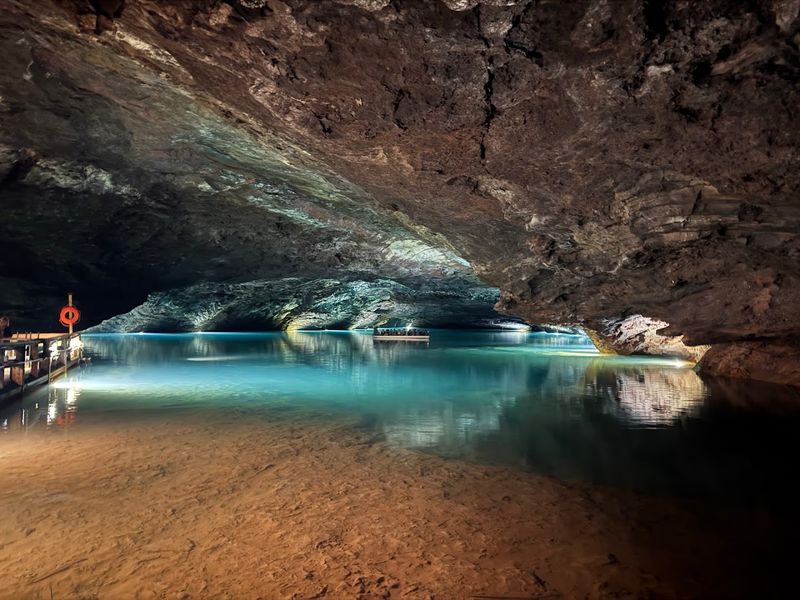
Somewhere beneath the rolling hills of East Tennessee, there is a lake so large it has never been fully mapped.
The Lost Sea Adventure at 140 Lost Sea Road, Sweetwater, sits within Craighead Caverns, a cave system with a history that stretches back centuries. Cherokee communities used these caves long before European settlers arrived, and Confederate forces mined them during the Civil War for saltpeter.
The lake itself has a story tied to a young boy named Ben Sands, who squeezed through a narrow opening in 1905 at age 13 and found himself standing at the edge of a massive underground lake.
Nobody believed him. Decades passed before explorers rediscovered it in the 1960s and confirmed what Ben had always known.
At 85 years old, Ben Sands took the very first boat tour on his lake.
Today, visitors ride glass-bottom boats across the glowing water, peering down at rainbow trout that have adapted to life underground.
Prehistoric jaguar tracks and bones found in the cave are so significant that some specimens ended up in the American Museum of Natural History.
The cave holds a steady temperature of 58 degrees Fahrenheit year-round. The Lost Sea is a place where geology, history, and pure wonder collide in the most unexpected way.
12. Great Smoky Mountains National Park
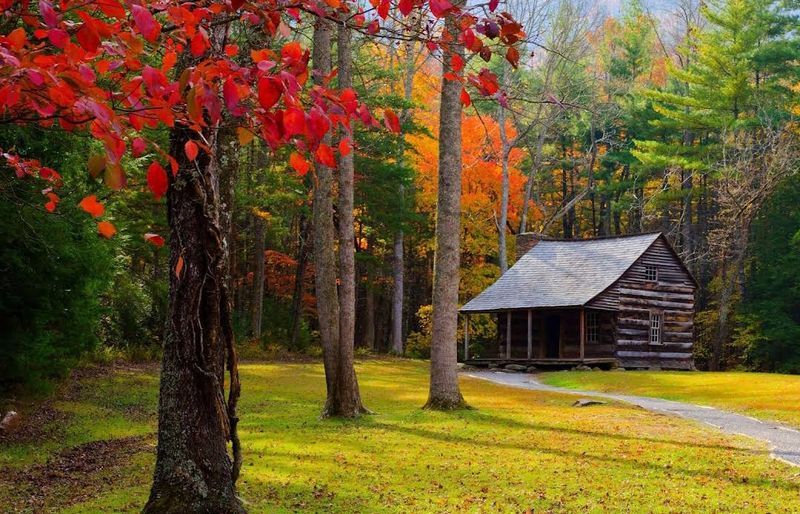
The Great Smoky Mountains do not just look ancient. They feel ancient, in the way that stops you mid-sentence and makes you forget what you were even going to say.
The Sugarlands Visitor Center at 1420 Fighting Creek Gap Road, Gatlinburg, serves as the gateway into one of the most visited national parks in the entire United States, welcoming millions of visitors every single year.
Creating this park was no small feat. Land had to be purchased from hundreds of farmers and timber companies, and the effort took years of political will and community sacrifice.
President Franklin Roosevelt formally dedicated the park in 1940, cementing its place in American conservation history. The Smokies are among the oldest mountains on Earth, and their biodiversity is staggering.
The legends woven into these hills add another layer entirely. Cades Cove carries whispered ghost stories.
The Greenbrier section supposedly hides a lost gold mine.
Cherokee oral traditions speak of mythical beings like Spearfinger and a hidden sacred lake called Atagahi, believed to have healing powers. Mysterious lights have been reported in Elkmont.
Whether you come for the wildlife, the waterfalls, the fall foliage, or the folklore, the Smokies deliver something that stays with you long after the mountain mist fades. Which of these stories are you most eager to experience in person?