
8 Texas Steakhouses That Keep It Old-School & 8 New Spots Taking Beef To The Next Level
In Texas, steak isn’t just dinner – it’s a way of life.
From dusty stockyard institutions where the grills have been sizzling since the 1940s to sleek newcomers experimenting with Wagyu flights and global flavors, the Lone Star State serves up beef like nowhere else on earth.
I’ve logged thousands of miles across Texas backroads and city skylines chasing the perfect cut, and what I’ve found is a tale of two traditions: the old guard, where simplicity and heritage rule, and the bold innovators, reimagining what a steakhouse can be.
Together, they prove that in Texas, the future of beef is every bit as exciting as its storied past.
1. Cattlemen’s Fort Worth Steak House: Where Cowboys Still Hang Their Hats
Walking into Cattlemen’s feels like stepping back to 1947. The worn wooden floors creak beneath my boots as I navigate past walls adorned with genuine cowboy memorabilia. Nothing fancy here – just honest cooking.
The menu hasn’t changed much in 75 years, and thank goodness for that! Their signature Heart O’ Texas Ribeye comes with that perfect charred crust that only decades-old grills can deliver. The seasoning is simple – salt, pepper, and a dash of something they’ll never reveal.
What I love most is spotting real ranchers at the bar, Stetsons placed carefully beside them, trading stories over rare steaks. In a state where new restaurants pop up daily, Cattlemen’s stubbornly refuses to change – and that’s exactly its charm.
2. Perini Ranch Steakhouse: The Ranch-To-Table Pioneer
Tucked away in Buffalo Gap (population: barely 400), Perini Ranch isn’t just a steakhouse – it’s a pilgrimage site for serious beef lovers. Tom Perini transformed his family’s working cattle ranch into this legendary spot back in 1983, and I still remember my first bite of his mesquite-grilled ribeye.
The converted barn dining room smells of smoke and sizzling beef. No white tablecloths here – just picnic tables under ceiling fans. Their pepper-crusted steaks arrive with glorious simplicity on metal plates, the way God intended Texas beef to be served.
President Bush was a regular, but celebrities get no special treatment. The James Beard Award-winning kitchen treats everyone equally – with extraordinary steaks and zero pretension. Their mail-order pepper rub remains my secret weapon at home.
3. Chamberlain’s Steak & Fish: Old-School Elegance Without The Stuffiness
My grandpa first took me to Chamberlain’s for my 16th birthday, and I’ve celebrated every promotion there since. Chef Richard Chamberlain opened this North Dallas institution in 1993, and while other steakhouses have come and gone, his remains the gold standard for classic steakhouse elegance.
The dimly lit dining room feels like a gentleman’s club without the exclusivity. Their bone-in ribeye arrives with that perfect caramelized crust that only comes from proper aging and high-heat cooking. The wine cellar boasts bottles that would make a Bordeaux collector weep.
What separates Chamberlain’s from corporate chains is the personal touch – Richard still works the room most nights, remembering regulars’ names and preferred doneness. The kitchen’s consistency over decades proves that sometimes, tradition trumps trends.
4. Al Biernat’s: Where Old Dallas Money Meets New Money Taste
The valet line at Al Biernat’s tells the whole story – Bentleys alongside pickup trucks. This Oak Lawn landmark has been serving the city’s power players since 1998, and I’ve closed more business deals here than anywhere else in Dallas.
The dining room buzzes with energy that feels both exclusive and welcoming. Their 30-day dry-aged prime ribeye arrives with a minerality that lesser steakhouses can’t touch. The tableside service – increasingly rare these days – reminds me why classic steakhouse rituals matter.
What keeps Al’s relevant isn’t just the perfect steaks but the balance between tradition and adaptation. They’ll remember if you prefer your Manhattan with rye instead of bourbon, yet they’ve subtly updated sides and appetizers to keep things fresh. The crowd spans three generations, proof that excellence transcends trends.
5. Pappas Bros. Steakhouse: Family Tradition Meets Fanatical Attention To Detail
The Pappas family doesn’t do anything halfway. Their flagship steakhouse, opened in 1995, represents the pinnacle of their restaurant empire. My father-in-law refuses to celebrate his birthday anywhere else, and after twenty years, I understand why.
The dry-aging room here is treated with the reverence of a temple. Their in-house butchers hand-cut every steak, and the kitchen’s obsession with temperature control borders on scientific. That bone-in New York strip arrives with a textbook medium-rare center that extends perfectly from edge to edge.
What impresses me most is how they’ve maintained standards while expanding to multiple locations. The sommelier program remains unmatched in Texas, with vertical tastings that make wine nerds swoon. In a state where bigger often claims to be better, Pappas proves that meticulous attention to detail actually is.
6. Dakota’s Steakhouse: The Underground Legend Returns
Dakota’s closure in 2020 broke my heart – this underground gem had been Dallas’ worst-kept secret since 1984. Then came the miracle reopening last year that had longtime fans (myself included) practically weeping with joy. The unique subterranean setting remains, accessible only by private elevator.
The new ownership wisely preserved the 36-foot waterfall and courtyard patio that made Dakota’s magical. Their wet-aged prime filet arrives with that distinctive char that comes from their 1,800-degree broiler. The tableside Caesar preparation – increasingly rare these days – continues the tradition of theatrical dining.
Dakota’s resurrection proves that some institutions deserve a second act. The refreshed menu honors classics while introducing subtle updates that never feel forced. In a city obsessed with the next hot thing, Dakota’s comeback reminds us why some places become legends in the first place.
7. Taste Of Texas: Where History Lessons Come With Your Ribeye
My first visit to Taste of Texas involved waiting two hours with out-of-town relatives. Twenty years later, the line still stretches out the door, but nobody complains – we all know it’s worth it. This Houston institution doubles as a Texas history museum, with glass cases displaying artifacts from the Republic era.
The salad bar remains gloriously old-school, and their famous “walk to the meat table” ritual lets you personally select your cut while learning about marbling from knowledgeable butchers. Their Certified Angus Beef steaks come from a carefully curated network of Texas ranchers who’ve supplied them for generations.
Families celebrate special occasions here because traditions matter. My kids now insist on having their picture taken beside the same bronze statue I posed with as a child. In a state that sometimes bulldozes its history, Taste of Texas serves heritage alongside perfectly cooked beef.
8. The Big Texan Steak Ranch: Where Route 66 Nostalgia Meets Eating Challenges
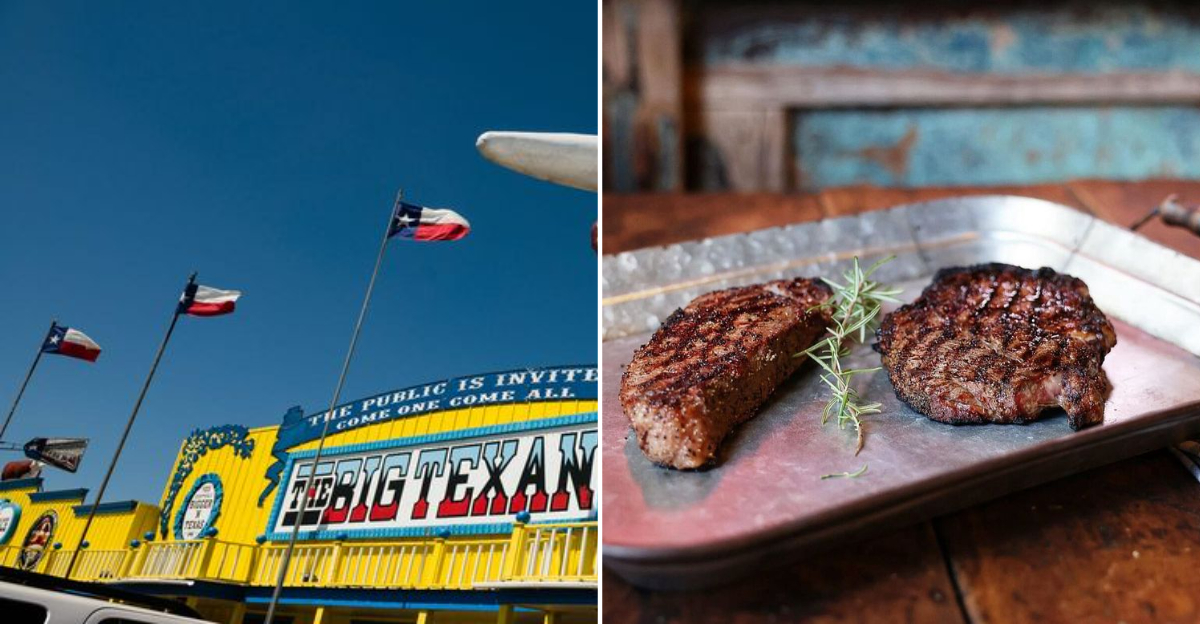
Sure, food snobs dismiss it as touristy, but I’ll defend The Big Texan until my dying day. This Amarillo landmark has been serving road-trippers along Route 66 since 1960, and their 72-ounce steak challenge has appeared on every food show imaginable.
The giant cowboy boots marking the entrance promise exactly what you’ll get – unapologetic Texas kitsch. Longhorn mounts watch from wood-paneled walls as servers in cowboy hats deliver massive steaks on sizzling platters. The gift shop sells everything from branded hot sauce to cowboy hats.
What critics miss is the genuine warmth beneath the spectacle. The Lee family still runs the place with pride, and their regular steaks (normal human-sized ones) are legitimately good Texas beef. I’ve brought foreign visitors here dozens of times, and they always leave with the exact Texas experience they hoped for.
9. Brass Ram: Chef John Tesar’s Mid-Century Meat Masterpiece
Chef Tesar has been called the most hated chef in Dallas, but I call him the beef whisperer. His newest venture, Brass Ram, opened last year in downtown Dallas and immediately changed the steakhouse game. The second-floor space channels 1960s executive dining rooms with a dash of Mad Men swagger.
Unlike traditional steakhouses that focus solely on prime cuts, Brass Ram celebrates the entire animal. Their beef cheek pastrami melts like butter, while the oxtail marmalade delivers concentrated bovine intensity. The dry-aging program pushes boundaries with 240-day experiments that develop flavor profiles I’ve never experienced elsewhere.
What makes this place revolutionary is how it honors tradition while completely reimagining it. The tableside prime rib cart feels nostalgic, but the meat itself – cooked using precision temperature control – delivers consistency impossible in the old days. Tesar proves that innovation and respect can coexist beautifully.
10. Brisket & Rice: Where Texas Meets Asia In Beefy Harmony
I stumbled upon Brisket & Rice during a rainstorm in Houston’s Asiatown and found shelter in what’s become my favorite culinary fusion experiment. Chef Quy Hoang combines his Vietnamese heritage with Texas barbecue techniques to create something entirely new.
The star attraction is their 44 Farms beef brisket, smoked Texas-style but served with Vietnamese fish sauce caramel and pickled papaya slaw. Their oxtail pho uses smoked bones for the broth, creating depth that traditional versions can’t match. The small dining room fills with fragrant smoke and excited conversation.
What makes this place special is its authenticity to both cultures rather than gimmicky fusion. Nothing feels forced or trendy – just genuinely delicious food created by someone with deep respect for both traditions. The crowds are equal parts barbecue aficionados and Asian food enthusiasts, all discovering new flavor combinations together.
11. Burnt Bean Co.: The Central Texas Smokehouse Redefining Beef Mastery
Driving two hours from Austin to Seguin for Burnt Bean Co. seemed excessive until that first bite of their smoked prime rib. Owners Ernest Servantes and David Kirkland opened this temple to smoke in 2020, and it’s already earned Texas Monthly’s coveted Top 10 BBQ ranking.
The counter-service setup feels casual, but make no mistake – this is serious beef artistry. Their prime brisket receives a complex rub before a 14-hour oak smoke bath, developing a black pepper bark that shatters between your teeth. The beef ribs – massive dinosaur bones – deliver intense marbling that renders into meat butter.
What separates Burnt Bean from other great smokehouses is their willingness to incorporate global influences. Their birria beef cheek tacos demonstrate how Mexican techniques can elevate Texas traditions. The line forms by 8 AM for their weekend specials, proof that innovation in Texas beef culture is alive and well.
12. Double Cut Steak House: Wagyu Wizardry In The Heart Of Houston
The first time I tried Japanese A5 Wagyu was at Double Cut, and I nearly wept at its buttery perfection. This newcomer to Houston’s restaurant scene has quickly established itself as the city’s premier destination for rare beef varieties from around the world.
The sleek interior with its glass-enclosed dry-aging room signals serious beef business. Their signature “flight of beef” lets you compare American, Australian and Japanese Wagyu side-by-side – a revelation in how terroir affects flavor. The tableside preparation of Wagyu nigiri, lightly torched and topped with truffle, creates a moment of pure luxury.
What impresses me most is how they balance innovation with respect for the product. Their aging experiments (some cuts aged 200+ days) push boundaries, but the cooking remains perfectly simple – letting exceptional beef speak for itself. The knowledgeable staff explains each cut’s origin with the reverence of sommeliers discussing grand cru wines.
13. Meridian: Oak Cliff’s Brazilian-Texan Beef Revolution
Chef Junior Borges has created something magical at Meridian – a restaurant that honors both his Brazilian heritage and his adopted Texas home. Located in Dallas’ trendy Oak Cliff neighborhood, this isn’t technically a steakhouse, but beef lovers should absolutely make the pilgrimage.
The open kitchen reveals chefs working over wood-fired grills, preparing cuts rarely seen elsewhere. Their picanha (sirloin cap) receives the traditional Brazilian salt crust before meeting Texas post oak smoke. The resulting steak arrives with chimichurri made from Texas herbs and Brazilian peppers – a perfect cross-cultural handshake.
What makes Meridian revolutionary is its celebration of lesser-known cuts. Their beef heart anticuchos convert even squeamish diners, while the bone marrow served with housemade manioc flour farofa creates textures I’ve never experienced elsewhere. In a state dominated by ribeyes and strips, Meridian proves that beef innovation comes from looking beyond borders.
14. Killen’s STQ: Where Steakhouse Precision Meets Barbecue Soul
Chef Ronnie Killen could have rested on his laurels after creating Texas’ most famous barbecue joint. Instead, he opened STQ in Houston, marrying steakhouse techniques with smoke in ways nobody had attempted before. My first visit left me speechless – and that rarely happens.
The intimate dining room feels like a sophisticated cabin, with cedar-lined walls absorbing the gentle smoke from the kitchen. Their wet-aged ribeye gets a quick mesquite smoke before finishing on cast iron, creating complexity that conventional broiling can’t match. The smoked beef belly burnt ends – essentially brisket transformed into meat candy – should be illegal.
What makes STQ revolutionary is its refusal to be categorized. Is it upscale barbecue? A smoky steakhouse? Who cares when it’s this delicious. Killen proves that Texas beef traditions can evolve without losing their soul. The wine list, focusing on bold reds that stand up to smoke, completes this thoroughly modern Texas experience.
15. J. Carver’s: The Supper Club Reinventing Dallas Dining
Hidden behind an unmarked door in Dallas’ Design District, J. Carver’s feels like a secret society for beef aficionados. Chef Julian Barsotti opened this modern supper club last year, and scoring a reservation has become the city’s ultimate status symbol. The old-world glamour hits immediately – dim lighting, leather banquettes, and the gentle tinkle of ice in vintage cocktail glasses.
The beef program defies categorization. Their signature 45-day dry-aged côte de boeuf for two arrives ceremoniously, sliced tableside and dressed with bone marrow butter. The carpaccio – hand-cut to translucent perfection – comes topped with black truffle and 36-month aged parmesan that’s microplaned before your eyes.
What makes J. Carver’s revolutionary isn’t just the exceptional beef but the entire experience. The throwback elegance feels both nostalgic and completely fresh. In an era of casual dining, Barsotti proves that formality can still feel exciting rather than stuffy.
16. Antico Nuovo: Italian Beef Mastery With Texas Heart
Chef Matt Balke’s Antico Nuovo in Houston’s Montrose neighborhood isn’t a steakhouse in the traditional sense, but it’s revolutionizing how Texans think about beef. This Italian-focused restaurant brings old-world meat traditions to the Lone Star State with spectacular results.
The bistecca alla Fiorentina – a massive porterhouse aged in-house and grilled over Texas oak – arrives with nothing but olive oil, sea salt, and lemon. The simplicity allows the exceptional beef to shine. Their carpaccio di manzo uses Texas wagyu sliced paper-thin and dressed with nothing but Sicilian olive oil, creating a silky texture that melts on contact.
What makes Antico Nuovo special is its respect for both Italian tradition and Texas product. The beef comes from small Texas ranches raising heritage breeds like Chianina, traditionally used in Tuscany. In a state where bigger often means better, Antico Nuovo proves that restraint and simplicity can create the most profound beef experiences.