
That Spiral Staircase Mystery In Santa Fe Has An Arizona Cousin Inside This Old Mission
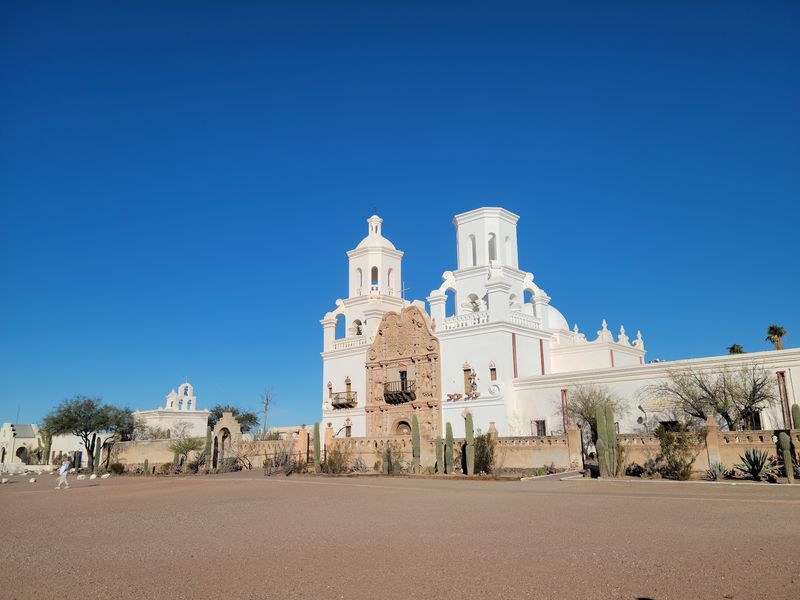
One bell tower wears a dome. The other one never got its cap, and it has stood that way since 1797.
That lopsided look has sparked stories for generations in Arizona. Some tales are dramatic, and some involve a clever tax dodge.
Historians lean toward a simpler answer about money running out.
I like how a missing dome can feel as puzzling as the famous floating staircase in Santa Fe. Both buildings leave you staring upward and wondering what really happened.
One sits in New Mexico, and the other sits in the Sonoran Desert.
Inside, the walls burst with color, carvings, and painted angels. Outside, fresh fry bread often waits near the parking lot.
I can’t imagine a better mix of mystery and snack. So which story do you believe about that tower?
A White Church That Glows Against The Desert Sky
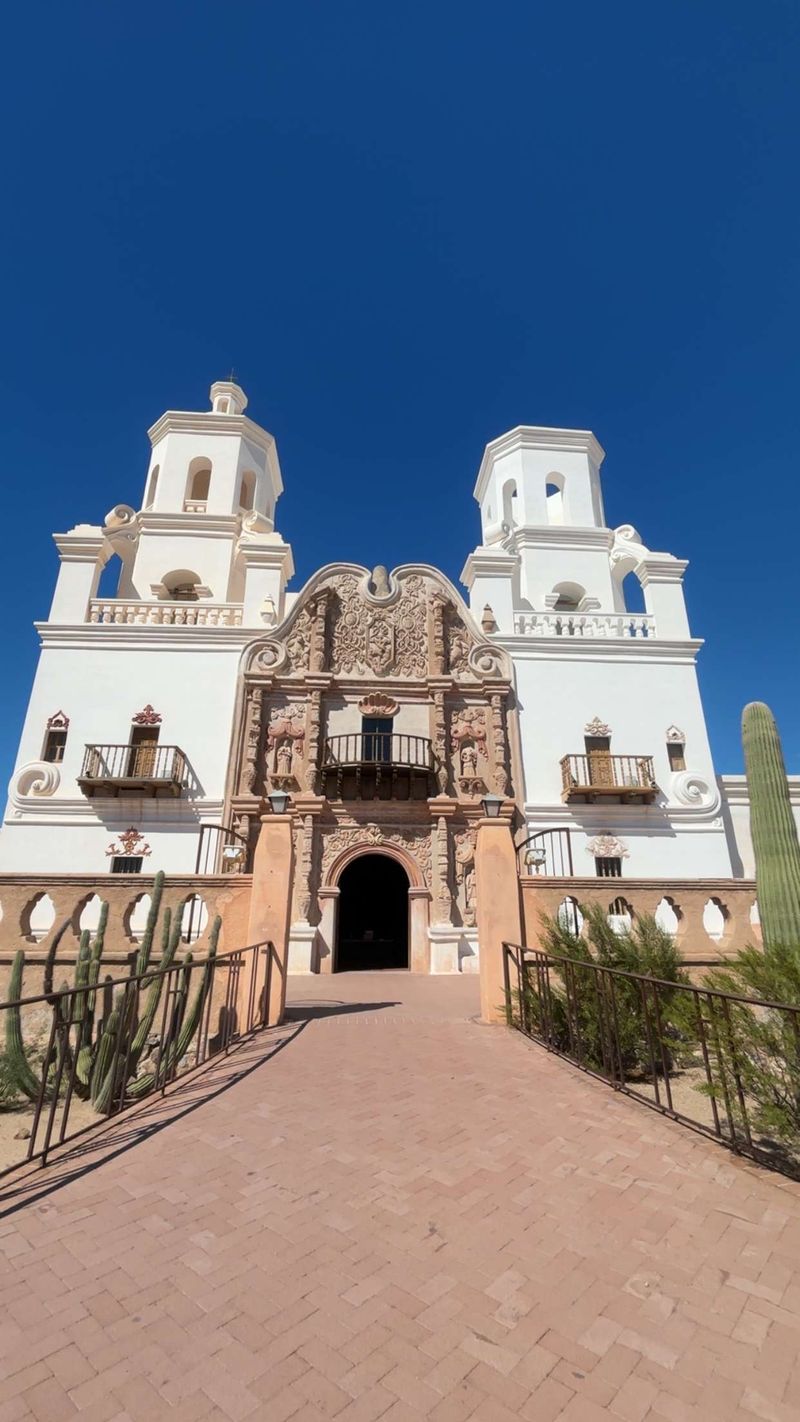
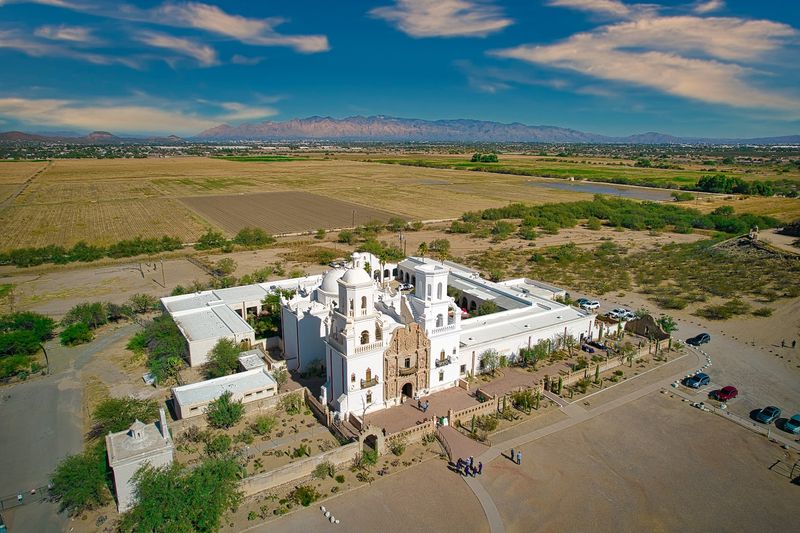
Bright white walls rise straight out of the desert floor about nine miles south of downtown Tucson. San Xavier del Bac Mission earned the nickname White Dove of the Desert, and one look explains why.
It’s a Catholic mission and still an active parish today. It’s also considered the oldest intact European structure in Arizona, which is a big title for one building.
The church stands on Tohono O’odham Nation land. Its story is woven tightly with the O’odham community it was built to serve.
Around 200,000 visitors arrive each year to see it. That’s a lot of people for a church at the edge of a city.
The style is Mexican Baroque with Mudéjar touches. In plain words, expect curves, ornament, and drama on a grand scale.
Many people call it one of the finest surviving examples of Spanish Colonial architecture in the country. The setting helps too, with open land and mountains around it.
Here’s the fun part for curious minds. The building carries a puzzle right on its front, and it’s been visible for over two centuries.
The mystery isn’t hidden in a basement or locked in an archive. It’s sitting in plain sight on top of the church.
Why Santa Fe Fans Should Pay Attention
Santa Fe’s Loretto Chapel is famous for its Miraculous Staircase. The helix-shaped stairs have no central support and were built with wooden pegs instead of nails.
Nobody knows for sure who the carpenter was. That gap in the record turned a staircase into a legend.
San Xavier del Bac Mission doesn’t have a matching spiral. What it has is a different kind of riddle, and it’s just as easy to spot.
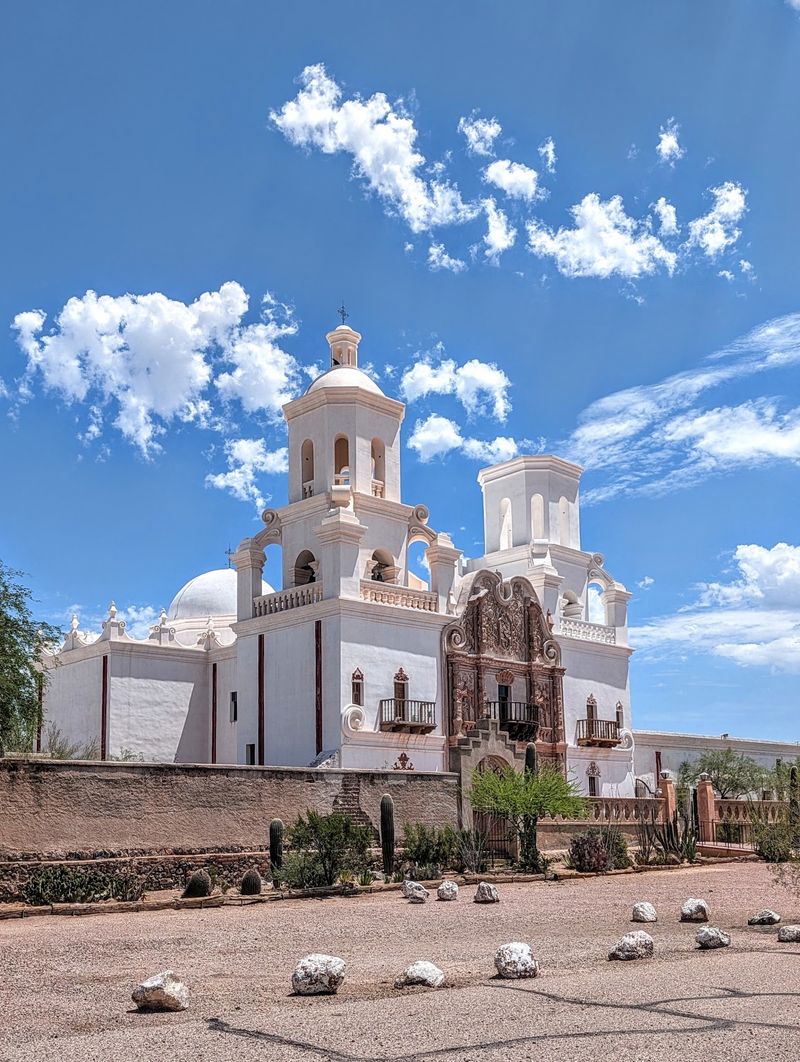
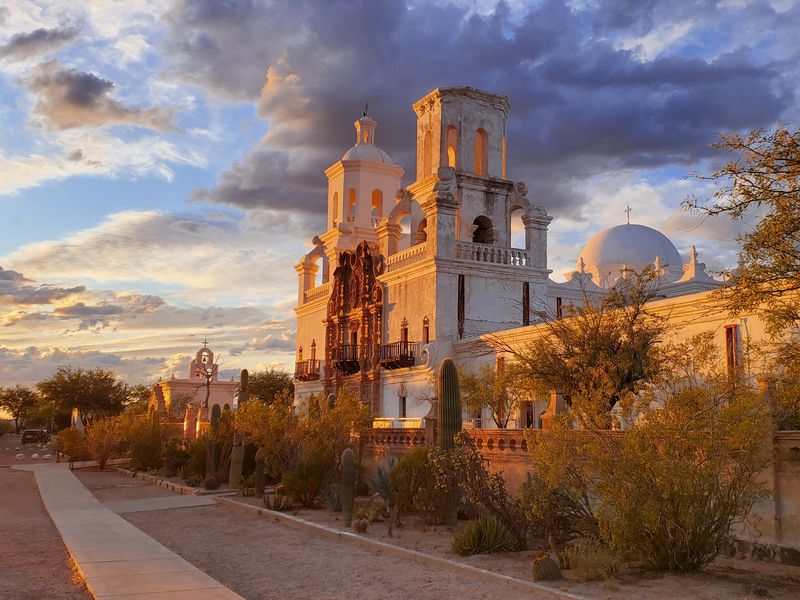
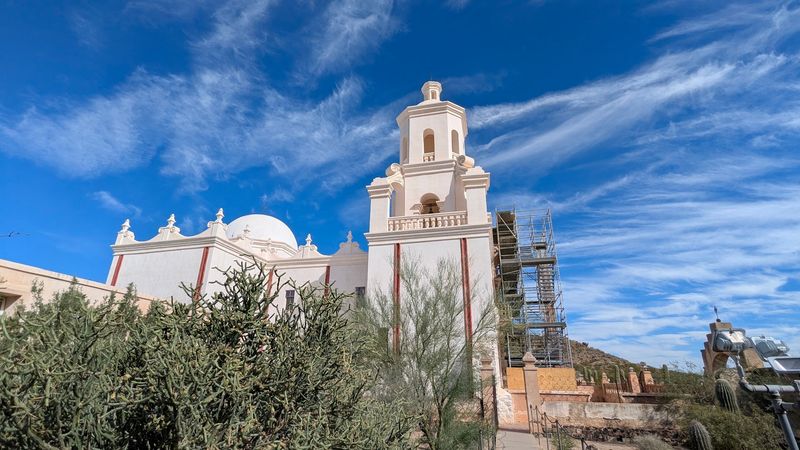
Look at the two bell towers. The west tower is finished with a dome, while the east tower stops short and stays bare.
It’s a striking bit of asymmetry on a building otherwise packed with balance and detail. Once you notice it, you can’t unsee it.
Both places share that same spark of wonder. A puzzle in plain view invites everyone to play detective for a minute.
So if the Santa Fe staircase ever made you raise an eyebrow, this Arizona cousin deserves a road trip. It offers fewer gravity questions and more construction ones.
Honestly, two unfinished stories in two neighboring states make a fun pair. One spirals, one stops, and both keep people talking.
Three Stories About One Missing Dome
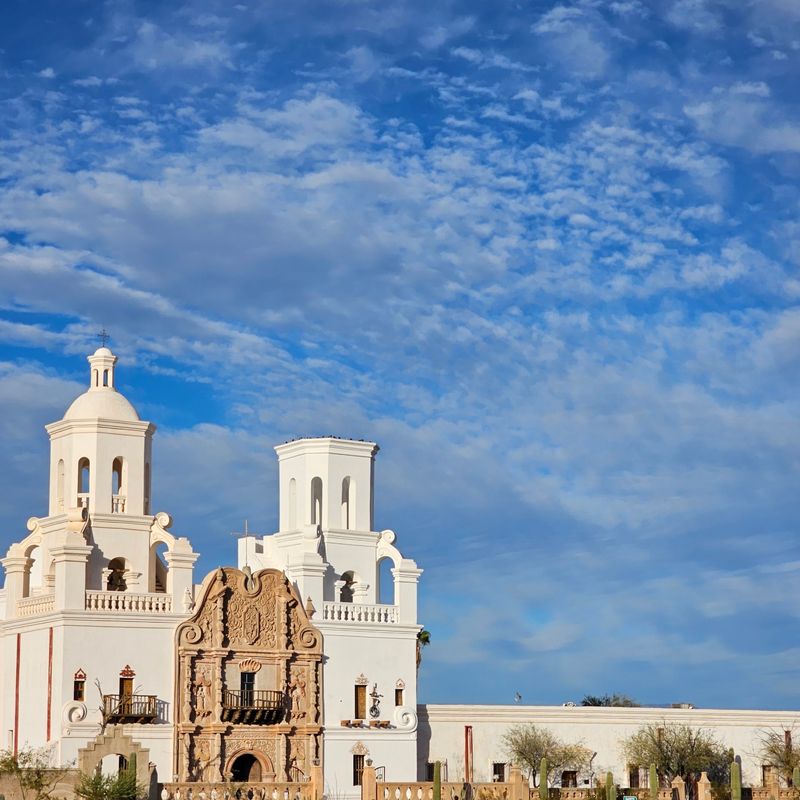
Local lore offers more than one explanation for the bare east tower. Some versions are sad, and some are surprisingly sneaky.
One tale says a worker fell during construction, and the tower was left alone afterward. It’s a somber story that has traveled for generations.
Another tale is pure paperwork drama. Supposedly, unfinished buildings were exempt from taxes owed to the King of Spain.
That one is fun to repeat at dinner. Still, a tax loophole makes for a better punchline than proof.
Historians generally point to the most practical answer. The builders simply ran out of funds in 1797, and construction stopped before the matching dome could go up.
Not exactly cinematic, right? Yet budgets have quietly shaped buildings everywhere for centuries.
Here’s a modern twist worth knowing. Recent preservation work on the east tower stabilized its exterior without adding a dome.
Preservationists chose to keep it true to its historically unfinished appearance. So the mystery stays exactly as the 1790s left it.
Which version wins in your book? The beauty here is that every visitor gets to look up and decide.
From A Kino Founding To A 1797 Finish Line
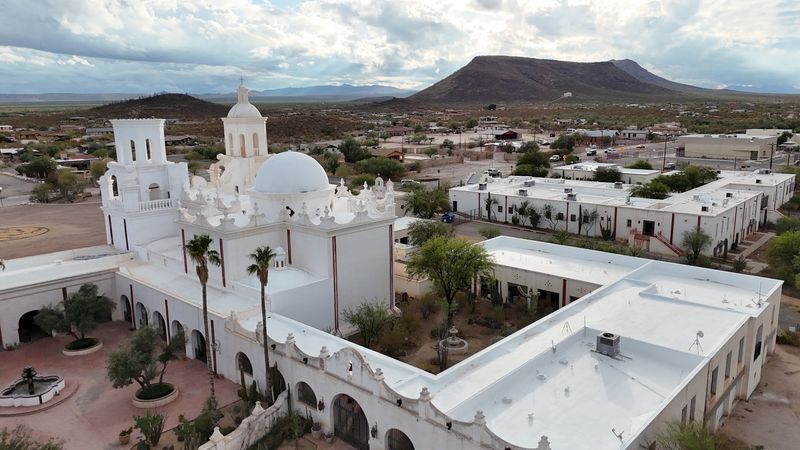
Father Eusebio Kino, a Jesuit missionary, founded the mission in 1692. He established it in an existing O’odham village.
The church you see today came later. Construction ran from 1783 to 1797, when Arizona was still part of New Spain.
That’s fourteen years of work with low-fire clay brick, stone, and lime mortar. The labor was largely O’odham, a fact that matters to the full story.
Missions like this were part of Spanish colonization. That history carries real pain for Indigenous communities, alongside the beauty in the walls.
Appreciating both truths together feels right here. The building is stunning, and its past is complicated.
The engineering also stands out. Thick walls, arches, and vaulted masonry roofing are rare among Spanish Colonial buildings in the United States.
Those choices helped the church last through more than two hundred desert summers. Not bad for materials pulled from the land around it.
Today it’s a National Historic Landmark. Even better, it still serves the community it was built for, which few buildings this old can claim.
Count The Angels If You Can
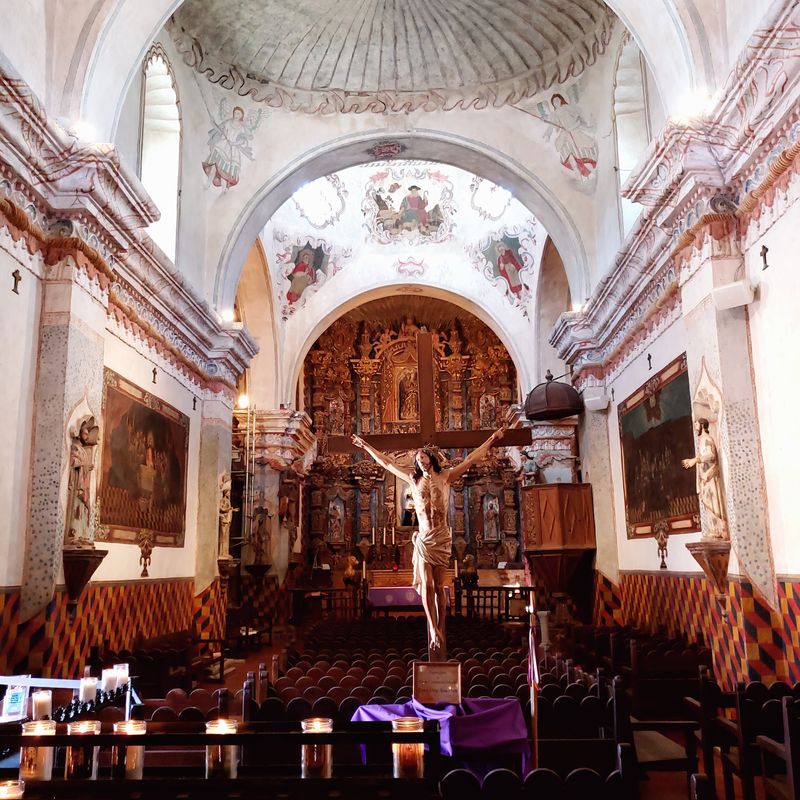
Step through the arched entrance, and the plain white exterior suddenly feels like a disguise. Inside, nearly every surface bursts with color.
Frescoes, murals, carvings, and religious statues fill the sanctuary. One count puts the number of angels at 183, which makes for a fun challenge.
Good luck finishing that tally before your neck gets tired. There’s simply too much to look at.
Painted faux doors and dramatic curtain motifs add an almost theatrical feel. Artists used these tricks to make walls look grander than they are.
The colossal altarpiece anchors the whole room. Carvings around the space tell biblical stories in late 18th-century style.
Hand-carved statues stand among the paintings. Photos and videos tend to shrink the effect, so seeing it in person makes a difference.
Remember that people come here to pray. Quiet voices and respectful attire fit the space, especially during services.
The calm mood actually helps. Sitting for a few minutes lets your eyes catch details you’d miss while hurrying past.
Bring patience instead of a checklist. This room rewards slow looking more than almost any building in Arizona.
A Short Climb With A Big Payoff On Grotto Hill
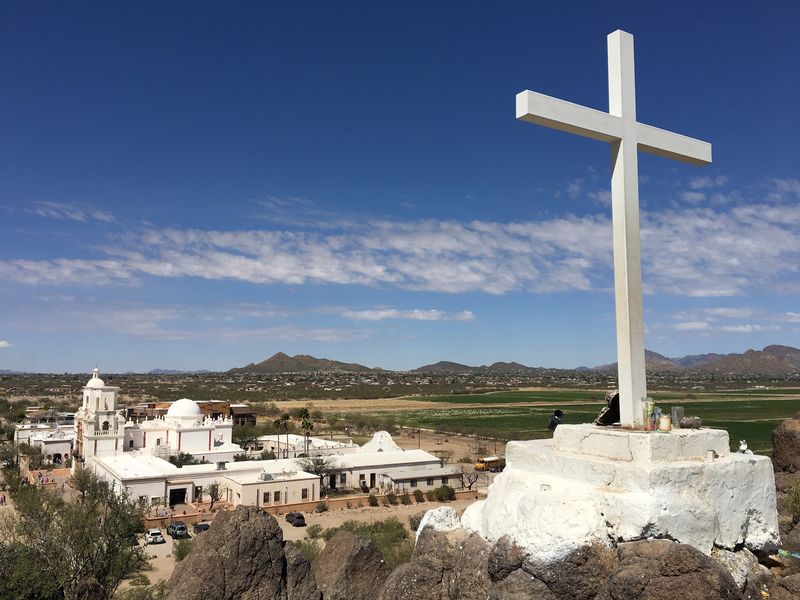
East of the church, a small hill holds a quiet surprise. Grotto Hill features a replica of the famous grotto in Lourdes, France.
The walk is short, which is great news on a warm day. It still delivers some of the best views on the property.
From the top, the mission spreads out below you. The surrounding desert and distant mountains fill in the rest of the scene.
It’s a lovely spot for prayer or simple reflection. Photographers will also appreciate the angle on both towers, finished and unfinished.
That vantage point makes the missing dome even easier to notice. Funny how a little height sharpens a mystery.
The grounds offer more than the hill. Gardens, courtyards, and a historic cemetery give visitors room to wander.
Each area feels calm and well kept. You can spend a peaceful half hour outside before or after the sanctuary.
Wear sturdy shoes for the hill path. Arizona sun bounces off white plaster and rock, so a hat and water help a lot.
Kids usually love a hill with a reward at the top. Grown-ups tend to agree once they see the view.
Fry Bread Might Steal The Show Outside
After all that history, hunger tends to show up. Luckily, vendors often set up near the mission with fresh fry bread.
Fry bread is a local specialty and a satisfying snack. Some stands also make Indian tacos and burritos.
The food is known for being very affordable. That’s welcome news for anyone stretching a day-trip budget.
Honey fry bread is a popular pick. Just know that bees appreciate honey too, so eating in the car might be smart.
Vendors aren’t a fixed restaurant with posted hours. Their presence can vary, so treat them as a happy bonus rather than a guarantee.
Weekends sometimes bring stalls with goods alongside the food. Markets and swap meets pop up on certain dates and can draw a crowd.
Buying from these local vendors supports the community right outside the church doors. Your snack does a little good.
Is there a better pairing than a 1797 church and warm fry bread? It’s hard to argue against that combo.
Bring some small cash just in case. Then grab a napkin, or several.
Rosaries, Turquoise, And A Museum Worth Your Time
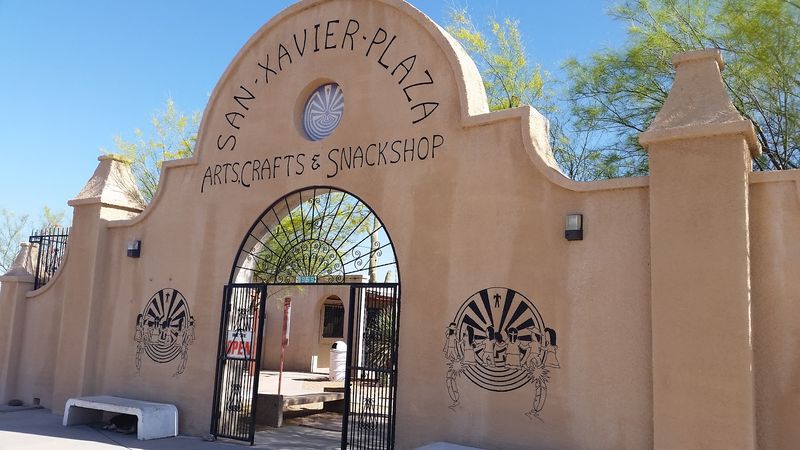
Around the side of the church sits the gift shop. Shelves hold rosaries, candles, religious items, and plenty of local art.
Silver crosses are a common keepsake. Several shops near the church also sell handmade jewelry, much of it turquoise.
That jewelry can lean pricey. Still, browsing costs nothing, and the craftsmanship is fun to study.
Next to the church, a small museum adds helpful context. It displays religious artifacts, historic mementos, and a video about the mission’s past and restoration.
The museum is well curated and informative. It’s a smart stop before you head into the sanctuary.
Knowing the story first changes how you see the carvings. Suddenly the angels and altar details make more sense.
Free docent-led tours run on most days, though not on Sundays. Tours may pause in hot months because the church has no air conditioning.
A self-guided audio option on your phone offers another way to learn. It’s free, flexible, and works on your own schedule.
Between the shop, museum, and tours, you could easily spend a full morning here. That’s a lot of value for no admission.
Prickly Pear Mortar Keeps The Old Walls Standing
Prickly pear cactus helps hold this church together. That’s not a joke, and it might be the coolest detail on the property.
The Patronato San Xavier, a non-profit founded in 1978, leads conservation work. Crews replace failing materials with traditional mixtures of lime, local sand, and prickly pear extract.
Old methods suit old walls. Modern materials can trap moisture, while traditional plaster lets adobe-era construction breathe.
Restoration work has been ongoing on the facade recently. You may spot scaffolding during your visit.
Don’t let that disappoint you. Watching preservation in action shows how much care this landmark needs to keep shining.
The east tower’s recent work fits the same spirit. Crews stabilized it without inventing a dome that never existed.
Meanwhile, church life continues as usual. Daily Mass runs throughout the week, plus Sunday Masses for the parish.
On Sundays, waiting until a service ends before touring makes sense. Worshippers deserve quiet, and the church will still be gorgeous afterward.
Donation boxes around the property help fund this work. Leaving a few dollars helps the next visitor enjoy the same view.
Free Entry And A Few Smart Planning Tips
Admission is free. For a landmark of this caliber in Arizona, that might be the best deal in the state.
San Xavier del Bac Mission sits at 1950 W San Xavier Rd, Tucson, AZ 85746. The church is typically open daily from 9 AM to 4 PM.
Finding it and parking are easy. The large dirt lot sits close to the entrance and the food stands.
Heat matters here. The church has no air conditioning or heating, so summer visits call for water and an early start.
Cooler months make the whole outing more comfortable. Fall, winter, and spring fit a lingering visit with a hill climb.
Morning arrivals often mean fewer crowds and milder temperatures. That’s a win for photos too.
So who will love this place? History buffs, architecture fans, people of faith, and anyone who enjoys a good unsolved puzzle.
Families and budget-minded day-trippers will feel right at home as well. The cost is small, and the reward is huge.
Santa Fe may have its staircase. Arizona has a half-finished tower, a room full of angels, and warm fry bread waiting outside.