
The Alabama Scenic Drive You’ll Be Thinking About Long After You Get Home
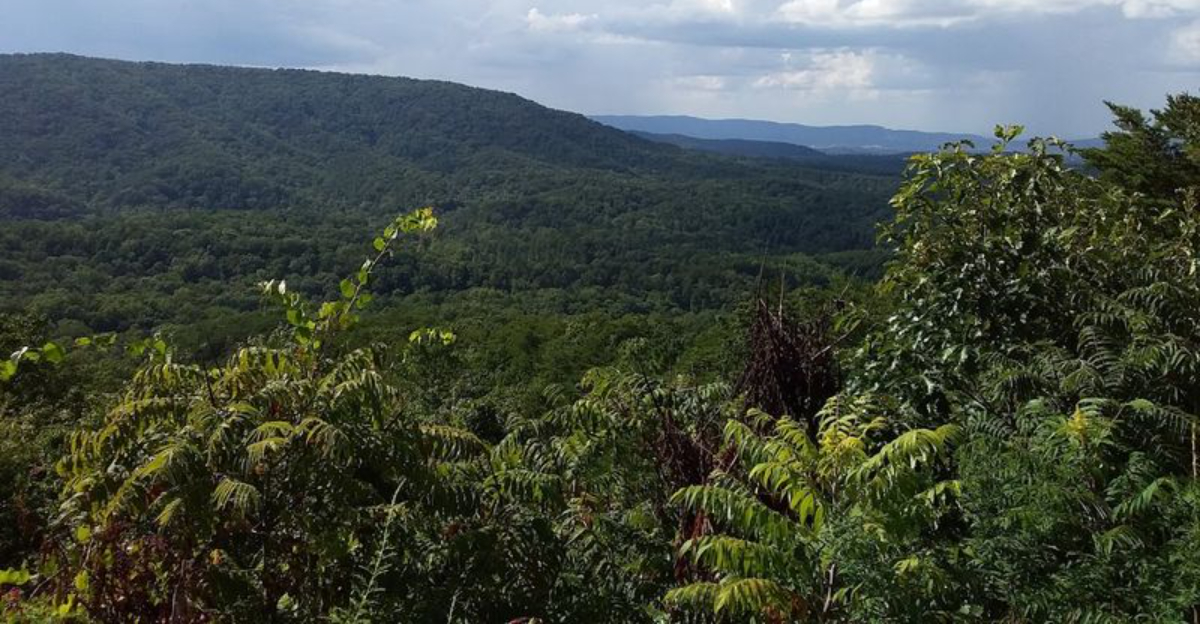
Most people don’t picture mountains when they think of Alabama. They picture warm weather, small towns, and long stretches of highway.
Then this scenic drive appears, and suddenly, Alabama changes the story. The road climbs through the Talladega National Forest, where curves replace straight lines, trees cover the horizon, and the views stretch much farther than you expected.
It’s the kind of drive that tricks you. At first, you think you’re just taking a scenic route.
Then you find yourself pulling over every few minutes because the view somehow got better than the last one. And that’s the secret of this road.
It doesn’t try to be the biggest adventure. It simply gives you a reason to slow down, and remember it long after the engine stops.
Alabama’s Highest Point
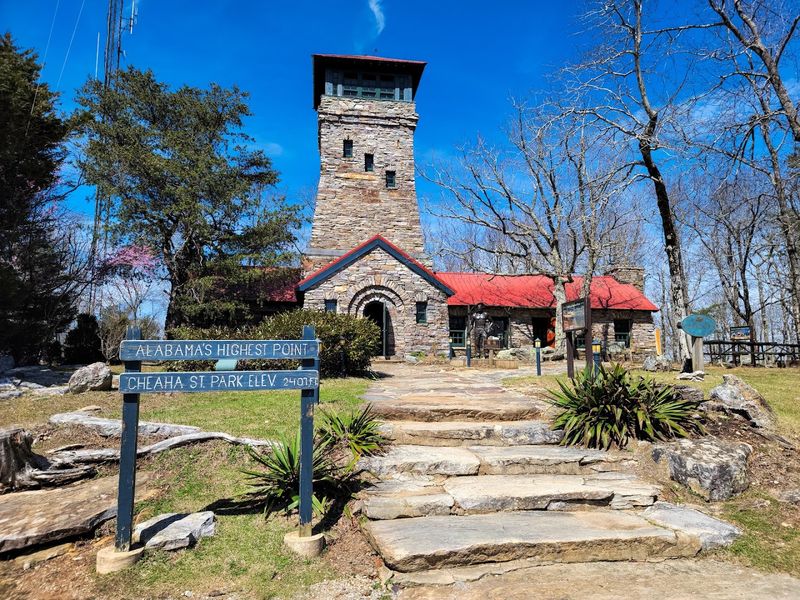
Standing at 2,407 feet above sea level, Cheaha Mountain is the tallest point in all of Alabama, and the views from up here are the kind that make your jaw drop on autopilot.
Cheaha State Park wraps around this summit like a crown, offering overlooks that stretch across rolling Appalachian ridgelines as far as your eyes can handle.
The park was established back in 1933, and those old stone structures built by the Civilian Conservation Corps still stand proudly today.
The Bunker Tower observation deck is an absolute must. Climb to the top and you get a full 360-degree panorama that feels like the whole state is laid out just for you.
Ancient granite boulders dot the landscape, and the wind up here has a personality of its own, cool, persistent, and completely refreshing.
There’s also a restaurant at the summit where you can grab a meal while the mountains do all the decorating outside the window.
Cheaha is not just a stop on this drive, it’s the headliner. Every other highlight on this route feels like it’s building toward this peak moment, literally and figuratively.
Where The Green Goes Endless
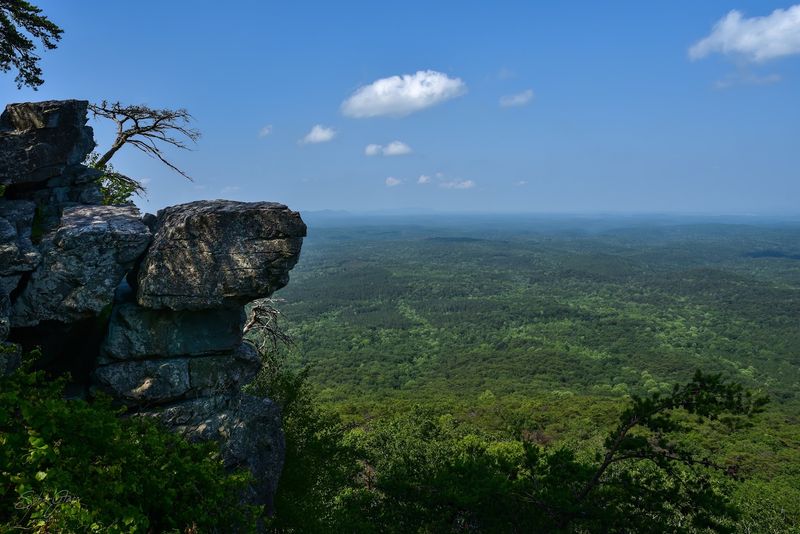
Nearly 400,000 acres of ancient forest and you get to drive right through the middle of it. That’s the Talladega National Forest experience, and it genuinely feels like stepping into a world that hasn’t changed much in centuries.
The trees press in close on both sides of the road, and during warmer months, a soft bluish haze drifts across the ridgelines like nature’s own atmospheric filter.
That haze isn’t mysterious fog or anything dramatic. It’s actually moisture released by the dense tree canopy meeting the warm Alabama air, and it gives the whole forest this dreamy, almost cinematic quality.
Rock outcroppings burst through the treeline at unexpected moments, reminding you that these mountains have serious geological backbone.
The forest is also a working natural ecosystem, meaning wildlife sightings are genuinely common.
Deer, wild turkeys, and countless bird species call this place home year-round. Picnic areas are tucked into the landscape at various points, inviting you to slow down and actually sit with the silence for a while.
The Talladega National Forest doesn’t just set the scene for this drive; it IS the drive, wild, generous, and completely unforgettable.
The Trail That Goes On Forever
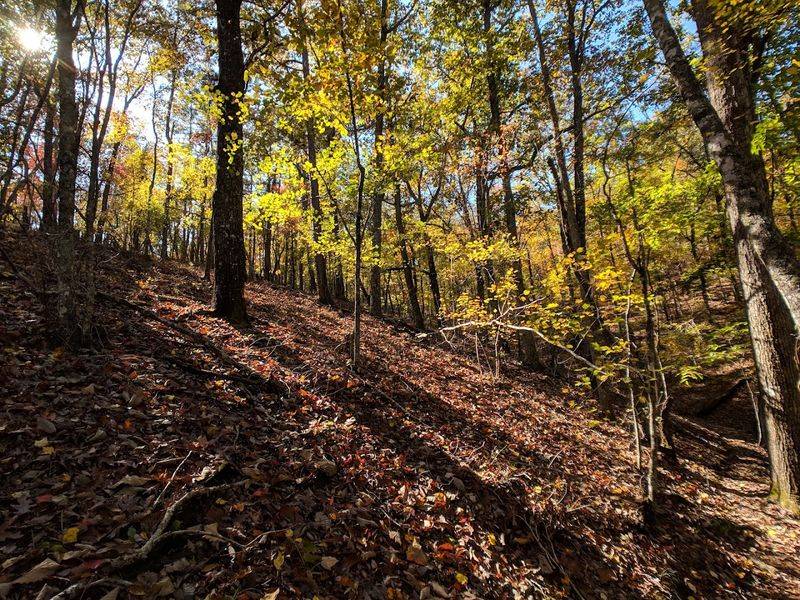
Over 100 miles of trail cutting through Alabama’s most rugged terrain, and somehow the Pinhoti National Recreation Trail makes every single mile feel worth it.
The name comes from a Creek Native American word meaning “turkey home,” which feels perfectly fitting given how many wild turkeys you might spot strutting through the underbrush like they own the place. Spoiler: they kind of do.
The Pinhoti is the backbone of Alabama’s long-distance hiking scene. It connects to Georgia’s Benton MacKaye Trail, making it part of a much larger southeastern trail network.
Sections range from manageable day hikes to multi-day backpacking routes, so whether you have two hours or two days, there’s a stretch of Pinhoti with your name on it.
Mountain streams cross the trail at regular intervals, and the sound of moving water becomes your constant companion along the ridgeline sections.
Rocky crags offer sudden, dramatic views that appear without warning, like the forest is pulling back a curtain just for you. The Pinhoti is the kind of trail that serious hikers talk about in reverent tones, and once you walk even a small piece of it, you’ll completely understand why.
The Road That Keeps You Guessing
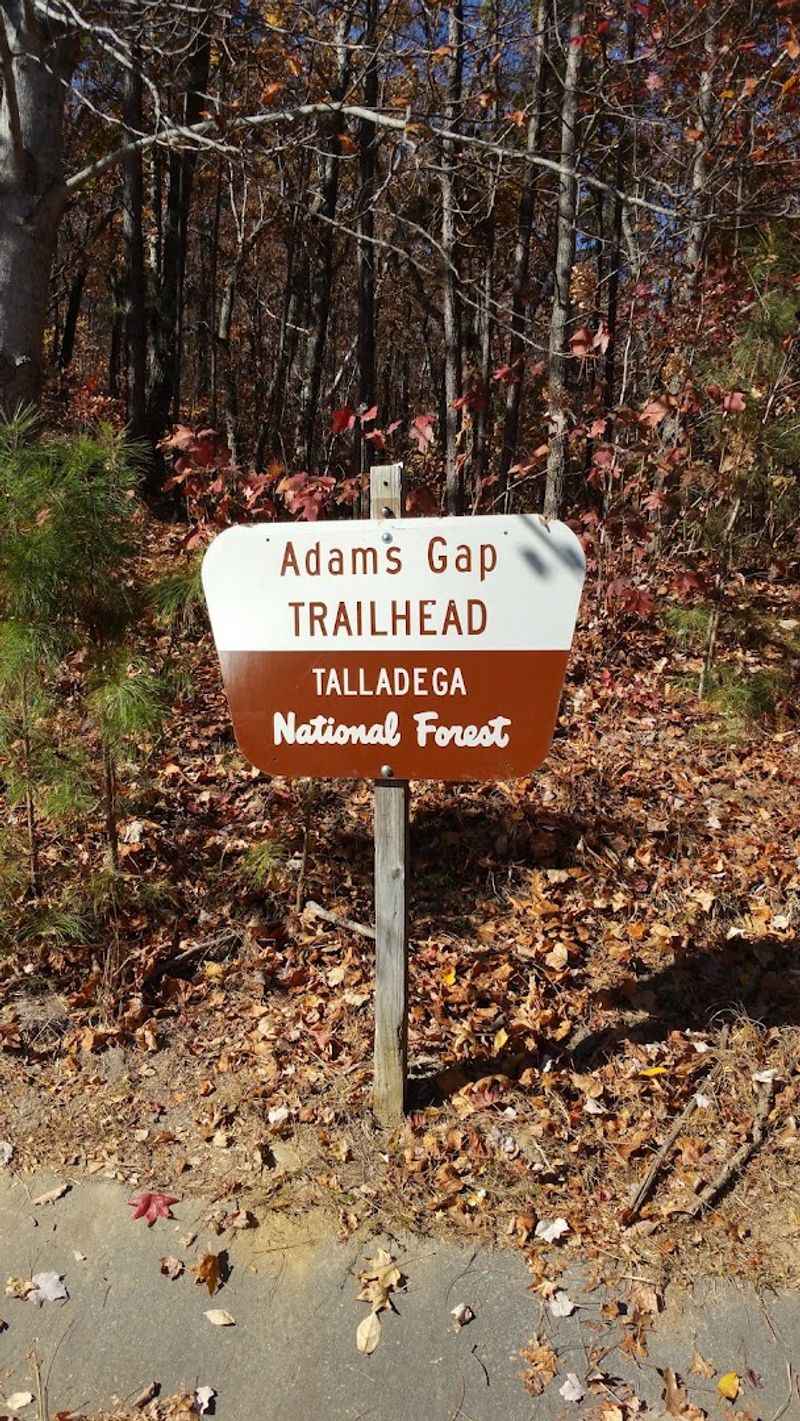
Not every great road is paved, smooth, or predictable, and the Skyway Motorway proves that point with zero apologies.
Originally imagined as a grander scenic byway, portions of this route now include rugged forest service roads that wind along the backbone of the Talladega Mountains.
It follows the ridgeline of Horns Mountain heading north, and the elevation changes are dramatic enough to keep your palms just slightly engaged with the steering wheel.
What makes the Skyway Motorway genuinely special is the contrast it offers. One moment you’re threading through dense forest canopy, and the next, the trees part and you’re staring out over wide open valley plains stretching into the distance.
That kind of visual whiplash is exactly what road trips are made of.
Off-road enthusiasts find this section particularly appealing, since the unpaved stretches reward vehicles with a little ground clearance. But even standard cars can navigate carefully during dry conditions, making this route accessible to more adventurous drivers.
The Skyway Motorway doesn’t coddle you with perfect asphalt; it challenges you just enough to make the views feel genuinely earned when they arrive.
Pull Over, You Won’t Regret It
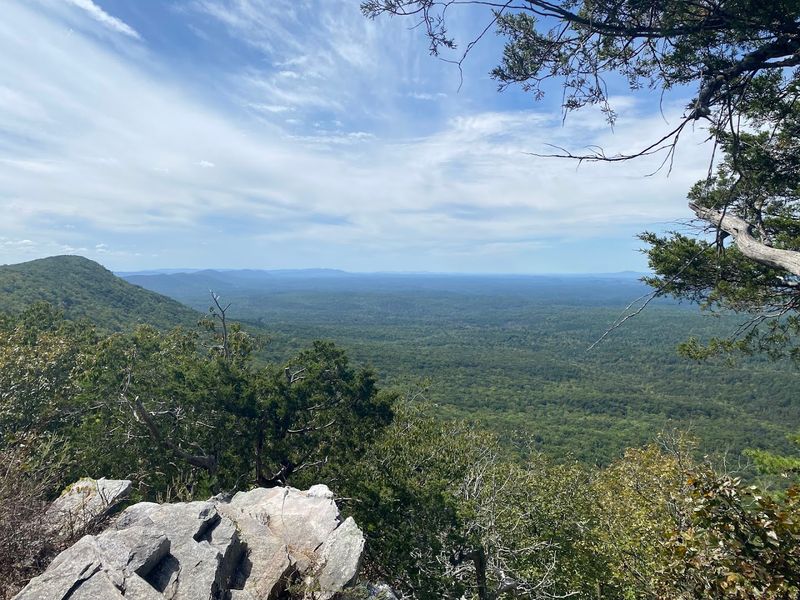
There is a specific kind of happiness that comes from pulling off a road unexpectedly and finding a view so good it stops your brain mid-thought.
The Talladega Scenic Drive delivers that feeling repeatedly, with multiple pull-off overlooks positioned along the route at moments that feel almost perfectly timed. Each one frames the landscape a little differently, offering a fresh perspective on the same ancient forest and mountain system.
Morning visits to these overlooks are especially rewarding.
Mist pools in the valleys below while the ridgelines catch the early light, creating a layered visual that photographers absolutely lose their minds over.
Midday brings clarity and depth to the views, while late afternoon turns everything golden in that way that makes even phone camera photos look professional.
These overlooks are not just photo opportunities, though they’re certainly that. They’re also natural pause buttons on a drive that can feel almost overwhelming in its beauty.
Standing at one of these pull-offs and just breathing for a few minutes recalibrates something in your chest. Alabama’s wild interior is vast and ancient, and these overlooks are the windows through which you finally get to see just how remarkable it truly is.
Alabama’s Unscripted Nature Show
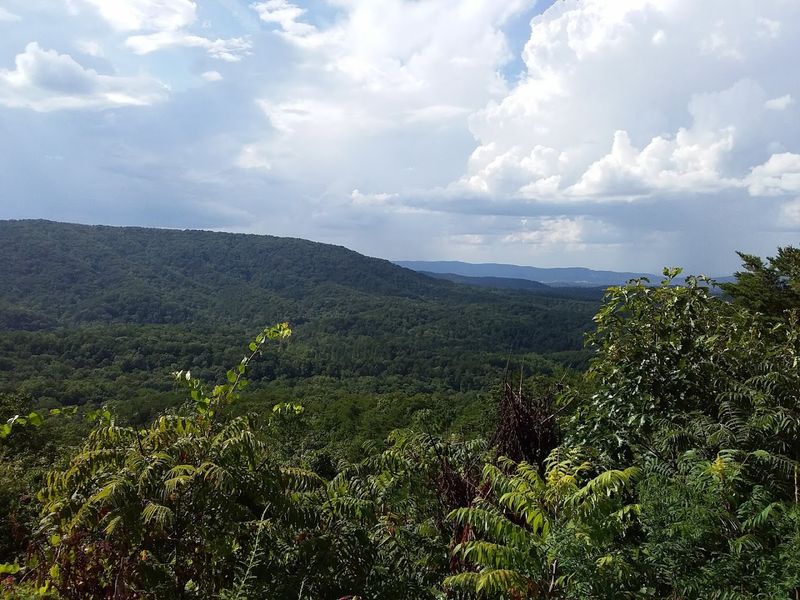
Nobody hands you a program at the start of the Talladega Scenic Drive, but if they did, the wildlife section would be the longest chapter by far.
White-tailed deer appear along the roadsides with casual regularity, often just standing there watching you drive past with that classic deer expression of mild curiosity. Wild turkeys are equally common, particularly in the forested stretches where the Pinhoti Trail runs nearby.
The ridgeline sections of the drive are especially exciting for anyone interested in birds. During fall migration, hawks ride the thermal currents above the mountain crests in numbers that can be genuinely breathtaking.
Broad-winged hawks, sharp-shinned hawks, and Cooper’s hawks all pass through, turning the sky into a living migration map. Birders with binoculars will find themselves pulling over constantly.
Squirrels, foxes, and the occasional shy opossum round out the supporting cast of this ongoing nature show.
The key to great wildlife sightings on this drive is patience and quiet. Slow down, roll the windows down, and let the forest come to you.
The Talladega National Forest rewards the observant visitor with moments that no wildlife documentary could fully replicate.
Raw, Rugged, And Completely Real
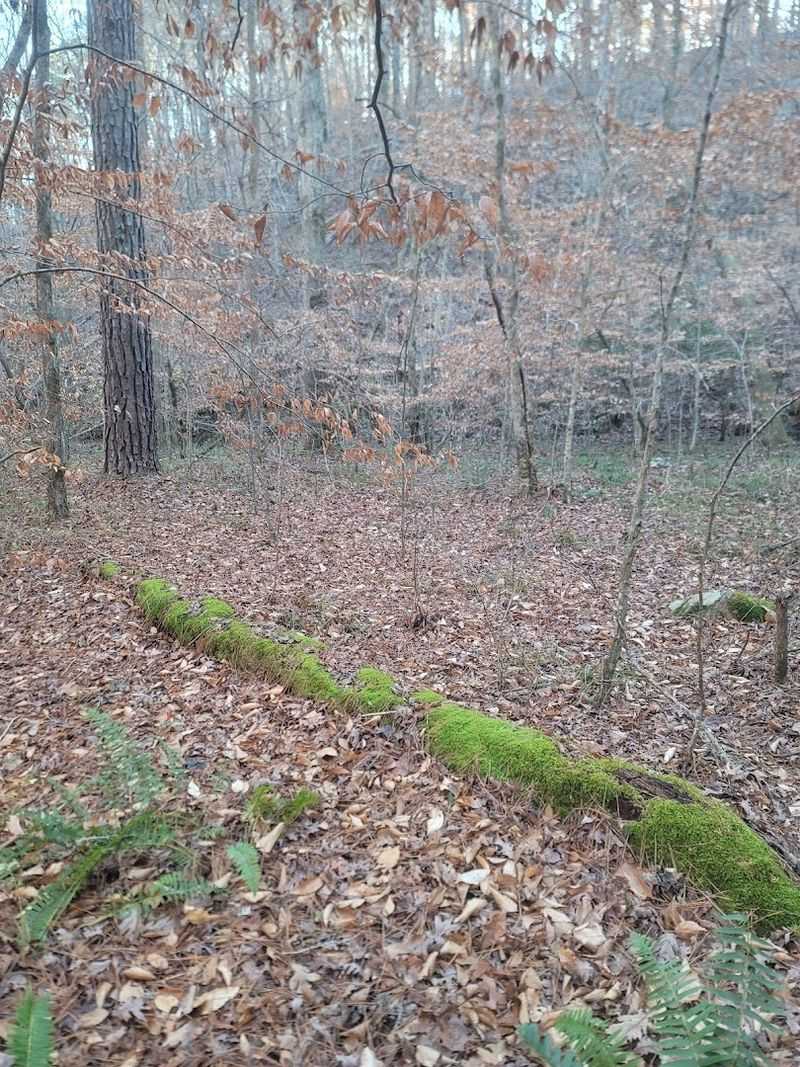
Some places are polished for visitors, and then there’s Dugger Mountain Wilderness, which makes absolutely no such effort and is all the better for it.
Designated as a wilderness area in 1999, this nearly 9,200-acre expanse within the Talladega National Forest is one of Alabama’s most genuinely remote natural spaces.
Dugger Mountain itself rises to 2,140 feet, and the terrain surrounding it is steep, forested, and wonderfully uncompromising.
What makes Dugger Mountain particularly fascinating is the old-growth forest that covers slopes too steep for historical logging operations.
These trees have been growing largely undisturbed for generations, creating a canopy that feels ancient and serious in a way that managed forests simply cannot replicate.
Walking through here, you get the distinct sense that the mountain is tolerating your presence rather than welcoming it, and somehow that makes it more appealing.
The Pinhoti Trail passes through or near this wilderness area, giving hikers access to some of its most demanding and rewarding terrain.
Solitude is essentially guaranteed here, especially on weekdays. Dugger Mountain Wilderness is the part of this scenic drive that reminds you Alabama has genuine wild spaces, places where nature operates entirely on its own terms and schedules.
Where The Forest Gets Intimate
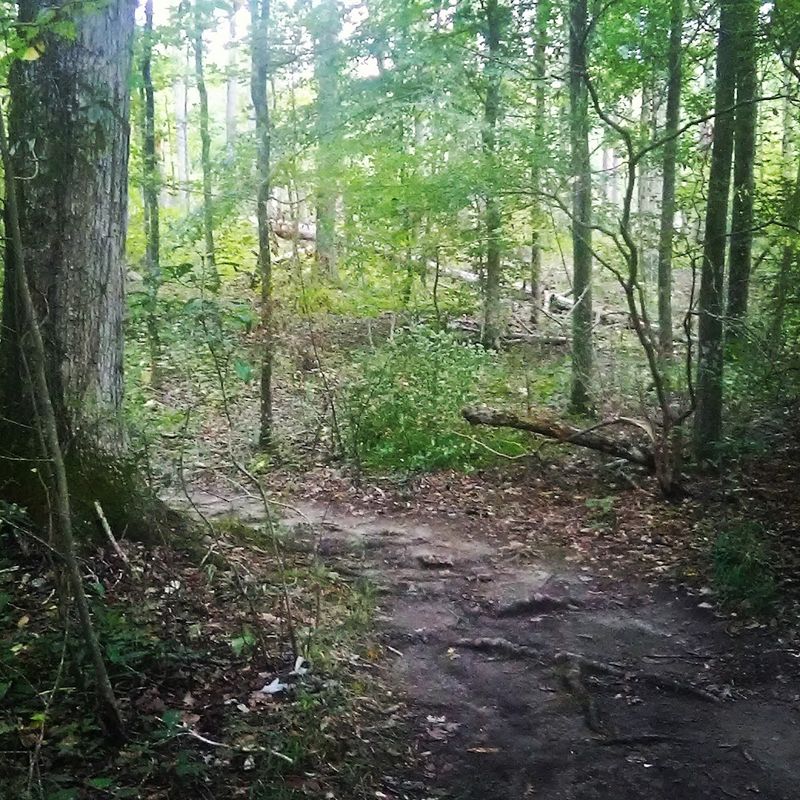
At approximately 6.7 miles, the Cave Creek Trail is the kind of loop hike that feels like the forest is personally guiding you through its favorite spots.
Nestled in the Talladega National Forest, this moderately challenging trail winds through rolling hills, alongside the namesake creek, and through some of the most enchanting rhododendron tunnels you’ll ever walk under.
When those rhododendrons bloom in spring, the trail transforms into something almost surreal.
Despite what the name might suggest, there are no actual caves along this route. Instead, the creek has carved its way through large rock formations over centuries, creating small cave-like passages in the stone that give the trail its character and its name.
Rock outcroppings appear at intervals along the path, offering elevated views through the tree canopy that reward hikers who look up as well as forward.
The sound of Cave Creek running alongside sections of the trail adds a constant, calming soundtrack to the whole experience. The water is clear and cold, and the streamside vegetation is lush and diverse.
Cave Creek Trail is the kind of hike where you finish and immediately want to do it again in a different season, because the forest here genuinely changes its outfit with the calendar. Ready to lace up your boots?