
The 12 Best Things To Experience At Cadillac Mountain In Maine
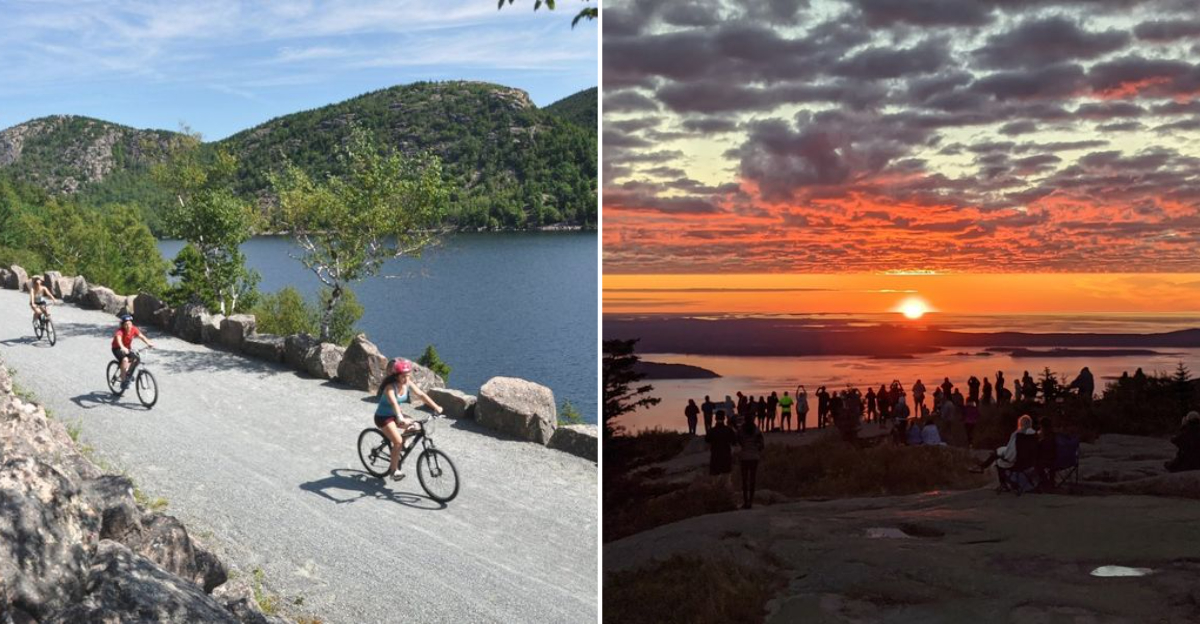
There is a mountain in Maine where sunrise feels almost competitive. Rising 1,530 feet above sea level inside a beloved national park, this granite summit claims one of the most memorable bragging rights in the country: during the colder months, it catches the first rays of daylight in the United States.
That alone makes an early alarm and a hot thermos feel completely worth it. Yet the sunrise is only the beginning.
You get the best of the mountain in the little details: the pink granite beneath your feet, the salty breeze, the forested slopes, and those wide-open views of islands and ocean.
It is the kind of place that works for almost everyone, whether you want a real hike, a great photo, a bit of history, or just a scenic drive with a view worth pulling over for.
This guide highlights the best ways to experience the mountain beyond that famous first light.
1. Enjoy Views From The Summit
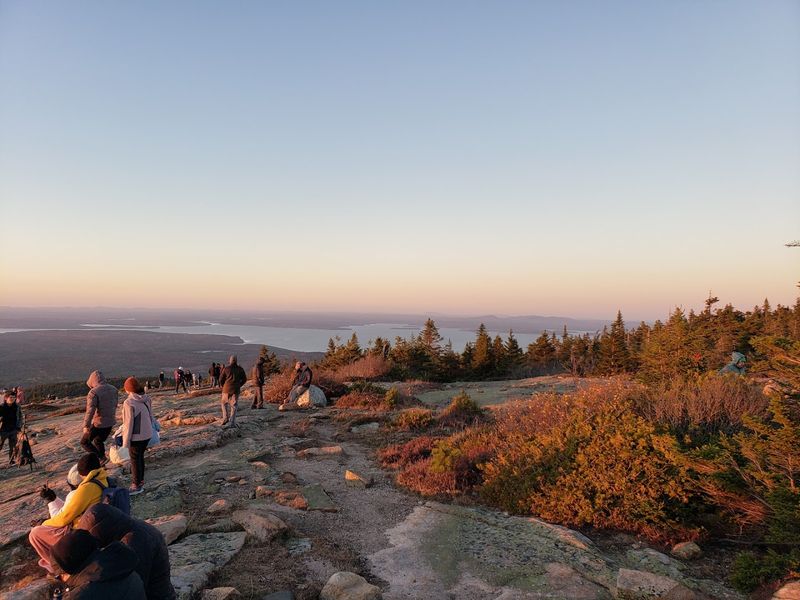
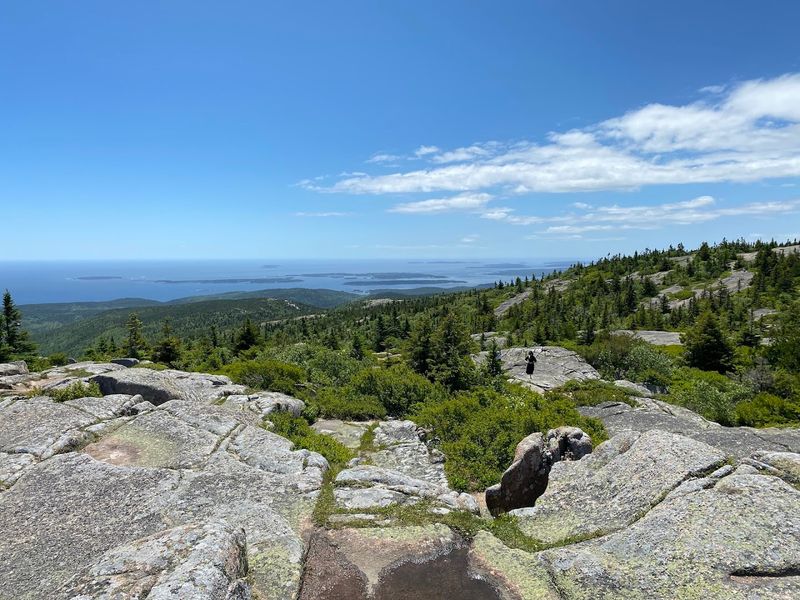
On a clear day, standing at the top of Cadillac Mountain feels like the world suddenly got much bigger. The 360-degree views from the summit stretch across Frenchman Bay, the Porcupine Islands, Bar Harbor, the Schoodic Peninsula, and the open Atlantic.
There is no tree line blocking the scenery up here, just wide open sky meeting water in every direction.
The summit sits at 1,530 feet, making it the highest point on the eastern seaboard of the United States. Visitors often find themselves completely still for a few minutes, just taking it all in.
The sheer scale of the coastline laid out below is genuinely hard to process at first glance.
Plan to spend at least thirty to forty-five minutes at the top so you can walk around and catch views from multiple angles.
The south-facing overlook gives a particularly dramatic look at the open ocean, while the northern side frames the town of Bar Harbor beautifully. Bring a light jacket because the wind up top can be surprisingly strong even on warm summer days.
2. Walk Along The Cadillac Summit Loop Trail
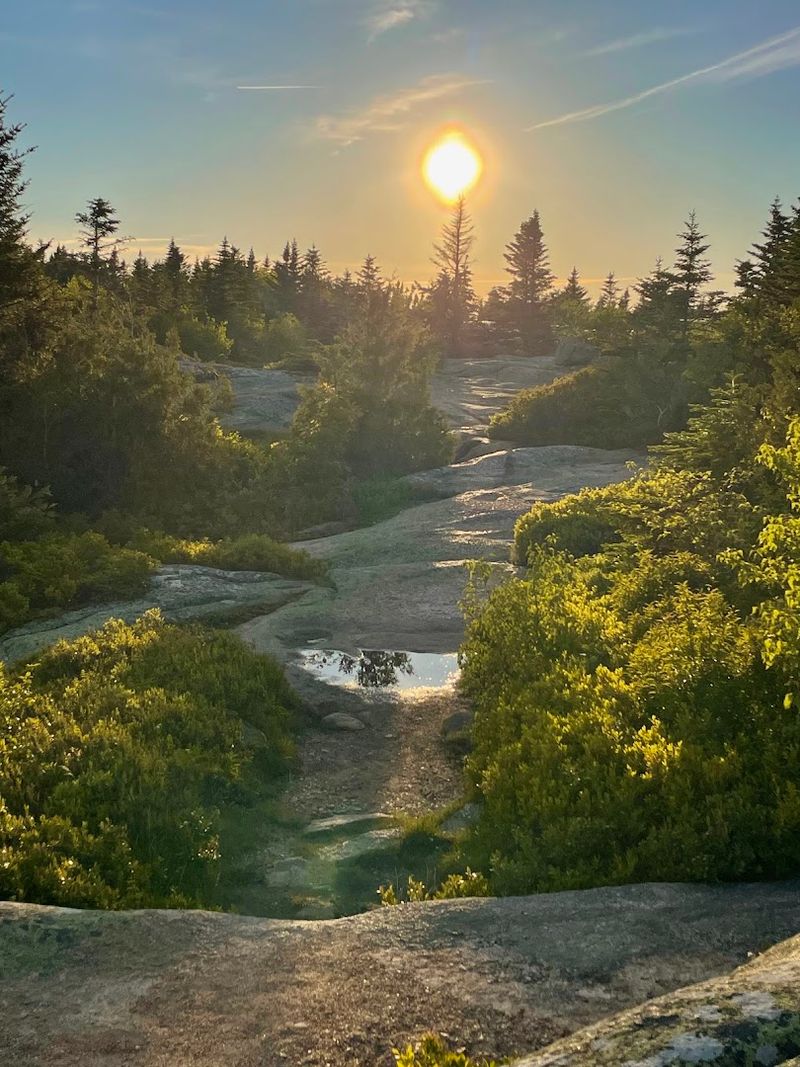
Most people drive to the top of Cadillac Mountain and snap a few photos near the parking lot, but the ones who lace up their shoes and walk the Summit Loop Trail get an entirely different experience.
The loop is about 0.3 miles and paved, making it accessible to most visitors, yet it winds through some genuinely dramatic scenery that you simply cannot see from the car.
Along the trail, interpretive signs explain the geology, ecology, and history of the mountain in a way that kids and adults both find engaging.
You will pass over smooth, rounded outcrops of the famous pink Cadillac granite and get views that shift with every turn in the path. The trail is well-maintained and usually takes about thirty minutes at a relaxed pace.
Going early in the morning or late in the afternoon gives you the best light for viewing and the fewest crowds. The golden hour glow on the granite is something photographers specifically seek out.
Even if hiking is not your thing, this short loop is absolutely worth the effort and rewards you with a much richer sense of the mountain than the parking lot alone ever could.
3. Embark On A Guided Tour Of Acadia National Park
Acadia National Park has been welcoming visitors since 1919, and its ranger-led programs remain one of the best ways to understand what makes this place so special.
Guided tours cover everything from the glacial history that shaped the mountain’s rounded peaks to the fascinating story of how wealthy families like the Rockefellers helped preserve the land in the early twentieth century.
The park offers a variety of tour formats including walking tours, carriage road tours, and boat-based naturalist programs that give you views of the coastline from the water.
Ranger programs are free with park admission and run throughout the summer and fall seasons. Checking the park’s schedule ahead of your visit is smart because popular tours fill up fast.
Private and small-group tours are also available through licensed outfitters based in Bar Harbor. These tend to offer more personalized storytelling and can be customized around your interests, whether that is birding, geology, or photography.
A knowledgeable guide turns a scenic drive into a genuinely educational adventure, and you will leave the park knowing things about its landscape and heritage that most visitors completely miss.
4. Go Fishing In The Rivers And Streams
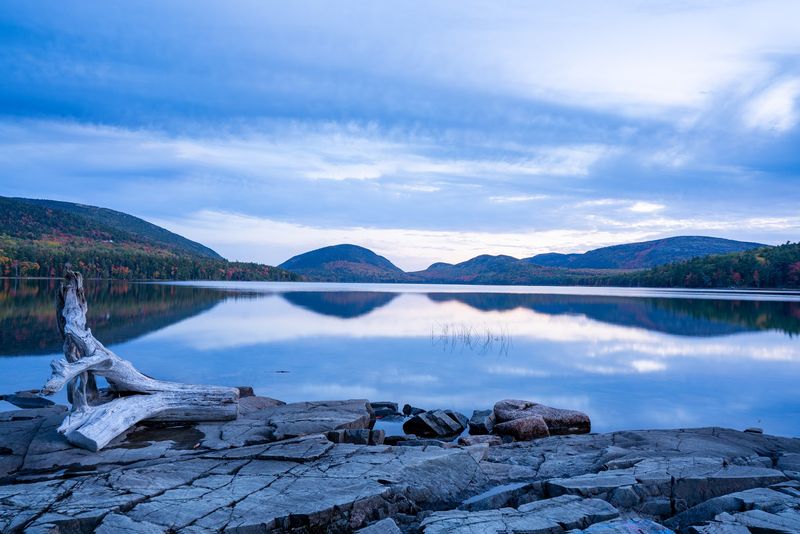
Acadia National Park is not just about mountain views and ocean overlooks. The park contains several freshwater lakes, ponds, streams, and rivers that offer surprisingly good fishing for those who know where to look.
Eagle Lake, Jordan Pond, and Echo Lake are among the most popular fishing spots within the park boundaries.
Brook trout and landlocked salmon are the main targets for anglers visiting the area. Fishing is permitted in most of the park’s freshwater bodies, though a valid Maine fishing license is required, and some specific areas have catch-and-release rules that help protect the native fish populations.
Picking up a copy of the current regulations before you cast is always a good idea. The fishing experience here is as much about the surroundings as it is about what you reel in.
Imagine casting a line with the forested slopes of Cadillac Mountain reflected in the still water around you.
Early morning and late evening tend to be the most productive times, and fall is particularly beautiful when the foliage turns the hillsides surrounding the water into a canvas of red, orange, and gold.
5. Bike Along Park Loop Road
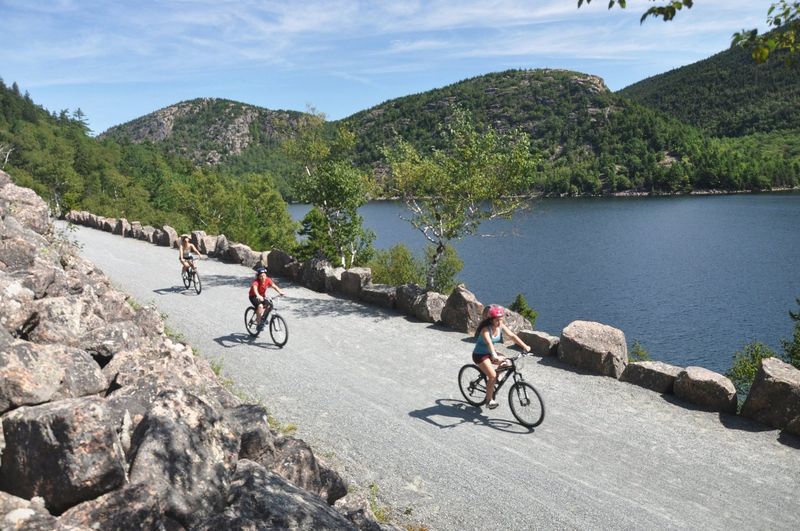
Park Loop Road is the scenic highway that winds through Acadia National Park, and biking it is one of the most rewarding ways to experience the landscape at a pace that actually lets you absorb everything around you.
The road stretches about 27 miles in total, passing through forests, along the rocky coastline, and offering multiple access points to trailheads and overlooks.
The one-way section of the road near the Ocean Path is especially popular with cyclists because it reduces the stress of sharing space with car traffic.
Bike rentals are readily available in Bar Harbor, and the town is only a short ride from the park entrance. Most reasonably fit cyclists can complete a satisfying loop in three to four hours with time built in for stops.
One of the true highlights of biking the loop is discovering how quickly the scenery changes. You might pass through a cool, shaded forest corridor and then suddenly emerge at Thunder Hole or Sand Beach with the Atlantic stretching out in front of you.
The carriage roads inside the park, built by John D. Rockefeller Jr., are also open to cyclists and offer a quieter, car-free alternative through the interior of the park.
6. View The Wildlife
Acadia National Park is home to a surprisingly diverse cast of wild residents, and spotting them is one of the quiet joys of spending time here. White-tailed deer are common throughout the park and are often seen grazing near the carriage roads at dawn and dusk.
Peregrine falcons nest on the cliffs of Acadia and have made a remarkable comeback after being absent from the park for decades.
Harbor seals and harbor porpoises are frequently spotted in Frenchman Bay, and whale-watching boats out of Bar Harbor offer excellent opportunities to see humpback and minke whales offshore.
Bald eagles soar over the lakes and coastline regularly, and patient birdwatchers have recorded more than 330 species within the park over the years.
Early morning is consistently the best time for wildlife viewing because animals are most active before the crowds arrive and the temperature rises. Moving quietly along the carriage roads or sitting still near the shoreline dramatically increases your chances of a close encounter.
Bringing a pair of binoculars makes a real difference, and a field guide to Maine birds or mammals adds a satisfying layer of context to every sighting you make during your visit.
7. Hike The Trails Of Acadia National Park
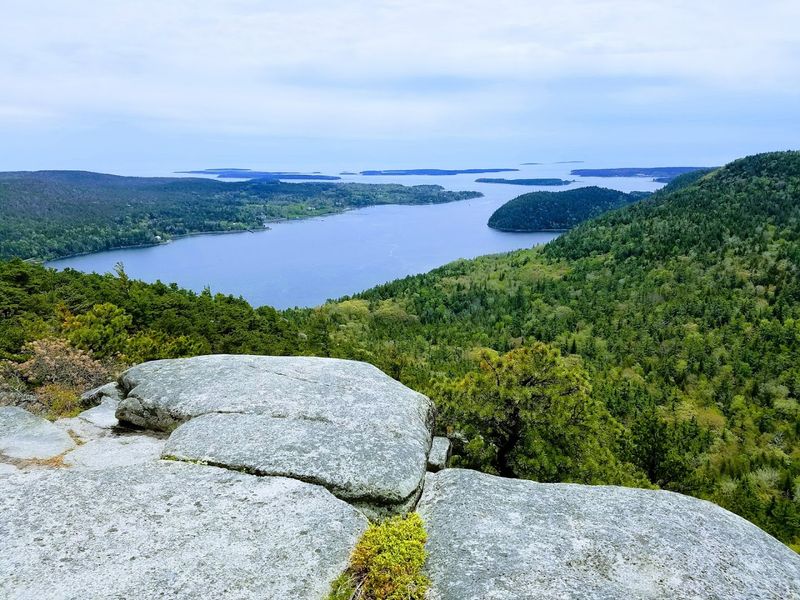
Acadia National Park has over 150 miles of hiking trails ranging from easy shoreline walks to genuinely challenging climbs with iron rungs bolted into cliff faces.
The variety is one of the park’s greatest strengths, meaning families with young children and experienced hikers looking for a serious workout can both find exactly what they need without much searching.
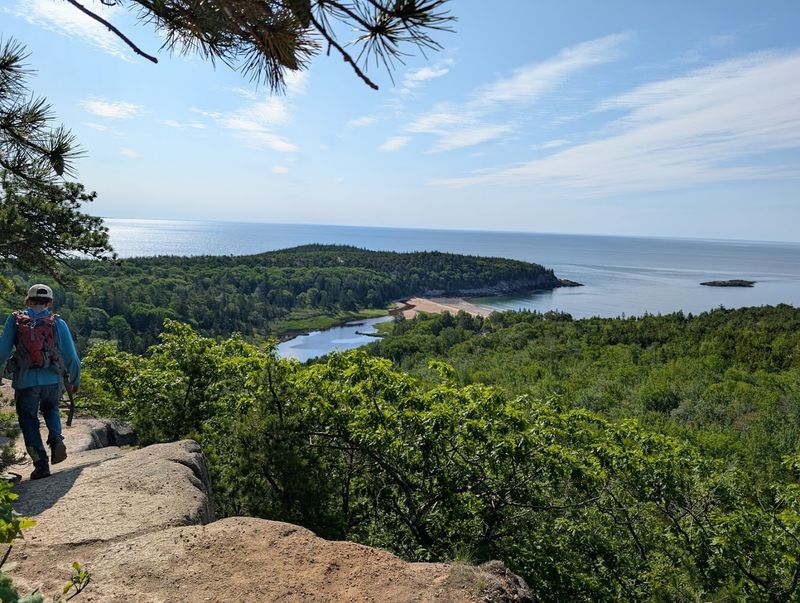
The Beehive Trail is one of the most talked-about hikes in the park, featuring iron ladder rungs and open ledges with heart-stopping views of Sand Beach and the Atlantic below.
For something more mellow, the Ocean Path follows the coastline for about 4 miles and offers stunning scenery with almost no elevation gain. The Precipice Trail is another bold option for those comfortable with exposed climbing.
Fall is widely considered the best season for hiking in Acadia because the foliage is extraordinary and the summer crowds have thinned considerably. Trail maps are available at the Hulls Cove Visitor Center, and the park’s website has detailed difficulty ratings and current trail conditions.
Wearing proper footwear with ankle support is genuinely important here because the granite surfaces can be slippery when wet.
8. Drive The Cadillac Summit Road
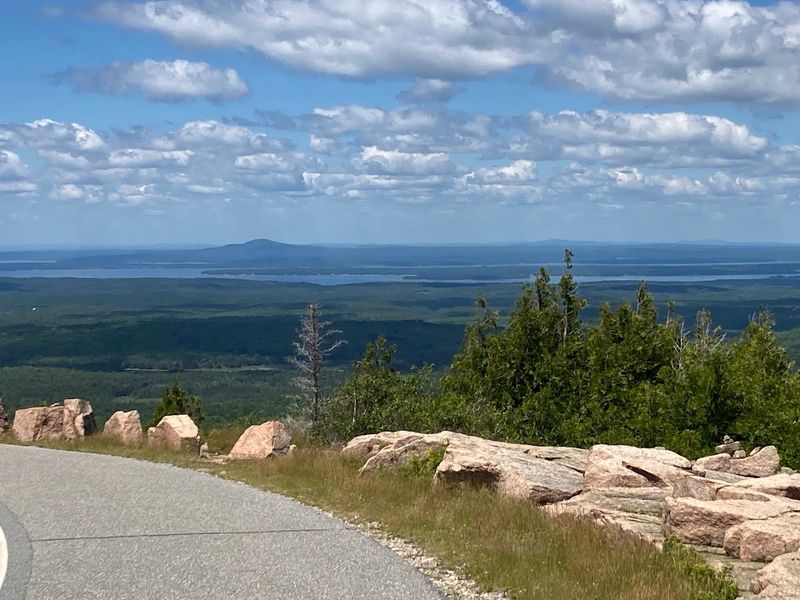
Not every great experience at Cadillac Mountain requires hiking boots. The Cadillac Summit Road is a 3.5-mile paved route that winds from the Park Loop Road all the way to the top of the mountain, and the drive itself is genuinely spectacular from start to finish.
The road curls through open granite terrain with views that expand dramatically as you climb higher. Timed entry reservations are required for the Summit Road from late May through mid-October, which keeps the summit from becoming overwhelmed with vehicles.
Booking your spot on the Recreation.gov website before your trip is essential during peak season. A portion of vehicle reservations is released 90 days in advance, while most are released two days ahead, and popular sunrise slots can sell out extremely fast.
Driving up at sunrise is the most iconic version of this experience, but the afternoon light and sunset views are equally worth considering. The road is open to motorcycles and RVs within certain size limits, making it accessible to a wide range of travelers.
Pullouts along the way invite you to stop, step out, and take in views that would be hard to improve upon anywhere else on the East Coast of the United States.
9. Photograph The Pink Granite
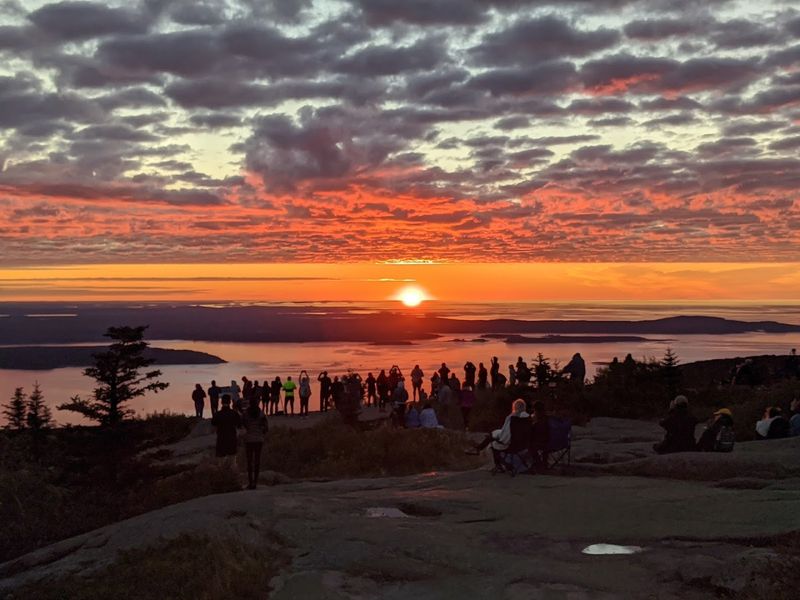
The rock beneath your feet on Cadillac Mountain is not just any old stone. The pink granite that makes up much of the mountain is approximately 420 million years old and has a distinctive rosy hue caused by potassium feldspar.
Photographers absolutely love it, and for good reason because the color shifts beautifully depending on the time of day and the quality of the light.
At sunrise, the granite glows with warm amber and peach tones that make even a basic smartphone camera produce striking images.
By midday, the surface takes on a cooler, more silvery-pink tone, and at sunset the rock can turn almost rust-colored in the right conditions. Patches of gray and green lichen add natural texture that gives close-up shots a painterly quality.
The Summit Loop Trail puts you in direct contact with the best granite formations, and the open terrain means you can set up a tripod without obstruction.
Landscape photographers often combine the granite foreground with the ocean horizon in the background for compositions that capture both the geological and coastal character of the mountain.
Even if photography is just a casual hobby, this location will push your creative instincts in a genuinely satisfying direction.
10. Spot The Egg Rock Lighthouse
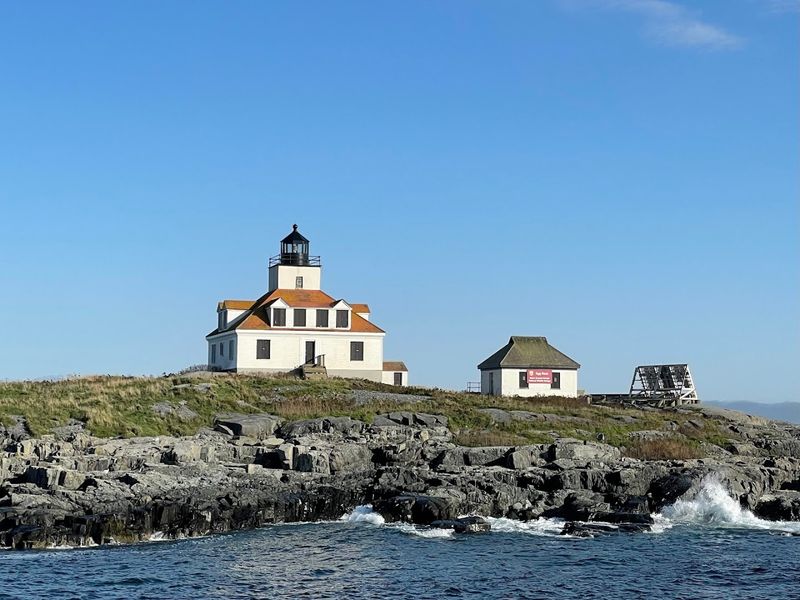
From the summit of Cadillac Mountain, sharp-eyed visitors can spot a small red and white structure perched on a tiny island out in Frenchman Bay.
That is Egg Rock Lighthouse, built in 1875 and still actively guiding mariners through the bay today. Binoculars make the view significantly more rewarding, turning a tiny white speck into a recognizable historic structure.
Egg Rock Island is also an important wildlife habitat in Frenchman Bay, especially for nesting seabirds such as gulls and cormorants. Seeing the lighthouse from above with that ecological context in mind adds a whole new dimension to what might otherwise just seem like a distant landmark.
Boat tours departing from Bar Harbor pass near Egg Rock and offer a completely different perspective on both the lighthouse and the mountain itself.
Seeing Cadillac from the water, rising dramatically from the coastline, is one of those views that reframes the entire landscape in your mind. If spotting the lighthouse from the summit sparks your curiosity, following it up with a harbor cruise is a very satisfying way to complete the picture.
11. Visit The Cadillac Mountain Gift Shop
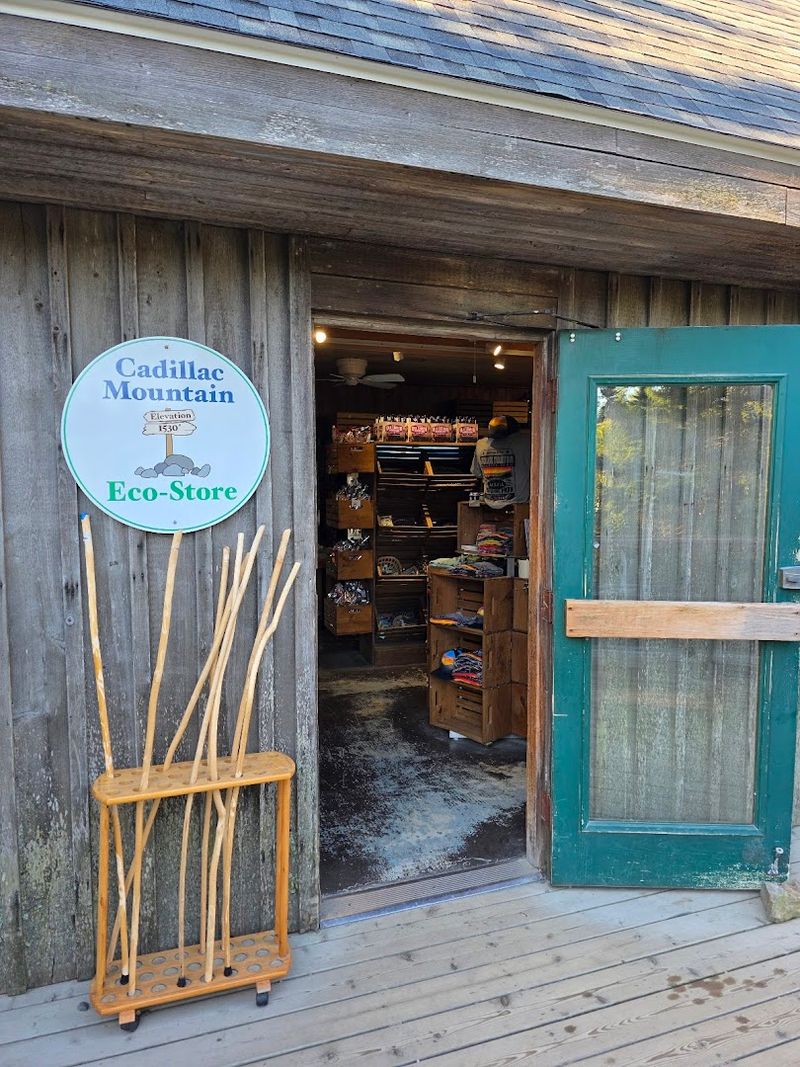
Right at the summit of Cadillac Mountain, tucked into the visitor facility near the parking area, the Cadillac Mountain Gift Shop offers a surprisingly well-curated selection of souvenirs, books, and locally made goods.
It is not your average roadside trinket stand. The shop stocks field guides, nature-themed jewelry, high-quality apparel, and a range of items specific to Acadia National Park that you will not find in generic souvenir stores down in town.
Purchases made at the gift shop support the Acadia National Park partners and help fund educational and conservation programs within the park.
So buying that embroidered hat or illustrated map is genuinely contributing to the preservation of the place you just enjoyed. That is a pretty good reason to browse a little longer than you planned.
The shop also sells snacks and hot beverages, which are very welcome after a windy morning at the summit or a long hike up one of the mountain’s trails.
The staff are knowledgeable and friendly, and they can point you toward lesser-known spots in the park that do not always make it onto the standard tourist itinerary. Consider it a final reward before you head back down the mountain.
12. Explore The Wabanaki History
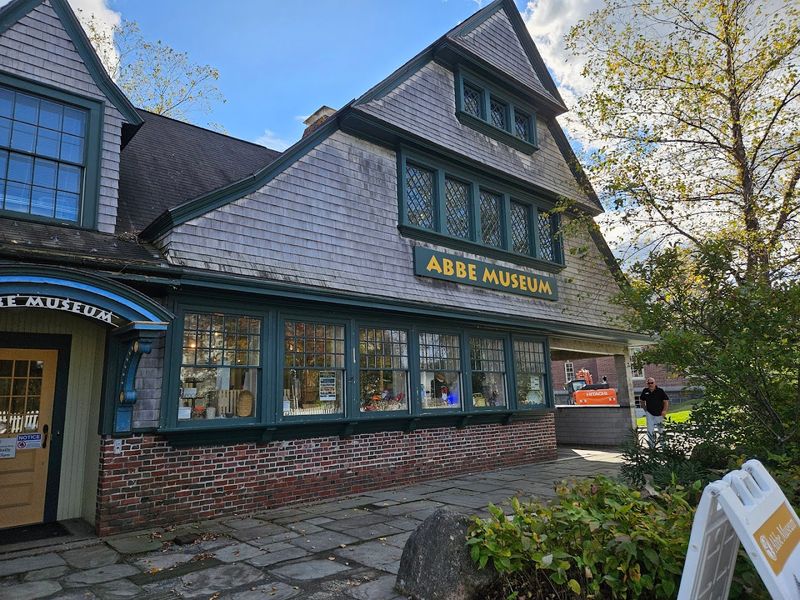
Long before Acadia National Park had a name, the Wabanaki people were living on and around the land that includes Cadillac Mountain.
The Wabanaki Confederacy, which includes the Penobscot, Passamaquoddy, Maliseet, Micmac, and Abenaki nations, has called this region home for thousands of years. Their relationship with the land is woven into the very geography of Mount Desert Island.
The name “Cadillac” itself comes from Antoine Laumet de La Mothe Cadillac, a French explorer, but the Wabanaki knew this mountain long before European contact and used the island as a seasonal home for fishing, hunting, and gathering.
Acadia National Park has been working to better acknowledge and honor this Indigenous history through interpretive programs and collaborative projects with tribal nations.
Visitors interested in this history can find interpretive panels along several trails and at the Hulls Cove Visitor Center that speak to the Wabanaki presence on the island.
The Abbe Museum in downtown Bar Harbor is the most comprehensive resource for Wabanaki culture and history in the region, featuring rotating exhibits, art, and educational programming.
Spending time there before or after your mountain visit gives your entire Acadia experience a much richer and more meaningful foundation.