
The Best $3 You’ll Spend In New York Is This Tram Ride Above The East River
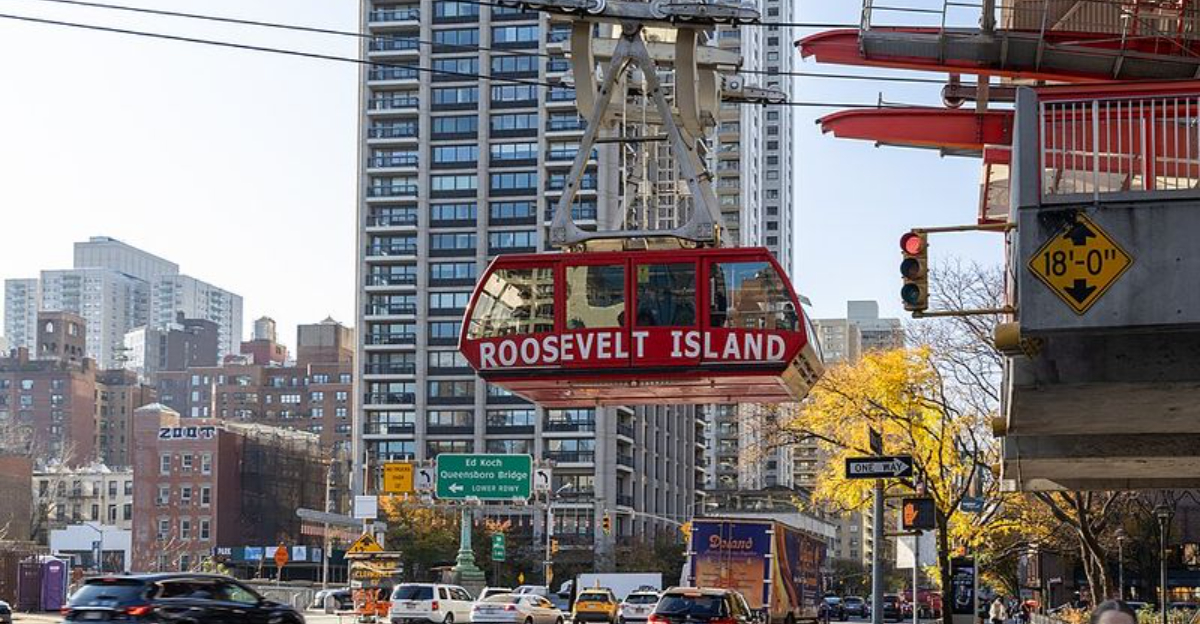
It’s hard to find anything in New York for $3. But somehow, we found something that cheap that feels almost priceless.
Floating high above the East River, this tramway turns a simple ride into a surprisingly unforgettable experience. For the price of a subway swipe, you’re suddenly suspended between Manhattan and Queens, with skyline views that feel way more expensive than they are.
Locals treat it like part of their daily routine. Visitors stumble onto it and wonder how it’s not talked about more.
Either way, it proves one thing: in a city known for being expensive, sometimes the best experiences are hiding in plain sight and barely cost a thing.
A Ride That Rewrote American Transit History
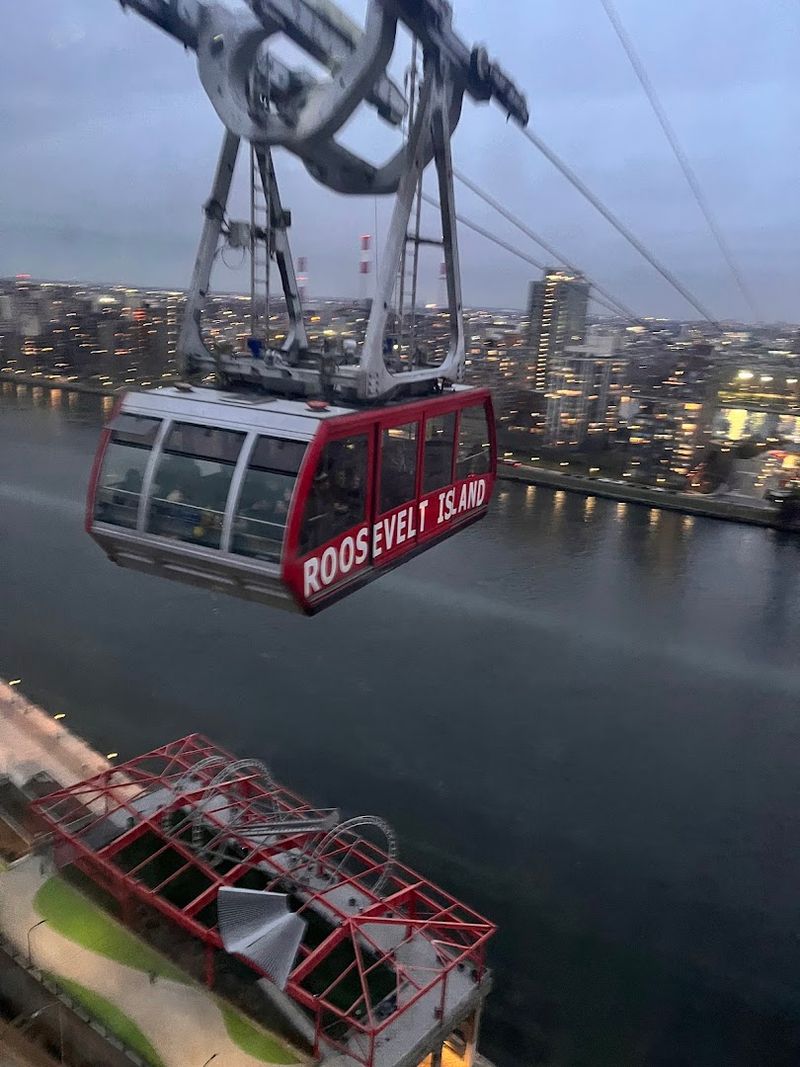
Not every transit system gets to claim a first, but the Roosevelt Island Tramway holds one that still turns heads. When it opened on May 17, 1976, it became the very first commuter aerial tramway in the entire United States.
That is not a small thing. Before this, aerial trams were something you associated with ski resorts in the Alps, not a bustling American city.
New York, being New York, decided to change that entirely.
The tram was originally designed as a temporary fix. The plan was to use it only until the subway line to Roosevelt Island was ready.
That subway finally opened in 1989, but by then, the tram had already won over the city. Ridership stayed strong, affection ran deep, and the tramway earned its permanent spot in the transit network.
Temporary turned into timeless, which feels very on-brand for New York.
The system underwent a major rebuilding project between March and November of 2010, getting a full modern upgrade while keeping its iconic status intact.
Today, it remains the only commuter aerial tramway still operating in all of North America. Riding it feels like touching a living piece of transportation history.
Every cabin that glides above the East River carries the weight of nearly five decades of commuters, dreamers, and wide-eyed visitors.
That kind of legacy is rare anywhere, let alone in a city that is always tearing things down to build something newer. The tramway is proof that some originals are simply too good to replace.
Where The Journey Begins
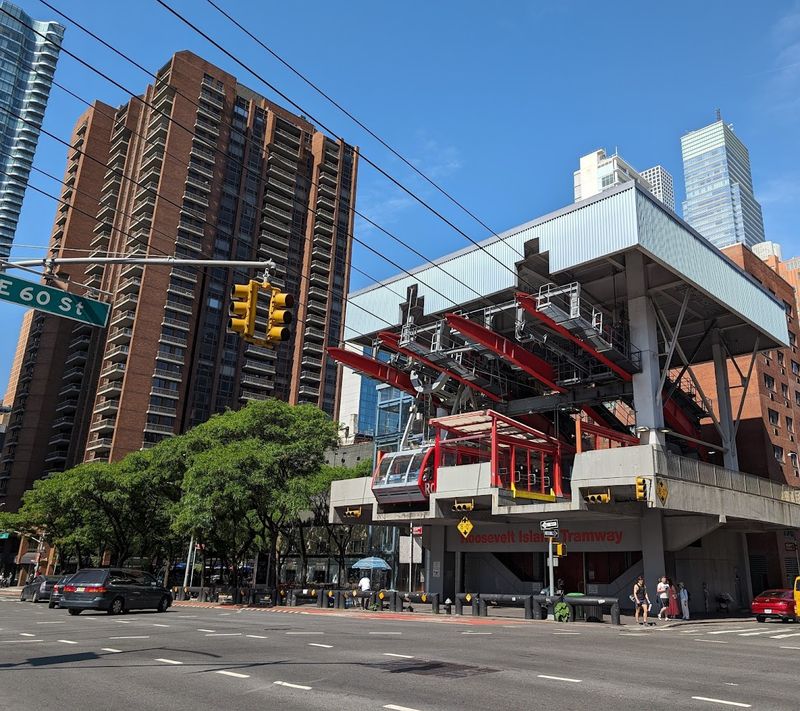
The starting point of this whole adventure sits right at the corner of East 59th Street and 2nd Avenue, New York, NY 10022. It is easy to walk past without noticing, which is honestly part of its charm.
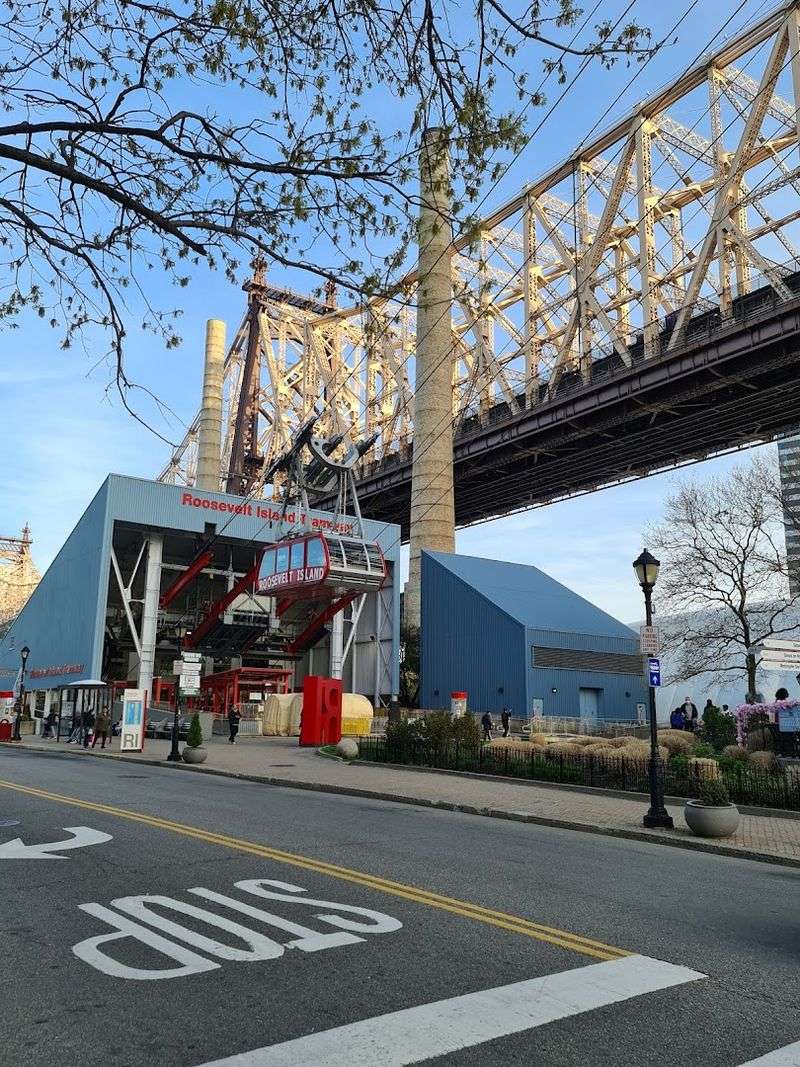
The Manhattan station blends into the Upper East Side streetscape until you look up and spot the cable lines stretching out over the river. That is your cue to stop walking and start boarding.
Getting in is refreshingly simple.
You tap your MetroCard or use OMNY, the city’s tap-to-pay system that works with credit cards and smartphones. The fare is $3.00, identical to a standard subway or bus ride.
If you are riding frequently within a seven-day stretch, OMNY caps your fares after 12 paid trips, meaning extra rides that week become free. Budget travelers, take note.
The station itself is accessible and well-designed, with wheelchair access built into both the Manhattan and Roosevelt Island ends.
There is no complicated ticketing process, no separate fare structure, and no tourist surcharge hiding in the fine print. You pay what every commuter pays, and you get the same breathtaking ride.
The tram operates daily starting at 6:00 a.m., running until 2:00 a.m. on weekdays and until 3:30 a.m. on weekends.
During rush hours, departures happen every 7.5 minutes. Off-peak, every 15 minutes.
Timing your visit is easy, and the frequency means you rarely wait long before the cabin doors open and the real fun begins.
Three Minutes Of Pure Sky-High Euphoria
Three to four minutes sounds like nothing. It is barely enough time to send a text or finish a sip of coffee.
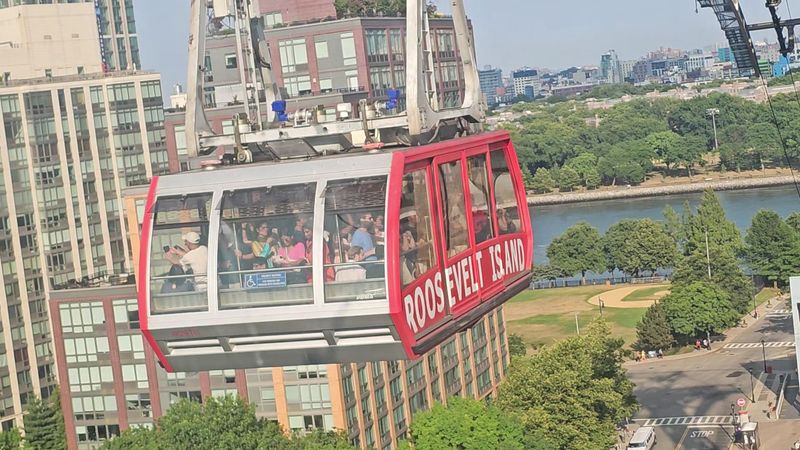
But suspended 250 feet above the East River, those minutes stretch out in the best possible way. Time moves differently when you are floating above one of the most famous rivers in the world, watching the city shrink below your feet.
The cabins are fitted with large windows that wrap around the sides, giving every passenger a generous view regardless of where they stand.
There is no bad seat on this ride. The moment the tram lifts off the station platform, the noise of the street fades and the skyline opens up like a curtain being pulled back on a stage.
It is genuinely theatrical.
At peak height, you are sitting 230 to 250 feet above the water. That is roughly equivalent to a 20-story building, except instead of walls, you have open sky and a river below you.
The Queensboro Bridge runs parallel to the tram cables, close enough that you can appreciate its massive steel framework from an entirely new angle. Each cabin holds up to 110 people, so even during busy periods, the experience never feels cramped or rushed.
The ride ends almost before you want it to, depositing you gently on Roosevelt Island with a grin you did not plan for. That is the magic of it.
Four minutes in the air, and the city looks completely different to you forever.
The Views That Make Your Camera Work Overtime
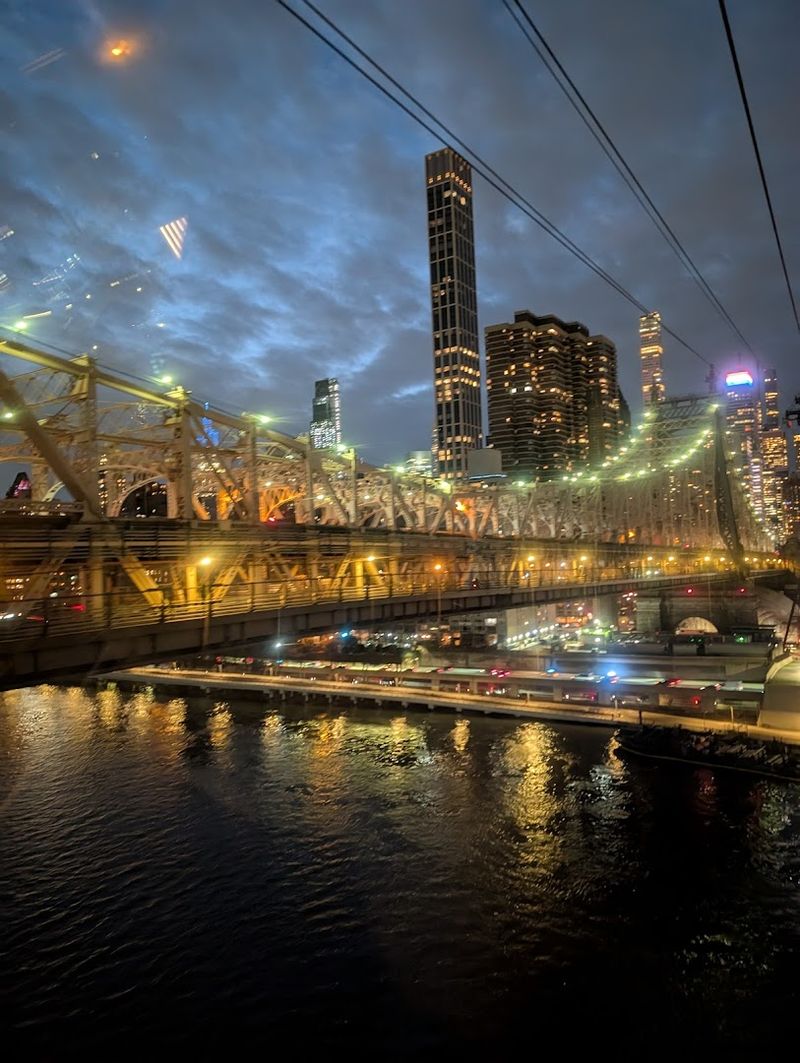
Photography lovers, prepare to run out of storage. The views from the Roosevelt Island Tramway are the kind that make even casual phone photographers suddenly feel like they have found their calling.
From the moment the cabin clears the station, the Manhattan skyline begins revealing itself in layers, and every few seconds brings a better frame than the last.
The Chrysler Building glints in the distance with its iconic art deco crown catching the light. The Empire State Building anchors the midtown skyline with quiet authority.
The Queensboro Bridge stretches out in industrial elegance right alongside the tram route, offering a perspective on its steel arches that you simply cannot get from street level. Looking down, the East River moves beneath you in shades of grey and green, dotted with the occasional boat cutting through the current.
Sunrise and sunset rides deserve a special mention. Early morning light turns the glass towers of Midtown into something almost golden, while evening rides offer a skyline that starts glowing as the city shifts into its nighttime rhythm.
Clear days give you visibility stretching far beyond what you would expect from a four-minute ride. Cloudy days have their own dramatic quality, with the tram cutting through low mist above the water.
The tram’s large windows are clean and unobstructed, so there is nothing between your lens and the view.
Bring your camera fully charged, because the Roosevelt Island Tramway is one of those rare spots where every shot actually turns out worth keeping.
The $3 Price Tag That Makes No Logical Sense (In The Best Way)
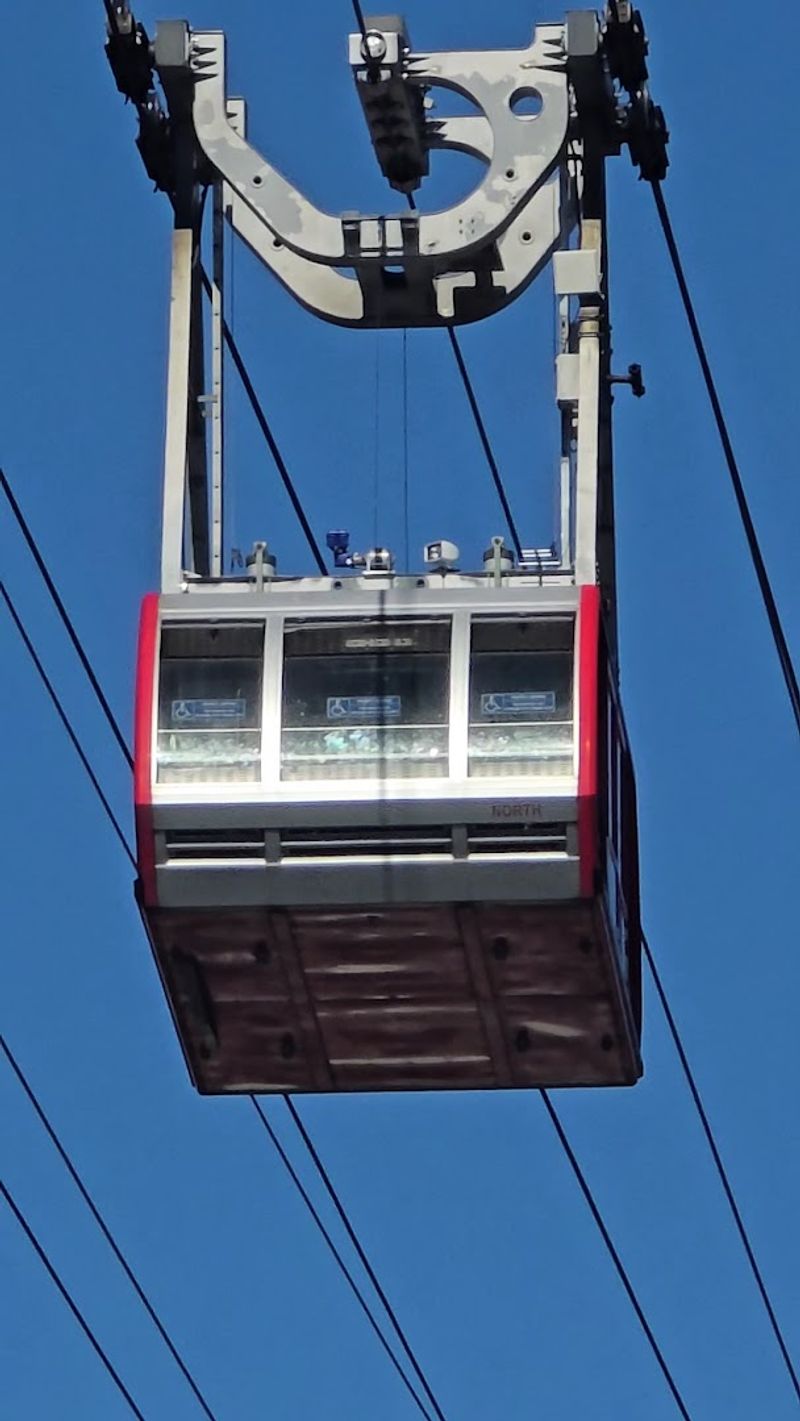
New York City is not exactly famous for being affordable. A slice of pizza costs more than it used to.
A coffee with any customization at all will set you back five dollars before you blink.
So when something genuinely spectacular costs exactly $3, it feels almost suspicious, like the city forgot to mark it up properly.
The Roosevelt Island Tramway fare matches the standard subway and bus fare exactly. No premium, no tourist pricing, no separate admission.
You tap your MetroCard or use OMNY on your phone or credit card, and you are in. OMNY users get an added bonus through the weekly fare cap.
After 12 paid rides within a seven-day period, every additional ride that week is free. If you are using the tram regularly during a visit, the math gets even friendlier.
For context, many of New York’s most popular observation experiences cost anywhere from $30 to $45 per person.
The tram gives you an aerial perspective above the city for a tenth of that price, with no reservation required, no timed entry, and no velvet rope situation. You just show up, tap, and float above the East River like it is the most normal thing in the world.
There is something quietly rebellious about getting a world-class view for the price of a ride across town.
The Roosevelt Island Tramway is one of those genuinely great deals hiding in plain sight, and savvy travelers who find it tend to ride it more than once just because they can.
The Quiet Surprise Waiting On The Other Side
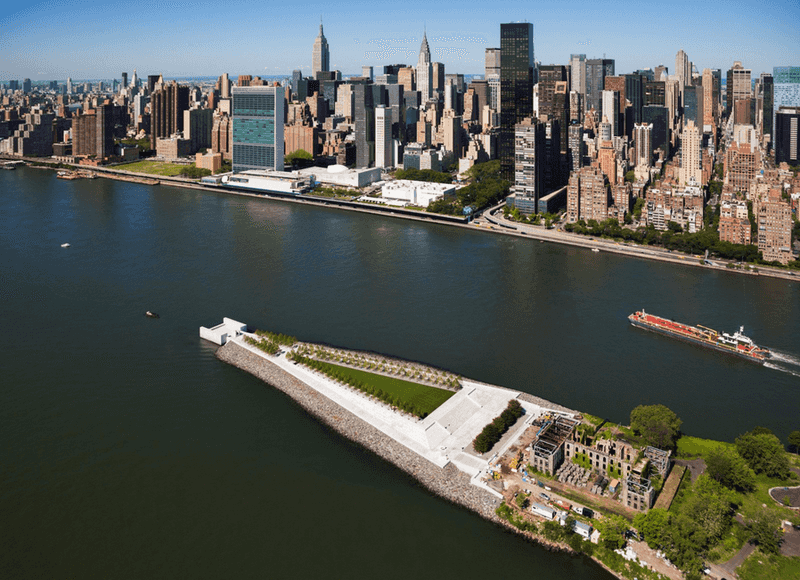
The tram ride itself is the headline act, but Roosevelt Island deserves its own moment in the spotlight. Arriving on the island feels like stepping into a calmer, quieter version of New York, one where cars are scarce, the air feels different, and the skyline you just came from now frames the horizon like a painting you can walk toward.
The island is a narrow strip of land, roughly two miles long and only 800 feet wide at its widest point. It sits in the middle of the East River between Manhattan and Queens, and its layout is built around pedestrian paths and open green spaces.
The Franklin D. Roosevelt Four Freedoms State Park sits at the southern tip, offering one of the most serene waterfront experiences in the entire city.
The park is built around Louis Kahn’s final architectural masterpiece, and the views back toward Manhattan from its granite plaza are genuinely breathtaking.
The island also has a history that goes well beyond its current peaceful appearance. Ruins of the old Smallpox Hospital still stand near the southern tip, a designated landmark that gives the island an unexpected layer of atmospheric history.
Spending an hour or two exploring before catching the tram back to Manhattan turns a four-minute ride into a full half-day adventure. Roosevelt Island rewards the curious traveler who decides to linger just a little longer than planned.
The Spider-Man Connection That Makes This Ride Even Cooler
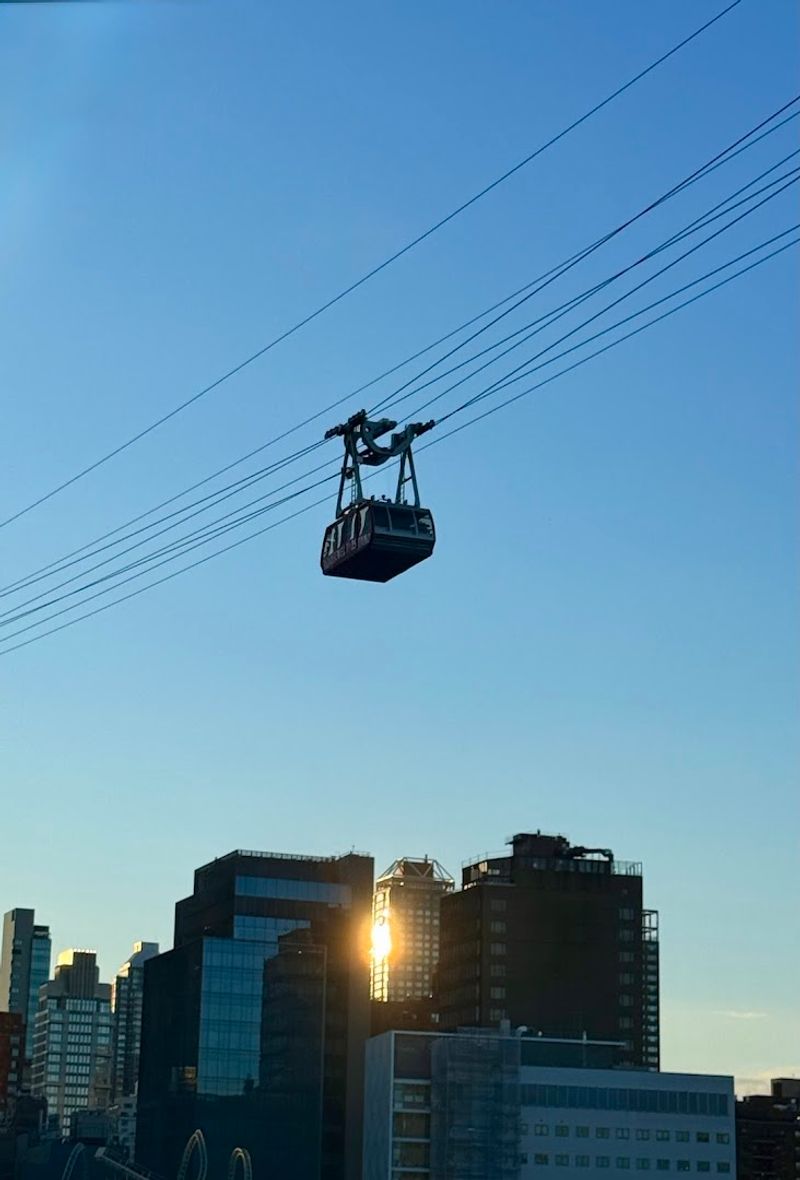
Here is a fun fact that will make you feel like a New York insider: the Roosevelt Island Tramway is literally a movie star. In Sam Raimi’s 2002 Spider-Man film, the climactic scene involves the Green Goblin dangling a tram car full of passengers above the East River while Spidey scrambles to save everyone.
That tram is this tram. Well, a Hollywood version of it, but the real one is the inspiration.
The scene became one of the most iconic moments in superhero cinema, and it gave the tramway a pop culture status that goes well beyond transit history.
Riding the actual tram with that knowledge in your head makes the whole experience slightly more thrilling. You find yourself looking out the window thinking about what it would look like from below, which is exactly the kind of ridiculous thought that makes New York so entertaining.
Beyond Spider-Man, the tram has appeared in other films and television productions over the decades, always serving as a visual shorthand for that very specific New York feeling of height, movement, and urban drama.
It photographs like a dream from the Queensboro Bridge pedestrian path, where you can watch the cabins glide silently above the river against the Manhattan skyline. The combination of real transit history and Hollywood mythology gives the Roosevelt Island Tramway a personality that most transit systems could never claim.
It is the rare piece of city infrastructure that feels genuinely cinematic, even when you are just riding it home on a Tuesday.
Why This Ride Belongs On Every New York Itinerary
Every city has that one experience that locals take for granted and visitors almost always miss. In New York, the Roosevelt Island Tramway is exactly that.
It does not have the marketing budget of the Empire State Building. It does not show up on every tourist map.
But the people who find it tend to call it one of the best things they did in the city, and they are not wrong.
The combination of accessibility, affordability, and sheer visual impact is almost impossible to beat. You are in and out in under ten minutes if you want to be, or you can ride over, explore the island, and come back whenever you feel like it.
The tram runs until 2:00 a.m. on weekdays and 3:30 a.m. on weekends, so a late-night ride with the city lit up below you is absolutely on the table. That nighttime skyline, seen from 250 feet above the water, is something genuinely special.
The tram fits into any itinerary without requiring a big time commitment or a reservation. It pairs perfectly with a walk across the Queensboro Bridge, a visit to Central Park, or an afternoon on Roosevelt Island itself.
Whether you are visiting New York for the first time or the fifteenth, the Roosevelt Island Tramway offers a perspective on the city that you simply cannot replicate from the ground.
So the next time someone asks you for the best three dollars you can spend in New York, you already know the answer, and now you have the ride to prove it.