
The Forgotten River Port In Missouri That Feels Trapped In The 1800s
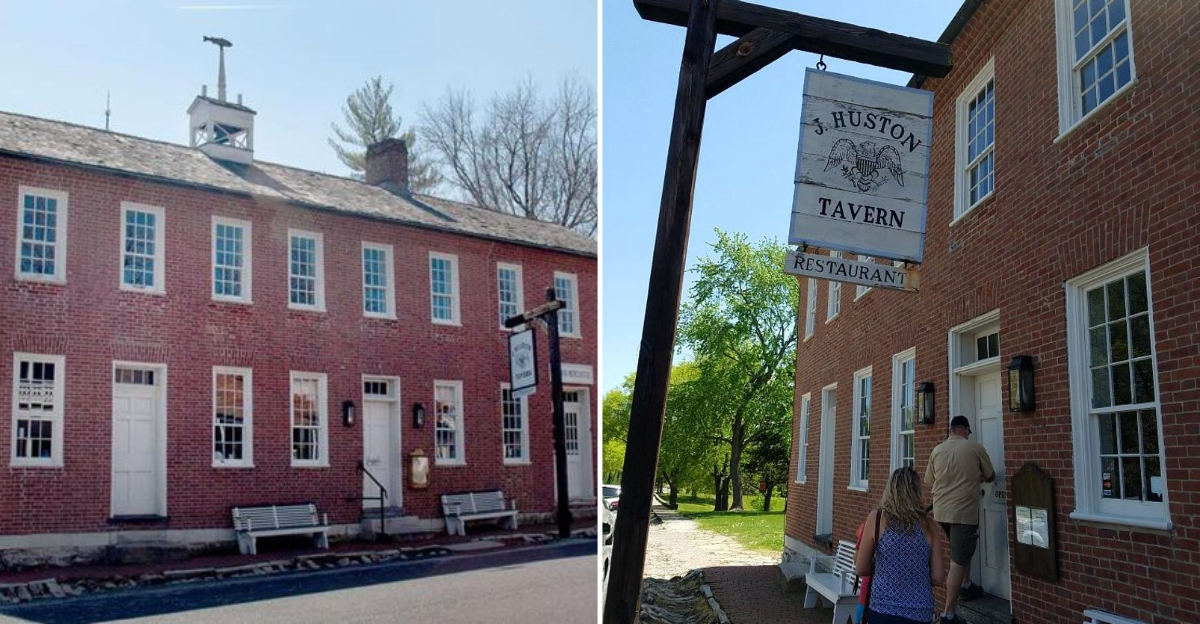
Last summer, I drove past Arrow Rock three times before finally pulling over, and I didnt regret it. This tiny Missouri village sits frozen somewhere between 1850 and today, with brick storefronts and white frame houses that look like they’re still waiting for the next steamboat whistle.
Once a roaring river port packed with nearly a thousand residents, Arrow Rock now shelters only a few dozen souls who share their streets with history buffs and curious travelers.
The whole place earned National Historic Landmark status, which means every corner whispers stories about wagon trains, river commerce, and the frontier days when this bluff above the Missouri River mattered to everyone heading west.
Where The River’s Bend Still Holds A Town In Place
Pull off Missouri Route 41 and the whole scene unfolds at once: brick buildings hugging a ridge, white clapboard homes tucked along side streets, and a bluff that tumbles toward the Missouri River like nature built a stage just for this village.
Streets stay quiet most days, yet every boardwalk plank and hand-painted sign makes it feel like the 19th century never fully left.
The entire village now forms a National Historic Landmark district, preserved as one of Missouri’s best surviving river towns from the steamboat era.
I remember parking near the main block and hearing nothing but birdsong and my own footsteps echoing off old brick.
Once The Busiest River Port Between St. Louis And Kansas City
Picture the 1860s, when Arrow Rock boomed with nearly a thousand residents, steamboat whistles, wagon traffic, and stacked hemp bales heading downriver.
Records from that period describe Arrow Rock as one of the busiest river ports between St. Louis and Kansas City, a place where streets bustled with shops, warehouses, and travelers circulating between wharves and taverns.
Today, only a few dozen people live in the village, yet echoes of that packed riverfront linger in the way the town faces the water below.
Standing on the bluff, I tried imagining the noise and chaos that once filled the landing area where now only grass and silence remain.
Arrowheads, Ferries, And The Santa Fe Trail
Long before ferries and freight, the bluff above town gave the place its name. Native peoples once quarried flint here for arrow points, a landmark later labeled Pierre à Flèche on early French maps and noted by Lewis and Clark as they worked upriver.
Generations later, a ferry began crossing the Missouri at this bend, carrying westbound settlers and Santa Fe Trail caravans whose wagons rattled up from the landing toward town.
That crossroads role turned Arrow Rock into a key doorway to the frontier and seeded the river port that followed.
Reading those old expedition journals made me appreciate how many boots and hooves crossed this exact spot.
Brick Taverns, Stone Gutters, And Streets Built By Hand
Walk down Main Street and details jump out: deep stone gutters lining the road, Federal-style brick buildings, and a long two-and-a-half-story tavern that dominates the block.
Built in 1834 by Judge Joseph Huston, that tavern expanded into a store and ballroom that fed and lodged generations of river travelers and wagon crews.
Many early streets and drainage channels were built by enslaved laborers, work that still shapes how rain moves through town and how footsteps sound against the old stone.
Interpretive signs now invite visitors to stand in those same spots and face that mixed legacy head-on, which I found both sobering and necessary.
How Railroads, Fires, And Changing Routes Left A Port Behind
Success felt secure for a while, yet trouble arrived in waves: guerrilla violence during the Civil War, devastating fires in the 1870s and early 1900s, and rail lines that bypassed the bluff entirely.
Steamboats lost their hold on commerce, and Arrow Rock never won the bridge or railroad it hoped would keep traffic flowing.
The population shrank from a small city to a tiny village, dropping to around sixty residents in recent counts, leaving quiet streets where storefronts once fought for space.
That slow fade is part of what makes the town feel paused in an earlier century, like someone pressed pause on progress and forgot to hit play again.
Preservation Instead Of Reinvention
As other river towns modernized, Arrow Rock gradually chose a different path. Restoration of the old Huston Tavern in 1923 became Missouri’s first publicly funded preservation project and helped launch the state park system.
Decades later, the village and a large slice of surrounding land became Arrow Rock State Historic Site and a National Historic Landmark, with guidelines that keep new construction in harmony with 19th-century streetscapes.
Instead of turning the place into a themed attraction, residents and preservation groups have protected it as a real town where daily life still plays out inside historic walls.
I appreciated seeing laundry hanging behind one historic house, proof that real people still call this place home.
Life After Steamboats: Huston Tavern And The Lyceum Theatre
Even in a village this small, evenings can feel lively. Huston Tavern still serves meals inside its brick rooms under the care of the J. Huston Tavern Society, carrying forward its role as one of Missouri’s oldest operating restaurants.
Just up the street, the Arrow Rock Lyceum Theatre fills a former church with professional productions that draw tens of thousands of visitors a year, bringing modern road-trippers and theater fans to the same streets where mule teams once rattled past.
I grabbed fried chicken at the tavern and caught a comedy show at the Lyceum, which felt wonderfully surreal in such a time-capsule setting.
Walking Arrow Rock Today: Tracing A River Port’s Ghost
Arrive on a clear afternoon and you can follow trails from the visitor center down toward the old river landing, where signs describe how freight once moved between bluff and water.
A self-guided loop carries you past the courthouse, stone jail, historic homes, and the bluff overlook, with miles of hiking paths, a small lake, and a campground tucked around the edges of town.
Stand near sunset on the ridge above the river and it becomes easy to imagine steamboat smoke drifting through the valley again, even while the village below stays suspended in its carefully protected present.
That golden-hour view alone made the whole detour worthwhile for me.