
The Ghostly Beauty Of Georgia’s Elberton Train Depot That Locals Can’t Stop Talking About
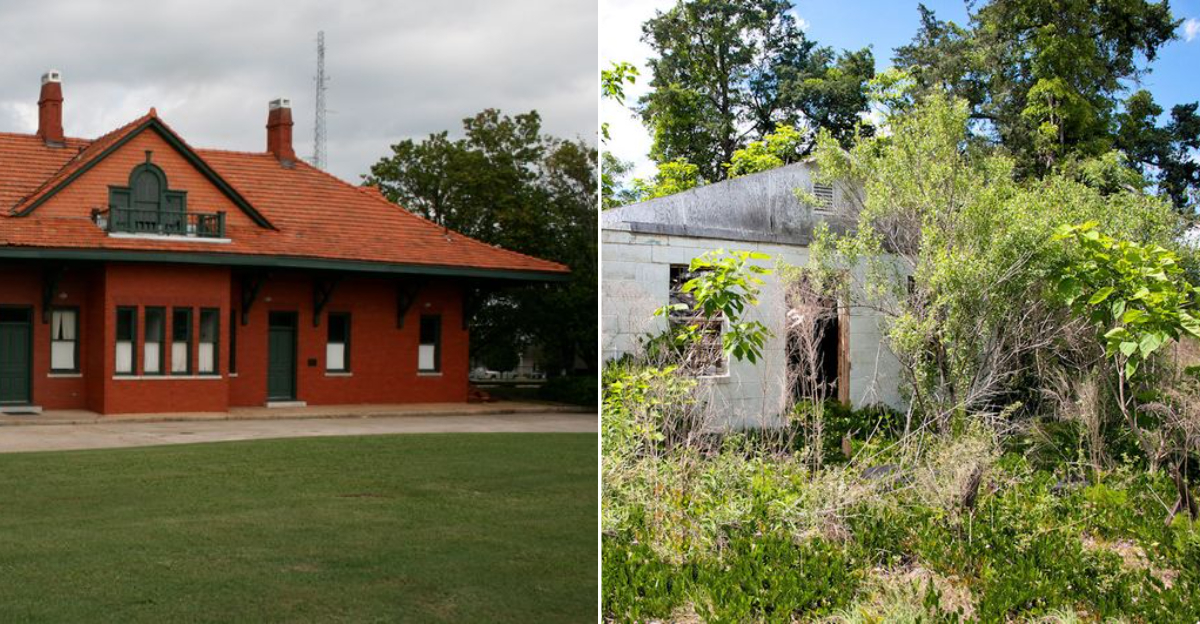
Once a hub of movement and sound, Elberton’s depot now lingers in silence. Built in 1910, the station’s presence remains striking, even as its function has faded.
Architecture tells a story: overhanging eaves, Stick-style brackets, and woodwork worn by time but still elegant. Trains no longer pull through, yet memories do.
Locals recall journeys, preservationists argue for its future, and its National Register listing preserves the gravitas. Here, Georgia’s history sits waiting, framed by grass, stillness, and nostalgia.
1. A 1910 Build With Classic Seaboard Air Line Architecture
Constructed in 1910, the Elberton depot reflects the practical yet dignified style of the Seaboard Air Line Railroad. Its proportions carry a strong architectural rhythm.
The design speaks of utility blended with quiet elegance. Materials chosen for function gained character over a century of weather and waiting.
Railroad fans note its alignment with regional design trends. Preservationists highlight how the structure captures a moment when rail travel was central to small-town life.
2. Overhanging Eaves With Stick-Style Brackets That Cast Deep, Dramatic Shadows
Broad eaves stretch beyond the walls, giving protection once vital to travelers. Stick-style brackets hold them firm while adding visual rhythm.
The shadows thrown by these eaves carve drama across the siding. Changing light transforms the depot throughout the day, giving it cinematic appeal.
Architectural historians describe these details as hallmarks of early twentieth-century design. Visitors often pause, noticing how utility here created artistry, and how those shadows deepen the building’s quiet mystery.
3. The “Silver Comet” Line Served Here,Real Train Lore Behind The Rails
This depot once heard the thunder of the Silver Comet, a passenger line linking New York to Birmingham. Its whistle echoed through Elberton.
The train carried soldiers, families, and workers. Its story runs parallel with the depot’s rise and later decline as cars eclipsed rail.
Today, the Silver Comet Trail preserves some of the line’s path. Locals recall waiting on these platforms for the glint of silver to round the bend.
4. Windows And Doorways Dilapidated, But Still Framed With Elegant Woodwork
Time has worn the windows and doorways, yet carved wood frames remain. The craftsmanship resists decay, still hinting at their original refinement.
Flaking paint and splintered surfaces give texture like a movie backdrop. These features anchor visitors in both beauty and ruin.
Photographers favor these lines, noting how light filters through broken panes. Preservationists call for careful repair to honor the skill once invested in such details.
5. Walls And Siding Showing Age And Weather, Giving Texture Like A Movie Backdrop
The siding wears decades of weather. Boards ripple with time, each line a record of sun, rain, and Southern humidity.
Texture builds character. What once looked ordinary now draws comparisons to stage sets and period films. The depot has become its own backdrop.
Local preservation voices argue the siding embodies authenticity. Its wear tells truth more vividly than fresh paint ever could. Visitors often comment on its cinematic, storybook quality.
6. Quiet surroundings — overgrown grass, seldom-heard trains, stillness dominates
Surrounding the depot, a quietude prevails, where overgrown grass sways gently in the breeze and the sound of passing trains is but a rare echo.
This stillness envelops the area, offering a serene escape from the bustle of modern life. The depot, with its hushed ambiance, becomes a sanctuary for those seeking solitude.
Here, time seems to pause, allowing visitors to reflect on the past and the passage of time itself. The peaceful surroundings are a stark contrast to the depot’s once lively atmosphere.
7. Located in downtown Elberton, juxtaposed with little historic preservation efforts
Nestled in the heart of downtown Elberton, the depot stands as a poignant juxtaposition of history and modernity. Despite its central location, efforts to preserve this piece of history have been minimal.
It’s a striking contrast to see the depot amidst newer developments, a reminder of the town’s rich past quietly coexisting with its present.
This lack of preservation highlights the fragility of history, urging locals and visitors alike to appreciate the beauty and stories that the depot holds before they fade away.