
The Giant Fish In This Michigan Town Has A Story Bigger Than The Statue Itself
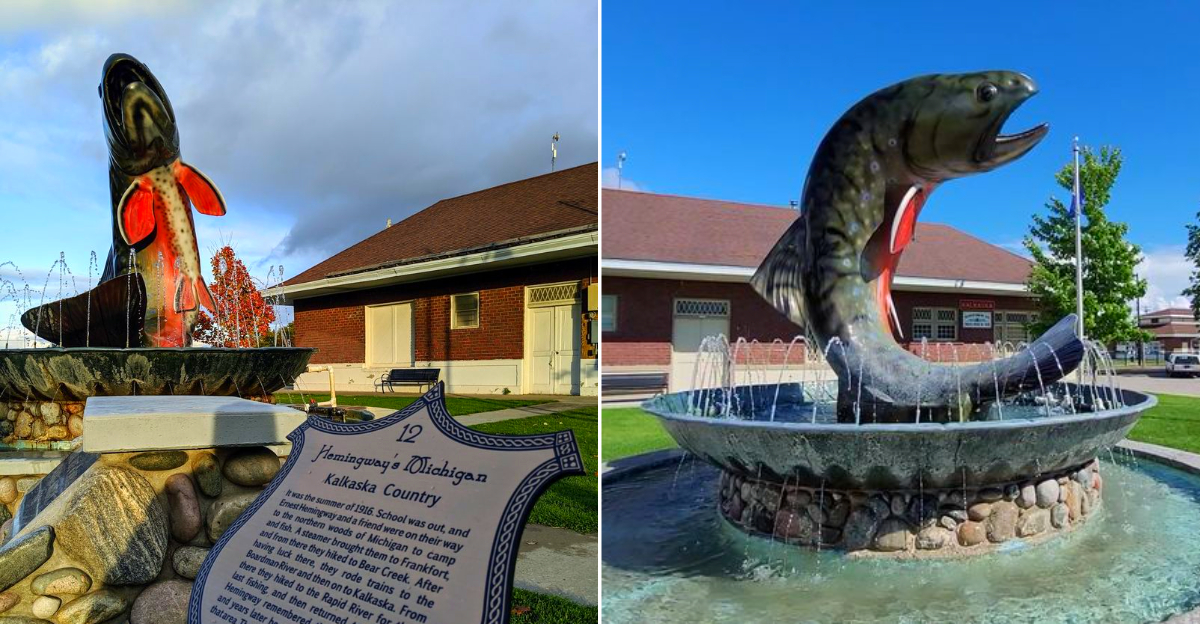
I slammed on my brakes the first time I saw it. A brook trout the size of a car rises from a fountain in the middle of this tiny northern town.
Water jets arc over its painted scales in warm weather. At night, hidden lights turn the whole thing into something almost magical. I expected a gimmick. What I found instead was genuine pride.
This place calls itself the Trout Capital of Michigan and has the rivers to back it up. The Boardman, the Rapid, and the Manistee all run through these woods.
The memorial beside the trout houses a small museum inside an old railroad depot that tells the story better than any roadside attraction I have visited.
Petoskey stones and rocks from Torch Lake are embedded in the base. The town throws an entire festival for trout every April. Sometimes the quirkiest landmarks carry the most honest history.
Look Closely At The Brook Trout Details
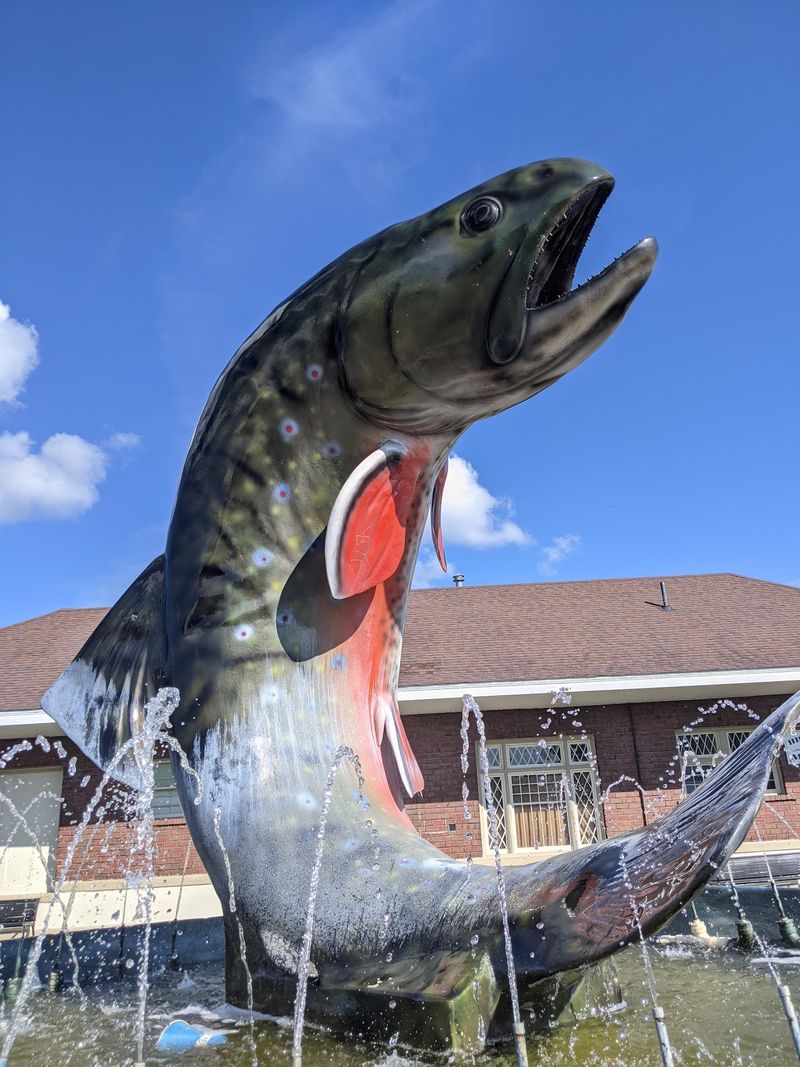
From a distance, the fish looks playful. Up close, the craftsmanship becomes the real surprise, because the sculptors used an actual frozen brook trout to copy the shape, curves, and spotting with careful accuracy.
That choice matters. Instead of a goofy mascot, Kalkaska got a memorial that respects the fish itself, and the result feels oddly lifelike for something so large, with patterns that reward a slower look.
Walk around the base and study the body from different angles. Kids may see a giant fish first, but adults usually end up admiring the patience behind it, especially after learning that hundreds of hours went into shaping and finishing a statue that still feels precise today in bright northern light there.
Kalkaska Put Its Fishing Story Eighteen Feet Tall
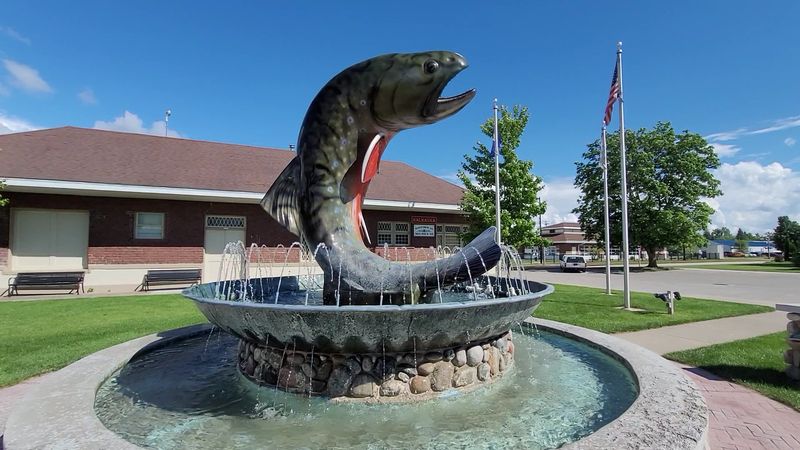
The National Trout Memorial stands in Railroad Square along the 300 block of South Cedar Street in downtown Kalkaska, Michigan. Approach through town on US-131, which becomes Cedar Street, and look toward the east side of the road.
The final approach passes Kalkaska’s compact downtown businesses before the enormous leaping trout appears beside the local museum. The sculpture is far easier to spot than any individual street number, though traffic on US-131 can make the turn arrive quickly.
Use a legal downtown street space or nearby public parking, then walk into Railroad Square toward the fountain and memorial. There is no ticket booth or formal attraction entrance, so the final step is simply crossing into the open public space.
Catch It When The Fountain Is Running
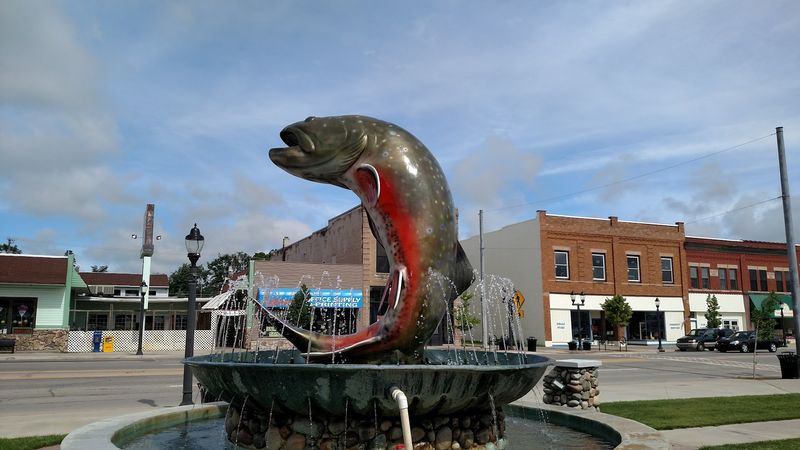
Warm weather changes the whole mood here. When the fountain is on, water jets circle the leaping trout and give the memorial a bit of motion, as if the fish might splash back into a stream at any second.
That seasonal feature also explains why winter visits feel quieter. Cold temperatures shut the fountain down to prevent freezing, so a summer stop and a snowy one can seem like two different roadside landmarks.
If timing is flexible, aim for the warmer months and linger long enough to hear the water. The sound softens traffic noise from nearby US 131 and makes the memorial feel less like a quick pull off and more like a town square with its own personality.
Notice The Stones Beneath The Splash
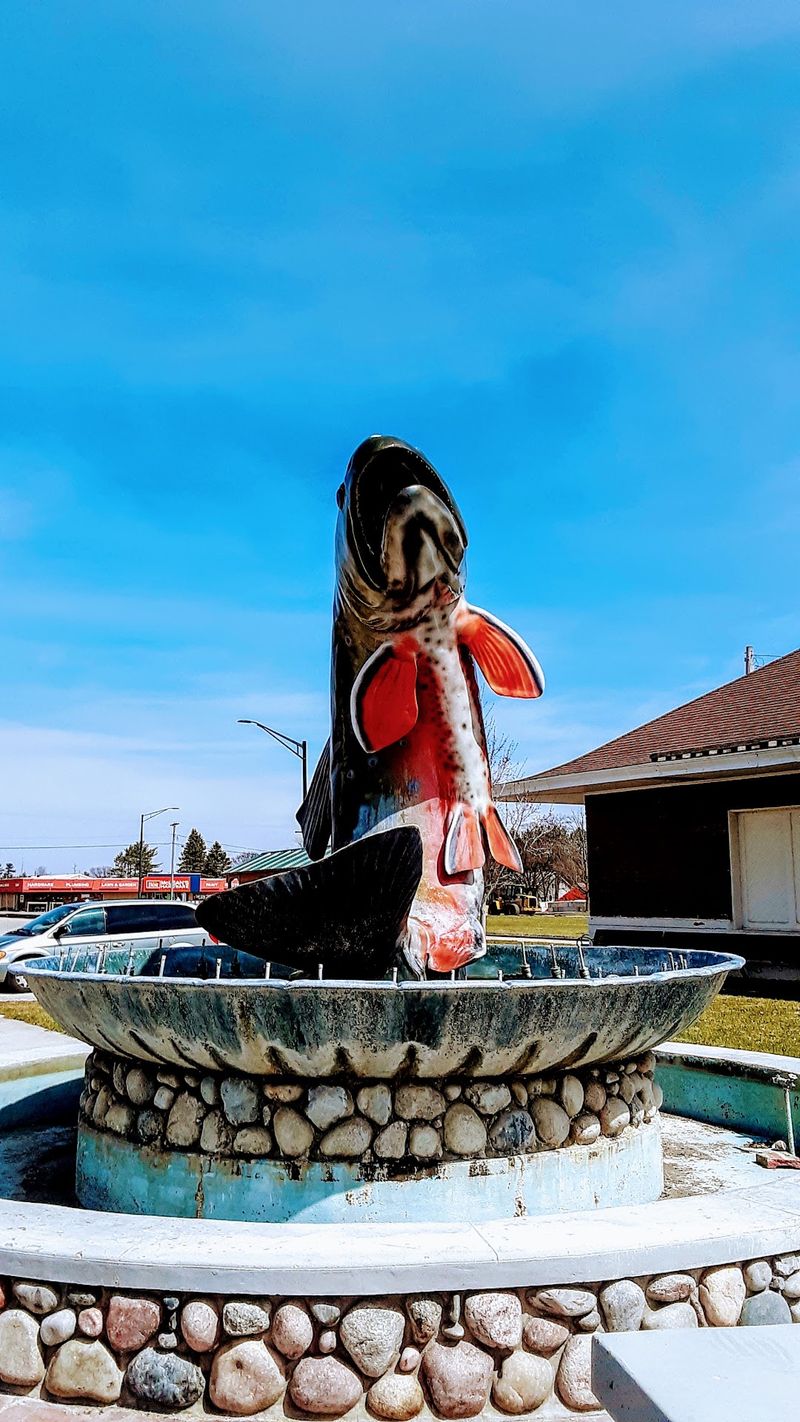
One of the easiest details to miss sits below the fish, not on it. The base includes wash stones from Torch Lake and Michigan Petoskey stones, tying the monument to the wider landscape in a quiet, thoughtful way.
That grounding matters because the memorial is not only about one trout. It also points to northern Michigan water, geology, and outdoor culture, which makes the whole display feel rooted instead of dropped in for effect.
Slow down and look at the materials before hurrying away. A lot of roadside art shouts for attention, but this spot slips in a gentler message, reminding visitors that place can be built from local texture as much as size, color, or height for passing travelers.
Stand Back To See Its True Scale
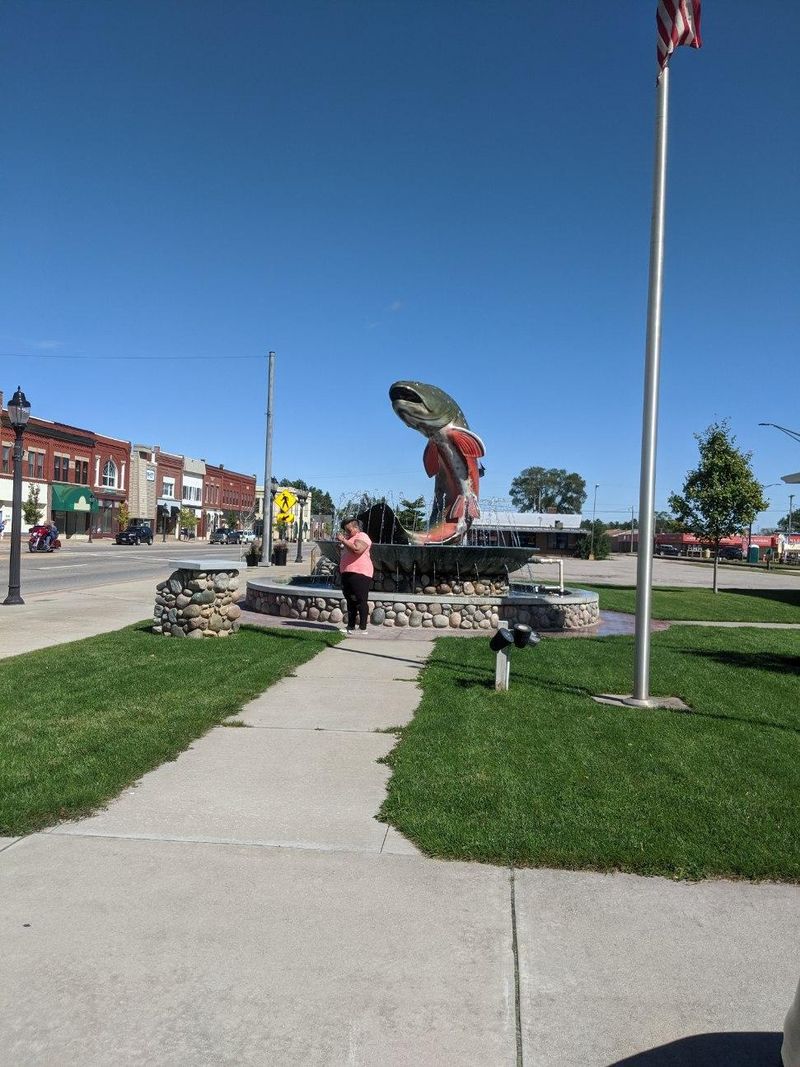
A giant trout sounds funny until you stand beside it. Then the numbers click: the memorial is about 17 to 18 feet long, around 12 feet high, and weighs roughly 600 pounds, so the fish stops being cute and starts feeling monumental.
Scale is part of the story here. Kalkaska did not build a tiny plaque for its trout heritage; it built something impossible to ignore, visible from US 131 and memorable even after a short stop.
For the best photos, step back farther than feels necessary. The open space lets the full leap read clearly, and people in the frame help show just how oversized the brook trout really is without any camera trickery or forced close cropping tricks.
Use The Museum Setting To Add Context
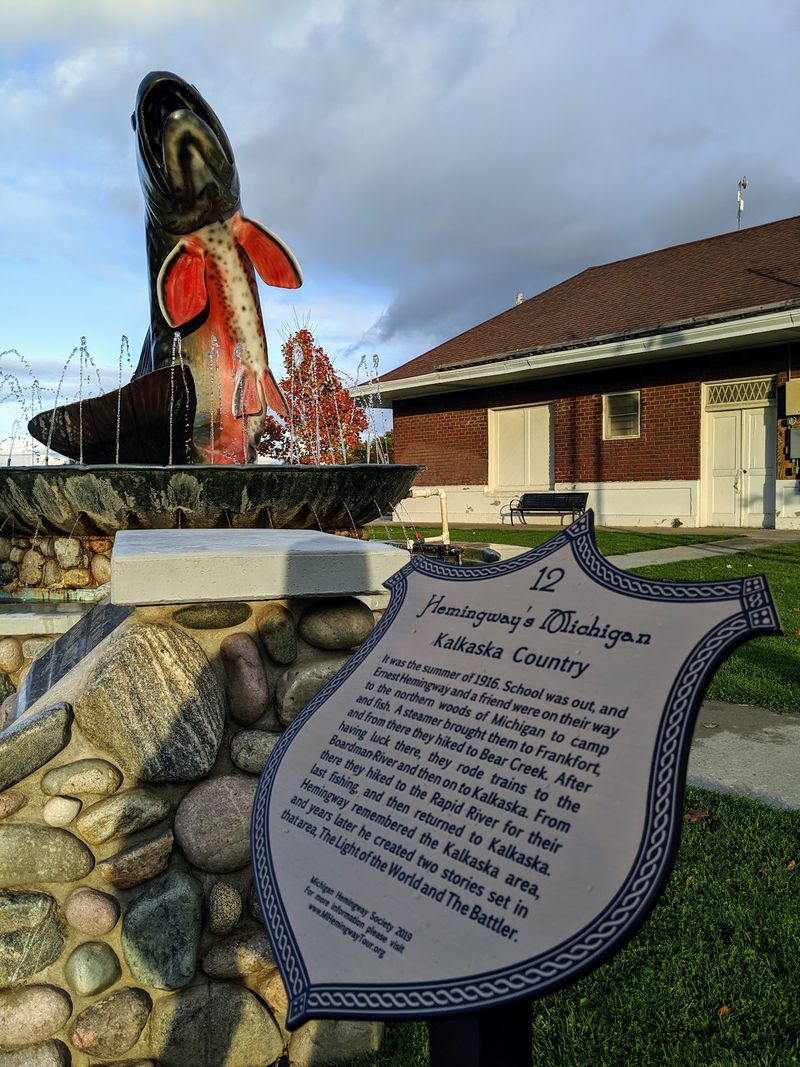
The trout does not stand in the middle of nowhere, and that helps. It sits in front of the Kalkaska Historical Museum, a former railroad depot, so the memorial shares space with another piece of local history.
That pairing gives the stop more depth than a quick roadside photo suggests. A railroad building behind a giant fish sounds slightly odd on paper, yet in person it reflects how towns preserve different chapters side by side.
Plan a few extra minutes instead of treating the memorial as a blink and go attraction. Even when only viewing the exterior, the setting explains that Kalkaska values memory, transportation, and fishing heritage as parts of one connected story rather than separate curiosities for visitors.
Time Your Trip For Festival Energy
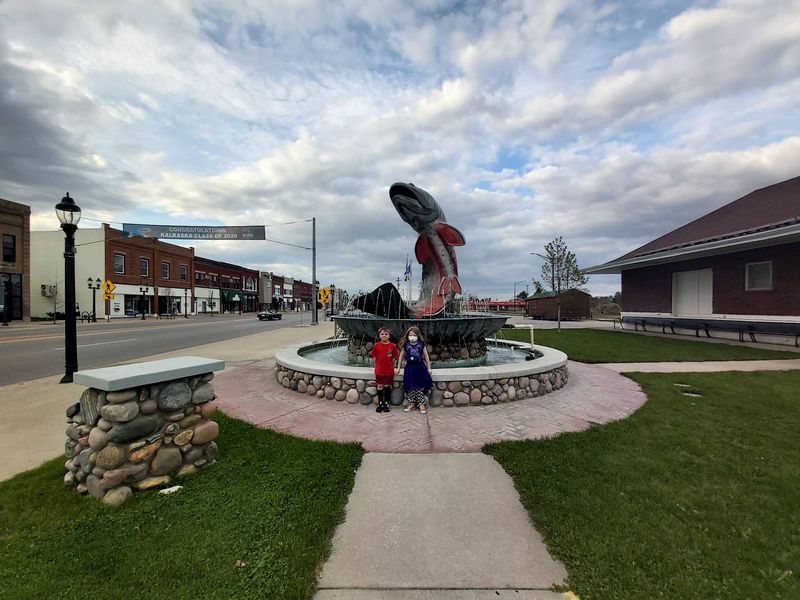
Late April gives the memorial its loudest season. The National Trout Festival, first held in 1935, celebrates the opening of Michigan’s trout season and turns the area around the statue into a gathering place with a much bigger pulse.
During festival days, the giant fish feels less like a solitary landmark and more like the mascot of an entire town tradition. Parades, family activities, and the rush of visitors help explain why the memorial matters so much to people who return year after year.
Anyone who likes quiet should come on a normal weekday instead. Anyone curious about local identity should aim for festival time, when the statue stops posing and starts participating in Kalkaska’s main annual celebration for real.
Remember Why Kalkaska Calls Itself Trout Town
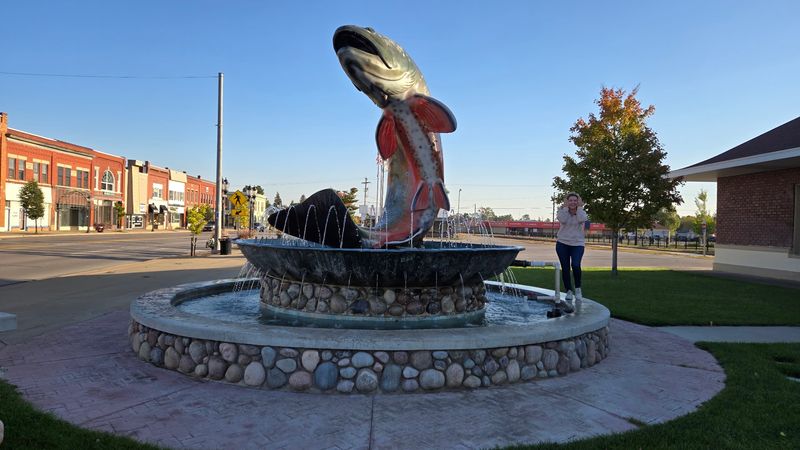
Long before the statue became a landmark, Kalkaska was already building its name around trout. The village has carried the nickname Trout Town since the 1930s, and the memorial makes that claim visible in one bold leap.
The title is not random booster talk. Kalkaska County is known for forests, many lakes, and hundreds of miles of trout streams, so the statue reflects a landscape that genuinely supports the fishing culture it celebrates.
Seeing the fish without that context would flatten the experience. With it, the memorial reads more like a town sign written in sculpture, announcing what matters here and why the surrounding water has shaped local pride for generations of residents and passing anglers alike through many seasons.
Notice The State Symbol In Giant Form
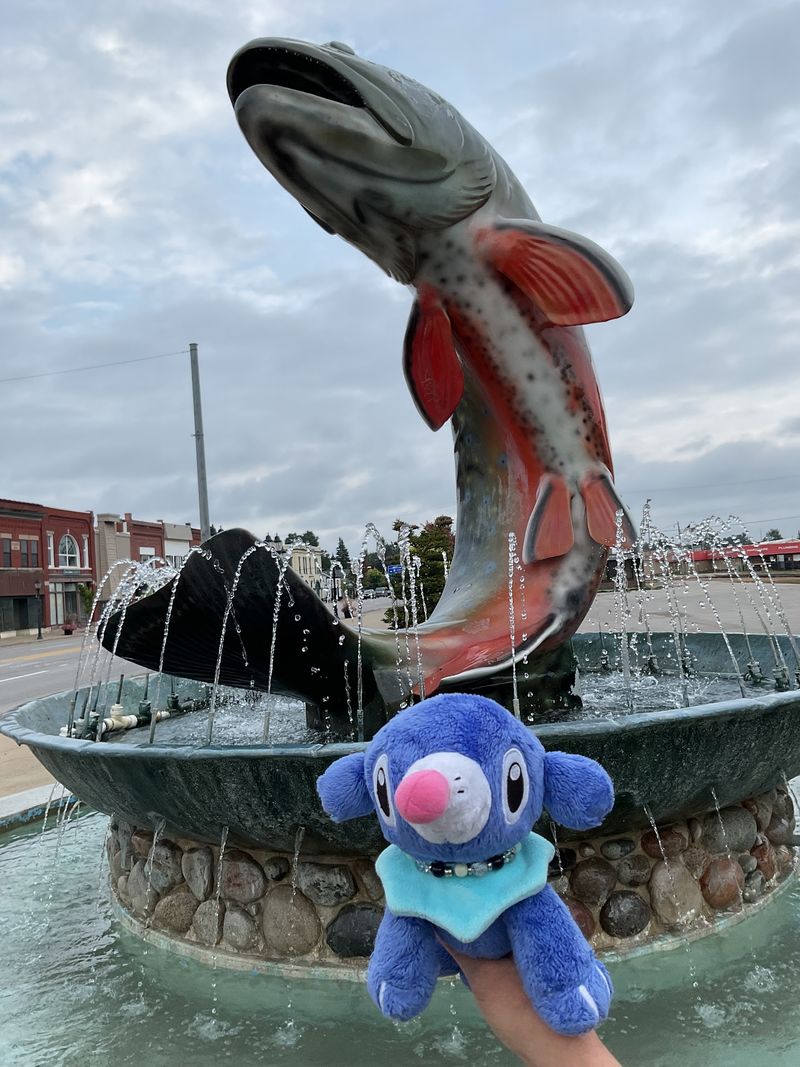
Michigan chose the brook trout as its official state fish, and Kalkaska gave that symbol a supersized stage. That civic connection adds another layer, because the memorial represents both local identity and something broader across the state.
There is a nice balance in that idea. The statue feels deeply specific to one town, yet anyone interested in Michigan outdoors can recognize the brook trout as part of the region’s natural character and fishing history.
Try reading the memorial as a symbol instead of just an attraction. Once that shift happens, the fish stops being merely oversized fiberglass and starts working like public art, translating a state emblem into a cheerful, unmistakable landmark that even hurried travelers can understand at once.
Make It A Quick Stop That Feels Rich
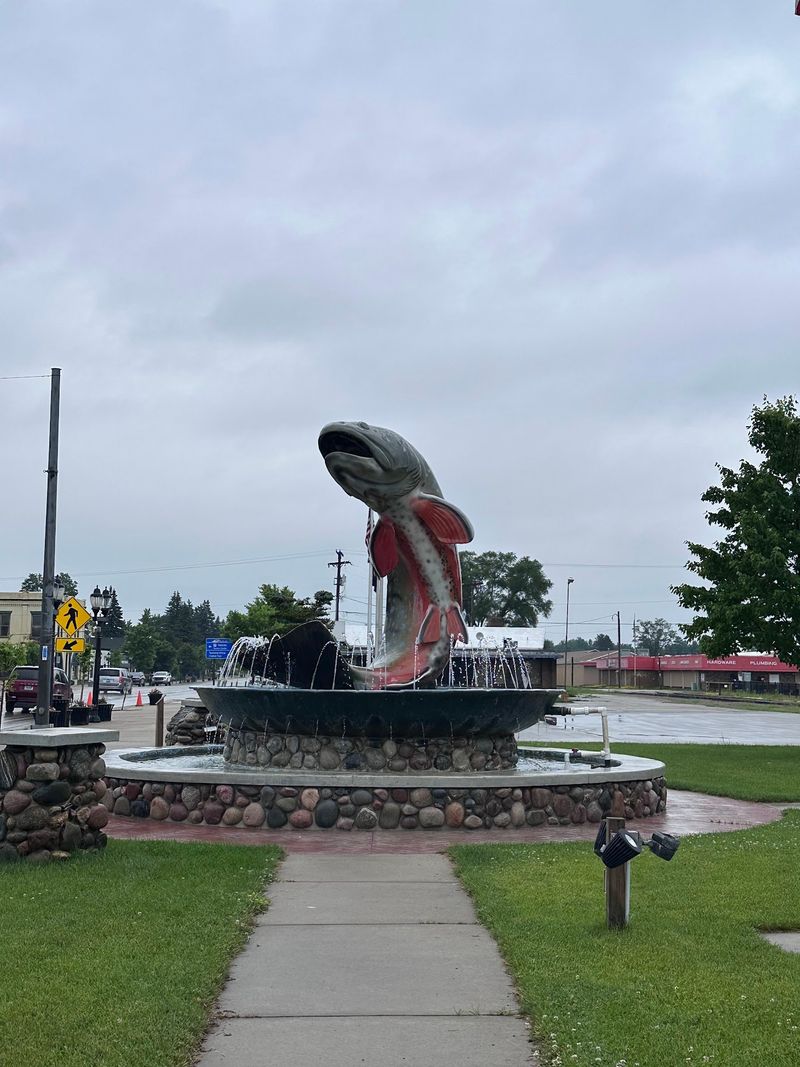
Roadside attractions often ask for five minutes and give back one joke. The National Trout Memorial is different because it is easy to reach, has free nearby parking, and still manages to offer history, design, and a strong sense of place.
Located right on US 131, the site works well for travelers who are moving between northern Michigan stops. There is no complicated plan required, which makes it a useful pause for families, day trippers, and anyone who likes memorable landmarks without a long detour.
Give yourself a little more time than the map suggests. A short stop can still feel satisfying here especially when you read the setting, notice the details, and let the town’s personality come through clearly.
Visit At Night For A Different Mood
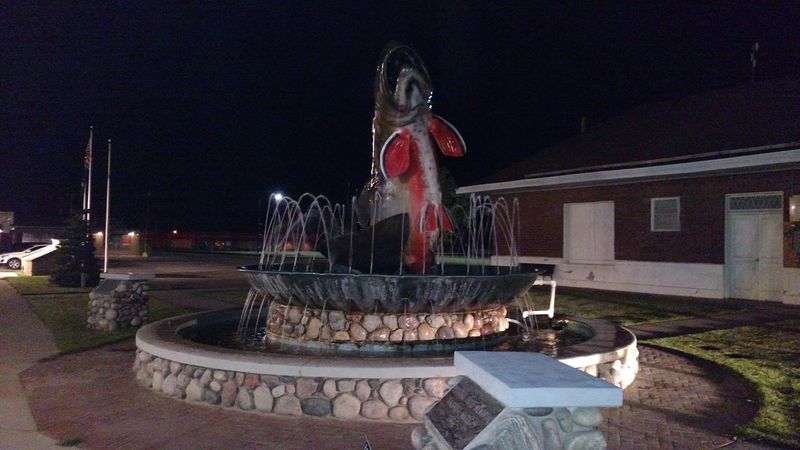
After dark, the trout takes on a stranger, more theatrical personality. Lighting turns the memorial from a cheerful daytime landmark into something almost stage set-like, with the fish seeming to hover above its base against the night sky.
That evening shift is part of the fun. Daylight reveals color, texture, and all the careful anatomical work, while nighttime simplifies the scene and lets shape do more of the storytelling.
An unhurried evening pass through town can be surprisingly rewarding. If the fountain season is on, the lights and water add even more presence, and if the water is off, the illuminated outline still makes the memorial feel special, like Kalkaska saved a little glow for travelers after sunset each night.