
The Haunting Story Of A Black Homesteading Colony That Vanished Into The Colorado Plains
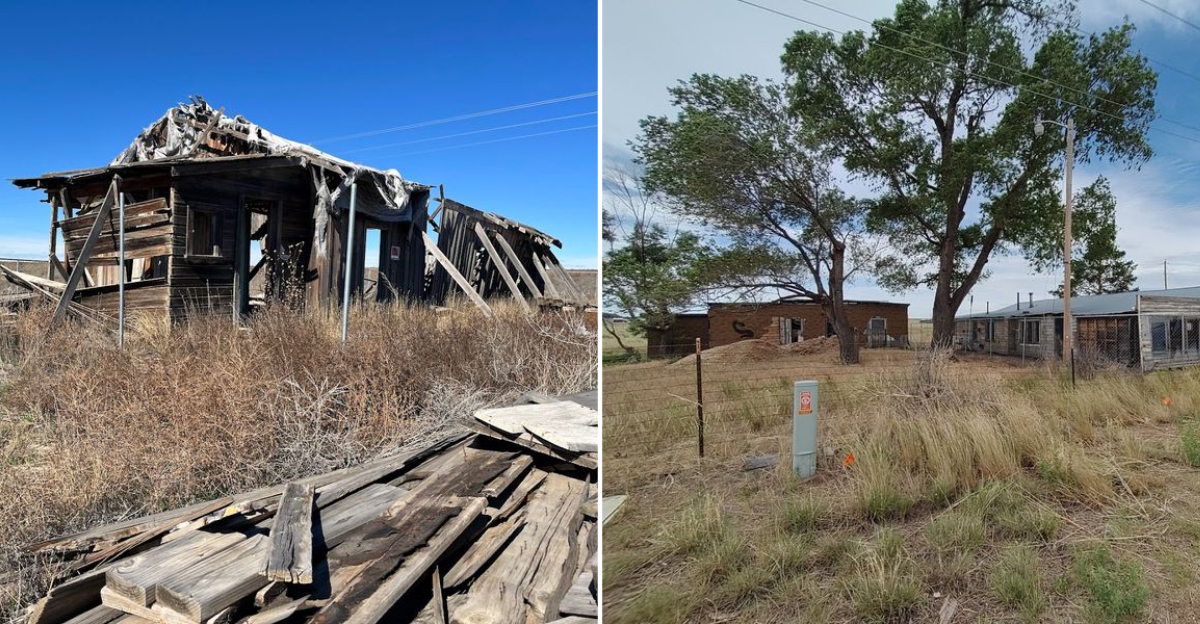
Some places do not shout their history. They let the wind carry it across empty fields until you realize the silence is part of the story.
On Colorado’s northeastern plains, where the horizon feels endless and the sky seems big enough to swallow the road, a nearly forgotten settlement still holds one of the state’s most powerful chapters. This was once a living, working vision of Black independence, built by families who believed land, labor, and community could create a future on their own terms.
Homes rose here. Businesses opened.
Children grew up surrounded by hope, grit, and the brutal demands of prairie life. Then came drought, financial hardship, and the crushing weight of the Great Depression.
Little by little, almost everything disappeared. What remains is quiet, weathered, and deeply moving.
In Colorado, some of the most important landmarks are not polished. They are the ones that ask you to remember.
The Visionary Who Dreamed Dearfield Into Existence
Some places exist because one person refused to accept the limits the world handed them. Oliver Toussaint Jackson, known as O.T.
Jackson, was that person for Dearfield. He arrived in Colorado with a conviction that Black Americans deserved land, ownership, and economic independence, and he turned that conviction into action rather than just words.
Jackson founded Dearfield in 1910, inspired partly by Booker T. Washington’s philosophy of self-reliance through agriculture and industry.
He personally recruited families to join the colony, promising them something rare and genuinely exciting: a place where they could build wealth on their own terms. The name “Dearfield” itself reportedly reflected how dear the land was to those who settled it.
At its height, the colony attracted hundreds of residents and covered thousands of acres of northeastern Colorado farmland. Jackson’s vision was not just agricultural but deeply communal, encompassing homes, a restaurant, a gas station, and a dance hall.
His story is one of extraordinary ambition planted in extraordinarily difficult soil, and understanding Dearfield begins entirely with understanding the stubborn, hopeful man who willed it into being.
Insider Tip: Watch the Rocky Mountain PBS special on Dearfield before visiting. It transforms what looks like crumbling walls into a living story.
What The Colorado Plains Looked Like To Early Settlers
Standing on the ground at Dearfield today, the first thing that strikes you is the sheer, uninterrupted openness of the landscape. The plains here are not gently rolling or romantically wild.
They are flat, exposed, and completely indifferent to whoever happens to be standing on them, which makes what the early settlers accomplished here feel even more astonishing.
Northeastern Colorado in the early 1900s offered cheap land precisely because it was hard land. Rainfall was unpredictable, winters arrived without apology, and the nearest city was far enough away to make supply runs a serious logistical undertaking.
Families who came to Dearfield were not naive about these challenges. They came anyway, because the alternative was sharecropping or domestic service in cities where their opportunities were deliberately capped.
The landscape that looks lonely and austere to a passing motorist was, to those early homesteaders, a canvas. They saw possibility where others saw hardship, and for a stretch of years in the 1910s and 1920s, they made that canvas bloom with crops, livestock, and community life.
The plains have a way of putting human ambition into perspective, and at Dearfield, that perspective is both humbling and quietly inspiring.
Best For: Visitors who appreciate landscape as context, not just scenery.
A Community That Actually Worked, For A While
It would be easy to frame Dearfield purely as a tragedy, but that framing misses something important. Before the collapse came the flourishing, and the flourishing was real.
By the early 1920s, Dearfield had become a functioning, self-sufficient community with a population that reportedly reached into the hundreds during its most productive years.
Residents grew sugar beets, wheat, and other crops. There was a lunchroom, a gas station, a dance hall, and enough of a social fabric that people genuinely wanted to live there rather than feeling trapped.
Families raised children, held community events, and built the kind of everyday life that the broader American story often pretended Black families were not capable of sustaining.
That prosperity was hard-won and never entirely secure, but it was undeniably real. Dearfield proved that given access to land and freedom from the most brutal forms of racial oppression, Black Americans could build thriving agricultural communities.
The story of those good years matters as much as the story of the decline, because it corrects a historical record that too often skips straight from struggle to ruin without acknowledging what was built in between.
Why It Matters: Dearfield’s working years are evidence, not just inspiration, that the colony succeeded on its own terms before outside forces dismantled it.
The Buildings That Still Stand And What They Tell You
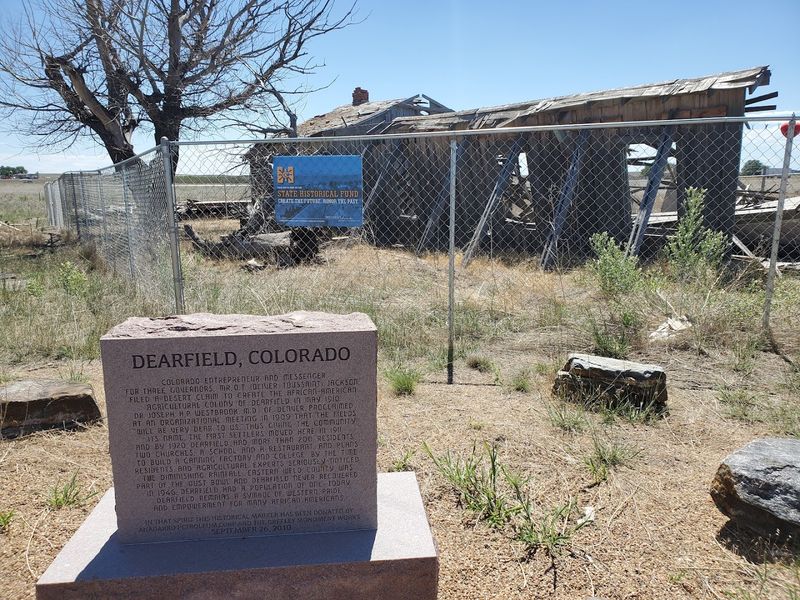
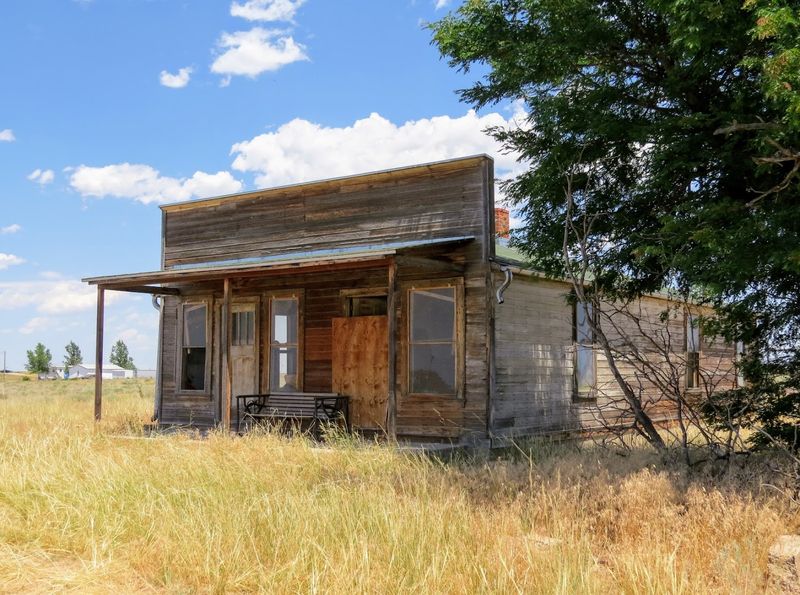
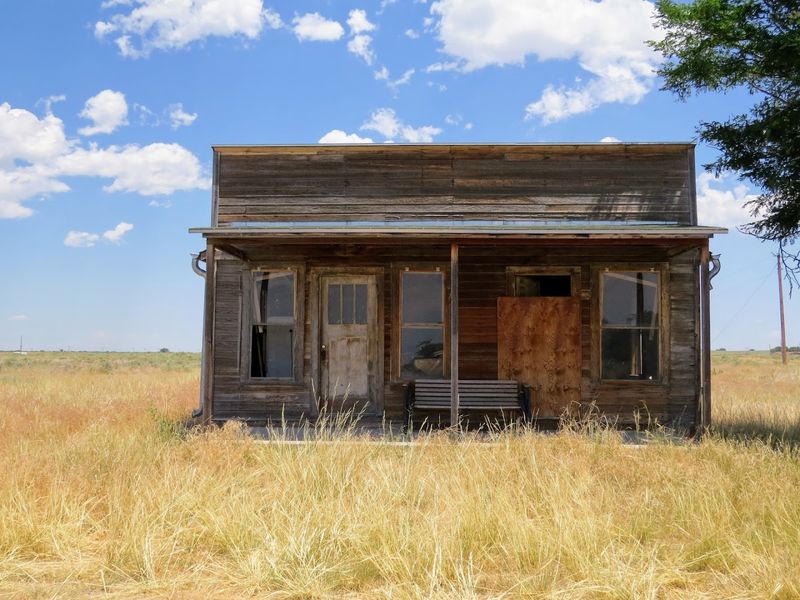
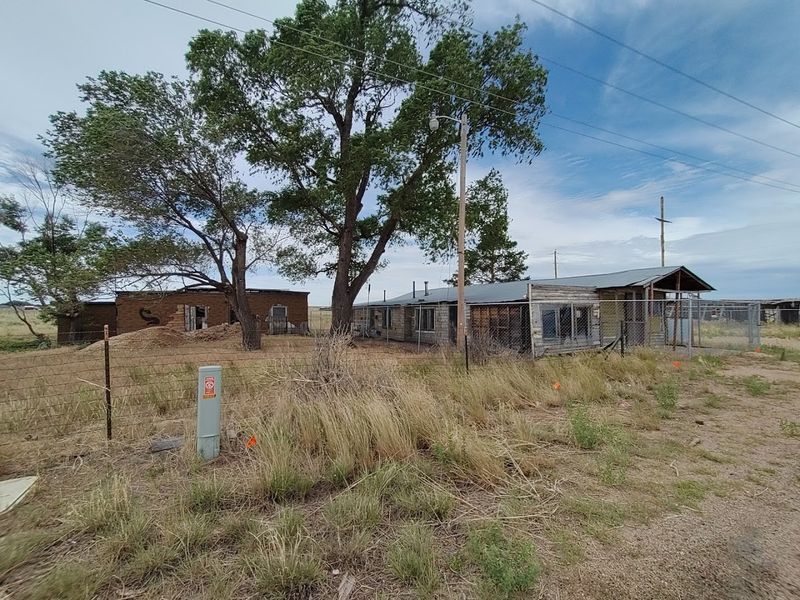
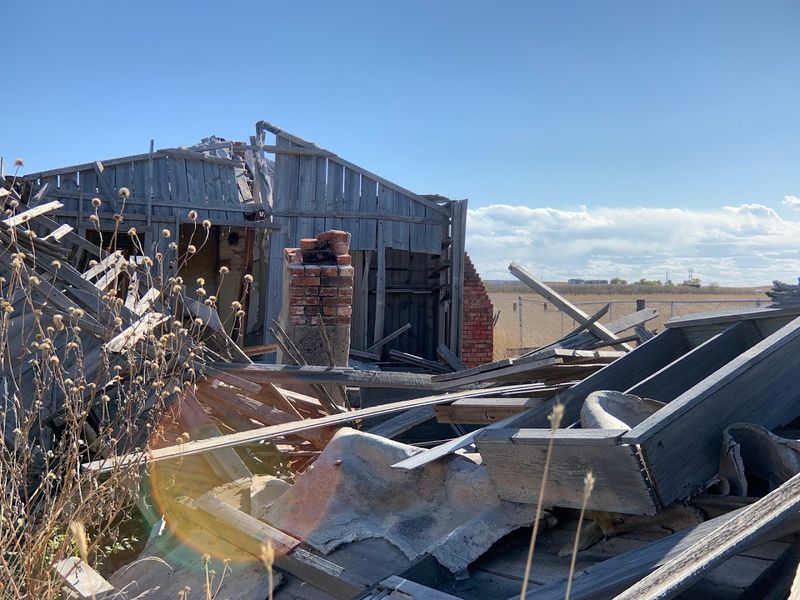
Three structures remain at Dearfield today, and calling them “buildings” requires a certain generosity of imagination. Two are fenced off behind chain-link barriers, their walls leaning in ways that suggest they are held up more by stubbornness than structural integrity.
The third, the founders’ home and hotel, is in better shape and has been partially stabilized through preservation efforts.
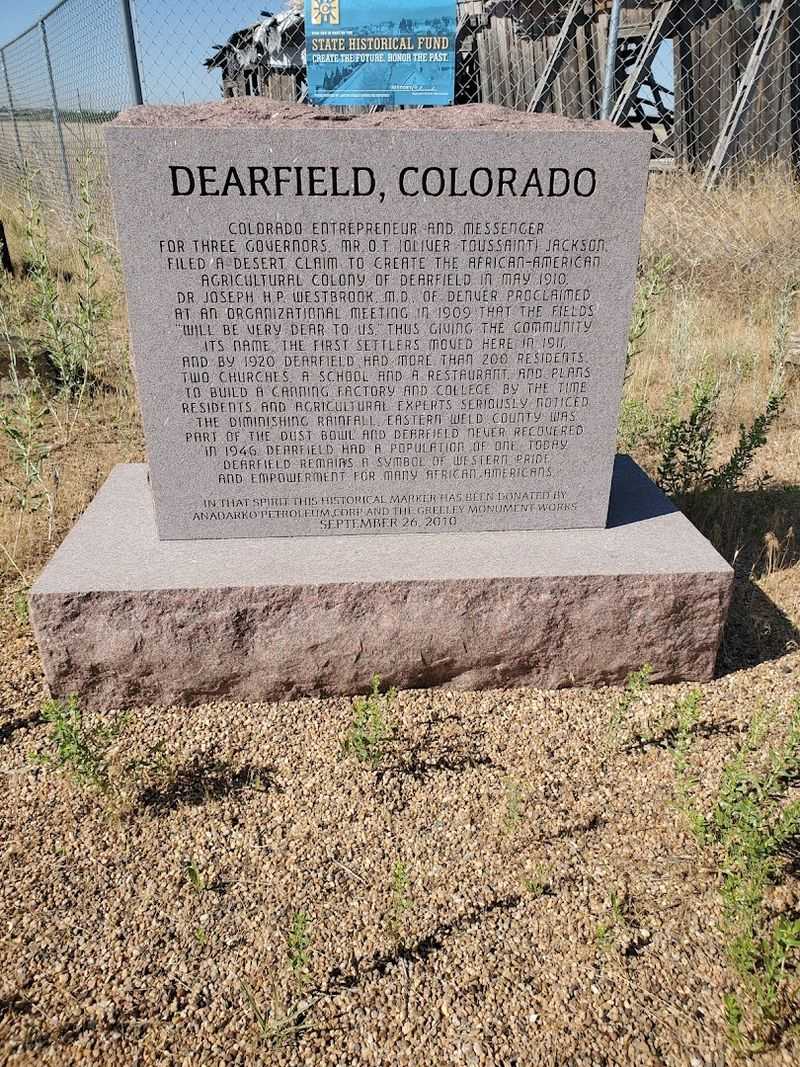
A stone memorial near the roadside commemorates the community’s history, and it does the quiet, dignified work that ruins alone cannot always manage. It names what happened here, who built it, and why it matters.
For many visitors, that memorial is the emotional center of the site, the place where the abstract history becomes something you actually feel rather than just understand intellectually.
Visitors should know that the turnoffs to the site are genuinely easy to miss. Slowing down when you spot the point-of-interest markers along US-34 is not optional advice but a practical necessity.
The buildings sit close to the highway, but the access roads are short dirt tracks that appear with little warning. What looks like nothing from speed becomes something quietly powerful once you stop, step out, and let the silence of the plains settle around you.
Quick Tip: Slow down well before you expect to see it. The site appears faster than the maps suggest.
How The Dust Bowl And Depression Erased What Took Years To Build
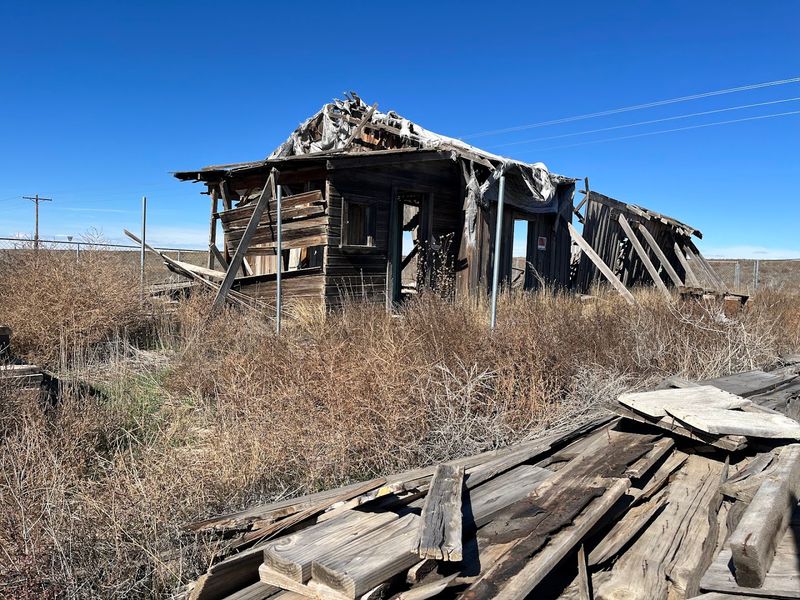
The 1930s were not kind to anyone farming the Great Plains, but they were particularly devastating for communities like Dearfield that had fewer financial safety nets and less access to government relief programs. The combination of prolonged drought, collapsing crop prices, and the catastrophic dust storms of the Dust Bowl era hit the colony from every direction at once.
Families who had invested years and everything they owned into their farms watched topsoil blow away and harvests fail season after season. Without the credit access and institutional support available to white farming communities, residents had fewer options for weathering the crisis.
One by one, and then in larger numbers, families left. Some headed to Denver.
Others scattered further.
O.T. Jackson himself stayed longer than almost anyone, reportedly remaining at Dearfield into the 1940s, long after the community had effectively ceased to exist around him.
That image, an old man keeping vigil over the ruins of his life’s work, carries a weight that no historical summary quite captures. The Dust Bowl did not only blow away soil.
At Dearfield, it blew away an entire vision of what Black life in the American West could look like, and the plains have been quiet ever since.
Common Mistakes to Avoid: Do not visit expecting a museum experience. Come prepared for reflection, not exhibition.
Why This Story Gets Left Out Of Most History Books
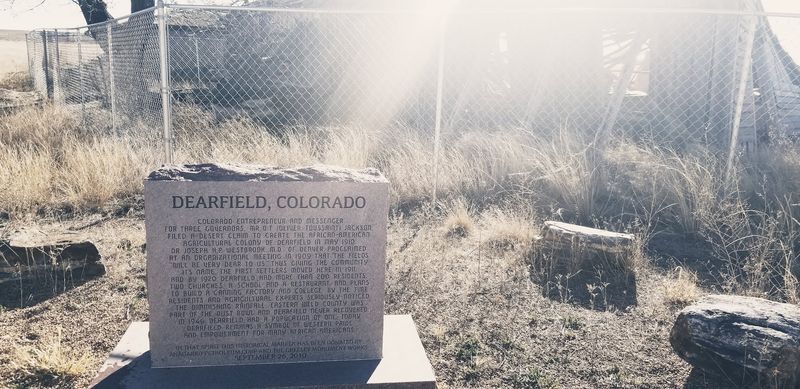
Here is a fact worth sitting with: Dearfield was the largest Black agricultural colony in Colorado history, and most people who have lived in Colorado their entire lives have never heard of it. That absence from the popular historical record is not an accident.
It reflects a much broader pattern of Black history being treated as a footnote rather than a chapter in the American story.
The colony’s story touches on land rights, racial segregation, the limits of the American Dream, agricultural history, and the resilience of communities operating outside the mainstream support systems of their era. Any one of those themes would be enough to anchor a significant historical narrative.
Together, they make Dearfield one of the most layered and underappreciated sites in the entire American West.
Fortunately, awareness is slowly growing. The Rocky Mountain PBS documentary on Dearfield has introduced the story to new audiences, and ongoing preservation work supported by nonprofit organizations and the Black American West Museum and Heritage Center in Denver is keeping the physical site from disappearing entirely.
The story was never actually lost. It was just waiting for enough people to stop their cars, read the memorial, and decide it was worth passing on.
Who This Is For: History enthusiasts, educators, and anyone who believes that understanding the full American story requires seeking out the parts that were deliberately set aside.
The Restoration Effort Trying To Save What Remains
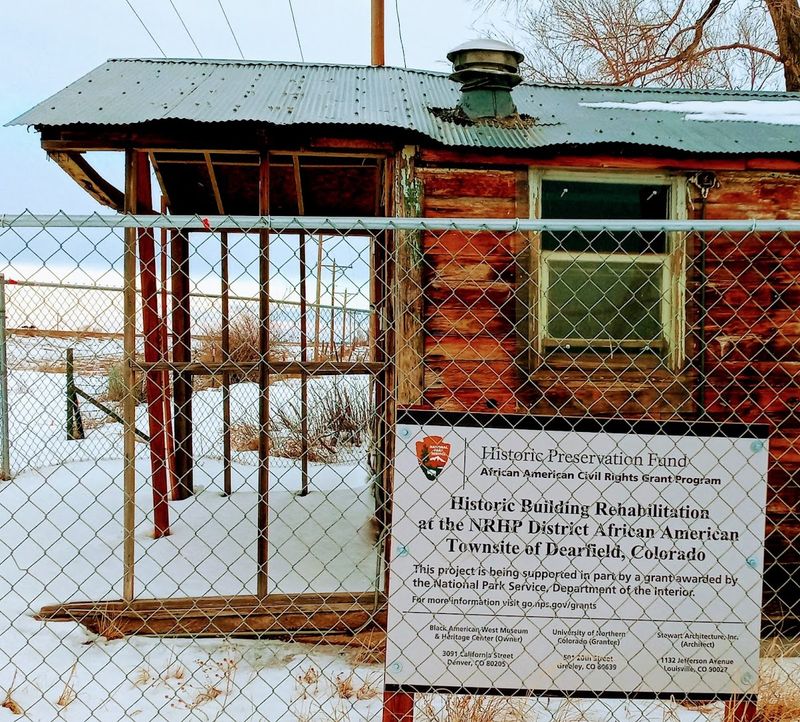
Not everything about Dearfield’s present tense is mournful. A genuine preservation effort is underway, and for visitors who arrive expecting only decay, the signs of active care are quietly encouraging.
The site is now the property of a nonprofit organization, and stabilization work on the remaining structures has already made a visible difference in what can be safely accessed.
The founders’ home and hotel building has been shored up enough that visitors have been able to walk through it during organized events like Dearfield Day, an annual gathering that brings history, community, and advocacy together in one place. The Black American West Museum and Heritage Center in Denver is actively involved in fundraising and restoration planning, and the National Park Service has recognized the site’s significance through its documentation and outreach programs.
None of this is fast work, and none of it is cheap. Historic preservation on this scale requires sustained funding, community commitment, and the kind of institutional patience that does not always arrive on schedule.
But the trajectory is forward, and visitors who come now are seeing the site at a genuine turning point. What looks like ruins today could, with enough support, become a destination that tells this story with the depth and dignity it has always deserved.
Planning Advice: Check the Black American West Museum and Heritage Center website for information on Dearfield Day events before planning your visit.
Making The Drive Out To Dearfield Part Of A Bigger Day
Dearfield sits along US-34 at 42468 US-34, Orchard, CO 80649, which puts it on a route that many Colorado travelers pass through without necessarily planning a stop. That is actually an advantage.
Adding Dearfield to a drive that is already happening requires almost no extra logistics, and the stop itself takes somewhere between fifteen minutes and an hour depending on how long you want to stand quietly and think.
The site works particularly well as a mid-drive pause on a longer northeastern Colorado road trip. There are no admission fees, no reservations required, and no gift shop competing for your attention.
It is a quick stop off your route that asks only for your time and a willingness to pay attention to something that most passing traffic ignores entirely.
Families traveling with older children will find the site genuinely useful as a conversation starter about American history, race, land, and resilience. Couples looking for something more substantive than scenic overlooks will appreciate the layered story waiting at the roadside.
Solo visitors often report that the quietness of the plains around the site creates an unexpectedly reflective experience. However you arrive and whoever you bring, Dearfield has a way of making the drive feel purposeful rather than just directional.
Best Strategy: Pair the stop with a pre-loaded podcast or the PBS documentary to give the ruins full context before you arrive.
What Dearfield Still Means, And Why It Should Not Be Forgotten
A place does not have to be grand to be important. Dearfield is not Gettysburg.
There are no visitor centers, no guided tours, no gift shops stocking commemorative mugs. What there is, standing quietly alongside a Colorado highway that most people use to get somewhere else, is one of the most honest and underappreciated stories in American history.
The colony at Dearfield demonstrated that Black Americans in the early twentieth century were not waiting passively for opportunity. They were actively creating it, on hard ground, with limited resources, against a backdrop of systemic barriers that would have stopped most people before the first seed hit the soil.
That the colony ultimately failed tells you something about the forces arrayed against it. That it existed and thrived for years first tells you something even more important about the people who built it.
Stopping at Dearfield is not a dramatic gesture. It is a small, quiet act of acknowledgment, the kind that history actually runs on.
You pull off the highway, read the memorial, look at what remains of the buildings, and leave knowing something true that you did not know before. That is not a minor thing.
That is exactly what the best roadside stops are supposed to do, and Dearfield does it without asking for anything except your attention.
Quick Verdict: Dearfield is not a spectacle. It is a reckoning, and the plains make sure you feel every word of it.