
The Hidden Beauty Of This Idaho Place In December That Most Travelers Never Experience
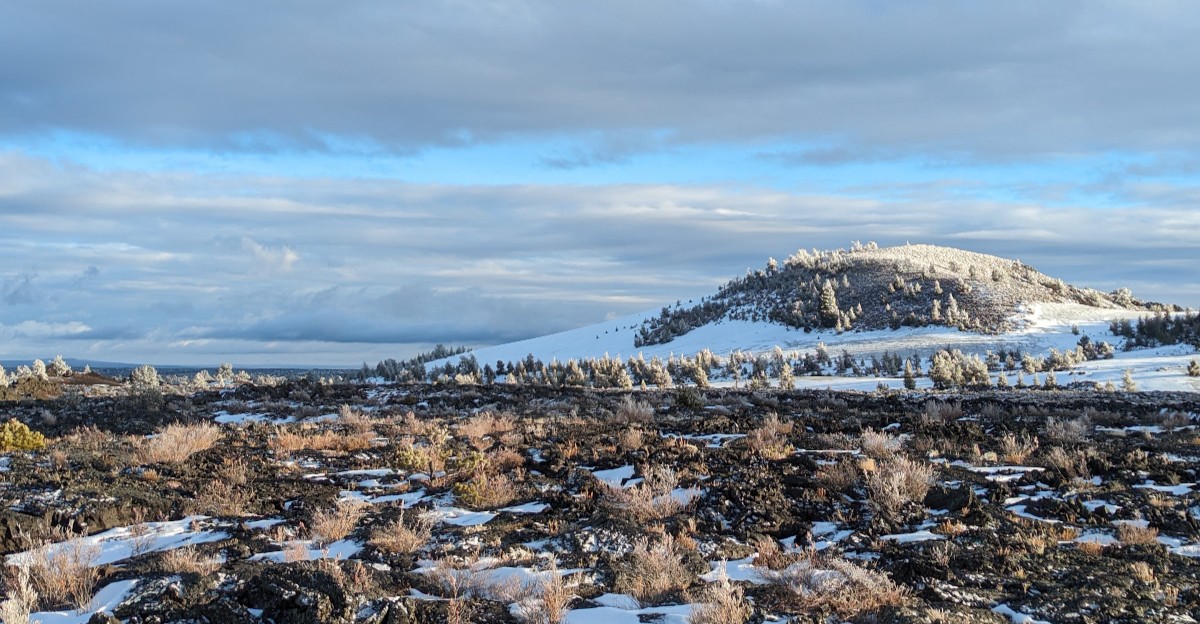
Apollo 14 astronauts trained on this lava field in 1969. Yes, NASA basically used a chunk of Idaho as a practice moon.
Now add snow. In December, the black volcanic rock gets dusted in white, and the main road closes to cars.
So what happens to a road with no cars? It turns into a groomed ski and snowshoe track.
My favorite part is how the whole place flips from summer road trip stop to quiet winter playground. Twisted juniper trees wear coats of rime ice.
Entry is free while the road stays closed. Not bad for a spot that looks borrowed from outer space.
Black lava, white snow, and almost nobody around? The landscape has serious Hoth vibes, minus the AT-ATs.
That’s a winter detour I’d happily put on my list.
Black Lava Plus White Snow Equals Pure Drama
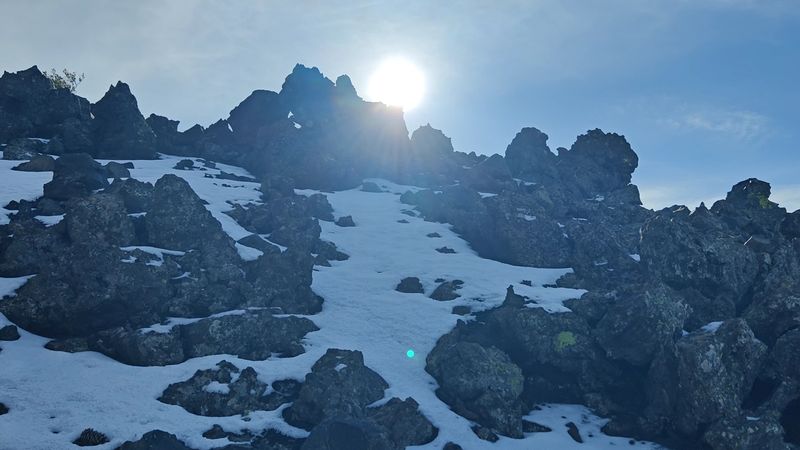
Contrast is the main event at Craters of the Moon National Monument and Preserve in December. Snow settles over jet-black lava, and the whole scene looks like a giant chessboard nature forgot to finish.
Winter here usually starts as early as November and can stretch through March. That means December visitors catch the season in full swing, with snow, ice, and plenty of cold air.
The monument sits at about 5,900 feet in Idaho. That elevation helps explain why the snow sticks around and the air feels crisp and sharp.
Cinder cones like Inferno Cone, North Crater, and Paisley Cone take on softer shapes under the snow. The rough lava edges that look harsh in July suddenly seem almost gentle.
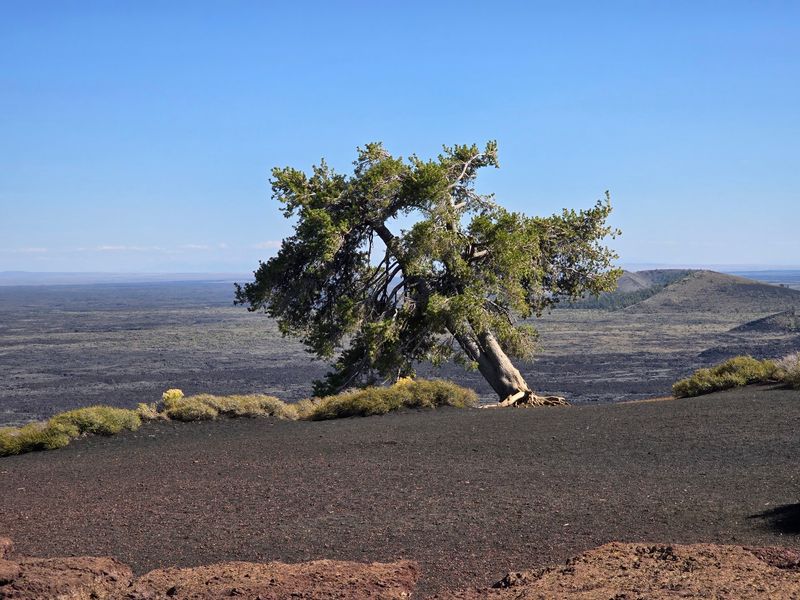
Twisted juniper trees deserve a close look too. In winter they often get plastered with snow and rime ice, turning them into frosty sculptures.
Photographers, this is your season. The bright snow and dark rock create bold lines that practically frame themselves.
Bring sunglasses, since snow glare is real. Pack extra batteries too, because cold weather drains them fast.
You’ll want every last shot of this strange, beautiful mashup.
Follow The Orange Poles For A Snowshoe Adventure
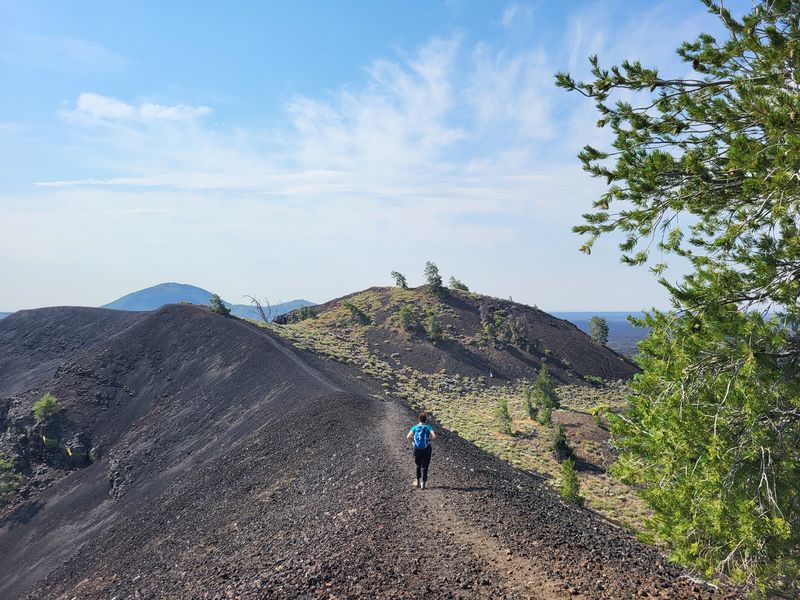
Bright orange poles poke out of the snow like a trail of breadcrumbs. They mark the Snowshoe Loop Trail, a 1.5-mile route through the winter landscape.
Don’t let the short distance fool your legs. The trail is rated moderately strenuous, and snowshoeing works muscles you forgot you had.
Why follow the poles so carefully? Snow hides the uneven lava underneath, and the markers help keep you on a safe path.
Regular hiking trails at Craters of the Moon National Monument and Preserve are buried in snow during winter. Ice patches can show up too, so the marked loop is your friend.
Gear matters out here. Wear warm layers, waterproof boots, and gloves you can actually move your fingers in.
Snowshoes can be borrowed from the visitor center for a suggested donation when it’s open. Since the center usually closes in December, bringing your own pair is the smart move.
Go slow and enjoy the hush. Snow muffles sound, and the open lava fields feel huge and peaceful.
It’s a workout and a breather in the same package, which is a pretty sweet deal.
The Road Trades Cars For Skis And Nobody Complains
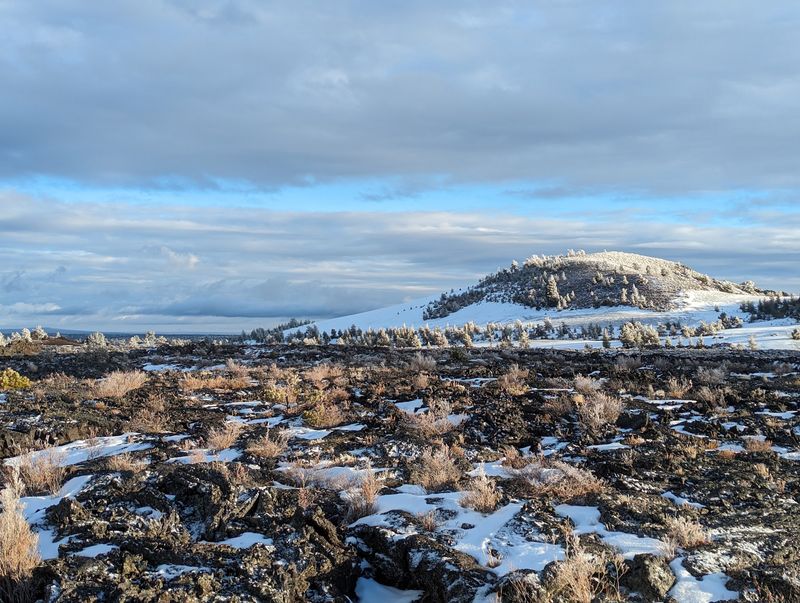
Seven miles of pavement go into hibernation every winter. From mid-November through mid-April, the Loop Road closes to motor vehicles.
Then something fun happens. Usually from December or January through March, depending on snowpack, the road becomes a groomed track for cross-country skiing and snowshoeing.
The roundtrip loop runs about 7 miles. Most people need 2 to 4 hours to finish it, so plan for a half-day adventure.
Overall, the route rates easy to moderate. There’s one catch, though.
A steep 10% grade sits near Inferno Cone and can surprise beginners.
New skiers should go clockwise around the loop. That way, you climb the steep hill instead of racing down it like an accidental Olympian.
Leave your pup at home for this one. Dogs aren’t allowed on the groomed ski track, which keeps the trail smooth for everyone.
Gliding past lava flows on skis feels wonderfully odd. One minute you’re in a winter sport, and the next you’re staring at volcanic cones.
It’s a combo you won’t find at many ski spots, which is exactly the point.
Starry Nights That Could Make An Astronomer Weep
Long December nights come with a bonus. In 2017, Craters of the Moon became an International Dark Sky Park.
That title means very little light pollution messes with the view. On clear winter nights, the sky can fill up with more stars than you might expect.
December brings early sunsets, so stargazing doesn’t require staying up super late. That’s great news for families and anyone who loves bedtime.
Cold is the tricky part. The average December low sits around 10 degrees, and some nights dip below zero.
Dress like you’re heading to the North Pole. Think thermal layers, a thick hat, insulated boots, and a warm drink in a thermos.
A red flashlight helps protect your night vision. Your eyes need about 20 minutes or more to fully adjust to the dark.
Cell service is very limited in the park. So download a star map app before you arrive, or bring a printed chart.
Lay back, look up, and enjoy the show. Snow below and stars above make a pretty unbeatable pairing in Idaho’s winter backcountry.
Your Wallet Gets A Winter Vacation Too
Free stuff always feels good. When the Loop Road closes to vehicles, Craters of the Moon charges no entrance fee.
That turns December into a budget-friendly season. You get the same wild volcanic scenery, just with a frosty twist and zero admission cost.
Finding the place is simple. The address is 1266 Craters Loop Road, Arco, ID 83213, and the visitor center sits 18 miles west of Arco.
It’s right along U.S. Highway 20/26/93.
Winter driving can get slick, so check road conditions before leaving home.
Plan ahead for a few things. The visitor center typically closes in December and reopens in January, so services are limited.
Drinking water is only available at the visitor center when it’s open. Pack plenty of water and snacks for your trip.
Fill your gas tank before heading out too. This is wide-open country, and you won’t want to run low.
The savings might tempt you to splurge on better gloves. Honestly, that’s money well spent when the wind kicks up across the lava fields.
Volcanoes Have A Wild Backstory Worth Knowing
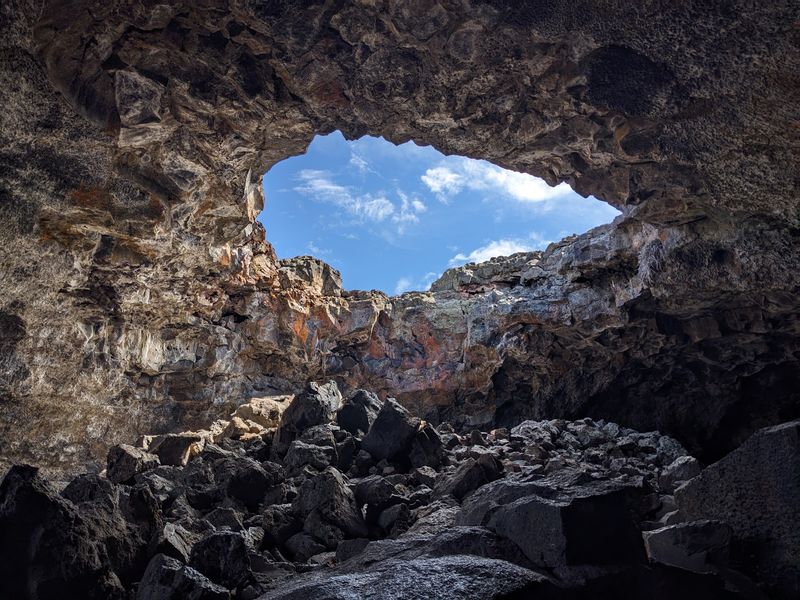
Fifty-two miles long. That’s the length of the Great Rift, a massive crack in the Earth’s crust that shaped this landscape.
Lava poured out through eight eruptive episodes over the last 15,000 years. The most recent one ended around 2,000 years ago, which is recent in rock years.
The area became a national monument in 1924 to protect its volcanic features. Today, the monument and preserve covers a huge 750,000 acres.
Then came the astronauts. In 1969, Apollo 14 crew members trained here because the ground looked so much like the moon.
Knowing this stuff changes how the snow looks. You’re not just skiing past rocks, you’re gliding over the leftovers of serious volcanic action.
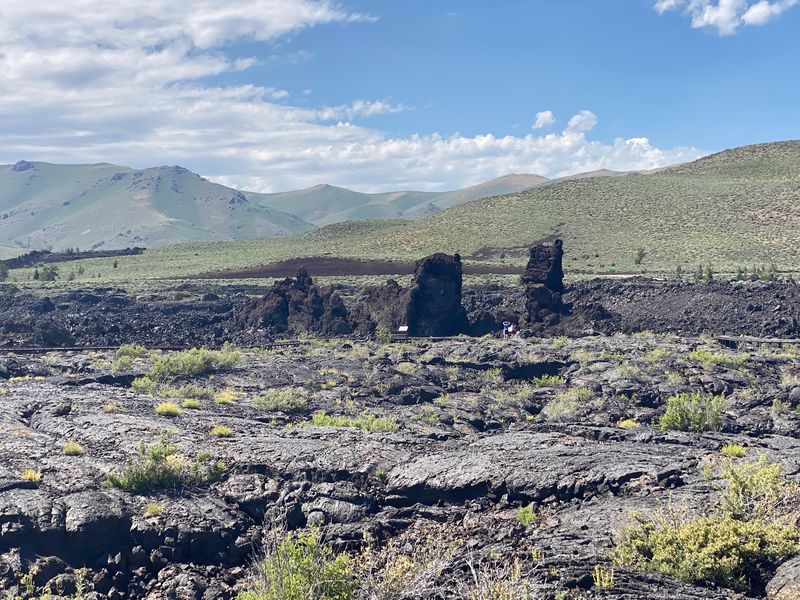
Spatter cones, cinder cones, and lava flows all tell a piece of that story. Snow outlines their shapes, making some features easier to spot.
Kids love the moon connection, and adults usually do too. It’s hard not to feel a little like an explorer out there.
Just maybe skip the space helmet, since a warm beanie works much better in Idaho’s December chill.
Tiny Tracks Tell Big Stories In The Snow
Fresh snow works like a giant notebook. Animals write their stories in it, and winter visitors get to read along.
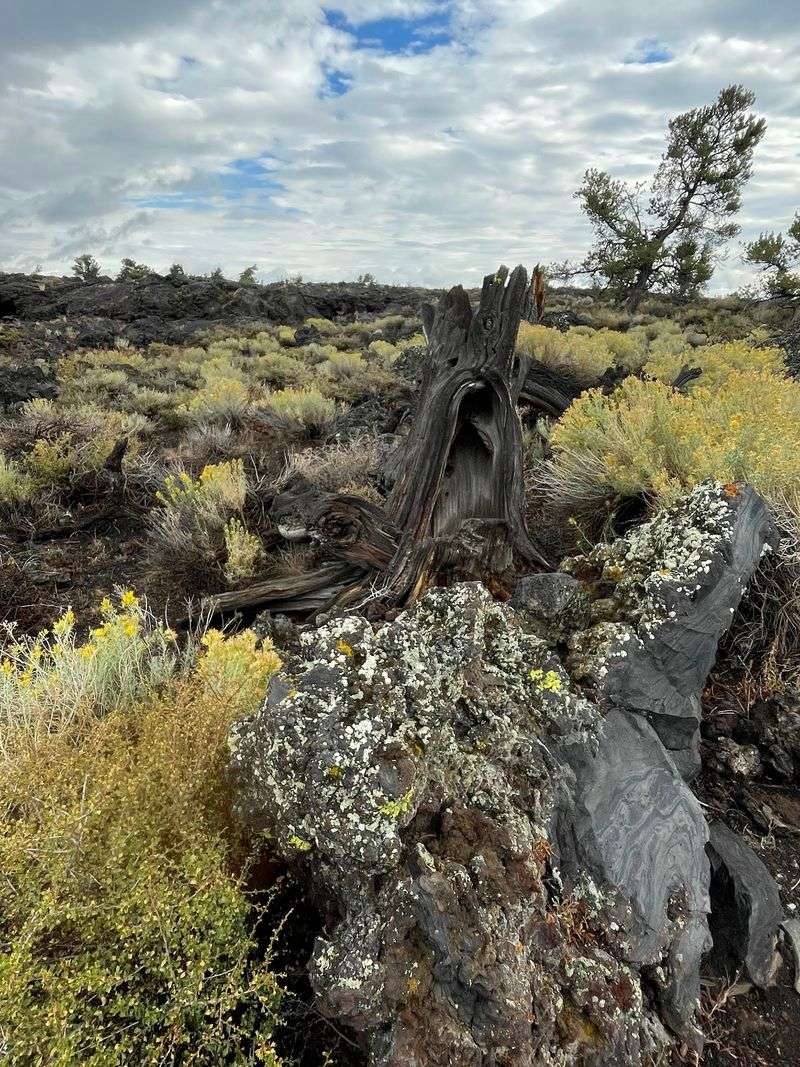
Wildlife tracking is one of the coolest December activities here. Look for little footprints weaving between lava rocks and sagebrush.
Pikas live at Craters of the Moon too. These small relatives of rabbits are pretty clever about surviving the tough climate.
They use cool lava cavities for shelter. They’re also most active at dawn and dusk, so timing matters if you hope to spot one.
Here’s a tip for budding trackers. Go out early after a fresh snowfall, when prints are crisp and easy to see.
Bring a small field guide or a tracking card. Matching prints to animals turns a simple walk into a fun detective game.
Keep your distance from any creatures you find. Winter is hard on wildlife, and saving energy helps them survive the cold months.
Binoculars are handy too. You might enjoy a better look without bothering anybody.
Who knew a quiet lava field could feel so busy once you notice the clues?
Brave Souls Can Snow Camp Under The Stars
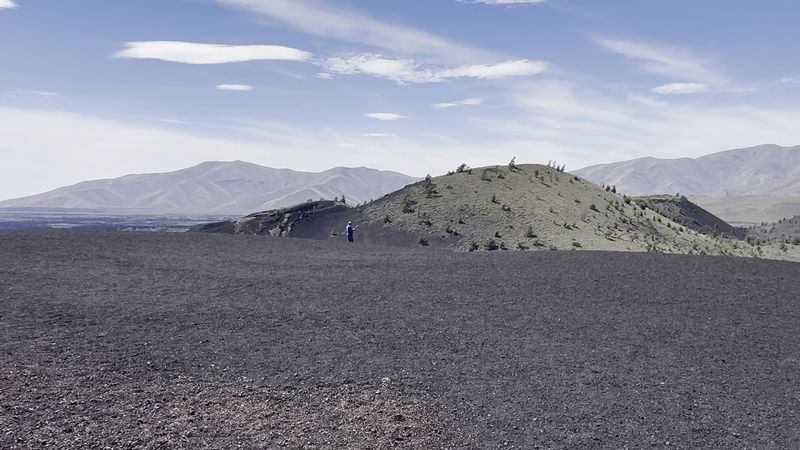
Cold-weather campers, this one’s for you. Lava Flow Campground closes to vehicles when the Loop Road shuts down, but tent snow camping is still allowed.
You’ll need a free permit to stay overnight. It’s an easy step that helps rangers know who’s out there.
Vault toilets are open 24 hours at the campground. That’s a small comfort, but in December, small comforts feel huge.
Gear makes or breaks a snow camping trip. A sleeping bag rated well below freezing is a must, since nights can drop below zero.
Use a thick sleeping pad to block cold from the ground. Pack hand warmers, extra socks, and food that’s easy to make.
Wind is common here, so stake your tent firmly. Freezing fog can also roll in, so prepare for damp, chilly air.
The reward? Quiet nights under a dark sky park, with snowy lava stretching all around you.
Sunrise might be the best part. Watching morning light hit snowy cinder cones feels like the payoff for every shiver.
Just keep that coffee thermos within arm’s reach.
Smart Packing Keeps The Magic From Turning Miserable
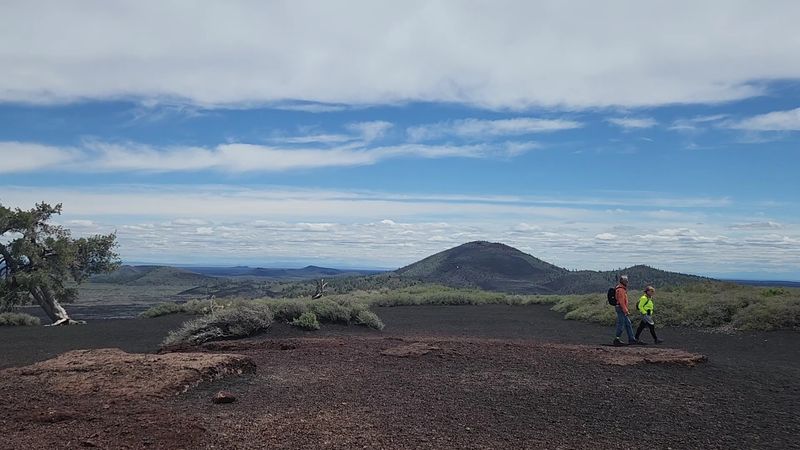
Numbers first: 16 degrees. That’s the average December temperature at Craters of the Moon National Monument and Preserve, the coldest month of the year.
Highs usually land between 20 and 37 degrees. Overnight lows range from about minus 2 to 18, so dress for serious cold.
Snow adds up too. December averages about 20.8 inches of snowfall, with an average snow depth of 11 inches.
Layers are your best friend. Start with a moisture-wicking base, add fleece, and top it with a windproof jacket.
Don’t forget a paper map. Cell service is very limited, so your phone may not help much out there.
Bring water and snacks, since water is only available at the visitor center when it’s open. Hand warmers are cheap and feel amazing.
Tell someone your plans before you go. That’s smart advice anywhere remote, especially in Idaho’s winter backcountry.
Plan around the calendar too. The visitor center usually stays closed in December and on Christmas Day.
Prepared visitors get to enjoy the best part, which is having this snowy moonscape mostly to themselves.