
The Hidden Ohio Bridge That Makes A Simple Drive Feel Historic
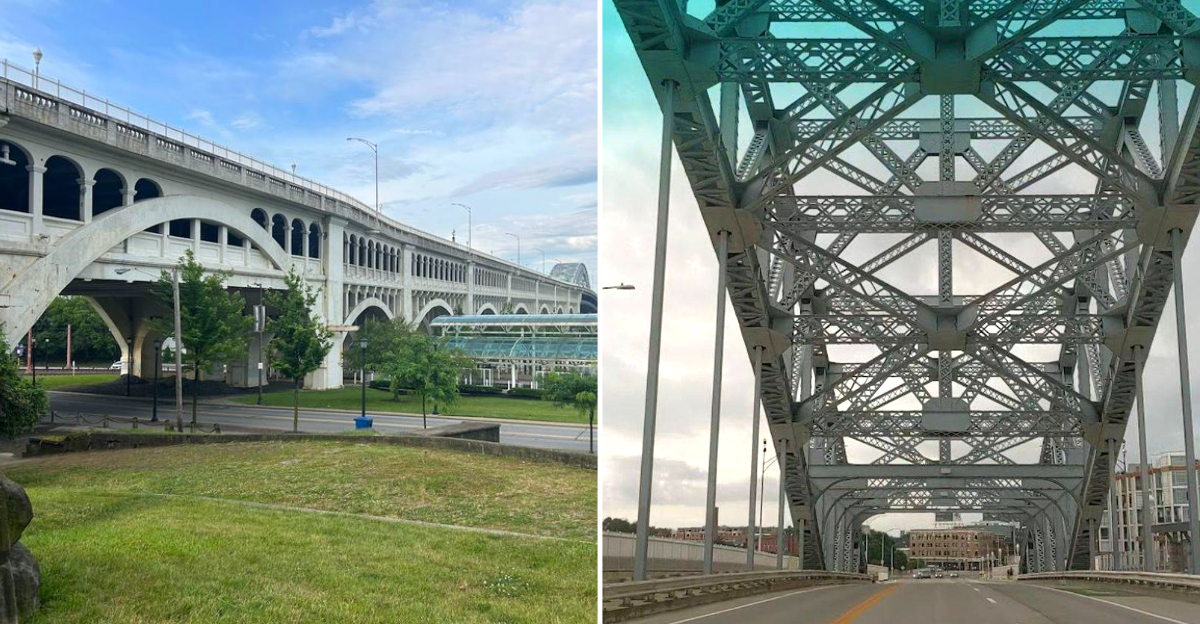
Some bridges are just part of the commute until you realize they have been keeping a whole second story under your tires. In Cleveland, this massive Ohio span carries traffic over the Cuyahoga River while hiding an old streetcar level that feels like the city pressed pause on another era.
This is not just a bridge crossing. It is Cleveland history with arches, river views, skyline drama, and a secret lower level that makes a simple walk feel like you found the bonus scene.
The surprise is how much life is packed into one piece of infrastructure. Above, the city moves at full speed; below, the old transit corridor waits for rare public tours, still holding tracks, tiles, and the kind of atmosphere that makes ordinary pavement feel suddenly suspicious.
A Bridge With Two Names and One Big Story
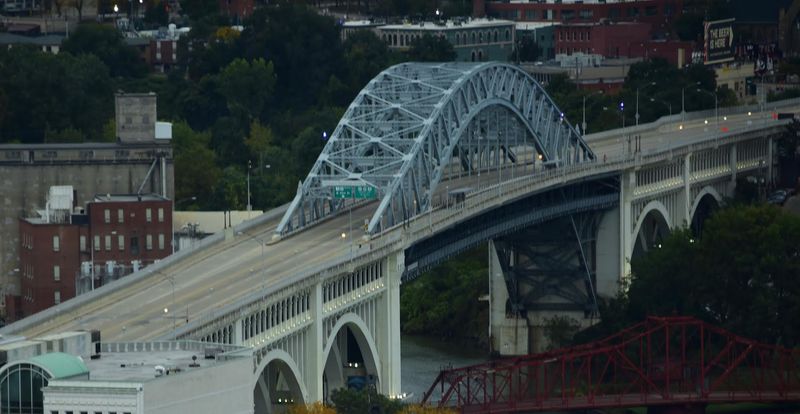
Most Clevelanders call it the Detroit-Superior Bridge, but the official name is the Veterans Memorial Bridge, and both names have earned their place in the city’s history.
The bridge stretches 3,112 feet across the Cuyahoga River, linking Detroit Avenue on Cleveland’s west side with Superior Avenue on the east. It terminates just west of Public Square, placing it right at the heart of the city’s daily rhythm.
Construction started in the early 1910s, and Cleveland’s King Bridge Company built the span between 1912 and 1917 at a cost of more than $5 million. At the time, it was the first fixed high-level bridge in Cleveland and one of the largest steel and reinforced concrete bridges in the world.
The bridge was listed on the National Register of Historic Places in 1974. You can find it at Cleveland, OH 44113, right where the east and west sides of the city meet above the river.
The Engineering Marvel Behind the Arch
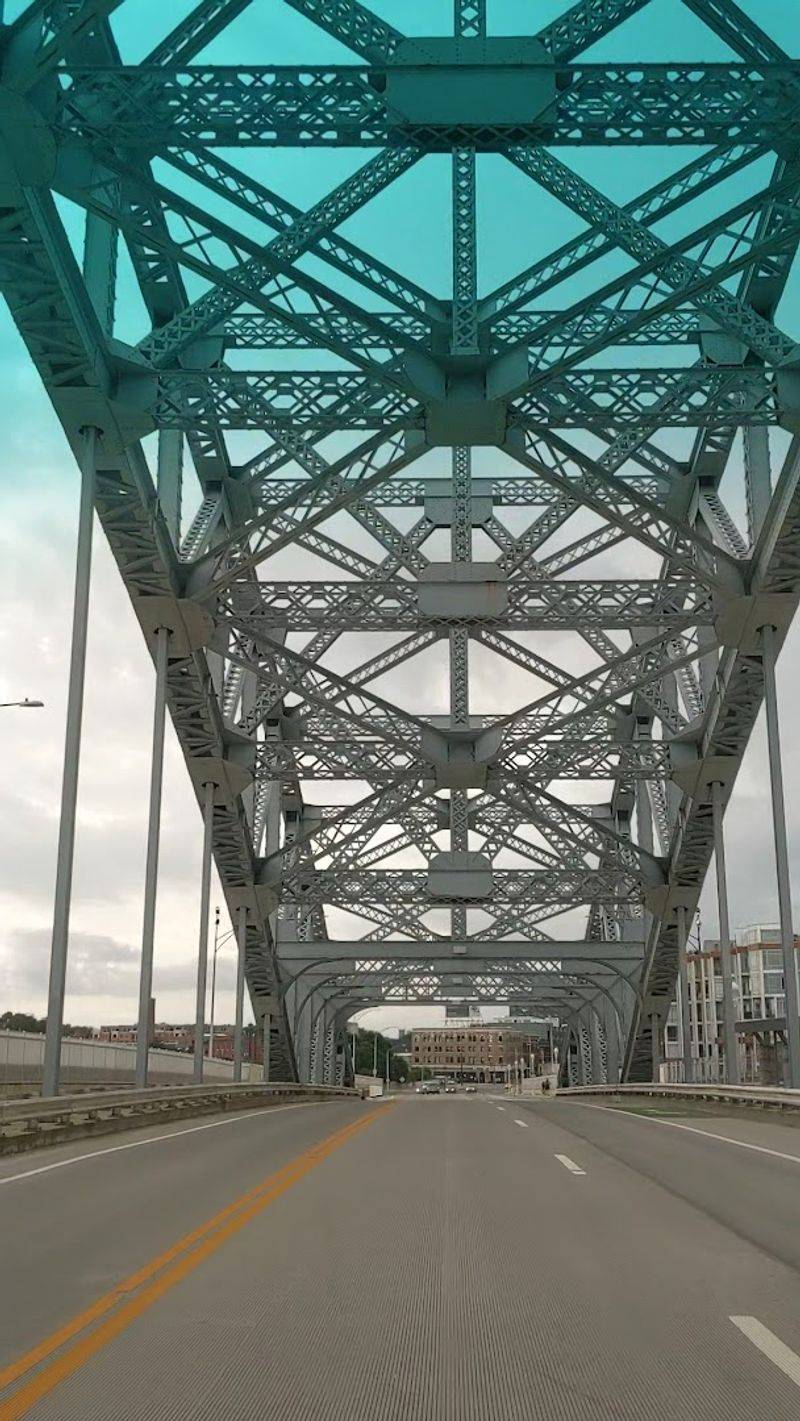
Not every bridge becomes a National Register-listed landmark, but this one absolutely deserves the attention.
The structure includes concrete arches and a dramatic overhead steel arch span, combining serious engineering strength with an elegance you can actually see from the riverbank below.
The bridge clears 96 feet above the Cuyahoga River, which is high enough to let large vessels pass through without any interruption to the vehicle traffic humming along above. That clearance was a deliberate engineering decision made to keep the river commercially active.
The arch itself was fabricated with precision that was remarkable for its era. A welded notice on the first arch of the elevated eastern approach reads “Formed November 1, 1915,” a small timestamp frozen in steel that connects today’s commuters to the workers who built it over a century ago.
Standing on the pedestrian walkway and looking up at the steel lattice overhead gives you an immediate sense of just how much thought went into every rivet and beam of this structure.
The Secret Lower Level That Stopped Time
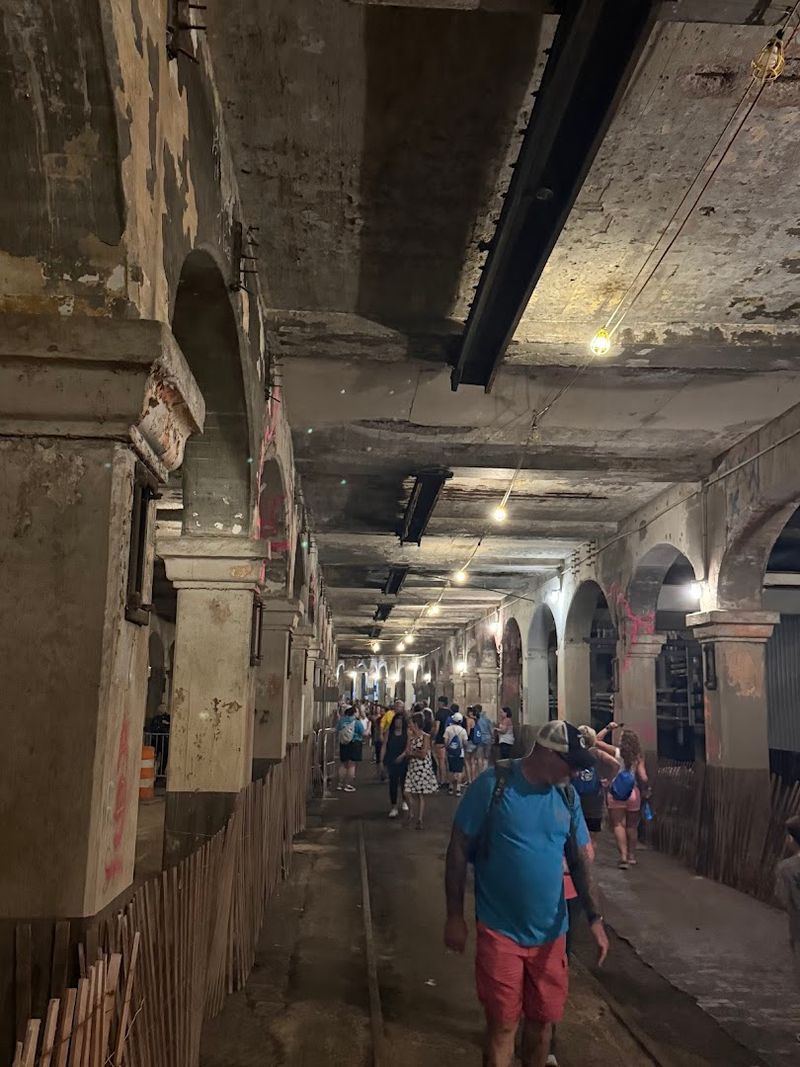
The most jaw-dropping part of this entire bridge is something most people never see.
Tucked beneath the road deck is a lower level that was originally built to carry electric streetcars across the river, and it has been largely sealed off from everyday public use for decades.
The vintage ceramic tiles still line the walls. The old rail tracks are still embedded in the floor.
The tunnels echo in a way that makes you feel like the last streetcar just rolled through five minutes ago rather than generations ago.
The lower level was part of Cleveland’s once-thriving transit network, and its preservation inside the bridge creates a kind of accidental time capsule that no museum could fully replicate. The atmosphere down there is something you genuinely have to experience in person to understand.
Access to this space is limited to announced public events and scheduled tours, including special openings connected to Cleveland history programming. The experience draws crowds every time it opens, and for good reason.
Walking the Span: Views Worth the Trip Alone
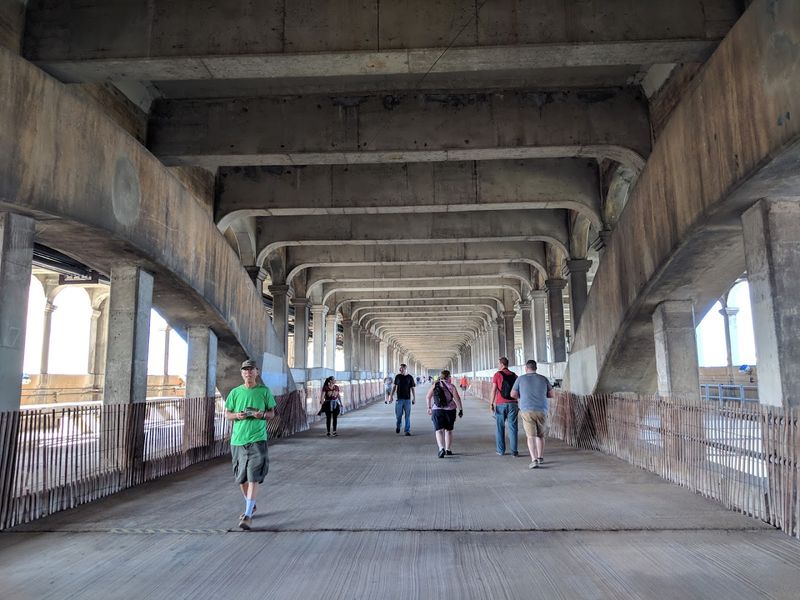
The bridge has pedestrian walkways running along both sides, and the views from up there are genuinely hard to beat. To the north, Lake Erie stretches out toward the horizon.
Below, the Cuyahoga River winds through the Flats, one of Cleveland’s most storied neighborhoods.
The south sidewalk near the Superior Avenue side opens up to a small plaza decorated with flags representing all branches of the armed services, along with the Stars and Stripes and an MIA flag. Plaques honoring veterans are mounted nearby, giving the walk a reflective and meaningful quality.
From the walkway, you can spot other bridges dotting the river corridor, including the Center Street Swing Bridge and the raised B&O Railroad Bridge. On a clear day, the downtown Cleveland skyline frames the eastern end of your walk beautifully.
Even if the lower level is not open during your visit, a slow walk across the pedestrian path gives you a completely different relationship with the city. The river, the skyline, and the industrial history of the Flats all come together in one panoramic frame.
Art in the Open Air: The Weather Sculptures
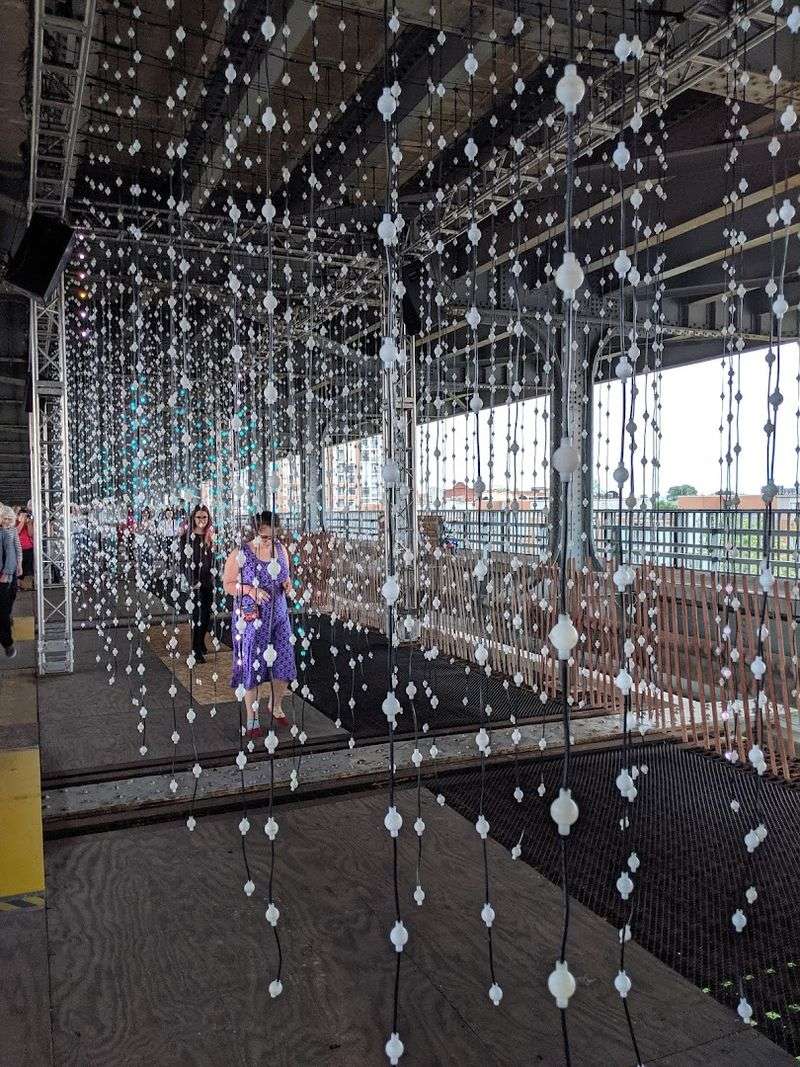
A bridge this historically rich deserves art that matches its character, and artist Don Harvey delivered exactly that in 2004.
His series of sculptures, simply titled “Weather Sculptures,” are installed along the bridge and bring a playful, unexpected energy to an already impressive structure.
The pieces are whimsical without being silly, blending abstract forms with a sense of movement that feels appropriate for a structure spanning a working river. They catch the eye just enough to make you pause mid-walk and actually look at your surroundings.
Public art on infrastructure is not always a given, so finding these sculptures here feels like a small bonus gift. They add a layer of personality to a bridge that already has plenty of its own.
If you are crossing on foot, take your time with each piece rather than rushing past. The combination of industrial steel overhead, river views below, and creative sculpture at eye level creates an experience that is genuinely unlike anything else in the Cleveland area.
Art and engineering rarely share the same stage this gracefully.
How Limited Public Access Works
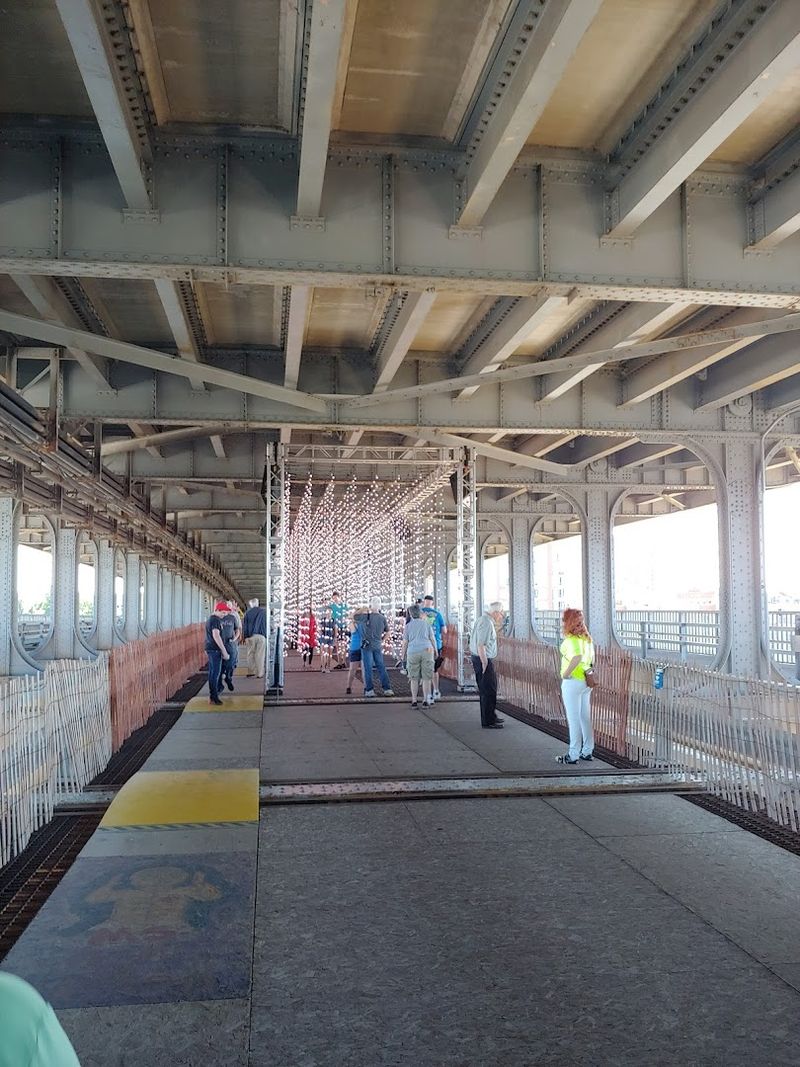
Getting access to the lower streetcar level requires a bit of planning since the space does not stay open year-round.
Public access is offered through announced events and scheduled tours, often connected to Cleveland History Days, Cuyahoga County programming, or Take-A-Hike tours.
The format is usually a self-guided or lightly guided walk through the historic streetcar corridor, with informational displays set up along the route to explain what you are seeing.
Past events have also included light shows, live music, local vendors, and community storytelling that turned the tour into a full-on neighborhood celebration.
Crowds tend to fill up quickly once word gets out, so arriving early is a smart move. The space packs in enthusiastic visitors who range from history buffs and architecture fans to curious families who just want to see something genuinely unusual.
Keeping an eye on Cuyahoga County’s Veterans Memorial Bridge event page or Cleveland History Days programming will help you catch the next opening before it passes you by. Mark it on your calendar the moment you spot it.
The West Side vs. East Side Street Name Quirk
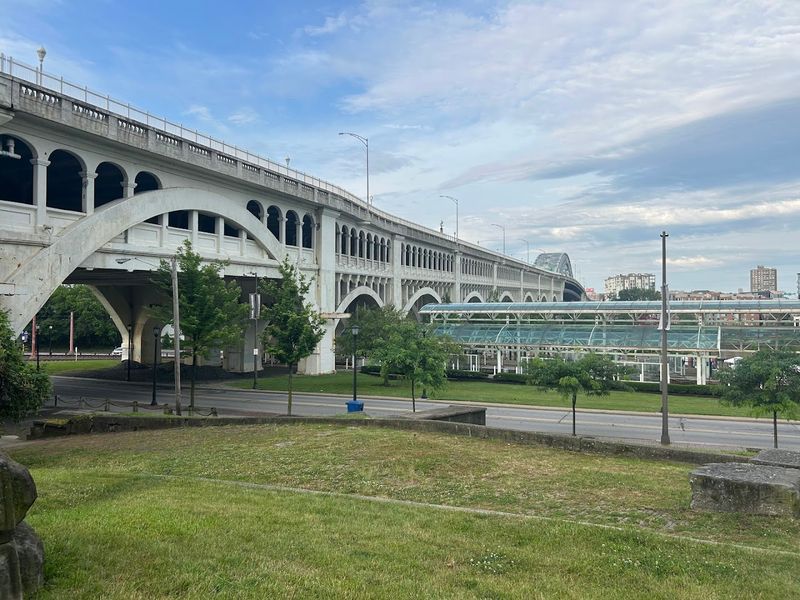
Cleveland has a charming local tradition that first-time visitors often find confusing: streets frequently change names at the Cuyahoga River crossing.
The bridge itself is a perfect example of this phenomenon, linking Detroit Avenue on the west side with Superior Avenue on the east.
Long-time Clevelanders will tell you this reflects the city’s deep-rooted west side versus east side identity, a friendly rivalry that has shaped neighborhoods, sports loyalties, and even restaurant preferences for generations. The bridge sits right at the border of that divide.
Locals have largely stuck with calling it the Detroit-Superior Bridge rather than the official Veterans Memorial name, which tells you something about how strongly neighborhood identity shapes everyday language in this city. The street names became the bridge’s identity before any official renaming could take hold.
For visitors, this quirk is actually a fun way to understand how Cleveland thinks about itself. The river is not just a geographical feature here.
It is a cultural boundary, and the bridge spanning it carries the weight of that local identity every single day, in both directions.
Watching Ships Pass Far Below
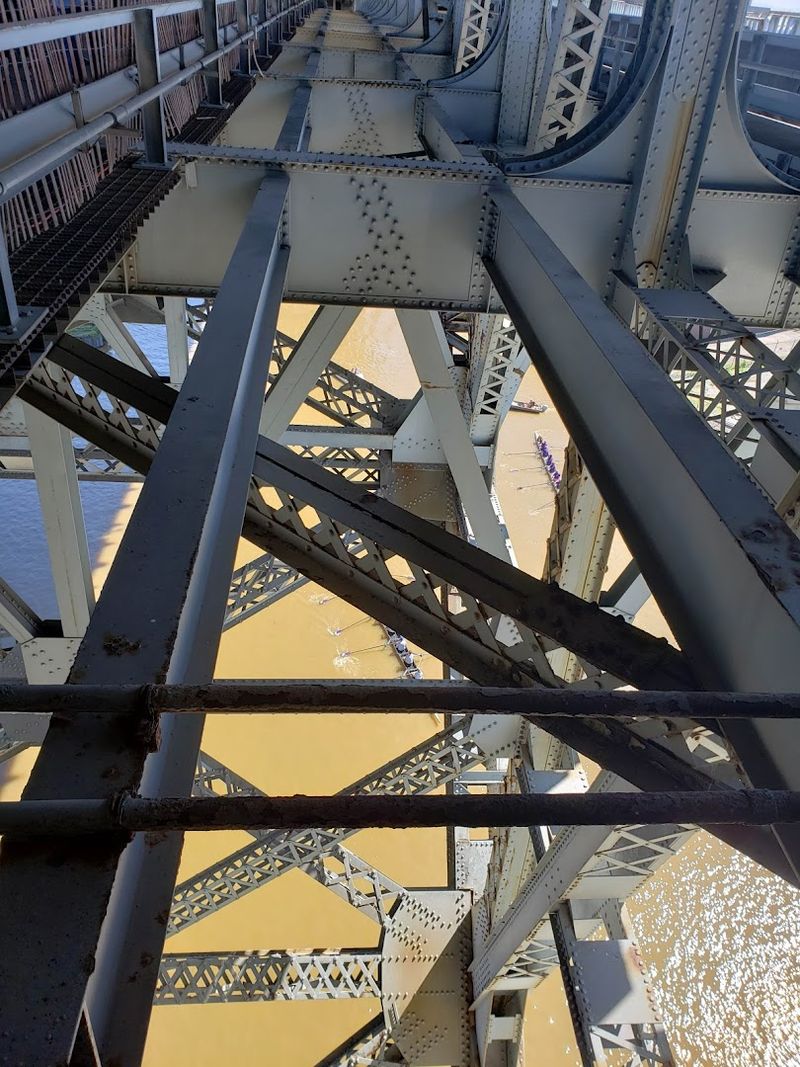
One of the most unexpected thrills of visiting this bridge is looking straight down from the walkway and watching massive vessels move through the water below.
The 96-foot clearance above the river was designed specifically to accommodate commercial shipping traffic, and the Cuyahoga River still sees its share of impressive boats.
Visitors can watch large freighters, tugboats, and racing sculls glide beneath them from the pedestrian walkway, which turns a simple bridge crossing into something genuinely dramatic. There is something almost surreal about standing on a busy urban bridge while a massive ship moves silently beneath you.
From the lower level during open tours, the experience becomes even more immersive. The river is visible through gaps in the structure, and the scale of the vessels passing below feels suddenly more immediate from that historic streetcar corridor.
Cuyahoga County has also been exploring ways to make the lower level more regularly accessible as a public space and multimodal corridor. That kind of attraction would make an already remarkable destination absolutely unforgettable.
The Surrounding Flats and What to Explore Nearby
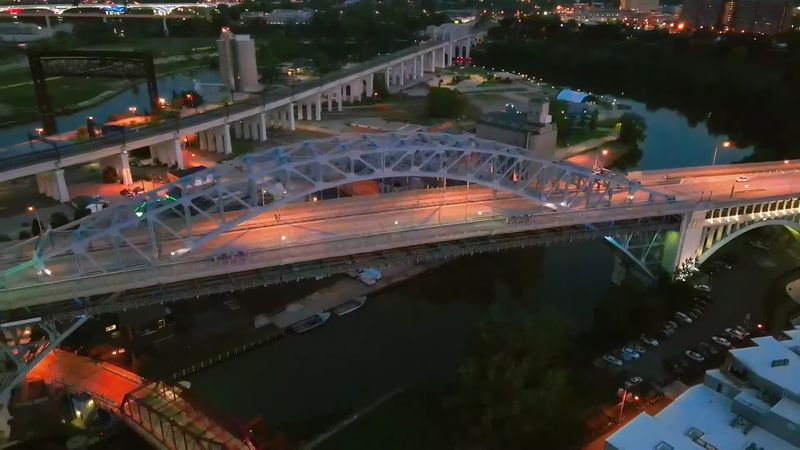
The bridge does not stand in isolation. Around it, the Flats neighborhood stretches along both banks of the Cuyahoga River, offering a mix of entertainment, dining, and industrial history that makes for a full afternoon of exploration.
The Flat Iron Cafe, visible from the RTA Red Line train running between downtown and West 25th Street, is one of the neighborhood landmarks that gives the area its character. The view from the train as it passes near the bridge is one of those unexpected urban moments that stays with you.
Also nearby is the Great Hunger Monument, a memorial that adds a layer of historical depth to the riverfront area. The cluster of bridges visible from this stretch of the river, each one with its own design and era, makes the Flats feel like an open-air museum of civil engineering.
After crossing the bridge on foot, heading down into the Flats gives you a ground-level perspective on the same structures you were just walking above. The contrast between the two vantage points is striking and genuinely worth the extra steps.
Night Views and the City Skyline After Dark
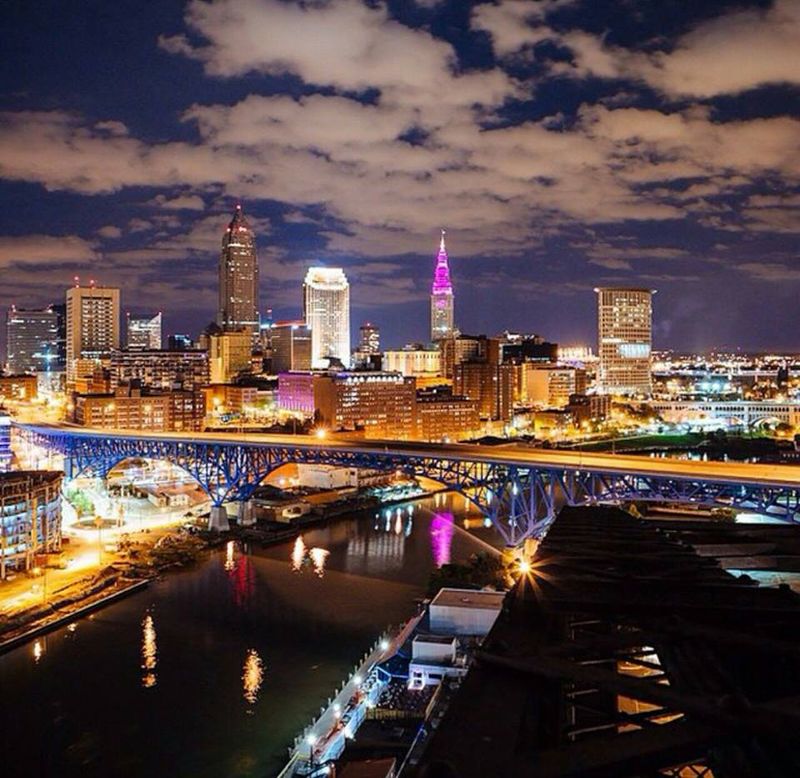
The bridge transforms after dark in a way that daytime visits simply cannot prepare you for.
The downtown Cleveland skyline lights up behind the arch, and the river below catches the reflection of the city in a way that feels almost theatrical.
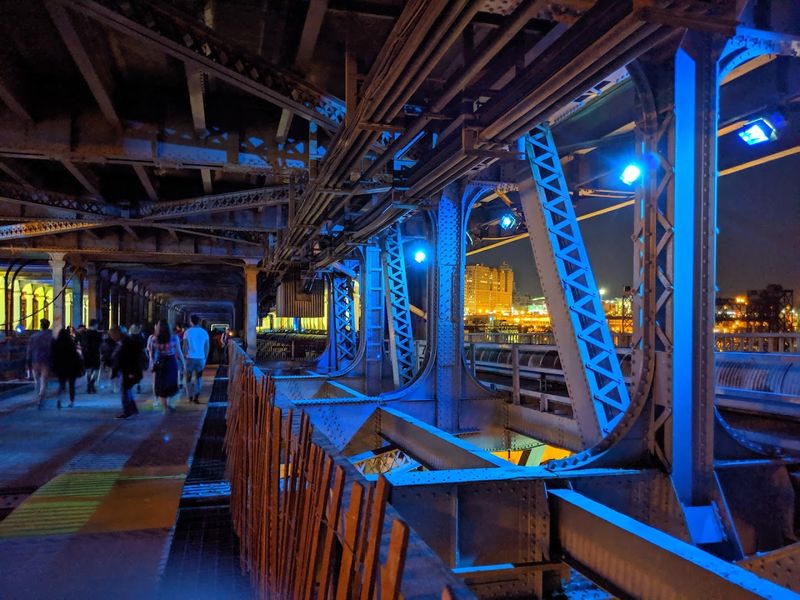
During special evening events, lights have been projected onto the steel girders, turning the entire structure into a canvas for visual art. Even on an ordinary night, the combination of streetlights, bridge architecture, and the glittering skyline creates a scene that photographers return to repeatedly.
The pedestrian walkways are accessible at night, though checking current city guidelines before a late visit is always a good idea.
The experience of crossing the bridge after sunset, with the wind off the river and the city glowing around you, is one of those quiet Cleveland moments that does not get enough attention.
Visitors who have attended evening events on the bridge consistently describe the atmosphere as surreal and cinematic, and that is not an overstatement.
The steel and stone that seem purely functional by day become something genuinely beautiful once the sun goes down over Lake Erie.
Why This Bridge Deserves a Spot on Your Cleveland Itinerary
Cleveland has no shortage of things to see, but the Detroit-Superior Bridge offers something that most attractions cannot: a layered experience that works on multiple levels at once.
You can cross it by car in under two minutes or spend an entire afternoon exploring it on foot.
The combination of National Register status, occasional public access to the lower level, public art, river views, and a hidden streetcar corridor that most tourists never discover makes this bridge an unusually rich destination. It rewards curiosity in a way that feels personal rather than packaged.
Bringing kids along is a great idea because the engineering story, the hidden streetcar tunnel, and the ships passing below all hit that sweet spot of genuinely interesting without needing any special background knowledge to appreciate. Adults tend to get just as absorbed as the younger visitors.
Whether you catch it during one of the rare open-tour events or simply walk across on a quiet weekday morning, this bridge has a way of making you feel more connected to Cleveland’s past than almost anywhere else in the city.
Some places just earn that feeling honestly.