
The Historic Pennsylvania Road Trip That Local Families Have Loved For Generations
Some road trips are really family stories with pavement underneath them.
Across Pennsylvania, this historic route has been part of weekend escapes, summer drives, and multi-generation traditions for decades.
The appeal is not just where the road leads, but how much history appears along the way.
Old towns, roadside landmarks, and long stretches of scenery give families plenty of reasons to keep returning, especially when the drive itself becomes part of the memory.
It is the kind of trip where grandparents can point out what has changed while kids discover what somehow has not.
I still remember sitting in the back seat on a family drive while someone in front kept calling out old buildings before we reached them.
At the time, I thought it was mildly annoying.
Years later, I caught myself doing the exact same thing on another trip, pointing through the windshield and starting every sentence with, “Wait until you see this.”
That was the moment I realized the road had quietly become part of the family script.
A Road Born From a Big Idea
I love knowing that this stretch of pavement started as a bold dream back in the year 1913.
A group led by businessman Carl Fisher wanted a single road that could carry drivers all the way across America.
They named it the Lincoln Highway, after President Abraham Lincoln. The route ran from New York City to San Francisco, making it one of the first coast-to-coast roads for cars in the country.
Back then, many roads were just dirt paths. Drivers often got stuck in mud, so a smooth, marked route felt like a small miracle.
In 1926, the United States started giving highways numbers. Much of the Lincoln Highway in Pennsylvania became part of U.S.
Route 30, which is the name you see on most maps today.
Here is a fun tip for families. Before you leave, print a simple map and let the kids mark each town as you pass it.
It turns a long drive into a game, and suddenly the back seat gets a lot quieter.
Gettysburg Sets the Starting Line
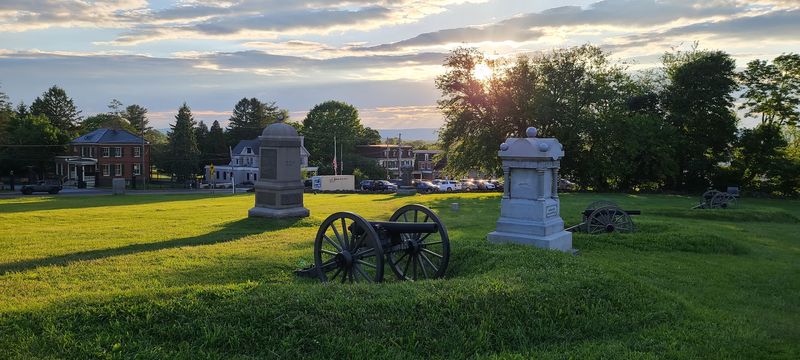
Kicking off the trip in Gettysburg gives your road adventure a powerful and thoughtful first chapter.
The town sits right along U.S. Route 30 in south central Pennsylvania, so it makes a natural starting point.
In early July of 1863, a huge Civil War battle took place in the fields around town.
A few months later, President Lincoln gave his famous Gettysburg Address here, a speech of just a few short paragraphs.
It feels fitting that a highway named for Lincoln passes through the very place he spoke.
My best advice is to start at the Museum and Visitor Center. The giant painted cyclorama inside wraps around you and helps kids picture the story before heading out to the fields.
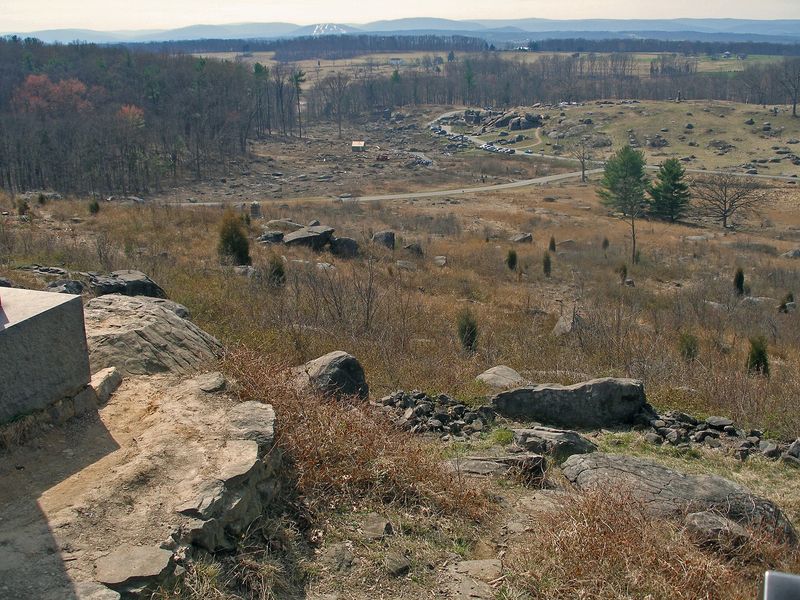
Driving the park roads is easy, and there are plenty of spots to pull over. Pack walking shoes, because climbing Little Round Top gives you a view worth every step.
Plan for at least half a day, since rushing this stop would be a real shame.
Mountains That Make the Drive Sing
Once you leave the flat farm fields behind, the road starts climbing and the views start showing off. U.S.
Route 30 crosses several ridges of the Appalachian Mountains in Pennsylvania, including Tuscarora Mountain and the Alleghenies.
Early drivers called these climbs tough work. Old cars sometimes overheated on the steep grades, so travelers stopped often to let engines cool down.
Today the hills are much easier, but they are still a treat for your eyes. Autumn is my favorite season here, when the leaves turn bright orange, red, and yellow.
Look for pull-offs near the summits. Some spots let you see for miles across valleys and tiny towns below.
Here is a practical tip. Fill up your gas tank before the long mountain stretches, since stations can be farther apart than you might expect.
Also, keep a light jacket handy, because the air at the top can feel cooler than down in the valley. The kids will grumble at first, then thank you once the wind picks up.
Concrete Posts With a Scout Story
Keep your eyes on the roadside, because little concrete posts tell a big story about teamwork.
On September 1, 1928, Boy Scouts across the country helped place around 3,000 markers along the Lincoln Highway.
Each post had a small bronze medallion showing Abraham Lincoln’s face. A blue letter L and a note saying the highway was dedicated to Lincoln made them easy to spot.
Many of these markers have disappeared over the years. A few still stand in Pennsylvania, and finding one feels like winning a scavenger hunt.
Families love turning this into a challenge. I like to give the first person who spots a marker the honor of picking the next snack stop.
You will also see bright red, white, and blue painted bands on poles and signs. These colors were the original way drivers knew they were still on the right road.
Bring a camera and take a picture with any marker you find. It makes a neat souvenir that costs absolutely nothing.
Quirky Roadside Wonders
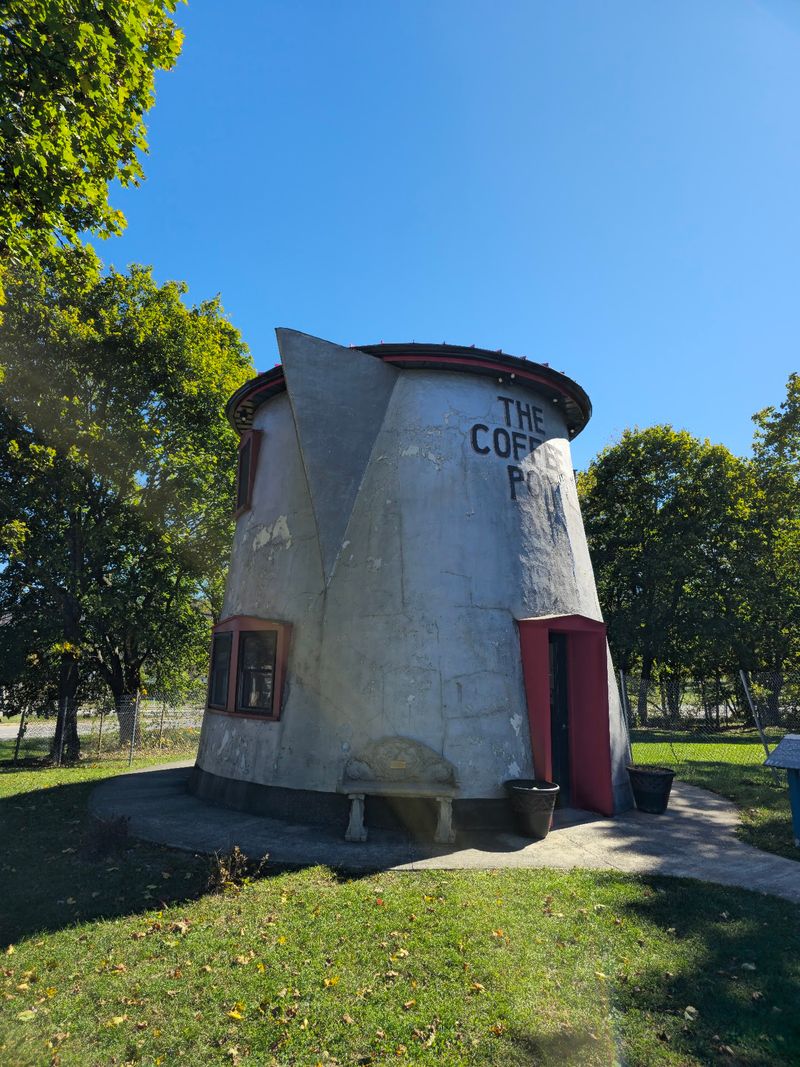
Nobody warned me that one of my favorite photo stops would be a building shaped like a coffee pot.
The Bedford Coffee Pot was built in 1927 as a lunch stand for hungry drivers on the Lincoln Highway.
Over time it got rundown, and it almost faded away. Local folks saved it, moved it across the road to the Bedford County Fairgrounds, and restored it in 2004.
Now it shines again and makes for a goofy, grin-worthy picture. Kids think it is hilarious that someone once ordered a sandwich inside a giant pot.
Old-fashioned roadside spots like this were built to grab attention. Business owners hoped big, silly shapes would make travelers hit the brakes and stop to eat.
Bedford itself is worth a stroll too. The downtown has old brick buildings and shops, and the town has roots going back to colonial days.
Give yourself at least an hour here. Short stops like this help everyone stretch their legs and reset their moods before the next stretch of road.
The Heritage Corridor Keeps the Past Alive
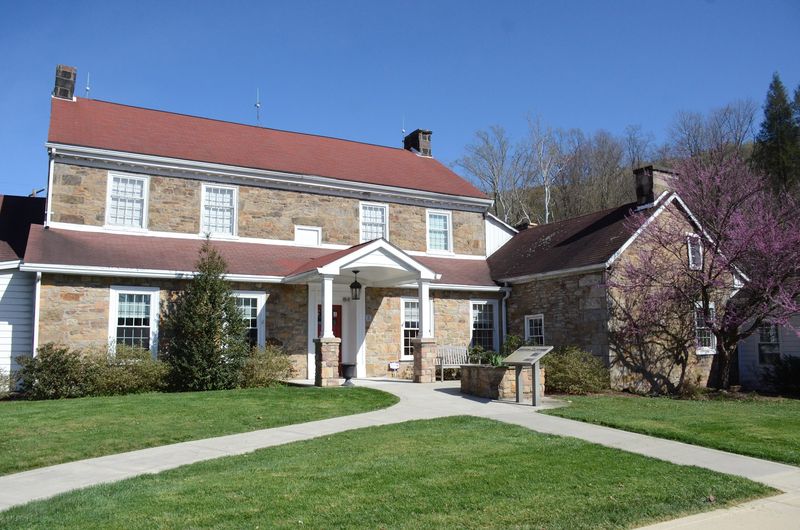
Helping travelers enjoy the old road is the full-time job of a group with a long name.
The Lincoln Highway Heritage Corridor covers about 200 miles of the route across six counties in Pennsylvania.
Those counties are Adams, Franklin, Fulton, Bedford, Somerset, and Westmoreland. The group works to protect historic sites and share stories about the highway.
One of the most fun projects is the painted vintage gas pumps. Local artists decorate old pumps with bright designs, and you can spot them along the way.
You will also find colorful murals and interpretive signs that explain what each town was like long ago. They make great reasons to pull over for a few minutes.
The group runs the Lincoln Highway Experience museum near Latrobe. Inside, you can learn about early motorists, old tourist cabins, and how road travel changed family vacations.
My tip is to grab a corridor map at a visitor center. It points out stops you might zoom past without noticing.
A Quiet Place of Honor Near Shanksville
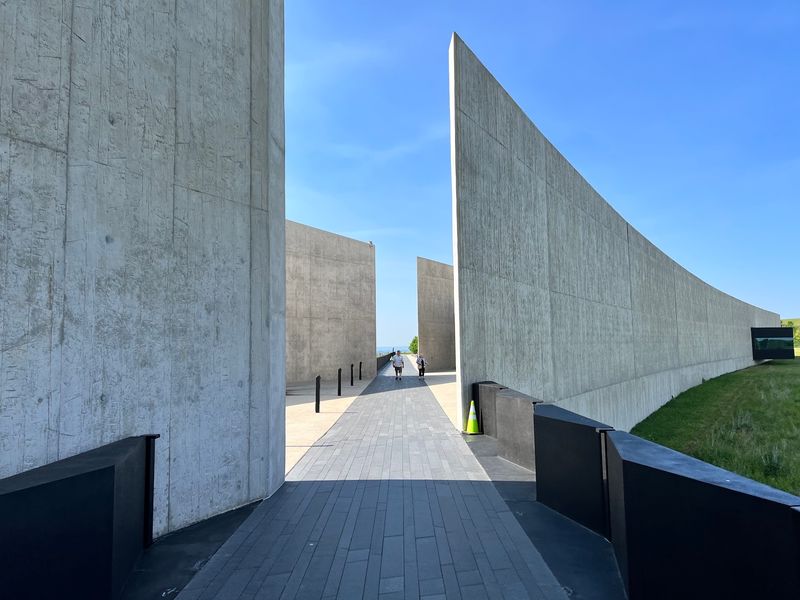
Some stops call for loud laughs, and some ask for soft voices and open hearts instead.
The Flight 93 National Memorial sits in Somerset County, just a short drive off U.S. Route 30 near Shanksville.
It honors the 40 passengers and crew members of Flight 93 on September 11, 2001. These everyday people worked together and became heroes to the whole country.
The Visitor Center explains their story in a careful, thoughtful way. Parents can decide which exhibits fit their kids, since the topic is serious.
Outside, the Wall of Names stands in white marble along a peaceful walkway. Each name has its own panel.
The Tower of Voices is something you hear before you fully see. It stands 93 feet tall and holds 40 wind chimes, one for each person honored.
I suggest visiting on a breezy day so you can listen to the chimes. Talk with your kids afterward about kindness and courage, because those lessons travel home with you.
A Frontier Fort Rebuilt With Care
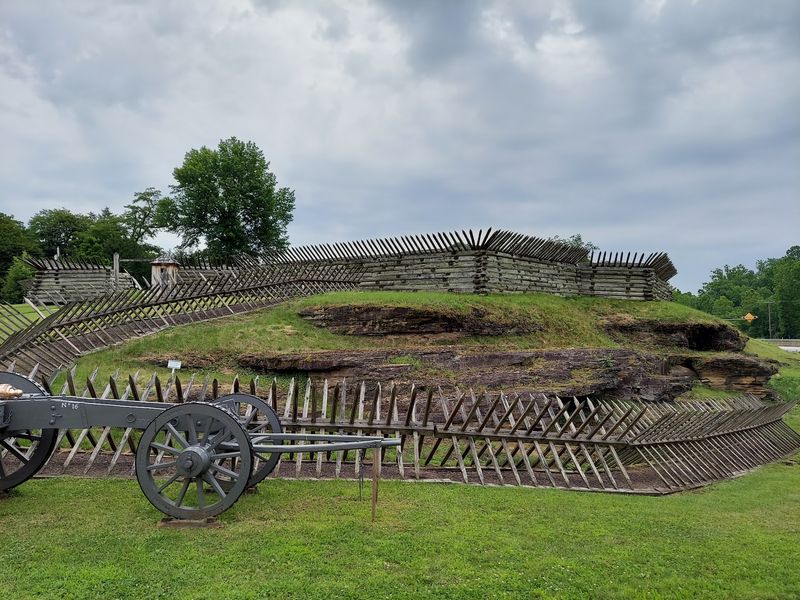
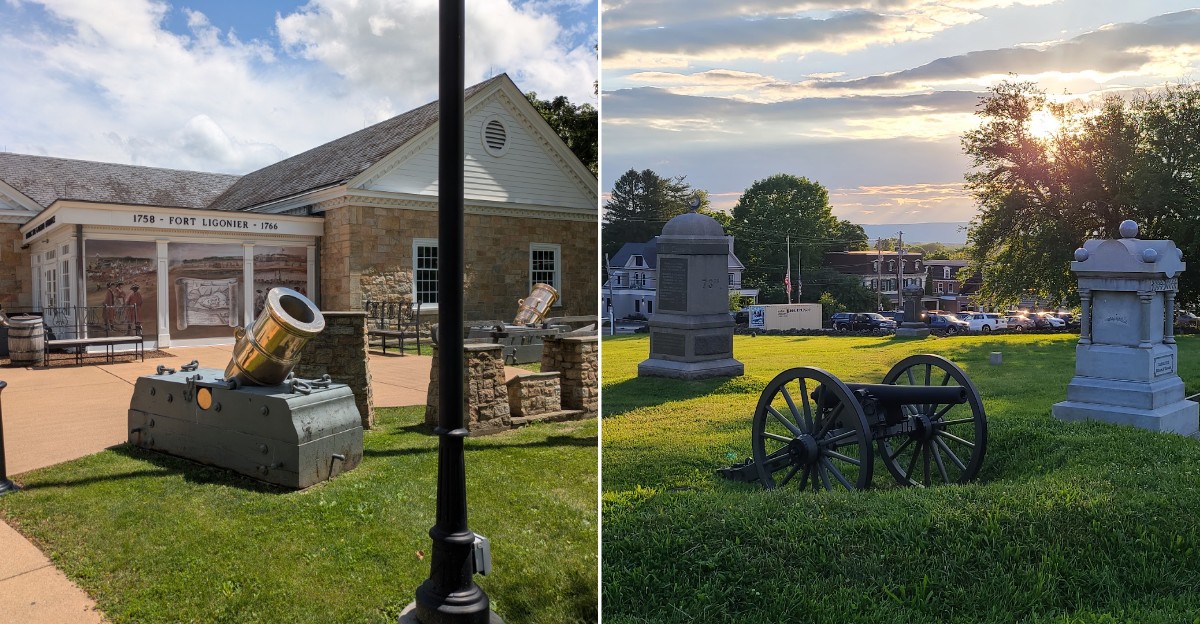
Walking through those wooden gates, I felt like I had stepped right into the 1750s frontier.
Fort Ligonier is at 200 S Market St, Ligonier, PA 15658, in western Pennsylvania, United States.
The British built the original fort in 1758 during the French and Indian War. It served as a key supply stop for General John Forbes as his army pushed west toward Fort Duquesne, where Pittsburgh stands today.
The fort you see now is a careful reconstruction. Builders used old plans and research, placing it right on the original site.
Inside the walls, you can peek into barracks, officers’ quarters, and storehouses.
One of the coolest spots is the underground powder magazine, where gunpowder was once kept dry.
Kids love the rows of cannons lined along the walls. They are reproductions, but they still look mighty impressive in photos.
From early April through Thanksgiving weekend, the site opens daily from 10 a.m. to 5 p.m.; winter access is limited to the museum.
Young George Washington’s Tough Lesson
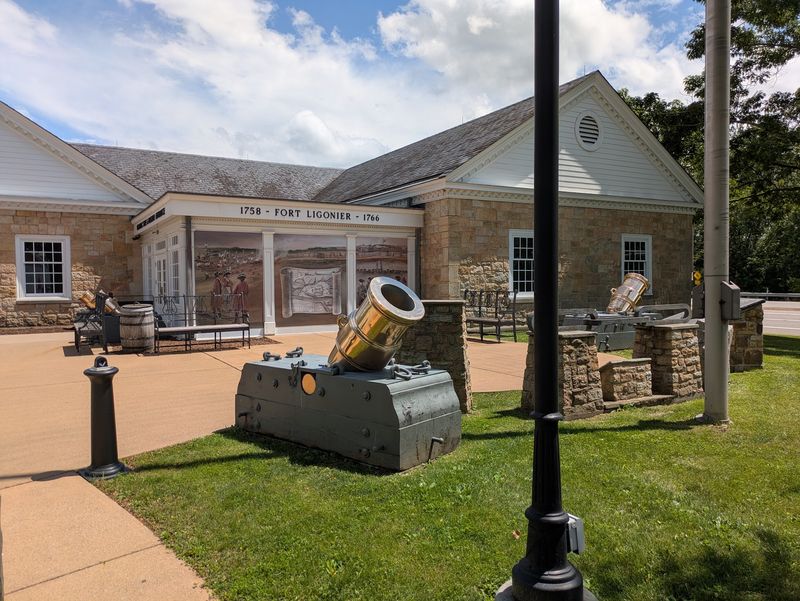
History buffs, get ready, because a famous future president learned some hard lessons near here.
George Washington was a young officer from Virginia when he served with the Forbes Expedition in 1758.
On November 12, 1758, two groups of soldiers on the same side mistook each other for the enemy in the fog and confusion.
Washington stepped between them to stop the firing, and the museum shares this story in detail.
It is a great conversation starter for kids. Even great leaders made mistakes and grew from them.
The museum next to the fort is packed with real items from the 1700s. You will see uniforms, weapons, maps, and a gallery of 18th-century portraits.
There is even a room from the home of Arthur St. Clair, a general who lived in the area later on. Seeing his actual living room feels surprisingly personal.
My suggestion is to start inside the museum first. Knowing the background makes the walk around the fort walls much more meaningful.
Fort Ligonier Days and a Charming Town Square
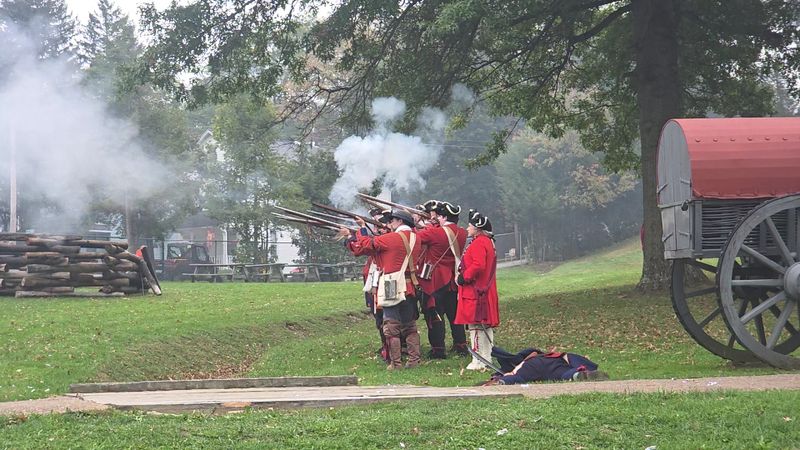
Every October, the little town of Ligonier throws a party that families mark on their calendars.
Fort Ligonier Days honors the 1758 battle at the fort with reenactments, crafts, food stands, and a big parade.
Crowds come from all over Pennsylvania, so parking fills up fast. I like to arrive early and walk in from a side street.
Even outside festival weekend, the fort often hosts living history programs. You might see cannon firing demonstrations or try your hand at candle dipping.
When you are done exploring, stroll over to the Diamond. It is the town square, with a cute white bandstand right in the center.
Shops and cafes line the streets around it. Grab some fudge or ice cream and find a bench to rest those tired legs.
The Diamond makes a sweet final stop on this historic road trip. Somehow, ending the day here makes everyone start planning the next visit before the car even leaves town.