
The Historic Pennsylvania Train Ride That Shows Off Fall Foliage Locals Try To Keep Quiet
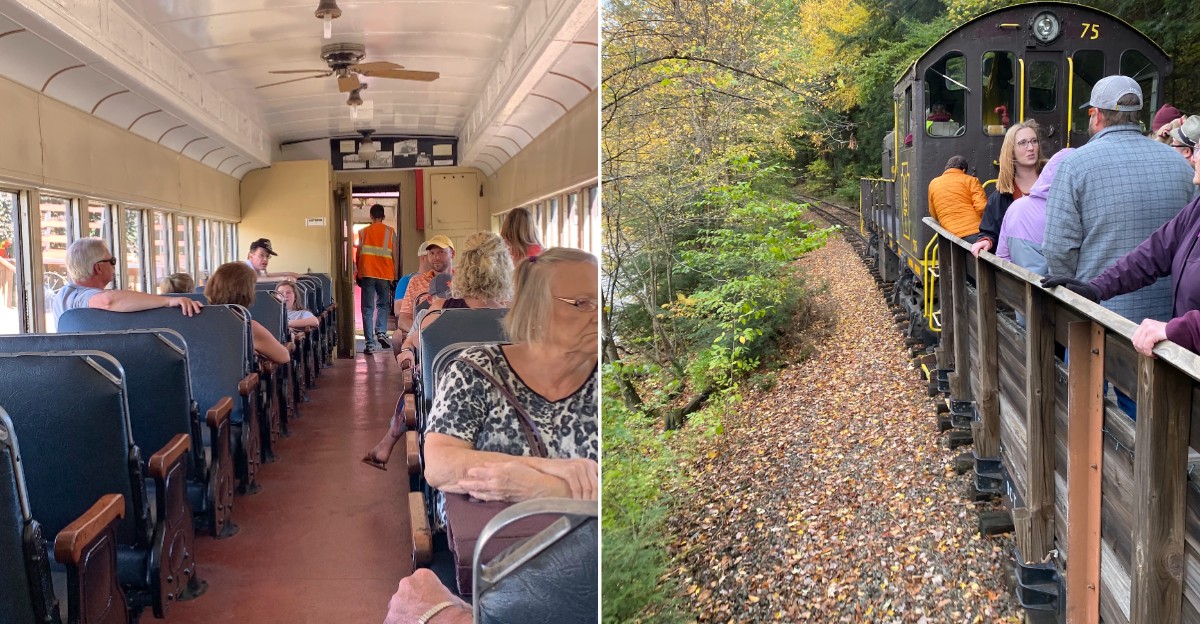
I knew the ride had me when I stopped checking where we were going and started watching the windows instead.
A historic train through Pennsylvania in fall can do that.
The tracks carry you past changing leaves at a pace that gives the scenery time to sink in, with none of the usual pressure to pull over, find parking, or rush to the next overlook.
It is easy to see why locals might prefer to keep a ride like this from becoming everybody’s autumn plan.
What I like most is the way a train turns foliage into a moving picture. You settle into your seat, the landscape keeps changing, and the best views come to you.
I once spent nearly an entire scenic ride leaning toward the glass because every bend seemed better than the last.
By the end, my camera roll was ridiculous and I had barely noticed the time. That is exactly how I want a fall afternoon to disappear.
A Valley Where The Oil Boom Started
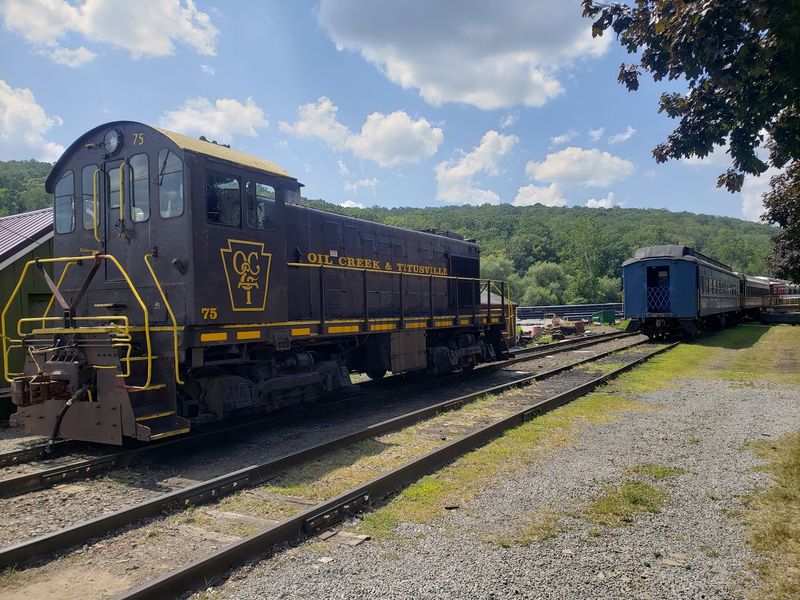
Back in 1859, the first commercially successful oil well in the world started pumping a few miles down this very valley.
That single event turned a quiet stretch of Pennsylvania farmland into one of the busiest places on earth for a few wild decades.
Riding the Oil Creek & Titusville Railroad puts you right in the middle of that story.
The train follows the same corridor where boomtowns appeared almost overnight, then vanished just as fast once the crude ran dry.
Guides point out spots where entire communities once stood, and today there is little more than trees and foundation stones.
I found that contrast strangely moving, like the forest quietly reclaimed everything.
The history is not just decoration here. Names like Pioneer and Petroleum Centre come with real stories about mud streets, teamsters, and fortunes made in months.
You leave understanding why this small corner of Pennsylvania shows up in world history books, which is not something most scenic train rides can promise.
Fall Foliage That Sells Out Fast
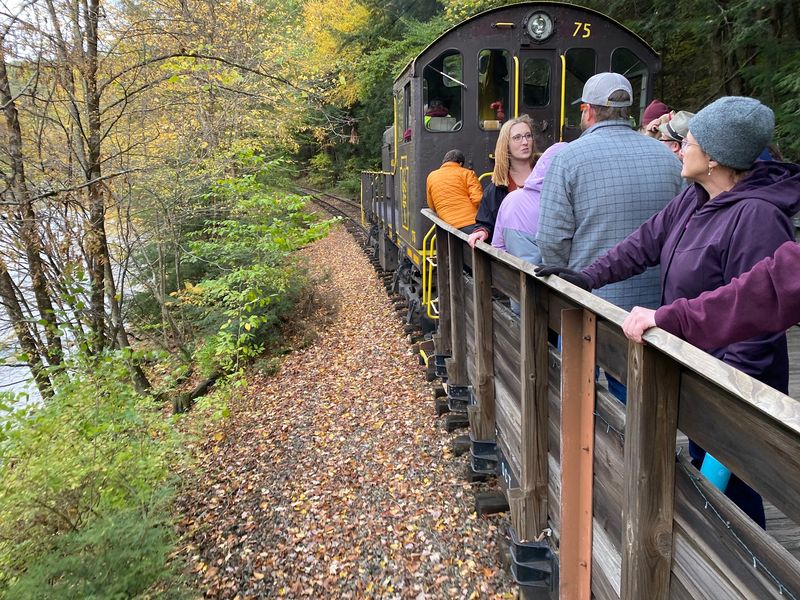
October is when this ride shifts from pleasant to unforgettable.
The valley walls close in on both sides, so the maples and oaks arch right over the tracks and the windows fill with orange, gold, and deep red.
Demand is real in 2026. Fall foliage rides run October 1 through October 16, Wednesdays through Sundays, and the railroad says October dates often sell out across times and dates.
Advance reservations are strongly recommended throughout October here.
Buy in advance if you want a specific date or class. First Class is already sold out for every 2026 foliage ride, while several Coach dates are sold out too.
What makes the color feel different here is the creek. Water reflects the canopy, so you get the leaves twice, once above and once below.
Peak timing usually lands somewhere between the first and third week of October in this part of Pennsylvania, though the weather always gets the final vote.
Perry Street Station And Its Museum
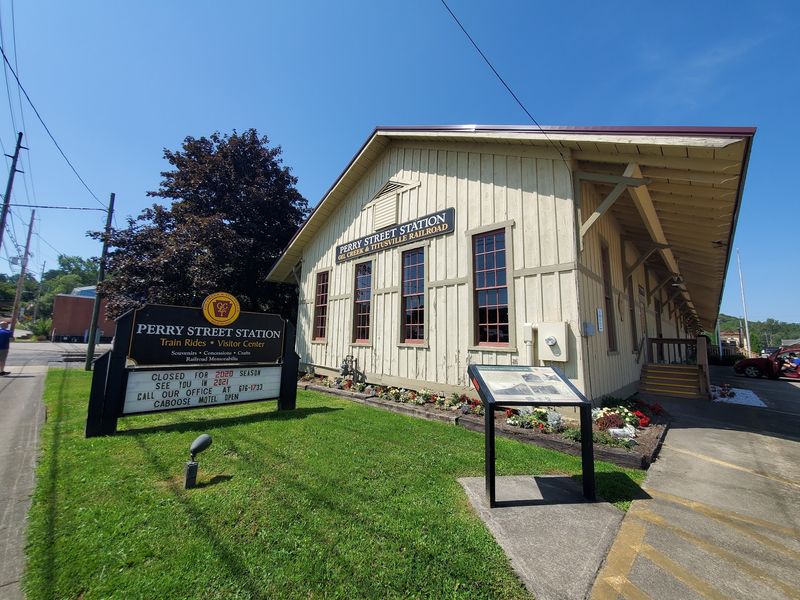
The departure point sits at 409 S Perry Street in Titusville, Pennsylvania, and the building alone earns an early arrival.
Inside, old lanterns, signal gear, timetables, and photographs line the walls like someone emptied a railroader’s attic in the best possible way.
I showed up about forty minutes before departure and still felt rushed.
There is a gift shop with reasonably priced postcards and souvenirs, plus displays that explain how the line worked when freight mattered more than sightseeing.
Parking is easy, and the boarding process moves smoothly because staff and volunteers have clearly done it a thousand times.
Small detail worth knowing: the station feels genuinely old, not theme park old. The wood, the ticket window, and the smell of the place do a lot of work before you even climb aboard.
Give yourself time to wander the platform too. Watching the locomotive get coupled up is half the fun for kids and, honestly, for me.
The Only Rolling Post Office Of Its Kind
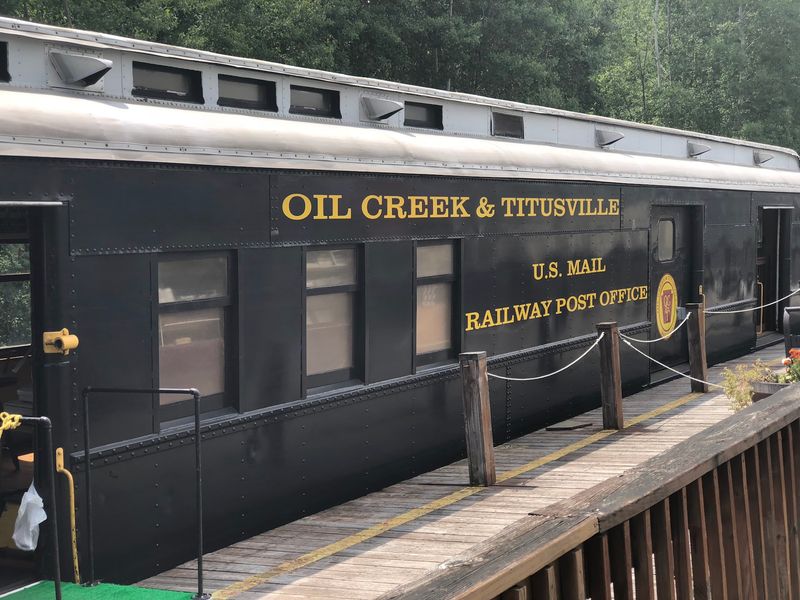
Here is the detail that surprised me most: you can mail a postcard from inside a moving train and have it cancelled with a special postmark.
The Railway Post Office car on this line is a working piece of postal history, complete with sorting pigeonholes and canvas mail sacks.
Buy a card in the gift shop, write it on board, and drop it in. Families with kids tend to love this part, and adults quietly love it more.
Railway Post Office cars once carried and sorted mail across the country at speed, with clerks working while the train rocked along. Almost none operate anymore.
Walking through it, I kept thinking about how physical mail used to be, all hands and stamps and ink.
It costs almost nothing to participate, and the postmark makes a better souvenir than anything mass produced. Mine went to my grandmother, who still has it on her refrigerator.
Herons, Hawks, And Deer Along The Creek
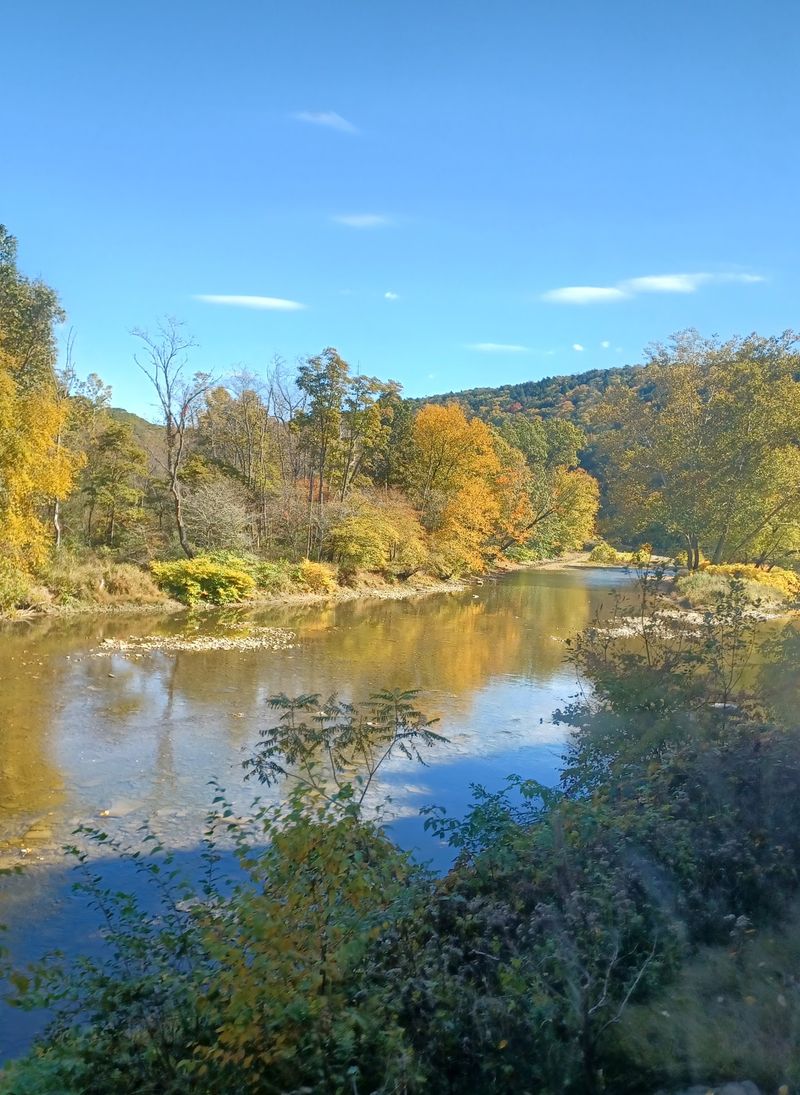
Wildlife shows up often enough that people start pointing before the guide does.
Great blue herons stand motionless in the shallows, red tailed hawks circle overhead, and deer step out along the banks like they own the place.
Because the tracks hug Oil Creek for much of the route, the train stays close to water the whole way. That means ducks, geese, turtles on logs, and the occasional beaver lodge.
My advice is simple: sit on the creek side if you can, and keep your eyes up rather than on your phone. The best sightings last about four seconds.
Fall is excellent for spotting animals since thinner leaves open up the view through the trees. Spring brings more bird activity and louder mornings.
Nobody guarantees anything, of course. Wildlife does not follow timetables, unlike the train, which gave me a fresh appreciation for how reliable a locomotive actually is.
Choosing Between Coach, First Class, And The Open Car
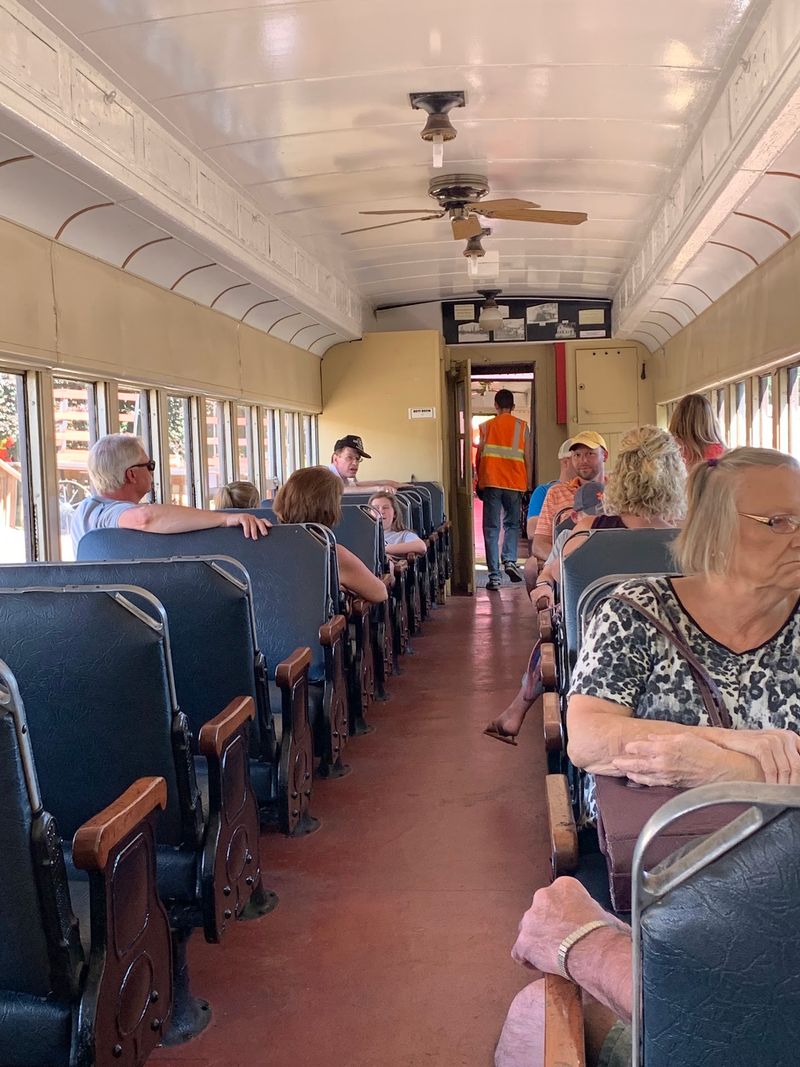
Seating choices matter more than you might expect. Coach gives you padded vinyl bench-style seats, while First Class uses cloth-covered seats with more legroom and priority boarding.
First Class also offers air conditioning, though climate control is subject to availability.
A volunteer tour guide may be assigned there when staffing allows. Coach history comes through the overhead PA system, with volunteer hosts when available.
The open-air gondola is different. It is not a separate ticket class, and passengers from both enclosed classes can visit it once the conductor allows movement through the train.
Photographers should aim straight for it.
Do check availability, because the gondola is weather dependent and is not guaranteed on every trip.
Layers are your friend in autumn. The open car runs noticeably cooler than the enclosed coaches, and mornings in this part of Pennsylvania can start out genuinely chilly before the sun clears the ridge.
Sleeping In A Caboose Across The Street
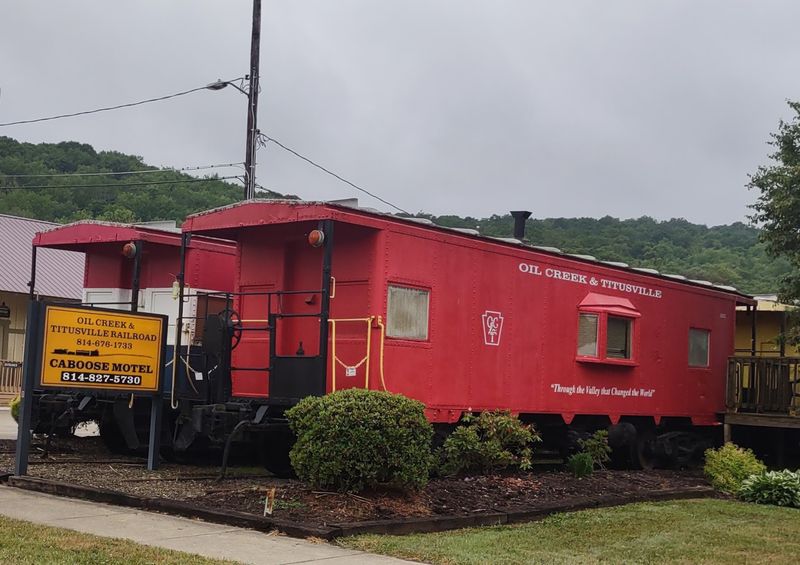
Right near the station sits a motel made entirely of restored cabooses, and yes, you can spend the night in one.
Twenty one of them line up like a train that decided to retire and open a guesthouse.
Each has a private bathroom and beds, which is more than the original crews ever got. The cupola windows are the charming part, letting you sit up high and look down the line.
I would pack a mattress topper if you are picky about firmness, and go in expecting character rather than luxury. That is exactly what makes it fun.
Staying overnight also solves the early arrival problem. You wander over to the station in the morning without any driving stress.
Book ahead during autumn weekends, because cabooses and foliage tickets fill up on the same calendar.
It remains one of the most genuinely unusual lodging options anywhere in Pennsylvania.
Volunteers Keep The Wheels Turning
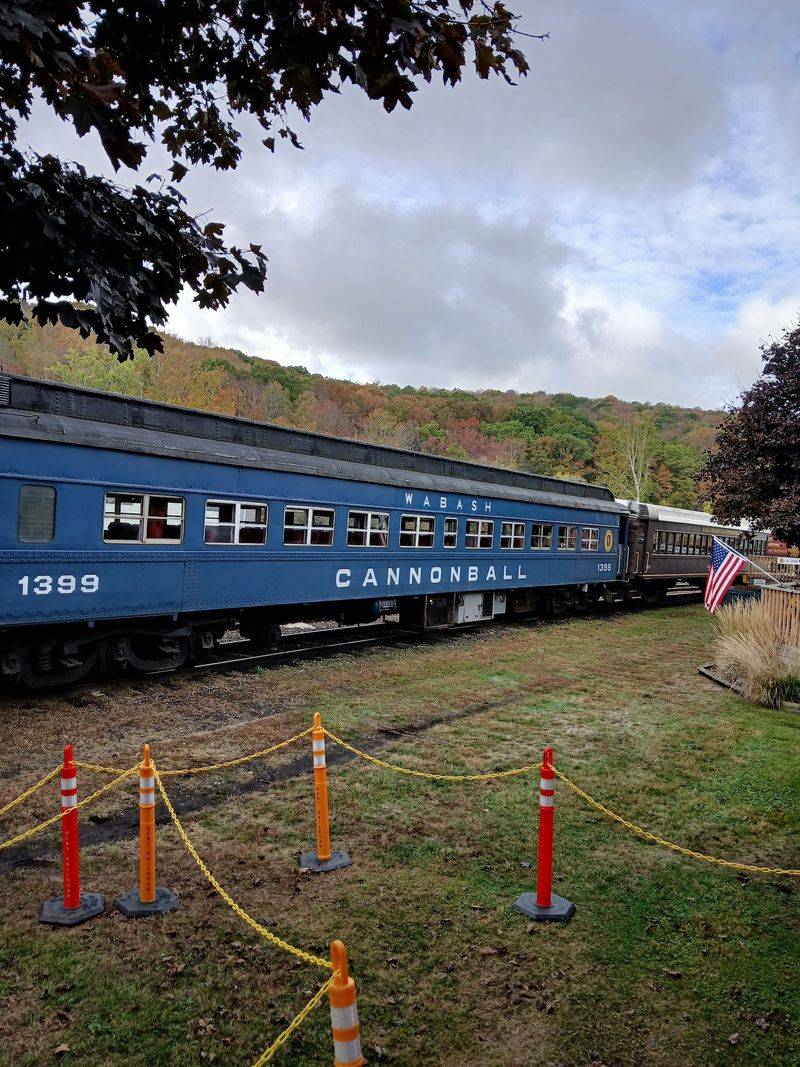
Something clicked for me when I learned this operation runs largely on volunteers.
The organization is a nonprofit, and much of the crew you meet gives their time because they love trains and local history.
That shows up in how they talk to you. Conductors crack jokes, answer questions about signals and switches, and genuinely seem thrilled you came.
Guides narrate the route with details about boomtowns, geology, and the rail line itself, then leave room for silence so you can actually absorb the scenery.
Knowing where your ticket money goes changes the experience a bit. Fares help maintain the track, the vintage cars, and the station museum.
I have been on plenty of tourist attractions that feel like a machine.
Here in Titusville, Pennsylvania, it feels like a community project that happens to weigh several hundred tons and run on rails, which is a very hard thing to fake.
Practical Tips Before You Board
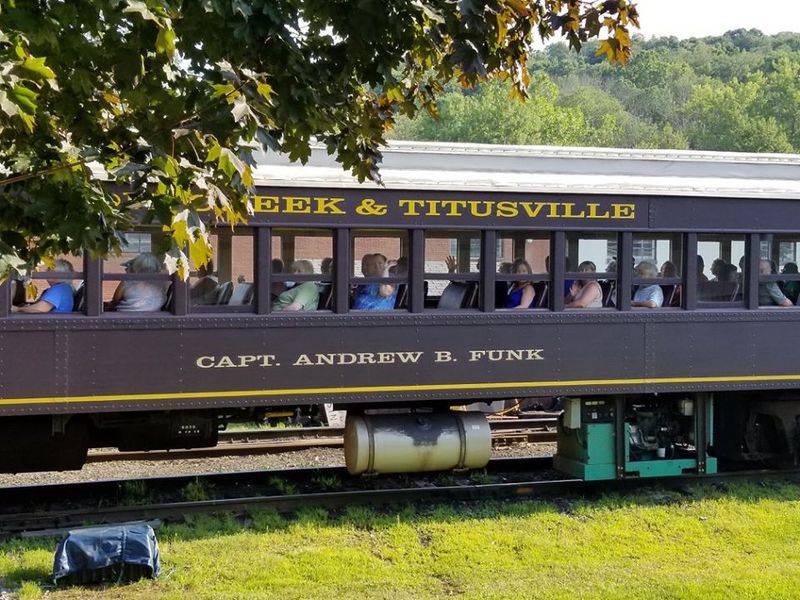
A few things would have made my first trip smoother. Round trips run about three hours, so plan bathroom breaks and snacks with that in mind, especially with young kids.
You are allowed to bring your own snacks and permitted beverages, which is excellent news on cold days. A thermos of hot cocoa or coffee is a useful thing to pack in October.
Snacks and beverages are sold on board, and there are restrooms in each car plus a midway stop at Rynd Farm where ice cream novelties are available through October.
Large bags, hard-sided coolers, picnic baskets, and glass containers are not permitted, so keep whatever you bring small enough to stay on your lap.
Buy tickets ahead, arrive early, and dress warmer than the forecast suggests.
The ride departs from Titusville in northwestern Pennsylvania, and honestly, I have always appreciated an extra layer on a train in Pennsylvania in autumn.