
The Historical Florida Sites That Tell Untold Stories
When most people think of Florida, they picture beaches, palm trees, or theme parks.
But hidden behind the sunshine and tourist attractions lies a far deeper story—one of ancient civilizations, daring utopias, colonial struggles, and the complicated legacies of freedom and oppression.
Over the years, I’ve uncovered remarkable places across the state that reveal these untold chapters.
From centuries-old shell mounds built by the Calusa to the radical Koreshan utopian experiment, from cigar factories that fueled Cuba’s independence to haunting reminders of slavery’s persistence, these seven sites capture Florida’s layered and often surprising past.
They’re not just destinations—you walk into living history that forever changes how you see the Sunshine State.
Kingsley Plantation: Where Freedom And Slavery Collided
Walking the grounds of Kingsley Plantation last summer, I felt the weight of its complicated history with every step. This rare surviving example of an antebellum Florida plantation tells the extraordinary story of Zephaniah Kingsley and his African-born wife, Anna Madgigine Jai.
Unlike typical plantation narratives, Anna was first enslaved and later freed, eventually managing land and playing a significant role in the plantation’s operations—an unusual position for a woman of African descent in the early 19th century. The tabby slave cabins still stand in a haunting arc formation, each constructed from a mixture of oyster shells, lime, and sand.
Located on Fort George Island near Jacksonville, the site offers a powerful glimpse into the complex racial dynamics of early Florida, when it was still under Spanish rule with laws on race and freedom that differed greatly from those of the American South.
Fort Zachary Taylor: The Union’s Southern Stronghold
Stumbling upon Fort Zachary Taylor during my Key West vacation completely reshaped my understanding of Florida’s Civil War history. While most Southern states joined the Confederacy, this massive coastal fortress remained in Union hands throughout the conflict, serving as headquarters for the U.S. Navy’s East Gulf Blockade Squadron.
Construction began in 1845, but the fort holds an unexpected secret. During excavations in the 1960s, workers uncovered a remarkable cache of Civil War–era cannons that had been buried within the fort’s walls during later renovations—one of the largest such collections in the country.
Today, visitors can wander through the brick stronghold while also enjoying one of Key West’s most beautiful beaches just steps away. For history buffs, the regular Civil War reenactments make the fort’s strategic role come vividly to life.
Koreshan State Park: A Utopian Colony’s Forgotten Dream
“We live inside the earth!” declared Cyrus Teed, founder of the Koreshan Unity settlement I stumbled upon in Estero. This bizarre 19th-century religious commune believed we inhabit a hollow sphere – just one of their many unconventional ideas that drew followers to Florida’s wilderness.
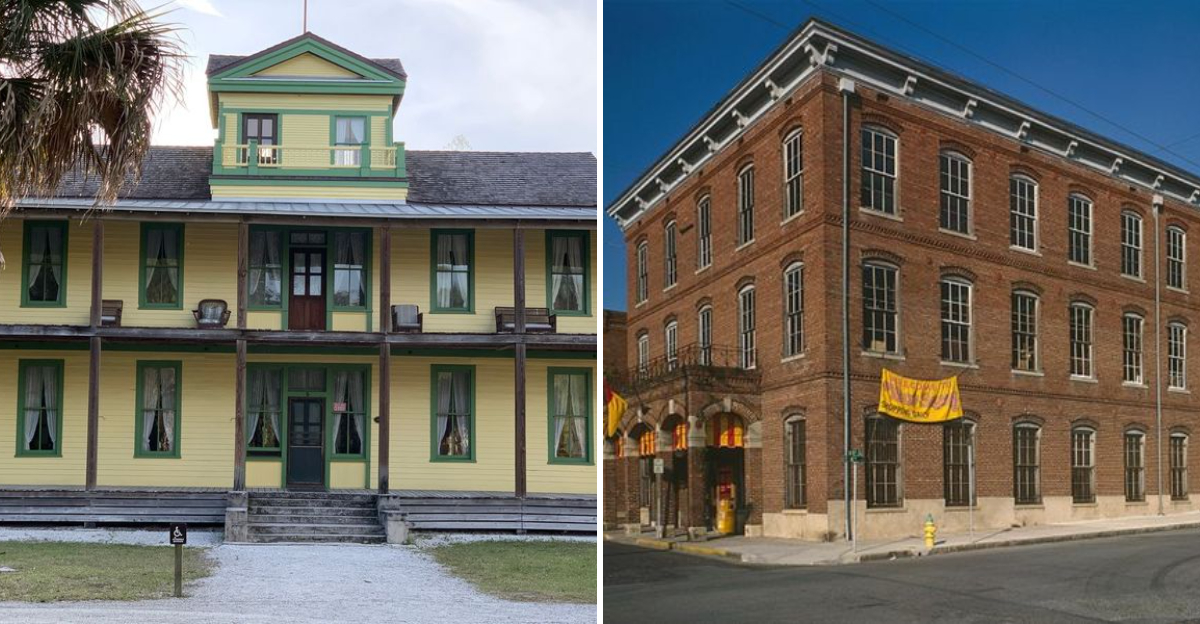
The Koreshans practiced equality between sexes long before women’s suffrage, operated their own printing press, and built impressive structures that still stand today. Their pristine grounds feature beautiful Victorian-era buildings including the Planetary Court where seven women governed the community.
What fascinates me most is how quickly this once-thriving utopian experiment faded. After Teed’s passing in 1908, membership declined until 1961 when the last four members donated their 320-acre property to Florida, preserving this quirky chapter of religious history for curious visitors like us.
Mound House: Ancient Indigenous Engineering On Display
“You’re standing on 2,000 years of history!” exclaimed my tour guide at Mound House on Fort Myers Beach. Unlike any museum I’ve visited, this entire house sits atop an ancient Calusa Indian shell mound – an engineering marvel created by indigenous Floridians long before European contact.
The most incredible feature? An underground viewing area where museum staff cut away a section of the mound, revealing distinct layers of shells, bones, and pottery that tell the story of the sophisticated Calusa civilization. These native Floridians built entire islands from discarded shells, creating elevated spaces safe from storms and flooding.
Beyond the archaeological wonder, the property showcases a 1921 Florida mansion with stunning views of Estero Bay. Walking the grounds, I was struck by how the Calusa thrived here for centuries, harvesting abundant seafood without agriculture – a completely different relationship with Florida’s environment than we have today.
Stiltsville: Miami’s Forgotten Offshore Community
Floating above Biscayne Bay’s shallow waters, Stiltsville captured my imagination the moment I spotted its weathered wooden structures from my boat tour. These seven remaining houses on stilts represent what was once a thriving offshore community of over 27 buildings, accessible only by water.
Dating back to the 1930s, Stiltsville began as a place where Prohibition-era boaters could access gambling and liquor beyond the reach of Miami authorities. Over decades, it evolved into a unique neighborhood where privileged Miamians escaped city life for fishing, socializing, and spectacular sunsets.
Hurricane Andrew in 1992 destroyed most structures, nearly erasing this quirky chapter of Florida history. The surviving houses now form part of Biscayne National Park, preserved through a trust that maintains them against the constant battering of storms and sea. Seeing these resilient buildings standing defiantly against the horizon feels like glimpsing Miami’s soul.
Ybor City: Tampa’s Cuban Revolutionary Headquarters
The aroma of hand-rolled cigars pulled me into Tampa’s Ybor City district last fall, but I stayed for the revolutionary history! This National Historic Landmark District was once known as the “Cigar Capital of the World,” where thousands of Cuban, Spanish, and Italian immigrants crafted premium cigars by hand in massive brick factories.
What surprised me most was learning how Cuban revolutionary José Martí frequently visited Ybor City in the 1890s, rallying support and raising funds for Cuba’s independence from Spain. The neighborhood’s mutual aid societies – magnificent buildings still standing today – provided healthcare, social activities, and cultural preservation for immigrant communities.
Between visits to the cigar factories and Columbia Restaurant (Florida’s oldest restaurant), I explored the José Martí Park – the only American property owned by the Cuban government. This small patch of technically-Cuban soil symbolizes the profound connection between Tampa and Cuba’s fight for independence.
Fernandina Beach: The Last American Slave Ship Port
Strolling through picturesque Fernandina Beach on Amelia Island, I was stunned to learn that this charming Victorian seaport also holds one of Florida’s darkest historical chapters. Even after the United States officially banned the international slave trade in 1808, illegal slave ships are believed to have docked here, taking advantage of the town’s shifting jurisdiction as it passed under eight different national flags throughout its history.
These complex legal circumstances created loopholes that smugglers exploited until the Civil War. Today, the meticulously preserved 50-block historic district showcases Florida’s most complete collection of Victorian architecture, while the Amelia Island Museum of History addresses this difficult legacy through thoughtful exhibits.
What makes this site particularly significant is how it reveals Florida’s tangled relationship with slavery beyond the typical plantation narrative. Standing at the harbor where enslaved Africans once disembarked, I gained a deeper appreciation for how Florida’s ever-changing political boundaries shaped its multicultural identity.