
The Illinois Italian Beef Stand That Still Tastes Like Opening Day
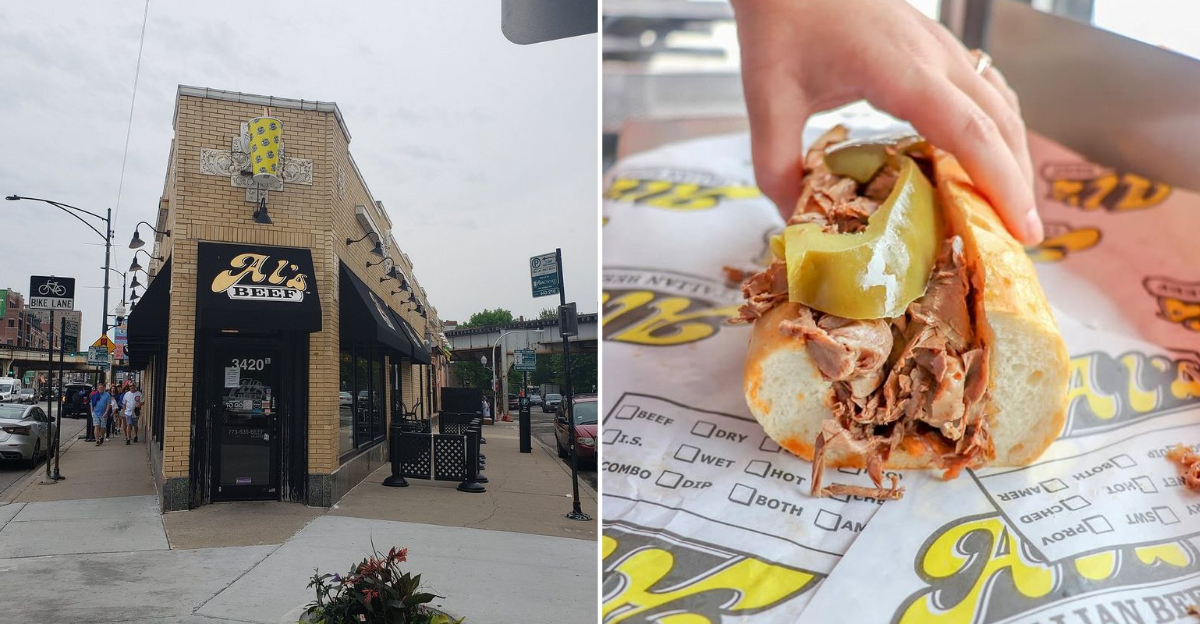
I still remember the first time I bit into an Italian beef sandwich at Al’s in Little Italy.
Juice dripped down my arms, giardiniera burned my tongue in the best way, and I knew I’d found something special.
This isn’t just another sandwich shop—it’s a time machine that transports you back to 1938 with every single bite.
Al’s has been serving the same legendary recipe for nearly a century, proving that when you’ve got perfection, you don’t mess with it.
A Chicago Legend Since 1938
Al’s Beef opened its doors when FDR was president and a nickel could buy you a candy bar. The Ferreri family started slicing beef in their Little Italy kitchen, never imagining their recipe would outlast empires. Walking into Al’s today feels like stepping through a portal where the Great Depression just ended and hope tastes like seasoned meat on fresh bread.
My grandfather used to tell stories about waiting in line here as a kid, and now I bring my own children. The same wooden cutting boards have witnessed generations of hungry Chicagoans. Four generations later, the Ferreri family still runs the show with the same dedication their great-grandfather had.
Nothing about the experience has been modernized or sanitized for Instagram. You’ll find the same no-frills approach that made Al’s famous in the first place.
The Birthplace Of The Italian Beef Sandwich
Before Al’s, Italian beef sandwiches didn’t exist—at least not in the form we worship today. The Ferreri family invented this masterpiece out of necessity during tough economic times. They needed to stretch expensive meat further, so they sliced it paper-thin and soaked it in flavorful juices that made every bite sing.
What started as a Depression-era survival strategy became Chicago’s most iconic contribution to sandwich history. Other places claim they invented it, but locals know the truth lives at Al’s. The technique of slicing beef against the grain, seasoning it just right, and dunking it in that magical gravy all originated here.
Every Italian beef stand in America owes a debt to what happened in that Little Italy kitchen. Al’s didn’t just create a sandwich—they launched a movement.
A Recipe That Hasn’t Changed In Nearly A Century
While other restaurants chase trends and update menus seasonally, Al’s stubbornly refuses to change a single ingredient. The spice blend remains locked in a family vault, passed down like a precious heirloom. I’ve heard rumors that only three people alive know the exact measurements, and they’ve sworn blood oaths never to reveal them.
This isn’t stubbornness for stubbornness’s sake—it’s respect for perfection. When you’ve cracked the code on flavor that makes grown men weep with joy, why would you tinker? The beef gets the same treatment today that it received when Benny Goodman dominated the radio waves.
Even the bread comes from the same bakery that supplied Al’s in the early days. Everything tastes exactly as it should, frozen in delicious amber.
Where Every Bite Still Tastes Like Opening Day
Consistency is Al’s superpower, and I mean that in the most complimentary way possible. Last Tuesday’s sandwich tasted identical to the one I ate in 2003, which probably tasted like the ones served in 1952. There’s something deeply comforting about knowing exactly what you’re getting, especially in a world that changes faster than we can process.
The beef arrives at your table swimming in its own juices, peppers piled high, bread soaked to structural failure. One bite and you’re transported back to opening day, standing shoulder-to-shoulder with workers from the nearby factories. Time collapses when flavor remains constant.
I’ve never had a bad sandwich here, not once in thirty years of loyal patronage. That’s not luck—that’s commitment to craft.
Inside The Iconic Beef Stand That Defines Chicago Street Food
Step inside Al’s and you’ll immediately understand why Chicago’s street food scene earned worldwide respect. The counter workers move with practiced efficiency, calling out orders in a rhythm that sounds like music. Steam rises from the beef trays, fogging up the sneeze guards and filling the air with garlic and oregano.
There’s no fancy dining room or mood lighting—just honest food served fast to hungry people. The walls display faded photographs of Chicago’s glory days, when factories hummed and neighborhoods thrived. You order at the counter, grab extra napkins (trust me, you’ll need them), and find whatever seat you can.
This stripped-down approach is what makes Al’s special. No pretension, no fusion experiments, just beef and bread doing what they do best.
Messy, Juicy, And Perfect — The Way Locals Like It
Tourists often make the mistake of ordering their beef “dry,” which defeats the entire purpose of visiting Al’s. Locals know to get it “dipped” or even “baptized,” which means the whole sandwich takes a swim in the gravy. Yes, it’s messy. Yes, you’ll need a shower afterward. Yes, it’s absolutely worth it.
I once watched a businessman in a fancy suit tackle a baptized beef with the determination of a man possessed. By the end, his tie was ruined and his face glowed with pure happiness. That’s the Al’s experience—abandon dignity, embrace deliciousness.
The juice-soaked bread disintegrates in your hands, forcing you to eat faster than you probably should. It’s barbaric, beautiful, and perfectly Chicago.
How Al’s Became A Must-Visit For Food Lovers Nationwide
Word of mouth turned Al’s from a neighborhood secret into a national pilgrimage site. Food writers discovered it in the seventies, and suddenly people were flying to Chicago just to eat here. Anthony Bourdain featured it on his show, calling the Italian beef “a religious experience wrapped in wax paper.”
Now you’ll find license plates from every state in the parking lot. Food bloggers film themselves taking first bites while locals roll their eyes and order their usual. The fame hasn’t changed Al’s one bit—they still serve the same sandwich to everyone, whether you’re a celebrity chef or a construction worker on lunch break.
I’ve overheard conversations in a dozen languages, all united by appreciation for properly seasoned beef. Al’s proved that quality needs no translation.
A Taste Of Tradition That Time Can’t Touch
In an era when restaurants close faster than they open, Al’s stands as a monument to doing one thing exceptionally well. The fourth generation of Ferreris now works the counter, teaching their kids the family business just like their great-great-grandfather did. This continuity creates something money can’t buy—authenticity that you can taste.
Every sandwich carries the weight of history, the pride of craftsmanship, and the love of family tradition. You’re not just eating lunch—you’re participating in a living piece of Chicago heritage. The flavors connect you to everyone who’s ever stood at that counter, from factory workers in the forties to your own grandmother.
Al’s proves that some things should never change, and perfect Italian beef is definitely one of them.