
The 5 Michigan Counties Seeing A Massive Spike In Black Bear Sightings This Fall
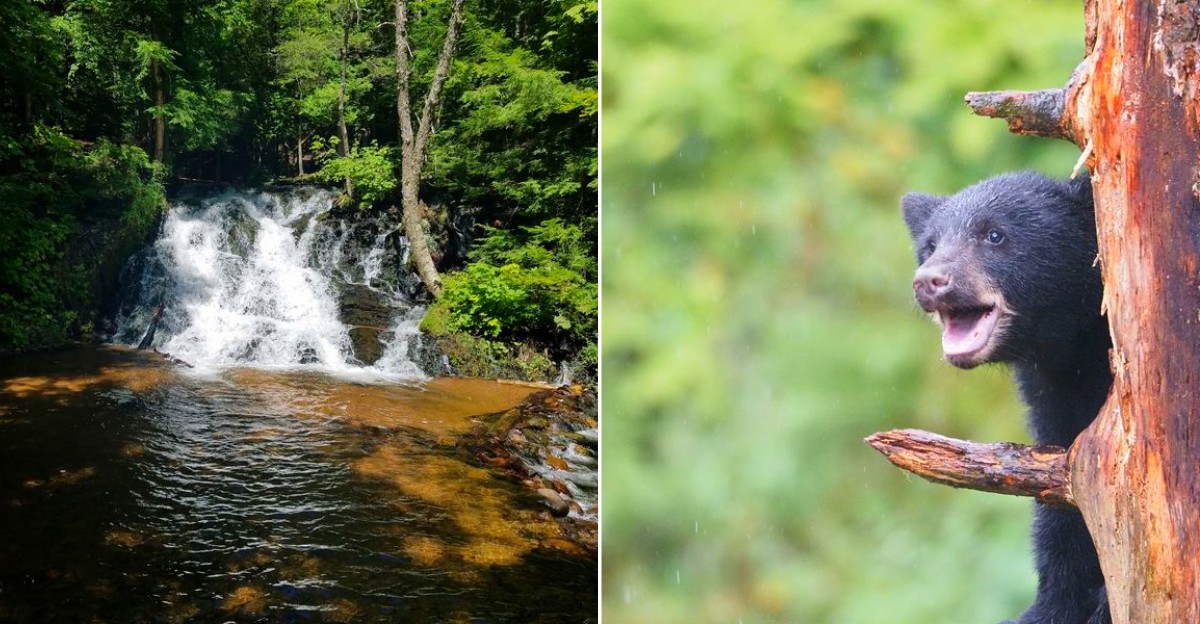
Fall in Michigan usually means color tours, cool trails, and cider stops, but black bears are quietly working through a very different seasonal checklist.
As winter approaches, they spend more time searching for calories, which can bring them closer to roads, neighborhoods, campsites, and places where humans accidentally leave an easy meal behind.
Recent reports have put several parts of the state under a brighter spotlight, though the strongest evidence still comes from established bear country in the north.
Across Michigan, rising black bear sightings reveal how autumn feeding patterns, expanding ranges, and human activity increasingly overlap.
What makes these reports interesting is how uneven the picture can be. Some areas have clear complaint records, while others are notable because a single wandering bear can create weeks of conversation.
That contrast matters. A sighting does not automatically mean a surge, but it does offer a fascinating glimpse at how wildlife moves through a changing Michigan landscape.
1. Grand Traverse County
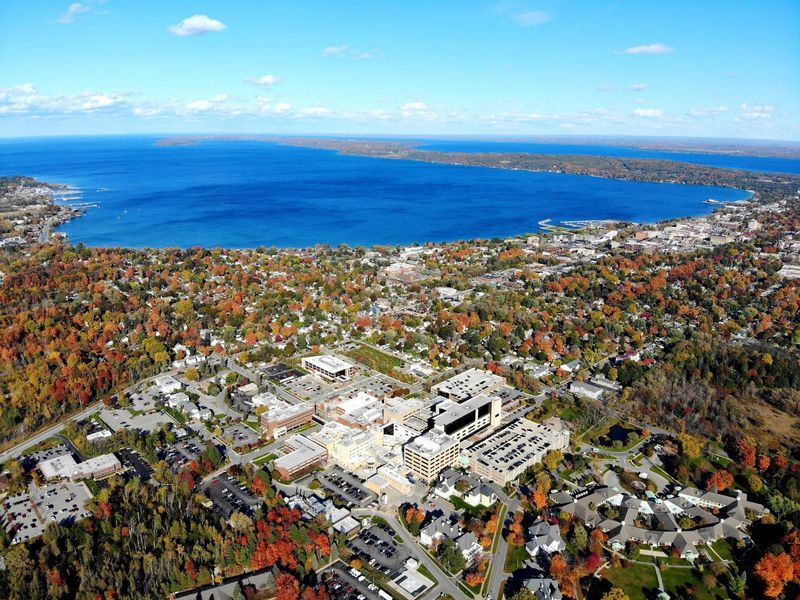
Wooded hills, orchards, river corridors, and suburban development meet unusually close together around Traverse City, which helps explain why black bears can feel both established and surprising in Grand Traverse County.
This is genuine Lower Peninsula bear country rather than the site of one freak wandering animal. Michigan hunting records have documented regular bear harvest in the county for years, including 19 bears estimated harvested there in 2022 alone.
The county also sits within DNR District 4, where bears occupy the larger forested landscape stretching through Grand Traverse, Benzie, Wexford, Manistee, Lake, and neighboring counties.
Fall intensifies the overlap. Bears are trying to put on weight quickly, while residents and visitors are simultaneously filling bird feeders, setting garbage outside, grilling at cabins, visiting orchards, and spending more time in the woods.
Bird seed is especially effective bear food because it packs huge calories into a concentrated space. If a bear begins visiting a feeder, the best response is to remove the feeder rather than trying to scare the animal away repeatedly.
Around homes, keep garbage secured until pickup day, clean grills thoroughly, bring pet food inside, and avoid leaving coolers outdoors overnight.
2. Monroe County
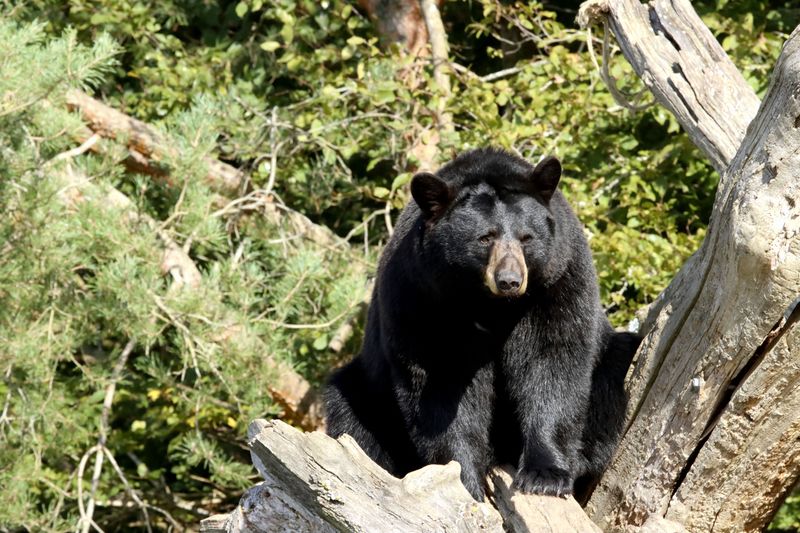
A black bear showing up near Carleton would barely qualify as news in parts of the Upper Peninsula. In Monroe County, it became one of the most unusual wildlife stories of 2026.
At about 1:13 a.m. on May 10, a cellular trail camera captured a black bear near Grafton Road and Carleton Rockwood Road. The DNR later confirmed the sighting and linked it to another report roughly a day later farther north in the Flat Rock-Rockwood area.
Wildlife officials believe the two sightings probably involved the same bear moving through southeast Michigan.
That is important context because Monroe County is not suddenly full of bears. What makes the sighting significant is how far south the animal traveled.
The DNR says the northern Lower Peninsula bear population has grown considerably since 2012.
Residents therefore do not need to behave as though a permanent breeding population has suddenly arrived, but basic precautions make sense when a bear is reported nearby.
Bring pet food indoors, secure garbage, remove bird feeders temporarily, and keep dogs close at night. Do not gather around a sighting or post a precise location online while the bear is still nearby.
3. Wayne County
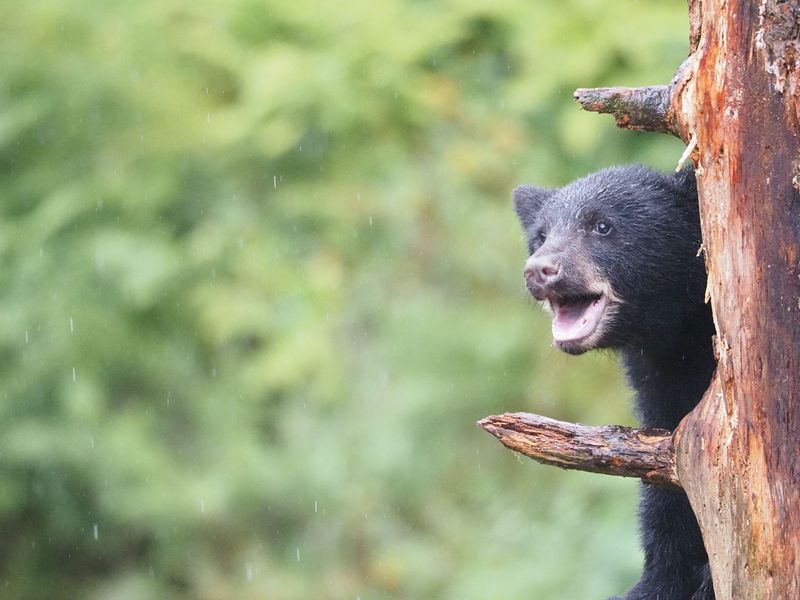
Few Michigan bear stories have felt more geographically improbable than a black bear walking through a Downriver yard within sight of the I-75 corridor.
Security footage captured the animal in the Flat Rock-Rockwood area on the night of May 10 or early May 11, 2026, near Woodruff Road between Olmstead Road and Interstate 75. The Michigan DNR confirmed the sighting and said it was probably the same bear recorded earlier near Carleton in neighboring Monroe County.
The episode did not establish a Wayne County bear population. It demonstrated something more interesting: how far an individual animal can move through a heavily developed landscape when patches of habitat still connect.
The Downriver area contains the Huron River, wetlands, wooded parks, railroad corridors, agricultural edges, and less-developed land that can function as temporary travel routes.
Local schools and police treated the report seriously but did not portray it as an immediate emergency. Flat Rock schools kept normal outdoor recess while reminding families that bears generally avoid human interaction.
For residents, practical steps matter more than panic. Check the yard before releasing pets, keep dogs leashed on evening walks, and never approach a bear for video.
4. Isabella County
A 150-pound black bear perched above a white-picket fence in Mount Pleasant became one of central Michigan’s strangest wildlife scenes of 2026.
On June 2, the animal wandered well inside the city limits and climbed a tree in a residential neighborhood. Because crowds had gathered and the bear was surrounded by developed streets, the Michigan DNR worked with Mount Pleasant police, firefighters, and city staff to tranquilize it safely.
A pole-vault landing pad borrowed from Mount Pleasant High School cushioned its fall, and wildlife staff then tagged and relocated the male bear roughly 60 miles north to the Houghton Lake area.
The episode is a good example of why an urban bear sighting is not automatically evidence of a local population boom.
Isabella County sits south of Michigan’s core Lower Peninsula bear range, but wooded stretches of the Chippewa River, farm edges, wetlands, and scattered forest provide routes that dispersing animals can follow. As the northern Lower Peninsula population expands, occasional bears are increasingly capable of appearing much farther south than residents are accustomed to seeing.
Fall adds food pressure to that movement.
If tracks appear, photograph them beside a ruler, boot, or other size reference without following the trail. If the animal itself appears, give it space rather than creating a crowd.
5. Marquette County
Nobody in Marquette County needs convincing that black bears live nearby.
This is deep Upper Peninsula bear country, where large blocks of forest, wetlands, berry-producing vegetation, campgrounds, rural homes, and seasonal cabins create exactly the kind of habitat bears have occupied for generations. Compared with the southeastern counties on this list, the surprise is not that bears appear here.
It is how frequently human food brings them into direct conflict with people.
The DNR’s August 2026 statewide bear-coexistence guidance even used a Marquette County example showing a black bear helping itself at a bird feeding station, a perfect illustration of one of the most common preventable attractants.
Autumn raises the stakes because bears enter hyperphagia before denning. Natural foods such as berries and nuts may become patchier, while calorie-rich human sources remain easy to locate by smell.
Cabins and camps therefore need discipline. Never keep food or scented items in a tent.
Store coolers inside a hard-sided vehicle or secure building, clean grills immediately, and keep garbage inaccessible.
Hikers should make noise around blind corners and keep dogs under close control. If cubs appear, give them a very wide berth because the mother may be nearby even when she is not visible.