
The Most Divisive Hot Dog In Illinois Is Hiding At This No-Frills Neighborhood Institution
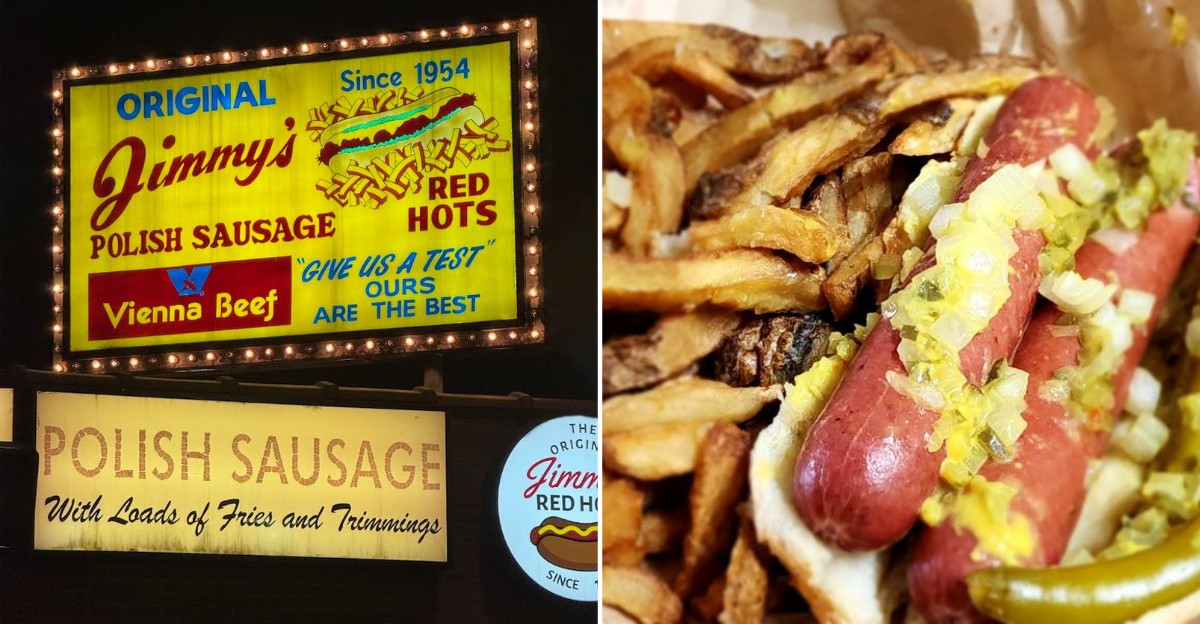
On a stretch of Grand Avenue in Chicago, Illinois, a narrow counter stand has been serving the same style of hot dog since 1954, and it has never shown much interest in softening its edges. The specialty here is the Depression-style dog, built fast and handed over without ceremony.
This cash-only counter stand doesn’t care about fancy presentation or making everyone happy, which is exactly why so many locals have been coming back for over 70 years.
The dogs arrive wrapped in paper with fries stuffed right in there, the peppers pack serious heat, and if you dare ask for ketchup, you’ll get the kind of reaction that makes tourists remember their visit forever.
What makes this place so polarizing is that it refuses to change with the times, serving food exactly the way it always has, and that stubborn commitment to tradition creates passionate defenders and frustrated critics in equal measure.
The No-Ketchup Policy That Sparks Debates
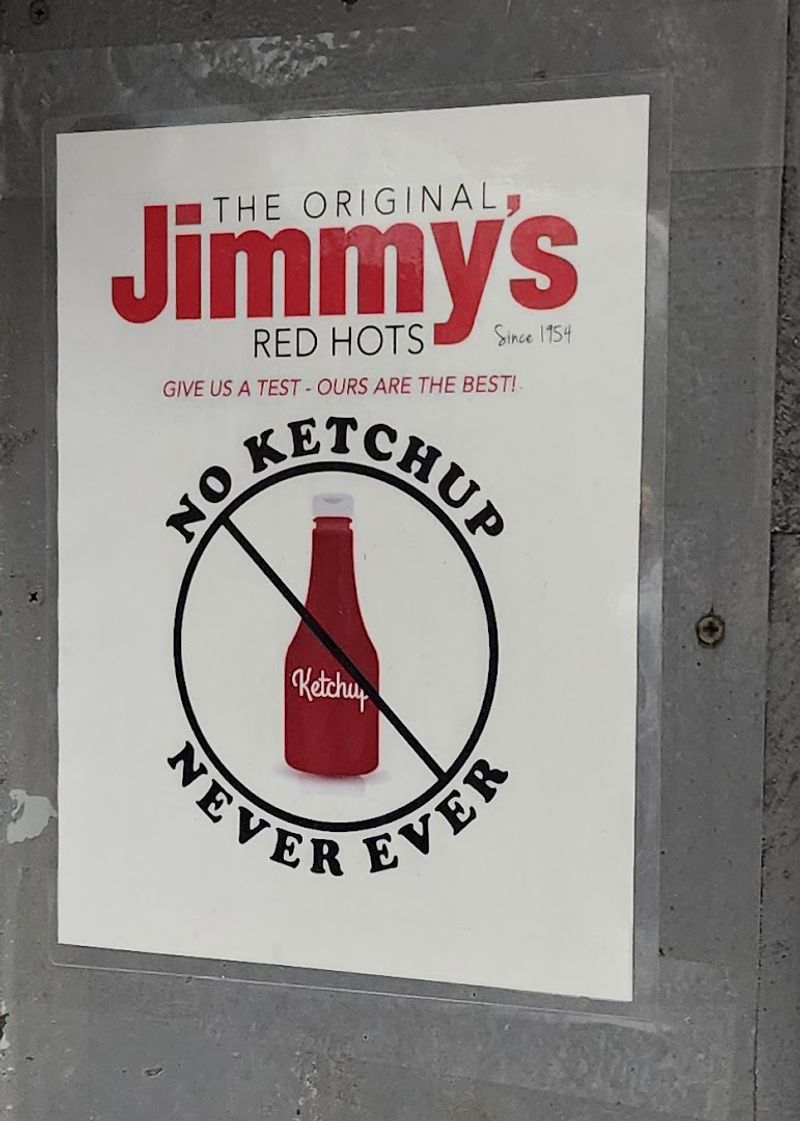
Walking into this place and asking for ketchup is like showing up to a jazz club and requesting country music. The staff doesn’t just politely decline, they react with the kind of theatrical horror that makes the whole experience memorable.
Some customers find this charming and authentic, while others think it’s unnecessarily rigid for a place selling fast food. This tradition runs deep in Chicago hot dog culture, where purists believe ketchup masks the flavors of quality toppings.
This no-frills place takes this philosophy seriously, offering their homemade habanero hot sauce as the approved condiment for fries instead. The sauce comes thick and flavorful, providing the kick that ketchup lovers might be seeking anyway.
What really divides people is whether a restaurant should dictate how customers enjoy their food. Defenders argue that respecting the no-ketchup rule shows appreciation for Chicago tradition.
Critics counter that paying customers should eat however they want. Either way, the policy generates more conversation than most marketing campaigns ever could, and that debate plays out daily at Jimmy’s Red Hots, 4000 W Grand Ave, Chicago, Illinois.
The Intentionally Messy Assembly Method
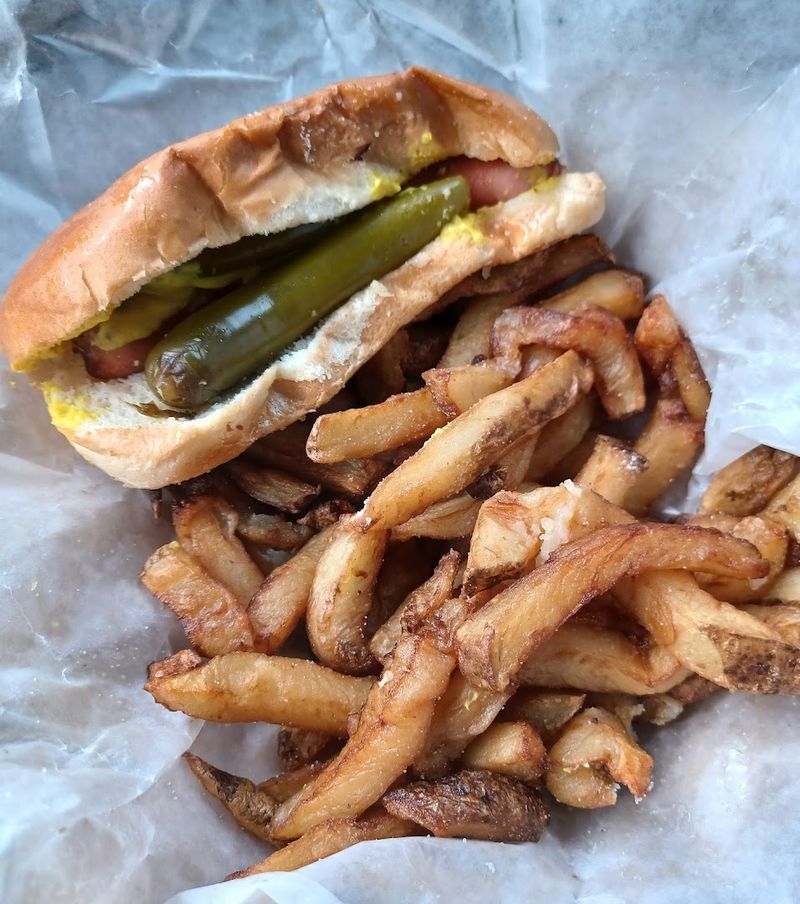
Jimmy’s focuses on speed and consistency rather than presentation. Hot dogs and Polish sausages are assembled quickly and wrapped in paper as soon as they’re finished.
Fries are bundled right alongside the sandwich, creating a unified package that regulars immediately recognize.
Toppings are added generously, and the entire order is handed over wrapped and ready to eat. For longtime fans, this straightforward approach represents tradition and efficiency.
The fries steam inside the wrapper with the hot dog, developing a soft texture that many customers specifically appreciate. Adding cheese while they’re hot is a popular option.
First-time visitors sometimes notice that the presentation differs from more modern hot dog spots where ingredients are arranged with visual symmetry. At Jimmy’s, the focus stays on flavor, speed, and long-standing routine.
For many customers, the distinctive wrapping method and texture are part of what makes the experience memorable. Others simply note that it reflects a classic Chicago stand style that has remained consistent for decades.
The Slimmer Franks That Surprise First-Timers
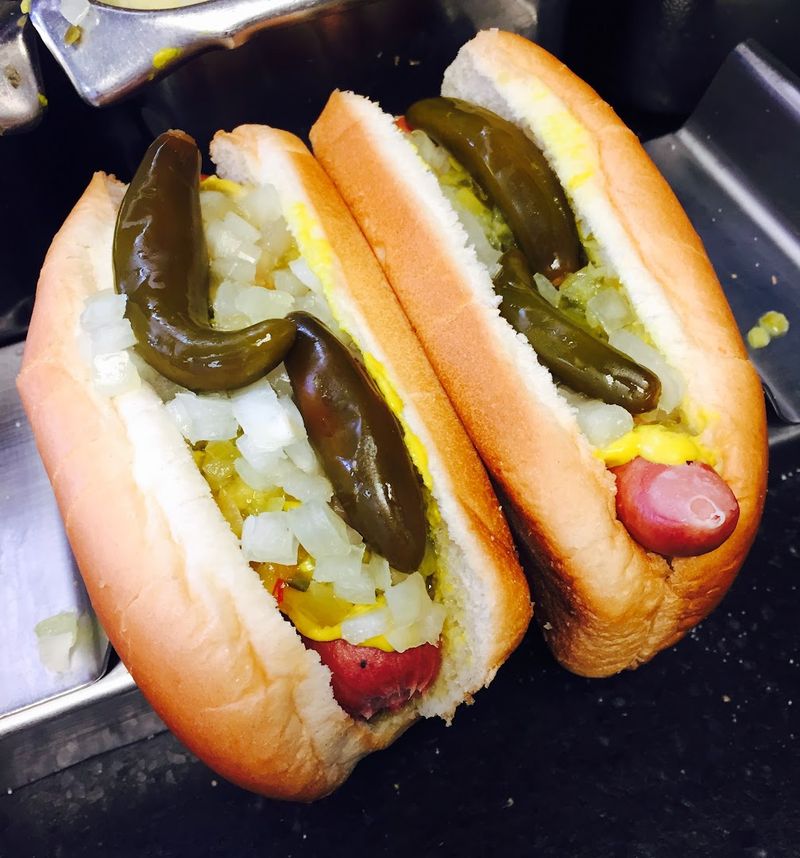
Ordering a hot dog at Jimmy’s means receiving a slimmer frank than some first-time customers expect. The hot dogs are noticeably thinner than the Polish sausages, giving each option a distinct profile and portion style.
Regular customers often have a clear preference. Some gravitate toward the Polish sausage for its heartier presence, while others appreciate the hot dog’s narrower shape and the signature snap of its casing.
The steaming process helps keep the franks juicy and flavorful.
Portion expectations naturally vary from person to person. Some visitors choose to order doubles, while others find a single dog with fries satisfying.
The slimmer frank also creates a different balance of ingredients, allowing the toppings to stand out clearly in each bite.
The all-the-way preparation includes mustard, chopped onions, sweet relish, a dill pickle spear, and sport peppers, resulting in a bold, balanced combination where every component plays a noticeable role.
The Cash-Only Policy
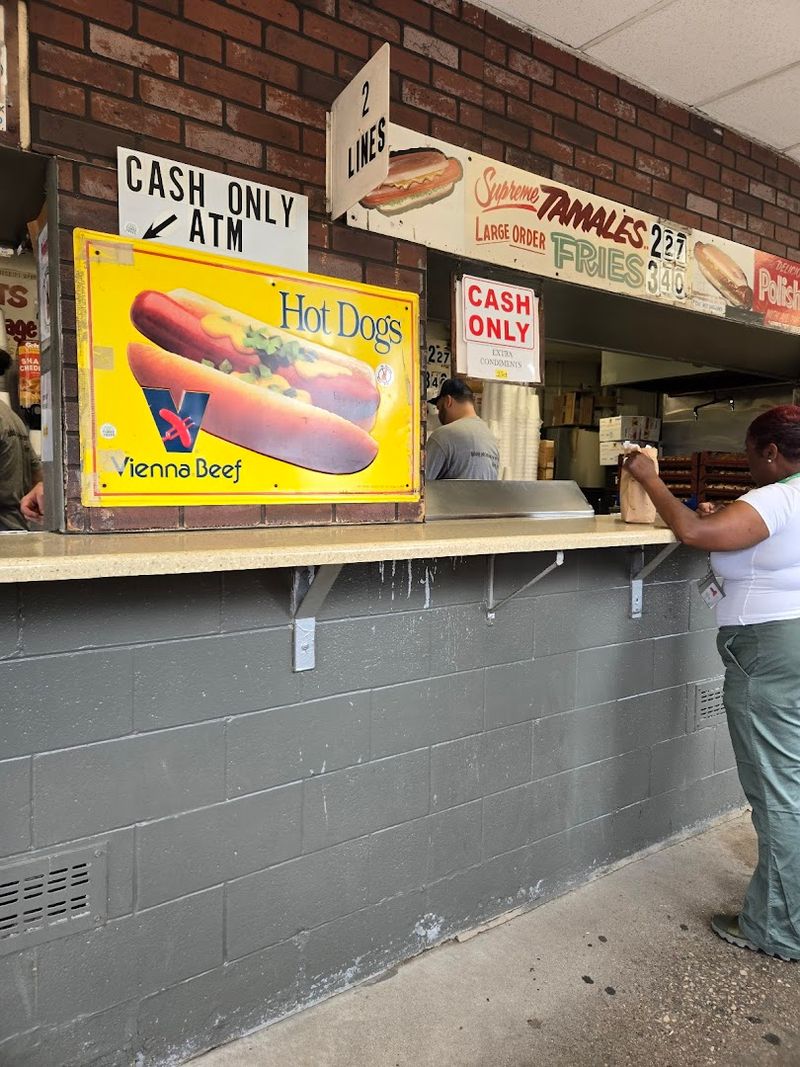
Jimmy’s is widely reported as operating as a cash-only establishment, a policy that stands out at a time when many businesses accept digital payments.
Customers who arrive prepared with cash tend to move through the line quickly, while others may need to make a quick stop before ordering. Some reviews mention surprise at the payment format when visiting for the first time.
Cash-only policies are often associated with streamlined transactions and simpler operations, particularly at longstanding neighborhood stands.
Cash payments can keep lines moving efficiently during busy periods. For a business that has operated since 1954, accepting cash reflects continuity with its long-established way of doing things.
Supporters counter that the cash-only requirement adds to Jimmy’s old-school charm. Planning ahead to bring cash becomes part of the ritual, separating casual visitors from committed fans.
The policy also keeps prices lower than they’d be with card processing fees added.
Either way, this choice perfectly illustrates the broader tension at Jimmy’s between preserving tradition and accommodating changing customer expectations in ways that inevitably leave some people unhappy.
The Neighborhood Location
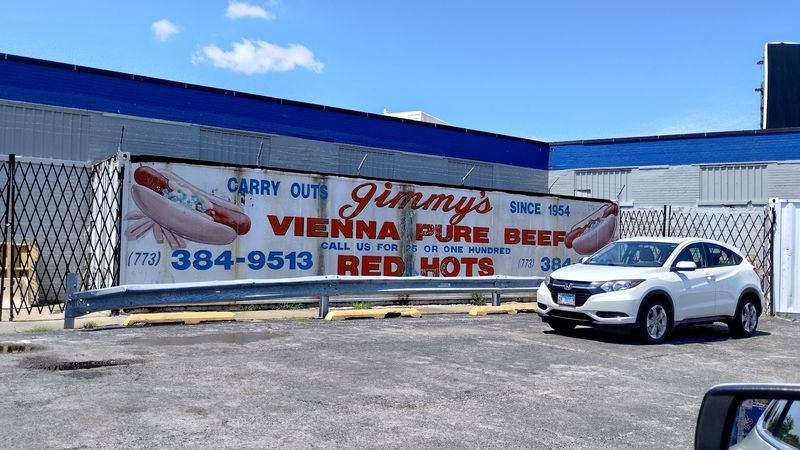
Jimmy’s sits at 4000 West Grand Avenue and has served its surrounding community for more than seven decades. Over the years, it has become a familiar fixture for nearby residents and regulars who value having a long-running hot dog stand close to home.
The restaurant is open daily until 1 AM, drawing a steady mix of daytime customers and late-night visitors. Many people stop in for a quick order and head out, while others enjoy their food in their cars or nearby.
For those traveling from other parts of the city or suburbs, the location offers a chance to experience a neighborhood stand that operates outside of major tourist corridors. The on-site parking lot makes pickup convenient and accessible.
As with any long-established spot, the setting shapes the overall experience. For some, the neighborhood character is part of the appeal.
For others, it simply reflects the stand’s deep roots in the community it has served for generations.
The Pickled Peppers That Spark Conversation
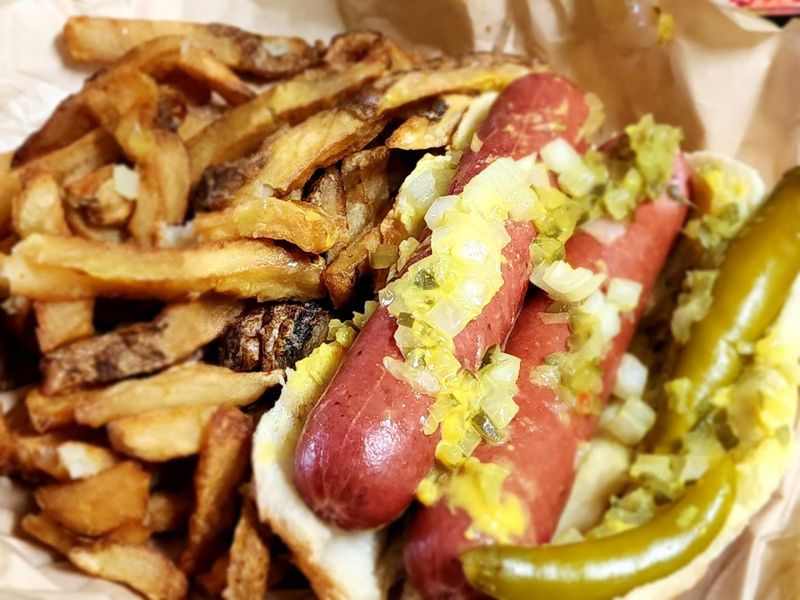
Pickled peppers arrive standard on Jimmy’s Depression-style hot dogs. Often described as sport peppers, some diners note they resemble serranos and can bring noticeable heat.
Reviews frequently mention the peppers’ kick, which stands out against the other toppings. Some customers actively seek that extra spice, while others choose to adjust or omit it based on personal preference.
The peppers contribute a distinctly Chicago flavor profile. Their vinegary brightness balances the richness of the frank and the sweetness of the relish.
Regulars often request a specific number to fine-tune the heat level to their liking, and the standard preparation is designed to add character without overwhelming the rest of the ingredients.
Other customers appreciate when the peppers accidentally get left off, finding them too spicy for enjoyment. The division over sport peppers mirrors larger disagreements about whether tradition should override personal preference.
Some people want their hot dogs made correctly according to Chicago standards, while others just want to enjoy their meal without mouth-numbing heat, and neither group is necessarily wrong in their expectations.
The Legendary Tamales
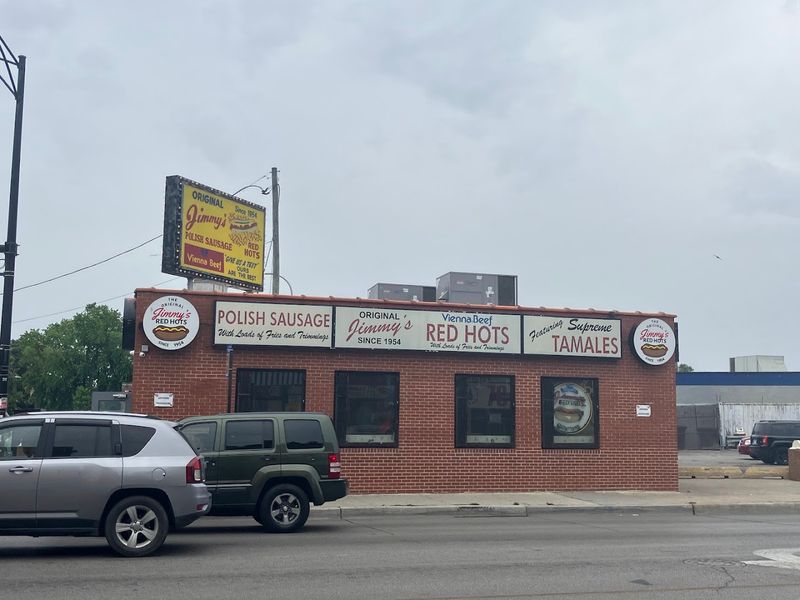
Jimmy’s serves tamales alongside hot dogs and Polish sausages, a detail that often catches the attention of visitors unfamiliar with Chicago’s distinct tamale tradition.
These are Chicago-style tamales, which are typically smaller and flatter than the regional varieties many people associate with the dish. Their texture and preparation developed within the city’s hot dog stand culture over decades, becoming a familiar fixture on neighborhood menus.
Longtime customers order tamales regularly, recognizing them as part of the broader story of Chicago street food. They pair naturally with a hot dog or Polish sausage, offering a different flavor and texture while fitting seamlessly into the stand’s quick-service format.
For first-time visitors, the style may feel different from what they have experienced elsewhere. That contrast highlights how regional food traditions evolve into something uniquely local.
At Jimmy’s, the tamales reflect a specific slice of Chicago culinary history, adding another layer to the menu’s long-standing identity.
The Fries Wrapped With The Dog
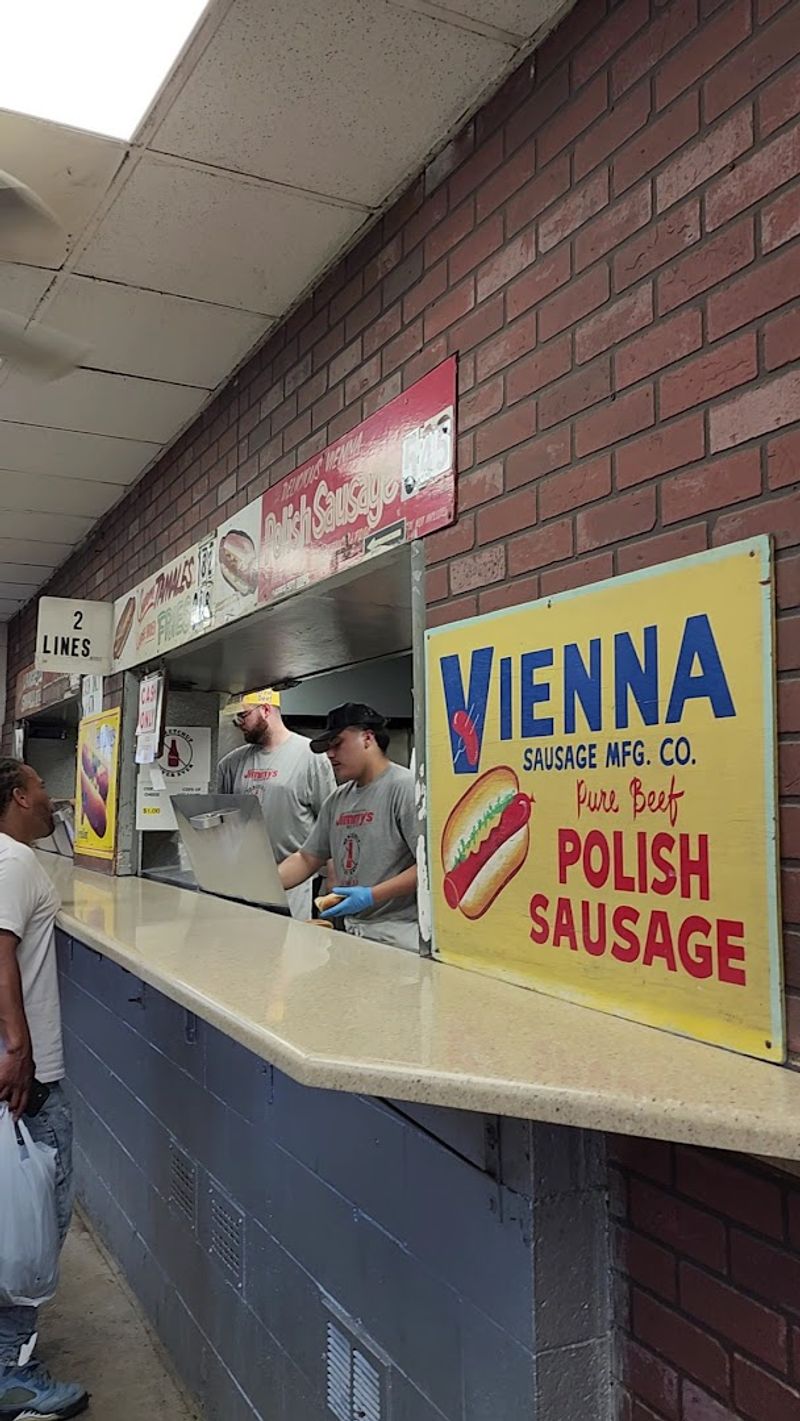
Fries at Jimmy’s arrive wrapped with your hot dog, steaming together in the same paper package. This creates intentionally soft, soggy fries that longtime customers specifically crave.
The fries absorb moisture from the hot dog and steam themselves in the wrapper, developing a unique texture that regulars consider perfect. Adding cheese while they’re hot creates an even more indulgent experience.
Fresh-cut and served hot, the fries taste delicious to people who appreciate this particular style. Fans describe them as glorious specifically because of their soft texture, not in spite of it.
The fries represent another example of Jimmy’s doing things their own way without concern for what modern food trends suggest fries should be like.
The fry debate encapsulates everything divisive about Jimmy’s. Are these fries bad because they’re soggy, or are they perfectly executed in a specific Chicago style that some people simply don’t prefer?
Defenders insist you’re missing the point if you want crispy fries here. Detractors argue that preference for crispy fries doesn’t make someone wrong or unsophisticated.
Both perspectives are valid, which means this argument will continue as long as Jimmy’s keeps wrapping fries with hot dogs.
The Rapid-Fire Service
Service at Jimmy’s moves with impressive speed. Customers regularly mention how quickly orders get prepared and handed over, with some people getting in and out within minutes even during busy periods.
The staff operates with practiced efficiency, knowing exactly how to assemble each item without wasting motion. Some customers mention calling ahead for quicker pickup, though most orders are handled directly at the counter.
This efficiency keeps the operation running smoothly despite high volume. Lines that look intimidating often move faster than expected because nobody wastes time on unnecessary pleasantries or complicated customizations.
The straightforward menu and standardized preparations mean workers can produce food rapidly without sacrificing consistency.
For a place open until 1 AM serving late-night crowds, speed matters enormously. Some customers appreciate the brisk, no-nonsense service style.
They want their food fast and don’t need extensive interaction with staff.
The service style matches Jimmy’s overall approach to business. Everything focuses on delivering food quickly and moving to the next customer.
This works beautifully for people who value efficiency and understand the system.
The Decades Of History
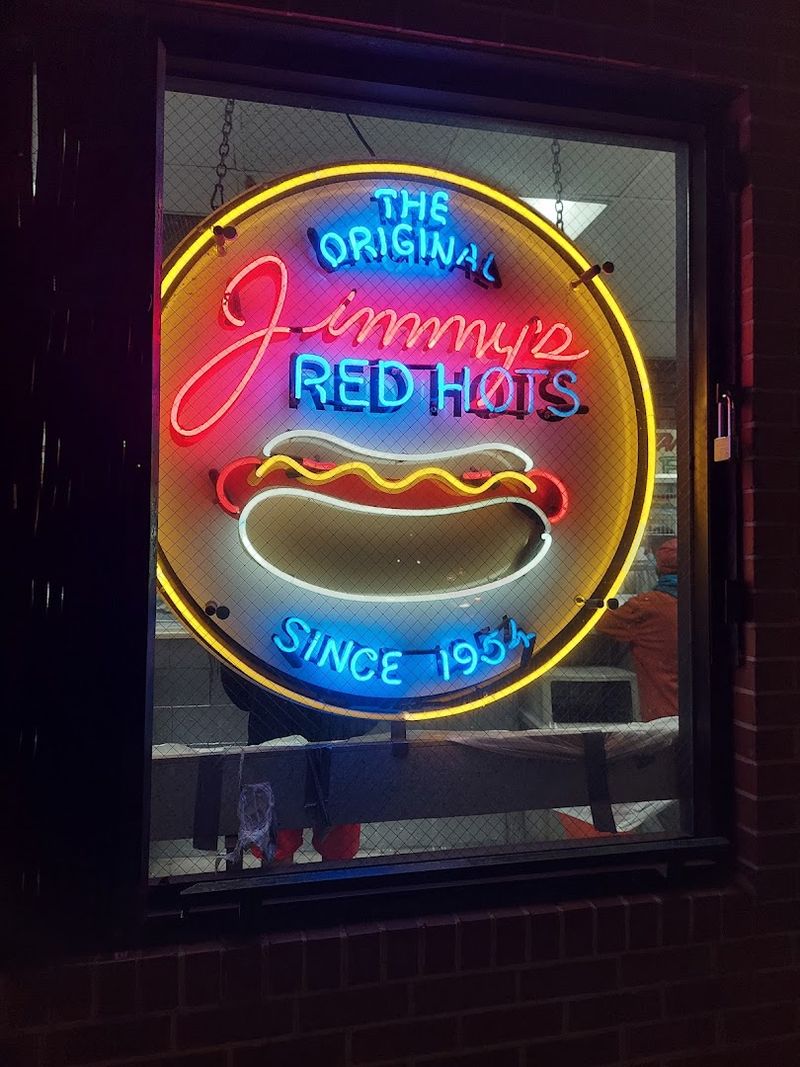
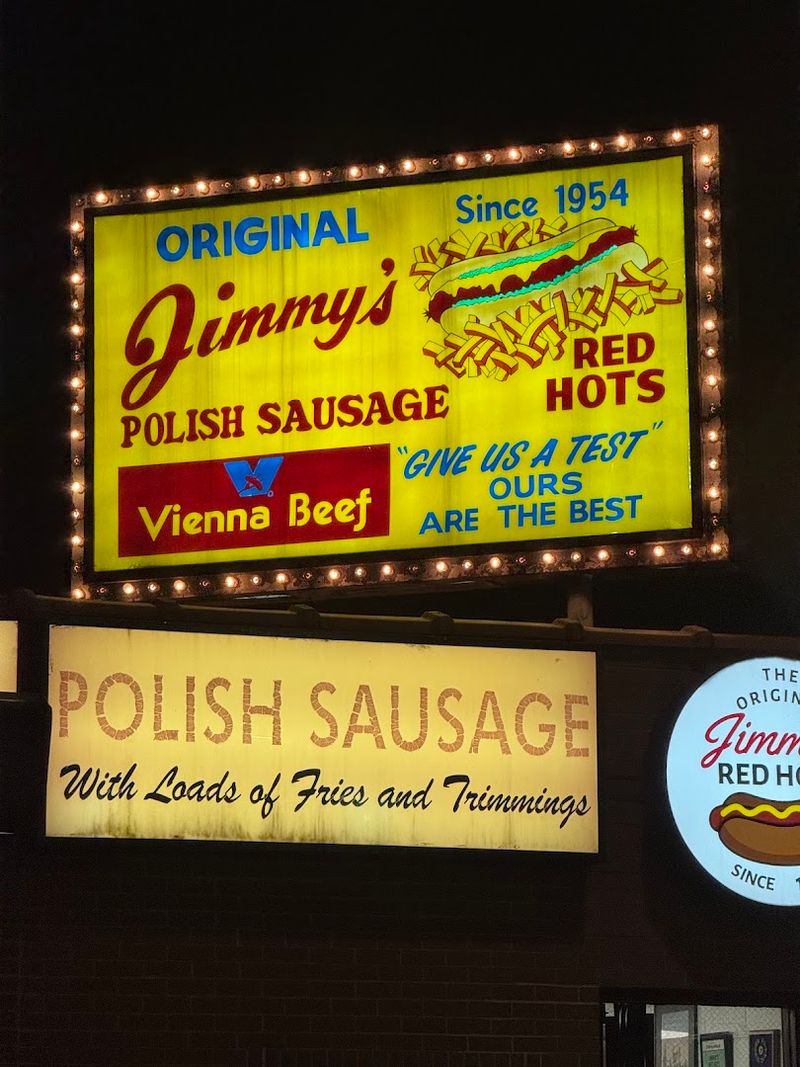
Operating since 1954 means Jimmy’s carries more than seven decades of history, along with the memories and traditions that come with it.
Customers who first visited years ago often return with a strong sense of connection to the place. For many, the flavors feel instantly familiar, bringing back moments tied to earlier visits and long-standing routines.
History naturally shapes expectations. People recall earlier eras with vivid detail, remembering how the experience felt at a particular time in their lives.
Even when recipes remain consistent, perspective changes over the years, and each visit carries a different context.
Newer customers arrive with their own expectations, shaped by reputation and word of mouth. Some immediately connect with the straightforward style and sense of continuity.
Others approach it simply as a classic neighborhood stand with deep roots in Chicago’s food culture.
Longevity invites reflection and comparison. A restaurant that has operated for more than seventy years becomes more than a place to eat; it becomes part of a city’s culinary story.
That legacy naturally sparks conversation, ensuring Jimmy’s remains a subject of ongoing discussion among those who care about Chicago hot dogs.