
The 11 Most Overrated Restaurants In Chicago
Chicago’s food scene has earned worldwide fame, with tourists flocking to try our deep-dish pizza and gourmet hotdogs.
But not every famous eatery lives up to its hype.
I’ve lived here for fifteen years and spent countless dollars discovering which spots deserve their reputation and which leave you wondering why you waited two hours for a table.
These eleven restaurants might have the buzz, the lines, and the Instagram presence, but trust me – they’re not worth the wait or the wallet drain.
1. Lou Malnati’s: Pizza Fame Without The Flavor
Tourists clutch their precious Lou Malnati’s boxes like they’ve struck gold, but this pizza institution has been resting on its laurels for years. Last summer, I took my New York cousins there, promising them “authentic Chicago deep dish” only to watch their faces fall with each disappointing bite.
The crust often arrives doughy and undercooked, while the sauce lacks the bright tomato punch that made it famous decades ago. Their cheese quality has noticeably declined too – that stretchy, gooey pull you expect from good pizza? Barely there anymore.
Sure, the atmosphere has nostalgic charm, but you’re paying premium prices for mediocre pizza that’s coasting on reputation. Skip the hour-long wait and find a neighborhood joint where they still care about every pie they serve.
2. Giordano’s: Tourist Trap Disguised As Pizza Paradise
Remember when Giordano’s actually tasted like someone’s Italian grandmother was in the kitchen? Those days are long gone! I recently revisited after a five-year hiatus and barely recognized what they’re passing off as stuffed pizza these days.
What was once a cheese-lover’s dream has morphed into a production line of mediocrity. The sauce tastes like it came from a can, and the once-generous cheese filling has shrunk dramatically while prices have soared. Their expansion to chain status has clearly prioritized profit over quality.
Worst of all is the crust – dry, flavorless, and somehow both overcooked and undercooked simultaneously. The restaurant itself feels like a tourist processing center rather than a place where food is crafted with care. Your stomach and wallet deserve better!
3. Portillo’s: Fast Food Nostalgia That Doesn’t Hold Up
Chicagoans get misty-eyed about Portillo’s like it’s some sacred culinary temple, but honestly? It’s glorified fast food with an increasingly corporate feel. My first job was at Portillo’s back in high school, and the quality has taken a nosedive since those days.
The famous chocolate cake shake remains decadent, I’ll give them that. But their hot dogs lack snap, the Italian beef is increasingly dry, and the fries often arrive lukewarm and limp. Service has become assembly-line efficient but soulless, especially since they’ve expanded nationwide.
The restaurant design still channels that old-school Chicago vibe, but it feels more like a theme park version of itself. For authentic Chicago street food, hit up the smaller family-owned stands that still make everything fresh and don’t charge premium prices for the privilege.
4. Pizzeria Portofino: Riverfront Views, Underwhelming Food
Gorgeous riverside location? Check. Beautiful people sipping spritzes? Double check. Food worth the astronomical prices? Not even close! My anniversary dinner at Pizzeria Portofino last month left me with stunning photos but a grumbling stomach.
The pizzas arrive looking Instagram-perfect but taste decidedly average – thin, floppy crusts with sparse toppings that wouldn’t impress anyone in a blind taste test. Their seafood dishes somehow manage to be both overcooked and under-seasoned, quite a culinary feat!
What you’re really paying for is the prime riverfront real estate and the chance to be seen. The cocktails are decent but priced like liquid gold. If you want Italian food that actually tastes like Italy (rather than a corporate restaurant group’s interpretation), countless family-owned trattorias around Chicago will treat your palate and wallet with more respect.
5. Gibsons Bar & Steakhouse: Old-School Expense Account Dining
Walking into Gibsons feels like stepping into a 1980s business dinner time capsule, complete with oversized martinis and waiters who’ve memorized the same spiel for decades. My boss loves this place, which means I’ve suffered through more mediocre $70 steaks here than I care to admit.
Sure, the cuts are massive – they practically hang off the plate – but size isn’t everything. The meat quality doesn’t justify the eye-watering prices, often arriving under-seasoned and inconsistently cooked. The sides are straight out of a steakhouse template: creamed spinach, massive potatoes, and mushrooms that have seen better days.
The clientele remains predominantly expense-account businessmen trying to impress clients with quantity over quality. If you want a truly spectacular steak in Chicago, newer establishments offer more interesting preparations, better sourcing, and atmospheres where you don’t feel like you’re dining in a museum of power lunches past.
6. Au Cheval/Small Cheval: The Emperor’s New Burger
I’ve waited three hours – THREE HOURS – for a burger at Au Cheval, only to wonder if I accidentally entered an alternate dimension where mediocrity is celebrated as genius. The hype machine has worked overtime convincing people this is the “best burger in America,” but let’s get real.
Yes, it’s a decent burger. The beef quality is good, and that egg on top makes for a pretty picture. But life-changing? Worth planning your entire Chicago trip around? Absolutely not. Small Cheval, their fast-casual spinoff, delivers basically the same experience without the ridiculous wait, yet still charges premium prices.
Both locations rely on the same trick: slathering everything in enough butter and salt to make cardboard taste good. Meanwhile, dozens of neighborhood spots across Chicago serve equally delicious burgers without the pretense or the wait. Your time in Chicago is precious – don’t waste it standing in line for an overhyped patty.
7. Billy Goat Tavern: Trading On History, Not Quality
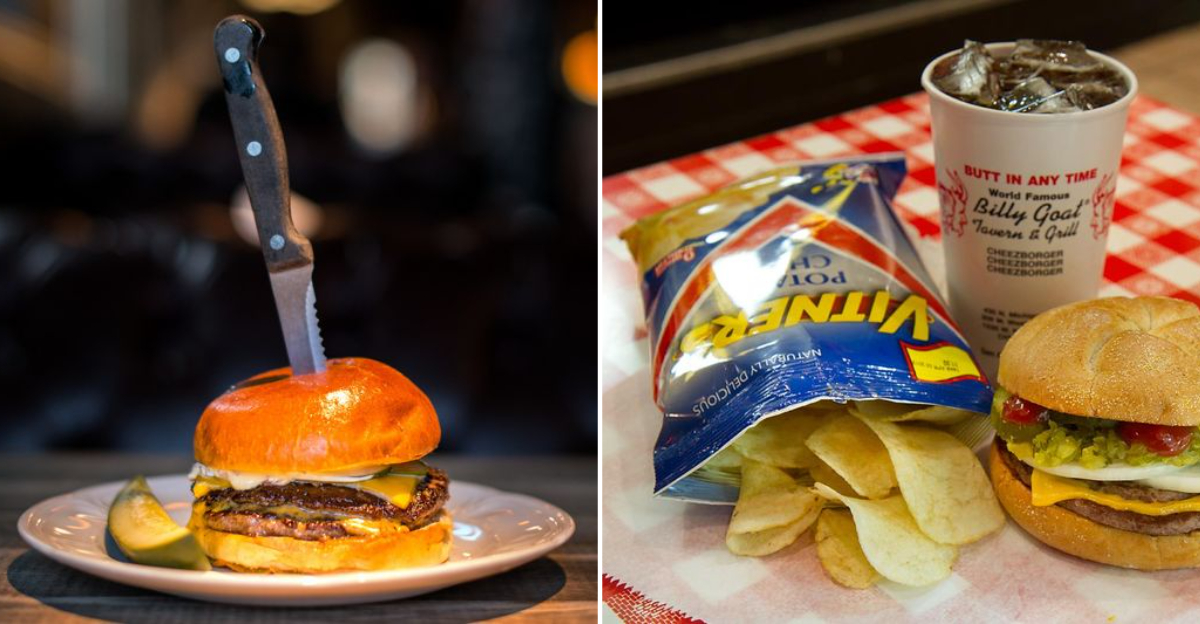
“Cheezborger, cheezborger, no fries, chips!” The famous Saturday Night Live skit might be the only reason this underground tavern still exists. My Chicago-visiting friends always insist on going, and I always regret taking them.
The burgers are thin, dry hockey pucks served on stale buns that wouldn’t pass muster at a high school cafeteria. The chips are straight from a bag, and the beer selection remains stuck in the 1970s. The surly service, once considered charming Chicago attitude, now just feels like genuine disinterest in customer satisfaction.
Yes, the newspaper memorabilia and the Cubs curse story make for good Chicago lore. But when a restaurant’s most interesting feature is its history rather than its food, it’s a museum, not a restaurant. Chicago’s burger game has evolved dramatically while Billy Goat remains frozen in amber – and not in a good way.
8. Next: Concept Over Cuisine
Scoring reservations at Next feels like winning the lottery, except the prize is spending hundreds of dollars on a theatrical dining experience that prioritizes concept over taste. My husband surprised me with their “Ancient Rome” menu last year, and while I appreciated the thought, I left hungry and confused.
Each themed menu takes diners on a supposed culinary journey, but often sacrifices flavor for historical accuracy or artistic vision. Dishes arrive with elaborate backstories delivered by earnest servers, yet frequently underwhelm on the palate. The themed cocktail pairings add another small fortune to your bill.
The constant reinvention means inconsistent experiences – one season might be brilliant while the next falls flat. For a restaurant charging premium prices, this inconsistency is unforgivable. Chicago has no shortage of tasting-menu restaurants that remember the most important theme of all: delicious food that justifies its cost.
9. Alinea: Molecular Gastronomy That Leaves You Hungry
Edible balloons! Dessert painted on your table! Smoke-filled glass orbs! Alinea offers plenty of culinary magic tricks but somehow forgets the most important part of dining out – serving satisfying food. My 10th anniversary dinner there cost more than my first car and left us stopping for pizza on the way home.
Chef Grant Achatz is undeniably talented, but the dining experience has evolved into performance art that prioritizes shock and awe over flavor and satisfaction. Dishes arrive with complex explanations requiring a culinary dictionary to understand, yet often deliver more intellectual appreciation than gustatory pleasure.
The reservation system feels designed to create artificial scarcity, and the final bill (easily exceeding $1,000 for two with wine pairings) represents the pinnacle of diminishing returns. Chicago’s fine dining scene offers numerous alternatives where the focus remains on exceptional ingredients prepared with technical mastery rather than scientific novelty.
10. Sixteen: Sky-High Prices For Middling Luxury
Dining 16 floors above the Chicago River should be magical, but Sixteen (now renamed Terrace 16) proves that altitude and attitude don’t guarantee culinary excellence. My parents’ 40th anniversary dinner there remains a family joke about style over substance.
The restaurant banks on its Trump Tower location and stunning views to justify prices that would make even seasoned expense-account diners flinch. The food itself is competent but forgettable luxury fare – predictable seafood towers, adequate steaks, and desserts that look better than they taste.
Service embodies a particular brand of robotic formality that confuses stiffness with sophistication. Wine markups reach stratospheric heights, often 400% above retail. Chicago offers numerous restaurants with equally impressive views and significantly more inspired cuisine. Unless you’re specifically visiting to impress someone who equates price with quality, your dining dollars will find more satisfying homes elsewhere.
11. Schwa: Culinary Pretension Without The Payoff
Getting a reservation at Schwa feels like joining a secret society – if that society charged $200+ per person to sit in an uncomfortable chair while listening to hip-hop and watching chefs who seem more interested in impressing each other than feeding you. My foodie friend from San Francisco still hasn’t forgiven me for taking him there.
The BYOB policy initially seems like a money-saver until you realize you’re compensating for bare-bones service and an atmosphere that can generously be described as “minimalist.” Dishes arrive with complex, whispered explanations from the chefs themselves, who often seem annoyed at having to interact with diners.
When the food hits the mark, it can be revelatory. But inconsistency plagues the experience – brilliant courses sit alongside puzzling misfires. For a restaurant commanding premium prices and near-impossible reservations, this unpredictability makes Schwa less a special occasion destination and more a culinary gamble.