
The Most Unique Tunnel in Alabama Comes With a Past That Few Know About
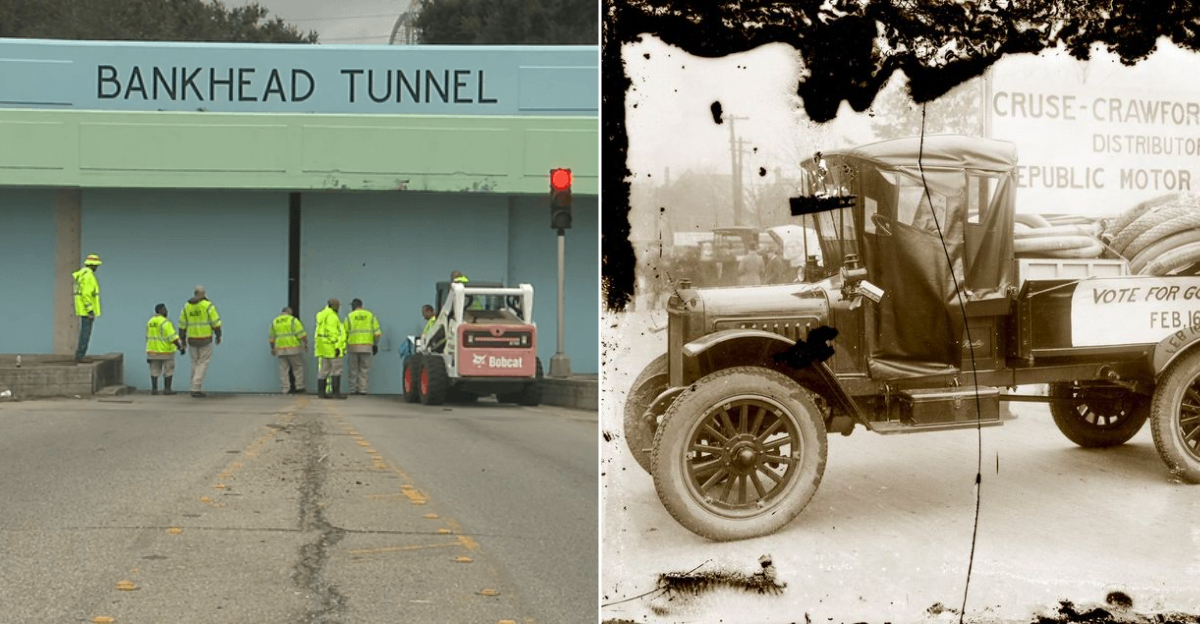
Imagine cruising down Government Street in Mobile, Alabama, and suddenly dipping beneath the river into a tunnel with a story as winding as the road itself.
The John H. Bankhead Tunnel isn’t just concrete and steel—it’s living history, an engineering marvel built in the late 1930s that still carries thousands of drivers each day. As headlights flicker along its curved walls, you can almost feel echoes of a time when building under a river seemed impossible.
Today, it remains one of Alabama’s most fascinating feats, a hidden gem that hums with stories from generations who’ve passed through its depths.
1. Unique Location & Engineering
Nestled under the Mobile River, the John H. Bankhead Tunnel is an engineering wonder. Built in the 1940s, it used the innovative “tubed-section” method. Picture massive steel tubes, floated, sunk, and connected beneath the water. It’s a feat that would give any modern-day tunnel a run for its money.
The tunnel stretches from downtown Mobile to Blakeley Island, making it not just a route but a bridge between worlds. These submerged sections were a bold move for the deep South, and they still carry the weight of history and traffic alike today.
2. A Depression Era Lifeline
In the throes of the Great Depression, this tunnel became a beacon of hope. It was more than concrete and steel; it was a job creator, a New Deal triumph. Funded by the Public Works Administration, it provided employment and left a lasting mark on Mobile’s landscape.
Imagine those tube sections being constructed, each a symbol of resilience and community spirit. Seven segments, each a lifeline for families, floated into place with precision, sinking not just into the riverbed but into the fabric of local history.
3. The Technical Marvel
Spanning 3,389 feet, this tunnel is a technical marvel. With a height constraint of 12 feet, it allows only the nimblest vehicles to pass through its narrow lanes. Begun in 1938, it opened in 1941, quickly becoming a vital artery under the river.
Designated a historic landmark in 1977, the tunnel is a tribute to mid-20th-century engineering prowess. Its flood-door system is a clever safeguard against nature’s fury, a feature not immediately visible but crucial during storm tides.
4. Still Vital Today
Despite newer infrastructure like the nearby George Wallace Tunnel, the Bankhead Tunnel remains essential. It’s a living piece of heritage, a reminder of how infrastructure shapes life. When it opened, it cut travel by 7.5 miles, ushering in a new era of connectivity.
Today, it’s more than a transit route; it’s a monument to progress and perseverance. Every vehicle that passes through writes a new chapter in this ongoing story of urban development and resilience.
5. Visitor’s Perspective
Approaching the tunnel is like stepping into a time capsule. With Art-Deco portals, it beckons travelers into its historic embrace. While it offers no formal tours, its exterior is a photographer’s delight, capturing light and shadow in surprising harmony.
Though not a typical tourist stop, it’s a quirky detour for those who appreciate engineering. The view from Government Street reveals its vintage charm, a silent guardian of the stories it holds beneath the river’s surface.
6. Sensory Journey
Driving through the tunnel is an experience for the senses. The transition from daylight to the dimly lit interior compresses sound, creating a unique auditory experience. Emerging on Blakeley Island feels like a reawakening, greeted by fresh air and the salty scent of the bay.
Outside, the masts of ships and the hum of marine traffic remind you of the bustling world above. The tunnel’s flood door serves as a silent testament to its engineering challenges, hidden yet ever-present beneath the river’s surface.
7. Who Should Know
Urban history buffs, take note: this tunnel is a treasure trove of stories and engineering wonders. Whether you’re an architecture aficionado or a road-trip explorer, its unique blend of history and function is captivating.
Accessible year-round, it’s best visited when you’re in Mobile with time to spare. While it may not offer the serene beauty of a hiking trail, its urban charm and storied past make it a must-see for those keen on uncovering lesser-known landmarks.