
The Most Unique Tunnel In Florida Comes With A History Buried Beneath The Sand
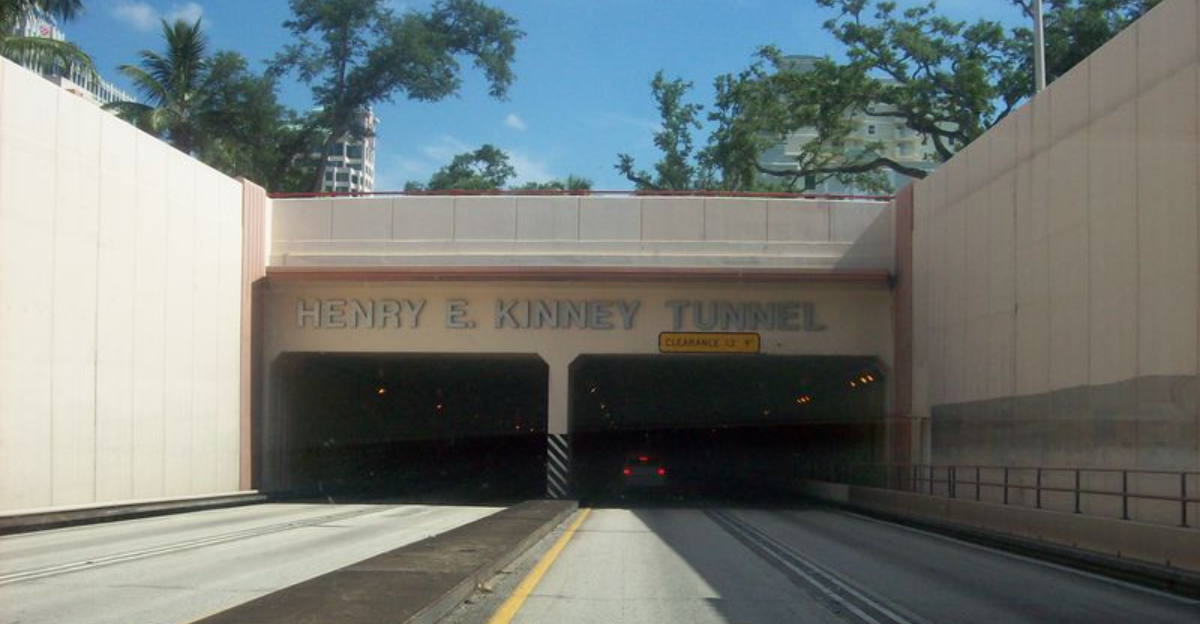
Most people think of Florida as a land of sunshine, beaches, and theme parks — but hidden beneath the New River in Fort Lauderdale lies something completely unexpected: the Henry E. Kinney Tunnel.
I’ll never forget the first time I drove through it, wondering how on earth they built a tunnel under water.
This engineering marvel, tucked right in downtown Fort Lauderdale, has been quietly moving traffic for over six decades — and most folks don’t even know it exists.
Florida’s Only Under-River Tunnel
Believe it or not, Florida has exactly one tunnel that runs beneath a river, and it’s hiding in plain sight in Fort Lauderdale. Built under the New River, this concrete passageway connects the bustling downtown area directly to the coast without a single drawbridge delay.
Most drivers zip through without realizing they’re actually traveling underwater. It’s wild to think about — you’re cruising along, surrounded by tons of river above your head, while boats glide overhead completely unaware.
The tunnel stretches roughly 1,300 feet and handles thousands of vehicles every single day. No one expects Florida to have underground infrastructure like this, which makes discovering it feel like stumbling upon a secret passageway in your own backyard.
A 1960s Vision Brought To Life
Back in 1960, when Elvis was topping the charts and cars had fins like spaceships, Fort Lauderdale completed something truly groundbreaking. This tunnel represented the pinnacle of mid-century American ingenuity, when engineers weren’t afraid to tackle ambitious projects that seemed impossible.
Construction began in the late 1950s, during an era when Florida was rapidly transforming from sleepy coastal towns into booming metropolitan areas. Traffic congestion was becoming a nightmare, and city planners knew they needed something revolutionary.
The tunnel opened to great fanfare as Florida’s first and only underwater vehicular tunnel. It stood as proof that even a state built on sand and swampland could achieve modern engineering feats that rivaled cities up north.
Named After A Man Who Dreamed Big
Henry E. Kinney wasn’t an engineer or a politician — he was a newspaper editor with a vision and the stubbornness to see it through. Working for the local paper, he used his platform to campaign relentlessly for a solution to Fort Lauderdale’s traffic nightmare.
Day after day, Kinney wrote editorials pushing city officials to think creatively about connecting downtown to the beaches. He understood that drawbridges constantly opening for boat traffic were strangling the city’s growth potential.
When the tunnel finally opened, city leaders honored his persistence by naming it after him. The Henry E. Kinney Tunnel stands as a reminder that sometimes the most powerful tool for change isn’t a bulldozer — it’s a typewriter and determination.
A Hidden World Beneath The Sunshine
Picture this: tourists are sipping mojitos on yacht decks, palm fronds are swaying in the breeze, and below all that postcard-perfect scenery, thousands of cars are flowing through a concrete tube. It’s the most Florida contradiction imaginable — sunshine above, engineering below.
That 1,300-foot passage handles an incredible amount of daily traffic that most residents take completely for granted. I’ve talked to people who’ve lived in Fort Lauderdale for years and had no clue they were driving underwater.
The tunnel represents everything unexpected about Florida’s infrastructure. While everyone focuses on what’s visible — beaches, buildings, boats — this hidden artery keeps the entire coastal connection alive and moving beneath layers of sand and river water.
Built With Courage And Concrete
Constructing anything below Florida’s water table sounds like a recipe for disaster, and honestly, it nearly was. Engineers faced constant flooding as they excavated beneath the New River, fighting against nature’s determination to reclaim every inch of space.
The sandy soil provided about as much structural support as a beach castle at high tide. Workers had to pump water continuously while pouring massive amounts of concrete to create watertight walls and ceilings.
Tight deadlines added pressure to an already nerve-wracking project. Every delay meant more money and more skepticism from critics who thought the whole idea was bonkers. But the construction crews persevered, creating something that still functions flawlessly today — a testament to their skill and guts.
The Gateway To The Venice Of America
Fort Lauderdale earned its romantic nickname “Venice of America” thanks to over 165 miles of scenic canals crisscrossing the city. With all those waterways came a serious problem: how do you move cars efficiently when boats constantly need bridges raised?
Before the tunnel, drivers spent frustrating minutes (or hours) waiting for drawbridges to lower after every yacht passed through. The city’s charm was literally causing traffic chaos, and something had to give.
Enter the tunnel — a modern solution that respected the canal culture while solving the transportation crisis. It became the vital artery connecting Fort Lauderdale’s heart to its coastal attractions, allowing both boats and cars to coexist without constant conflict or delay.
Stories Buried In The Riverbed
When renovation crews started working on the tunnel years after its construction, they unearthed way more than mud and rocks. Hidden in the riverbed were remnants of Fort Lauderdale’s maritime past — old ship debris, trade route artifacts, and pieces of forgotten history.
Each discovery told stories of the river’s former life as a bustling trade corridor. Before highways and tunnels, this waterway served as the main transportation route, carrying goods and connecting communities along Florida’s coast.
Finding these relics felt like opening a time capsule nobody knew existed. The tunnel doesn’t just connect two sides of a city — it literally bridges centuries of history, with modern concrete preserving ancient secrets beneath tons of sand and water.