
The Most Unique Tunnel In Georgia Comes With A History Locals Still Talk About
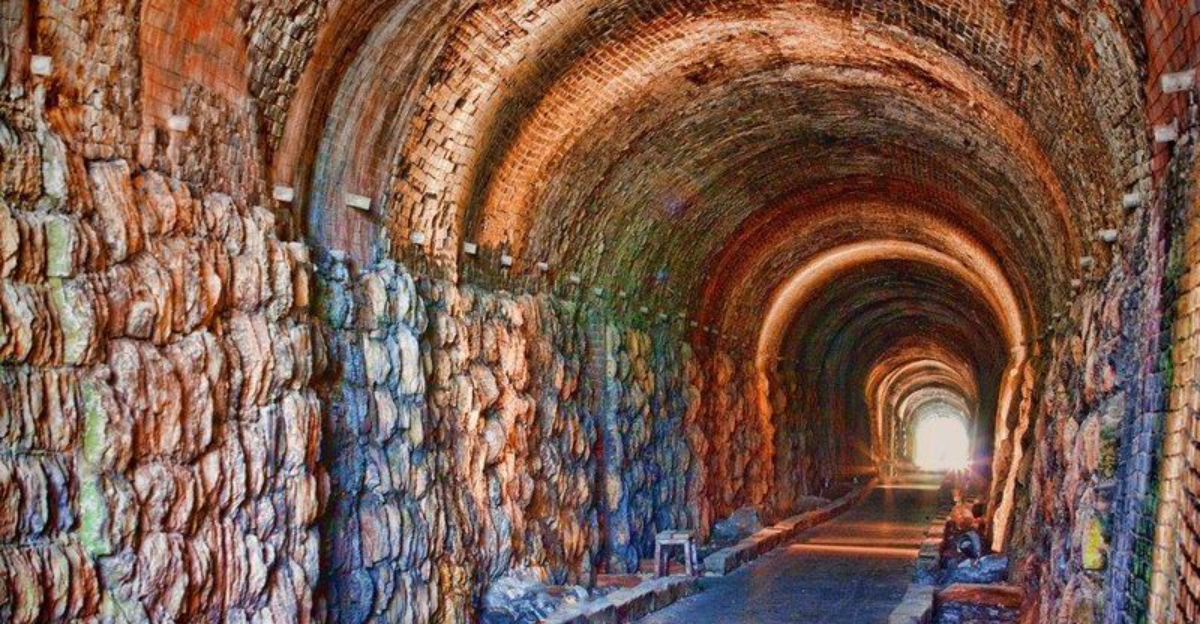
I still remember the first time I stood before the Chetoogeta Mountain Tunnel in Tunnel Hill, Georgia, the cool mountain air rushing out of its stone mouth like a ghostly sigh.
At first glance, it looks like nothing more than a dark hole carved into rock — but step closer, and you can feel the history pressing in around you.
Built in the 1840s, this was Georgia’s first great railroad tunnel, a place that saw soldiers, spies, and steam engines thunder through long before highways or headlights ever existed. Locals say the tunnel never truly went silent.
Some come for the Civil War stories, others for the whispers that echo after sunset — tales of phantom trains, distant footsteps, and voices carried by the wind.
Whether you believe in ghosts or just love Southern history, one thing’s for sure: the Chetoogeta Mountain Tunnel is more than a landmark. It’s a living memory carved straight into Georgia’s heart of stone.
The Tunnel That Put Tunnel Hill On The Map
Before engineers started blasting through rock in the 1840s, this area was just another sleepy patch of North Georgia farmland. Nobody paid much attention until construction crews showed up with pickaxes, dreams, and probably some questionable safety equipment.
Once workers carved their way through Chetoogeta Mountain, everything changed overnight. A town sprouted up around the tunnel entrance like wildflowers after spring rain, and folks needed something to call it.
Someone with zero creativity but maximum accuracy decided on “Tunnel Hill,” and honestly, I respect that level of straightforwardness. The tunnel literally created the community, gave it a reason to exist, and handed it a name that nobody could possibly misunderstand or mispronounce at the post office.
Georgia’s First Major Railroad Tunnel
Completed in 1850 after years of backbreaking labor, the Chetoogeta Mountain Tunnel became the South’s first serious attempt at boring through solid rock for railroad purposes. Workers chipped away 1,477 feet of stubborn Georgia stone, one painful inch at a time, probably wondering if they should’ve chosen easier careers.
This engineering marvel changed transportation across the entire region forever. Suddenly, trains could zip through mountains instead of awkwardly climbing over them or taking ridiculous detours that added days to journeys.
The tunnel represented Southern ambition at its finest—proving that determination and explosives could conquer geography. Railroad companies saw profits skyrocket, and passengers enjoyed smoother rides without feeling like mountain goats clinging to cliff faces during their commutes.
A Civil War Landmark That Witnessed History
When the Civil War erupted, this tunnel suddenly became prime real estate for military strategists on both sides. Controlling the passage meant controlling supply lines, troop movements, and basically the entire transportation network through North Georgia.
Soldiers marched through its dark depths carrying rifles, rations, and probably some serious anxiety about what waited on the other end. The echoing footsteps of thousands of young men still seem to linger in the damp air when you walk through today.
During the legendary Great Locomotive Chase of 1862, this tunnel played a starring role in one of the war’s most dramatic episodes. Union raiders and Confederate pursuers both thundered through these stone walls, making history at breakneck speeds that would’ve terrified any sensible passenger.
The Great Locomotive Chase Connection
Union soldiers led by civilian spy James Andrews pulled off one of the war’s gutsiest moves when they hijacked the locomotive called The General in 1862. They raced northward, ripping up tracks and cutting telegraph lines, with furious Confederates chasing behind in another engine.
This very tunnel witnessed that wild pursuit, with both trains screaming through the darkness at speeds that would make modern safety inspectors faint. I can only imagine the noise, the steam, and the absolute chaos echoing off those stone walls.
The chase ultimately failed, but it became legendary anyway—inspiring books, movies, and endless retellings at Georgia history museums. Standing in the tunnel today, you can almost hear phantom whistles and the thundering wheels of trains that passed through over 160 years ago.
The Abandonment And Rediscovery
After engineers completed a newer, bigger tunnel in 1928, the original passage fell silent for the first time in nearly 80 years. Trains stopped rumbling through, maintenance crews disappeared, and nature started reclaiming what humans had carved from her mountain.
For decades, only locals remembered it existed, sharing stories about the abandoned tunnel while vines crept over the entrances and bats moved in rent-free. Kids probably dared each other to explore it, creating their own spooky legends in the process.
Eventually, historians and preservationists realized they were letting an irreplaceable piece of Georgia heritage crumble into obscurity. Restoration efforts began, clearing debris, stabilizing the structure, and transforming the forgotten tunnel back into the historical treasure it deserved to be recognized as throughout the state.
Walking Through The Past
Nowadays, visitors can actually walk the entire 1,477-foot length of the tunnel, experiencing what 19th-century passengers only glimpsed from train windows. The temperature drops noticeably as you step inside, and moisture drips from the ceiling like the mountain is crying tears of history.
Your footsteps echo in ways that make you hyper-aware of the massive weight of rock suspended above your head. It’s simultaneously thrilling and slightly unnerving, especially when you reach the middle section where both entrances disappear from view.
Sunlight eventually appears as a growing circle ahead, guiding you back to the present day. The experience connects you to every person who passed through before—from Civil War soldiers to everyday travelers just trying to get home for supper.
The Haunted Legends That Refuse To Fade
Ask any longtime Tunnel Hill resident about strange occurrences, and you’ll hear stories that’ll make your spine tingle faster than walking through the tunnel at midnight. Locals swear they’ve heard phantom footsteps echoing when nobody else was around, and distant train whistles that no modern locomotive could’ve made.
Some folks claim to see shadowy figures near the entrances at dusk, possibly Civil War soldiers still guarding their strategic position. Whether you believe in ghosts or not, there’s something undeniably eerie about standing in that pitch-black center section alone.
I’m not saying the place is definitely haunted, but I’m also not volunteering to spend the night in there with just a flashlight and my overactive imagination for company. The tunnel holds its mysteries close, and maybe that’s exactly how history should feel sometimes.
A Living Monument To Georgia’s Grit
Today’s restored tunnel functions as both museum and heritage site, reminding everyone that Southern determination—plus a few thousand tons of dynamite—accomplished seemingly impossible engineering feats. School groups, history buffs, and curious tourists regularly explore this tangible connection to Georgia’s railroad legacy.
Interpretive signs explain the construction process, the Civil War significance, and the tunnel’s role in regional development. Educational programs bring the past to life better than any textbook possibly could, because you’re literally standing inside the history lesson.
The tunnel survived war, abandonment, and the passage of 170-plus years, proving that good craftsmanship and solid Georgia rock make an unbeatable combination. It stands as testament to the workers who carved it, the soldiers who fought around it, and the preservationists who refused to let it fade into forgotten obscurity.