
The Most Unique Tunnel In Pennsylvania Comes With A Story Locals Never Forgot
Let’s be honest, tunnels can be… well, tunnel-like. Dark, a bit damp, and usually just a quick way to get from Point A to Point B. But then there’s Rays Hill Tunnel in Pennsylvania. This isn’t your average underground commute. Oh no.
This particular strip of subterranean engineering comes with a side of local legend so enduring, so utterly memorable, that it’s practically a tourist attraction in itself.
Forget your standard road trip trivia. We’re talking about a story that has stuck around longer than a stubborn fog, a tale that explains why this Pennsylvania tunnel is anything but ordinary. Buckle up, because we’re about to uncover the most unique, and most unforgettable, tunnel story in the Keystone State.
Welcome To The Abandoned Pennsylvania Turnpike
The forgotten 13-mile stretch near Breezewood represents America’s first superhighway system gone quiet. Abandoned in 1968, this section of turnpike including Rays Hill Tunnel was left to slowly return to nature after engineers decided its narrow passages created dangerous bottlenecks.
Walking this deserted highway feels like stepping into a post-apocalyptic movie set. The cracked pavement, gradually being reclaimed by persistent vegetation, stretches eerily into the distance.
Modern travelers zoom past on the newer, wider highway nearby, most completely unaware they’re passing one of Pennsylvania’s most fascinating historical artifacts – a monument to mid-century American optimism about the open road.
A Dark Passage Through History
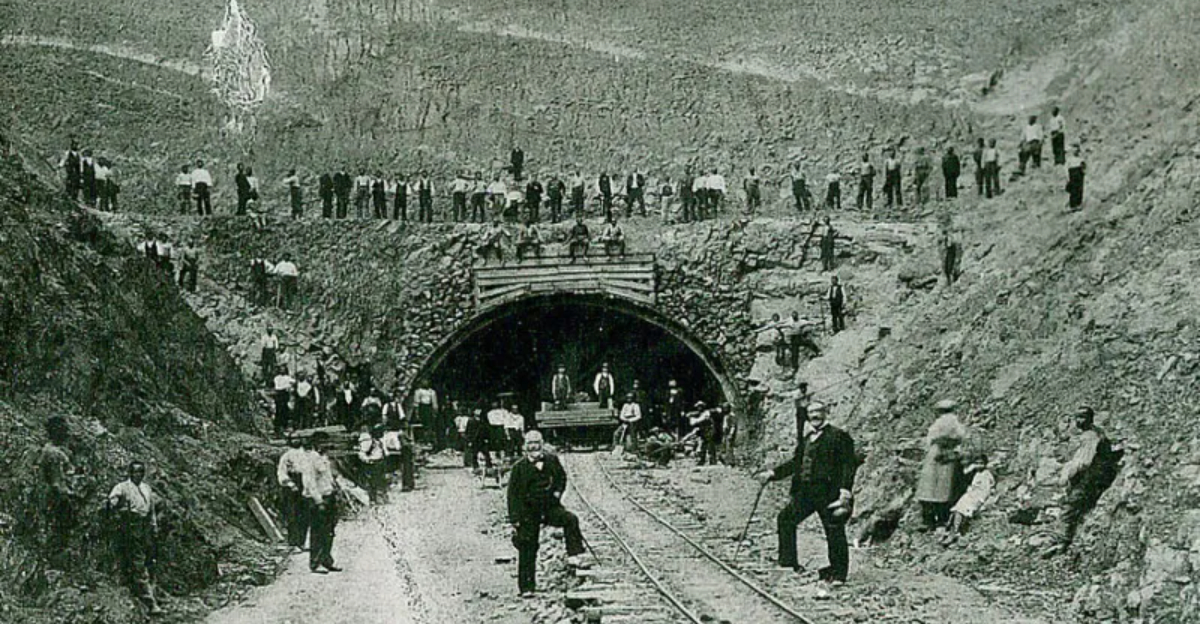
Originally carved through the mountain for trains in the 1880s, Rays Hill Tunnel found new purpose when converted for automobile use in 1940. The tunnel stretches approximately 6,800 feet – long enough that daylight barely penetrates its center, creating an eerie twilight zone effect.
The tunnel’s design reflects early highway engineering challenges. Its narrow two lanes, minimal lighting, and poor ventilation became increasingly problematic as traffic volumes grew throughout the mid-20th century.
Standing at the entrance, you can still see the original ventilation system openings and architectural details. It made this passage both an engineering marvel and ultimately, a traffic nightmare.
The Engineering Challenge That Became A Bottleneck
Traffic jams at Rays Hill became legendary by the 1960s. Cars would back up for miles during peak travel times, with the tunnel’s narrow lanes creating a claustrophobic crawl through the mountain. I remember my grandfather telling stories about planning entire trips around avoiding these tunnels during holiday weekends.
Engineers faced a difficult choice: widen the existing tunnels at enormous expense or bypass them completely. The bypass won, creating the modern turnpike we know today.
The original tunnels, including Rays Hill, couldn’t accommodate the growing number of vehicles or their increasing size and speed. A victim of its own success as America’s love affair with highways blossomed.
Ghost Stories, Graffiti, And Urban Legends
Locals whisper about strange echoes and unexplained sounds emanating from Rays Hill Tunnel after dark. Urban explorers report feeling watched as they venture deep into the unlit passage, where flashlight beams barely cut through the absolute darkness.
The tunnel walls now serve as a constantly evolving gallery of graffiti art. Bold colors and intricate designs transform this abandoned infrastructure into an underground art exhibition that changes with each new visitor brave enough to leave their mark.
One persistent legend tells of a maintenance worker who died during construction and whose spirit supposedly appears as a distant light that vanishes when approached. A story that adds another layer of mystery to this already atmospheric location.
A Playground For Adventurers And Cyclists
Today’s adventure seekers have reclaimed this abandoned infrastructure. The Pike2Bike trail project aims to officially convert this stretch into a recreational path, though many cyclists and hikers already make the journey unofficially.
Exploring requires preparation – the tunnel remains completely dark in its center section, so powerful flashlights or headlamps are essential. During my first ride through, I foolishly brought only a small bike light and found myself pedaling through what felt like infinite blackness!
The smooth, car-free pavement makes for excellent cycling, while photographers capture haunting images of this curious time capsule. Many visitors report the surreal experience of standing in complete darkness in the tunnel’s center as one of Pennsylvania’s most unique sensory experiences.
Rays Hill Vs. Other Notable Pennsylvania Tunnels
Pennsylvania boasts several famous tunnels, but Rays Hill stands apart from even its closest counterparts. Unlike the active Blue Mountain or Allegheny Tunnels that thousands traverse daily, Rays Hill offers a rare glimpse into infrastructure frozen in time.
Green Man’s Tunnel in South Park Township carries its own folklore about the legendary Raymond Robinson (nicknamed “Charlie No-Face”), who supposedly haunted its passages. However, Rays Hill’s abandonment creates a more immersive historical experience.
While Sideling Hill Tunnel nearby shares Rays Hill’s abandoned status, Rays Hill remains more accessible to casual explorers, making it the preferred destination for those seeking to experience this unique piece of Pennsylvania’s transportation history.
Why Locals And Visitors Can’t Forget This Tunnel
“Once you’ve stood in the middle of Rays Hill, you never quite shake the experience,” says Bedford County resident, who remembers traveling through the tunnel as a child. The unique combination of historical significance and eerie abandonment creates a powerful memory.
The tunnel represents a physical connection to America’s infrastructure evolution. Visitors often describe feeling a tangible link to the past while exploring this concrete time capsule.
As preservation efforts continue, Rays Hill stands as both warning and monument. Showcasing how quickly our most ambitious projects can become obsolete while simultaneously preserving a crucial chapter in America’s transportation history for future generations to discover and explore.