
The Most Unique Tunnel In Pennsylvania Has A Story Locals Never Forgot
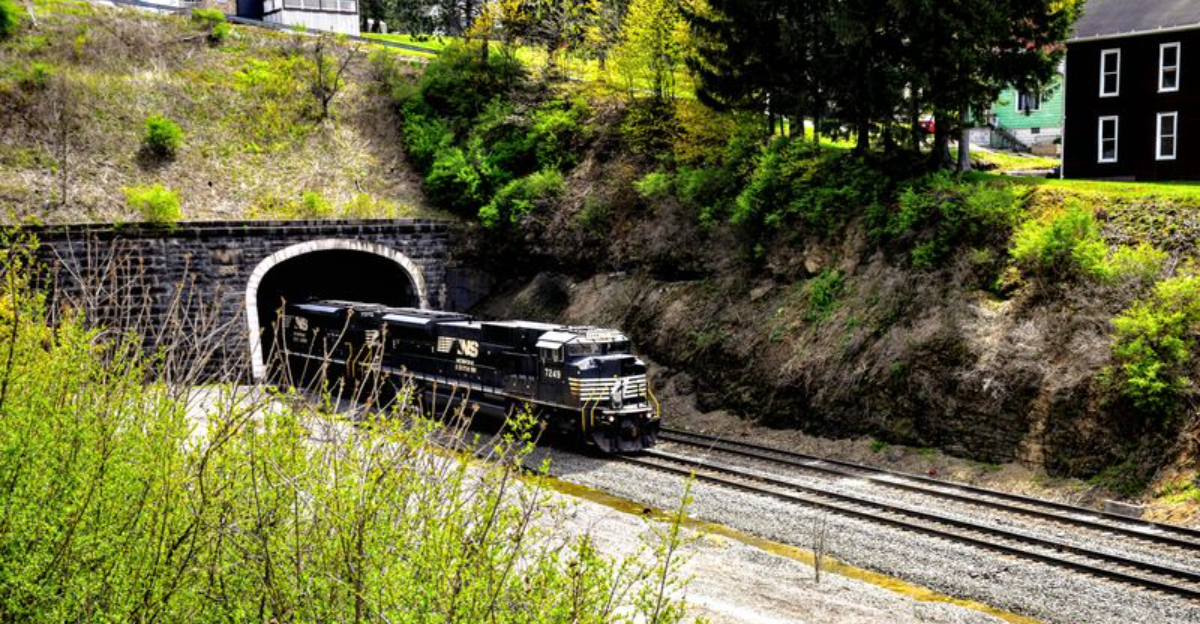
Deep in the Allegheny Mountains, a series of historic railroad tunnels cuts through solid rock, carrying trains just as they did over 150 years ago.
The Gallitzin Tunnels in Pennsylvania stand as monuments to human determination and engineering brilliance from a time when building through mountains meant backbreaking labor and real danger.
Local residents still share tales of the immigrant workers who carved these passages and the trains that rumble through them today, keeping history alive with every echo.
Location And Getting There
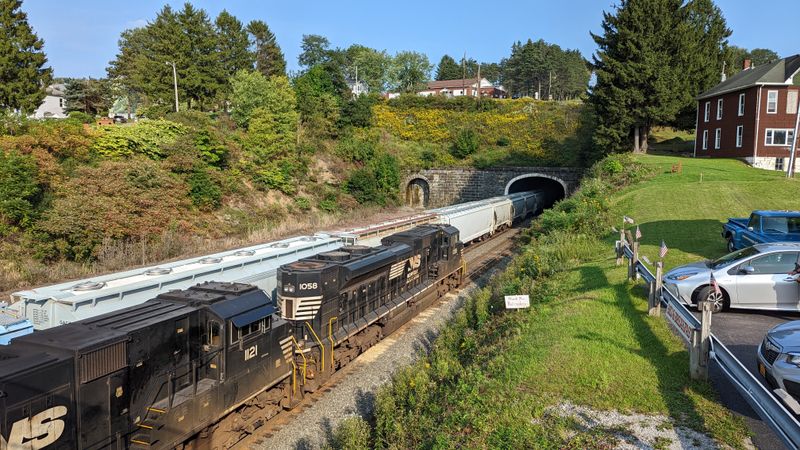
Finding these tunnels feels like discovering a secret hideaway tucked into Pennsylvania’s rugged landscape.
Located in Gallitzin, PA 16641, the site sits roughly 20 miles west of Altoona and about 90 miles east of Pittsburgh, making it accessible for day trips from either city.
Driving along winding mountain roads builds anticipation as the terrain grows steeper and more dramatic.
The approach offers glimpses of the railroad cutting through hillsides and valleys.
Small towns dot the route, each one seemingly frozen in time with their brick buildings and local diners.
Nearby attractions include the Allegheny Portage Railroad National Historic Site and several hiking trails that showcase the region’s natural beauty, perfect for extending your adventure beyond the tunnels themselves.
History And Construction
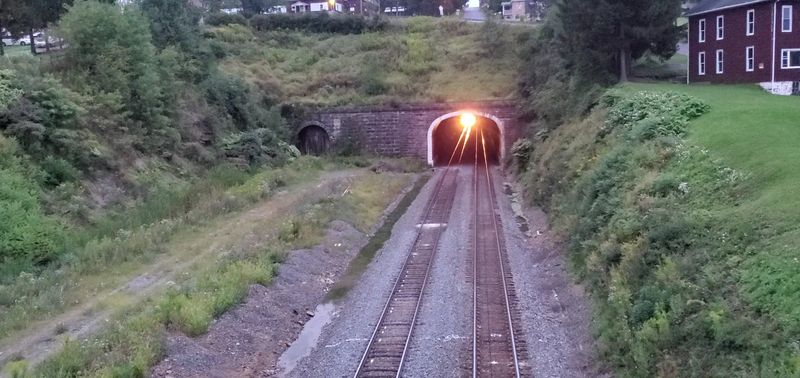
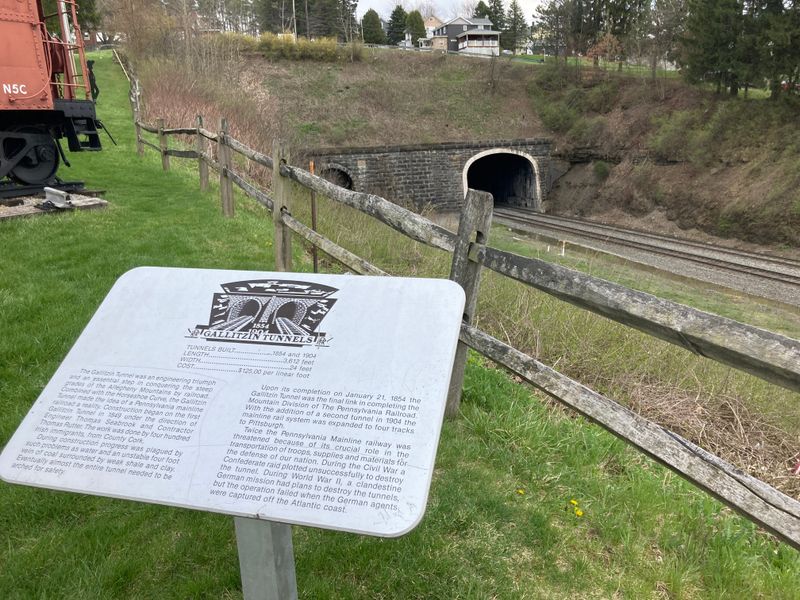
Built during the mid-1800s, these tunnels represented a massive undertaking for the Pennsylvania Railroad as it pushed westward across formidable terrain.
Engineers faced the daunting challenge of crossing the Allegheny Mountains, where steep grades and solid rock formations made construction extremely dangerous and slow.
Immigrant workers, many from Ireland and other European countries, toiled in harsh conditions with primitive tools and explosives to blast through the mountain.
Standing near the tunnel entrance today, you cannot help but imagine the deafening noise of hammers striking rock and the dust-filled air that workers breathed.
Many men lost their lives during construction, sacrificing everything for wages that barely fed their families.
Their legacy remains carved into every foot of these passages, a testament to human perseverance against overwhelming odds.
The Tunnels Themselves
Multiple tunnels make up this historic site, including the famous Allegheny Tunnel and others that bore through the mountain range at different points.
Each tunnel stretches hundreds of feet through solid rock, with heights and widths precisely calculated to accommodate the steam locomotives of their era.
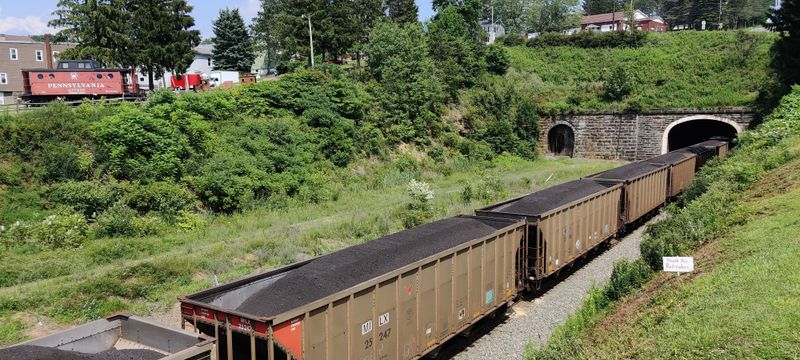
Modern freight trains still rumble through these passages daily, their diesel engines echoing where coal-fired behemoths once labored up steep grades.
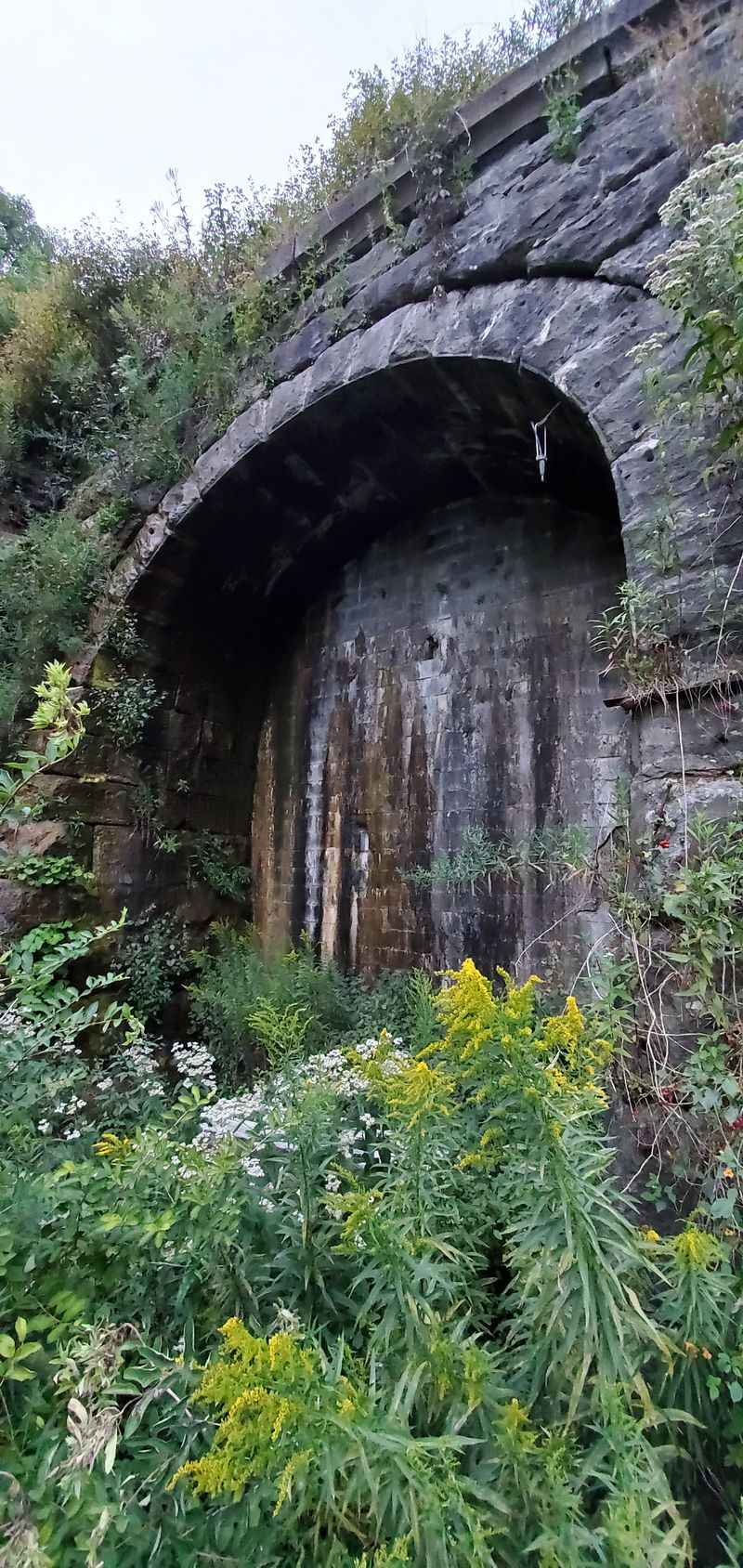
Walking near the tunnel openings provides perspective on their impressive scale and craftsmanship.
The stonework around the portals showcases the skill of 19th-century masons who shaped each block by hand.
Photographers love capturing trains emerging from the dark tunnel mouths, wreathed in mist during cooler months, creating scenes that transport viewers back to railroading’s golden age.
Local Legends And Stories
Whispers of ghostly happenings have followed these tunnels since their earliest days, with locals recounting strange lights and unexplained sounds near the portals after dark.
Some believe the spirits of workers who perished during construction still linger, forever bound to the passages they carved with their own hands.
Railroad employees through the decades have reported unsettling experiences while working near the tunnels, though most dismiss such tales with nervous laughter.
Residents of Gallitzin speak about the tunnels with a mixture of pride and reverence, recognizing their importance to the community’s identity.
Older folks remember when steam locomotives would shake the ground and fill the air with coal smoke.
During a visit to a local cafe, an elderly gentleman shared how his grandfather worked maintaining the tunnels, stories passed down through generations like precious heirlooms.
Scenic Surroundings
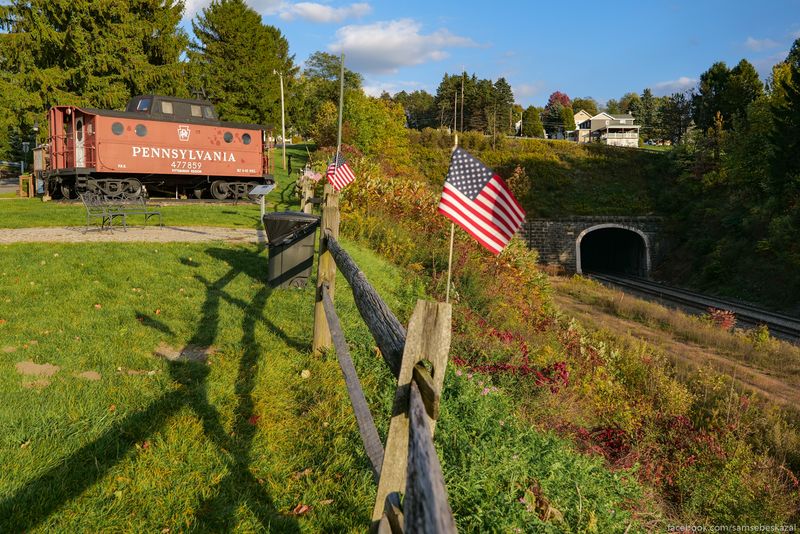
Mountains rise dramatically around the tunnel sites, their slopes covered in dense forests that change character with each passing season.
Winter transforms the landscape into a monochrome masterpiece where snow clings to bare branches and softens the rugged terrain.
Spring brings explosive greenery and rushing streams swollen with snowmelt, while autumn paints the hillsides in fiery reds, oranges, and golds that rival any New England display.
Rivers and creeks wind through valleys below the railroad grade, their waters sparkling in sunlight that filters through the tree canopy.
Standing at a vantage point near the tunnels during fall, I watched a freight train snake through the colorful landscape, its rumble harmonizing with rustling leaves.
The combination of human engineering and natural beauty creates scenes that linger in memory long after you leave.
Engineering Marvel
Calculating the precise grades and curves needed to push a railroad through these mountains required mathematical genius and practical experience that few possessed in the 1850s.
Engineers had to balance the steepness of the climb against the pulling power of locomotives, creating a route that trains could actually navigate while carrying heavy freight.
The tunnels themselves had to be perfectly aligned and adequately ventilated to prevent suffocation from smoke and exhaust.
Drainage systems built into the tunnel floors still function today, channeling water away from the tracks to prevent flooding and erosion.
Support structures reinforce weak points in the rock, evidence of ongoing maintenance that keeps these passages safe for modern rail traffic.
Every technical detail reflects careful planning and execution that continues to impress engineers who study 19th-century infrastructure and marvel at what was accomplished with such limited technology.
Modern Operations
Norfolk Southern Railway now operates the main line through these historic tunnels, running dozens of freight trains daily through passages originally designed for much smaller locomotives.
Double-stack container trains, coal hoppers, and intermodal cars pass through openings that once barely accommodated puffing steam engines with their tall smokestacks.
The contrast between old infrastructure and modern railroading creates a living museum where history and commerce intersect.
Train enthusiasts gather at viewing spots to photograph and record the constant parade of rolling stock.
Signals and communication equipment mounted near the tunnels represent modern safety technology overlaid on Victorian-era construction.
Watching a mile-long freight train disappear into the mountain reminds you that these tunnels remain vital transportation arteries, not mere historical curiosities gathering dust in some forgotten corner of Pennsylvania.
Tips For Visitors
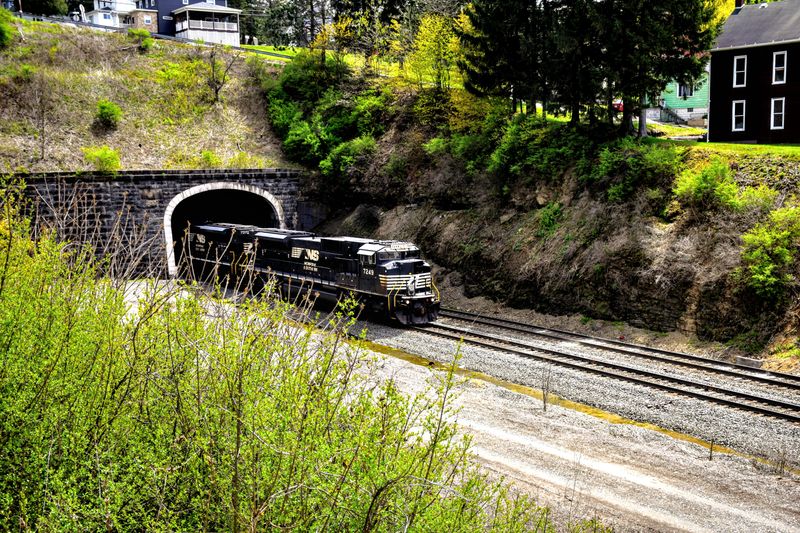
Early morning or late afternoon provides the best lighting for photography, with golden hour sun illuminating the tunnel portals and surrounding landscape beautifully.
Safety must come first since active railroad tracks mean real danger from approaching trains that can appear suddenly and move faster than they seem.
Designated viewing areas exist where you can safely observe and photograph without trespassing on railroad property or risking your life.
The small town of Gallitzin offers limited amenities including a few restaurants and gas stations for basic needs.
Parking near popular viewing spots can be tight on weekends when railfans converge to catch specific trains.
My best advice is to bring patience, respect private property boundaries, and allow plenty of time to soak in the atmosphere rather than rushing through, because these tunnels deserve contemplation and appreciation.