
The Natural Wonder Hidden In This Small Michigan Town Is Absolutely Spectacular
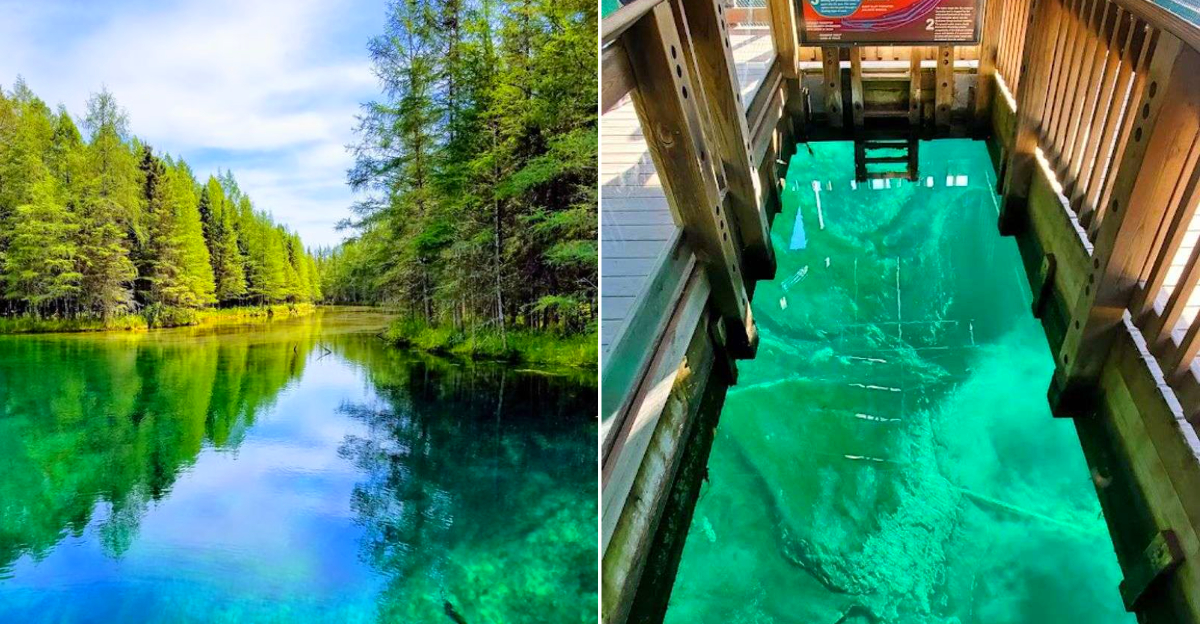
The cedar and hemlock stand like silent guardians, holding their breath until the forest suddenly breaks open to reveal a secret that feels far too ancient for a modern map.
I’ve always found that the deepest greens in the Upper Peninsula aren’t in the trees, but in the shimmering, impossible clarity of this basin, where the water doesn’t just sit, it breathes.
It is a rare, liquid mirror that captures the sky and the trout in a single, breathless frame, making the line between air and water feel like a beautiful lie.
Michigan’s largest freshwater spring reveals a crystal-clear sanctuary where ancient limestone vents and emerald depths create a living masterpiece of nature.
Honestly, if you can’t find a sense of quiet wonder while hovering over a world that looks like a high-definition dream, you’re moving too fast. There is a sacred, slow-motion rhythm here that rewards anyone willing to leave their hurry at the trailhead and simply stare into the blue.
First Glimpse Of The Big Spring
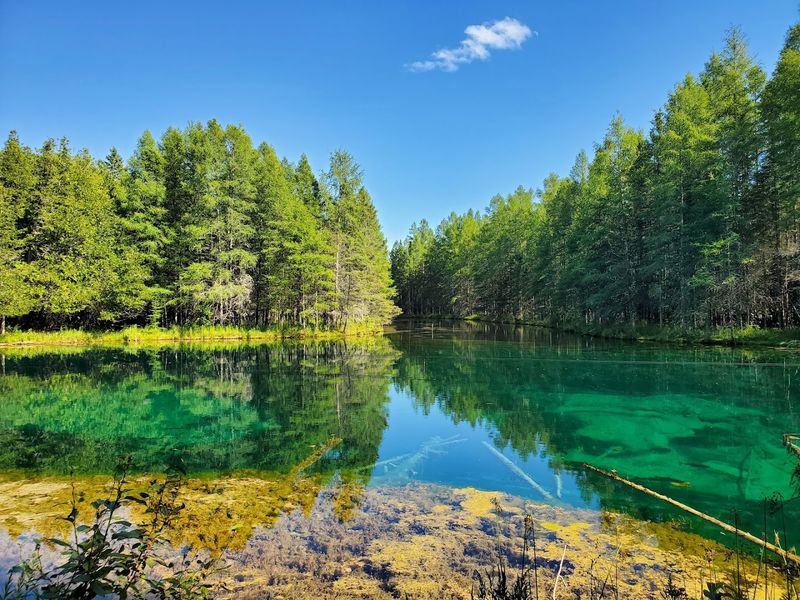
Color first grabs you at Kitch-iti-kipi, a jewel-toned bowl set in quiet Upper Peninsula forest. The spring spans about 200 feet across and reaches roughly 40 feet deep, a limestone window into restless groundwater.
Even on the coldest days, the water holds near 45 degrees, so it never freezes, and the surface stays astonishingly calm. Watch the bottom breathe as sand boils puff and swirl where more than ten thousand gallons per minute surge upward.
The vibe is reverent without being stiff. People lower their voices, cameras click, and the woods seem to nod in approval. Arrive early or later in the afternoon for softer light and fewer lines at the raft. Bring layers, because shady boardwalks feel cooler than parking-lot forecasts suggest.
Finding Your Way
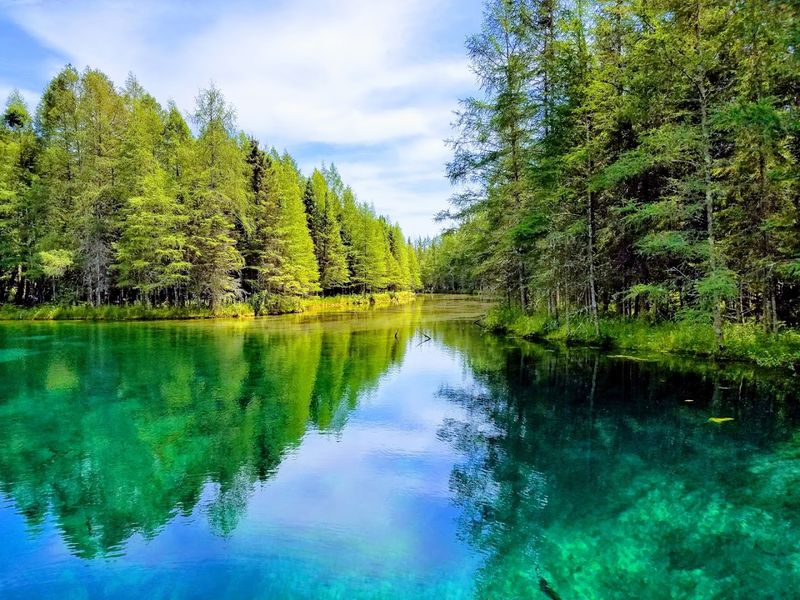
Finding your way to Palms Book State Park at 7200 County Road 449, Manistique, Michigan 49854 feels like a deep dive into the lush, emerald heart of the Upper Peninsula. Most travelers arrive via US-2, turning north onto M-149 and winding through a serene corridor of dense cedar and pine forests.
If you are coming from the north or the Lake Superior shoreline, the trek along the county roads offers a quiet, rhythmic experience through the rugged backcountry of Schoolcraft County.
There is a spacious, paved parking area nestled right at the trailhead, providing a quick transition from your car to the accessible boardwalks. Once you step out, the crisp, cool air and the sight of the turquoise waters through the trees guide you straight to the self-propelled observation raft.
Why The Water Stays So Clear
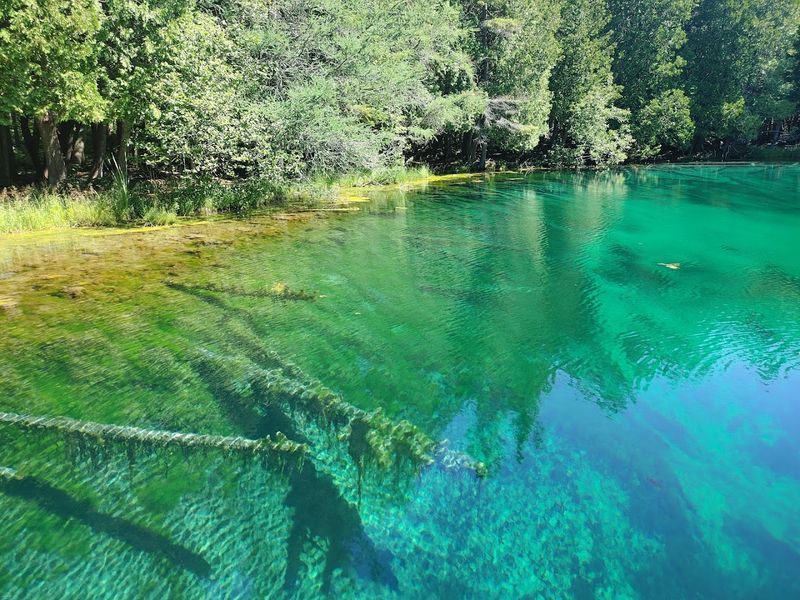
Clarity here is a lesson in geology and patience. Kitch-iti-kipi lives in fractured limestone, where groundwater filters through stone before erupting into the basin. Constant inflow exceeding ten thousand gallons per minute keeps the water fresh and incredibly transparent.
The temperature holds near 45 degrees year-round, discouraging algae blooms that cloud other lakes. Even fallen logs look curated, pale and sculptural against minty depths. The history reads quietly in the rock.
Karst features, joints, and solution channels guide the upwelling, and you can watch the proof as sand lifts and settles like breath. Visitor tip: when the raft stops, lean over the central well and trace the movement of individual grains. Patience reveals patterns you miss in motion.
Fish You Will Meet But Never Catch
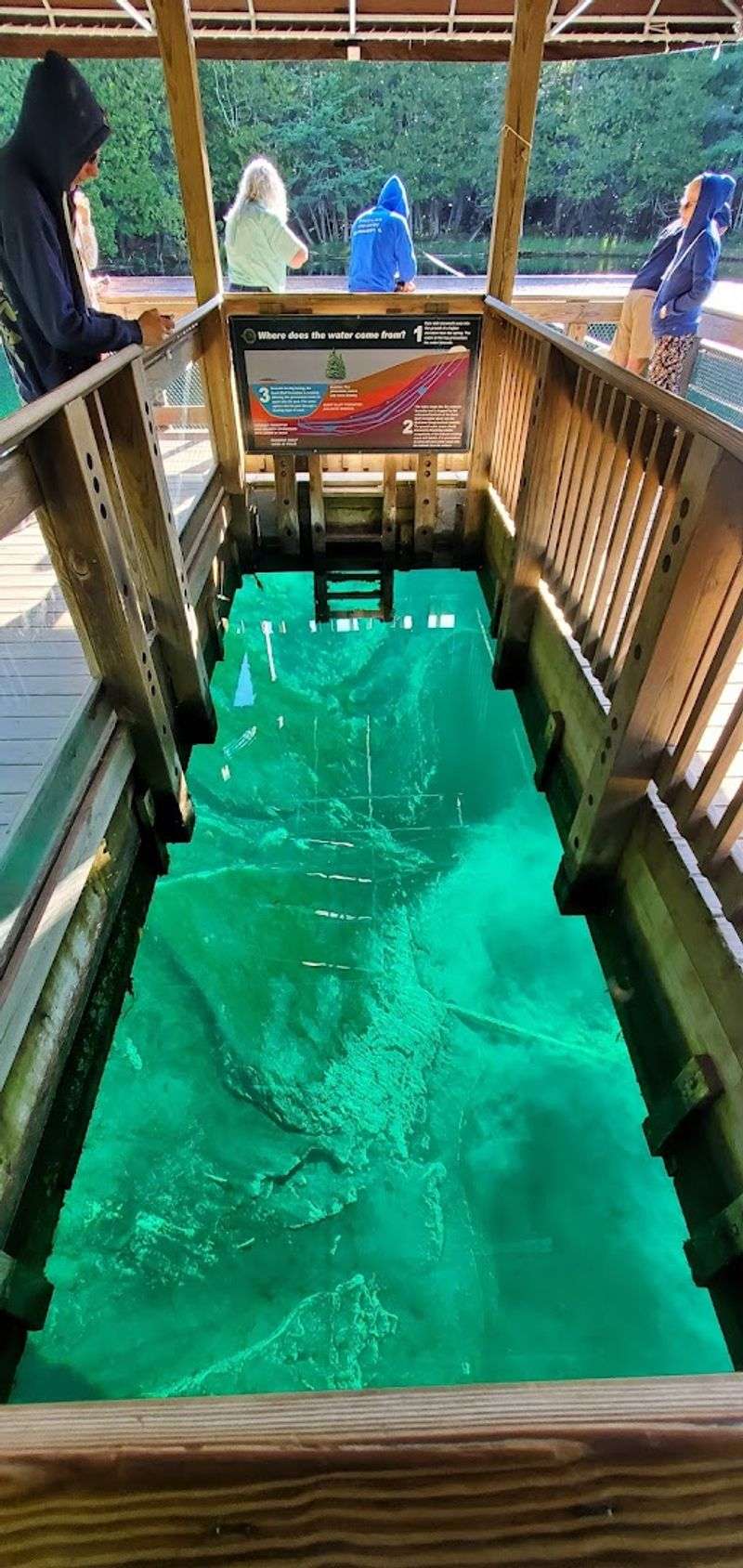
The trout look oversized, almost theatrical against that cinematic water. Many are retirees from local hatcheries, here to drift and graze in a sanctuary with no hooks, no lines, and no chasing. Their slow arcs telegraph calm, scales flashing like little mirrors when a cloud passes.
You will be close enough to count fin rays, but the rule is simple and kind: you are a guest, not a participant in their routine.
Kids press noses to the viewing window and gasp in unison. The vibe becomes hushed, like a backstage tour. Resist feeding fish or tossing anything overboard. Best viewing happens when someone gently stops the raft, letting trout re-enter the frame from the edges, unbothered and beautifully ordinary.
Seasons At A Constant Forty-Five Degrees
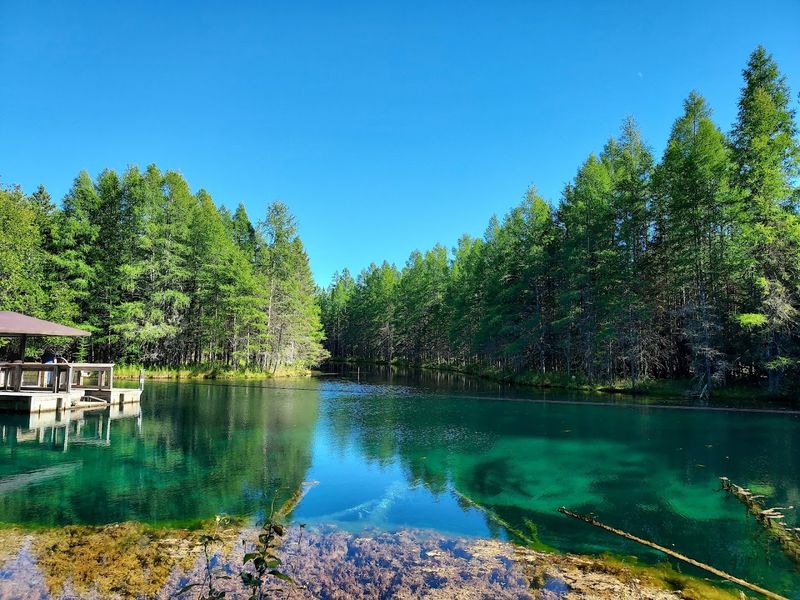
Winter surprises people first. Snow muffles the forest, yet the spring stays open, steaming slightly where the air is bitter but the water holds at 45 degrees. The raft may be secured to the dock in deep cold, and paths can glaze with ice, so traction matters.
Summer brings a saturated green chorus, with warm boardwalk railings and longer lines for the raft. Spring and fall trade crowds for crisp light.
I time visits for shoulder hours, chasing shadow lines on the bottom. Morning gives delicate pastels. Late afternoon deepens the turquoise and quiets the woods. Check current hours before driving out, and in winter pack microspikes.
The colors feel new across seasons, even though the temperature never budges.
Reading The Reflections For Photos
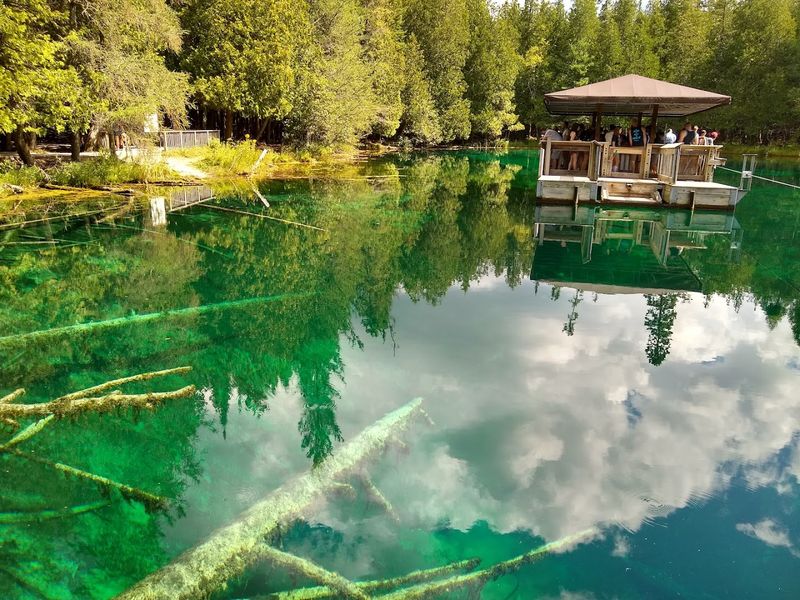
Reflections are the spring’s language, and a polarizing filter is its translator. With the filter turned one way, you photograph mirror-still trees. Twisted the other, the bottom leaps forward, logs and sand boils crisp as diagrams. Gentle wind writes brief punctuation across the surface, so wait for pauses.
Colors shift with sun angle, sliding from mint to bottle-green to blue. Avoid harsh noon if you can. The vibe rewards considerate timing over gear obsession.
Step lightly on the raft, brace elbows on the rail, and breathe with the scene. Visitor habit worth stealing: shoot, then pocket the camera and simply look. Your best frames usually arrive right after you stop chasing them, when the water exhales.
Boardwalk Quiet And Forest Edge
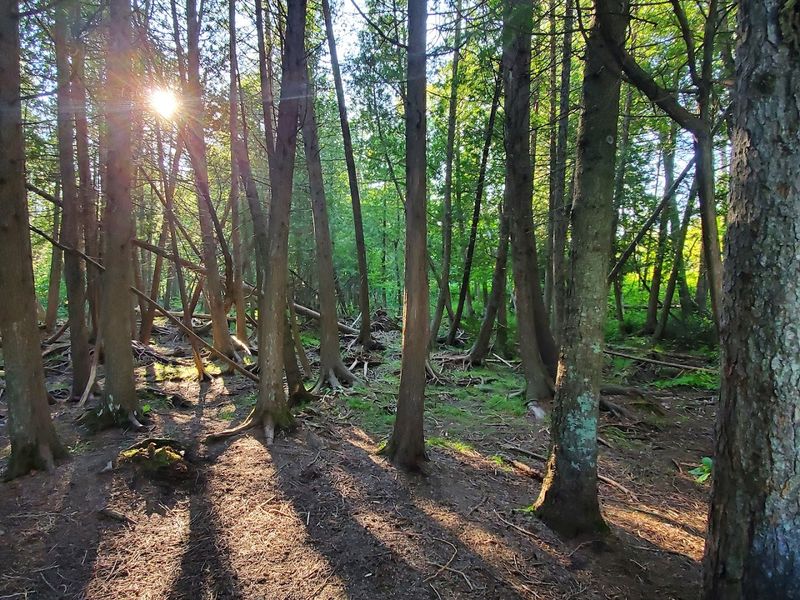
The approach is a soft reset. Boardwalk planks carry you over damp ground where cedar roots lace the soil and moss brightens knees of old stumps. Birdsong runs counterpoint to distant parking-lot chatter, then fades. Small interpretive signs add context without crowding the story.
The path is short, but it primes your eyes, switching attention from highway scale to spring scale. History rides along side the trees. Timber-era logging reshaped this region, yet this bowl survived as a clear, cold exception.
Bring bug spray in shoulder seasons, and keep voices low near the water. Families naturally slow here, even kids who sprinted from the car. The forest asks for an inside voice, and most visitors oblige.
Practicalities: Hours, Passes, And Timing
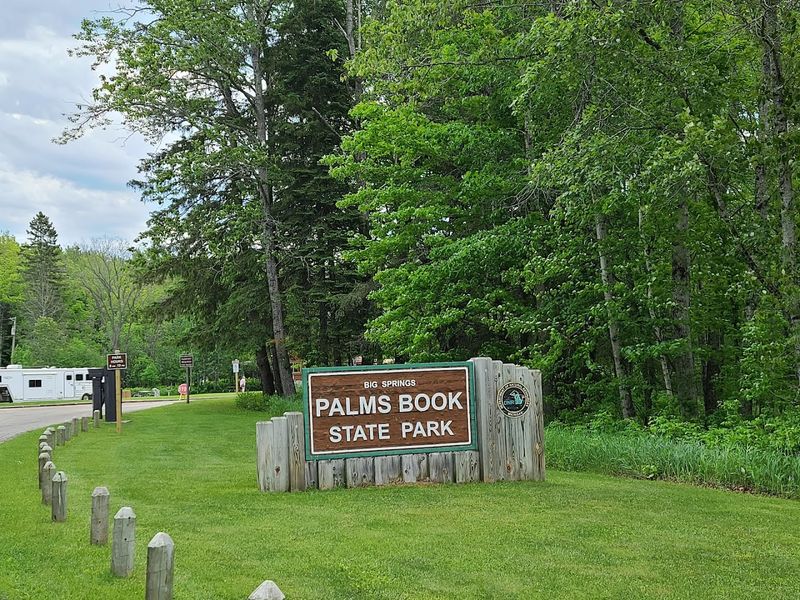
Logistics are straightforward if you plan ahead. The park is open daily with generous hours, and a Michigan Recreation Passport covers in-state vehicles. Out-of-state visitors can purchase a daily pass, commonly around eleven dollars per car.
Expect lines on holiday weekends, and note that the raft operates first-come, first-served. Restrooms and a small shop sit near the boardwalk, handy for souvenirs and a cold drink. The best timing is early or late, when light softens and crowds thin. Weekdays feel especially calm.
If a queue forms, let a ranger’s cadence guide expectations and enjoy the forest until your turn. Always check the official DNR page before driving, since seasonal maintenance or icy approaches can change access conditions.
Local Care And Gentle Etiquette
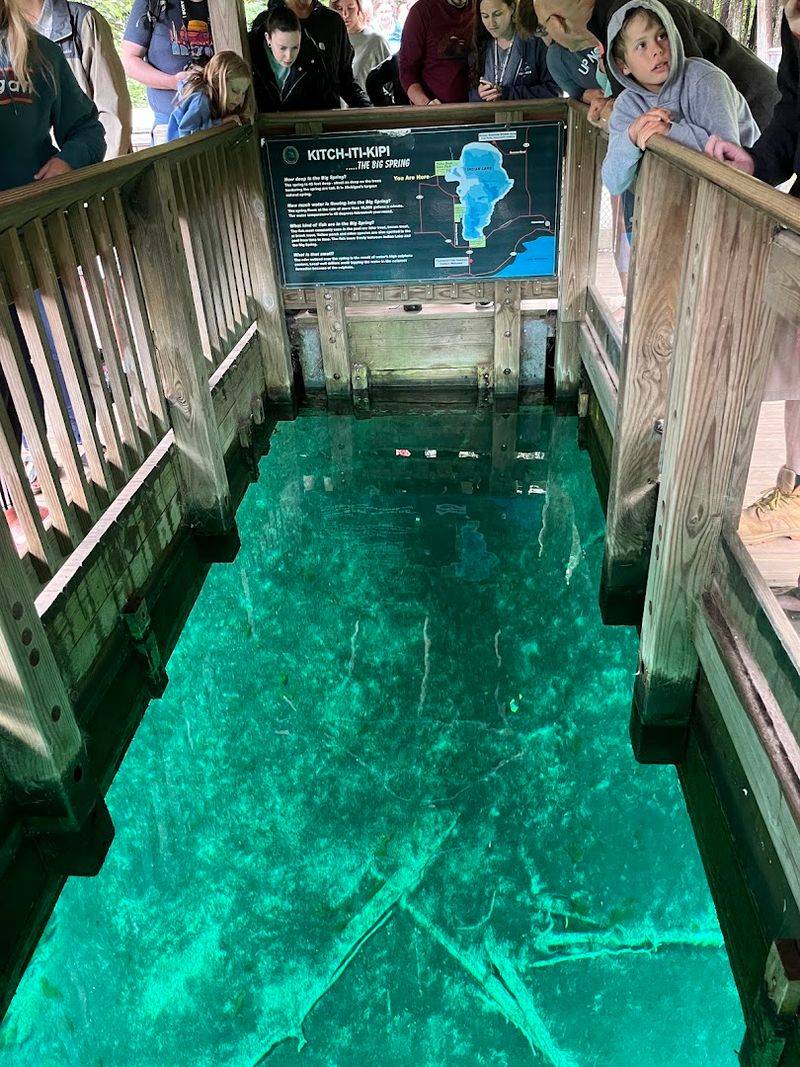
Stewardship here is as visible as the water. Rangers and visitors quietly model Leave No Trace habits, and the spring repays the favor with clarity. Staying on the boardwalk protects spongy ground. Hands off the railings when applying bug spray, and keep snacks sealed so crumbs do not travel.
This is a place for looking, not touching, which paradoxically makes it feel more intimate. I found the calm contagious. People take turns at the raft wheel, share the central window, and make space for kids to peer.
If you see litter, packing it out feels natural. The spring rewards restraint with detail: the longer you hold still, the more the bottom’s shifting stories appear without coaxing.
Accessibility And Family Flow
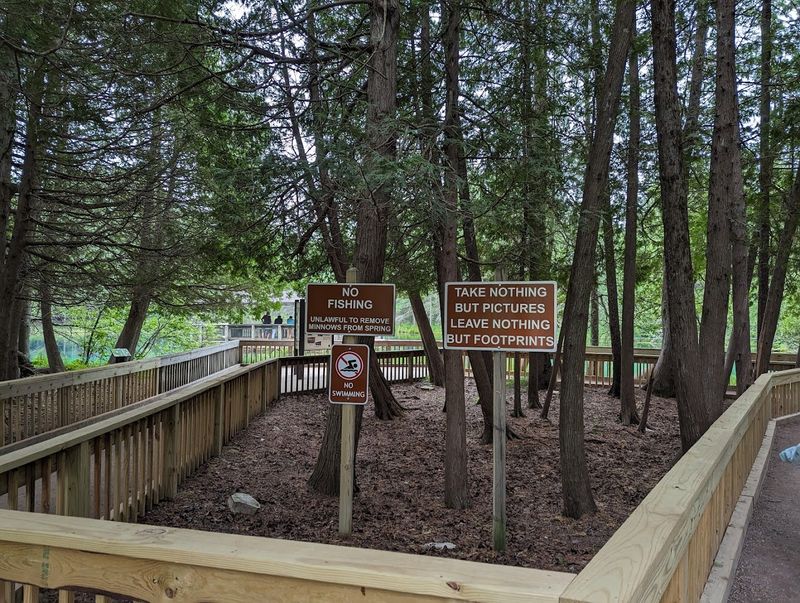
The route from parking to the spring is brief and mostly flat, making it friendly for multigenerational visits. Boardwalks feel secure, with rails that welcome short arms and cautious hands. Strollers roll fine, and benches help with pacing.
The raft accommodates groups comfortably, and movement stays gentle, so even first-time riders relax quickly. Because the attraction is concentrated, families can enjoy a meaningful stop without a marathon itinerary.
Visitor habit that helps: assign a simple buddy system before boarding. Keep small bags zipped, and avoid dangling items over the viewing well. If someone needs a quieter moment, step back to the forest edge where cedar shade settles nerves. A short walk returns you to the show when ready.
Picnic Moments And Nearby Wanders
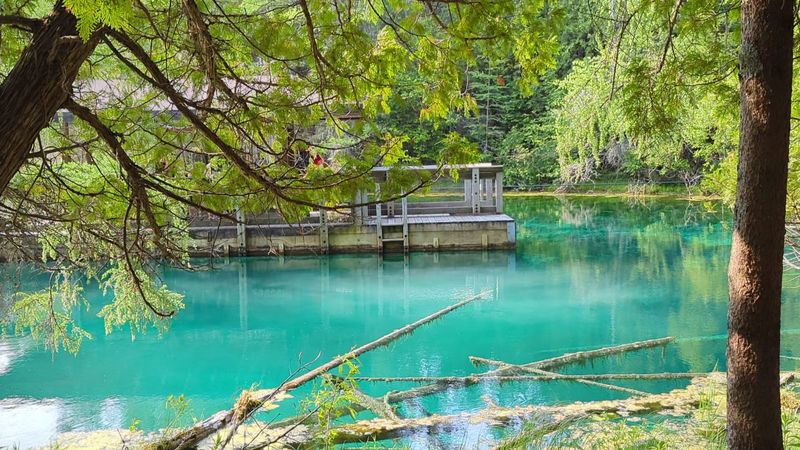
Picnic tables tuck into shady corners near the spring, perfect for a simple lunch while voices drift from the boardwalk. The setting encourages unhurried bites and a second look at your photos. Short paths stitch the area together, so you can alternate sitting with brief wanders.
The gift shop nearby offers small treats and local keepsakes without pulling focus from the water. Logistics stay easy if you pack nimble. Bring a light jacket in summer, because cool water air collects under the trees.
Keep food sealed and dispose of trash back at the bins. After eating, return to the raft when lines shorten. The scene often changes with the light, and another crossing feels fresh.
Name Stories And Deep Time
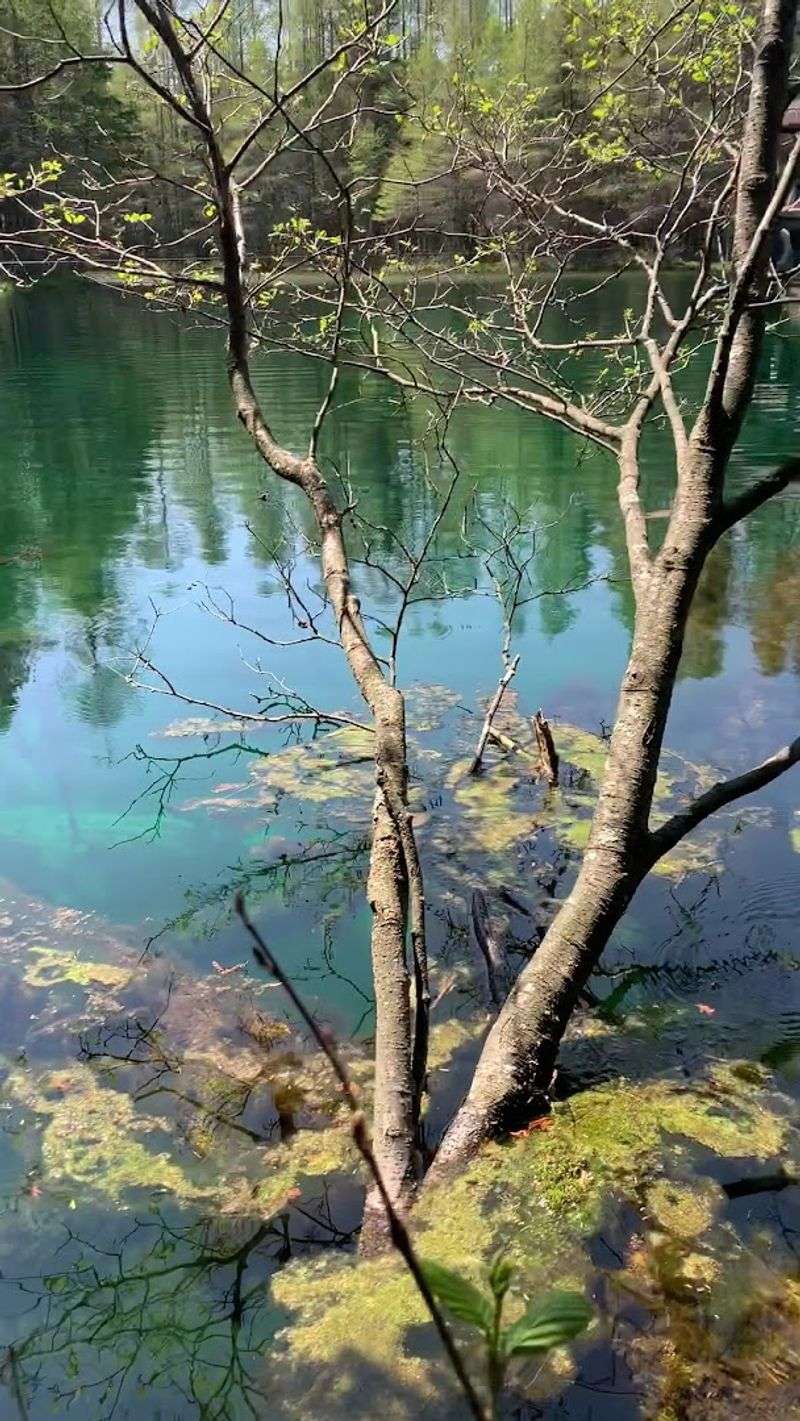
The spring’s widely shared name, Kitch-iti-kipi, is often translated as the Mirror of Heaven, a fitting nod to its reflective calm. Stand at the rail and history stretches beneath your feet, where logs from earlier eras rest like museum pieces.
Geology carries the older story still, each sand boil a tiny clock marking groundwater travel through limestone. Time multiplies in the reflections, past layered over present.
Practical advice meets regard: read posted signs, consider the cultural context, and keep the tone thoughtful rather than theatrical. I like to end at the far corner of the raft, where the view frames trees, trout, sky, and those small rising sands. It feels like a modest, durable benediction.