
The Quaint Pennsylvania Town Where Every Street Tells A Story
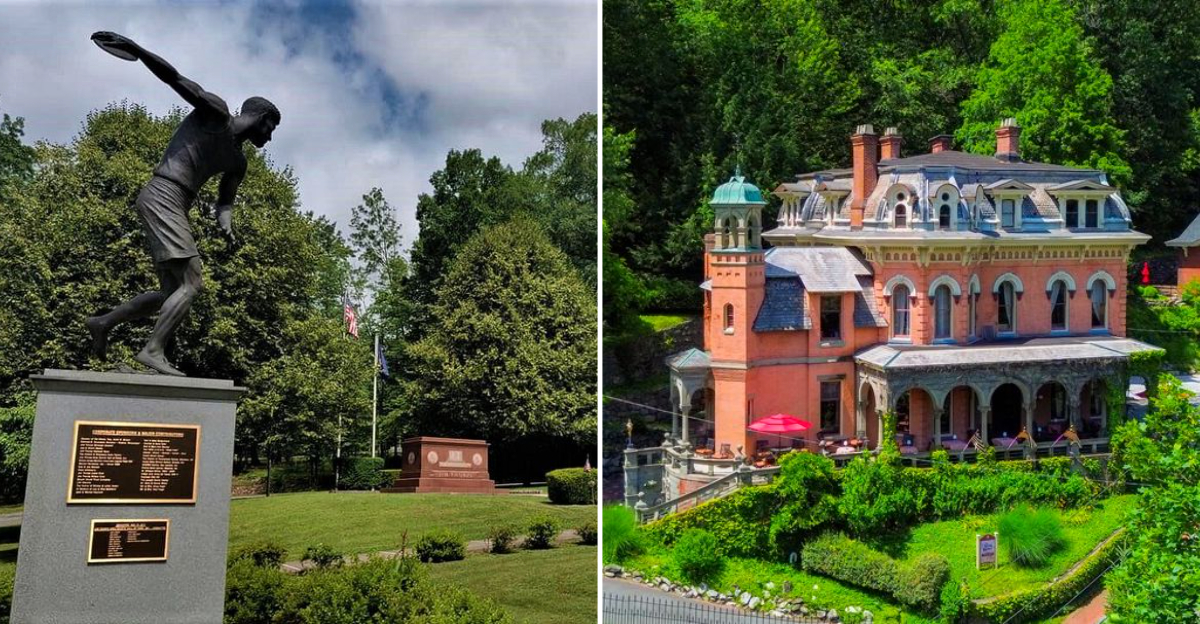
Tucked into the Lehigh Gorge, Jim Thorpe is a Pennsylvania borough that looks like someone plucked a Victorian postcard out of the 1800s and dropped it into the Pocono Mountains.
I stumbled through on a rainy Tuesday, half-lost and wholly charmed, watching gingerbread trim drip with mist and brick storefronts glow under old-fashioned streetlamps.
What started as a coal-shipping powerhouse called Mauch Chunk turned into a quirky tribute to an Olympic legend, and now every corner whispers tales of gravity railroads, opera houses, and a handprint that refuses to fade.
If history had a cozy reading nook, this would be it.
Victorian Streets in a Mountain Gorge
Steep hillsides cradle block after block of ornate 19th-century buildings, earning Jim Thorpe the nickname “Switzerland of America” back when tourists first arrived by rail. The compact center feels like a living museum, no velvet ropes required.
Originally called Mauch Chunk, the borough wears its coal-era architecture proudly. Brick facades, wrought-iron balconies, and painted shutters line sidewalks that tilt uphill, making every stroll feel like a gentle workout with a history lesson.
I found myself stopping every few steps to photograph corbels and cornices. It is the kind of place where even the gutters look photogenic, and every lamppost has probably seen more drama than your favorite streaming series.
Where the Town Began (and how it was Renamed)
Mauch Chunk sprouted along the Lehigh River as a canal-and-rail hub, fueled by anthracite coal and one audacious gravity railroad that hauled black diamonds down the mountain. By the 1950s, the coal had dried up, and two boroughs merged, hunting for a fresh identity.
Enter Jim Thorpe, the Olympic champion whose widow agreed to inter his remains here in exchange for a memorial and a new town name. It is an odd marriage of industrial grit and athletic glory, but somehow it works.
I stood at the memorial park, reading plaques about a man who never set foot in Mauch Chunk during his lifetime. History has a sense of humor, and this place proves it.
Mansions Above the Rooftops
Asa Packer made a fortune building railroads, then planted his 1861 Italianate mansion atop a hill so everyone below could see it. Today, the National Historic Landmark offers guided tours, and the view from its porch is worth the climb alone.
Next door, the turreted Harry Packer Mansion now serves as an inn and lounge, dripping with Victorian drama. Both homes lord over the valley like benevolent brick monarchs, reminding visitors that coal barons knew how to spend.
I huffed my way up Packer Hill, cursing my coffee habit and marveling at the ironwork. From the top, the town unfurls like a model-train layout, complete with tiny people and real steam rising from chimneys.
The gravity road that thrilled America
Back in 1827, engineers strung a railroad down the mountain to haul coal cars by gravity, then mules hauled the empties back up.
Tourists soon discovered that riding the Switchback Gravity Railroad delivered white-knuckle thrills, and it became one of America’s earliest roller-coaster experiences.
Tracks are long gone, but museum displays and trail markers trace the old route. You can still hike sections and imagine screaming passengers clinging to wooden benches at speeds that felt breakneck in top hats.
I walked a stretch of the rail bed, half-expecting a runaway coal car to rumble past. Instead, I got chipmunks and wildflowers, which is probably safer for everyone involved.
Curtain up on Millionaires’ Row
The Mauch Chunk Opera House opened in 1881 and still hosts concerts, plays, and the occasional comedy night. Its pressed-tin ceiling and balcony seating feel like time travel, minus the corsets.
Brick storefronts flank the theater, housing restaurants and shops that keep the block buzzing after dark. Millionaires’ Row earned its nickname when coal magnates built mansions nearby, and the opera house was their cultural crown jewel.
I caught a folk trio there on a Saturday, sandwiched between locals who knew every creak in the floorboards. The acoustics are stellar, and the ghosts of top-hatted patrons probably still hum along from the rafters.
Rivers, Rails, and Easy Adventures
The Lehigh Gorge Scenic Railway rolls out of the restored station, offering narrated trips through the gorge without breaking a sweat. If pedaling sounds better, the D&L and Lehigh Gorge Trail runs along the river, flat and gentle enough for a post-breakfast spin.
Shuttle services let you bike one-way and coast back into town, which is my kind of mountain adventure. No technical skills required, just functioning brakes and a willingness to stop for photos every quarter-mile.
I rented a bike, packed a sandwich, and spent three hours rolling past waterfalls and old trestles. By the time I returned, I had earned both lunch and a nap.
Shadows of the Molly Maguires
The Old Jail Museum occupies thick stone walls that once held accused members of the Molly Maguires, a secret society of Irish coal miners tried in the 1870s.
Exhibits recount the trials, and one cell still displays a handprint said to have appeared the night before an execution and resisted every scrubbing since.
It is a sobering stop, heavy with coal-country tension and the ghosts of labor struggles. The guides do not sensationalize; they just let the stone and iron tell the story.
I stood in that cell longer than I planned, staring at the faint smudge on the wall. History leaves marks, literal and otherwise.
When the Hills Blaze Gold
October transforms the Lehigh Gorge into a kaleidoscope of scarlet maples and golden oaks, and the Jim Thorpe Fall Foliage Festival packs weekends with live music, craft vendors, and enough pumpkin-flavored everything to last until Thanksgiving.
The town swells with leaf-peepers, but the gorge is big enough to swallow the crowds.
Timing a visit for peak color feels like winning the scenic lottery. Trails, train rides, and even the view from your car become postcard-worthy.
I arrived mid-October, dodged a few tour buses, and still found quiet overlooks where the only sound was leaves crunching underfoot. It is proof that a little town can feel both lively and utterly peaceful at once.