
The Remote Idaho Desert Hideaway That Looks Like It Came From Another World
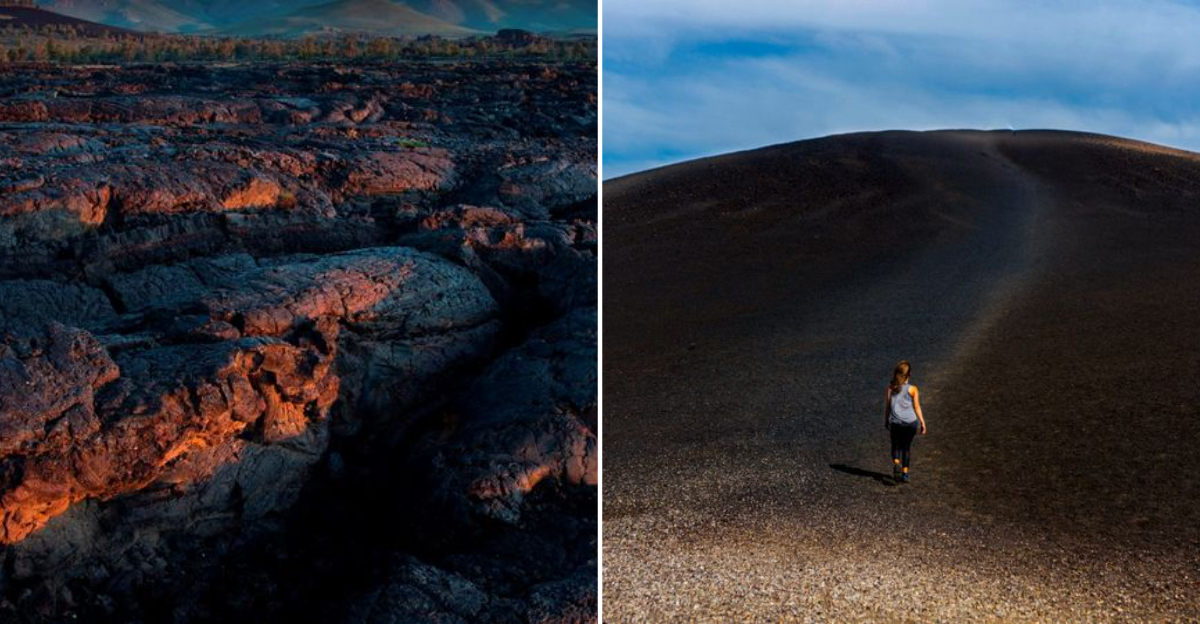
I still remember the first time I stepped onto the black crust at Craters of the Moon, half expecting to see a NASA rover roll past.
This Idaho treasure isn’t your typical desert with rolling sand and saguaro cacti. Instead, you’ll find a frozen ocean of basalt, cinder cones piled like sleeping volcanoes, and caves carved by rivers of molten rock.
It’s one of the most surreal landscapes in the lower 48, and it’s been hiding in plain sight along a quiet stretch of highway for thousands of years. That is what makes it truly special.
Where It Is and Why It Feels Like Another Planet
Craters of the Moon National Monument and Preserve sprawls across the Snake River Plain, wedged between the blink-and-you-miss-it towns of Arco and Carey in southern Idaho.
A 7-mile scenic Loop Road snakes through seas of black lava and towering cinder cones, giving you your first clue that this so-called desert is less Sahara and more lunar landing site.
The landscape here formed over 15,000 years of volcanic eruptions along the Great Rift, a series of deep cracks in the Earth’s crust.
Lava oozed, fountained, and exploded, leaving behind a textured moonscape of frozen waves and jagged spires. It’s a geology class meets science fiction, all without leaving Idaho.
Getting There Without Breaking the Spell
Point your car down US-20, US-26, or US-93, and the park entrance will appear about 18 miles southwest of Arco or 24 miles northeast of Carey.
Once you roll past those boundary signs, the hum of the highway fades and you’re swallowed by a moonscape that seems to stretch forever.
There’s no bustling gateway town or neon motel row to announce your arrival. Just open road, sagebrush, and then suddenly, black rock as far as you can see. The shift is so abrupt it feels like driving through a portal.
I remember glancing at my odometer, half convinced I’d somehow teleported a few hundred miles off-planet.
Drive the Loop Step Into the Story
Most of the monument’s headline attractions peel off the Loop Road like chapters in a geology textbook.
Inferno Cone, Spatter Cones, Devils Orchard, and the Caves Area all have their own pull-offs, so you can cruise at your own pace, hop out, and wander short trails that unpack the weird and scenic story of this place.
Each stop offers a different flavor of volcanic drama. Some trails are paved and flat, perfect for a quick stretch. Others climb steep cinder slopes or duck into shadowy lava tubes.
The Loop Road makes it easy to sample a little bit of everything without committing to a full-day hike.
Walk a Cinder Cone for a 360 Degree Wow
Inferno Cone is a short, steep scramble up loose, crunchy cinders that sound like cornflakes underfoot.
Minutes later, you’re standing on a wind-brushed summit with a 360-degree view of the entire monument spread out below like a quilt stitched from lava and sky.
The Pioneer Mountains float on the horizon, and everywhere else you look, cones and flows ripple toward the edges of your vision.
It’s the park’s quickest route to a jaw-dropping panorama, and the climb is just challenging enough to make you feel like you earned it.
Bring a windbreaker; the summit can be breezy even on calm days.
Go Underground Lava Tubes Done Right
At the Caves Area, self-guided lava tubes like Dewdrop Cave and Indian Tunnel reveal the monument’s hidden underworld.
These tunnels formed when the outer crust of a lava flow hardened while molten rock kept flowing underneath, eventually draining away and leaving hollow tubes behind.
You’ll need a free cave permit from the visitor center to protect sensitive bat habitat, plus sturdy shoes for the boulder-strewn floors.
Indian Tunnel is the most popular, with a collapsed roof that lets daylight pour in and illuminate the textured walls. It’s eerie, beautiful, and surprisingly cool even on hot summer days.
Bring a flashlight for the darker passages.
Camp on the Lava and Count the Stars
The Lava Flow Campground sits near the visitor center and offers 42 first-come, first-served sites tucked among young basalt.
There are no hookups, just seasonal water and toilets, but you get a front-row seat to one of the darkest night skies in America.
Craters of the Moon is a certified International Dark Sky Park, so on a clear night, the Milky Way arcs overhead like a glowing river. I’ve camped here twice, and both times I stayed up way too late just staring at the stars.
The silence is thick, broken only by the occasional rustle of a passing breeze. It’s the kind of place that makes you feel very small and very alive all at once.
When to Go and What Changes in Winter
From spring through fall, the Loop Road stays open to vehicles, and the monument buzzes with hikers, campers, and curious road-trippers.
By mid-November, the road typically closes to cars and transforms into a groomed route for cross-country skiing and snowshoeing when conditions allow.
The landscape takes on a whole new personality in winter. Snow dusts the black lava, turning the monument into a study in contrasts.
It’s starkly beautiful and much quieter, though you’ll need to bundle up and check conditions before you go.
The monument is gorgeous year-round, just different depending on the season. Summer can be scorching, so pack extra water and sunscreen.