
The Scenic Drive Through Kentucky Horse Country That Few Tourists Ever Find
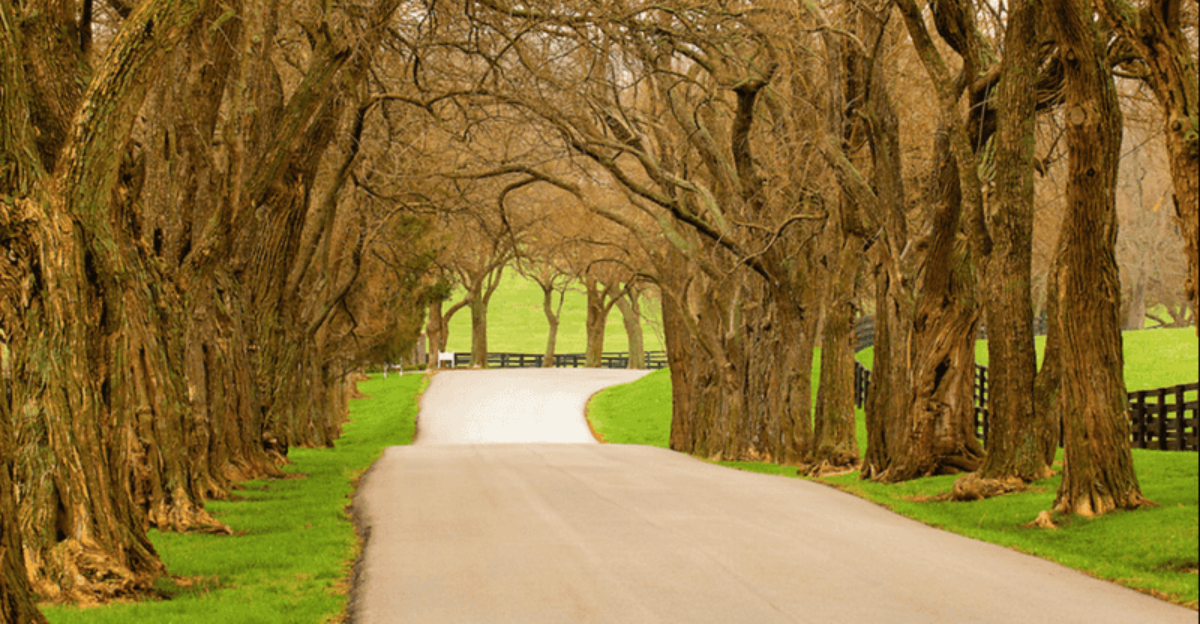
Last spring, I took a wrong turn off US-60 near Versailles and stumbled onto a road so pretty I forgot where I was going. Pisgah Pike is the kind of drive that makes you slow down, roll the windows down, and wonder why anyone races past on the highway.
Just five miles of stone fences, grazing Thoroughbreds, and shade trees older than your grandparents, tucked into Kentucky’s Horse Country, where the tourists never think to look.
Right now, I am thinking of scheduling a journey, but without a destination; just a drive and views thorugh the car window.
Start At A Castle, Not A Crowded Highway
Your adventure begins where fairy tales meet farmland. The Kentucky Castle stands at 230 Pisgah Pike in Versailles, complete with turrets, cobblestones, and a grand archway that makes you feel like royalty before you even turn the ignition.
Once you pull away from that storybook entrance, Pisgah Pike unfolds like a private escape route. Traffic noise fades fast, replaced by the soft clip-clop rhythm of hooves and the rustle of bluegrass swaying in the breeze.
I parked near the castle gates last April, snapped a photo, and felt like I was about to discover Narnia. Instead, I found something better: real-world beauty without the crowds.
A Short Road With Centuries In Its Bones
Pisgah Pike stretches just over five miles between US-60 and Old Frankfort Pike, but every inch carries weight.
Kentucky’s transportation department lists this segment as a state scenic byway, a badge earned by roads that hold stories in their curves and whispers in their gravel shoulders.
Short does not mean shallow. Generations of farmers, breeders, and travelers have worn this path smooth, and you can feel that legacy in the way the land rolls and dips.
I spent an entire afternoon on those five miles, stopping three times just to stare at the horizon. Time stretches here, even if the road does not.
Stone Fences, Osage Orange Shade, Bluegrass Quiet
Driving under the Osage orange canopy feels like slipping beneath a living cathedral. Branches arch overhead, pruned by decades of careful hands into a shaded arcade that cools the blacktop even on July afternoons.
Dry-laid limestone walls line both sides, stacked without mortar by frontier masons who knew how to make rock hold. Sweet hay perfumes the air, and when the wind shifts, you catch hints of clover and fresh-cut grass.
I rolled my windows down and let that smell fill the car. No air freshener on earth can match bluegrass country in the breeze.
A Frontier Church Keeping Watch
Pisgah Presbyterian sits just off the lane like a quiet guardian, its congregation founded in 1784 and its Kentucky-limestone sanctuary built in 1812 (later remodeled in 1868).
The cemetery beside it holds names etched in weathered marble, stories of settlers who cleared this land and raised families under the same sky you see today.
If you time your visit right, you might hear the bell toll for Sunday service. That sound carries across the fields, low and steady, a reminder that some rhythms never change.
I pulled over one Sunday morning and listened. The bell rang six times, and for a moment, I forgot what year it was.
Gateways To Legendary Farms
Names on the gateposts read like a Hall of Fame roster. WinStar Farm, Paynes Mill, Williams Lane operations: these are the places where champions graze, where million-dollar foals wobble on spindly legs, where pedigrees matter more than diplomas.
Most farms offer tours by appointment only, so respectful roadside admiration is the rule. Pull into a designated spot, snap a photo of those manicured paddocks, and watch the Thoroughbreds stretch their necks over the fence.
I saw a chestnut mare nursing her foal one afternoon. That image stuck with me longer than any racetrack trophy ever could.
A Quiet Link To A Big-Name Byway
At the north end, Pisgah Pike meets Old Frankfort Pike, a National Scenic Byway celebrated coast to coast for its classic horse-farm vistas.
Thousands of visitors cruise Old Frankfort every year, cameras ready, maps in hand, chasing the postcard-perfect Kentucky experience.
Most never notice the quiet turnoff onto Pisgah. That oversight is your gain, because this softer side street delivers the same dreamland scenery without the tour buses.
I drove both routes back to back. Old Frankfort Pike is stunning, but Pisgah Pike feels like a secret handshake, a locals-only password to the same magic.
Detour For Racing Royalty, Then Drift Back To Peace
Keeneland sits a short hop away on US-60, close enough to visit without breaking your Pisgah Pike spell.
Stroll the paddock, watch trainers walk their horses, or plan a race-day visit in April or October when the track hums with energy and the scent of popcorn drifts over the grandstand.
Then slip back onto Pisgah Pike and let the hush settle over you again. Hoofbeats echo in both places, but here they come without announcers or betting slips.
I spent a morning at Keeneland, then drove Pisgah Pike that afternoon. The contrast made both experiences richer.
When To Go, What To Watch
Spring delivers foals and dogwood blossoms, summer paints the paddocks deep emerald, and October light turns fence lines into gold stripes across rolling hills. Each season rewrites the scenery, so pick your favorite palette and plan accordingly.
Roads here are narrow and working, shared with farm trucks hauling hay and tractors moving slow. Ease around blind curves, give equipment plenty of room, and use designated pull-offs for photos.
I visited in late May and caught newborn foals racing their mothers. That sight alone justified the trip, the tank of gas, and the detour off my original route.
How To Drive It Like A Local
Start at the Kentucky Castle on US-60, turn onto Pisgah Pike, and meander north to Old Frankfort Pike. Loop back through Midway or Versailles for coffee, pie, and a slice of small-town charm that pairs perfectly with your morning drive.
Keep your speed down, your eyes up, and your phone camera ready. This route rewards slow rolls and spontaneous stops, not GPS efficiency or highway hustle.
I followed this exact loop last fall, stopped for cinnamon rolls in Midway, and felt like I had cracked a code. Short, soulful, and rooted in place, Pisgah Pike is the drive many miss.
Pack Patience, Not A Schedule
Pisgah Pike is not built for speed or tight itineraries. Farm vehicles lumber along at tractor pace, horses sometimes cross the road, and locals wave from porches as you pass.
Rushing here feels wrong, like sprinting through a museum or skimming a love letter. Bring patience, leave your schedule behind, and let the road set the tempo.
I got stuck behind a hay wagon once, and instead of fuming, I rolled down my window and listened to the birds. Best traffic jam I ever sat through, hands down, no contest.
Bring A Camera, Leave The Crowds
Designated pull-offs dot Pisgah Pike, inviting you to stop, stretch, and frame the perfect shot. Thoroughbreds pose like models, fence lines create natural leading lines, and the morning light turns ordinary pastures into gallery-worthy scenes.
Most tourists cluster around Keeneland or downtown Lexington, leaving Pisgah Pike blissfully empty. You might share the road with a jogger or a cyclist, but tour buses stay far away.
I snapped over fifty photos on my first drive, and not one frame included another car. That kind of solitude is rare, precious, and worth the detour.