
The Secret Arizona Campground Locals Try To Keep Hidden From Tourists
I nearly drove past the turnoff the first time, distracted by saguaros standing at attention along U.S. Highway 93. Then the road dropped into a canyon, and there it was: a creek running clear and blue through the middle of the Sonoran Desert, with shaded picnic tables sitting quietly above the water.
This is one of those places Arizona regulars mention softly, as if saying the name too loudly might fill up all 23 sites by next weekend. I spent two nights there listening to canyon wrens, wading in cold pools, and poking around rocks that shine when you tilt them toward the sun.
In this article I will walk you through how to find it, what the campsites are really like, when the wildflowers put on their best show, which spots the birders quietly claim first, and the practical details that make the difference between a smooth trip and a long drive back to town.
Sunsets paint the canyon walls in ridiculous shades of orange, the stargazing makes you forget about your endless to-do list, and the resident donkeys might just inspect your cooler. Just promise to keep this little slice of desert paradise between us, alright?
Consider this your friendly nudge toward a canyon that deserves your attention.
Finding The Turnoff Along Highway 93
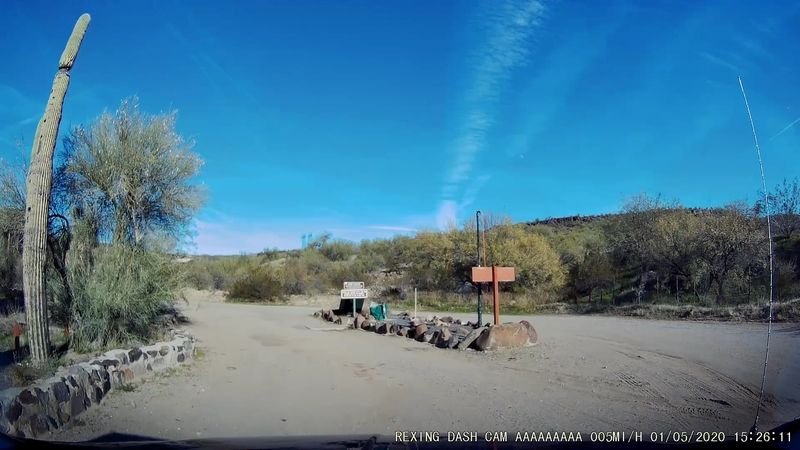
Milepost 140.2 on U.S. Highway 93 does not look like much at first glance. I was watching for the Burro Creek Bridge, and sure enough, exactly one mile south of it the turnoff appeared on the right.
A paved road runs about 1.25 miles down into the canyon, so no rough four-wheel-drive adventure is required to reach camp. Passenger cars, trailers, and RVs all handle it fine, though the grade gives you a nice little preview of the drop in elevation.
Location-wise, the campground sits roughly 60 miles west of Prescott, 60 miles southeast of Kingman, and about 60 miles northwest of Wickenburg, straddling Yavapai and Mohave counties. The mining town of Bagdad lies around 10 miles southeast of the nearby wilderness area.
Cell service gets patchy along that stretch, so I downloaded my maps before leaving the last town. Fill your gas tank too, because the desert between exits is generous with scenery and stingy with services.
A Blue Creek Running Through Red Rock Country
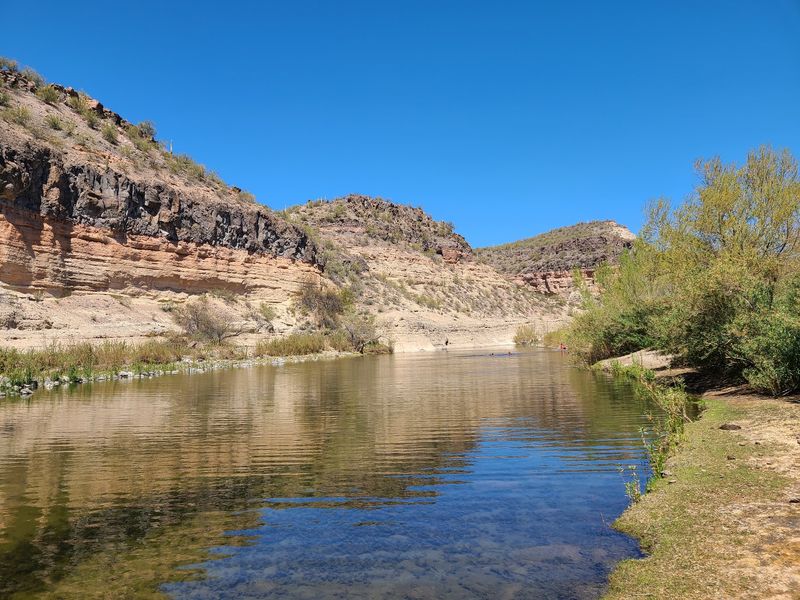
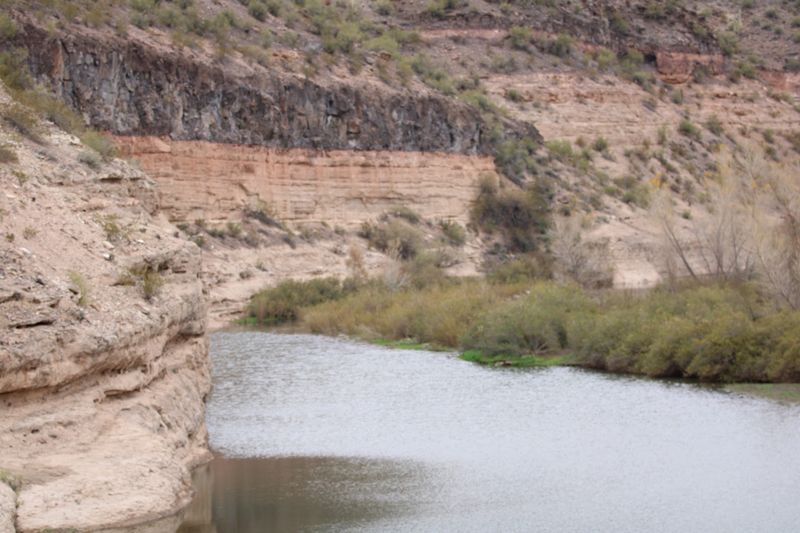
Water in the desert always feels like a small miracle, and Burro Creek Campground delivers it year-round as a perennial stream. Sitting at 1,960 feet inside a Sonoran Desert canyon, the campground looks out over deep blue pools framed by leafy banks.
Above the water, the hillsides go full Arizona: saguaro-studded slopes, layered cliffs, and rock faces that change color as the sun moves across them. The contrast between the cool creek and the sunbaked stone is the whole reason people fall for the place.
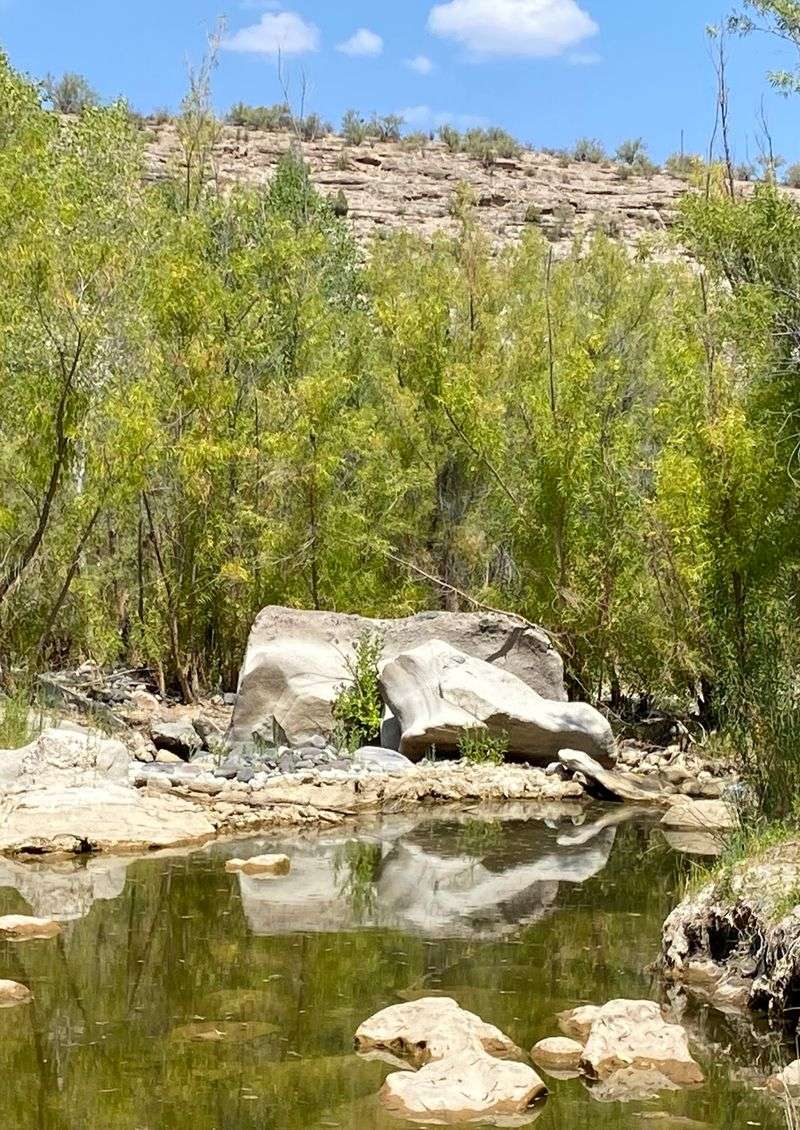
Upstream, inside the 27,440-acre Upper Burro Creek Wilderness, the creek cuts through bedrock and forms clear pools linked by small waterfalls. Walking that stretch felt like being let in on a secret the highway drivers overhead never suspect.
Wading is one of my favorite ways to spend a warm afternoon here. Bring water shoes, since the streambed is rocky and slick in spots, and let your feet do the exploring.
Campsites With Ramadas, Fire Rings, And Elbow Room
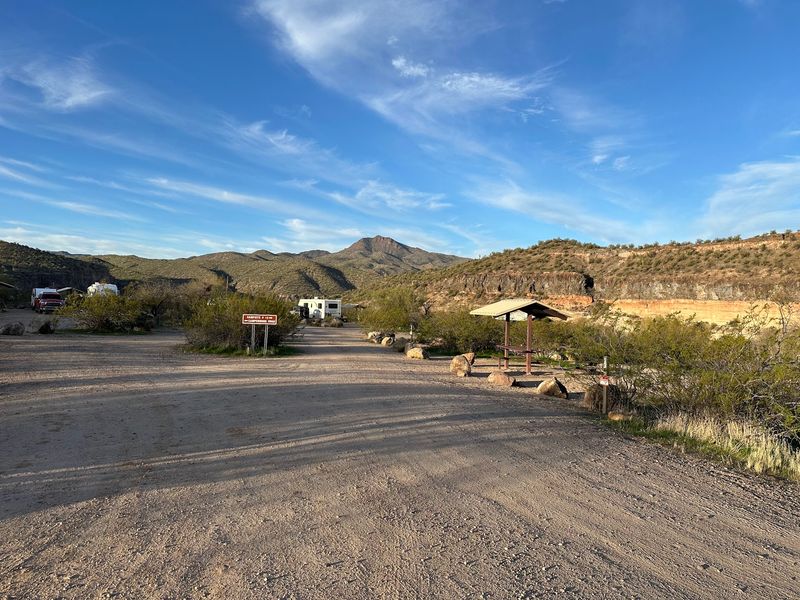
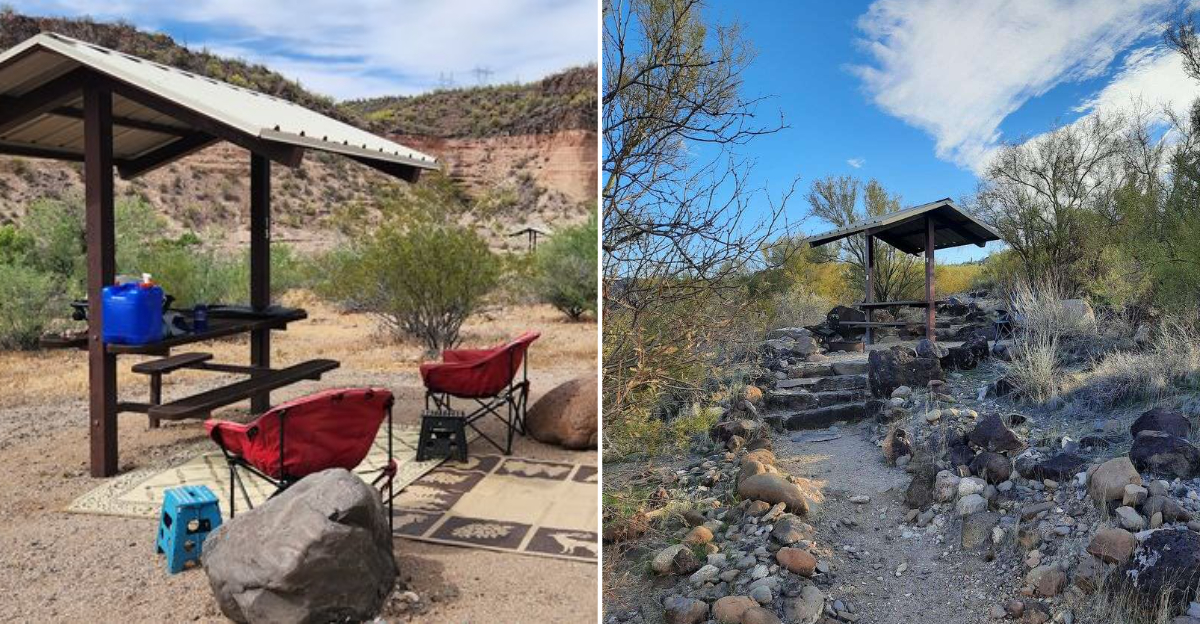
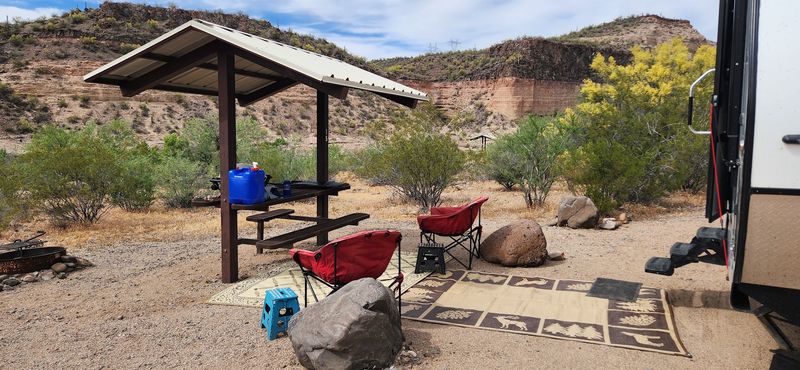
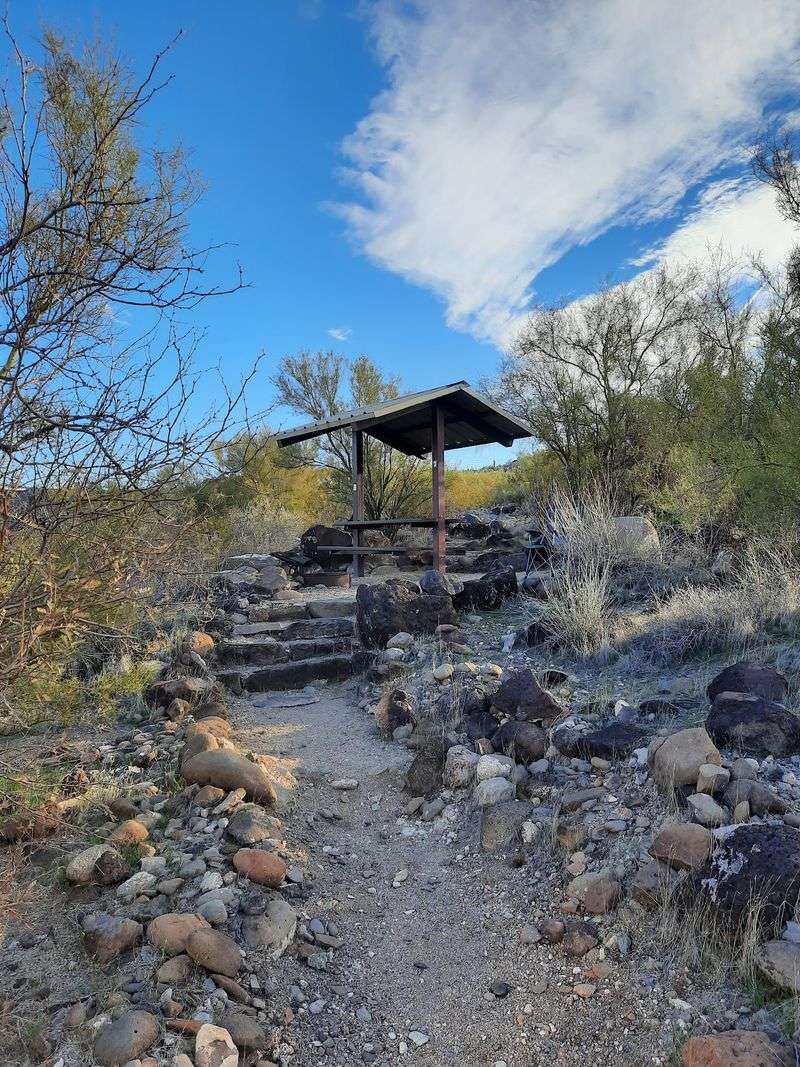
Shade is currency in Arizona, and the Bureau of Land Management spends it well here. Most of the 23 individual sites come with a large sun-shelter ramada over the picnic table, plus a metal fire grill with a grate, a trash can, and a level parking spot.
There is also one group site and two day-use sites, so a family reunion or a quick lunch stop both fit the plan. Flush toilets are available at two locations in the campground, which felt luxurious after my last stretch of dispersed camping.
Drinking water is provided, but individual sites have no water or electrical hookups. One RV dump station sits on-site, and rigs up to 40 feet can be accommodated, though smaller vehicles slide into certain sites much more comfortably.
Campfires are generally allowed within the provided grills. I still packed a small camp stove, because desert wind has opinions about breakfast timing.
The ramadas make a noticeable difference once the afternoon sun settles over the campground. Even without hookups, the basic facilities cover most of what campers need for a comfortable stay.
Birding Hotspots And Canyon Wildlife
Binoculars earn their place in your bag here. Raptors ride the thermals above the canyon, and the mix of water, trees, and open desert pulls in a surprising variety of birds for such a compact area.
Regulars will tell you that sites 7, 8, and 9 are the prime seats for bird watching, and after one sunrise I understood why. The creek corridor acts like a highway for wings, and the show starts early.
Four-legged residents make appearances too. Javelina, raccoons, coyotes, foxes, deer, and antelope have all been spotted in the area, and mountain lions live here as well, though they keep their distance from noisy campers.
A Watchable Wildlife Exhibit and an Interpretive Desert Garden sit within the recreation site, and the garden labels a large variety of native cacti. I learned more plant names in twenty minutes there than in years of hiking, which felt like a fair trade for a slow morning stroll.
Wildflower Season And The Best Months To Show Up
Timing changes everything at this canyon. Cooler temperatures settle in from October through April, and that stretch is when the campground feels most inviting for hiking, wading, and lingering outside past noon.
Summer, by contrast, turns quiet and quite warm, and most visitors sensibly head for higher elevations. If you do come in July, plan your activity for the early morning and treat midday as nap time under a ramada.
Spring is the headliner. Depending on how generous the winter and spring rains have been, wildflower displays can be excellent from March through May, spreading color across slopes that spend most of the year in shades of brown and green.
Photographers should pack a wide lens and get out before eight, when low light rakes across the blooms and the canyon walls glow. I filled a memory card in one morning and still wanted another hour, which tells you something about how the light behaves down there.
Fall evenings can be especially comfortable once the daytime heat fades. Winter brings crisp mornings that make longer hikes easier to enjoy.
After a wet season, even familiar trails can look completely different under fresh blooms. For the best balance of mild weather and color, spring is hard to beat.
Trails, Rockhounding, And Side Canyon Wandering
Boots on, phone away. Hiking and backpacking along Burro Creek and into the side canyons of the surrounding wilderness are the main events for anyone who likes earning their views.
Routes here are informal rather than heavily signed, so following the creek is the simplest plan and the prettiest one. Every bend seems to hide another pool, another shaded pocket, another cluster of boulders worth scrambling over.
Rockhounding draws its own crowd, and I met a couple who had been collecting in the area for years and still got excited over a single colorful stone. Check current BLM rules on what you may collect and how much before you fill your pockets.
Anglers cast in the clear water, hunting is possible in the surrounding area during fall, and off-highway vehicle riders find dispersed opportunities nearby. Carry more water than seems reasonable, wear a hat, and tell someone your route before you disappear up a side canyon for the afternoon.
Good footwear matters once the ground turns rocky and uneven. The farther you wander, the easier it is to see why people return to explore another stretch.
Reservations, Accessibility, And Smart Planning Tips
Half the fun of this canyon is that it never feels crowded, and a little planning keeps it that way for you. Reservations go through Recreation.gov and must be made at least seven days ahead, with online booking for reservable sites opening 14 days before arrival.
Spontaneous travelers still have options. Sites 1 through 6, site 8, and sites 18 through 23 run on a first-come, first-served basis, so arriving early on a Friday improves your odds considerably.
Accessibility gets real attention here. Campsite 12 is designated accessible with a concrete parking pad, a picnic ramada, and a table built for wheelchair users, while other sites offer accessible tables and flat, packed gravel that works for visitors with limited mobility.
Pack layers, because desert nights cool off fast once the sun clears the canyon rim. Bring your own firewood, haul out what you carry in, and leave the place looking like nobody ever found it.
The quieter setting makes mornings especially peaceful before day-trippers begin arriving. Cell service can be unreliable, so save directions and reservation details before leaving the highway.
A little preparation goes a long way when the nearest conveniences are not right around the corner.