
The Short And Scenic Waterfall Hike In Arizona You’ll Want To Take Again And Again
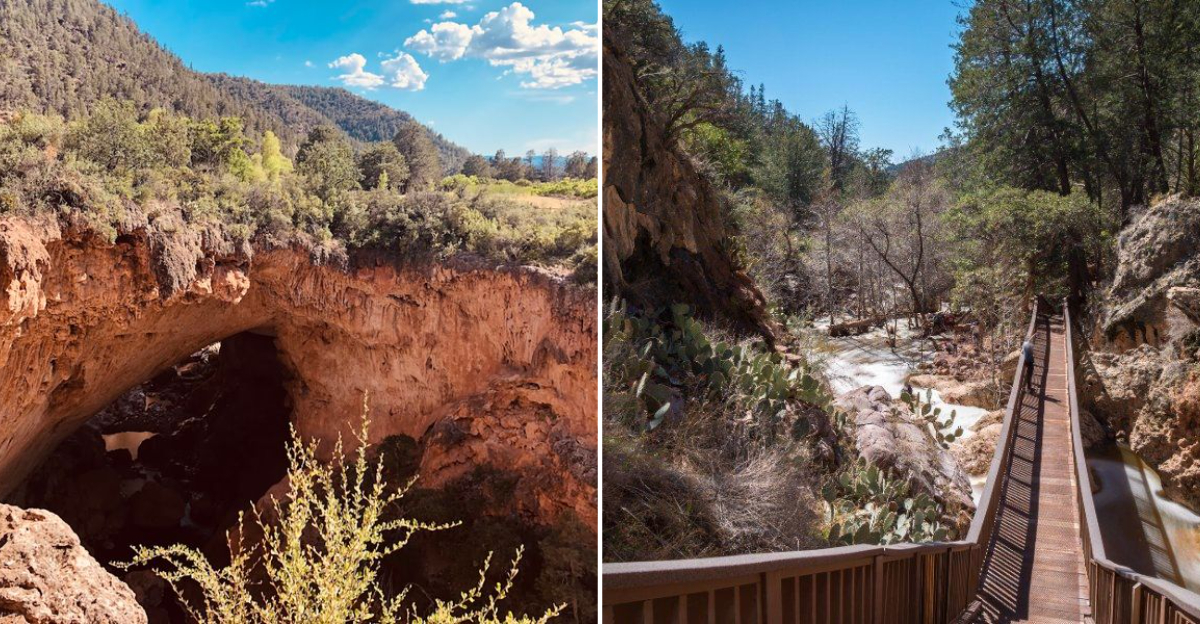
Everyone knows Arizona for its deserts, its canyons, its scorching summers that make you question every life choice that led you there. What nobody tells you is that the state harbors a secret side-a lush, green, surprisingly cool side that feels like stumbling into an entirely different world.
This loop trail is the perfect introduction to Arizona’s unexpected personality. Four distinct stops, each offering something unique, strung together like pearls on a necklace of well-maintained trail.
The creek babbles companionably beside you, occasionally breaking into full song at each waterfall along the way. Anna Mae and Gowan compete for your attention while the final cascade saves its dramatic entrance for last.
By the time you complete the loop, you’ll have conquered less than four miles while collecting memories that last a lifetime.
This is Arizona at its most delightful-inventive, surprising, and utterly unforgettable. At just under two miles, it is short enough for a casual afternoon but packed with enough jaw-dropping scenery to keep you talking about it for weeks.
Tonto Natural Bridge State Park
Most people picture Arizona as a land of red dust and saguaro cacti, so arriving at Tonto Natural Bridge State Park feels like stepping into a completely different world.
Near the towns of Payson and Pine, roughly two hours north of Phoenix, this compact park punches way above its weight class in the scenery department.
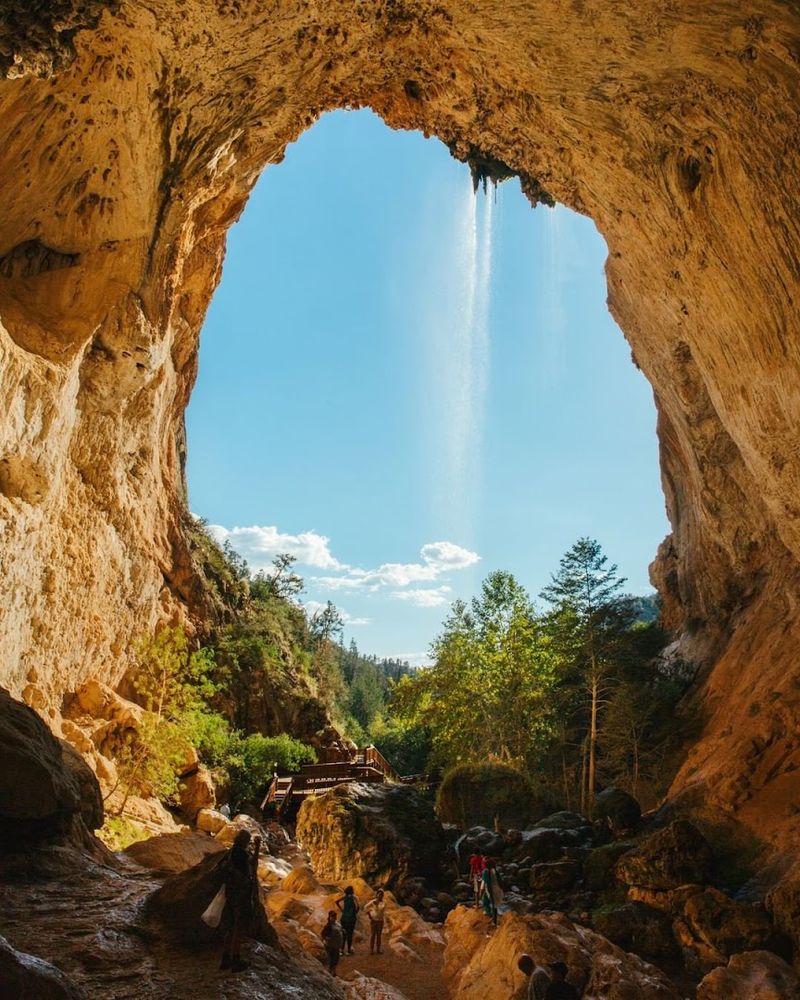
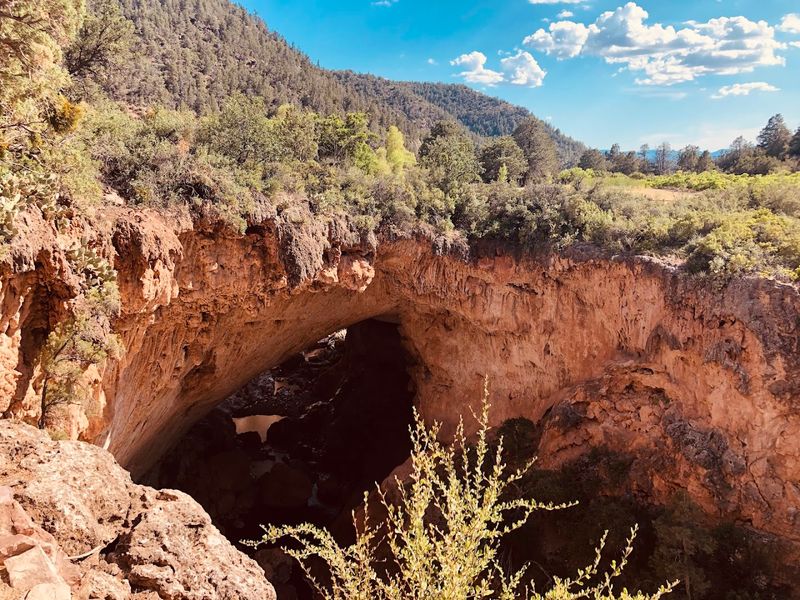
The star attraction is the Tonto Natural Bridge itself, recognized as the largest natural travertine bridge on the planet. It stands 183 feet high, spans more than 150 feet wide, and stretches nearly 400 feet in tunnel length.
That is not a typo. The scale of this thing has to be seen to be believed.
Beyond the bridge, the park offers lush canyon vegetation, a cool creek, multiple hiking trails, and observation decks that give you sweeping views without requiring serious effort.
Entrance fees are reasonable at $7 for adults and $4 for children, making it an affordable family outing that absolutely delivers on its promise.
What To Expect Before You Hit The Trail
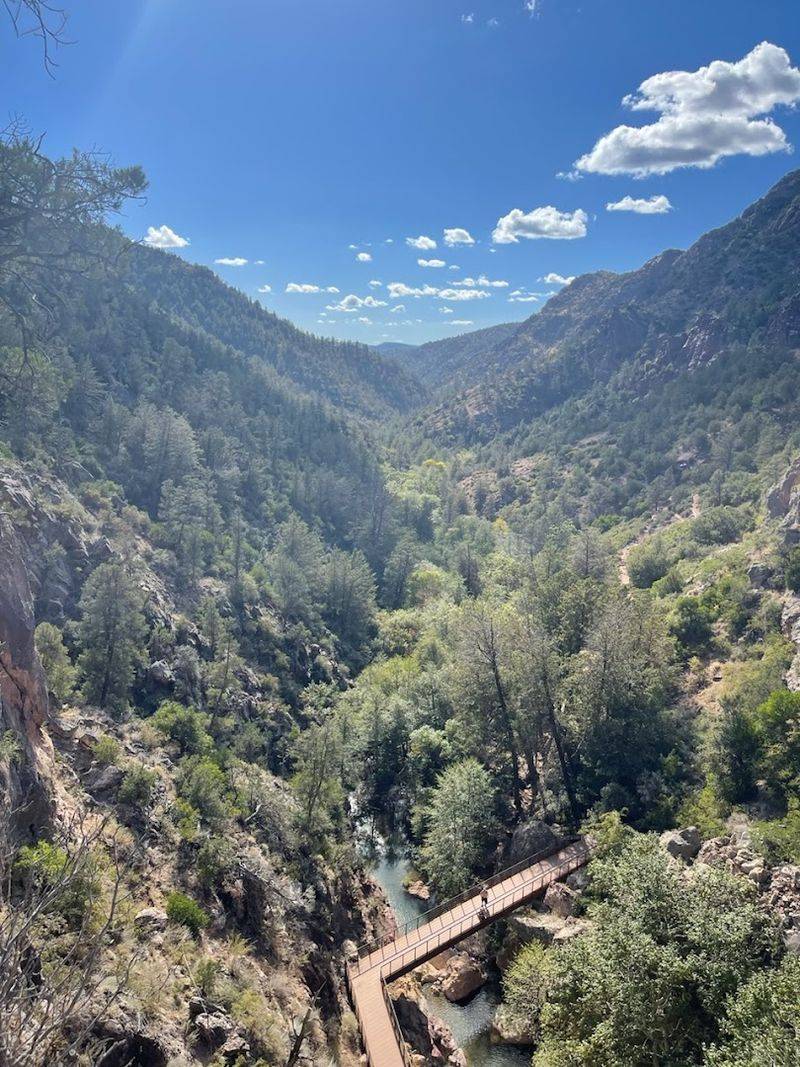
Before lacing up your boots, it helps to know exactly what you are getting into with this loop. The combined Pine Creek, Anna Mae, Gowan, and Waterfall Loop covers approximately 1.8 miles with an elevation change of around 293 feet.
Most hikers finish it in somewhere between 51 minutes and three hours, depending on how many times they stop to gawk at things. Park rangers officially classify all trails in the park as steep and strenuous, but do not let that scare you off.
Families with energetic kids tackle this loop regularly, and the rewards far outweigh the effort. The key is taking your time, watching your footing, and wearing proper footwear.
The park opens at 9:00 a.m. daily, with the last entry at 4:00 p.m. and trails closing at 4:00 p.m. as well. Planning to arrive early gives you cooler temperatures, better lighting for photos, and a quieter experience on the trail before the midday crowd arrives.
Starting On The Gowan Trail: A Dramatic Descent
Many seasoned visitors recommend beginning the loop on the Gowan Trail, and after taking it myself, I completely agree. This roughly 0.4-mile trail drops steeply through a series of dramatic rock formations that look like something a film crew arranged for a movie set.
Spoiler: they are completely natural. The descent is rough and requires some careful footwork, but the payoff is an observation deck perched right at the creek bottom.
From there, you get one of the most dramatic close-up views of the natural bridge available anywhere in the park. The scale hits differently when you are standing at water level looking straight up at 183 feet of ancient travertine.
Pine, oak, and juniper trees crowd the canyon walls, giving the whole route a surprisingly lush feel for a desert state park.
The air is noticeably cooler as you descend, and the sound of Pine Creek gets louder with every step, building anticipation in a way that makes the steep sections feel completely worth it.
Walking The Pine Creek Trail
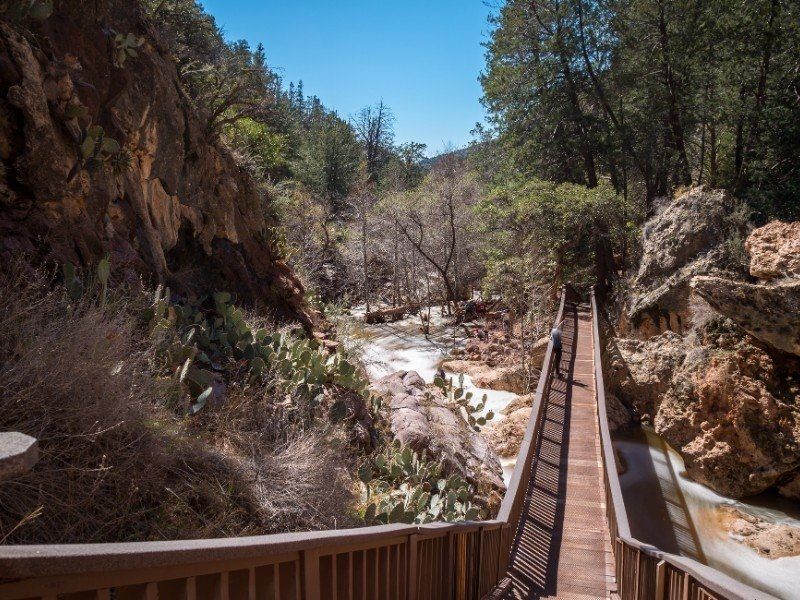
Once you reach the canyon bottom, the Pine Creek Trail takes over and delivers what might be the most magical stretch of the entire loop.
Running approximately 0.5 miles along the creek, this section puts you right at water level, where the creek gurgles over smooth travertine and the canyon walls rise dramatically on both sides.
Pine Creek is the force that carved this entire landscape over thousands of years, and walking alongside it gives you a real sense of that slow, patient power. The water is clear and cold, and on a warm Arizona afternoon, the temptation to dip your feet in is very real.
Just watch the footing, because the rocks can be slick. This section also connects directly to the underside of the natural bridge, which is honestly the highlight of the whole hike.
You walk right through the tunnel, feeling cold water droplets falling from the ceiling above while scrambling over boulders worn smooth by centuries of flowing water. It is genuinely unforgettable.
A Short But Steep Challenge With Big Rewards
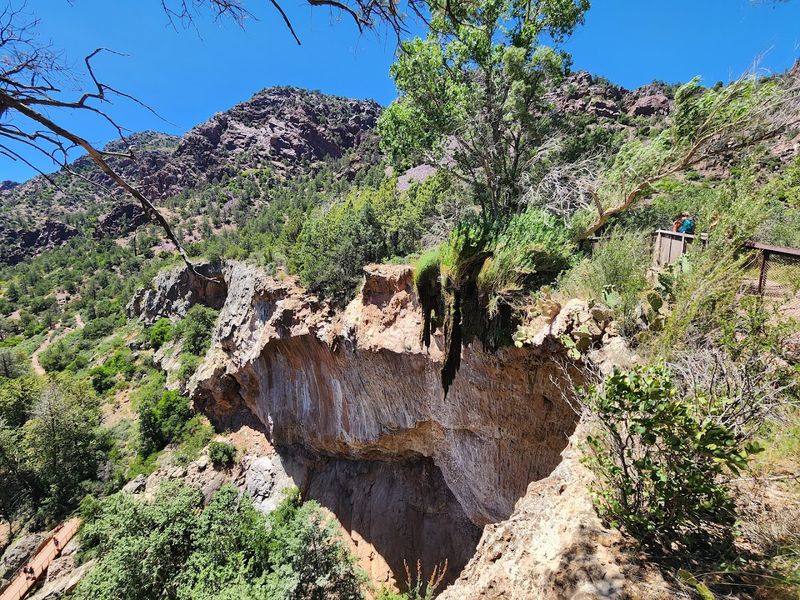
At just 0.25 miles long, the Anna Mae Trail sounds easy on paper. In reality, it is probably the most challenging section of the loop, earning its reputation as a steep dirt path that demands both focus and decent footwear.
Trekking poles would not go to waste here. The trail connects the Pine Creek Trail to the upper areas of the park, and while the climb is real, the sense of accomplishment when you reach the top is equally real.
Looking back down the canyon from the higher elevation puts the whole landscape into perspective in a way that the creek-level views simply cannot match. Named after Anna Mae Binkley, who was connected to the history of this land, the trail carries a quiet sense of story with every step.
The vegetation shifts slightly as you climb, with the dense creek-side greenery giving way to the drier, sunnier character of the upper canyon. Short it may be, but the Anna Mae Trail leaves a lasting impression on anyone who tackles it.
The Waterfall Trail: Saving The Best Surprise For Last
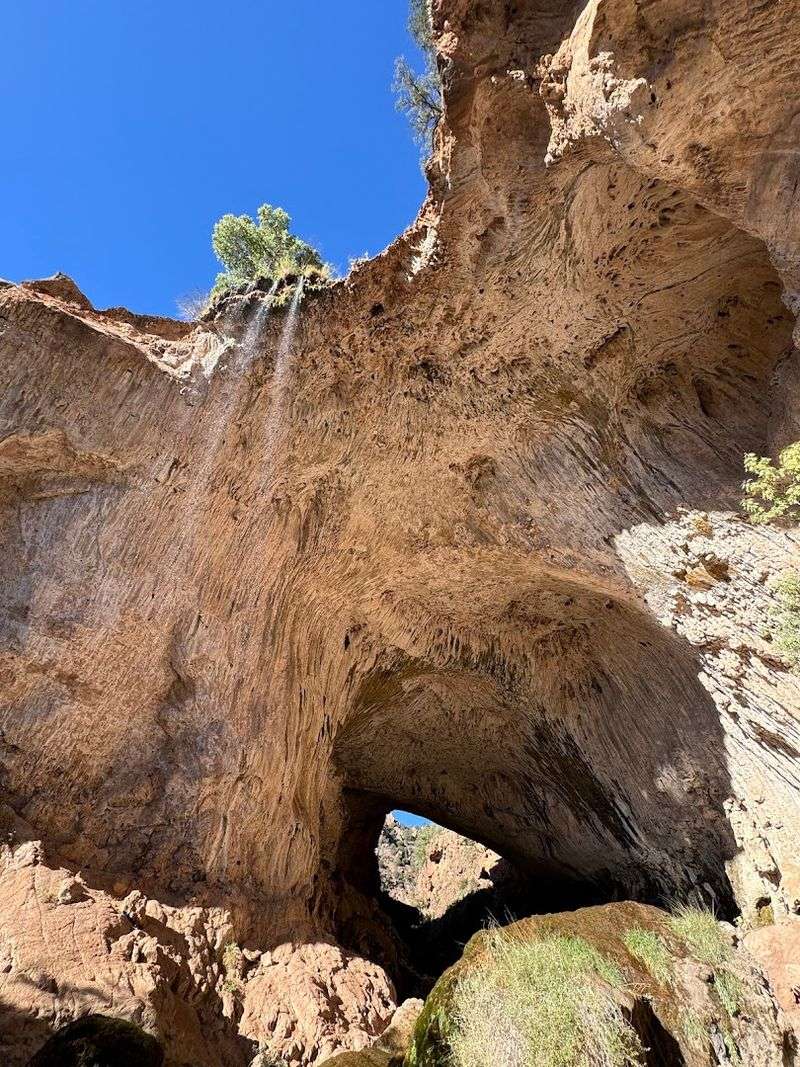
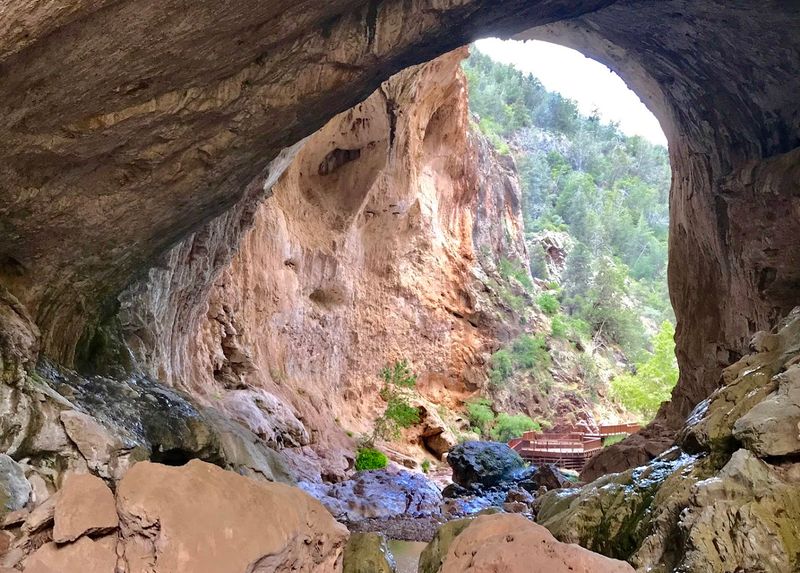
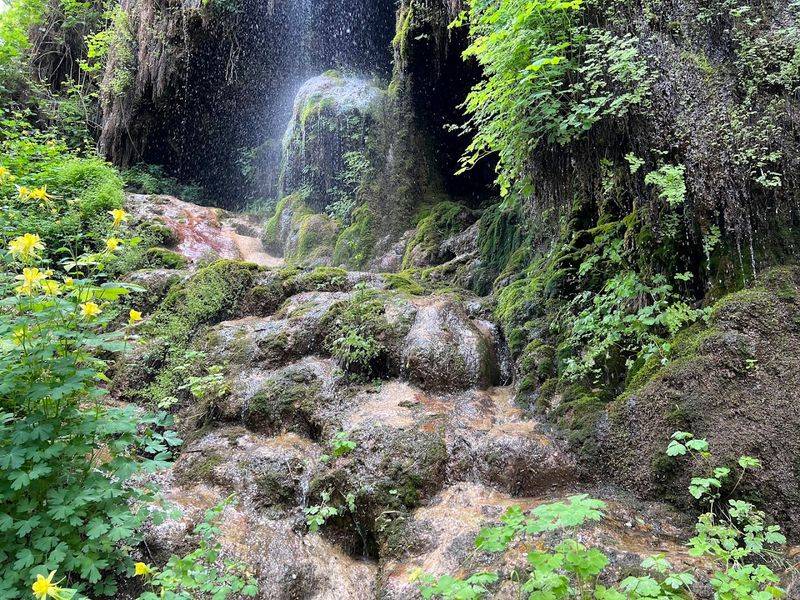
If the natural bridge is the headline act of this park, the Waterfall Trail is the encore that nobody expected. This short spur, only about 300 feet long, branches off from the main loop and ends at a waterfall cave tucked into the canyon wall.
The moment you round the last corner and see it, you will understand why people come back to this park year after year. The trail involves uneven stone steps and can get slippery, especially if recent rain has come through.
Overgrown vegetation sometimes crowds the path, giving it a wonderfully wild, off-the-beaten-path feeling even though it sits within a managed state park. Take your time and watch each step carefully.
Inside the cave, the waterfall tumbles down over moss-covered travertine in a scene that feels almost impossibly beautiful for a 300-foot detour.
The cool air inside the cave provides welcome relief on a warm day, and the sound of the falling water echoes in a way that makes you want to stand there for much longer than is probably practical.
Under The Bridge
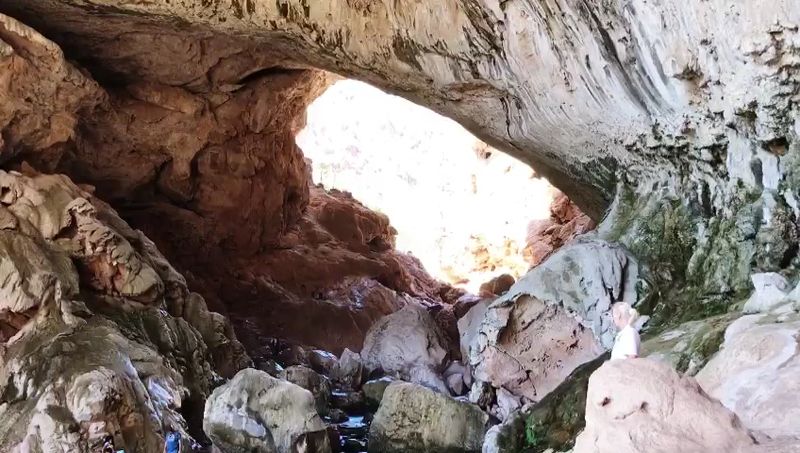
Walking through the tunnel beneath the Tonto Natural Bridge is one of those travel moments that genuinely stops you in your tracks.
The tunnel stretches nearly 400 feet, and as you move through it, cold water drips from the travertine ceiling while the creek rushes alongside your boots and the canyon walls close in around you.
The scale is almost hard to process. You are standing inside a natural structure 183 feet tall and 150 feet wide, formed entirely by mineral-rich groundwater depositing travertine over thousands of years.
Every surface has texture, color, and a kind of ancient permanence that makes modern life feel very small and very recent.
Scrambling over the boulders inside the tunnel requires some agility, and the rocks are often wet and slick. Solid closed-toe shoes are not just recommended here, they are genuinely necessary.
But every awkward step and careful balance is completely worth it for the experience of standing at the heart of one of the most remarkable geological formations in the entire American Southwest.
The Living Canyon Around You
One of the most pleasant surprises about this hike is just how alive the canyon feels. While Arizona is famous for its desert landscapes, the canyon carved by Pine Creek supports a surprisingly rich mix of plant life, with ponderosa pine, Arizona oak, alligator juniper, and various ferns and mosses thriving in the cool, moist microclimate near the water.
Keep your eyes open for wildlife as well. Mule deer occasionally wander the canyon edges, and a variety of birds use the tree canopy as both shelter and hunting ground.
If you move quietly and stay patient, the canyon rewards careful observers with glimpses of creatures going about their business completely undisturbed.
The contrast between the lush canyon bottom and the drier terrain at the top of the trails is striking, almost like visiting two different ecosystems within the same short hike.
That ecological variety is part of what makes the loop feel so rich and layered, even at just 1.8 miles. Nature packed a lot into a small space here.
Timing Your Trip For The Perfect Experience
Timing your visit to Tonto Natural Bridge State Park can make a significant difference in your overall experience. Spring and fall are widely considered the ideal seasons, offering mild temperatures, lower crowds, and gorgeous natural lighting that makes every photo look effortlessly stunning.
Summer works too, especially because the canyon stays noticeably cooler than the surrounding desert. Summer monsoon season, which typically runs from July through September, can make the trails wetter and more slippery than usual.
The waterfall and creek levels also tend to be higher after rain, which adds drama but also requires extra caution on the rocks. Always check current trail conditions before heading out.
Winter visits are possible and often beautifully quiet, but some sections of the trail can become icy, so footwear with good grip becomes even more critical.
Arriving right when the park opens at 9:00 a.m. is a solid strategy any time of year, giving you the best chance of enjoying the trails before the afternoon rush arrives in full force.
Gear Up Right: What To Bring On The Loop

Packing smart for this hike makes the whole experience more comfortable and safe. The single most important item on your gear list is a pair of sturdy closed-toe shoes or proper hiking boots.
Flip flops and sneakers are a bad idea on terrain that is steep, rocky, and frequently wet. Your ankles will thank you for making the right call here.
Bring more water than you think you need, especially during warmer months. The canyon can feel cool near the creek, but the climb back up on the Anna Mae or Gowan Trail will remind you quickly that you are still in Arizona.
A small daypack with snacks, sunscreen, and a light jacket for the cool tunnel sections covers most of your bases.
A waterproof phone case or a small dry bag for your camera gear is worth considering since you will be scrambling over wet boulders under the bridge. Trekking poles are optional but genuinely helpful on the steeper sections, particularly for hikers who prefer extra stability on uneven ground.
Observation Decks And Views
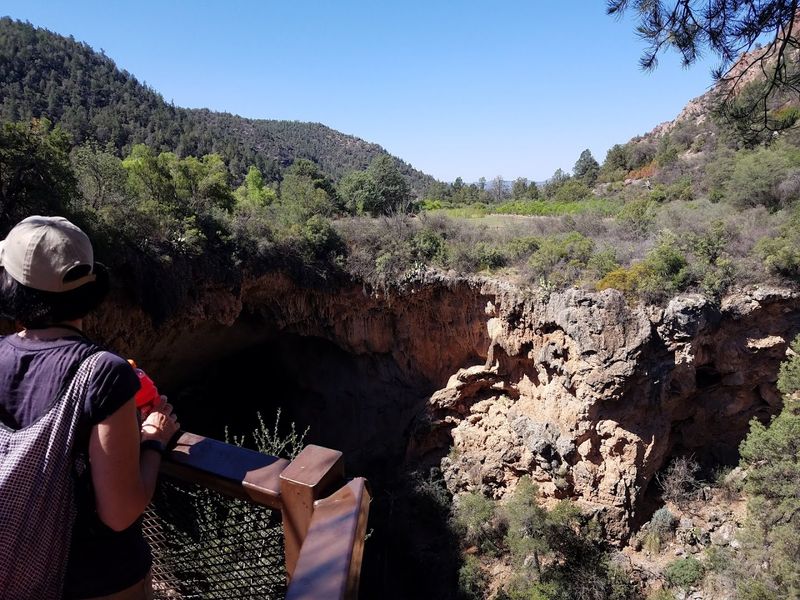
Not every visitor to Tonto Natural Bridge State Park needs to tackle the full loop, and the park thoughtfully provides observation decks that deliver spectacular canyon views without requiring a steep descent.
These paved viewing areas are accessible to most visitors and offer a birds-eye perspective of the natural bridge that is genuinely breathtaking from above.
Standing on the main observation deck and looking down into the canyon gives you a completely different appreciation for the scale of the bridge compared to the creek-level view.
From up top, you can see the entire arch framed by the canyon walls, with the green ribbon of pine and juniper running through the bottom like a living painting.
Dogs are welcome on the paved paths and viewpoints, making these areas a great option for visitors who brought their four-legged companions along.
The visitor center and gift shop are also located near these upper areas, so you can grab a memento and learn more about the park’s geology and history before or after hitting the trails.
Practical Tips

A few practical details can turn a good visit into a great one. Arrive early, especially on weekends and holidays, because the small parking area fills up faster than you might expect.
The park charges $7 for adults and $4 for children at the gate, cash or card both work, and the fee is genuinely worth every cent for what the park delivers.
Leave extra time to explore beyond just the loop itself. The visitor center has interesting exhibits on the geology of the natural bridge, and the gift shop stocks some genuinely nice locally made souvenirs.
If you want to linger near the creek after the hike, bring a picnic and enjoy the canyon atmosphere at a slower pace.
The Pine Creek, Anna Mae, Gowan, and Waterfall Loop is one of those rare hikes that manages to feel both accessible and extraordinary at the same time.