
The Tiny Georgia Lake Town Where Life Still Moves At A Sunday Pace
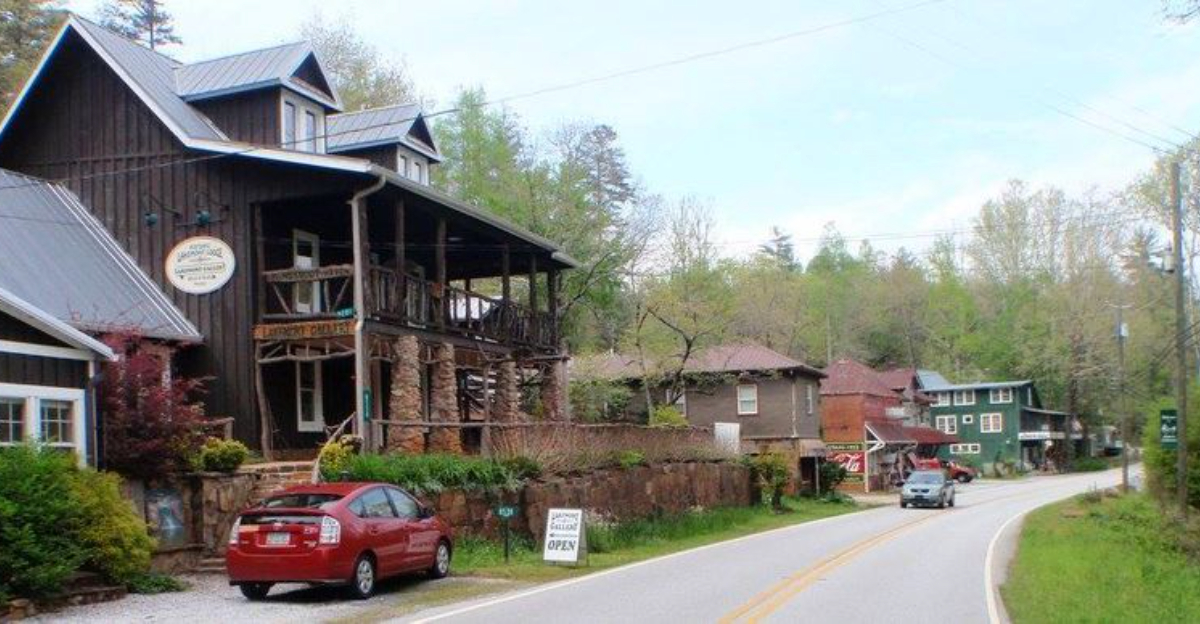
I visited Lakemont on a Sunday morning last fall, lost on purpose between mountain roads and lake mist. This North Georgia village sits so quietly along Lake Rabun that you might mistake it for a postcard someone forgot to mail.
People here still wave from porches, boats glide without hurry, and the loudest sound is usually a woodpecker working overtime. If your calendar runs your life, Lakemont might feel like a glitch in the system.
But if you’re ready to trade hustle for hammocks and deadlines for driftwood, this pocket-sized town will teach you what Sundays were always meant to feel like.
Meet Lakemont, A Pocket Village On Lake Rabun
Tucked between Tallulah Falls and Clayton, Lakemont feels less like a destination and more like a secret someone whispered into the trees.
This North Georgia mountain community clings to the edge of Lake Rabun, a narrow stretch of blue framed by ridges and old-growth shade.
Galleries dot the quiet roads, a few weathered buildings lean into their stories, and a hush settles over the water like fog at dawn.
I parked near the shoreline on my first visit and immediately noticed the tempo shift. No one rushed. No one honked.
The whole place operates on lake time, which is somewhere between slow motion and stopped altogether.
A 1922 Lodge That Teaches You To Slow Down
Across from the water sits the Historic Lake Rabun Hotel, a 1922 lodge that refuses to modernize its soul.
Pine beams creak underfoot, rocking chairs line the porch, and the whole place smells faintly of firewood and Sunday dinner. Travelers who check in here aren’t looking for room service or flat screens.
They come for long dinners, early morning birdsong, and the kind of quiet that makes you forget what day it is. I spent an entire afternoon on that porch doing absolutely nothing, and it felt like a personal record.
This lodge doesn’t just offer a bed. It offers permission to stop moving.
Morning Strolls In Historic Lakemont Village
Wander the tiny historic strip and you’ll find art, antiques, and the kind of coffee that tastes better when you’re not in a hurry.
Places like Lakemont Gallery and a handful of studios make the village feel like a time capsule with fresh paint and voices that remember your name. Each storefront tells a different story, and none of them involve chains or franchises.
I picked up a hand-thrown mug on my last visit and still use it every morning. The woman who sold it to me asked where I was from, then told me about her canoe.
That’s the pace here. Conversations meander like the lake itself.
Where The Day Plan Is Simply “Lake”
Lake Rabun belongs to a connected string of Georgia Power’s North Georgia hydro lakes, a narrow, forested reservoir with long, quiet coves that seem to multiply the farther you paddle.
Anglers and paddlers slide out at first light, then let the sun decide when to head back. No one checks their watch.
I rented a kayak one morning and spent three hours drifting between reflections and lily pads. A heron watched me from a fallen log, unimpressed by my lack of direction.
The lake doesn’t demand anything from you. It just waits, patient and still, until you figure out what you need from it.
Beach, Camp, Repeat
At Lake Rabun Beach Recreation Area, trails and swims blend into campfire nights without much fanfare.
The site sits above the shoreline, with boating, fishing, and seasonal campground operations that keep things peaceful when the leaves start to turn.
Families spread out on towels, kids wade into the shallows, and the whole scene feels like a postcard from 1978.
I camped here one September weekend and woke to mist rolling off the water like a slow-motion avalanche.
By noon, the sun had burned it off, and the lake turned glass-flat. That rhythm, soft and unhurried, is the real attraction here.
A Short Walk To A Tall Waterfall
Just up the road, an easy path leads to Minnehaha Falls, a wide, wedding-cake cascade tucked in dense green that drips and tumbles like it’s got all day. No special gear required, no permits, no crowds fighting for selfie angles. You park, you walk, you stare.
I visited on a Tuesday morning and had the whole place to myself. The sound of the water drowns out everything else, which is exactly what I needed after a week of emails and obligations.
This waterfall turns a lazy day into a small adventure, and it asks for nothing in return except a little attention.
Life Revolves Around The Boathouse
Need gas, a part, or just to chat about the water level. You’ll find it at Hall’s Boathouse, the lake’s longtime marina and unofficial town square. Locals swap weather notes while skiffs nudge the dock, and afternoons drift by without much urgency.
I stopped in to ask about canoe rentals and ended up hearing a twenty-minute story about a largemouth bass that got away. Twice. The guy behind the counter knew everyone who walked through the door, and everyone seemed to know him.
This boathouse isn’t just a business. It’s the heartbeat of Lakemont, steady and unhurried.
The Story In The Shoreline
This lake exists because early hydropower shaped the Tallulah River, linking Rabun with sister lakes and sending energy downstream.
Engineers carved out blue corridors in the 1910s and 1920s, and the result today is a string of reservoirs where weekends feel unhurried by design. The landscape looks natural now, but it was built with intention and sweat.
I learned this history from a plaque near the dam, then spent an hour imagining what the valley looked like before the water rose.
The shoreline tells a story of transformation, but the lake itself feels timeless, as if it’s always been here waiting.