
The Vermont Covered Bridge That’s A Fall Tradition For Generations
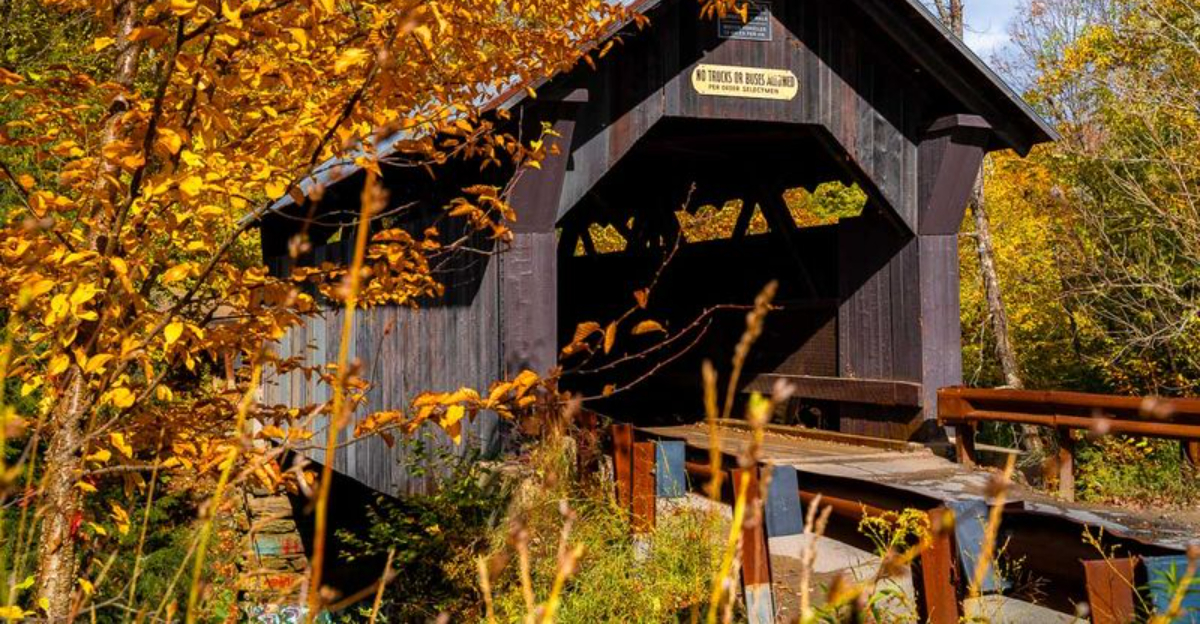
Gold Brook Covered Bridge is one of Vermont’s most cherished fall destinations. Tucked away in Stowe, this quiet wooden bridge has drawn families and visitors for generations, especially when the leaves turn.
Its weathered boards and classic design feel like a step back in time, offering a glimpse into New England’s past. Locals know it not just as a way across the brook, but as a place to pause, take in the colors, and enjoy the season’s stillness.
Whether you’re passing through or making it a yearly stop, the bridge stands as a simple, lasting symbol of Vermont in autumn.
Built By Master Craftsman In 1844
John W. Smith constructed this remarkable bridge using techniques that were cutting-edge for the 1840s. His single-span wooden Howe truss design carries Covered Bridge Road gracefully over Gold Brook.
Smith’s craftsmanship has withstood nearly 180 years of Vermont weather, from harsh winters to spring floods. The bridge represents exceptional 19th-century engineering that modern builders still admire.
Local historians consider Smith’s work a masterpiece of practical construction that perfectly balances form with function.
Only Public Road Timber Howe Truss In Vermont
This bridge holds a unique distinction among Vermont’s covered bridges. While other 19th-century bridges exist throughout the state, none combine the timber Howe truss design with active public roadway use.
Most covered bridges were either rebuilt with different materials or converted to pedestrian-only access. Gold Brook Bridge continues serving vehicles daily while maintaining its original wooden truss system.
Engineers study this bridge as a living example of how traditional construction methods can endure modern transportation demands.
Perfect Proportions For Photography
Measuring 48.5 feet long and 17 feet wide, with a 13.5-foot roadway, this bridge offers ideal dimensions for capturing stunning photographs. The compact size creates intimate framing opportunities that larger bridges cannot provide.
Professional photographers appreciate how the bridge’s proportions complement the surrounding landscape without overwhelming it. The dimensions allow visitors to capture both detail shots and sweeping scenic views.
These classic proportions follow traditional New England bridge-building standards that prioritized harmony with natural surroundings.
National Register Recognition Since 1974
October 1, 1974 marked an important milestone when Gold Brook Bridge earned National Register of Historic Places status. Reference number 74000224 officially recognizes the bridge’s historical significance to American heritage.
This designation protects the bridge from inappropriate modifications while ensuring proper maintenance standards. The recognition also attracts history enthusiasts and preservationists from across the country.
Being listed among America’s most important historical sites elevates this small Vermont bridge to national prominence and cultural importance.
Early Example Of Revolutionary Bridge Design
William Howe’s 1840 patent revolutionized bridge construction, and Gold Brook Bridge showcases this innovation just four years later. The Howe truss became the standard for 19th-century bridge builders across America.
I remember my engineering professor explaining how this design combined wood compression members with iron tension rods. The system was brilliant in its simplicity and incredibly effective for spanning waterways.
This bridge demonstrates how quickly new technologies spread through rural communities, bringing modern engineering to remote Vermont valleys.
Route 100 Photography Hotspot
Scenic Route 100 brings thousands of leaf-peepers past this photogenic bridge every autumn. Tour buses regularly stop here, making it one of Stowe’s most frequently photographed landmarks.
Social media has amplified the bridge’s popularity, with Instagram posts featuring the structure reaching viral status during peak foliage season. Visitors often spend hours waiting for the perfect lighting conditions.
Local businesses have embraced this tourism boom, with nearby shops selling postcards and prints featuring the bridge’s autumn splendor.
Part Of Stowe’s Covered Bridge Trio
Tourism officials promote Gold Brook Bridge alongside Brookdale and Red Covered Bridge as Stowe’s historic bridge collection. This trio creates a compelling driving tour that showcases different architectural styles and historical periods.
Each bridge offers unique photographic opportunities and historical insights. Visitors often spend entire afternoons bridge-hopping, collecting memories and photographs from all three locations.
Local maps and brochures feature special routes connecting these bridges, making them essential stops for anyone exploring Stowe’s historical attractions.
Emily’s Bridge Ghost Story Fame
Local folklore has dubbed this structure Emily’s Bridge, complete with spine-tingling ghost stories that captivate autumn visitors. Ghost walk tours regularly feature the bridge as a highlight of their spooky seasonal programming.
Regional media outlets publish Emily’s Bridge stories every October, adding supernatural intrigue to the historical significance. These tales blend local legends with the bridge’s atmospheric nighttime appearance.
Whether you believe in ghosts or not, the stories add an extra layer of mystique that makes visiting this bridge even more memorable.