
The Washington Coastal Byway Locals Drive For Lighthouse Views And Empty Autumn Beaches
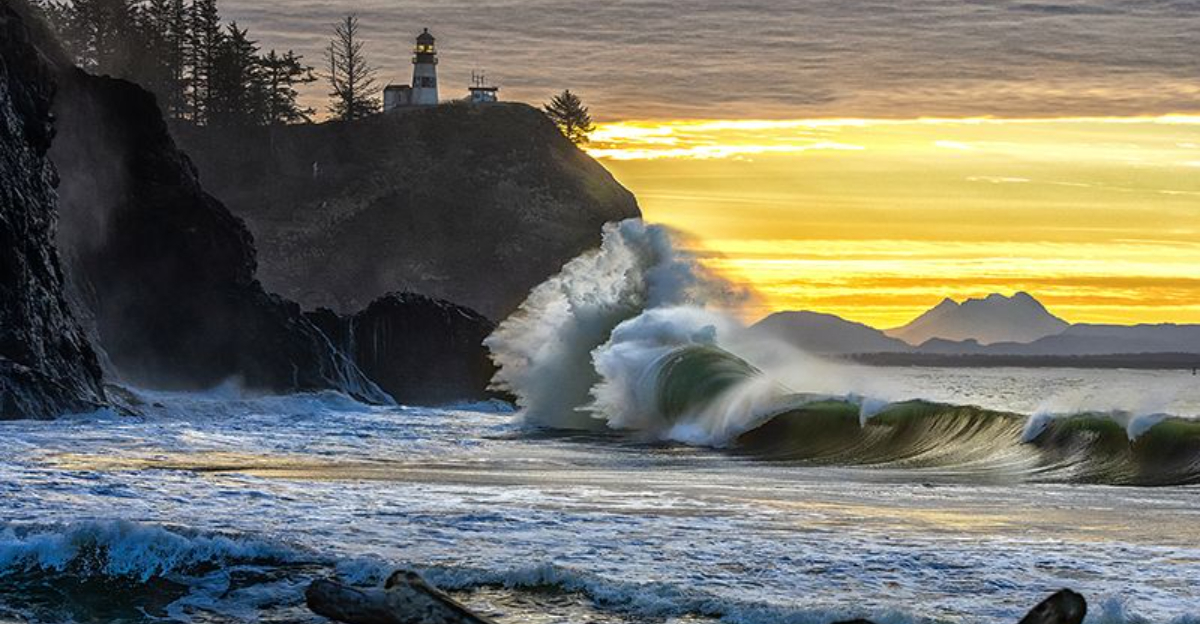
Cape Disappointment State Park sits right where the Columbia River meets the Pacific, and it’s one of those places that feels different once summer ends.
The crowds fade, the air sharpens, and you can actually hear the waves without all the noise. Washington’s coastline shows off here, with lighthouses standing guard and trails that make you feel like you’ve stumbled onto something special.
I’ve spent a few quiet afternoons walking those beaches, and every time, it reminds me why Washington’s coast is best when it slows down a little.
Where The River Meets The Ocean
Standing at the mouth of the Columbia River on the Long Beach Peninsula gives you a front-row seat to one of the West Coast’s most dramatic meeting points. Ocean swells crash into the river’s outflow, creating white-capped chaos that photographers dream about.
The headlands wrap around both sides, offering sweeping viewpoints that shift with the light and tide. You can watch cargo ships navigate the tricky bar while seabirds wheel overhead.
Pack a camera and comfortable shoes because these panoramas deserve more than a quick glance from the car. Every angle reveals something new, whether it’s a distant sailboat or fog rolling in like a living thing.
Two Historic Lighthouses Worth The Climb
North Head Lighthouse opens for climbs from May through September, and the small fee is worth every penny for the view at the top. Built in 1898, this beacon guided ships around the treacherous headland when Cape Disappointment’s light couldn’t reach far enough.
Cape Disappointment Lighthouse, first lit in 1856, holds the title of Washington’s oldest working lighthouse. Its weathered walls and sturdy construction tell stories of storms and shipwrecks that earned this coast its grim nickname.
Both beacons offer different perspectives on the same wild coastline, so budget time for exploring each one thoroughly.
Learning About The Graveyard Of The Pacific
The Lewis and Clark Interpretive Center perches high above the ocean, offering warm, glassed-in views that protect you from the wind while you soak in the scenery. Exhibits detail the treacherous waters below, known as the Graveyard of the Pacific for the hundreds of ships lost here.
Posted hours change seasonally, and modest admission gets you access to displays about the Corps of Discovery’s journey and the maritime history that shaped this coast. Interactive maps and artifacts bring the past to life in ways that kids and adults both appreciate.
I spent an entire rainy afternoon here once, watching storm waves hammer the rocks below while reading shipwreck accounts that made me grateful for modern navigation.
Storm Watching With Serious Precautions
Fall brings fewer crowds and the kind of dramatic surf that makes storm watching a local tradition. Waves build to impressive heights, and the sound alone is worth the trip.
Always check conditions before heading out, and keep a safe distance from the water because sneaker waves can appear without warning. These rogue swells have swept people off rocks and beaches, turning a beautiful day into a tragedy faster than you can react.
Watch from designated viewpoints and never turn your back on the ocean. The show is spectacular, but nature doesn’t care about your photo op.
Parking Passes And Small Fees Add Up
A Discover Pass is required for parking anywhere in the park, so grab one before you arrive to avoid the scramble at the entrance. These annual or day passes fund state park maintenance and are checked regularly.
Lighthouse climbs and the interpretive center charge separate small fees on top of your parking pass. Budget a few extra dollars per person if you plan to explore everything the park offers.
The fees are reasonable, but they do stack up if you’re traveling with a group or family, so plan accordingly and bring cash or a card.
Discovery Trail For Car-Free Exploring
Walking or biking a section of the paved Discovery Trail from Beard’s Hollow gives you dune and bluff views without burning gas or circling for parking. This multi-use trail stretches for miles, connecting beach access points and scenic overlooks.
Gentle grades make it accessible for most fitness levels, and you can turn around whenever you’ve had your fill. Wildflowers bloom along the edges in spring, and autumn light turns the grasses golden.
Rent bikes in nearby Long Beach if you didn’t bring your own, and pack water because the ocean breeze can be deceptive.
Camping Closed But Day Use Open
Renovations have closed all camping through late spring 2026, so don’t plan on pitching a tent or parking your camper overnight. The good news is that day-use areas remain open, including the interpretive center, North Head area, Beard’s Hollow, Waikiki Beach, and the North Jetty.
You can still explore trails, climb lighthouses, and watch the surf without an overnight stay. Nearby towns like Ilwaco and Long Beach offer lodging options if you want to extend your visit.
Always recheck park alerts before you go because schedules and closures can shift with construction progress and weather conditions.