
The West Virginia Mountain Overlook That Locals Call The State’s Hidden Gem
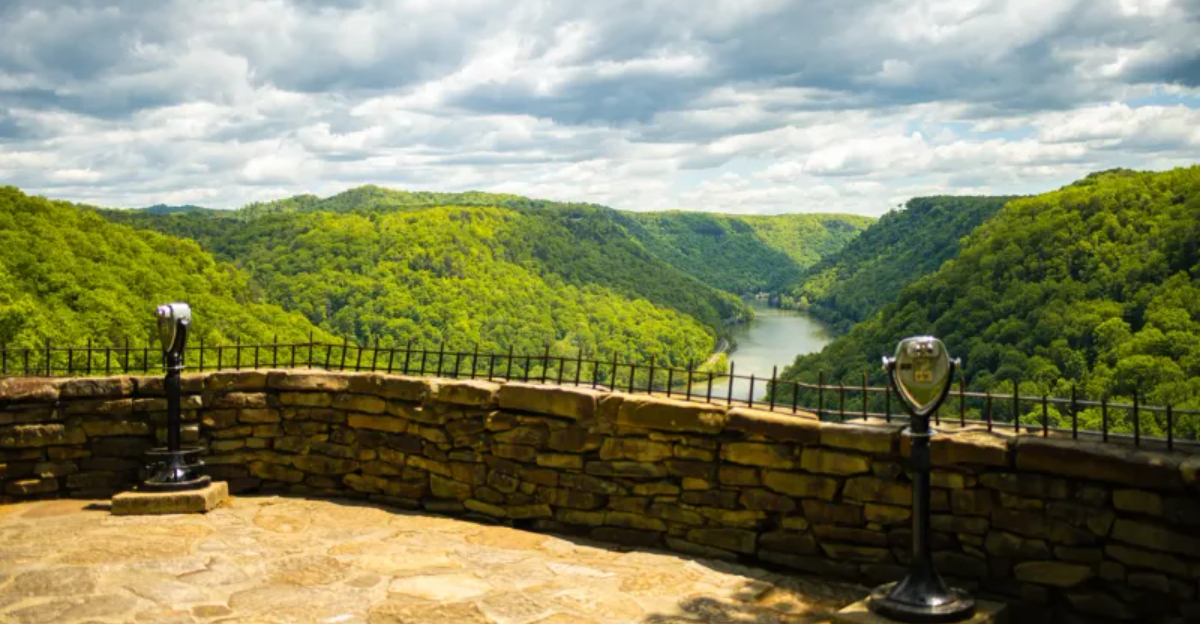
Tucked away in West Virginia’s rugged landscape, Hawk’s Nest Overlook offers breathtaking views that leave visitors speechless.
This spectacular mountain viewpoint towers high above the New River, providing panoramic scenes that rival some of America’s most famous natural wonders.
While tourists often rush past on nearby highways, locals know this spot holds special magic that makes it one of the state’s best-kept secrets.
Towering Heights Create Jaw-Dropping Views
Standing 585 feet above the winding New River below, this overlook delivers some of the most spectacular scenery in all of West Virginia. The sheer height makes you feel like you’re on top of the world.
From this lofty perch, visitors can see for miles across rolling mountains and dense forests. The river looks like a silver ribbon snaking through the valley floor.
Photography enthusiasts especially love how the elevation captures both intimate forest details and sweeping landscape shots in single frames.
Easy Highway Access Makes Stopping Simple
Unlike many mountain overlooks that require long hikes, Hawk’s Nest sits conveniently right off U.S. Route 60. Road trippers can pull over within minutes of spotting the signs.
The accessible location means families with young children or elderly members can easily enjoy the views. No special hiking gear or physical preparation is needed to reach this natural wonder.
Smart travelers often plan their Route 60 journeys around this stop, knowing they’ll get maximum scenic payoff with minimal effort required.
Historic Writers Praised These Mountain Views
Back in the 1830s, English writer Harriet Martineau visited this spot and declared the scenery nearly as moving as mighty Niagara Falls. That’s quite a comparison from someone who traveled extensively.
Her written accounts helped spread word about West Virginia’s natural beauty to readers across America and Europe. These early travel writings put the overlook on the map for adventurous tourists.
Modern visitors often feel the same sense of awe that inspired Martineau’s glowing descriptions nearly two centuries ago.
State Park Amenities Extend Your Visit
The overlook anchors Hawk’s Nest State Park, which offers much more than just scenic views. A comfortable lodge provides overnight accommodations for guests wanting to catch sunrise or sunset from the cliffs.
Families enjoy the nature museum, multiple picnic areas, and several hiking trails that wind through the surrounding forest. The park creates a full day of outdoor entertainment beyond the main attraction.
During my last visit, I watched kids explore the museum exhibits while parents planned which trails to tackle after lunch.
Aerial Tram Once Connected Cliff To River
For many years, an exciting aerial tram carried visitors from the lodge down to the New River below, adding serious adventure to any overlook trip. The tram ride provided a unique perspective of the towering cliffs.
Though no longer operating, the tram remains part of the park’s colorful history and local folklore. Old-timers still share stories about the thrilling rides and spectacular views from the moving cars.
The tram’s legacy reminds visitors that this overlook has been attracting thrill-seekers and nature lovers for generations of West Virginia tourism.
Tragic Tunnel Disaster Shaped Local History
The Hawks Nest Tunnel Disaster of the 1920s remains one of America’s worst industrial accidents, affecting workers who suffered from silica exposure during nearby construction projects. This somber history adds depth to the overlook’s story.
Hundreds of workers, many African American, became ill or lost their lives while building infrastructure in the area. Their sacrifice helped create the transportation networks that make the overlook accessible today.
Visitors often pause to reflect on this tragic chapter while enjoying the peaceful beauty these workers helped make possible.
Depression-Era Workers Built Park Structures
The Civilian Conservation Corps constructed many of Hawk’s Nest’s early buildings and overlook structures during the Great Depression. These skilled craftsmen created lasting stonework and wooden features that still serve visitors today.
Their careful attention to detail shows in every hand-laid stone wall and carefully crafted wooden railing around the viewing areas. The structures blend seamlessly with the natural landscape around them.
Walking through the park feels like stepping back in time, thanks to the authentic 1930s architecture that has weathered decades beautifully.
Fish Hawks Once Called These Cliffs Home
Ospreys, commonly called fish hawks, originally nested on these dramatic cliffs, giving the overlook its distinctive name. These magnificent birds of prey made their homes in the rocky outcroppings for countless generations.
Railroad construction and blasting eventually drove the ospreys away from their ancestral nesting sites. The birds sought quieter, more remote locations away from the increasing human activity and industrial noise.
Though the original residents have moved on, their legacy lives on in the overlook’s name, reminding visitors of the wild heritage that once ruled these heights.