
The World’s Largest Kokopelli Is Watching Over This Arizona Highway
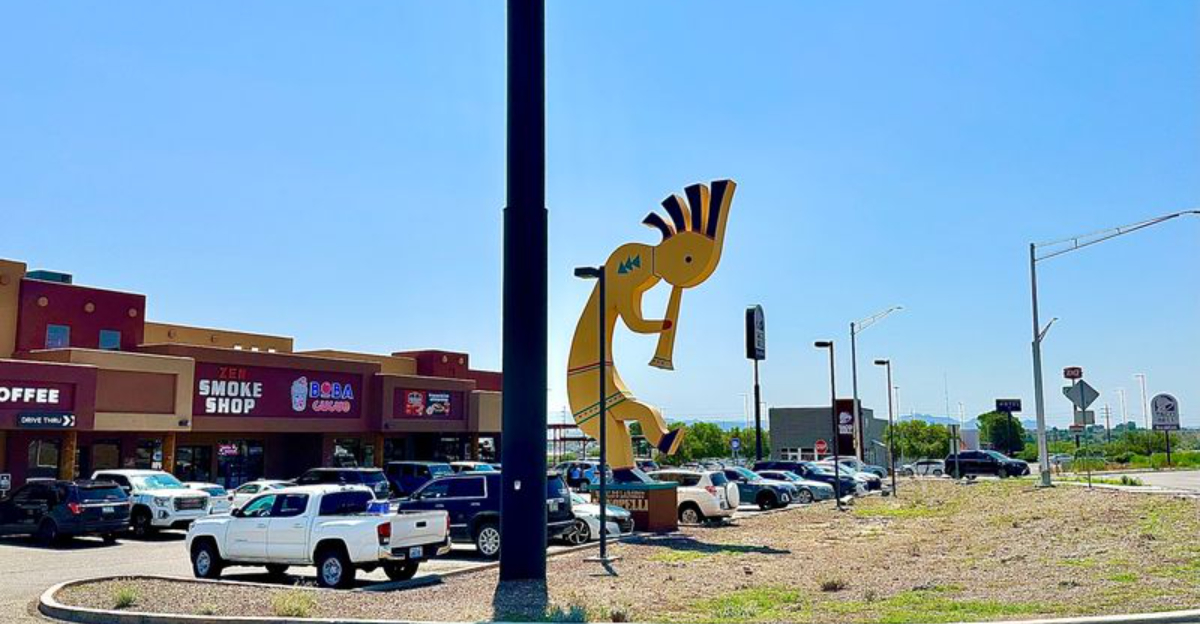
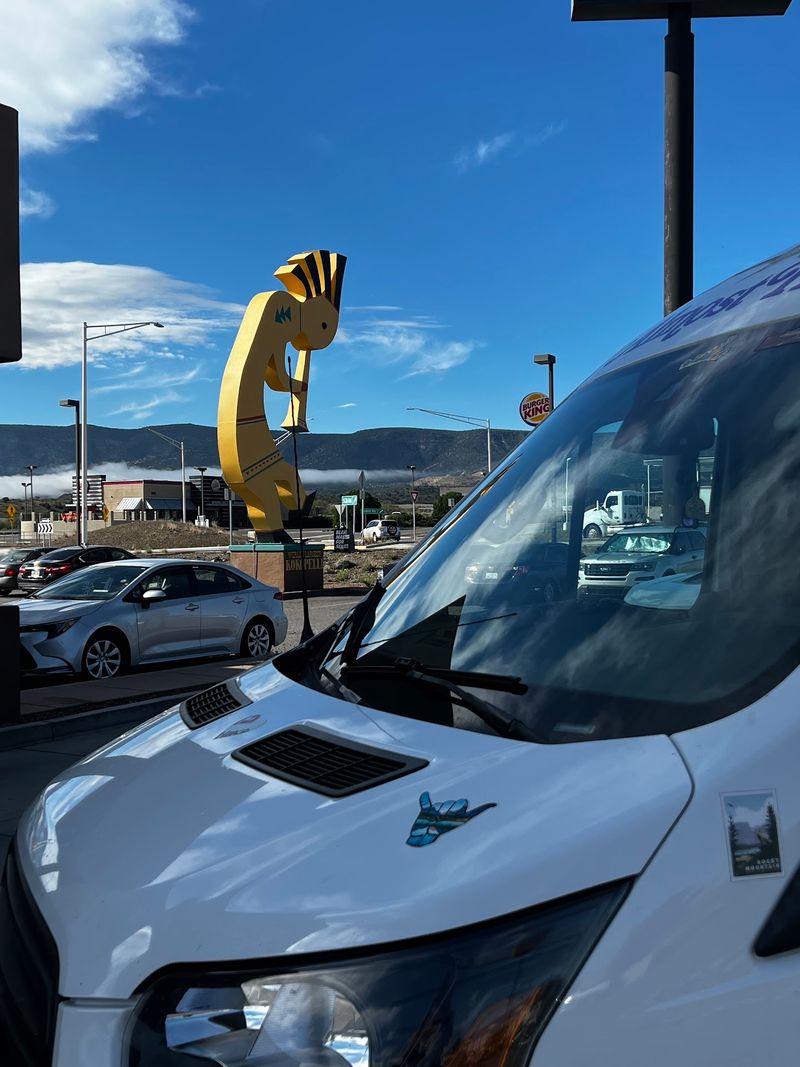
I was cruising along Highway 260 when a 32-foot golden figure suddenly rose above the roadside, flute pointed toward the Arizona sky. Camp Verde had apparently been keeping a giant secret, and there was no chance I was driving past without stopping.
This is the World’s Largest Kokopelli, a towering roadside landmark that somehow manages to look both playful and completely at home in the desert.
I had not planned to visit it, which made the discovery even better. One second I was watching the road, and the next I was staring at a golden musician tall enough to compete with the nearby signs and rooftops.
Up close, the statue is even more unusual. Its curved pose, metallic finish, and enormous scale turn a familiar Southwestern symbol into something impossible to ignore. The surrounding desert light gives it a different look throughout the day, especially when the late-afternoon sun catches the gold surface.
This is the kind of roadside stop that turns an ordinary drive into a story. You pull over for a quick photo, then stay because you want to know why it is there.
Camp Verde has history, scenery, and plenty of worthwhile stops, but its giant Kokopelli may be the one you remember first.
A Giant’s Genesis: The Making Of A Roadside Icon
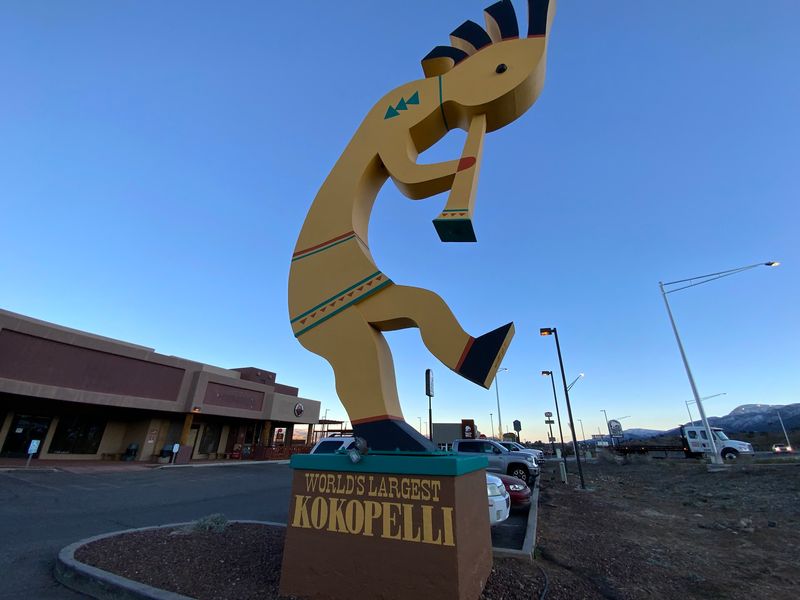
Back in the 1980s, a man named Lowell Johnson had a bold vision: create something so eye-catching that drivers on Interstate 17 simply could not pass without stopping.
Johnson, the then-owner of the Montezuma Trading Post in Camp Verde, Arizona, commissioned blacksmith Gerry Berg Sr. and his son Gerry Jr. to bring that vision to life.
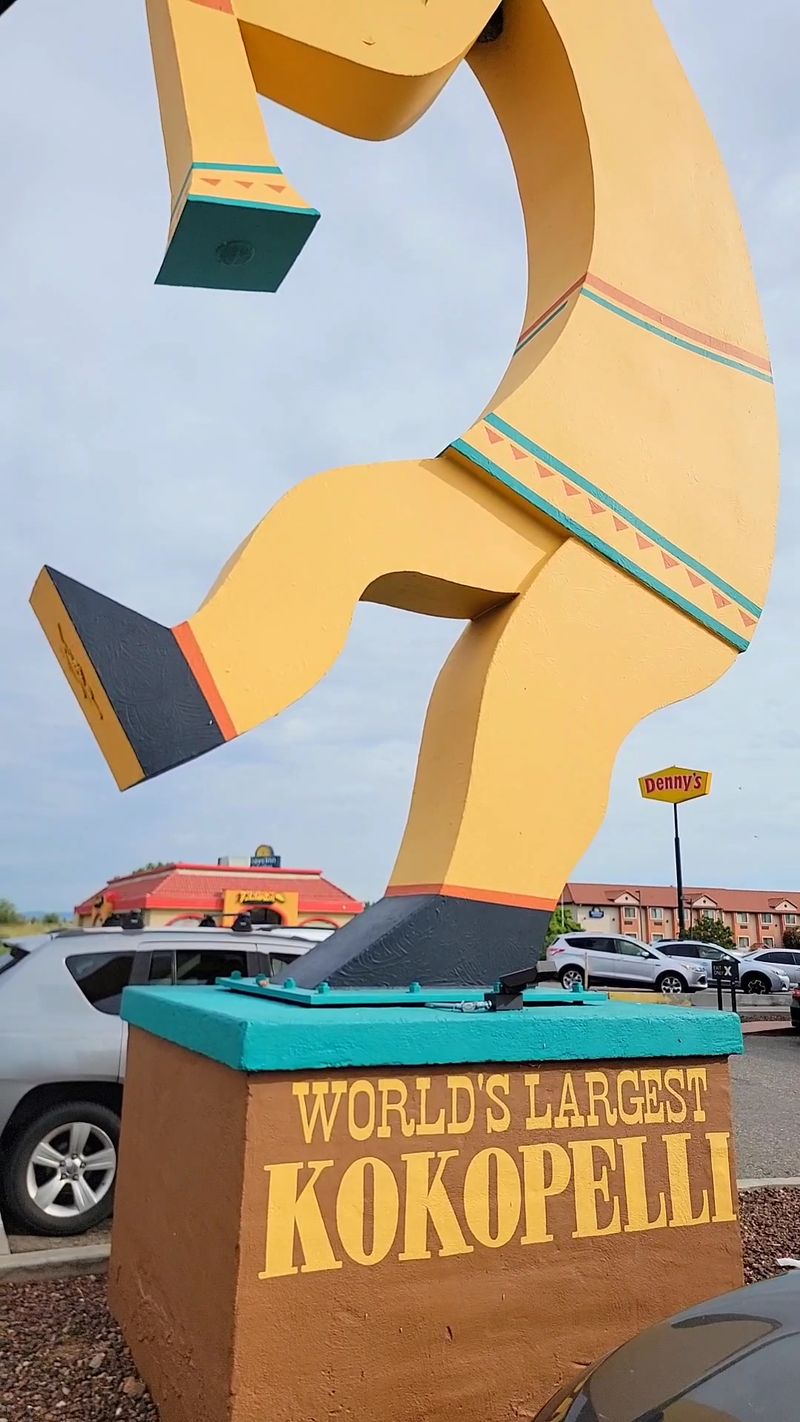
The father-and-son team spent roughly 45 days carefully shaping and welding quarter-inch plate steel, pouring more than $25,000 into the project. The result was a cheerful, flute-playing figure standing 32 feet tall, perched on a six-foot base that boldly announces its world-record status to anyone passing by.
Before this golden giant arrived, a hot pink 1920s automobile was the trading post’s main attraction, and let’s just say it had far less personality.
The Kokopelli statue became an instant landmark, outlasting the original trading post itself and cementing its place as one of Arizona’s most beloved roadside surprises.
The Ancient Legend BehindTthe Flute Player
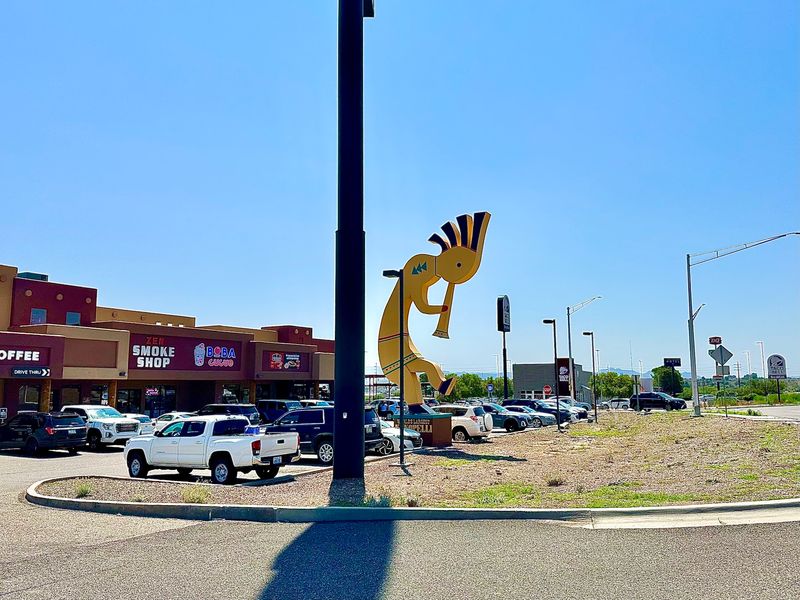
Long before Gerry Berg ever picked up a welding torch, Kokopelli was already one of the most recognized figures in Southwestern Native American culture.
His image appears on petroglyphs, pottery, and canyon walls across Arizona, Utah, New Mexico, and Colorado, some of them carved more than a thousand years ago.
Kokopelli is typically shown as a humpbacked figure playing a flute, and he carries deep symbolic meaning across many tribes. He is celebrated as a fertility deity connected to childbirth, agriculture, and the return of spring.
That distinctive hump on his back is often interpreted as a bundle of seeds for planting, or even babies, representing new life and abundance. Depending on the tribal tradition, he can also appear as a trickster, a traveling trader, or a rainmaker.
Knowing this rich backstory transforms the giant statue from a fun photo stop into a genuine cultural touchpoint, connecting modern road-trippers to centuries of Southwestern history in one glance.
Finding The Flute Player: Location And Getting There
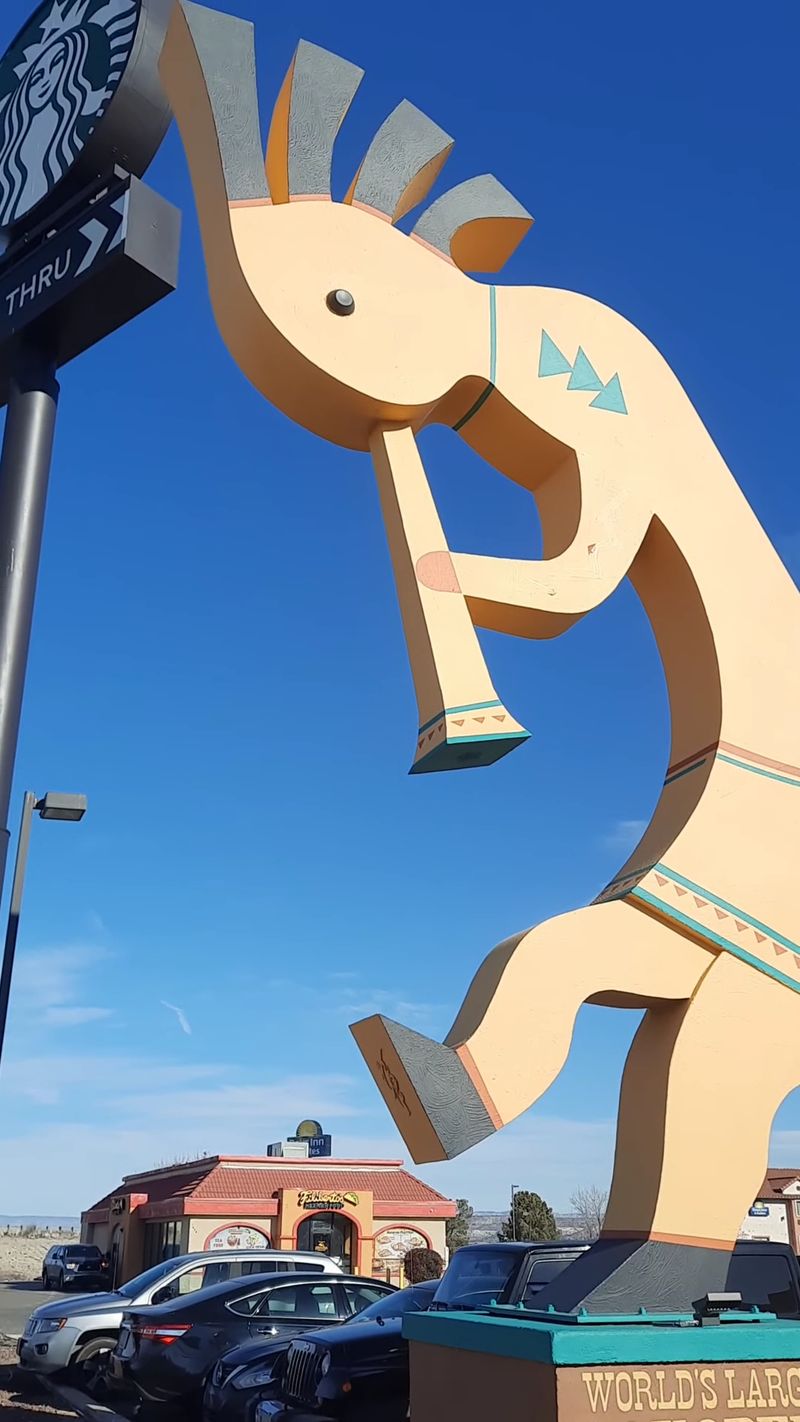
Tracking down this larger-than-life landmark is genuinely easy, which makes it a perfect detour for anyone driving through central Arizona.
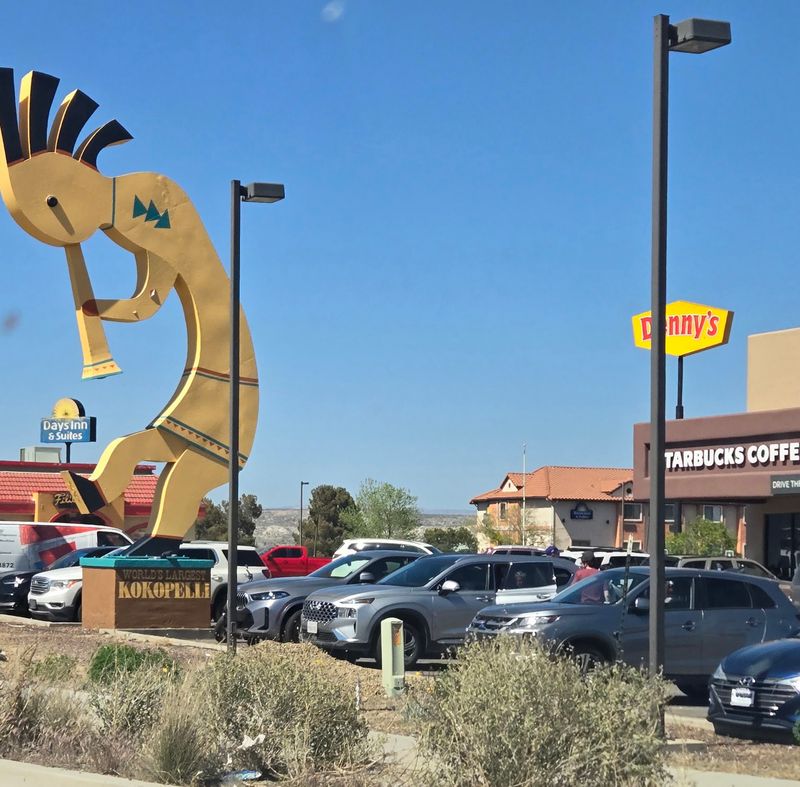
The World’s Largest Kokopelli stands at 1620 West Highway 260, Camp Verde, Arizona, right off Interstate 17 at exit 287. Head south one block on Finnie Flat Road, and the golden giant appears on your left like a friendly desert guide waving you over.
Camp Verde itself sits about 90 miles north of Phoenix and roughly 20 miles south of Sedona, putting this stop in prime road-trip territory. The statue is free to visit, accessible any time of day, and the surrounding area offers good natural light for photos in the early morning or late afternoon hours.
Today, a small strip mall surrounds the base of the statue, including a coffee shop and a Mexican restaurant. That means you can snap your selfie, refuel with a snack, and be back on the road in under 30 minutes, carrying a fresh story and a great photo.
Why This Stop Is Worth Every Minute Of Your Time
There is something genuinely refreshing about a roadside attraction that earns its world-record title without trying too hard.
The Kokopelli statue is not surrounded by a ticket booth or a gift shop full of overpriced souvenirs. It simply stands there, golden and proud, offering a free and surprisingly meaningful pit stop for anyone willing to slow down.
Visitors who take a moment to read the base plaque and learn about Kokopelli’s cultural roots often say the stop felt far more substantial than they expected.
Road-trippers heading to Sedona’s red rocks, Montezuma Castle National Monument just a few miles away, or the Verde Valley wine country nearby find that this quick detour adds a layer of character to the whole journey.
I stood at the base of that statue, squinting up at the flute player silhouetted against the Arizona sky, and felt a quiet appreciation for the human creativity that planted him here. Some giants are worth looking up to, and this one absolutely is.
Photography Tips At The Kokopelli
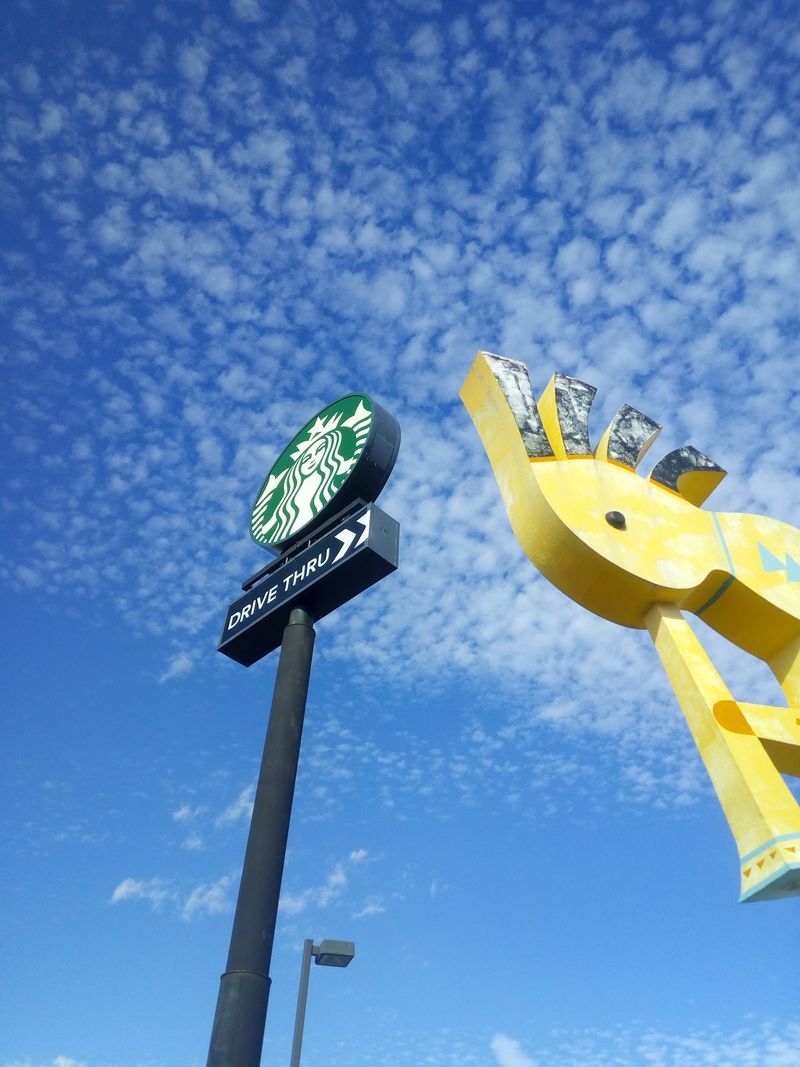
The world’s largest Kokopelli is practically begging to be photographed. Standing more than 32 feet tall, this metal giant creates a striking silhouette against the wide Arizona sky. Early morning or late afternoon light works best, casting warm golden tones across the sculpture.
Position yourself far enough back to fit the full statue in the frame, with desert scenery stretching out behind it. Try a low angle to make Kokopelli look even more impressive against the clouds.
A wide-angle lens is your best friend here, and a selfie next to this massive figure puts its true scale into perspective. Step to one side and use nearby signs, trees, or parked cars to show just how enormous the statue really is.
A vertical shot works especially well for capturing the full height without wasting space around the frame. Watch for harsh midday shadows, which can flatten the gold surface and hide smaller details. Cloudy skies can also work in your favor by creating softer, more even light.
Take several photos from different distances because the statue looks completely different in a close-up than it does from across the roadside. Before leaving, turn around and capture one final wide shot that shows Kokopelli standing proudly over Camp Verde.
More Than A Roadside Stop: Unexpected Surprises
Camp Verde, Arizona packs a lot more than one giant flute player into its borders. Just a short drive from the Kokopelli statue, you will find Montezuma Castle National Monument, one of the best-preserved cliff dwellings in North America.
These ancient stone rooms were built by the Sinagua people over 600 years ago, making this area rich with Native American history.
Nearby, Montezuma Well offers a peaceful natural sinkhole fed by underground springs. Local shops and eateries in Camp Verde give visitors a taste of small-town Arizona life. Combining all these stops makes for a genuinely rewarding day trip.
The Verde Valley Archaeology Center adds another layer to the area’s story with exhibits focused on the region’s early communities. Fort Verde State Historic Park preserves buildings from the settlement’s military era and gives the town yet another chapter to explore.
Outdoor travelers can also follow nearby trails, watch for wildlife, or spend time along the Verde River. None of these stops requires rushing, which makes Camp Verde especially easy to enjoy at a relaxed pace.
The giant Kokopelli may grab your attention first, but the surrounding history gives you plenty of reasons to stay longer.
A Symbol That Lives On: Kokopelli In Modern Culture
Few figures from ancient Native American tradition have found as comfortable a home in modern life as Kokopelli.
You will spot his unmistakable humpbacked, flute-playing silhouette on everything from coffee mugs and T-shirts to jewelry, tattoos, and welcome mats. He has become one of the most recognizable symbols of the American Southwest.
His image can appear playful at first, but it carries a much deeper history. Kokopelli has been represented in rock art and oral traditions for centuries, with meanings that vary among Indigenous cultures.
That long history gives the modern symbol far more weight than an ordinary piece of Southwestern decoration.
Even people who do not know his full story often recognize the curved back, raised flute, and dancing posture immediately. Part of his staying power comes from what he represents. Joy, music, fertility, travel, and good fortune are themes that people still connect with today.
His silhouette suggests movement, celebration, and a tune drifting across the desert wind. It is easy to understand why artists and travelers continue returning to the image.
The world’s largest version of Kokopelli standing along an Arizona highway proves that some stories, and some symbols, simply never get old.