
The World’s Largest Rotating Globe Is In Maine, And It Feels Almost Too Strange To Be Real
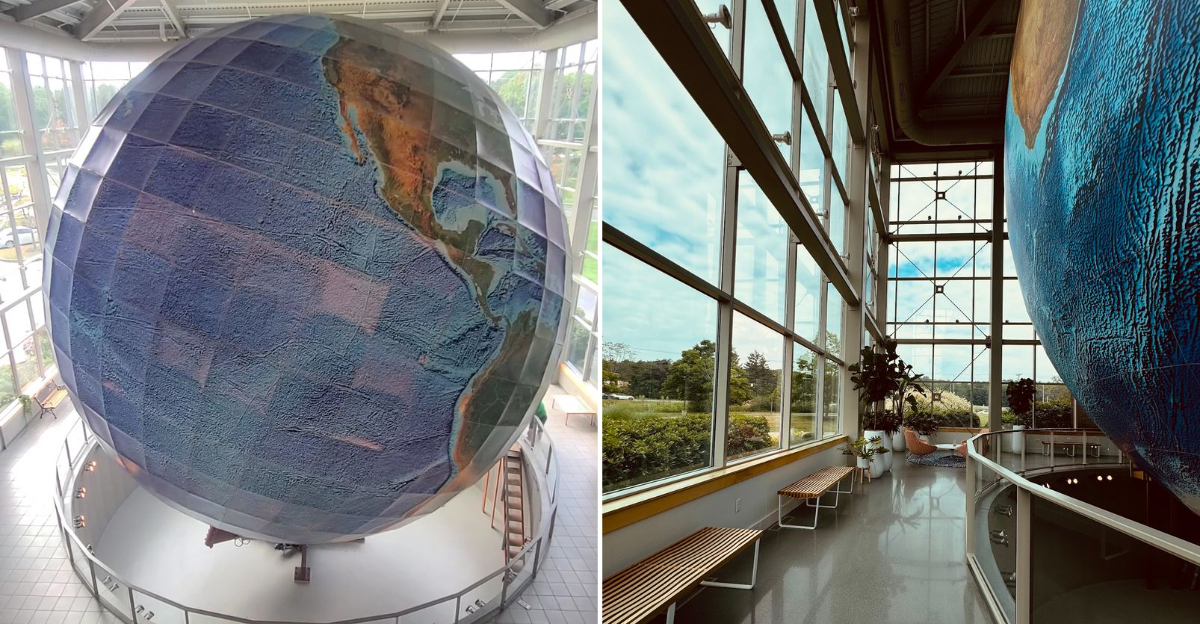
I have learned to be skeptical of giant roadside attractions, but this one proved me gloriously wrong. While driving through Maine, I spotted a sign for the world’s largest rotating globe and figured it was worth a quick detour.
The building looked like an ordinary office, and I almost laughed at the idea that anything remarkable could be waiting inside. Then the doors opened, and I found myself staring upward in complete disbelief.
The globe towered above me, filling the atrium in a way that photos never capture. I even caught myself checking twice to make sure it was actually moving.
My GPS earned an apology that day. Hidden inside an unassuming building, this remarkable landmark turns an ordinary highway stop into one of the state’s most memorable surprises.
Eartha Is The World’s Largest Rotating Globe
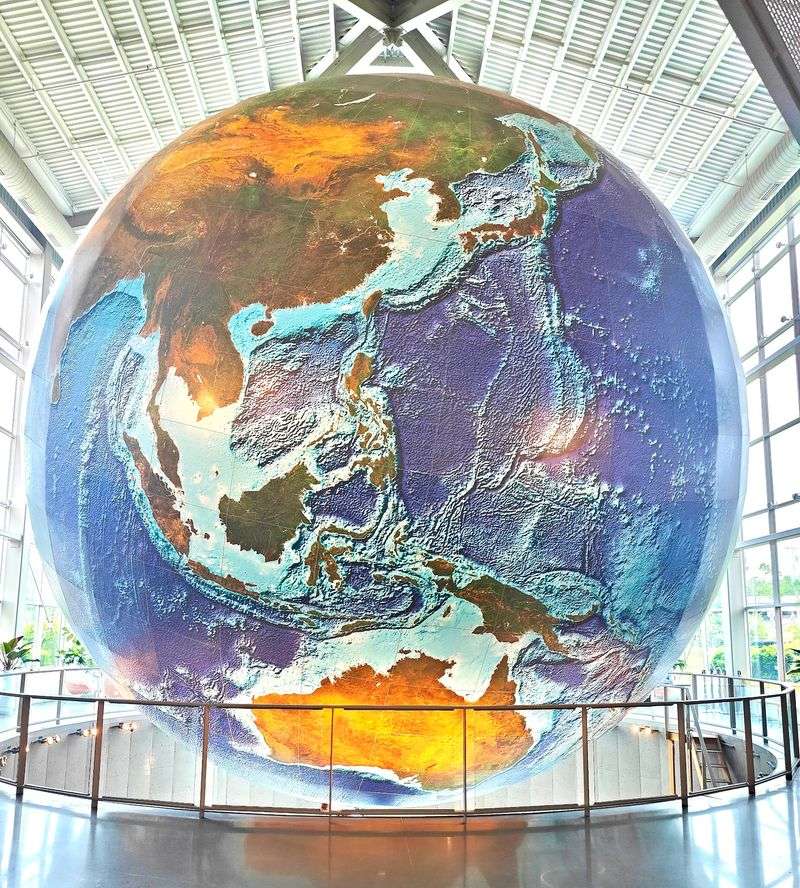
Some records are impressive on paper, but Eartha earns hers in person. Standing at 41.5 feet in diameter and weighing approximately 5,600 pounds, Eartha holds the Guinness World Record for the largest rotating globe on Earth.
She was built by the DeLorme mapping company and completed in 1998, right inside the atrium of their headquarters in Yarmouth, Maine, at DeLorme Drive.
The globe is so large that it spans three full floors of the building. From the ground level, you see the lower half of the planet curving above you.
Climb the stairs to the second or third floor, and the perspective shifts completely, offering a bird’s-eye view of continents and oceans rendered in stunning detail.
What makes Eartha stand out is not just her size but her accuracy. She is built to a scale of 1:1,000,000, meaning every inch represents roughly 16 miles of actual Earth surface.
The detail is almost unsettling in the best way. Tiny mountain ranges, coastlines, and ocean floors are all represented with cartographic precision that reflects DeLorme’s legacy as a mapmaking powerhouse.
Seeing her for the first time genuinely rewires your sense of scale.
The Globe Rotates Just Like The Real Earth
One of the first things visitors notice after the sheer size is the movement. Eartha actually rotates, and she does it with a quiet, almost hypnotic grace.
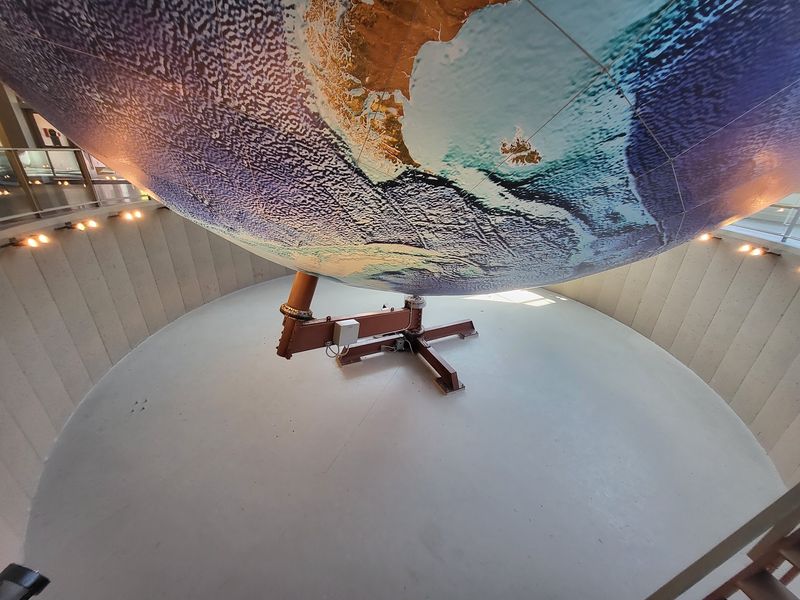
Eartha completes its rotating and revolving cycle in approximately 18 minutes, creating an accelerated demonstration of the planet’s movement.
Watching her turn is oddly meditative. You can stand on the ground floor and see the Pacific Ocean slowly drift into view, or position yourself on an upper landing and watch a continent arc past your eye level.
The mechanical system that drives her rotation is visible from certain angles, and it is a satisfying piece of engineering to observe.
The movement also means that your experience changes depending on how long you stay. Spend 20 minutes watching, and you will see a meaningfully different portion of the globe than when you first arrived.
That slow, steady turn adds a sense of life to what could otherwise be a static display.
It is one of those small design choices that transforms an exhibit from impressive to genuinely memorable, and it rewards patient visitors who take the time to simply watch.
Admission Is Completely Free
Free admission at a world-record attraction sounds too good to be true, but Eartha delivers exactly that. There are no tickets to buy, no reservations to make, and no lines to wait in.
You simply walk through the front doors of the building at DeLorme Drive in Yarmouth, Maine, and there she is, right in the lobby.
The building is a working office space, so the expectation is that visitors keep their voices respectful and their energy calm.
That is a small and entirely reasonable ask given that the attraction costs nothing. The parking lot outside has plenty of space, and the whole setup feels refreshingly low-pressure compared to most tourist destinations.
Free attractions sometimes feel like you get what you pay for, but Eartha is a genuine exception. The building is clean, well-maintained, and welcoming.
Informational placards are posted around the lobby explaining the history and science behind the globe.
There is also seating nearby so you can sit, read, and watch Eartha turn at your own pace. For families traveling on a budget, or anyone who appreciates a no-fuss stop on a road trip, this is one of the most satisfying free experiences you will find anywhere in New England.
The Scale Is Almost Impossible To Believe
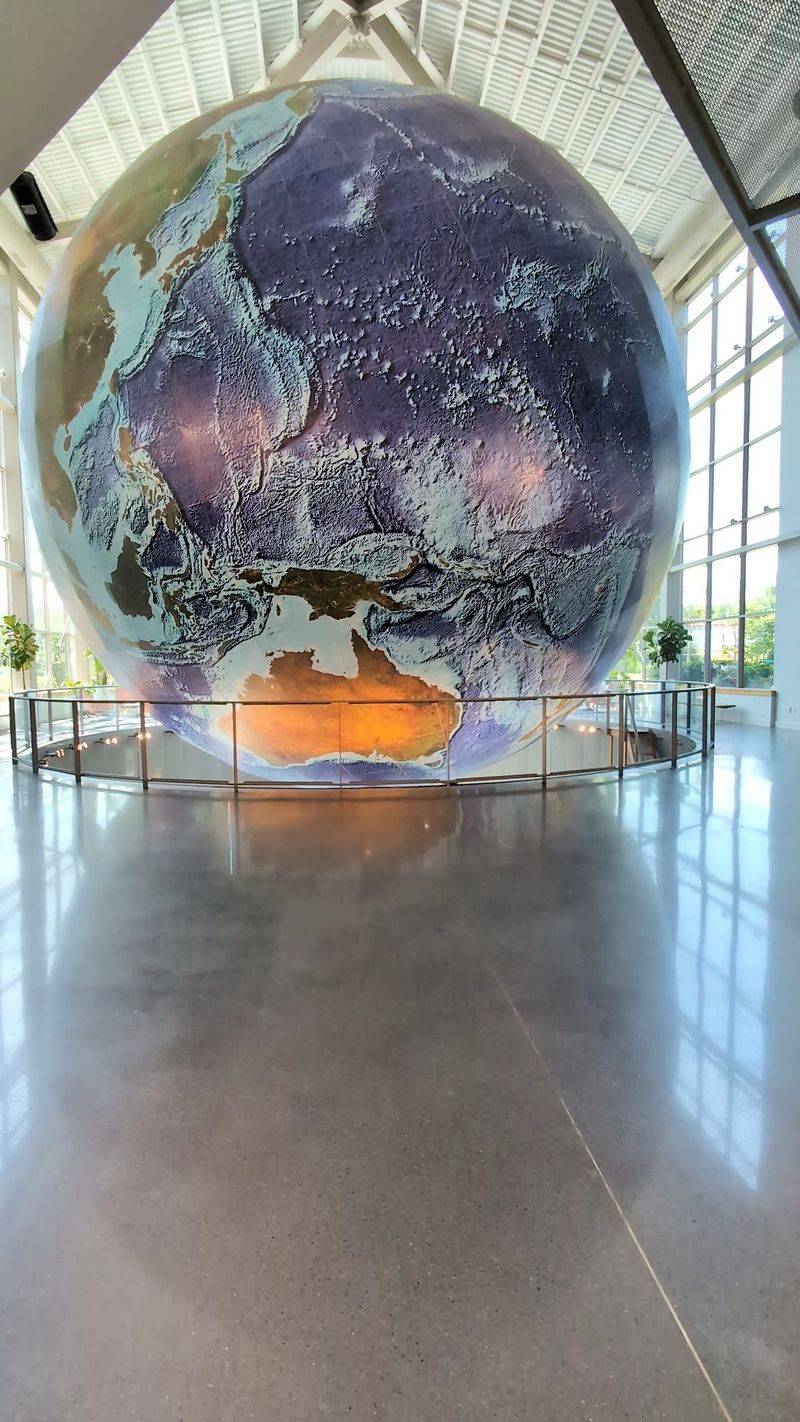
Numbers can only do so much. Eartha is built at a scale of 1:1,000,000, which means one foot on the globe equals roughly 16 miles on actual Earth.
That might sound like a geography lesson, but standing next to her makes that ratio feel viscerally real in a way no textbook ever could.
The surface detail is extraordinary. You can spot the ridges of the Himalayas, trace the curve of the Gulf of Mexico, and pick out individual island chains in the Pacific.
The ocean floors are rendered with the same care as the landmasses, showing underwater mountain ranges and trenches that most people never think about. It is a reminder that the planet is just as dramatic below the waterline as above it.
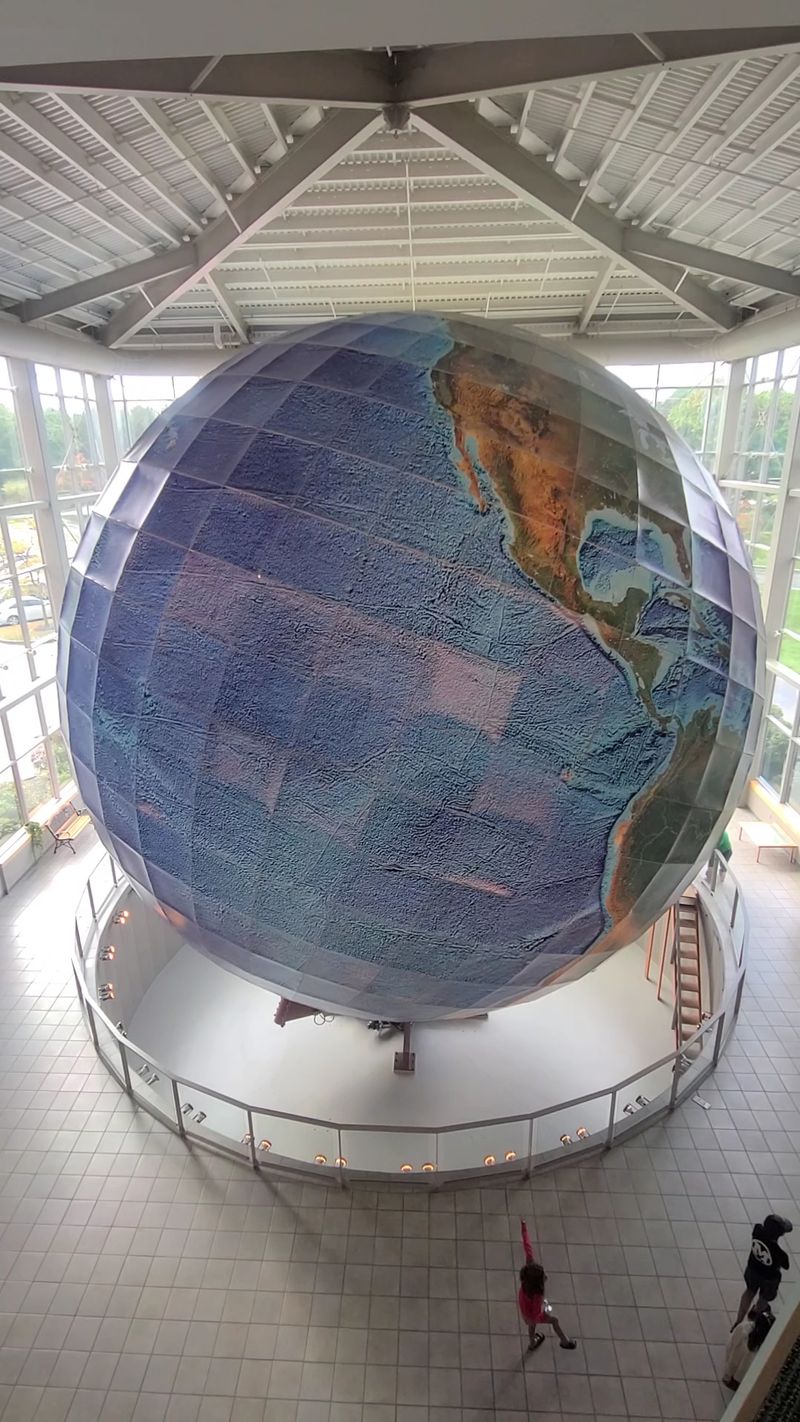
What really gets you is looking up. Eartha fills much of a three-story glass atrium, and looking up at the northern regions creates a dramatic sense of scale.
Most globes sit on a desk and fit in your hand. This one makes you feel like the small thing in the room.
That reversal of scale, where you are suddenly the tiny object next to the planet, is the kind of experience that sticks with you long after you leave Yarmouth.
You Can View It From Three Different Floors
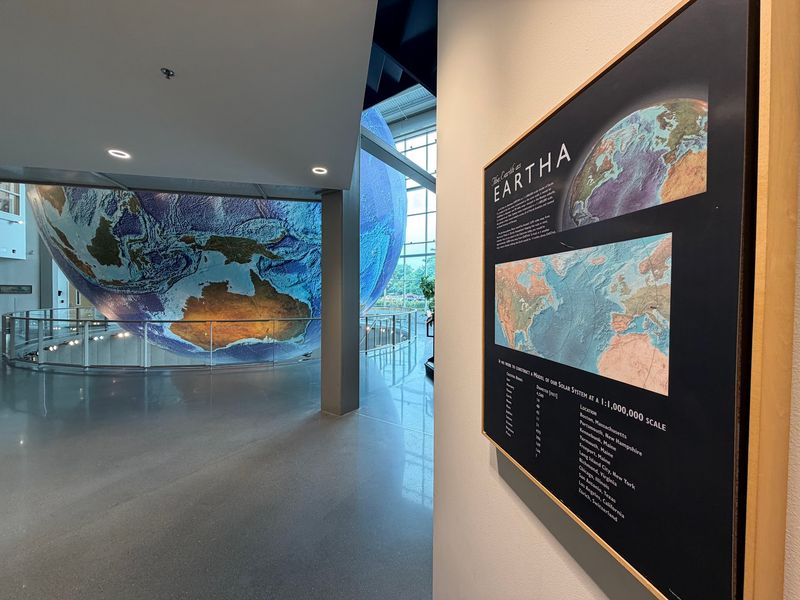
Most exhibits give you one vantage point and call it a day. Eartha offers three completely different experiences depending on which floor you are standing on.
The ground level puts you eye-to-eye with the lower hemisphere, where you can study the Antarctic continent and the southern oceans up close. It is the most immersive angle, and the one that makes the globe feel largest.
Head up the stairs or take the elevator to the second floor, and the perspective shifts noticeably. You are now looking roughly at the equatorial regions, and the globe’s curvature becomes more apparent.
The third floor is where things get genuinely dramatic.
From up there, you are peering down at the northern hemisphere, and the globe fills your field of vision in a way that feels almost cinematic.
Each floor has its own character and its own set of details to discover. Some visitors sprint through all three levels in five minutes.
Others spend time on each floor, watching Eartha rotate and waiting for a favorite region to come into view.
There is no right way to experience her. The stairs are accessible, an elevator serves all floors, and the building is fully accommodating for visitors of all mobility levels, which is a thoughtful touch.
Built By A Mapmaking Company With A Big Vision
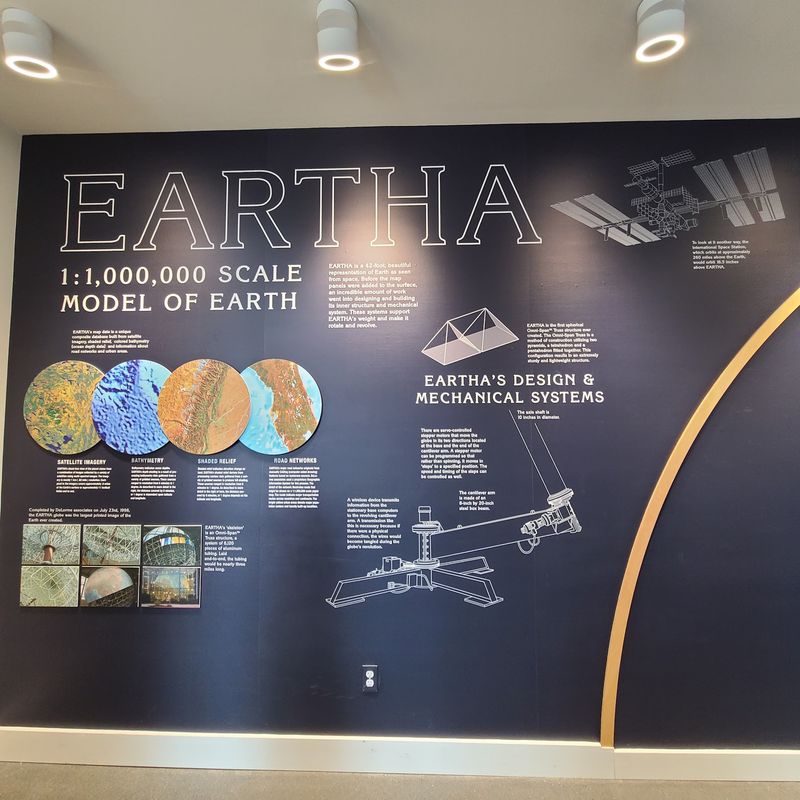
Eartha was not built by a theme park or a tourism board. She was created by DeLorme, a company that spent decades making some of the most detailed maps and atlases in America.
Founded in 1976 by David DeLorme, the company became famous for its state atlas series and later for GPS navigation software under the brand name Street Atlas USA.
The idea of building the world’s largest rotating globe came from a desire to celebrate cartography and the art of understanding our planet. DeLorme wanted a centerpiece that reflected the company’s core mission, and Eartha became exactly that.
Construction took years of planning and engineering, and the result was unveiled in 1998 to considerable attention from the mapping and geography communities.
DeLorme was later acquired by Garmin in 2016, and the building now operates under Garmin’s ownership. The globe remains, treated with care by the new company and still open to the public as a tribute to DeLorme’s legacy.
Informational placards in the lobby tell the story of how Eartha was made, including details about the materials, the engineering challenges, and the mapmaking philosophy that inspired her.
The Hours Are Tied To A Real Working Office
Eartha is not a museum in the traditional sense, and knowing that before you visit saves a lot of frustration. The globe lives in the lobby of a functioning office building, which means access is tied to business hours.
As of the most recent information available, the building is open Monday through Friday from 9 AM to 3 PM, and closed on weekends and holidays.
That schedule matters a lot for trip planning. A Saturday detour will leave you peering through glass from the parking lot, which is still impressive given Eartha’s size, but not quite the same as walking inside.
Weekday mornings tend to be calm and uncrowded, making them a great window for a relaxed visit.
The building is a workplace, so loud groups or disruptive behavior is not appropriate, but calm families and curious travelers are welcomed warmly.
The attraction is located at 2 DeLorme Drive in Yarmouth, close to Interstate 295 and convenient for a coastal Maine road trip.
No reservations are needed, and the whole visit can comfortably fit into 30 to 45 minutes. If you are heading up or down the Maine coast on a weekday, slotting Eartha into your itinerary requires almost no extra effort and pays off generously.
A Perfect Road Trip Stop
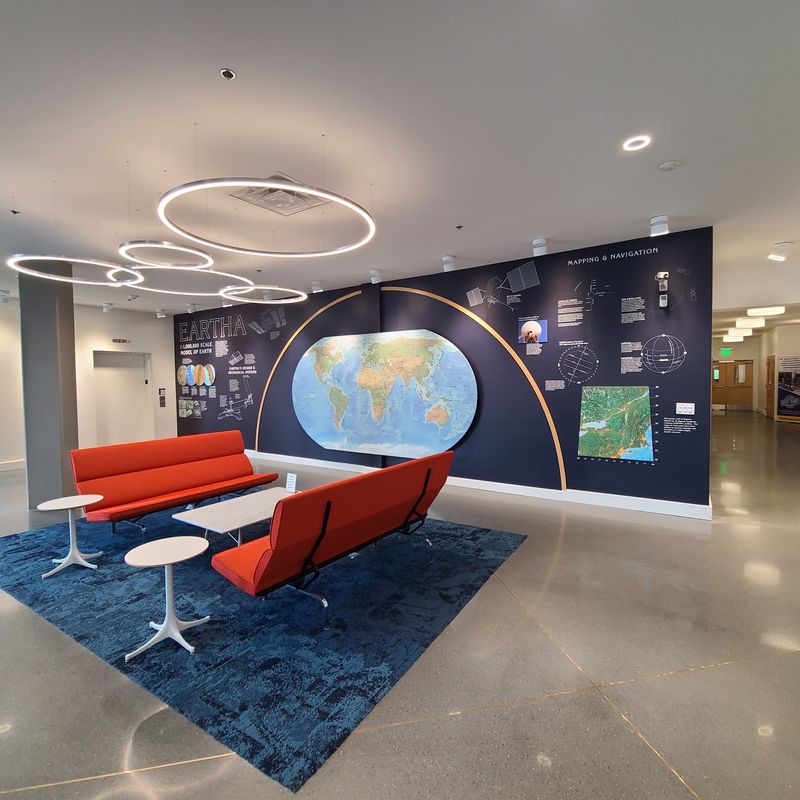
A world-record globe is reason enough to stop, but Eartha’s building offers a few extra comforts that make the detour even more worthwhile.
Magno Terra Cafe operates inside the building, offering items such as sandwiches, baked goods, and coffee. It is a practical bonus for road trippers who need a quick, satisfying bite without hunting for a separate restaurant.
Clean public restrooms are available to visitors as well, which anyone who has driven the Maine coast with kids will tell you is not a detail to overlook.
The combination of a free world-record attraction, accessible facilities, a snack option, and ample parking in a single stop makes Eartha genuinely useful as a midpoint break on a longer drive.
The building is also fully accessible, with an elevator serving all three floors and push-button door openers at the entrance. Visitors with strollers, wheelchairs, or mobility considerations can navigate the entire experience comfortably.
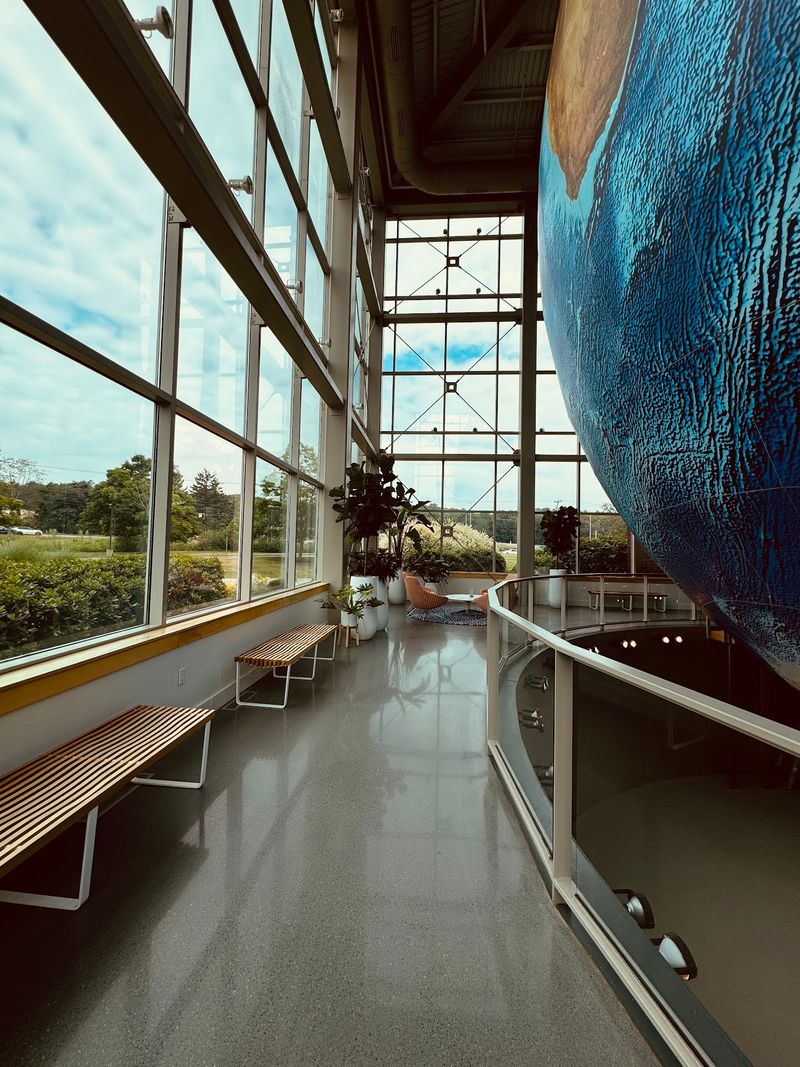
There is seating in the lobby near the globe, so you can settle in, read the informational placards, and watch Eartha turn without needing to stay on your feet the whole time. For a no-cost stop, the overall visitor experience is thoughtfully put together and genuinely comfortable.