
The World’s Largest Telescope Mirrors Are Made Beneath An Arizona Football Stadium
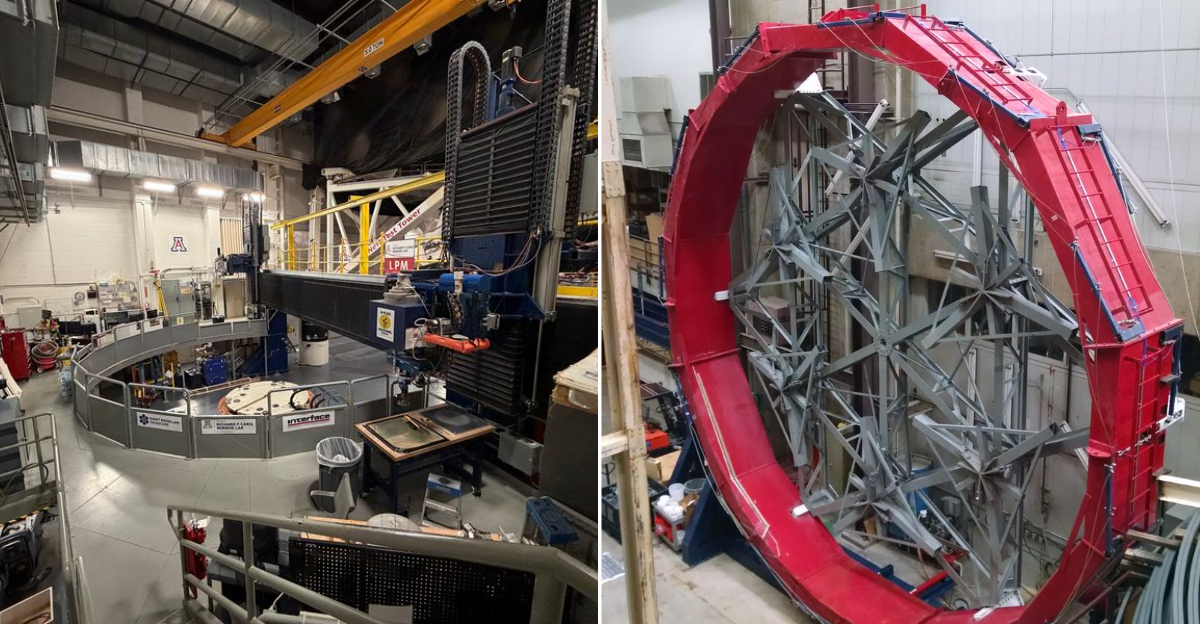
My friends always tease me for having my head in the clouds, but today I took it to a whole new level, literally beneath the 50-yard line. Yep, I spent my day lurking in the cavernous underbelly of a bustling Arizona football stadium, watching scientists spin giant blobs of glass like giant, expensive pizzas.
Who knew that while college students were worrying about touchdowns, geniuses down in the basement were busy crafting the world’s largest telescope mirrors?
It’s basically a high-stakes baking show for nerds, minus Paul Hollywood, but with way more danger if you drop the glass. I nearly tripped over a cable just looking at the sheer scale of this place.
Astronomers around the world depend on the mirrors made right here to study distant galaxies, stars, and planets in breathtaking detail.
If you have ever been curious about how humanity pushes its view deeper into the cosmos, a visit to this underground lab might just be the most unexpectedly fascinating few hours you will ever spend.
The Extraordinary Setting Beneath The Stadium
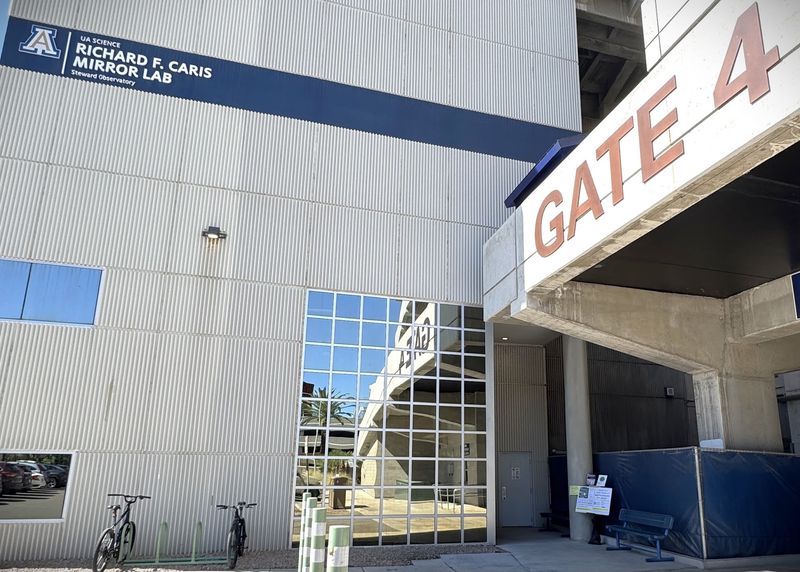
Few stadiums can claim that some of their most ambitious work happens beneath the seats rather than on the field. Most people associate a football stadium with roaring crowds and game-day snacks, not world-changing science.
Yet tucked directly under the east wing of Arizona Stadium at the University of Arizona sits one of the most consequential manufacturing facilities on the planet.
The Richard F. Caris Mirror Lab occupies this improbable space in Tucson, Arizona, and it has been quietly reshaping what humanity can see in the night sky for decades.
The lab is nestled near Gate 4 of the stadium, and visitors often do a double-take when they realize the sheer scale of what is happening underground.
The space is enormous, filled with industrial machinery, polishing equipment, and mirrors so large they look more like swimming pools than scientific instruments.
There is something almost poetic about the contrast: thousands of fans cheering above ground while engineers below work on tools that will one day reveal the secrets of the universe.
Tours begin with an introductory presentation at the historic Steward Observatory at 933 N. Cherry Ave., University of Arizona, Tucson, AZ 85719.
The Spin-Casting Furnace That Changed Everything
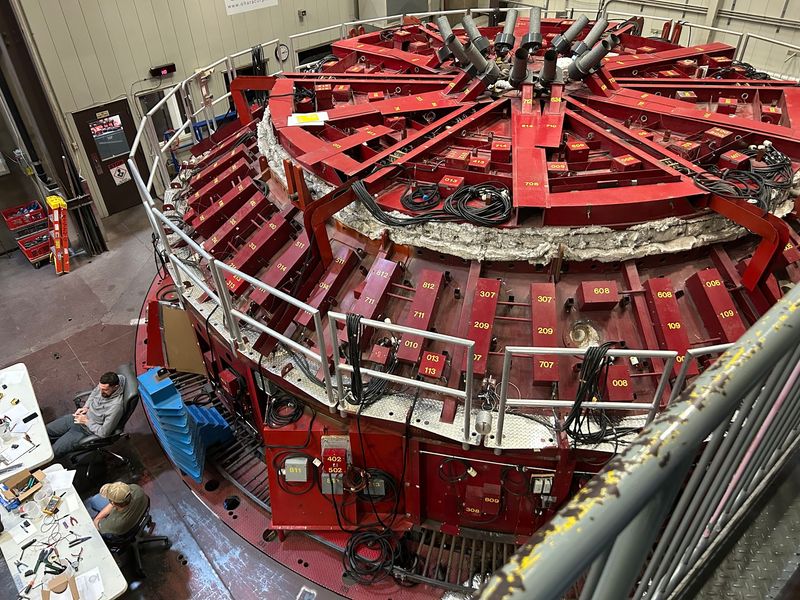
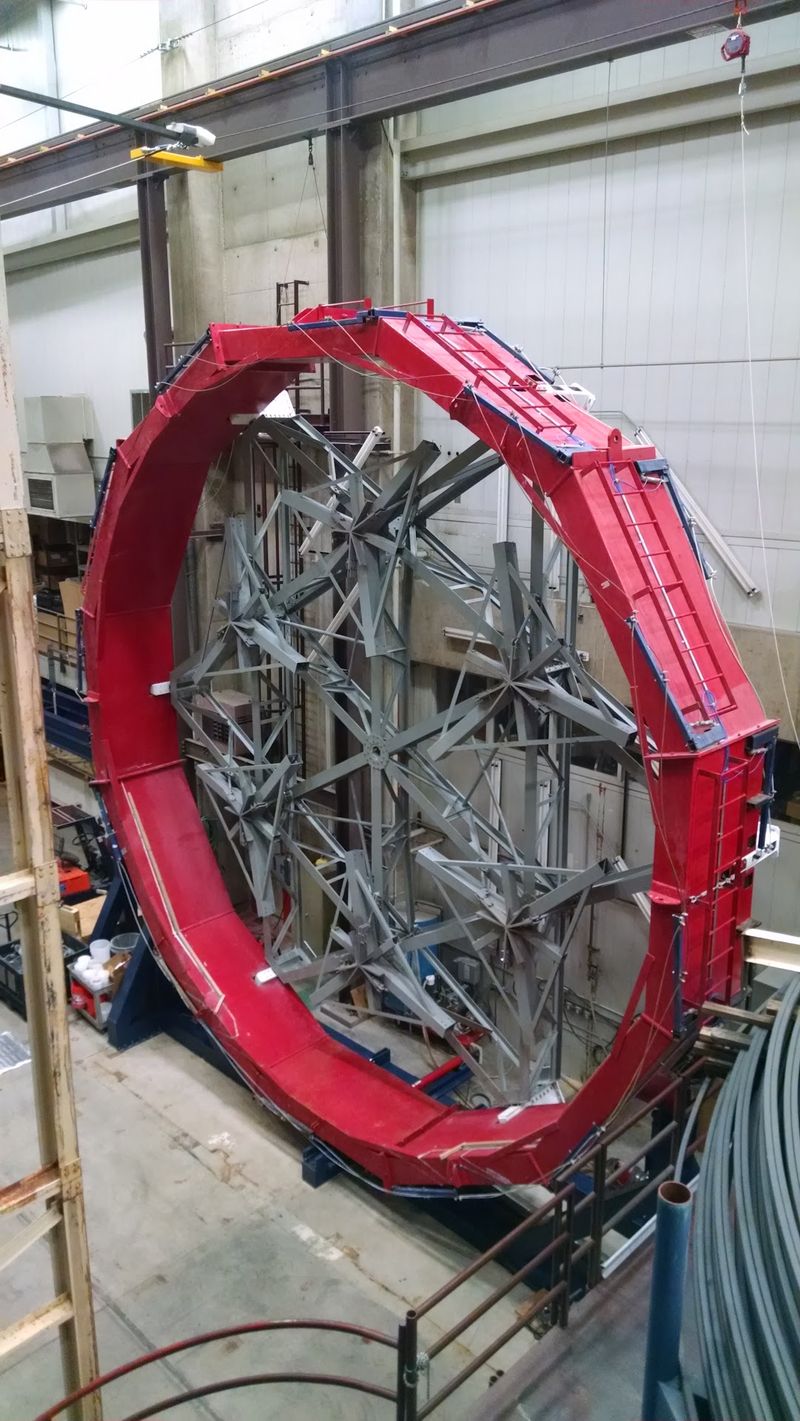
Picture nearly 20 tons of glass melting inside a spinning oven the size of a small house, and you start to get a sense of what makes this facility truly one of a kind. The rotating furnace at the Richard F. Caris Mirror Lab is the only instrument of its type anywhere in the world.
It heats high-purity borosilicate glass, specifically Ohara E6 glass, to approximately 1,165 degrees Celsius for around five hours until the material becomes a flowing liquid.
The furnace spins at up to five revolutions per minute during this process. That spinning motion is not just for show. It uses centrifugal force to naturally push the molten glass into a rough paraboloidal shape, which is exactly the curved form a telescope mirror needs to focus light properly.
After casting, the mirror keeps spinning at a slower rate during an 11-week cooling period called annealing, which removes internal stress from the glass and makes it incredibly tough. That single furnace has produced mirrors that now sit at observatories on multiple continents.
The process moves slowly, but the finished mirror is built to gather light that has traveled across the universe for billions of years. Few manufacturing jobs begin with molten glass and end by changing how far humanity can see.
The Honeycomb Mirror Design By Dr. Roger Angel
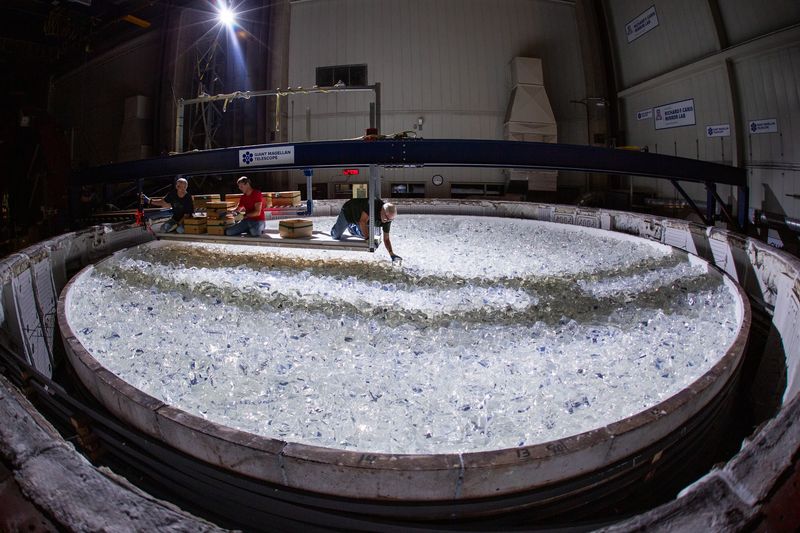
Dr. Roger Angel is the visionary behind one of the cleverest ideas in modern optics. Instead of casting a telescope mirror as a solid block of glass, he designed a honeycomb structure with hollow cells running through the interior.
This innovation, developed at the University of Arizona, makes the mirrors dramatically lighter without sacrificing any of their strength or rigidity. A traditional solid mirror of the same diameter would weigh several times more and would be nearly impossible to cool evenly, which causes distortion.
The honeycomb design solves both problems at once. Air can circulate through the cells, allowing the mirror to reach thermal equilibrium with the surrounding atmosphere much faster, which keeps the images sharp.
Dr. Angel’s contribution was so significant that he was inducted into the National Inventors Hall of Fame in 2015.
Seeing a partially finished mirror up close during a lab tour, with its intricate geometric cells visible from the back, is one of those moments that makes the science feel genuinely tangible and astonishing.
Polishing To Near-Impossible Precision
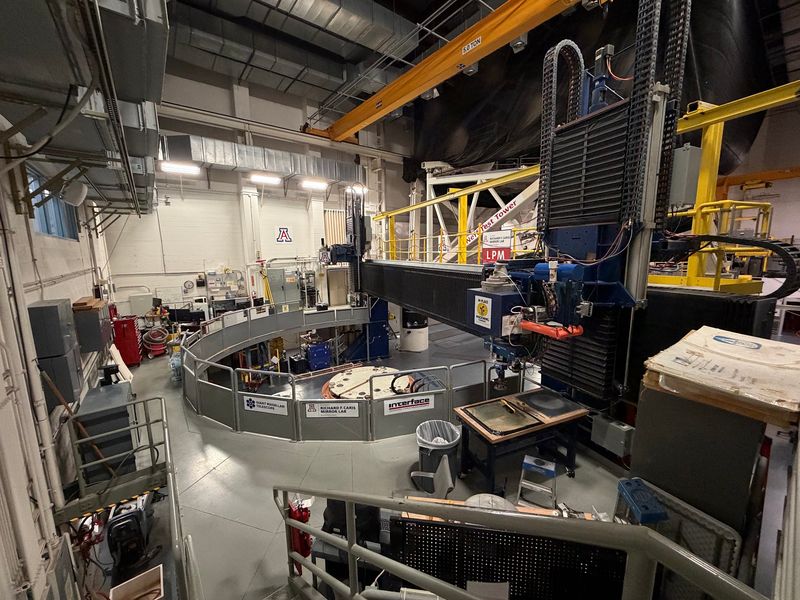
Casting the glass is only the beginning of a journey that takes years to complete. Once a mirror blank has cooled and been removed from the furnace, it enters a grinding and polishing phase that can last up to two full years.
The goal is to achieve a surface so smooth that any remaining imperfection is smaller than one-thousandth the width of a human hair, which works out to better than 25 nanometers of precision.
To put that in perspective, a human hair is already incredibly thin, and the lab is aiming for accuracy far beyond what the naked eye could ever detect.
Specialized computer-controlled machines do most of the heavy lifting, guided by laser measurements that constantly check the mirror’s shape and surface quality. The patience and technical skill required for this process are hard to overstate.
Each mirror is essentially a custom scientific instrument, shaped to exact specifications for its destination telescope. Watching even a small portion of this process during a tour gives visitors a real appreciation for why these mirrors cost so much and take so long to build.
The Giant Magellan Telescope Mirror Project
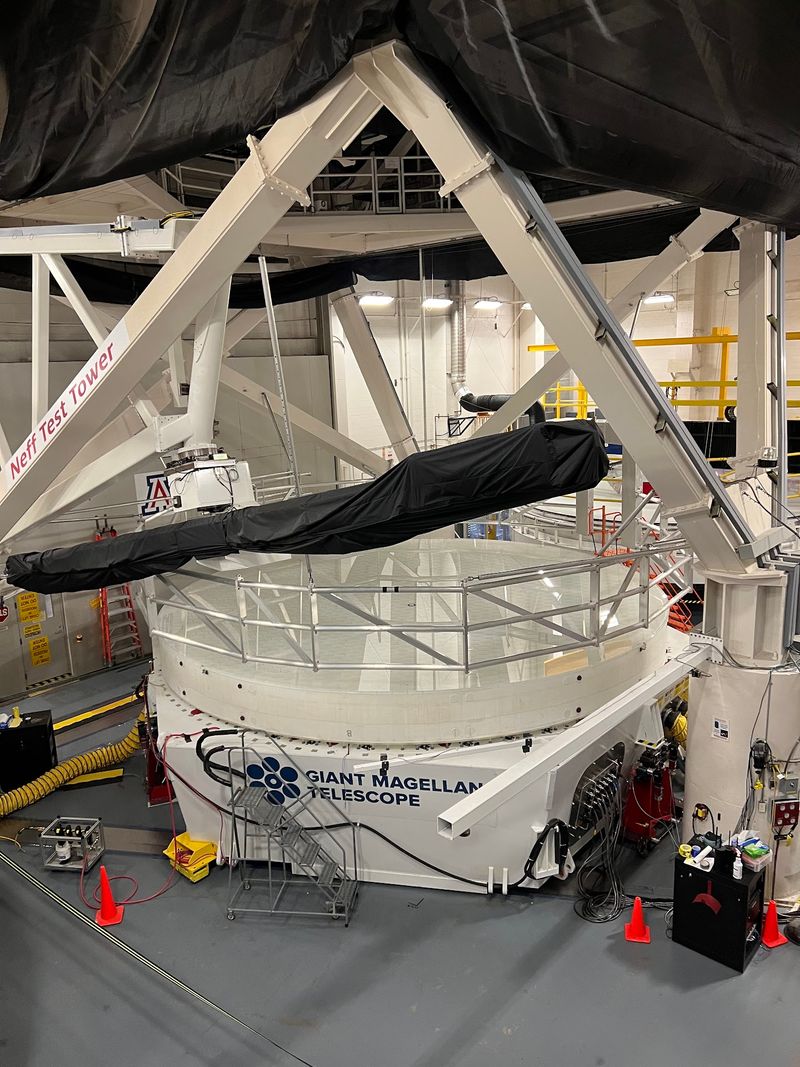
Among all the mirrors produced at the Richard F. Caris Mirror Lab, the ones destined for the Giant Magellan Telescope represent the most ambitious chapter yet.
When completed, the Giant Magellan Telescope will be the largest ground-based telescope on Earth, featuring a primary mirror system that spans 25 meters across. All seven of its primary mirror segments, each measuring 8.4 meters in diameter, are being made right here in Tucson.
Each segment weighs around 17 tons and must be polished to the same extraordinary tolerances as every other mirror that leaves this facility.
The combined light-gathering power of the seven-segment array will allow astronomers to study exoplanets, black holes, and the earliest galaxies in the universe with a level of clarity never before achieved from the ground.
The telescope will ultimately be installed in Chile, where high-altitude desert skies provide ideal viewing conditions. For anyone who visits the Mirror Lab while one of these massive segments is in progress, the experience carries the rare thrill of witnessing a future landmark of science being born in real time.
Other Major Telescopes Built With Tucson Mirrors
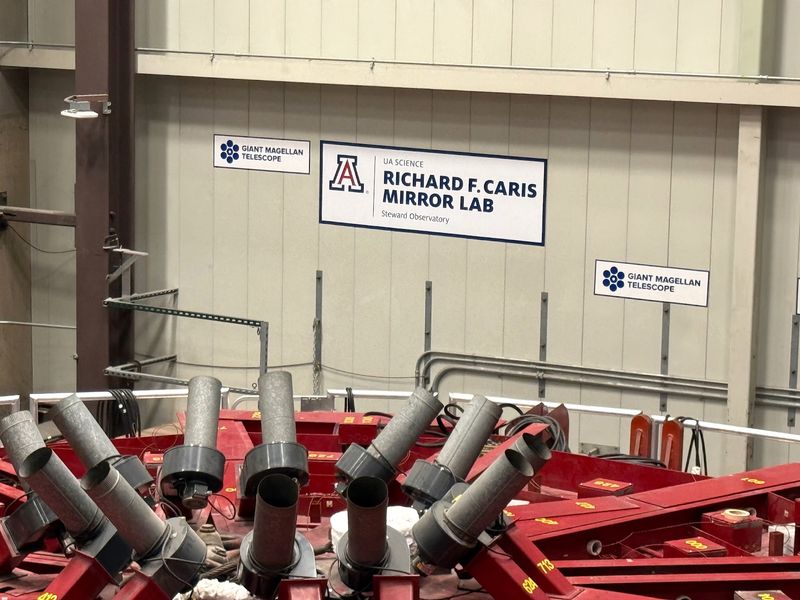
Long before the Giant Magellan Telescope became the lab’s headline project, the Richard F. Caris Mirror Lab had already supplied mirrors to some of the world’s most important observatories.
The Large Binocular Telescope on Mount Graham in Arizona uses two 8.4-meter mirrors made right here, giving it a combined light-collecting surface that made it the largest single telescope in the world when it opened.
The Vera C. Rubin Observatory in Chile, which is designed to photograph the entire visible sky every few nights to track how the universe changes over time, also received its primary mirror from Tucson.
That project alone took years of careful casting, cooling, and polishing before the mirror was ready to ship.
Knowing that mirrors made under a football stadium are now scanning the sky from mountain peaks in two different countries adds a certain hometown pride to the whole experience.
Visitors who follow astronomy news will likely recognize several of the telescope names mentioned during the tour, making the behind-the-scenes glimpse feel even more personally rewarding.
Planning Your Visit To The Mirror Lab Tour
Getting a spot on a Mirror Lab tour takes a little planning, but the effort is absolutely worth it. Tours run on weekdays with varying start times, and advance reservations are required since spaces fill up quickly.
The experience lasts about 90 minutes and begins with an introductory presentation at the historic Steward Observatory before moving into the lab itself beneath the stadium.
A few practical things to keep in mind before you go: visitors must be at least 10 years old to participate, and comfortable closed-toe flat shoes are mandatory because the tour involves moderate walking and climbing stairs. The lab is an active production facility, so safety comes first at every step.
Tripadvisor recognized this tour in 2025 as one of the Top 10% of Things to Do Worldwide, which is a well-earned distinction for something so genuinely unique.
Whether you are a lifelong astronomy fan or simply someone who appreciates extraordinary craftsmanship, standing just a few feet away from a mirror that will one day orbit a distant telescope is an experience that stays with you long after you leave Tucson.