
There’s A Massive Roadside Attraction Hiding In Arizona, And It’s Time To See It For Yourself
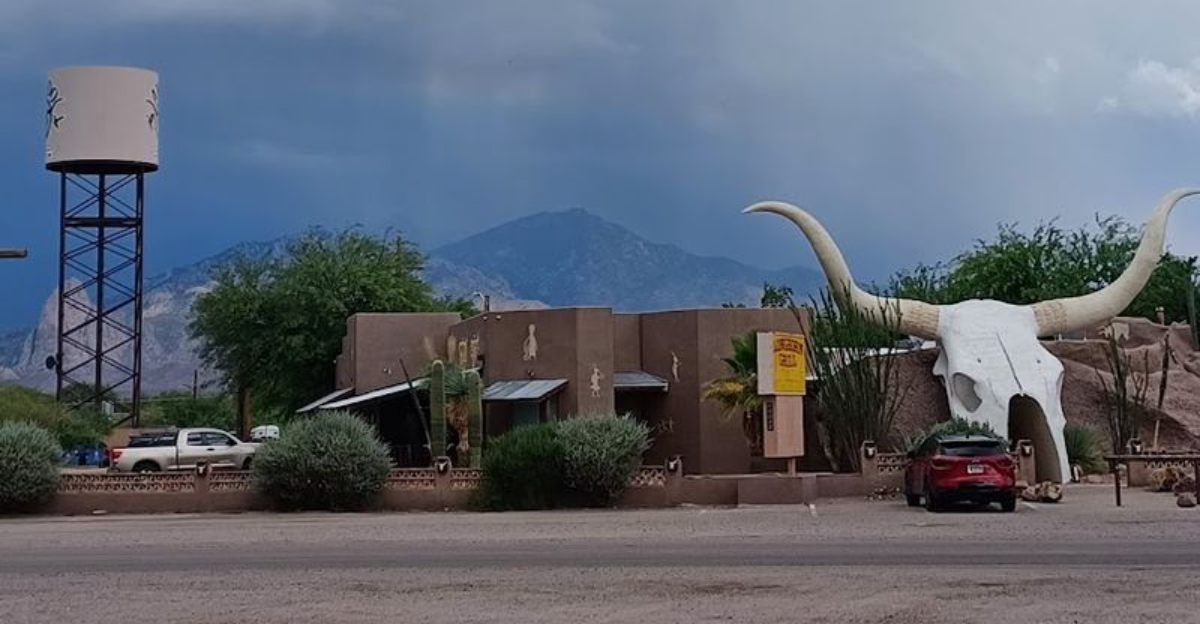
Road trips are meant for quirky discoveries, but few spots offer a greeting quite as literal as this one. Driving through the vast, sun-drenched landscape of Arizona, it is impossible to miss the towering silhouette of a massive longhorn steer looming over the highway.
This isn’t just a clever piece of marketing; it is a genuine slice of retro Americana that demands a quick pit stop Somewhere along Interstate 19, about 40 miles south of Tucson, Arizona, a giant steer skull stares back at you from the side of the highway, and trust me, you will not drive past it without doing a double take.
That is a place where the roadside attraction is literally the front door. You walk through the massive jaws of a 30-foot-wide concrete skull just to get to your table, which might be the coolest restaurant entrance in the entire country.
A place has way more going on than a giant skull, and I am here to tell you every detail worth knowing before you make the trip.
The Giant Skull That Started It All
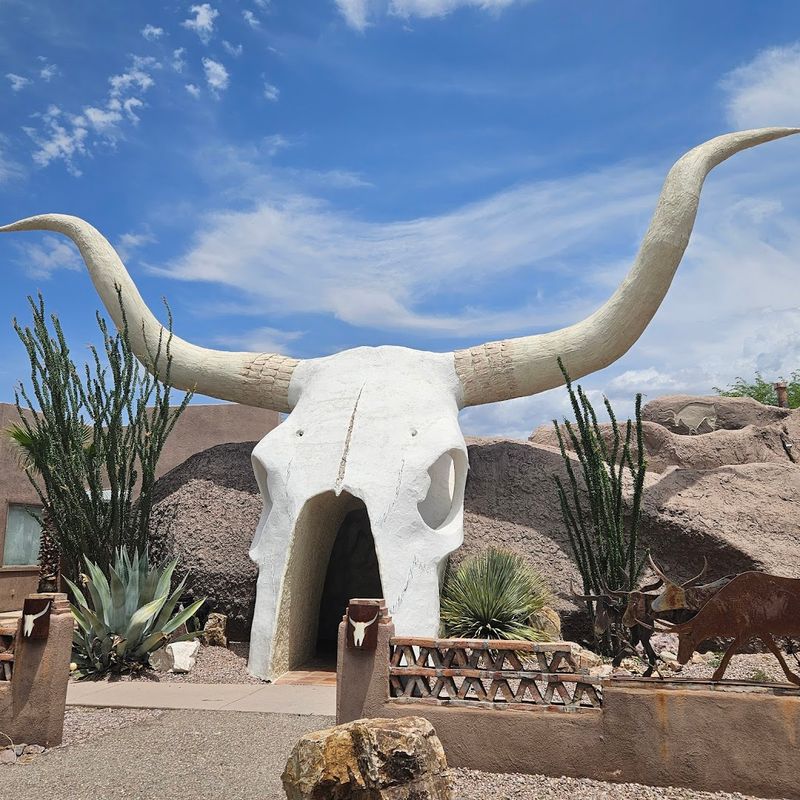
Standing at the entrance of the Longhorn Grill and Saloon feels like stepping onto a movie set. The giant steer skull, with horns spanning a full 30 feet across, is not something your brain processes immediately as real.
You look at it, look away, and look back again just to confirm that yes, you are actually about to walk through a concrete cow skull to grab lunch. Built in the early 1970s by local artist Michael Kautza, the sculpture was crafted from concrete, rebar, and stucco.
It was never meant to be subtle, and over the decades it has become one of Arizona’s most beloved roadside landmarks.
Travelers along I-19 have been pulling over to snap photos of it for generations. What makes this skull so special beyond its size is the sheer audacity of the idea.
Someone looked at an empty lot in a small Arizona town and decided the best possible thing to build there was a massive steer head. That bold creative spirit is exactly what makes American roadside culture so endlessly entertaining.
The Artist Behind The Masterpiece
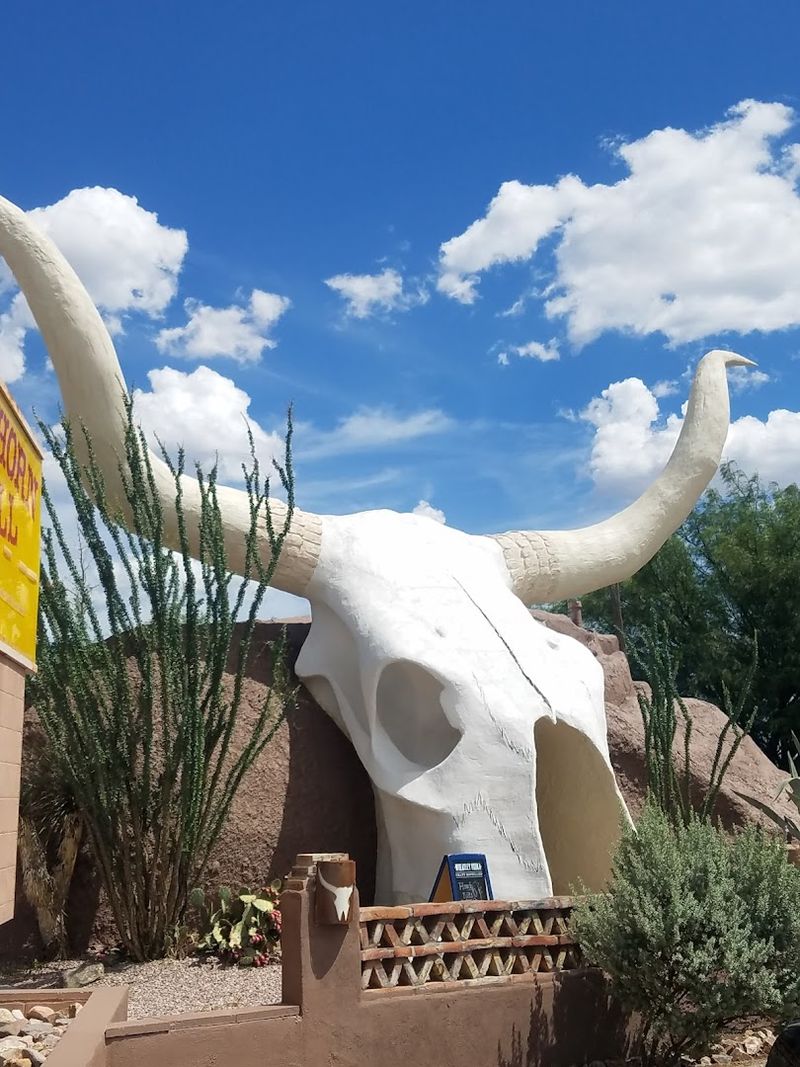
Not every roadside attraction comes with a known creator, so the fact that Michael Kautza built this iconic skull gives the whole place an extra layer of character.
Kautza was a local artist working in the early 1970s, a period when bold public art and quirky commercial architecture were thriving across the American Southwest.
His decision to build something this large, this strange, and this unforgettable along a busy highway corridor speaks to a genuine creative fearlessness.
The materials he chose, concrete, rebar, and stucco, were practical and durable, which is why the skull has survived for more than 50 years with its presence fully intact. It was built to last, and it has.
Most art from that era has faded or disappeared entirely, but Kautza’s steer skull still pulls people off the highway every single day.
Knowing that a real person with a real vision created this structure makes stopping here feel more meaningful. You are not just visiting a quirky landmark. You are standing inside someone’s wildly ambitious artwork, which is a pretty remarkable thing to experience over a plate of brisket.
A Building With Many Lives
Before it became the Longhorn Grill and Saloon, this building wore a lot of different hats. Over the years, the skull-fronted structure housed a roofing company, a bait shop, and a clothing store, among other businesses.
Each new tenant must have realized pretty quickly that operating out of a building shaped like a giant cow head was either going to be a marketing advantage or a very confusing experience for customers.
The property operated as a steakhouse called the Longhorn Grill starting in 1993, which felt like the most logical use of the space.
That version of the restaurant ran until 2012, when it closed following a foreclosure. For several years after that, the skull sat empty and quiet along the highway, which felt like a genuine loss for anyone who had ever made a detour to see it.
The building’s layered history makes it more than just a restaurant stop. It is a small snapshot of rural American commercial life, where quirky spaces get reinvented again and again until they finally find their best possible purpose.
In this case, that purpose turned out to be feeding hungry road trippers in style.
The Comeback Story Worth Cheering For
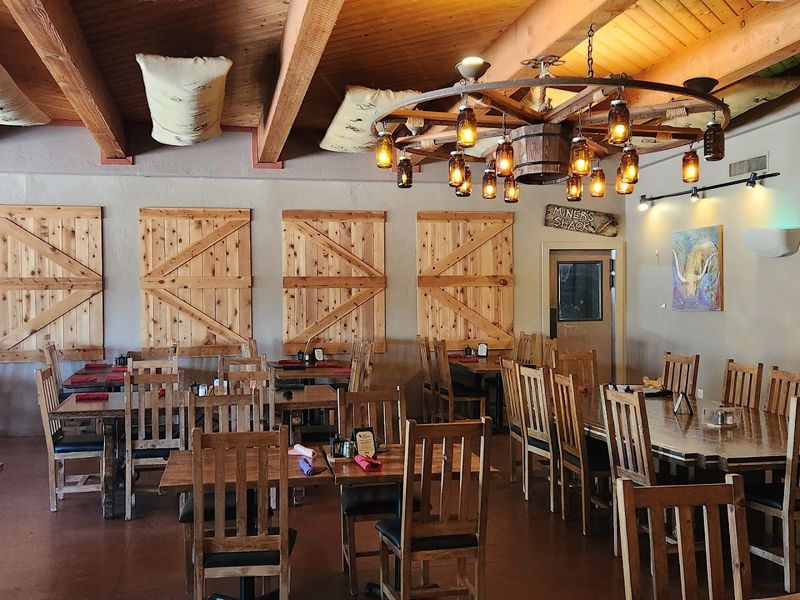
Every great landmark deserves a second chance, and the Longhorn Grill and Saloon got exactly that in 2019. Greg and Amy Hansen purchased the property back in 2018 and spent months working through significant renovations before reopening the doors in May of that year.
Taking on a building with this much history and this much structural personality could not have been a small undertaking.
The Hansens understood what made the place worth saving. Rather than stripping away its character or modernizing it beyond recognition, they leaned into the Wild West identity that had always made the Longhorn memorable.
The result was a restaurant that felt both refreshed and deeply connected to its roots, which is exactly the right balance for a spot like this.
Reopenings like this one matter to local communities and to road-trip culture in general. The Longhorn is not a chain restaurant or a corporate concept. It is a family-owned place with a story, and Greg and Amy Hansen took a real chance on keeping that story alive.
That kind of commitment to a community landmark is something worth supporting every time you pass through Amado.
The Menu That Matches The Mood
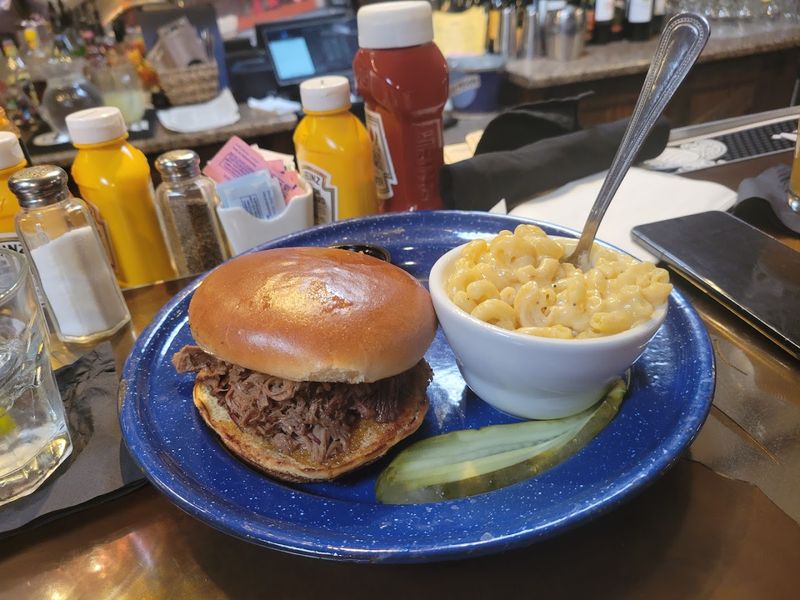
Walking through a giant skull to sit down for a meal sets a certain expectation, and the Longhorn Grill and Saloon delivers on it.
The menu is a hearty, no-fuss lineup of steaks, BBQ, sandwiches, burgers, and salads, the kind of food that makes sense after a long stretch of highway driving. Breakfast, lunch, and dinner are all served daily, which means there is no wrong time to stop in.
The brisket Reuben has earned a loyal following among regulars and first-time visitors alike. It takes the classic deli sandwich format and gives it a smoky, slow-cooked twist that feels right at home in an Arizona roadside setting.
If you are someone who judges a restaurant by one signature item, that sandwich is your benchmark here. Beyond any single dish, the overall food quality is the kind that makes you glad you pulled off the interstate.
This is not novelty dining where the attraction carries the food. The kitchen holds its own, and the combination of good cooking inside a genuinely unforgettable space makes the Longhorn one of the more satisfying stops you can make along I-19.
Wild West Atmosphere Inside The Walls
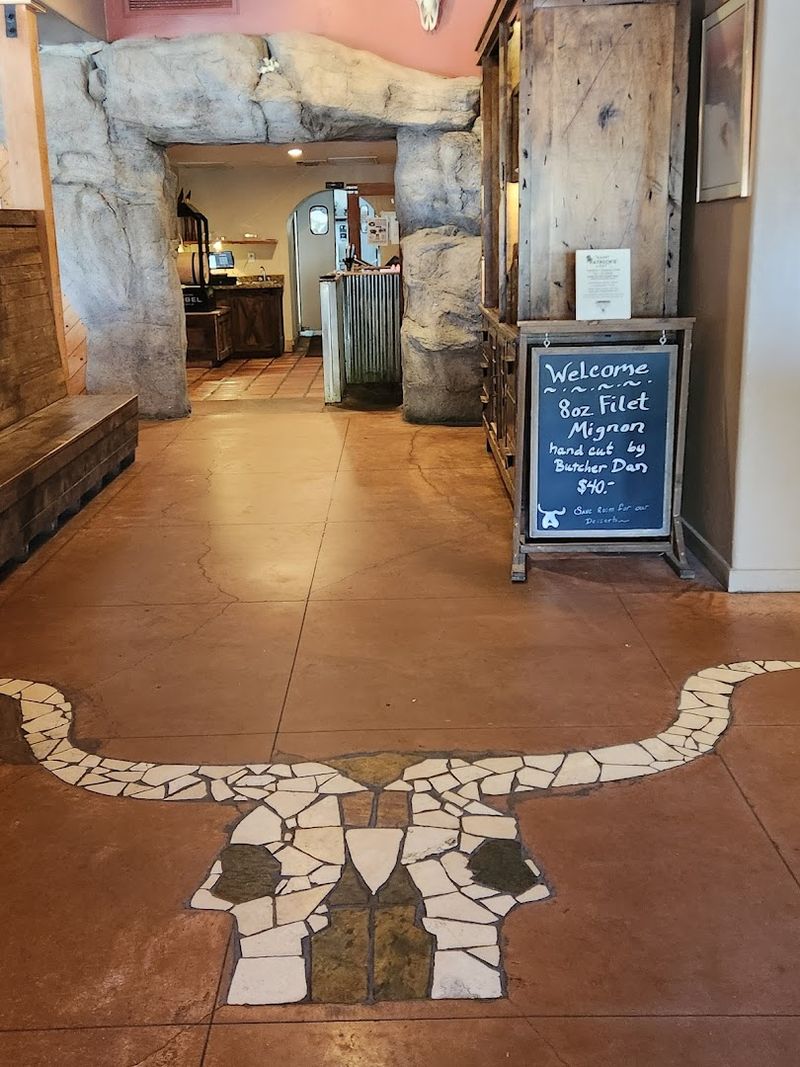
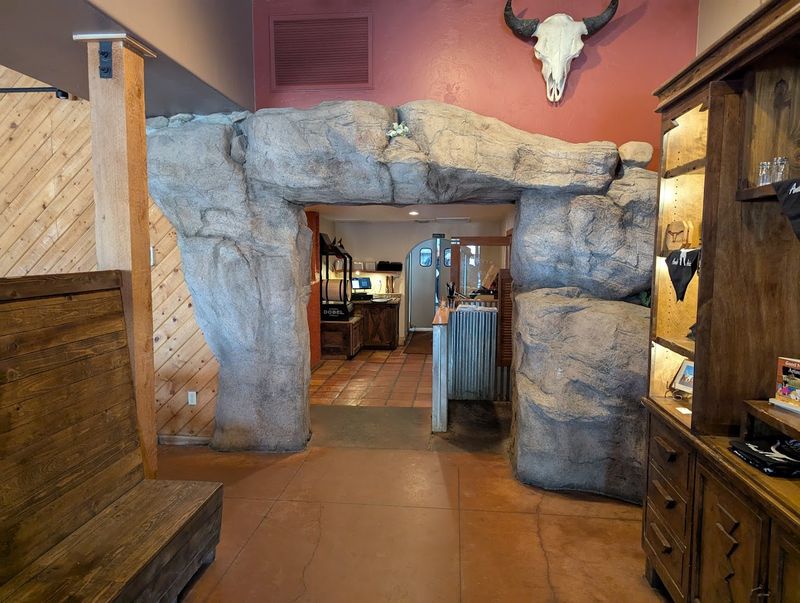
Once you step through those giant jaws and into the dining room, the Wild West theme continues without missing a beat.
The interior of the Longhorn Grill and Saloon is decked out with Western-themed decor that feels authentic rather than overdone. Wooden accents, vintage touches, and cowboy-era styling create an atmosphere that genuinely transports you somewhere else entirely.
There is a warmth to the space that makes it easy to settle in and stay a while. Road trips can feel relentless sometimes, all forward momentum and quick fuel stops, and a place like this invites you to actually pause.
The decor gives you things to look at, stories to wonder about, and a sense that you have landed somewhere with real personality.
The combination of the exterior spectacle and the interior atmosphere is what elevates the Longhorn beyond a simple novelty stop. Plenty of roadside attractions are worth a quick photo and nothing more. This one gives you a reason to come inside, sit down, and spend an hour.
That is a rare quality, and it is what keeps people talking about the Longhorn long after they have driven back home.
Hollywood Came Calling Too
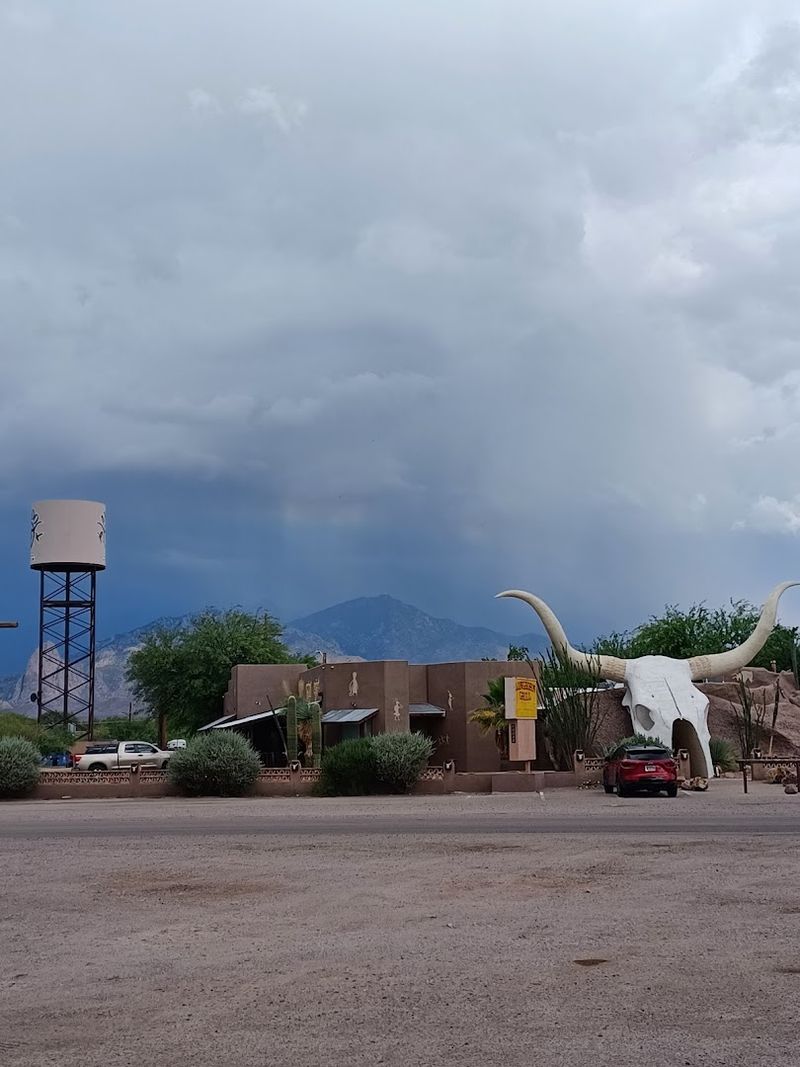
A skull this cinematic was never going to stay off camera for long. The iconic steer skull at the Longhorn has appeared in two notable films, which says something about how visually striking the structure really is.
Martin Scorsese used it as a location in his 1974 film Alice Doesn’t Live Here Anymore, a road drama that leaned heavily on the textures and landscapes of the American Southwest.
The skull showed up again in Boys on the Side in 1995, a film starring Drew Barrymore that also used the region’s distinctive visual character to great effect. Having two films two decades apart both choose the same roadside skull as a location is not a coincidence.
It is a testament to how powerfully the structure communicates something about the American road trip experience. Knowing the film history adds a fun layer to any visit. You can stand in the same spot where a film crew once set up their cameras and framed a shot for the big screen.
Not many lunch stops come with that kind of cinematic backstory, and it is one more reason the Longhorn Grill and Saloon earns its place on any serious road trip itinerary through Arizona.