
There’s A Remote Telescope In Arizona That Sees Farther Into Space Than Nearly Any On Earth (And You Can Tour It)
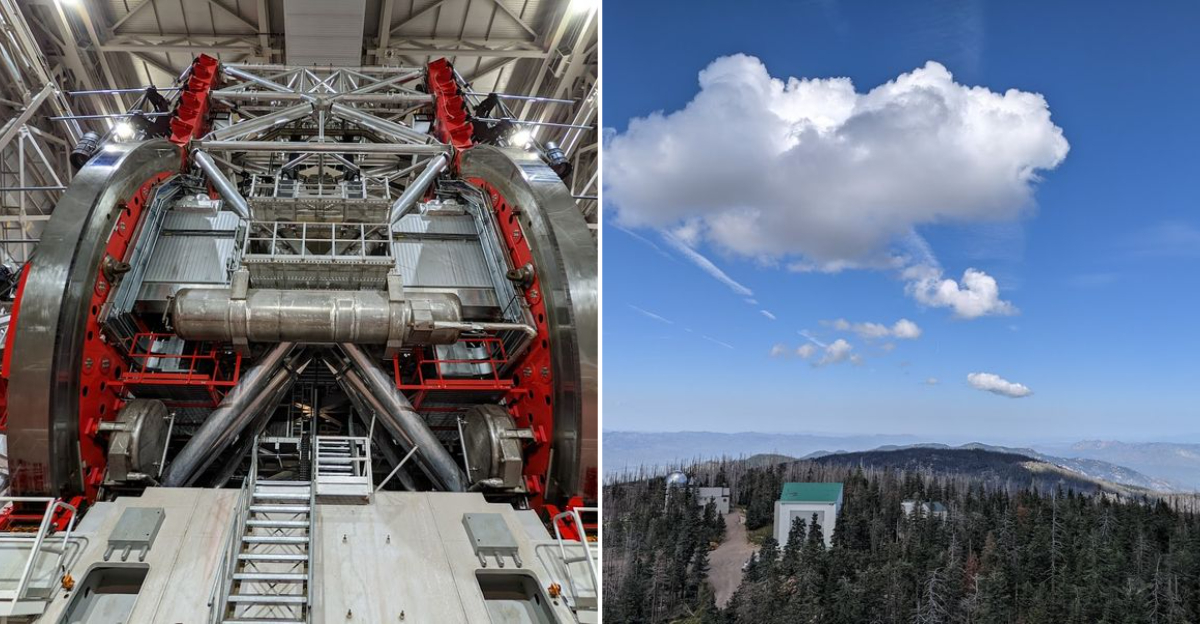
I have a confession: my usual interaction with “astronomy” involves accidentally seeing a bright light in the sky and wondering if it’s a planet or a really high-flying drone. Everything changed when I stepped into a massive observatory that looks more like a high-tech fortress than a research facility.
I discovered that there is a remote telescope in Arizona that sees farther into space than nearly any on Earth, and for the price of a fancy lunch, you can actually tour it and pretend you’re hunting for distant galaxies.
It’s a humbling, slightly dizzying experience that turns your brain into static, but it’s definitely better than staring at my phone. Pack your layers and get ready, we’re about to peek into the deep, dark abyss. This is not your average roadside attraction.
If you have ever looked up at a clear night sky and felt that pull of curiosity about what is really out there, this place will grab you by the collar and not let go.
The tour is educational, surprisingly accessible, and the kind of experience that makes you rethink your place in the universe. Stick with me, and I will walk you through everything you need to know before you make the drive up that mountain.
The Telescope That Thinks In Pairs
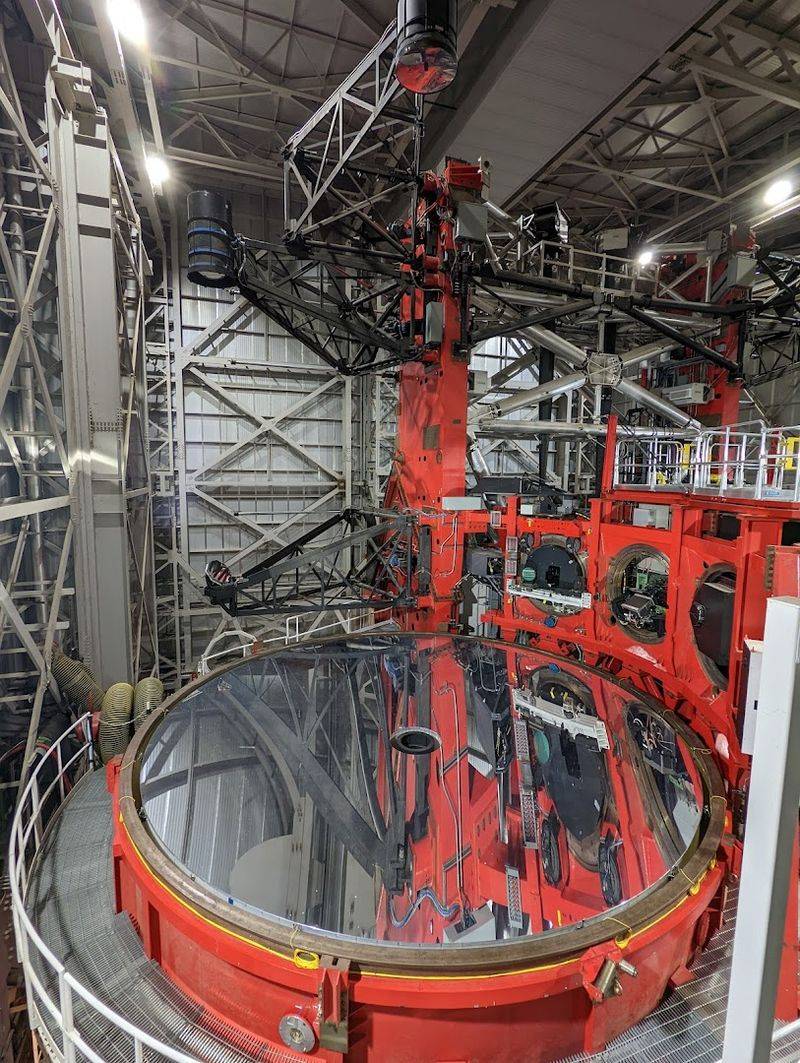
Most telescopes have one mirror. The Large Binocular Telescope has two, and that is what makes it so extraordinary. Each of its twin primary mirrors measures 8.4 meters, or about 331 inches, across.
Mounted side by side on a single shared structure, they work together like a giant pair of binoculars pointed at the cosmos.
The combined light-gathering power of these two mirrors equals that of a single 11.8-meter telescope. That is a staggering amount of light collected from objects that are unimaginably far away.
When I first saw photos of the twin mirrors before my visit, I honestly thought they were exaggerating the scale. Standing inside the dome and seeing them in person was a completely different story.
The engineering behind this design is elegant in a way that even a non-scientist can appreciate. Two mirrors, one mount, and a shared mission to push the boundaries of what humans can observe from our small corner of the universe.
That setup makes the telescope feel less like one instrument and more like a carefully coordinated cosmic machine.
How Sharp Is Its Vision, Really
Here is a number that stopped me mid-sentence when I first read it: when the LBT combines light from both mirrors using a process called interferometry, it achieves the resolving power of a 22.8-meter telescope.
That means it can distinguish fine details in the sky with extraordinary clarity.
To put that in relatable terms, the LBT can actually outperform the Hubble Space Telescope in certain infrared wavelengths. Hubble is famous for its stunning images, so hearing that a ground-based telescope can beat it in any category is genuinely surprising.
The secret is adaptive optics technology built into the system. Deformable secondary mirrors flex in real time to cancel out the blurring caused by Earth’s atmosphere.
Sensors detect distortions hundreds of times per second, and the mirrors adjust accordingly. The result is an image so sharp it achieves what scientists call a high Strehl ratio, a technical way of saying the telescope sees the universe almost perfectly clearly.
That blend of raw mirror size and constant correction is what makes the LBT feel so futuristic. It is not just collecting more light from deep space, it is sharpening that light with almost unbelievable precision.
Mount Graham And The Sky Above It
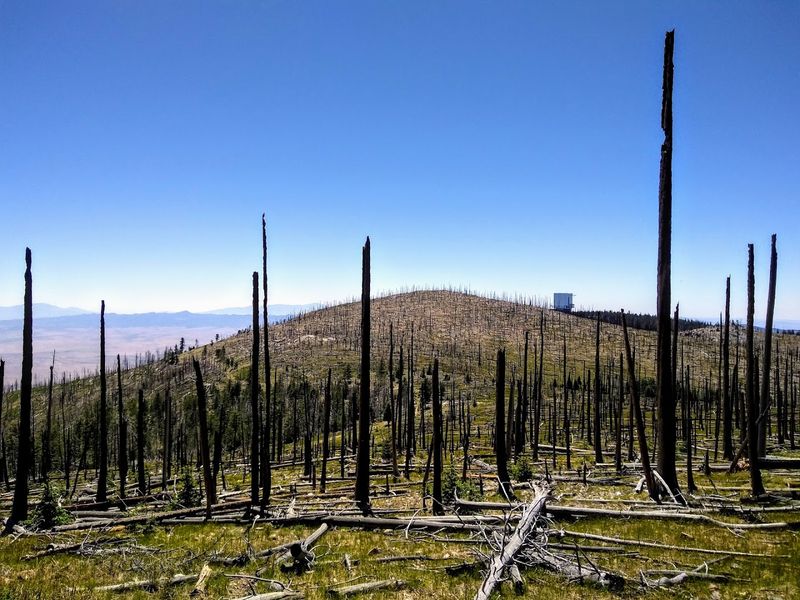
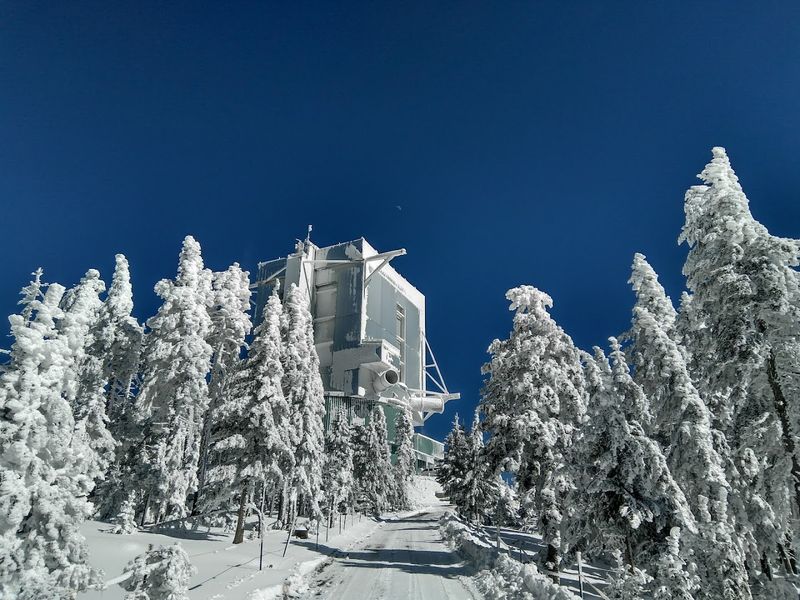
Elevation matters enormously in astronomy, and Mount Graham delivers. Rising to about 3,200 meters, or roughly 10,500 feet, above sea level in the Pinaleno Mountains of southeastern Arizona, the peak sits well above much of the atmospheric interference that plagues observatories at lower altitudes.
The drive up is an experience all on its own. You pass through multiple ecological zones, watching the landscape shift from desert scrub to pine forest as you climb. By the time you reach the summit, the air is noticeably thinner and the views are sweeping in every direction.
I remember stepping out of the tour vehicle near the top and feeling the temperature drop by nearly 30 degrees compared to the valley below.
The sky up there has a different quality to it, darker, calmer, and somehow more present. Astronomers chose this site carefully, and once you are standing at the summit, it becomes obvious why Mount Graham earned its place among the world’s premier observatory locations.
What The Telescope Actually Studies
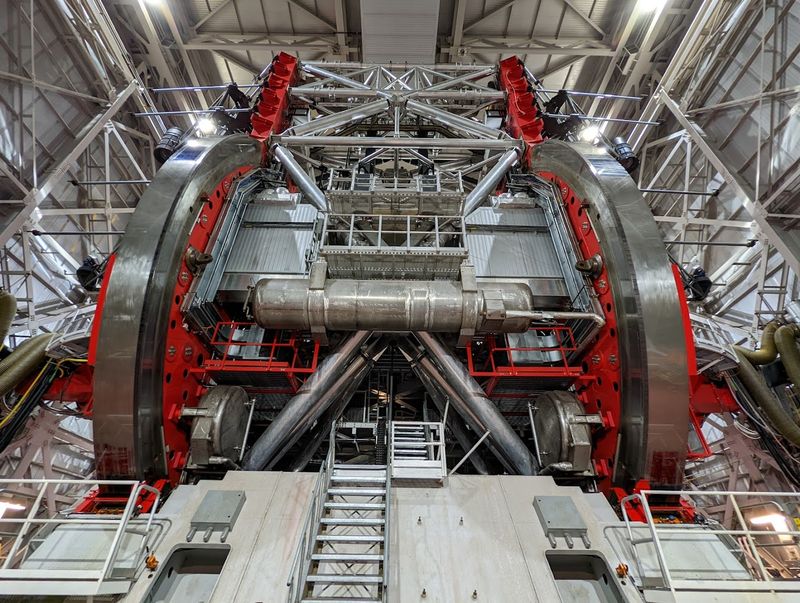
The LBT is not pointed at just one type of target. Its suite of instruments spans both optical and infrared wavelengths, giving researchers an unusually broad toolkit for exploring the universe. Scientists use it to study everything from planets orbiting nearby stars to galaxies so far away that their light left before Earth even formed.
Exoplanet research is a major focus. Astronomers analyze the atmospheres of planets beyond our solar system, searching for chemical signatures that might hint at conditions worth knowing more about. The telescope’s sensitivity in the infrared range makes it especially useful for this kind of work.
At the other end of the cosmic scale, researchers use the LBT to observe what are called high-redshift galaxies, objects so distant that the universe’s expansion has stretched their light into the infrared spectrum.
Studying these ancient structures helps scientists understand how galaxies formed and evolved over billions of years. The range of science happening here is genuinely breathtaking.
Booking Your Tour Before You Go
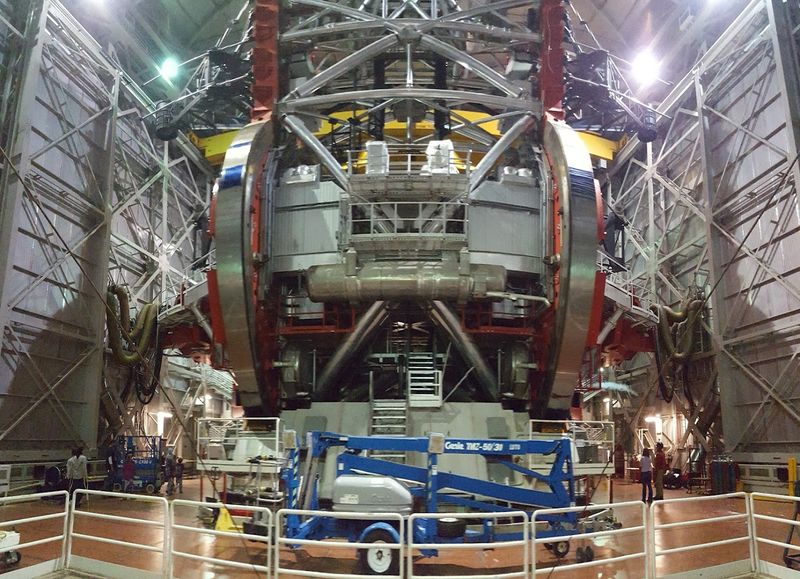
Getting to the LBT is not as simple as showing up and knocking on the door. The observatory sits within a protected zone established to preserve the habitat of the Mount Graham red squirrel, an endangered species found nowhere else on Earth.
Because of this, all visitors must join an organized tour and obtain the necessary permits in advance. Eastern Arizona College’s Discovery Park Campus organizes these public tours, which typically run on weekends from mid-May through mid-November, depending on weather conditions.
Spots fill up, so booking ahead is strongly recommended. I made my reservation about three weeks in advance and was glad I did.
The tour departs from Safford, Arizona, which is the nearest town at the base of Mount Graham. Plan to set aside a full day for the experience. The drive alone takes well over an hour each way, and the guided time at the summit is worth savoring rather than rushing.
Wear layers and bring a good pair of walking shoes. The temperature can shift quickly as you climb, so the mountain may feel nothing like the desert town you left below.
That extra effort only makes the visit feel more special once the dome finally comes into view.
The Full Tour Experience From Base To Summit
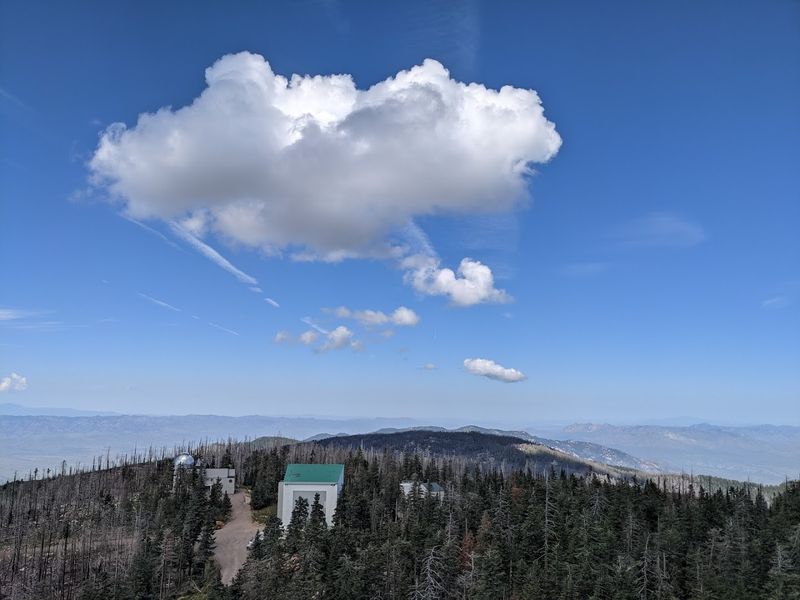
The tour itself is far more than a quick peek through a telescope eyepiece. From the moment the vehicle starts climbing Mount Graham, your guide begins weaving together stories about the mountain’s geology, its layered ecosystems, and the history of the observatory complex at its peak.
The ride feels more like a nature documentary than a shuttle service. Lunch is served near the summit, which I found to be an unexpectedly charming touch.
Sitting at nearly 10,500 feet, eating a packed meal while looking out over the Sonoran Desert far below, is a memory that has stayed with me. After lunch, the real highlight begins.
Guides lead small groups into the observatory buildings, explaining how each telescope works and what kind of research it supports.
The LBT dome is enormous, and standing beneath those twin mirrors while a scientist describes what they have observed is one of those rare moments that makes the universe feel both vast and oddly personal at the same time.
Planning Your Visit To Safford And Beyond

Safford is the kind of town that feels genuinely off the tourist radar, and that is part of its appeal. Located in the Gila Valley of southeastern Arizona, it serves as the practical base for anyone visiting the observatory.
The town has a handful of motels, restaurants, and gas stations, so arriving the night before your tour makes the early morning departure much easier to manage.
Eastern Arizona College’s Discovery Park Campus, located in Safford at 1651 W. Discovery Park Blvd., is the starting point for tours and also worth visiting on its own.
The campus features a science center and a smaller community telescope that is open for public viewing on certain evenings, a nice warm-up before your big day on the mountain.
The surrounding region also offers hot springs, hiking trails, and scenic byways that make a longer trip worthwhile.
Visitors who turn the observatory tour into a two or three day road trip through southeastern Arizona tend to leave with a much richer sense of just how remarkable this corner of the state really is.