
These Abandoned Places In Florida With Fascinating Stories Worth Discovering This March
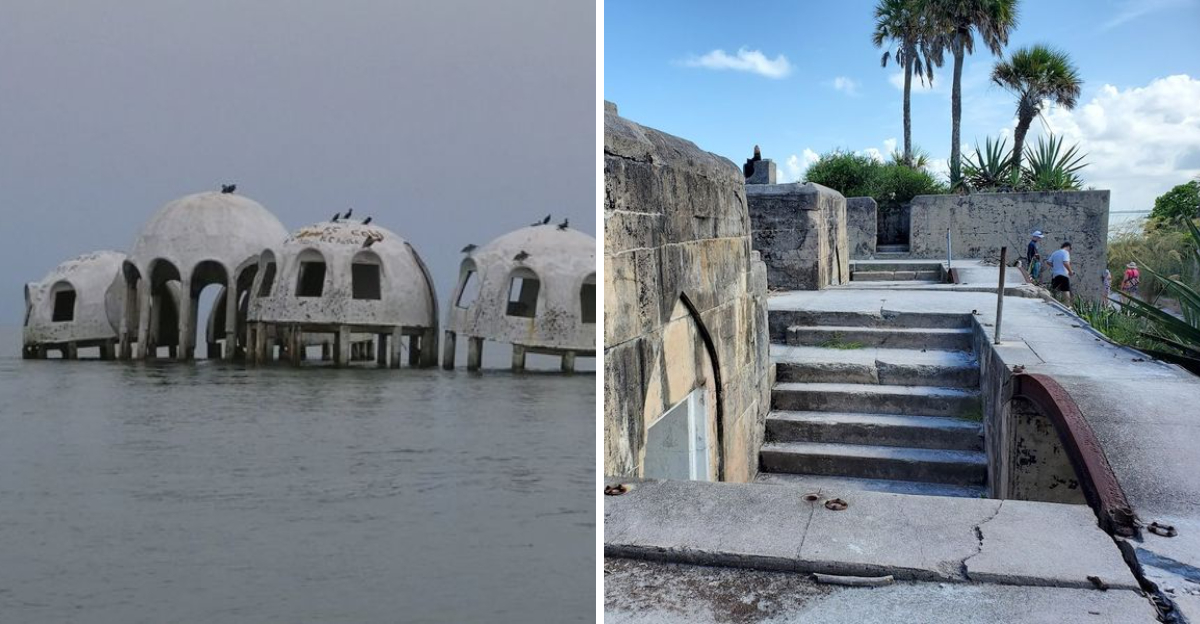
Florida is famous for beaches, sunshine, and theme parks, but here is a question most travelers never think to ask. What happens when you explore the places Florida left behind?
Across the state, hidden in forests, along quiet backroads, and behind walls of creeping vines, there are abandoned sites that feel frozen in time. Crumbling forts stand where soldiers once watched the horizon.
Old buildings sit silent beneath moss-draped oaks. Forgotten ruins slowly disappear into the landscape as nature reclaims them piece by piece.
Walking through places like these feels different from any typical Florida attraction. The air is quieter.
Every broken wall or weathered staircase seems to hold a story waiting to be uncovered.
March is the perfect time to explore them. The weather is mild, the trails are inviting, and the atmosphere makes these forgotten corners feel even more mysterious.
For travelers who love history and discovery, Florida’s abandoned places offer a journey into the past few people ever see.
1. Fort Dade Ruins, Egmont Key State Park
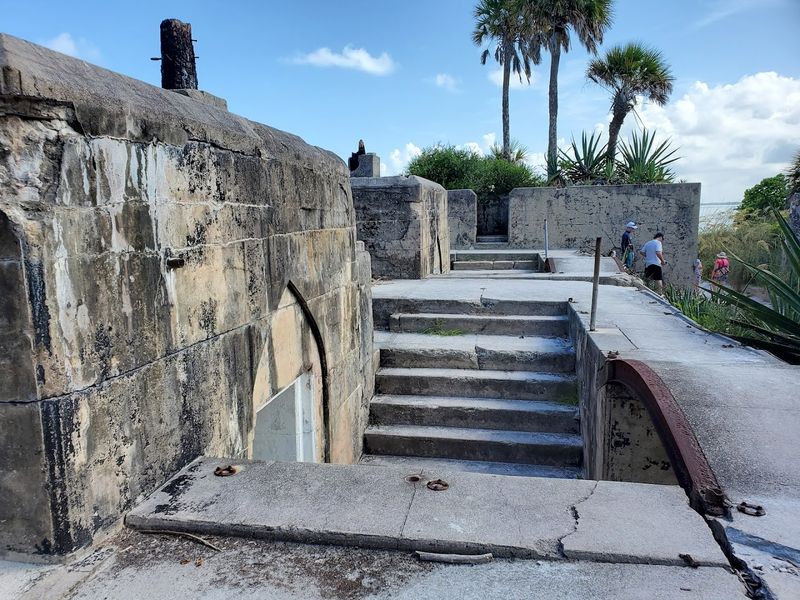
Sitting on a small island in the Gulf of Mexico, Fort Dade feels like stepping into a time machine that takes you back more than a century.
The military outpost was built in the 1890s to protect Tampa Bay during the Spanish-American War, and soldiers once marched through its corridors preparing for battles that would shape American history.
Today, the brick buildings stand in various states of decay, with walls crumbling and nature slowly reclaiming what humans built.
You can only reach this abandoned fort by boat or ferry, which makes the adventure even more exciting.
Walking through the empty barracks and gun batteries, you’ll notice how the tropical environment has transformed the military structures into something almost magical.
Gopher tortoises now live in the ruins, and seabirds nest in the old fortifications.
The contrast between the fort’s military past and its peaceful present creates an atmosphere that photographers and history lovers find irresistible.
Egmont Key itself is a protected state park, so while you explore the ruins, you’ll also encounter beautiful beaches and wildlife.
The island’s isolation has preserved both the natural environment and the historical structures in ways that mainland locations cannot match.
Address: Egmont Key State Park, St. Petersburg, FL 33715
2. Bulow Plantation Ruins Historic State Park
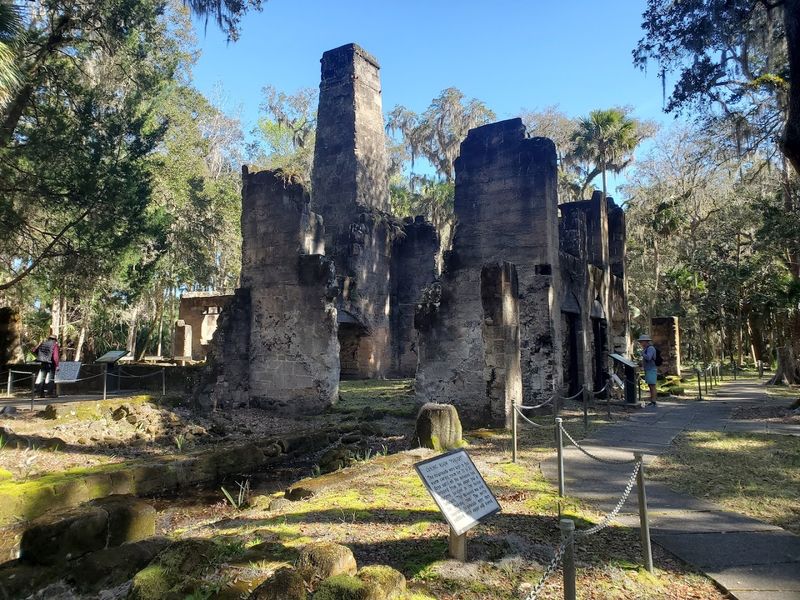
Walking among the towering coquina walls of what was once a thriving sugar plantation creates an eerie feeling that’s hard to describe.
Major John Bulow built this massive operation in the early 1800s, and at its peak, the plantation produced sugar and molasses using enslaved labor.
The ruins you see today are the remains of the sugar mill, with walls reaching up to 40 feet high in some places.
These structures survived because they were built from coquina, a natural stone made from compressed shells that’s incredibly durable.
The plantation met its end during the Second Seminole War in 1836 when it was burned to prevent it from falling into enemy hands.
Now, massive live oak trees draped with Spanish moss create a canopy over the ruins, giving the site an almost mystical quality.
A spring-fed creek runs through the property, and you can follow nature trails that wind past the old mill and through beautiful Florida woodlands.
Interpretive signs throughout the park explain the plantation’s history, including the difficult lives of the enslaved people who worked there.
The combination of natural beauty and historical significance makes this one of Florida’s most thought-provoking abandoned sites.
Address: 3501 Old Kings Rd, Flagler Beach, FL 32136
3. Dummett Plantation Sugar Mill Ruins
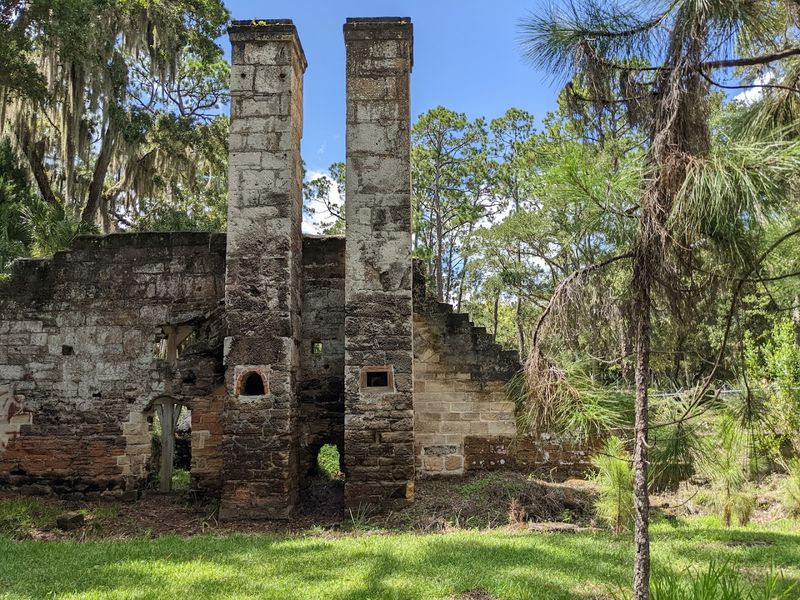
Hidden in a residential area near Ormond Beach, these plantation ruins surprise visitors who stumble upon them while exploring the neighborhood.
Thomas Dummett established this sugar plantation in the 1820s, and like Bulow, it operated using enslaved labor during Florida’s territorial period.
The remaining structures include portions of the sugar mill built from coquina blocks, though they’re smaller and more weathered than the Bulow ruins.
What makes this site particularly interesting is how it sits right in the middle of a modern community, creating a stark contrast between past and present.
The ruins are surrounded by a small park where locals walk their dogs and families have picnics, seemingly unaware of the heavy history beneath their feet.
Vegetation grows through the cracks in the stone, and you can see where time and weather have worn away the mortar holding the blocks together.
The plantation also met its end during the Second Seminole War, burned along with other area plantations in 1836.
A historical marker provides basic information about the site, but much of the plantation’s story remains buried in archives and old documents.
Visiting this location reminds you that Florida’s complicated history exists right alongside its modern development.
Address: 1620 Old Plantation Rd, Ormond Beach, FL 32174
4. Rio Vista Ruins (Riviera Hotel Arch Ruins)
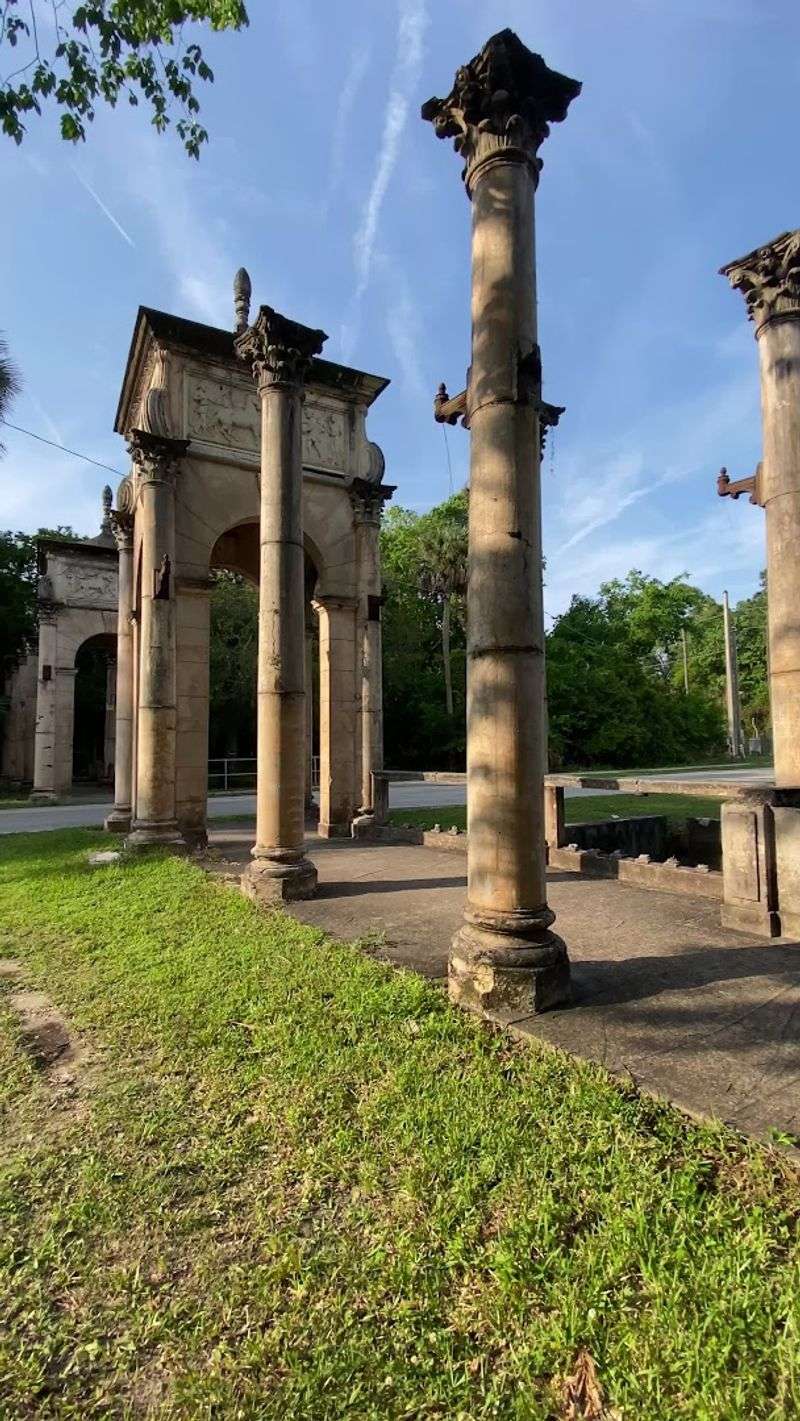
Standing on Ormond Beach, a solitary stone archway rises from the sand like a monument to Florida’s 1920s tourism boom.
This arch is all that remains of the Riviera Hotel, a luxurious resort that once welcomed wealthy visitors to Florida’s east coast.
Built during the land boom of the 1920s, the hotel featured Spanish Revival architecture and promised guests a taste of Mediterranean elegance.
The hotel operated successfully for several years, but the Great Depression and changing tourism patterns eventually led to its closure.
Rather than renovating the aging structure, developers demolished most of the hotel, but somehow this decorative entrance arch survived.
Now, the arch stands as an accidental monument, framing views of the Atlantic Ocean and serving as a popular photography subject.
Beach walkers often stop to admire the ruins and wonder about the hotel’s glamorous past.
The contrast between the ornate stonework and the natural beach environment creates a romantic, almost melancholy atmosphere.
Preservation efforts have kept the arch standing, though saltwater and weather continue to wear away its details.
The Rio Vista ruins remind us how quickly grand buildings can disappear, leaving only fragments for future generations to puzzle over.
Address: 1 N Beach St, Ormond Beach, FL 32174
5. Chautauqua Amphitheater Ruins
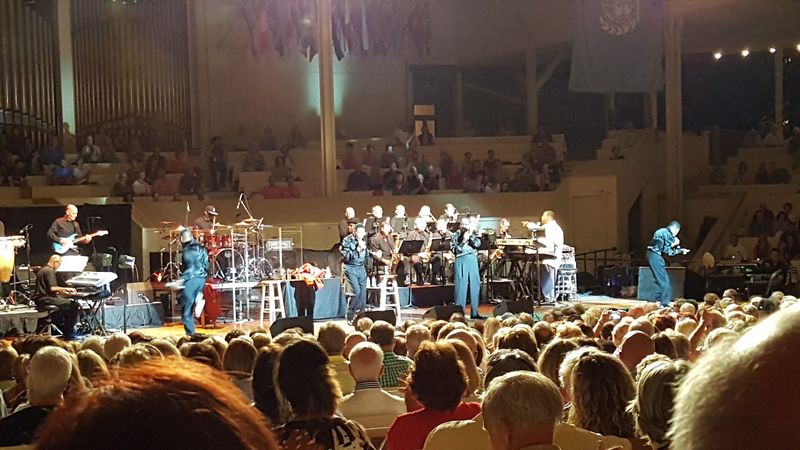
In a quiet corner of Arcadia, the remains of an amphitheater speak to a time when traveling educational and entertainment programs brought culture to small towns.
The Chautauqua movement swept across America in the late 1800s and early 1900s, offering lectures, concerts, and performances in communities far from big cities.
Towns built special facilities to host these events, and Arcadia’s amphitheater was one of the finest in Florida.
Hundreds of people would gather to hear speakers discuss everything from politics to science, or to enjoy musical performances.
The amphitheater featured semicircular seating areas and a stage, all built from concrete to withstand Florida’s weather.
As radio and later television brought entertainment directly into homes, the Chautauqua movement faded, and the amphitheater fell into disuse.
Today, concrete seats are cracked and tilted, vegetation grows through every gap, and the stage area has partially collapsed.
Yet the basic structure remains recognizable, and you can still imagine audiences sitting on warm evenings, watching performances under the stars.
The site has an almost sacred quality, like ruins of an ancient theater, though it’s barely a century old.
Local historians occasionally discuss restoring the amphitheater, but for now, it remains a beautiful ruin.
Address: Lake Katherine Rd, Arcadia, FL 34266
6. Suwannee Springs Bridge to Nowhere
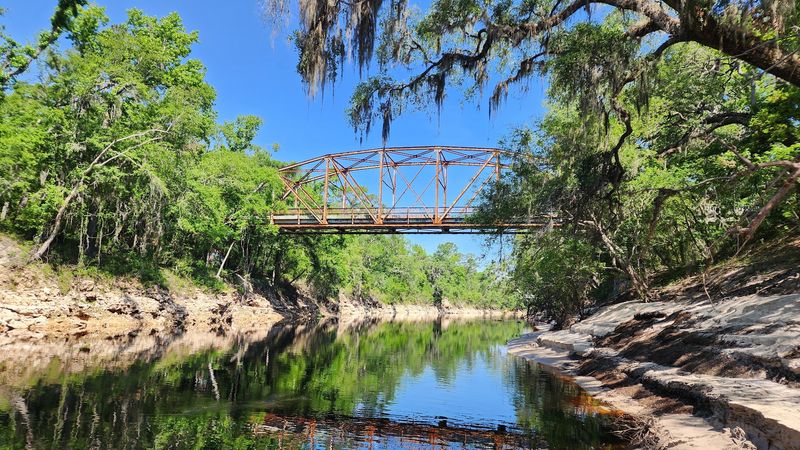
Rising from the dark waters of the Suwannee River, a concrete bridge extends partway across before stopping abruptly in midair.
This strange structure, known locally as the Bridge to Nowhere, was part of an ambitious plan to connect communities across the river.
Construction began in the 1930s as a Depression-era public works project meant to provide jobs and improve transportation.
Workers built sturdy concrete supports and began extending the bridge deck across the river’s span.
Then, for reasons that remain somewhat mysterious, construction stopped and never resumed.
Some say funding ran out, others claim engineering problems made completion impossible, but the real story has been lost to time.
Now, the incomplete bridge stands as an accidental monument to abandoned dreams and failed plans.
Kayakers and canoeists paddling the Suwannee River pass beneath it, marveling at the structure that leads nowhere.
The bridge has become a favorite subject for photographers who appreciate its surreal quality.
Cypress trees grow in the water around the supports, and the entire scene has an otherworldly beauty.
The Bridge to Nowhere perfectly captures how human ambitions sometimes fall short, leaving behind mysterious remnants for future generations to discover and wonder about.
Address: US-129, Live Oak, FL 32060
7. Cape Romano Dome Houses
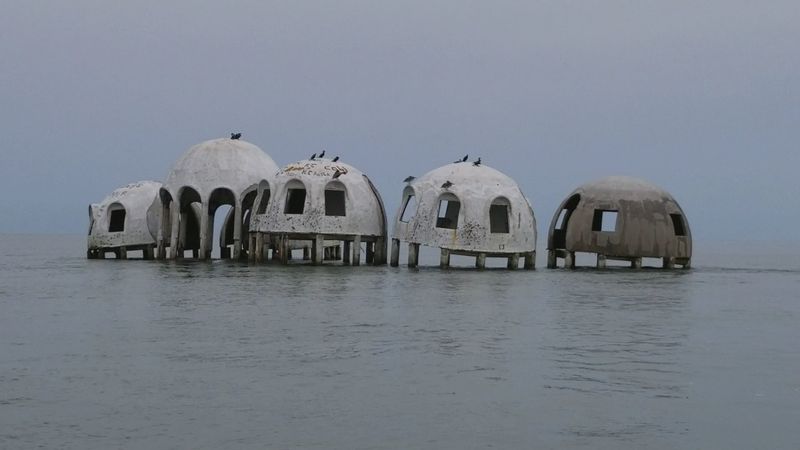
Off the coast of Marco Island, a cluster of strange white dome structures rises from the shallow waters of the Gulf of Mexico like something from another planet.
These futuristic buildings were constructed in 1980 by a retired oil producer named Bob Lee who wanted to create a storm-resistant beach house.
The unique design used interconnected concrete domes that were meant to withstand hurricanes and shifting coastal sands.
For years the home sat safely on a barrier island, but powerful storms slowly eroded the surrounding land.
Eventually the shoreline disappeared entirely, leaving the dome structures standing directly in the water.
Today the abandoned domes are partially collapsed and covered in barnacles, but they remain one of Florida’s most surreal sights.
Kayakers and boaters often visit the site to photograph the unusual structures rising from the sea.
The domes have become a symbol of Florida’s constantly changing coastline and the power of nature to reshape even the most carefully planned buildings.
Address: Cape Romano, Marco Island, FL 34145
8. Yulee Sugar Mill Ruins Historic State Park
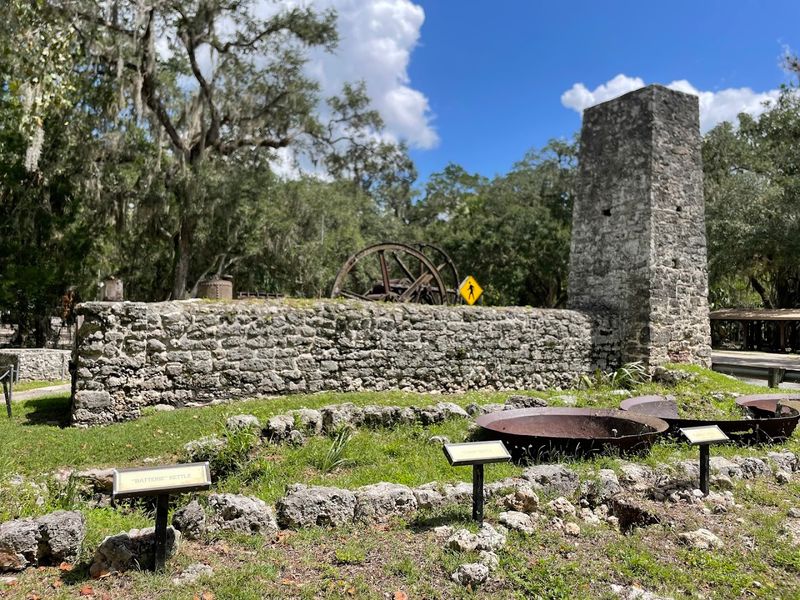
Hidden in Homosassa, the remains of a massive sugar mill stand quietly among tall oak trees and palm fronds.
This plantation complex was once part of one of the largest sugar operations in Florida during the mid-1800s.
The site was owned by David Levy Yulee, one of Florida’s earliest U.S. senators and a major figure in the state’s early railroad development.
At its peak, the plantation produced sugar, syrup, and citrus using hundreds of enslaved workers.
Today the most striking feature is a huge iron sugar mill machinery set within the stone ruins.
The massive gears and rollers look almost frozen in time, giving visitors a rare glimpse into how sugar production once worked.
Unlike many historic sites, the machinery remains in place exactly where it operated more than 150 years ago.
The quiet park surrounding the ruins adds to the eerie atmosphere, making it easy to imagine the plantation as it once was.
Address: 3400 Yulee Dr, Homosassa, FL 34448
9. Koreshan Unity Settlement
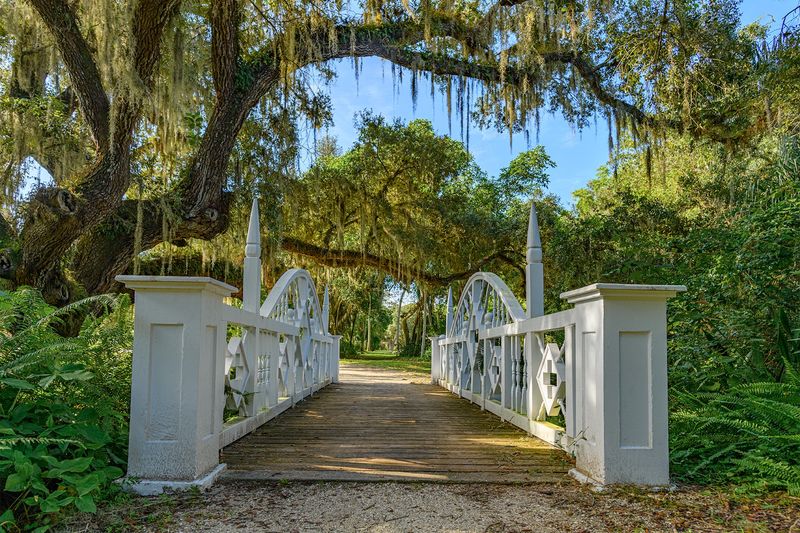
Deep within Estero lies one of Florida’s strangest historical communities.
The Koreshan Unity Settlement was founded in the late 1800s by Cyrus Teed, a charismatic leader who believed the Earth existed inside a giant hollow sphere.
His followers built an entire self-sufficient community along the Estero River based on these unusual beliefs.
Members constructed homes, workshops, gardens, and a large meeting hall while waiting for the world to recognize their philosophy.
For decades the community functioned as a cooperative society with shared labor and resources.
After the group’s membership slowly declined during the early 1900s, the settlement was eventually abandoned.
Today the preserved wooden buildings stand quietly within Koreshan State Park, creating an eerie glimpse into a forgotten social experiment.
Walking through the empty structures feels like stepping into a chapter of Florida history that few people know about.
Address: 3800 Corkscrew Rd, Estero, FL 33928