
These Are Unique Arizona Experiences You Can’t Miss In 2026
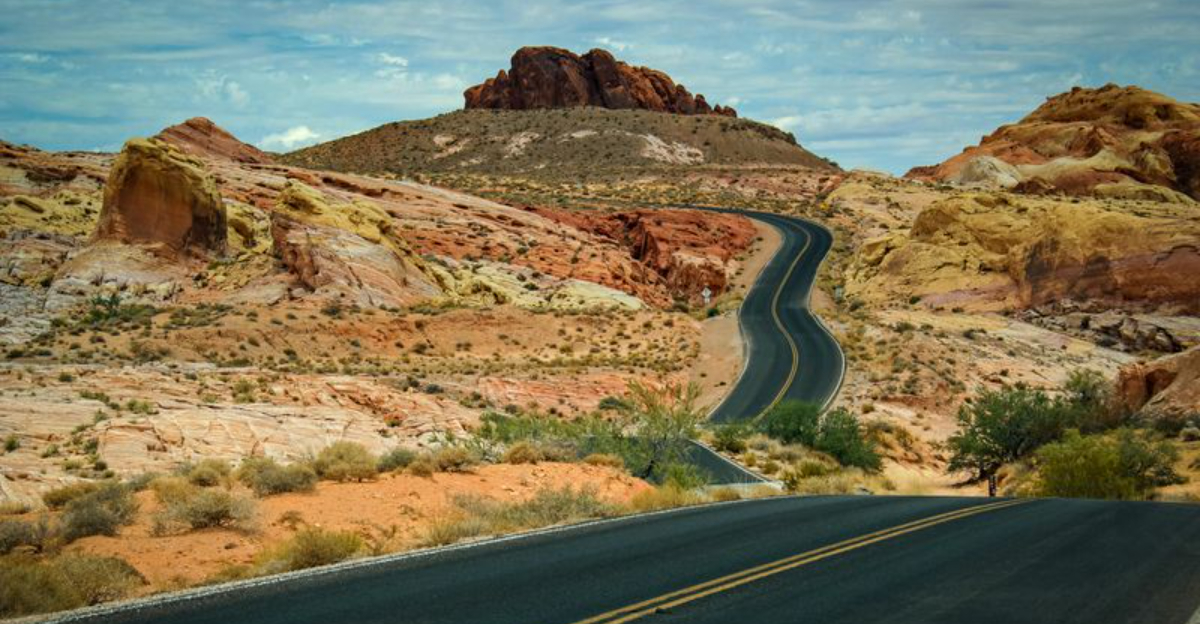
Arizona keeps surprising me every time I visit, and 2026 is shaping up to be an incredible year to explore this state. I have watched sunrises that painted the desert gold, floated past wild horses on lazy rivers, and stood inside slot canyons that felt like nature’s own cathedral.
This place offers so much more than the usual tourist checklist. You will find ancient cliff dwellings, underground mining tunnels, roadside nostalgia along historic routes, and night skies so clear they make you rethink your place in the universe.
I put together this list because these experiences gave me memories I still replay in my mind months later. Each one shows a different side, and I think you will leave each spot with stories worth telling.
Arizona summers may be scorching, but the desert landscapes and vibrant culture make it a destination like no other.
1. Watching The Sunrise From Horseshoe Bend Without The Crowds
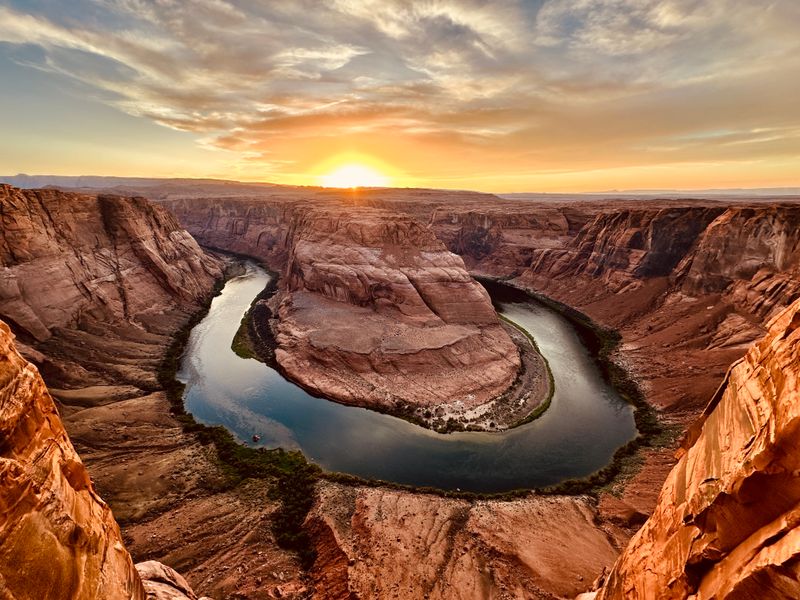
Setting my alarm for 4:30 a.m. felt painful until I stood at the rim of Horseshoe Bend and watched the sky shift through shades of purple, orange, and gold.
This iconic viewpoint sits just outside Page, Arizona, where the Colorado River bends into a perfect horseshoe shape 1,000 feet below.
Most visitors arrive midday when the parking lot overflows and the rim feels like a crowded observation deck, but early risers get the place nearly to themselves.
I walked the three-quarter-mile trail in the cool pre-dawn air, my headlamp cutting through the darkness, and reached the edge just as the first light touched the canyon walls. The river glowed like molten copper, and the silence made the whole scene feel almost sacred.
By the time the sun fully rose, only a handful of other people had joined me, and we all stood there quietly, cameras clicking softly.
The heat had not yet arrived, the light was soft and perfect, and I had enough space to find my own spot along the rim without jostling for position. Leaving before the tour buses arrived felt like keeping a beautiful secret.
2. Soaking In A Natural Hot Spring Beneath The Desert Sky
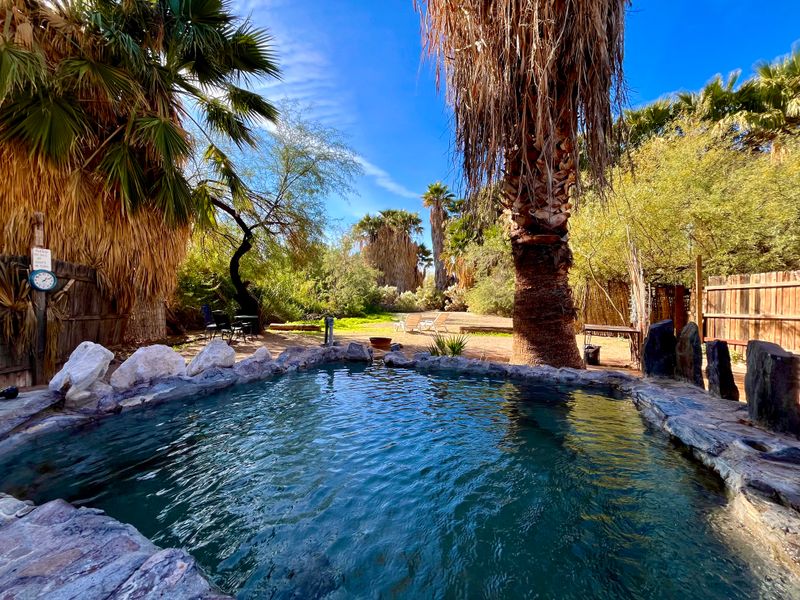
Arizona hides dozens of natural hot springs across its deserts and canyons, and soaking in one after a day of hiking feels like the ultimate reward.
Castle Hot Springs Resort near Lake Pleasant offers a luxurious option with restored historic pools fed by natural geothermal water, though you will pay for the pampering.
I prefer the more rustic spots tucked along the Colorado River or hidden in the Sonoran Desert, where you can soak for free if you are willing to hike or drive a rough road.
One of my favorite memories involves a spring near the Verde River, where I eased into water so warm it felt like a bath while desert stars filled the sky overhead.
The mineral-rich water left my skin feeling soft, and the quiet was broken only by the occasional rustle of wildlife moving through nearby brush.
Some springs require careful timing since summer heat makes them unbearable, but winter and spring offer perfect soaking temperatures. I always bring plenty of water, a towel, and a sense of adventure, since these spots rarely have amenities.
Finding your own desert oasis never gets old.
3. Riding the Grand Canyon Railway Through High Desert Landscapes
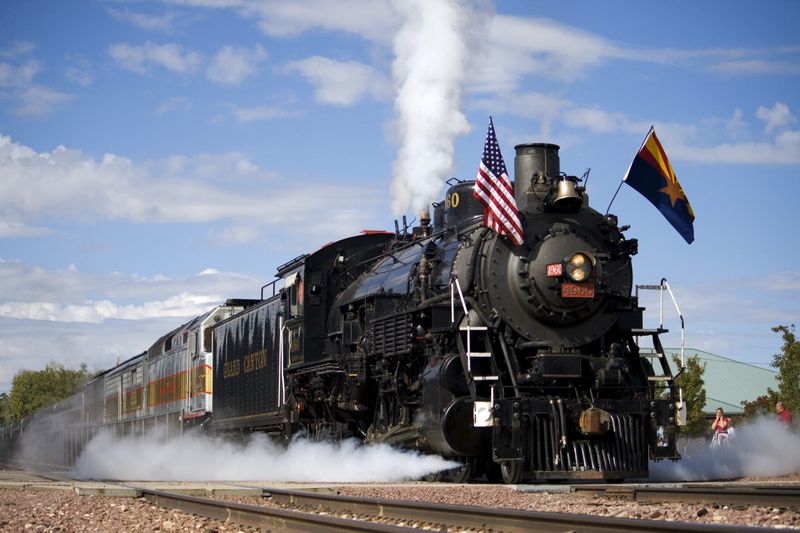
Boarding the Grand Canyon Railway in Williams, Arizona, feels like stepping into another era, complete with vintage passenger cars and costumed characters who roam the aisles.
The train chugs north through 65 miles of high desert and ponderosa pine forests, climbing gradually toward the South Rim of the Grand Canyon.
I chose a morning departure, settled into my seat with a cup of coffee, and watched the landscape shift from open grassland to dense forest as the train rocked gently along the tracks.
Musicians strolled through the cars playing folk songs, and a mock train robbery added a playful touch that made kids squeal with delight.
The real magic happened when the trees began to thin and canyon views started peeking through the windows, building anticipation for the main event. Arriving at the historic Grand Canyon Depot felt more special than pulling up in a car, and I had several hours to explore the rim before the return trip.
The train ride itself became part of the experience rather than just transportation, and I appreciated not dealing with parking or traffic.
Riding back at sunset, with golden light streaming through the windows, made the perfect end to the day.
4. Exploring Antelope Canyon With A Navajo Guide
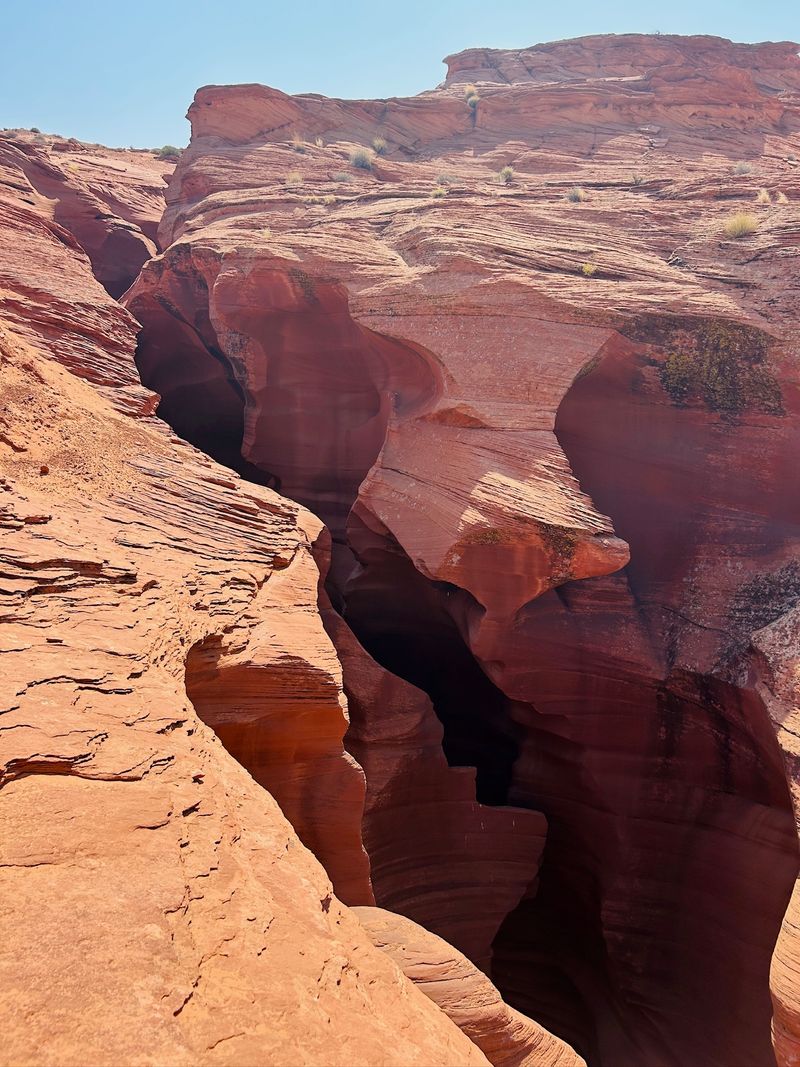
Antelope Canyon near Page sits on Navajo Nation land, and you can only visit with an authorized guide, which turns out to be one of the best parts of the experience.
I booked a tour through a local Navajo-owned company and met my guide early in the morning when the light beams are most dramatic.
Walking into the narrow slot canyon felt like entering a sculpture carved by wind and water over thousands of years, with walls that twisted and curved in shades of orange, red, and purple.
My guide pointed out shapes in the rock that resembled animals and faces, shared stories about the canyon’s significance to his community, and knew exactly where to stand for the best photos.
When sunlight poured through the opening above and illuminated the dusty air in glowing columns, I understood why this place appears on so many bucket lists.
The guide explained how flash floods shaped these passages and why the canyon remains sacred to the Navajo people, adding depth to the visual spectacle.
I left with stunning photos, but the cultural context and personal stories made the experience truly memorable. Respecting the land and learning from those who know it best felt just as important as seeing the famous light beams.
5. Stargazing At Kitt Peak National Observatory
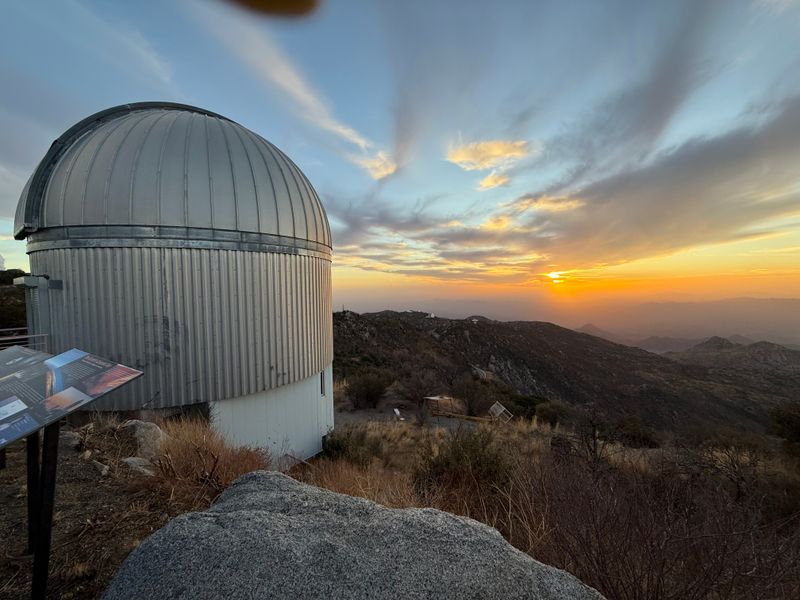
Driving up to Kitt Peak National Observatory southwest of Tucson, I watched the city lights fade behind me and the sky grow darker with every mile of elevation gained.
This observatory sits at 6,875 feet in the Quinlan Mountains, where some of the darkest skies in the continental United States make it a perfect spot for stargazing.
I joined a nightly observing program that included guided telescope viewing, constellation tours, and talks from astronomers who work at the facility. Looking through the telescopes, I saw Saturn’s rings, Jupiter’s moons, distant galaxies, and nebulae that looked like colorful clouds in deep space.
Between telescope sessions, I lay on the ground and stared up at the Milky Way stretching across the sky like a river of light, visible in a way that city dwellers rarely experience.
The guides shared stories about the research happening at Kitt Peak and explained how light pollution affects astronomy, making me appreciate the protected darkness even more.
The high desert air felt crisp and clear, and the silence was broken only by the whir of telescope motors tracking celestial objects. Driving back down the mountain, I kept glancing up at the stars, reluctant to return to the glow of civilization.
6. Walking Among Ancient Cliff Dwellings At Montezuma Castle
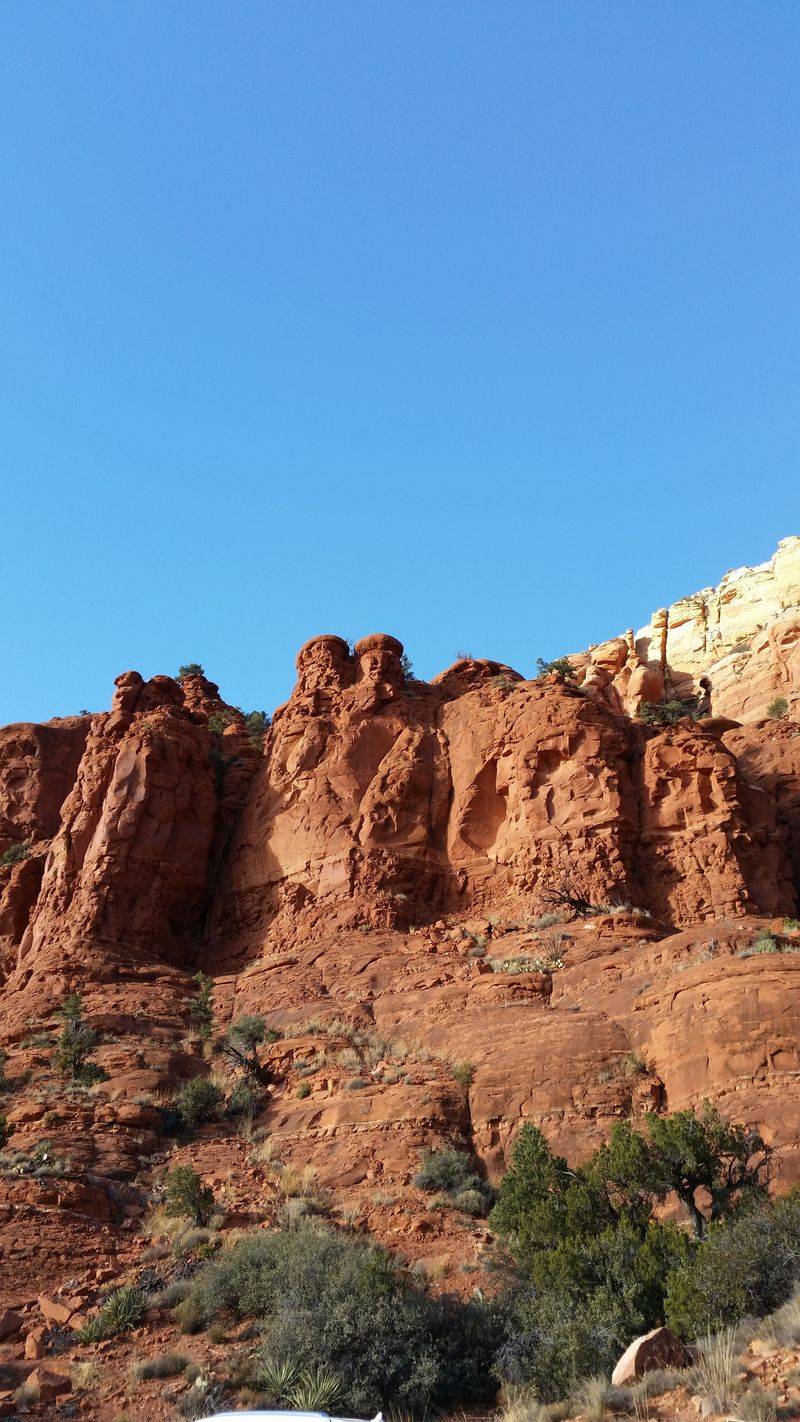
Montezuma Castle National Monument sits tucked into a limestone cliff above Beaver Creek in the Verde Valley, and it never fails to make me stop and wonder how people built this place over 800 years ago.
The five-story dwelling was home to the Sinagua people, who somehow constructed 20 rooms into the cliff face using stone, mud, and wood beams, all without modern tools or scaffolding.
I walked the paved trail below the ruins, craning my neck to study the doorways and windows that still look remarkably intact after centuries of exposure to the elements.
The dwelling sits 100 feet above the valley floor, which provided protection from floods and enemies while keeping the residents close to water and farmland.
Rangers explained that the name is a misnomer since the Aztec emperor Montezuma had nothing to do with this site, but early settlers incorrectly assumed a connection.
I appreciated that visitors can no longer climb into the ruins, which helps preserve them, though I would have loved to peek inside those small rooms.
The surrounding landscape is beautiful too, with sycamore trees lining the creek and desert plants dotting the hillsides. Standing there made me think about the ingenuity and resilience of the people who called this cliff home.
7. Floating Through The Salt River With Wild Horses Nearby
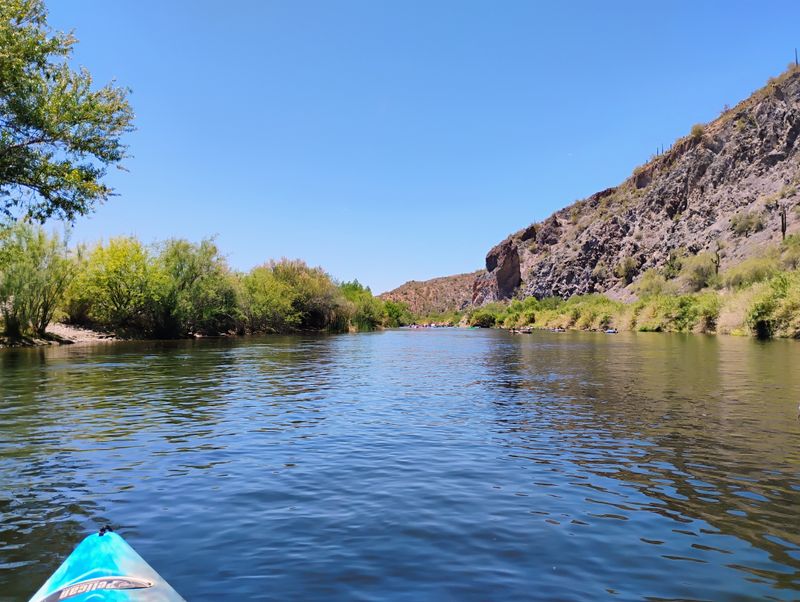
Tubing down the Salt River northeast of Phoenix offers a relaxing way to beat the desert heat, and the chance to spot wild horses makes it unforgettable.
I rented a tube at one of the local outfitters, hopped on a shuttle to the launch point in Tonto National Forest, and spent the next few hours floating lazily downstream.
The current was gentle enough that I could relax without worrying about rapids, and the water stayed refreshingly cool even as the sun blazed overhead.
About halfway through the float, I spotted a small herd of horses on the riverbank, their coats gleaming as they dipped their heads to drink.
These Salt River wild horses are descendants of Spanish colonial horses, and they roam freely through the area, protected by local advocacy groups.
I drifted quietly past them, watching as foals stayed close to their mothers and the herd moved with an easy grace through the desert brush.
The scenery along the river shifts between rocky canyon walls, sandy beaches, and stands of cottonwood trees that provide welcome shade. Other tubers floated by with coolers and music, creating a party atmosphere in some sections, but I found quiet stretches where the only sounds were birdsong and water lapping against my tube.
8. Exploring Bisbee’s Old Mining Tunnels Underground
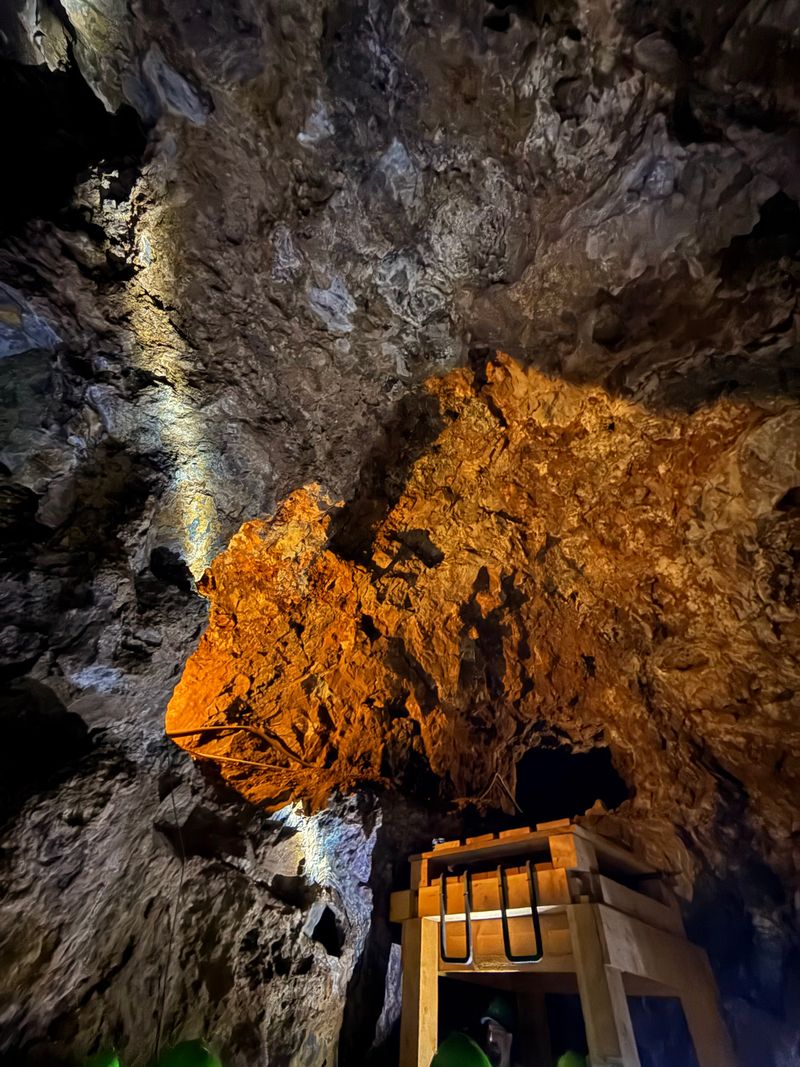
Bisbee clings to the Mule Mountains in southeastern Arizona, a former copper mining town that transformed into an artsy community filled with galleries, quirky shops, and colorful Victorian houses.
The town’s mining past comes alive when you descend into the Copper Queen Mine on a guided underground tour led by retired miners. I put on a hard hat, a yellow slicker, and a headlamp before boarding a small mining cart that rattled into the dark tunnels.
Our guide, a former miner with decades of experience, shared stories about working thousands of feet underground, the dangers they faced, and the camaraderie that developed among the crews.
The tunnels stretched in multiple directions, and I could see tool marks on the walls, old equipment left in place, and ore veins that once produced millions of pounds of copper.
The temperature stayed cool year-round, a welcome relief from the summer heat above ground, and the air smelled of damp rock and earth.
I learned about drilling, blasting, and hauling ore, and gained new respect for the hard physical labor that built this town.
Emerging back into daylight, I wandered Bisbee’s steep streets with a deeper appreciation for the history hidden beneath the surface.
9. Driving Route 66 Through Seligman And Hackberry
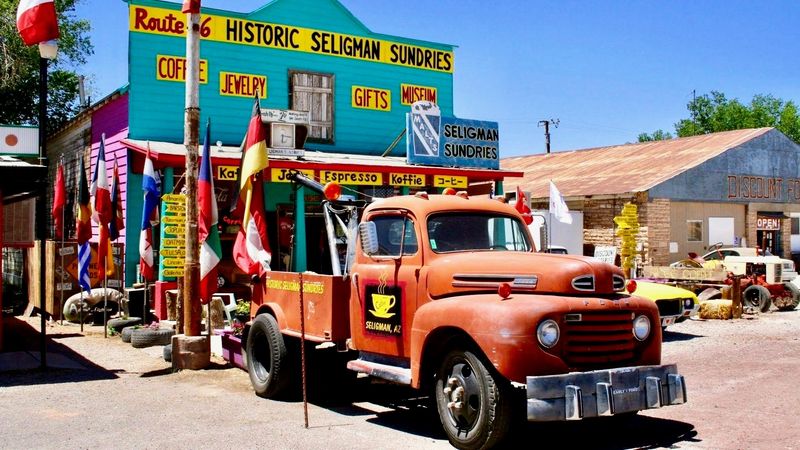
Route 66 cuts through Arizona on its way from Chicago to Los Angeles, and the stretch between Seligman and Hackberry feels like driving through a time capsule of mid-century Americana.
I started in Seligman, where the main street is lined with vintage motels, diners with turquoise booths, and gift shops overflowing with Route 66 memorabilia.
The town inspired the movie Cars, and you can see why, with its quirky characters, hand-painted signs, and buildings that look frozen in the 1950s.
I stopped at the Snow Cap Drive-In for a burger served with a side of pranks and jokes from the owner, who loves to mess with customers using fake mustard bottles and silly props.
Continuing west toward Hackberry, the road opened up into classic desert scenery with red rocks, juniper trees, and wide-open sky. The Hackberry General Store is a must-stop, packed with vintage cars, old gas pumps, Route 66 signs, and enough nostalgia to make anyone smile.
I wandered through the collection of rusted Corvettes and faded advertisements, feeling like I had stepped into a roadside museum where everything is for sale and nothing is too precious.
This stretch of highway celebrates a slower, simpler time when road trips meant adventure and every small town offered its own charm.
10. Hiking Through A Desert Bloom In Spring
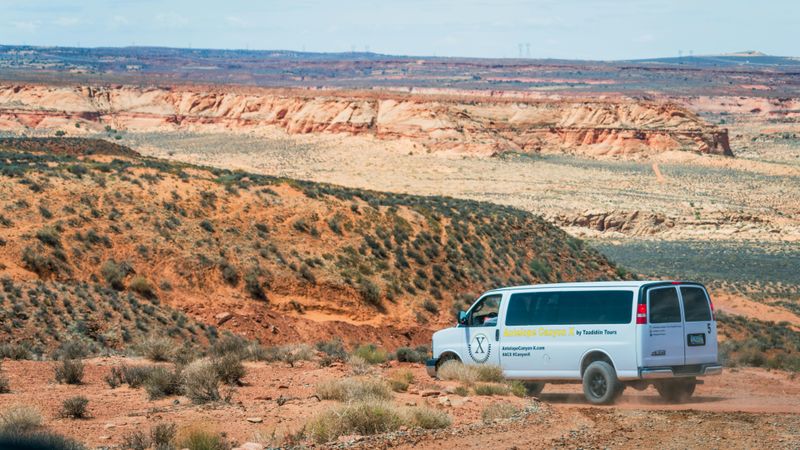
Most people think of the desert as brown and barren, but visit Arizona in spring after a wet winter and you will see an explosion of color that rivals any garden.
The Sonoran Desert surrounding Phoenix and Tucson transforms into a wildflower wonderland between late February and April, with timing that depends on rainfall and temperature.
I hiked the Superstition Mountains east of Phoenix during a particularly good bloom year and found the trails lined with yellow brittlebush, purple lupine, orange poppies, and delicate white desert chicory.
Saguaro cacti sprouted creamy white flowers on their arms, and ocotillo plants topped their spiny stems with bright red blooms that hummingbirds couldn’t resist.
The colors seemed almost unreal against the rocky terrain and blue sky, and I stopped constantly to take photos and simply stare. Other hikers wore big smiles too, and we traded information about which trails had the best displays and where we had spotted the most vibrant patches.
The bloom typically lasts only a few weeks before the heat arrives and the flowers fade, making it a fleeting spectacle that feels extra special.
Experiencing this transformation reminded me that the desert is far more alive and dynamic than it first appears.
11. Eating Your Way Through Phoenix’s Indigenous Food Scene
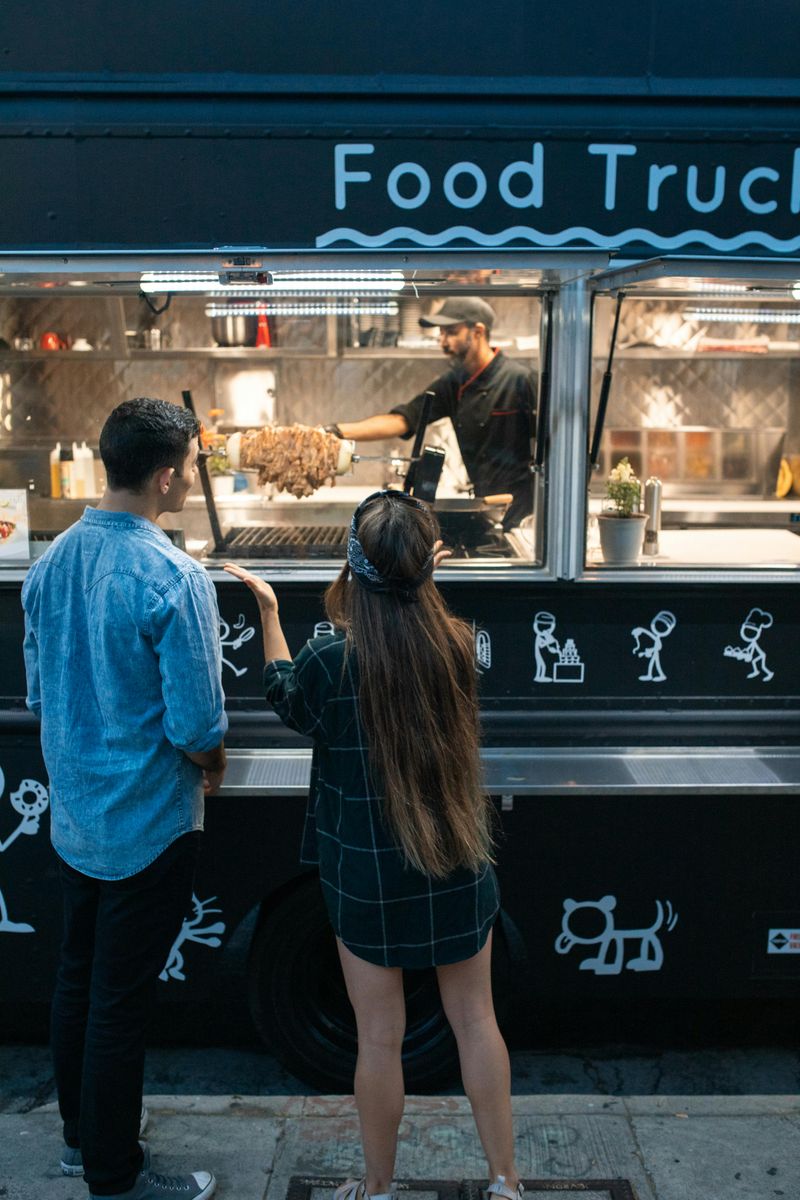
Phoenix has become a surprising hub for Indigenous cuisine, where Native American chefs are reclaiming traditional ingredients and cooking methods while adding modern creativity.
I started my culinary exploration at Fry Bread House, a James Beard Award-winning spot that serves puffy, golden fry bread topped with everything from savory beans and meat to sweet honey and powdered sugar.
The fry bread arrived hot and crispy on the outside, soft and pillowy inside, and I understood immediately why people line up for it.
Moving beyond fry bread, I discovered restaurants showcasing tepary beans, cholla buds, prickly pear, mesquite flour, and other ingredients that Indigenous communities have harvested from the Sonoran Desert for centuries.
At Kai Restaurant in the Sheraton Grand at Wild Horse Pass, I tasted dishes that felt both rooted in tradition and elegantly contemporary, with flavors that told stories about the land and its people.
I also visited the Desert Botanical Garden’s cafe, where the menu features native plants and seeds prepared in ways that honor their cultural significance.
Each meal taught me something new about the deep connection between Indigenous communities and the desert ecosystem. Supporting these restaurants felt like a meaningful way to engage with Arizona’s living cultures while enjoying some truly memorable food.