
These 10 California Beaches Make Sea Glass Hunting A Breeze
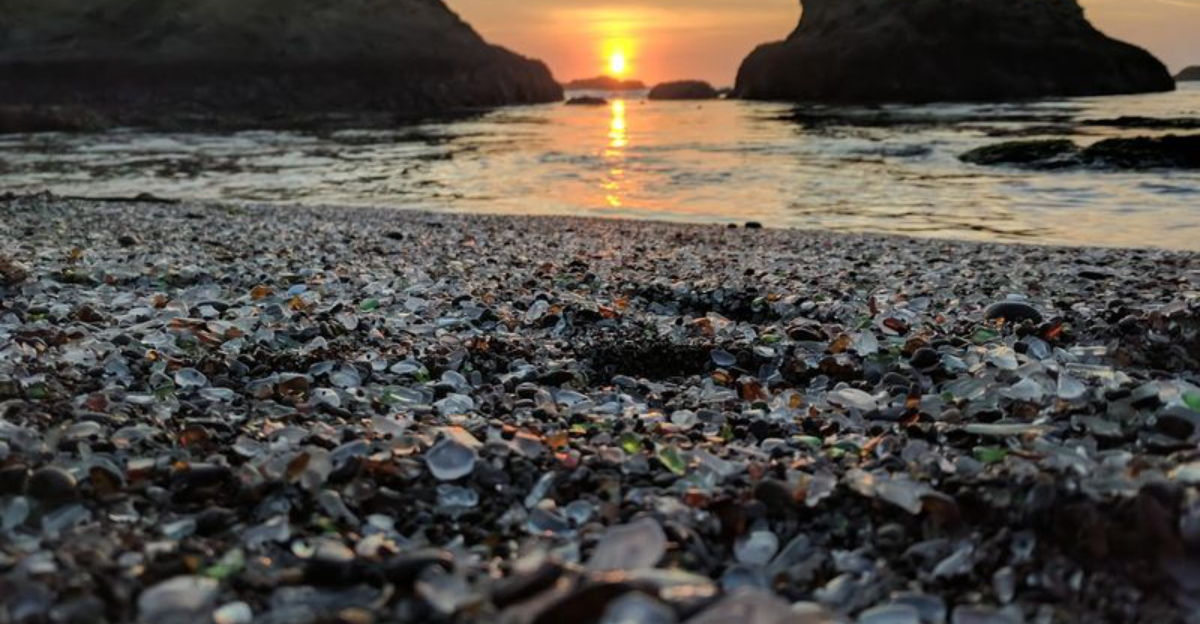
The ocean doesn’t lose things in California. It repackages them.
These beaches turn sea glass hunting into a quiet obsession, where every step in the sand feels like flipping through nature’s most unpredictable catalog.
No noise, no rush, just waves doing their slow work and tiny shards of color waiting to be noticed like they’ve been rehearsing the moment for years.
One glance down, and suddenly the beach stops being a beach. It becomes a search pattern. A guessing game. A soft addiction.
Some spots are generous. Some make you work for it.
All of them leave you checking “just one more stretch of sand” longer than you planned.
1. Sand City Beach, Monterey County
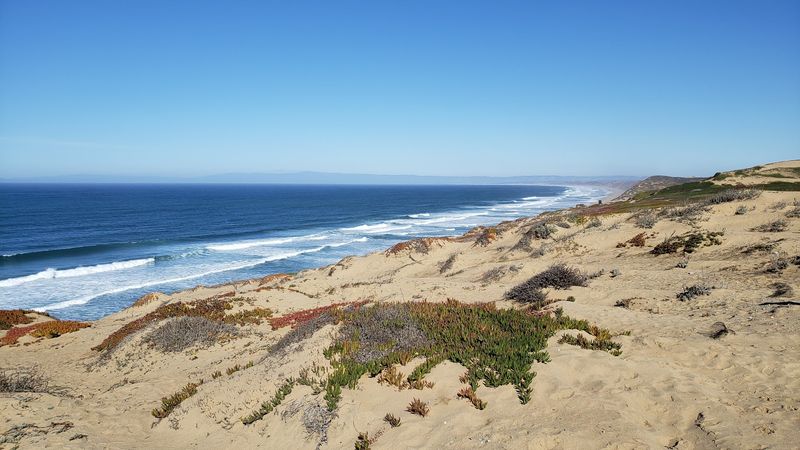
Sand City Beach doesn’t get nearly enough credit, and honestly that works in your favor. Located at 905 Playa Ave, Sand City, CA 93955, this stretch of coastline sits just north of Monterey and offers a surprisingly productive sea glass hunting experience.
The beach is wide and relatively uncrowded compared to more tourist-heavy spots nearby, which means more undisturbed shoreline for you to explore at your own pace.
The sand here is soft and deep, but the real action happens closer to the waterline where wave action exposes rocky patches and compressed sand. Sea glass tends to surface in those transitional zones between soft sand and harder substrate.
Green and brown pieces are the most common finds, but patient hunters occasionally pull out white frosted pieces with interesting textures that suggest older origins.
Low tide is absolutely the golden window here. The receding water reveals sections of beach that stay submerged during high tide, and those areas tend to hold the best surprises.
Parking is straightforward, the beach is open and accessible, and the Monterey Bay backdrop makes the whole outing feel genuinely special. Sand City Beach is the kind of spot where you show up for twenty minutes and end up staying two hours without even noticing the time slipping away.
2. Seaside Beach At Monterey State Beach
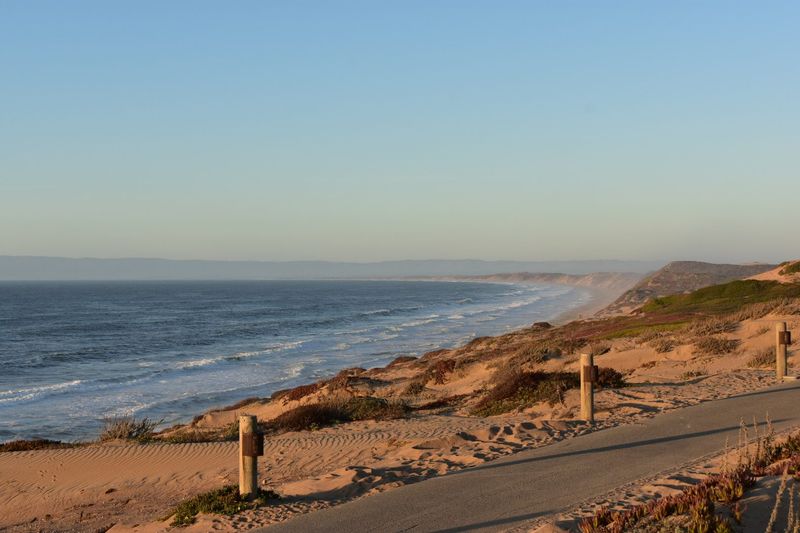
Picture this: you’re standing at the edge of the Monterey Bay, the air smells like salt and possibility, and you’re about to go treasure hunting for free. That’s the vibe at Seaside Beach, part of Monterey State Beach, located at Canyon Del Rey Blvd and Sand Dunes Dr, Seaside, CA 93940.
This beach stretches along the bay and offers a mix of sandy flats and rocky patches that create ideal conditions for sea glass accumulation.
The Monterey Bay region has a long maritime history, with fishing industries and coastal trade routes contributing glass debris to the ocean over many generations. That history pays dividends for today’s sea glass hunters.
Pieces found here tend to show significant weathering, meaning they’re beautifully frosted and smooth rather than sharp or partially processed. The frosting quality is one of the markers collectors use to assess a piece’s age and value.
Seaside Beach also benefits from its position within the larger Monterey State Beach system, which means it’s well-maintained and easy to navigate.
The dune system behind the beach adds a scenic backdrop and also helps funnel glass deposits toward certain stretches of shoreline. Head toward the waterline during low tide and scan slowly.
The glass here blends into the sand more than you’d expect, so a slow and deliberate approach always wins over rushing.
3. Glass Beach, Fort Bragg
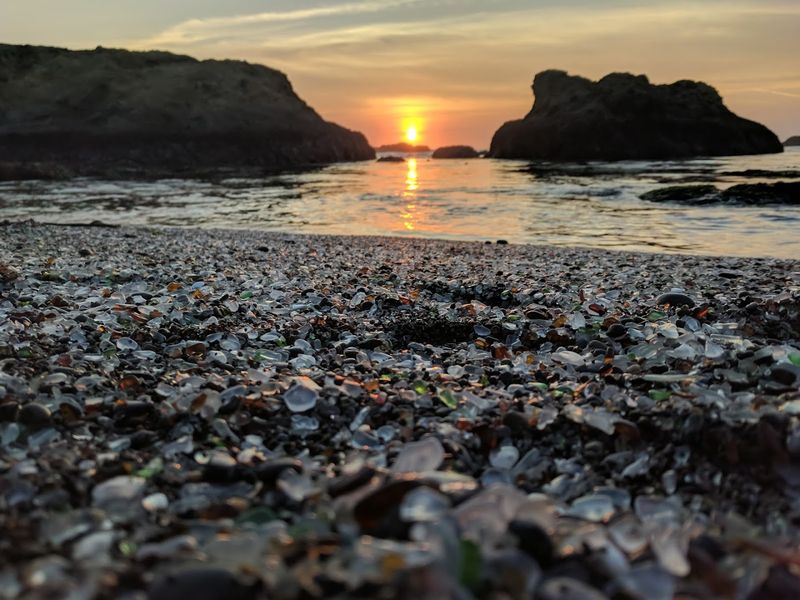
There is no beach in California with a more fitting name than this one. Glass Beach sits along the coast in Fort Bragg at Elm St and Old Haul Rd, Fort Bragg, CA 95437, and its story is as wild as its shoreline.
For decades in the early 20th century, the town used the bluffs here as a dumping ground for household waste, including enormous amounts of glass. The ocean took over from there, spending years grinding and polishing those shards into the stunning frosted gems that blanket the beach today.
Walking onto Glass Beach feels like stepping into a treasure chest. The ground literally sparkles with sea glass in shades of green, brown, clear, and occasionally the highly prized cobalt blue.
The variety here is unmatched because the source material was so diverse, from old medicine bottles to household jars.
Every handful of pebbles seems to hide something colorful and smooth.
One important note: collecting sea glass here is prohibited to preserve this extraordinary natural landmark. The rule exists so future visitors can experience the same jaw-dropping scenery.
Think of it as a living museum where the exhibit is spread across the sand.
Bring a camera instead of a bag, and soak in one of the most visually stunning beaches California has to offer.
4. Marina State Beach, Marina
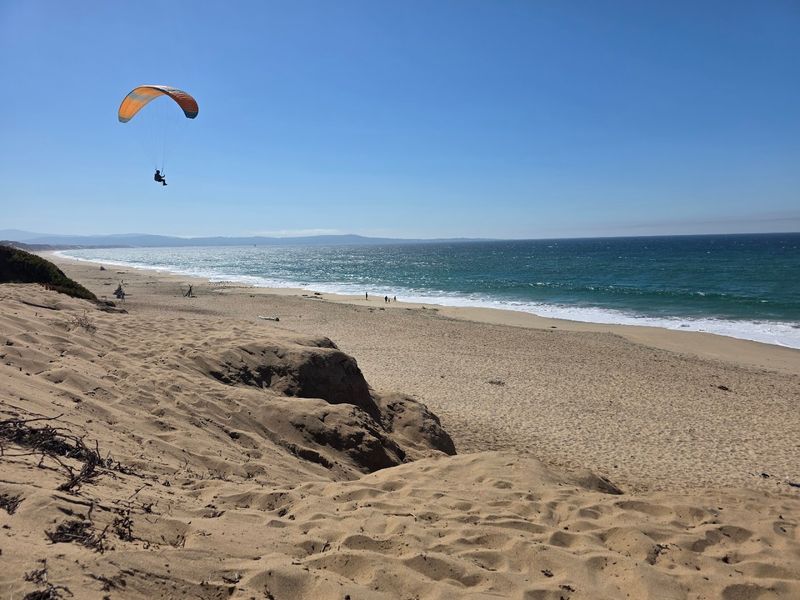
Marina State Beach has a secret weapon that most hunters overlook: its towering sand dunes. Situated at 1 Reservation Rd, Marina, CA 93933, this beach is framed by some of the tallest coastal dunes in California.
Those dunes aren’t just photogenic backdrops.
They actively shape how wave energy moves across the beach, creating pockets and low points where heavier objects like sea glass tend to settle and concentrate.
The beach itself is wide and long, giving you plenty of ground to cover. Rocky areas near the northern end of the beach tend to yield the most consistent sea glass finds.
The wave action along this stretch of Monterey Bay is strong enough to tumble glass effectively but not so violent that pieces get buried too deep.
Green and brown glass are reliable finds, and the occasional blue or teal piece shows up to make your day.
Marina State Beach is also a popular spot for hang gliding, which means the dunes above you often have an audience of colorful gliders swooping overhead while you hunt below. It’s a surprisingly cinematic setting for a beachcombing session.
The parking area off Reservation Road is easy to find, and the walk to the waterline is short. Bring sunscreen because this beach gets real wind, and that same wind that messes up your hair also helps uncover glass buried just beneath the surface.
5. Fort Ord Dunes State Park, Marina
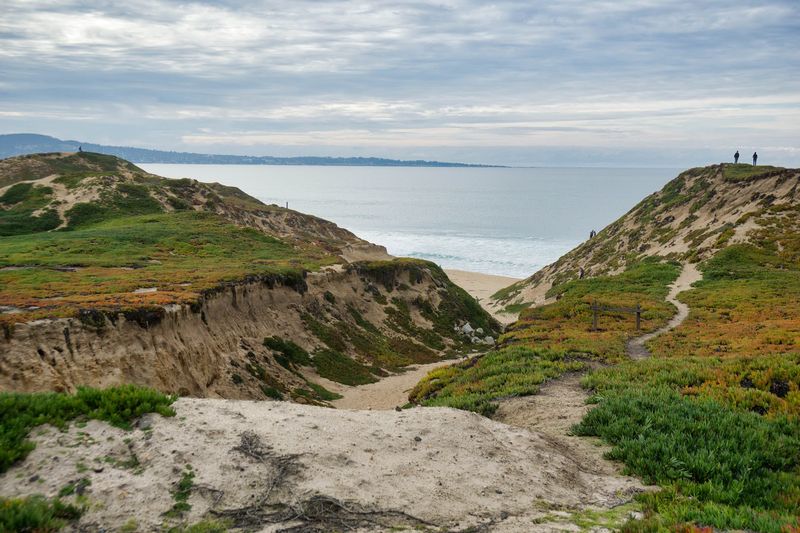
Fort Ord Dunes State Park carries a fascinating backstory that most visitors don’t know. The area at 3010 Lake Ct, Marina, CA 93933 was once part of the Fort Ord military base, which operated for decades along this stretch of Monterey Bay coastline.
The combination of military history, industrial activity, and decades of coastal erosion has created a shoreline with genuinely interesting sea glass deposits. History and treasure hunting rarely go hand in hand this well.
The park encompasses over four miles of undeveloped Pacific coastline, which translates to miles of beachcombing opportunity with relatively low foot traffic.
Less traffic means glass pieces have more time to rest undisturbed between tides, which is exactly what you want when you’re hoping for quality finds. The rocky areas interspersed throughout the beach are your best hunting zones, especially at lower tide levels when more substrate gets exposed.
Sea glass colors found here lean toward the classic spectrum: greens, browns, and whites dominate, but the sheer volume of coastline means patient hunters can build a solid collection in a single outing.
The park also features trails through the dunes that offer elevated views of the shoreline, which is actually useful for spotting where glass tends to concentrate before you head down to ground level. Fort Ord Dunes rewards the curious and the methodical in equal measure.
6. Davenport Beach, Santa Cruz County
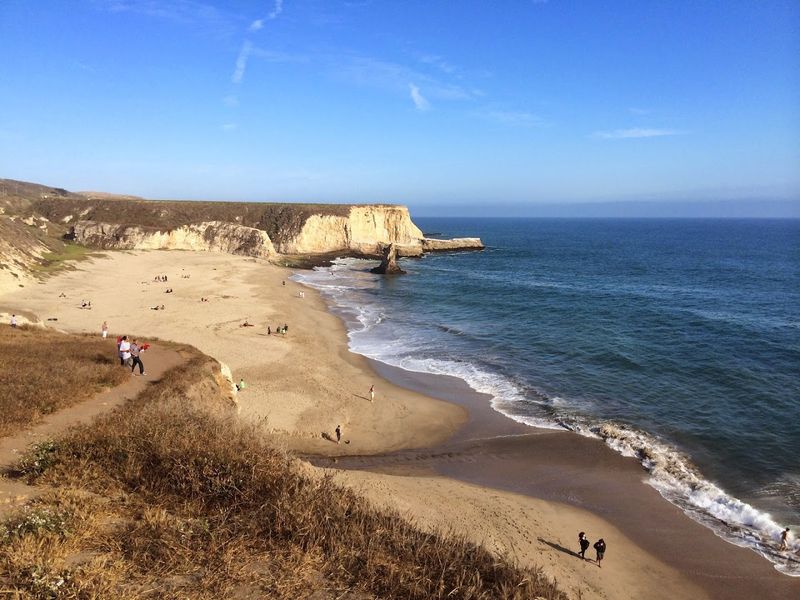
Davenport Beach is the kind of place that feels like it was designed specifically for sea glass hunters. The beach sits along the rugged Santa Cruz County coastline at Cabrillo Hwy and Ocean St, Davenport, CA 95017, and its rocky, wave-battered shoreline creates near-perfect conditions for tumbling and depositing glass.
The town of Davenport itself has an industrial history tied to cement production, which contributed various glass materials to the local ocean environment over the decades.
What makes Davenport genuinely exciting for collectors is the presence of darker, rarer glass pieces. The rocky substrate here catches and holds glass rather than letting it wash back out, which means pieces accumulate over time.
Hunters report finding dark olive green, deep amber, and occasionally deep blue pieces that suggest old bottle origins. The variety here goes beyond the standard finds you encounter at more typical beaches.
The beach is accessible from Highway 1, and the dramatic bluffs surrounding it make the whole experience feel adventurous.
Tide pools dot the rocky sections, adding another layer of natural interest to the outing. Always check tide charts before heading out because some of the best hunting zones sit in areas that become inaccessible at high tide.
Davenport Beach is proof that the most rewarding spots often require just a little extra preparation to reach their full potential.
7. Pescadero State Beach, San Mateo County
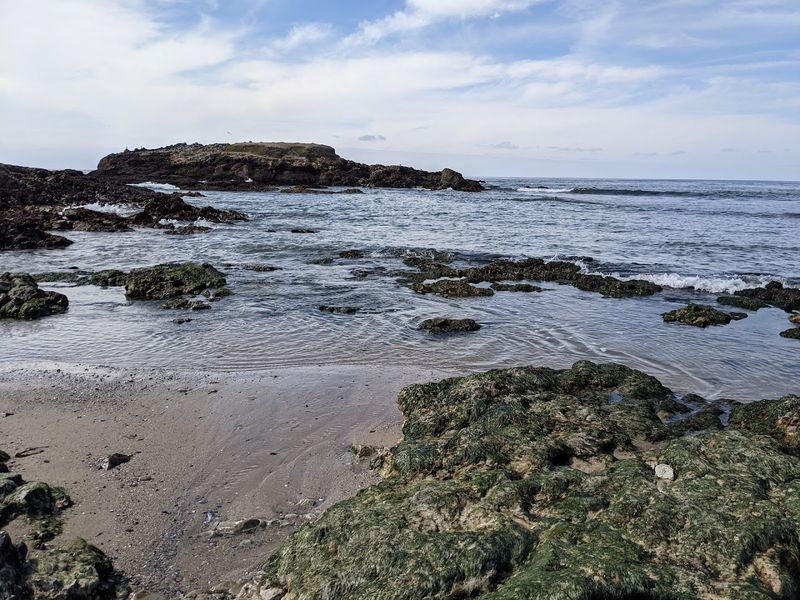
Pescadero State Beach sits along one of the most scenic and least crowded stretches of the California coast. Found at Pescadero Creek Rd and Cabrillo Hwy, Pescadero, CA 94060, this beach combines natural beauty with genuine sea glass productivity.
The San Mateo coastline has long been a working maritime zone, and that history of ocean traffic and coastal activity has left behind a steady supply of glass that the Pacific has been polishing for generations.
The beach features a mix of sandy coves and rocky outcroppings, and that variety is exactly what sea glass hunters love.
Glass tends to get trapped in rocky crevices and along the edges where sand meets stone. Those transition zones are where you want to focus your attention, especially during the first hour after low tide when the water has just pulled back.
Greens and browns are the workhorses here, but white and clear frosted pieces appear with pleasing regularity.
Pescadero State Beach is also part of a larger natural area that includes a freshwater marsh and coastal scrub habitat, making it an excellent destination even beyond the sea glass angle.
The surrounding landscape feels genuinely wild and remote despite being within driving distance of the Bay Area. Bring layers because coastal fog can roll in quickly, and a light jacket transforms a chilly morning hunt into a genuinely comfortable adventure.
8. Gazos Creek Beach, San Mateo County
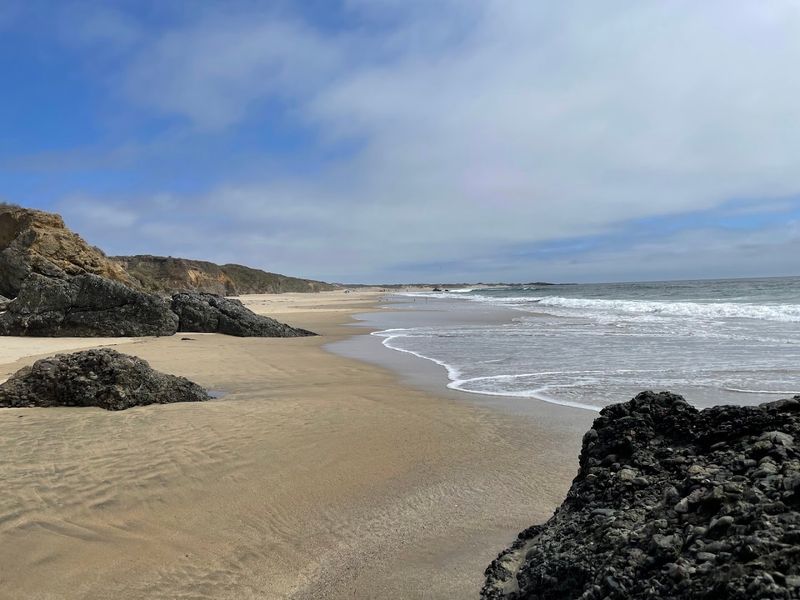
Where a creek meets the ocean, interesting things happen. Gazos Creek Beach, located at Gazos Creek Rd and Cabrillo Hwy, Pescadero, CA 94060, sits at exactly that kind of intersection, and the result is one of the more underrated sea glass spots on the entire California coast.
The creek mouth creates a natural collection zone where materials carried by both freshwater and ocean currents converge and settle.
That double-source dynamic gives this beach a distinctive character.
The shoreline here tends to be rockier and more varied in texture than the smooth sandy beaches nearby. That rougher substrate is exactly what sea glass collectors want because it slows the movement of glass pieces and allows them to accumulate rather than washing back out to sea.
Hunters who take the time to explore beyond the immediate creek mouth often find that the adjacent rocky sections hold real surprises, including pieces with unusual shapes and colorations.
Gazos Creek Beach sees far less foot traffic than nearby Pescadero State Beach, which is a meaningful advantage for collectors.
Fewer visitors mean less competition and more undisturbed glass waiting to be found. The drive in along Gazos Creek Road is scenic and the parking area is small, which naturally keeps the crowds manageable.
If you’re planning a sea glass trip to the Pescadero area, pairing this beach with its neighbor makes for a deeply satisfying full-day outing.
9. New Brighton State Beach, Capitola
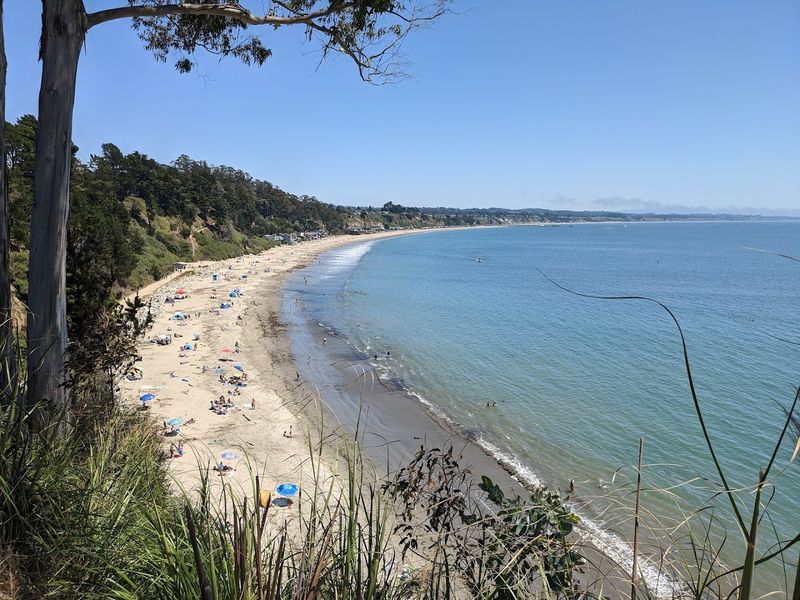
New Brighton State Beach has a charm that’s hard to put into words until you actually show up. Situated at Park Ave and McGregor Dr, Capitola, CA 95010, this beach sits just south of Santa Cruz and offers a slightly more sheltered environment than the exposed beaches further up the coast.
That protection from the full force of Pacific swells doesn’t diminish the sea glass hunting here at all. If anything, the calmer conditions make it easier to spot glass without squinting through spray and wind.
The bluffs above New Brighton are lined with eucalyptus trees, and the beach below features a mix of coarse sand and pebbly sections near the water.
Those pebbled zones are your hunting sweet spot. Sea glass blends in with rounded pebbles remarkably well, which makes the find feel even more satisfying when you finally spot that telltale frosted surface among the stones.
Green, brown, and white pieces are consistent here, with occasional blue finds that make the whole trip worthwhile.
New Brighton has a campground right above the beach, which means you could theoretically hunt at dawn and dusk when the light is best for spotting glass.
Early morning light hitting the wet sand at a low angle is genuinely the optimal condition for sea glass visibility. Whether you’re day-tripping or camping overnight, New Brighton delivers a relaxed and rewarding beachcombing experience that keeps drawing people back season after season.
10. Davenport Landing Beach, Davenport
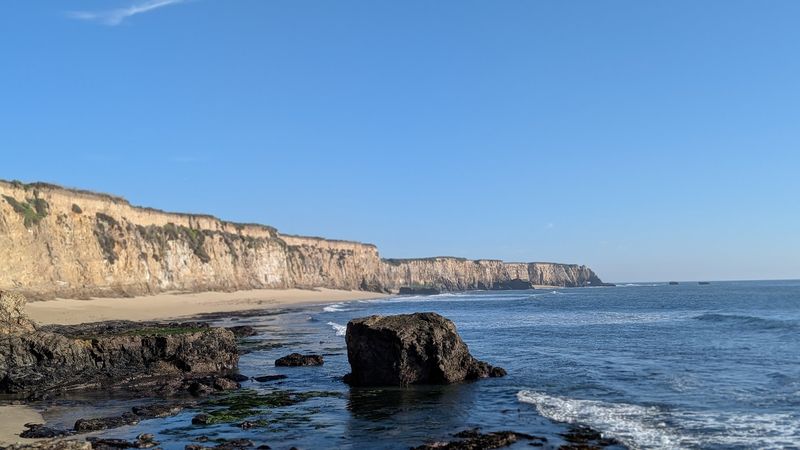
Davenport Landing Beach is the quieter, slightly more secretive sibling of nearby Davenport Beach, and collectors who know about it tend to keep that knowledge close. Located at 335 Davenport Landing Rd, Davenport, CA 95017, this small cove beach sits below dramatic bluffs and sees a fraction of the visitors that other Santa Cruz County beaches attract.
That low traffic combined with a rocky, glass-catching shoreline makes it one of the most productive sea glass spots in the region.
The cove shape of the beach is a major factor in its sea glass abundance. Cove beaches naturally funnel wave energy toward a central point, and that concentrated action deposits heavier materials like sea glass in predictable zones.
Head toward the rocky edges of the cove rather than the sandy center for your best results. The darker volcanic rocks here make it slightly easier to spot frosted glass pieces by contrast, which is a nice practical advantage.
Rare colors have been reported at Davenport Landing, including the highly coveted red and orange pieces that collectors prize above almost everything else.
Those finds aren’t guaranteed, but the possibility alone makes every visit feel like a genuine treasure hunt. The drive down Davenport Landing Road offers stunning ocean views, and the beach itself feels like a reward just for making the effort to find it.
So, are you ready to start your California sea glass adventure?