
These California Small Towns Balance Low Costs With High Quality Of Life
California has a way of dazzling with its coastlines and cities, but the smaller towns often hold the real charm. Away from the noise and high prices, these communities trade glitz for balance, places where mornings start with coffee on a porch instead of a commute, and weekends stretch wide with trails, markets, and lake breezes.
I’ve gathered twelve towns that quietly deliver what the big ones can’t: space to breathe, a sense of belonging, and beauty that doesn’t need fanfare. You’ll find artists, hikers, and neighbors who still wave, plus food worth slowing down for.
Whether you’re planning a quick getaway or something more lasting, these spots prove that life in California can still feel spacious, grounded, and affordable.
Redding
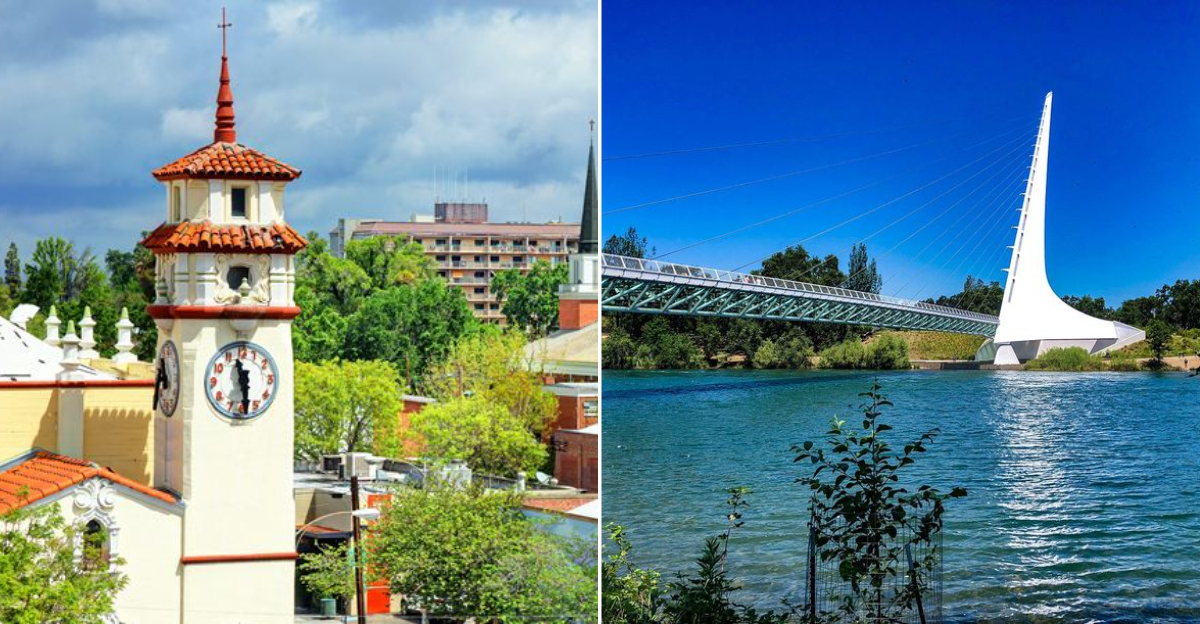
The Sacramento River runs through town, and locals seem to orbit around it, walking trails or paddling under the Sundial Bridge. The air smells faintly of pine, dust, and heat.
This is the kind of place where weekends mean waterfalls, lakes, and barbecue smoke curling above backyards. Nature isn’t an escape here; it’s the backdrop.
I left thinking Redding doesn’t try to impress, it just quietly dares you to slow down.
Chico
College town energy meets country charm, and somehow it works. Downtown Chico buzzes with thrift stores, live music, and enough good coffee to power the student body twice over.
A few blocks away, Bidwell Park unfolds, one of the largest municipal parks in the U.S., where oak trees shade creeks that practically beg you to wade in. Founded during the Gold Rush, Chico’s roots run deep, but it feels constantly young.
You can still sense that pioneer optimism tucked into the grid. Here’s a tip: visit in spring, when the wildflowers burst like confetti across the foothills.
Visalia
There’s a hum to Visalia that feels steady, farm trucks on the move, morning markets buzzing with citrus and walnuts. You can smell the fields in the air, rich and alive.
Downtown keeps things modest but pretty, with old brick facades and murals that nod to its agricultural soul. What stands out most is balance. You’re close enough to Sequoia National Park for spontaneous day trips yet far enough from tourist chaos.
I loved that mix of purpose and calm, it’s the kind of town that doesn’t perform, it just welcomes.
Lodi
The first thing you notice is the air, it carries that soft, sweet smell of grapes in the late afternoon. Vineyards stretch for miles, and there’s a quiet pride here in being California’s other wine country, the one without crowds or pretension.
The streets downtown are tidy, walkable, and filled with local tasting rooms. Founded in the mid-1800s, Lodi grew from farmland grit into a community that loves both work and rest.
Come in fall, when the harvest festival fills the air with live music, crushed fruit, and that golden valley light.
Yuba City
If you like places that blend small-town rhythm with bursts of energy, Yuba City will click instantly. Downtown hums with local diners, farm stands, and small parks that feel personal, not polished.
There’s a neighborly honesty to it, you’ll probably chat with someone by your second coffee. Once a gold rush hub, it evolved into an agricultural powerhouse, still proud of its orchards.
Here’s a tip: visit during the Sikh Festival in November. It’s one of the largest in the nation, and the entire city seems to glow with color and kindness.
Merced
Sunlight hits differently in Merced; it feels rounder, warmer, reflecting off the flatlands that stretch toward the Sierras. The town’s pace is easy, with bike paths, farmer’s markets, and a surprising number of murals that brighten its brick downtown.
It’s the kind of place where you start planning morning walks and evening ice cream stops without trying. You can feel Yosemite’s pull, just an hour away, always visible in conversation and weekend plans.
I loved how grounded it all felt, like life here runs on sunlight and second chances.
Modesto
Walk its tree-lined streets and you’ll catch glimpses of classic California, vintage neon, mom-and-pop shops, and a downtown that feels stubbornly alive. There’s something endearing about how Modesto leans into its modesty, proud of what it is rather than what it isn’t.
Local murals and festivals celebrate that same grounded confidence.
Born from the irrigation boom, this is a city that owes everything to its farmland roots. Agriculture still defines its rhythm.
Visit in summer when the farmer’s markets overflow and the air smells faintly of peaches and promise.
Lompoc
A drive into Lompoc feels like slipping through a coastal secret, rolling hills, art-covered alleys, and the faint hum of ocean wind. It’s quiet in the best way, full of color from the city’s famous flower fields and murals that make even parking lots feel creative.
Founded as a temperance colony in the 1870s, Lompoc has evolved into a mellow artist’s enclave with a working-class heart.
If you go in spring, bring a camera: the poppy fields outside town explode into color so vivid it feels unreal.
Tehachapi
Wind turbines spin like dancers on the horizon, and the scent of pine lingers even downtown. The altitude changes everything here; the air is cooler, the light cleaner, the stars sharper.
It’s a high-desert town that somehow manages to feel cozy. Railroad roots run deep: Tehachapi grew around the iconic Loop, still drawing train watchers and engineers alike.
I loved the contrast, brisk mornings, apple orchards, and a Main Street that feels like it could star in a small indie film about peace and pie.
Clearlake
There’s something hypnotic about the water here, the largest natural freshwater lake in California, ringed by sleepy marinas and small bait shops that haven’t changed in decades.
The town itself hums at lake pace, slow and sun-warmed, with locals who know every ripple by name. Born as a resort stop in the 1920s, Clearlake still feels a little vintage, a little rugged around the edges.
The best way to experience it? Rent a kayak at sunrise. The mist on the surface glows like glass turning to fire.
Ridgecrest
From a distance, Ridgecrest looks like it’s floating in the Mojave, framed by desert mountains and the occasional swirl of dust devils. Up close, it’s all community spirit and surprising art: murals, small cafés, and a local museum that tells the story of life near the naval base.
It was built around Edwards Air Force testing grounds, so history here leans aerospace and grit.
Stop by in April for the petroglyph festival. It’s unexpectedly moving, a reminder of how long humans have called this desert home.
Eureka
Fog rolls in like theater curtains, and suddenly Eureka feels like a dream, Victorian houses glowing under dim streetlights, the smell of salt and redwood mingling in the air. The waterfront’s alive with galleries, fish shacks, and old cannery buildings reborn into something stylish.
Founded in the 1850s, it was once the logging capital of the region, now reborn as a quirky cultural port.
I could walk that Old Town for hours, between the creaking docks and painted storefronts, you feel the pulse of the past still breathing.