
These Enchanting Cascades In Arkansas Feel Like Another World
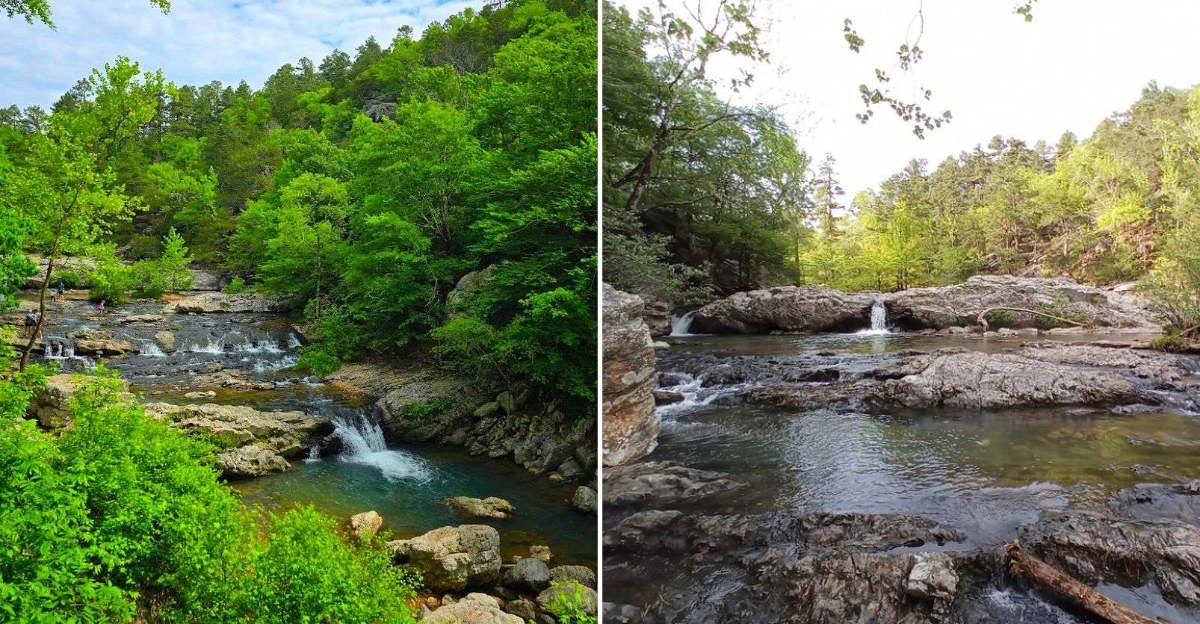
You walk through the Ouachita National Forest expecting a typical trail, nothing too dramatic. Then the sound hits.
Water, constant and strong, pulling you forward before you even see it. The view finally opens and it doesn’t feel real at first.
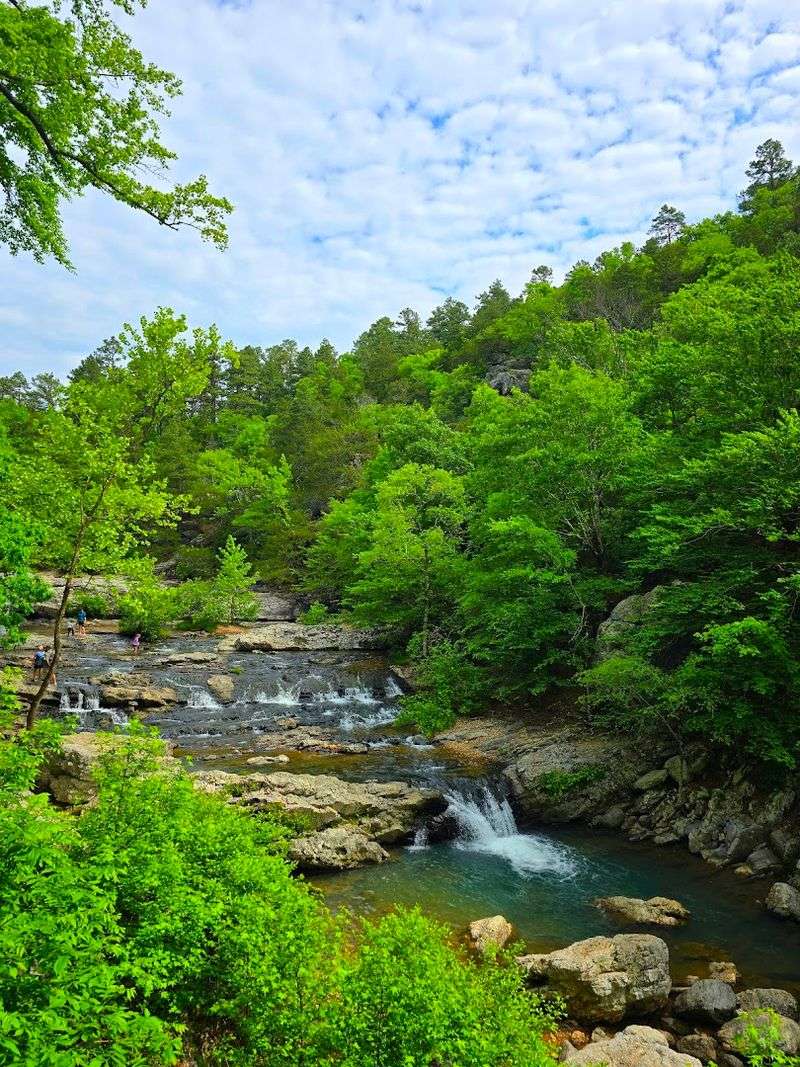
Cascades pour over layered rock in wide, smooth steps that seem almost sculpted. I stood there longer than I planned, just watching.
No distractions, just that steady rush filling the space. The pools below carry this deep blue-green tone that stands out against the dark stone.
Moss spreads across the cliffs, thick and vibrant, while a cool mist rises slowly into the air. It all feels calm but powerful at the same time.
Arkansas has places people recommend all the time, but this one feels different when you actually experience it. It doesn’t try too hard.
It just stays with you.
A Journey Beyond Familiar Landscapes
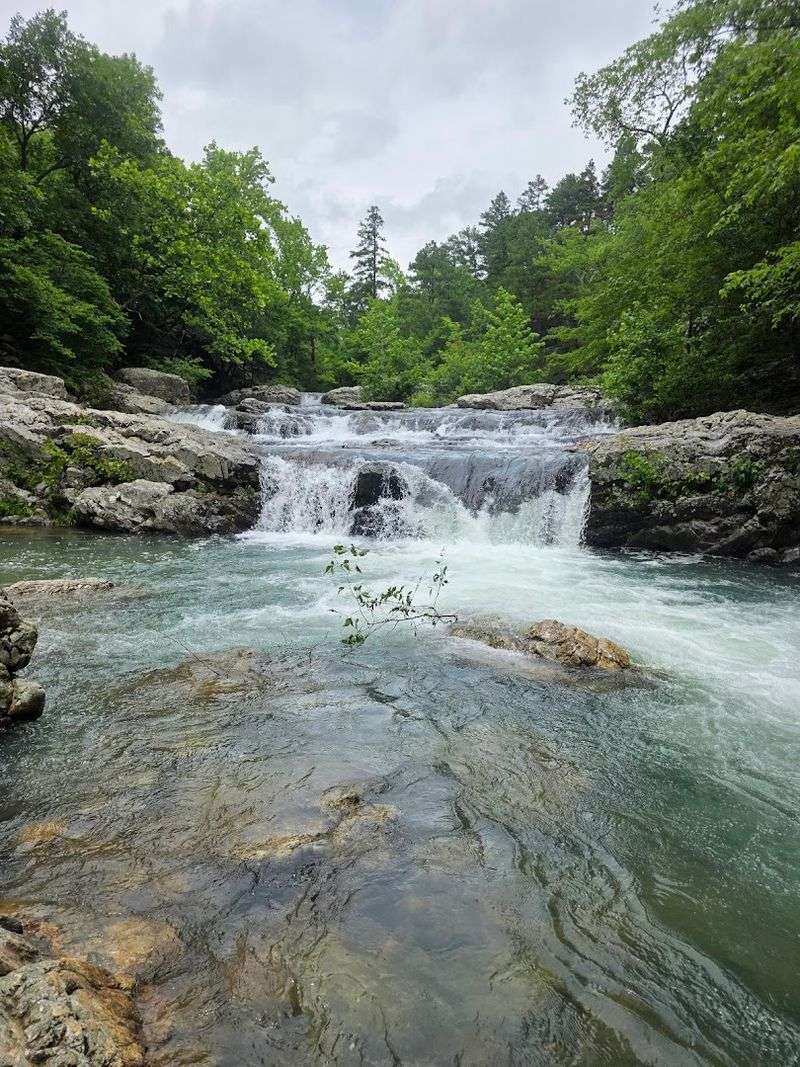
Getting there is half the story, and I mean that in the best possible way.
The drive through the Ouachita National Forest already sets the mood long before you reach the water.
Miles of gravel road wind through dense woodland, where the tree canopy closes overhead and the outside world starts to feel very far away.
I remember gripping the steering wheel a little tighter on the narrower stretches, watching the forest thicken around me and wondering if I had taken a wrong turn.
Then the trailhead appears, a small parking area with picnic tables and a short path that signals you have arrived somewhere worth protecting.
The 0.3-mile round-trip trail is easy enough for families with young children, yet the surroundings feel wild and untouched in a way that keeps your senses sharp.
Birdsong fills the gaps between the sound of moving water, and the smell of pine and damp earth follows you the entire way.
First-time visitors often describe the approach as unexpectedly dramatic, and I completely agree.
That feeling of having traveled just far enough off the beaten path to earn something special is exactly what greets you at Little Missouri Falls, reached via AR-369 near Langley and a network of Forest Service roads in the heart of southwest Arkansas
The Sound Of Water Through Ancient Stone
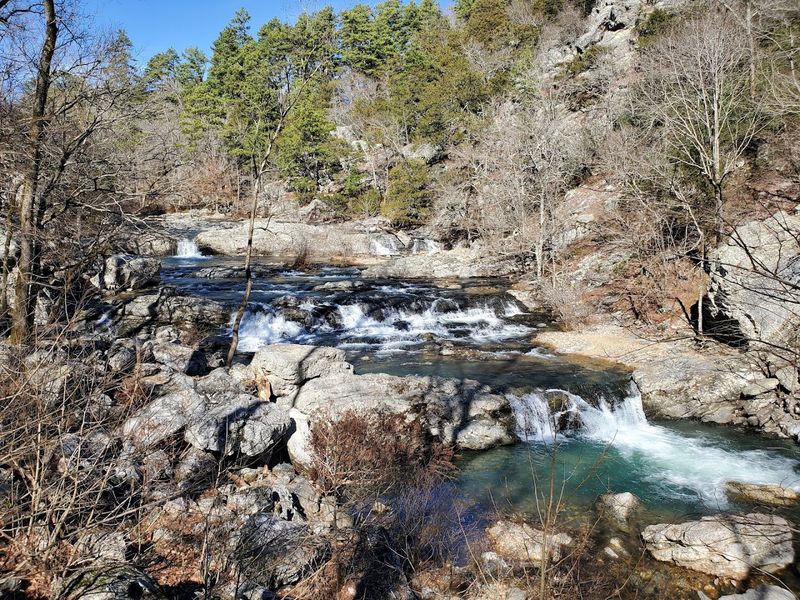
Before you ever see the falls, you hear them.
That low, steady roar builds gradually as you walk the short trail, and by the time the first cascade comes into view, your ears have already prepared your eyes for something remarkable.
The Little Missouri River has been shaping this stone for thousands of years, and the results are a series of tiered drops where water presses through channels worn smooth by centuries of patient erosion.
Archaeological evidence found near the site suggests that people have been gathering here since the Archaic period, roughly 7,000 years ago, drawn by the same river and its steady, reliable presence.
Ancient tools crafted from novaculite, a stone quarried locally, have been uncovered in the area, connecting modern visitors to a very long human history tied to this waterway.
Standing at the base of the falls, I pressed my hand against one of the rock faces and felt the vibration of moving water humming through the stone.
It is the kind of moment that reminds you how briefly any of us pass through a landscape that has been shaped by forces far older than memory.
The river keeps its own time here, indifferent and magnificent all at once.
Crystal Pools Beneath Towering Cliffs
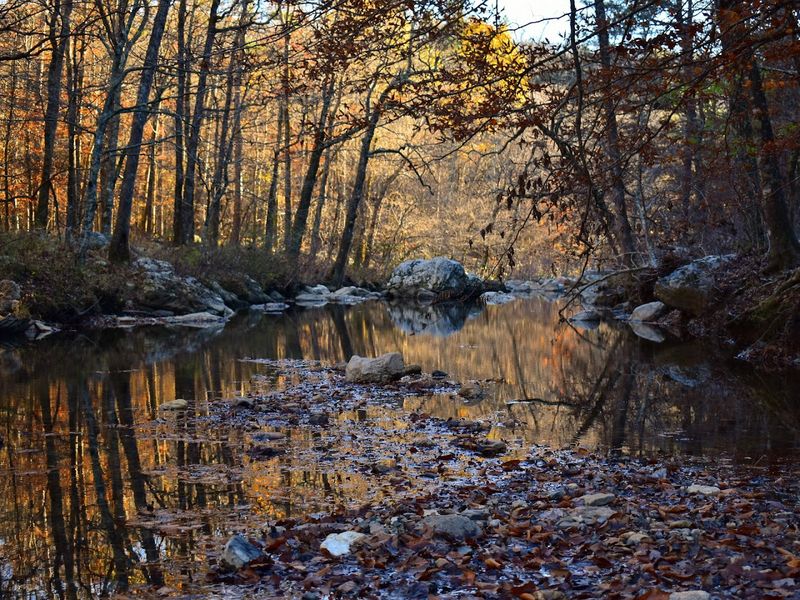
Nothing quite prepares you for the color of the water at the base of these falls.
I had seen photos online, and I still gasped a little when I rounded the last bend and caught my first full view of those pools.
The water runs a shade of turquoise that looks almost tropical, especially in summer when the sun hits the surface at the right angle and lights it from within.
The clarity is remarkable too, clear enough to count the stones on the bottom even in sections several feet deep.
Families spread out across the flat rocks surrounding the pools, kids splashing in the shallows while adults ease into the cooler depths with the careful optimism of people who know the water will be cold.
And it is cold, refreshingly, almost shockingly so, which makes it perfect on a warm Arkansas afternoon.
The cliffs that frame the swimming area rise sharply above the water, draped in ferns and moss that cling to every crack and ledge.
Swimming shoes are a smart idea here because the rock surfaces beneath the water can be uneven and slippery in spots.
Still, the experience of floating in those crystal pools with the sound of cascading water all around you is one that lingers in the memory long after the drive home.
Sunlight Dancing Across Endless Cascades
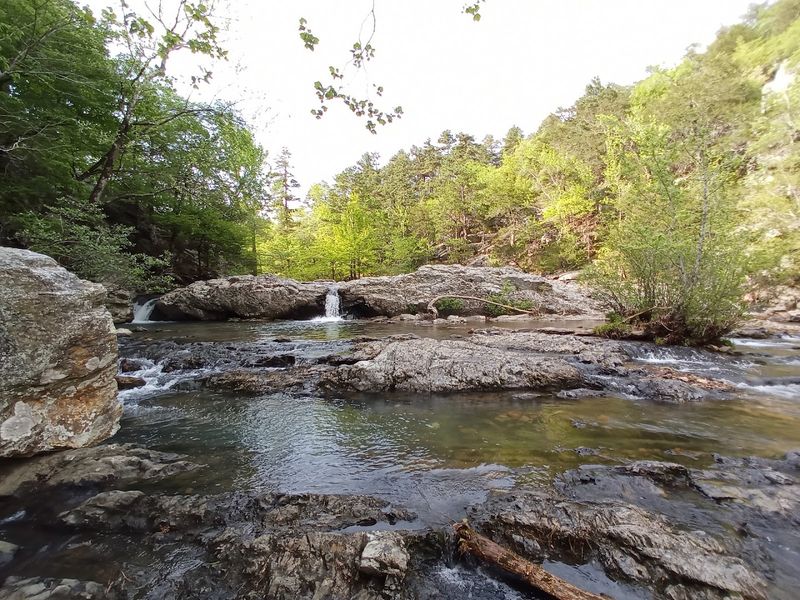
Mid-morning is my favorite time to visit, and the light is the main reason.
When the sun climbs just high enough to clear the ridgeline, it sends shafts of warm light through the tree canopy and straight down onto the falls, turning the spray into something that glitters like scattered glass.
The cascades at Little Missouri Falls are not a single dramatic drop but rather a wide, layered series of steps where the river tumbles from one level to the next in a continuous, rolling motion.
Water flow is strongest during winter and spring, particularly after a good rainfall, when the river swells and the falls become a thundering, full-bodied spectacle that commands complete attention.
Summer visits offer a gentler flow, but the lower water level actually reveals more of the sculpted rock formations underneath, which have their own kind of quiet beauty.
I spent nearly an hour just watching the light shift across the surface, the way a patch of brightness would slide from one cascade to the next as clouds drifted overhead.
Photographers will find endless angles here, from the observation overlook above to the flat rocks at water level below.
Every hour of daylight delivers a slightly different version of the same stunning scene.
Hidden Trails Winding Through Lush Wilderness
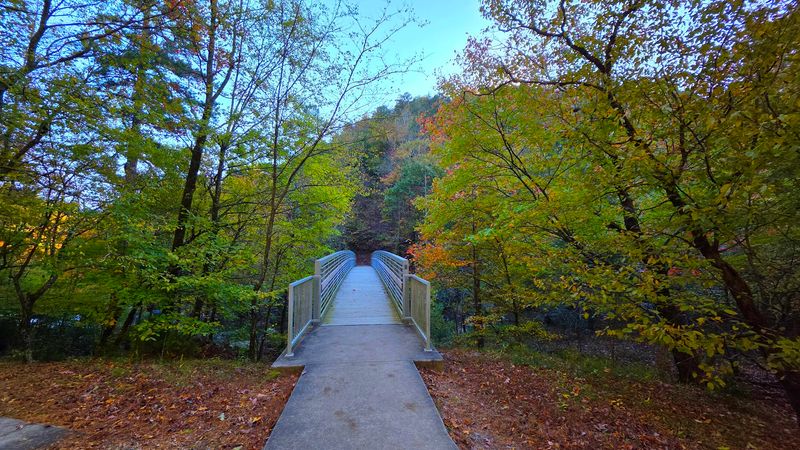
The main trail to the falls is short and well-maintained, but the surrounding area rewards those who are willing to explore a little further.
A longer trail connects Little Missouri Falls to the Albert Pike recreation area, covering roughly 14.7 miles through terrain that shifts from easy riverside walking to more moderate uphill sections.
I covered part of that route on a weekday morning when the forest was quiet enough that I could hear individual birds calling from different directions and actually try to identify them.
The trail passes through stretches of old-growth woodland where the trees grow tall and close, filtering the light into something soft and green that makes every step feel a little cinematic.
Wildflowers appear along the path in spring, small bursts of color tucked between tree roots and along the edges of the trail where the sun can reach the ground.
The Little Missouri River stays close for much of the route, visible through gaps in the vegetation as a glittering thread of movement running parallel to your steps.
Hikers who push past the busy observation area near the falls often find quieter pockets of the forest where the only sounds are wind, water, and wildlife.
The wilderness here does not demand anything dramatic from you, just a willingness to keep walking and pay attention.
Moments Of Stillness In A Wild Sanctuary
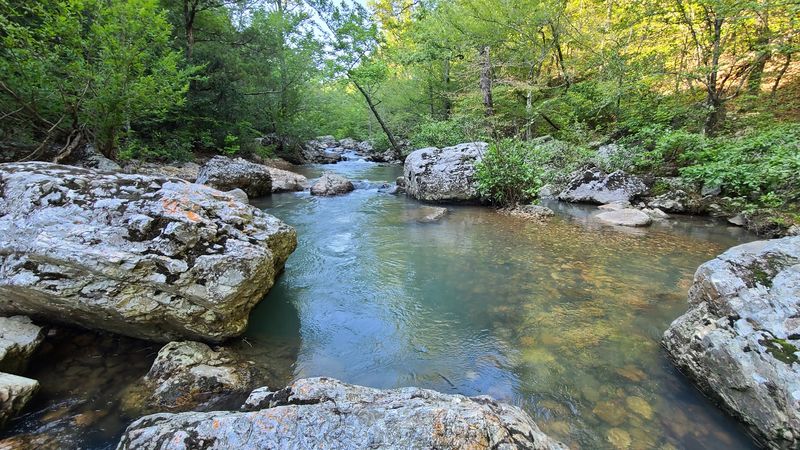
There is a particular kind of quiet that exists at this place even when other visitors are nearby.
I noticed it on a weekday afternoon when I found a flat rock near the edge of one of the lower pools and simply sat down without any particular plan.
The sound of the falls fills the air completely, a steady, layered white noise that somehow muffles everything else and makes the brain slow down in a way that a full week of ordinary life rarely manages.
The recreation area includes picnic tables and grills set near the stream, and I watched one family spread out a full lunch there while their kids dangled their feet in the shallower water nearby.
That scene, completely ordinary and completely lovely, felt like exactly what a wild sanctuary is supposed to offer.
Off-season visits, particularly on weekday mornings, deliver an even deeper version of this stillness, with the parking area nearly empty and the trail quiet enough that you might share the falls with only a handful of other people.
The area is open year-round, which means early risers can catch the falls in the hush of dawn before the day heats up.
Moments like those have a way of resetting something inside you that you did not realize needed resetting.
Textures And Colors That Feel Unreal
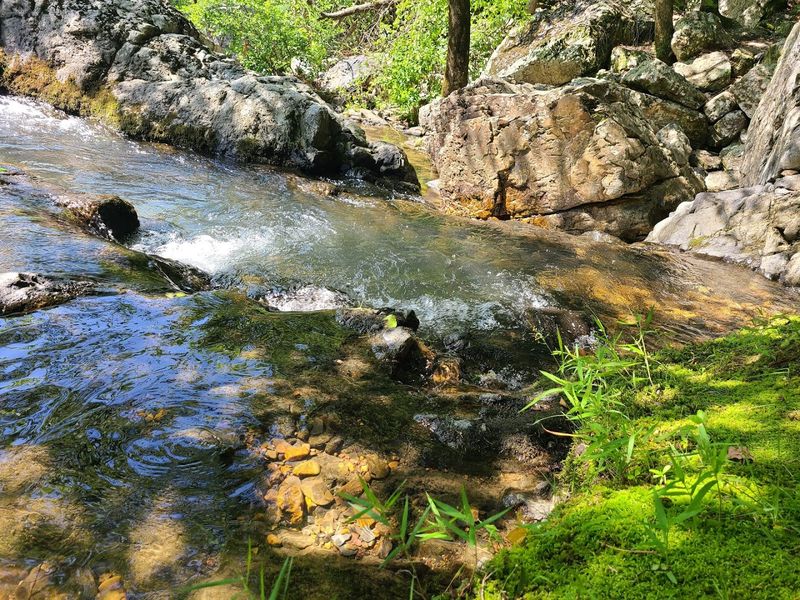
A geologist would have a field day here, and honestly, so would anyone with a decent camera.
The rock formations at Little Missouri Falls are layered in ways that look almost architectural, as if someone deliberately stacked and carved the stone into its current arrangement of ledges, channels, and overhangs.
Up close, the surfaces reveal an entire palette of colors: deep rust, pale gray, patches of black where moisture never fully dries, and vivid green where moss has claimed every available foothold.
The novaculite bedrock that underlies much of this region gives the stone a particular character, smooth in some places, jagged and crystalline in others, depending on how the water has worked it over time.
I crouched down near one of the lower cascades and watched a thin sheet of water slide over a perfectly flat section of stone before breaking into foam at the edge.
The visual detail available at water level is completely different from what you see at the overlook above, and both perspectives are worth taking the time to experience.
Ferns grow directly from the cliff faces, their roots finding purchase in hairline cracks that seem too narrow to support anything living.
The whole scene has a texture and depth that photographs approach but never fully capture.
Why This Place Stays With You Forever
Some places are beautiful and forgettable, pleasant enough in the moment but gone from your mind within a week.
Little Missouri Falls is not one of those places.
I have been back twice since my first visit, and each time the drive through the forest, the sound of the falls growing louder on the trail, and that first full view of the cascades and pools hits me with the same force as it did the very first time.
Part of what makes it memorable is the contrast between the effort required to get there and the reward waiting at the end of a rough gravel road and a short walk.
There is currently no day-use fee per vehicle, which makes access to something this remarkable feel even more rewarding, and the picnic areas nearby make it easy to spend an entire afternoon without needing to leave.
The biodiversity of the surrounding forest adds another layer of interest, with black bears, various bird species, and seasonal wildflowers all part of the living backdrop.
Visitors are advised to store food securely and keep a respectful distance from wildlife, which is standard good practice in any forest setting.
Long after the drive home, the image of those turquoise pools beneath the cascading falls tends to surface unexpectedly, a quiet reminder that Arkansas holds wonders worth every bumpy mile of gravel road.