
These 12 Florida Bucket List Destinations Prove There’s More To The Sunshine State Than Theme Parks And Beaches
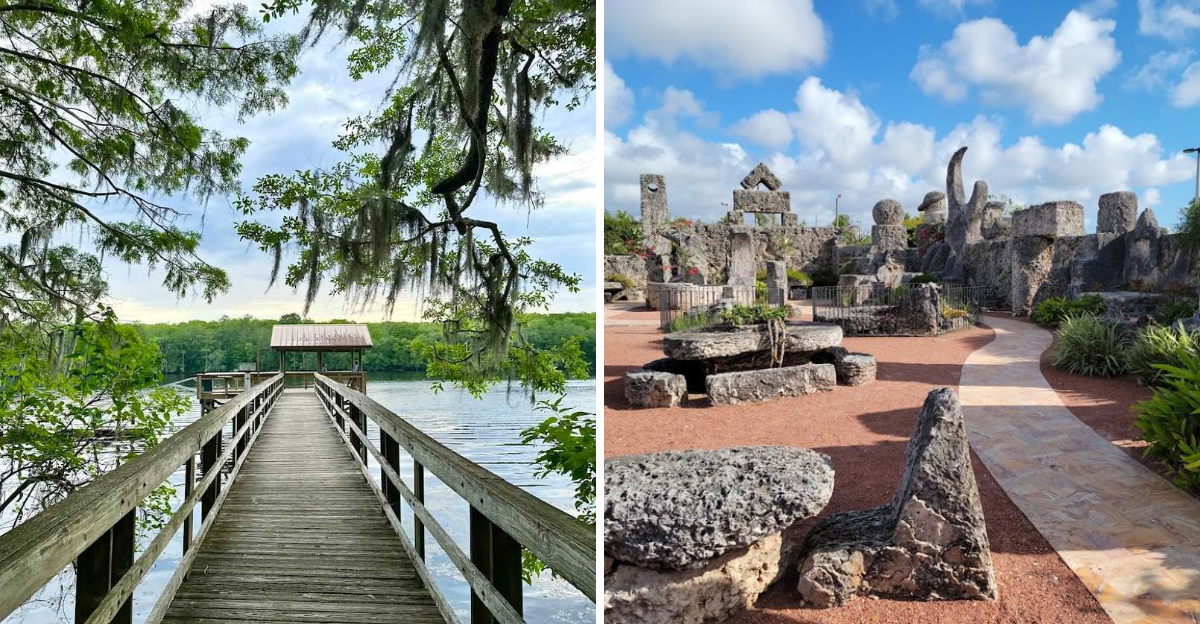
Florida’s biggest attractions are not always its most unforgettable.
The places people talk about least are often the ones that leave the biggest impression.
Step away from the theme parks, and an entirely different Florida begins to appear. Crystal-clear springs replace crowded pools.
Ancient caves hide beneath the landscape. Quiet gardens bloom in places most travelers never think to look.
Suddenly, the Sunshine State feels less like a tourist destination and more like a giant treasure map waiting to be explored.
That is what makes these places so remarkable.
Florida is famous for beaches and world-class attractions, but some of its greatest experiences are found far from the crowds. Every stop on this list reveals a side of the state that feels quieter, wilder, and wonderfully unexpected.
They prove that the real magic of Florida is not always where everyone else is looking.
Sometimes the best adventures begin the moment you leave the obvious behind.
That is exactly what these Florida hidden gems are waiting to prove.
1. Everglades National Park, Homestead
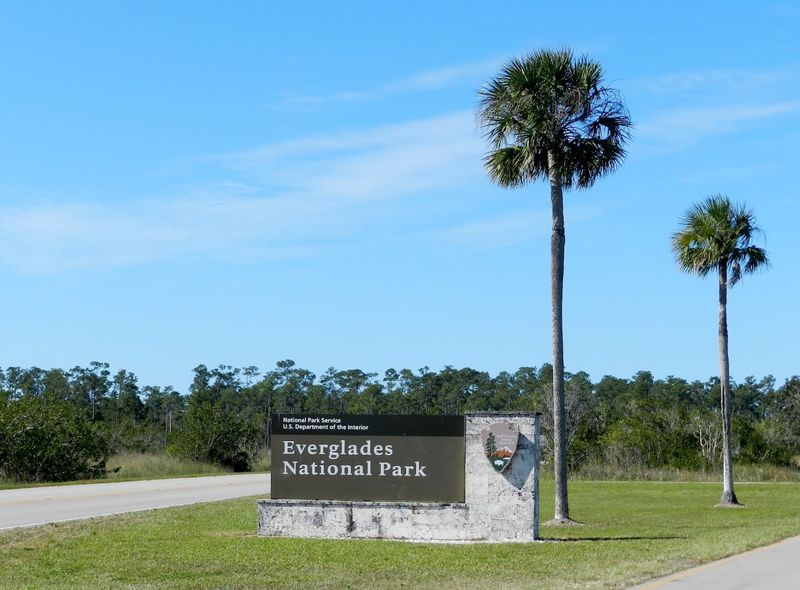
Nothing quite prepares you for the moment you step into Everglades National Park and realize the landscape stretches so far in every direction that it feels almost endless.
Located at 40001 State Road 9336 in Homestead, FL 33034, this is the largest subtropical wilderness in the United States, covering over 1.5 million acres of sawgrass prairies, mangrove forests, and slow-moving rivers.
I paddled a canoe through the Ten Thousand Islands section on a foggy morning and spotted a roseate spoonbill wading just a few feet away, completely unbothered by my presence.
Alligators are practically guaranteed sightings here, especially along the Anhinga Trail, which is one of the best short walks in the entire park for wildlife spotting.
The dry season between November and April is the sweet spot for visiting, when mosquitoes calm down and animal activity peaks near the remaining water sources.
Every hour I spent here felt like a quiet reminder that Florida’s wild side runs much deeper than any theme park ever could.
2. Florida Caverns State Park, Marianna
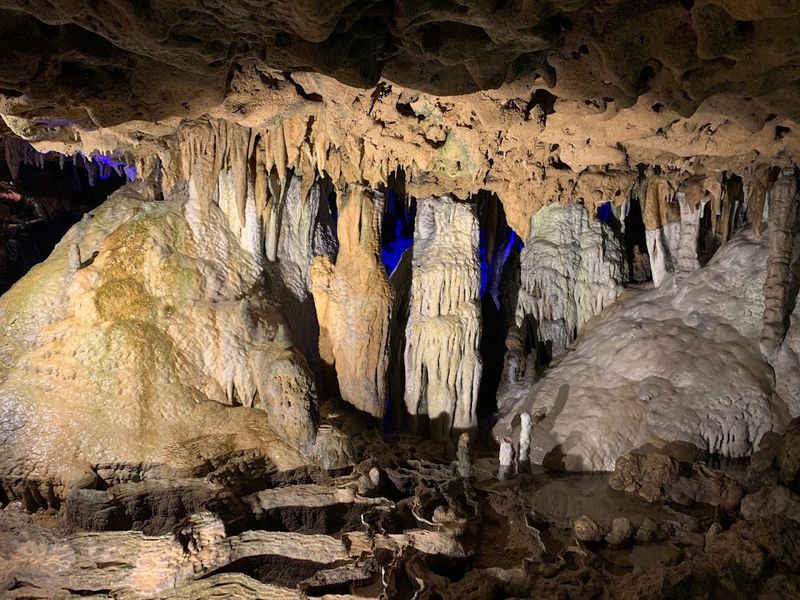
Most people do not associate Florida with caves, which makes Florida Caverns State Park in Marianna one of the state’s best-kept secrets.
Tucked away at 3345 Caverns Road, Marianna, FL 32446, this park contains the only publicly accessible air-filled caves in all of Florida, a geological oddity that sets it completely apart from anything else in the state.
I joined a ranger-guided tour and spent nearly an hour winding through chambers filled with stalactites, stalagmites, flowstones, and cave bacon, which is exactly what it sounds like: thin, wavy formations that actually resemble strips of the breakfast staple.
The cave temperature stays a steady 65 degrees Fahrenheit year-round, making it a refreshing escape during Florida’s notoriously brutal summer heat.
Beyond the caves, the park offers tubing on the Chipola River, horseback riding trails, and camping facilities that make it easy to turn a single-day visit into a full weekend.
Seeing those formations up close genuinely shifted something in me, a quiet awe that stayed long after I drove back out onto the Florida flatlands.
3. Anastasia State Park, St. Augustine
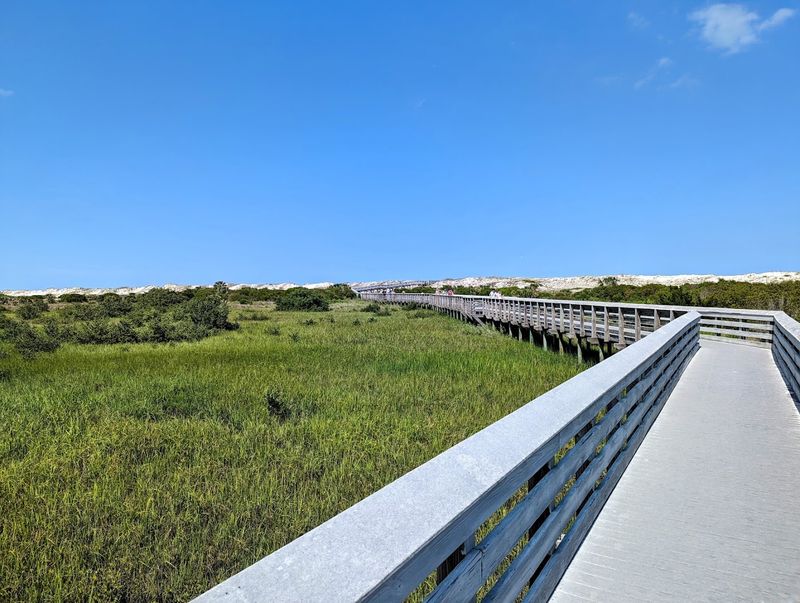
St. Augustine already carries the weight of being the oldest city in the United States, but Anastasia State Park adds a whole new layer of wonder just across the Bridge of Lions.
Sitting at 300 Anastasia Park Road, St. Augustine, FL 32080, the park sprawls across more than 1,600 acres of maritime hammock, tidal marshes, and a stunning stretch of Atlantic coastline that feels remarkably uncrowded compared to other Florida beaches.
What really caught my attention were the ancient coquina rock formations along the shoreline, a rare type of sedimentary rock made from compressed shells and coral that was actually used to build the famous Castillo de San Marcos fort downtown.
Kayaking through the salt marshes at sunrise is one of those experiences that earns permanent real estate in your memory, with dolphins occasionally surfacing alongside your boat.
Camping here is genuinely lovely, and the sites are shaded by live oaks draped in Spanish moss that sway in the coastal breeze.
Anastasia is the kind of place that rewards visitors who slow down long enough to actually look around.
4. De Leon Springs State Park, De Leon Springs
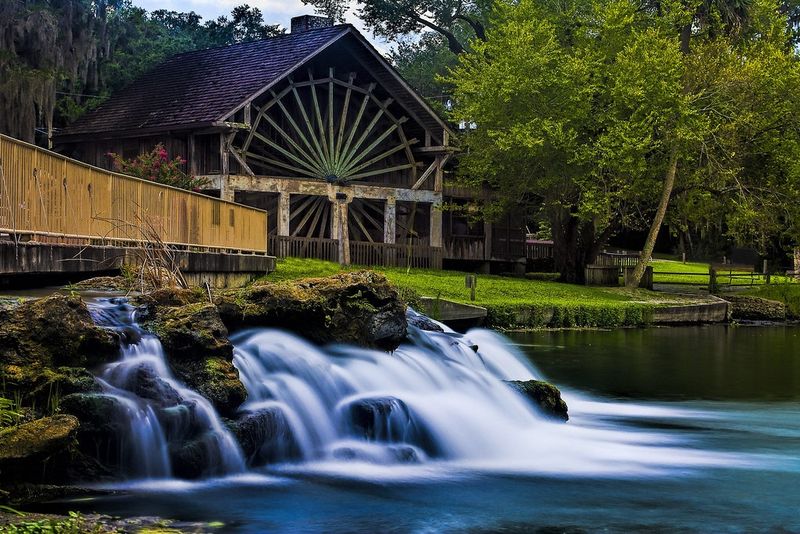
Somewhere between a nature preserve and a breakfast adventure, De Leon Springs State Park manages to be one of the most cheerfully unusual parks I have ever visited.
Found at 601 Ponce DeLeon Boulevard, De Leon Springs, FL 32130, the park centers around a first-magnitude spring that pumps out an astonishing 19 million gallons of 72-degree water every single day.
Swimming in that spring feels like slipping into a giant, perfectly chilled glass of the clearest water you have ever seen, with fish darting around your feet and cypress knees poking up from the sandy bottom.
The Old Spanish Sugar Mill restaurant inside the park is legendary for a reason: diners cook their own pancakes on griddles built right into the tables, using stone-ground flour milled on site.
Kayaking and canoeing on the spring run are popular, and the surrounding forest trails offer solid birdwatching opportunities throughout the year.
I left with a full stomach, pruned fingertips, and a completely irrational desire to move into the park permanently.
5. Rainbow Springs State Park, Dunnellon
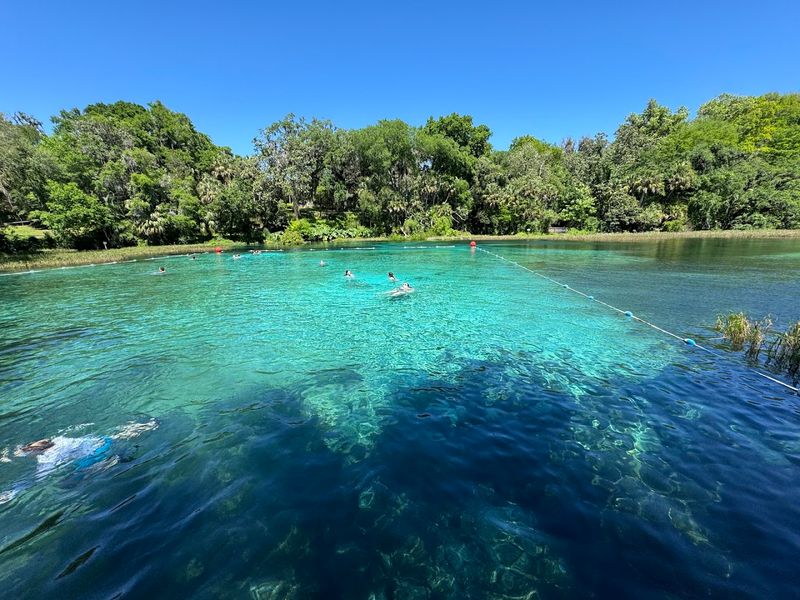
The name alone sets expectations high, and Rainbow Springs State Park in Dunnellon somehow still manages to exceed them once you actually see the water in person.
Located at 19158 SW 81st Place Road, Dunnellon, FL 34432, this park sits along the Rainbow River, one of Florida’s clearest waterways, where visibility can stretch to over 100 feet below the surface on a calm day.
Tubing down the river is the main event for most visitors, and I spent a lazy afternoon floating through corridors of overhanging trees with sunlight filtering through the canopy in long golden beams.
Snorkelers here encounter manatees, soft-shell turtles, and dense underwater grass beds that look almost otherworldly from below the surface.
The park also features restored botanical gardens near the headspring, complete with small waterfalls that were originally built during the park’s days as a private attraction in the mid-20th century.
Rainbow Springs is proof that Florida’s most dazzling natural features sometimes come without a single sign pointing you toward them from the interstate.
6. Blue Spring State Park, Orange City
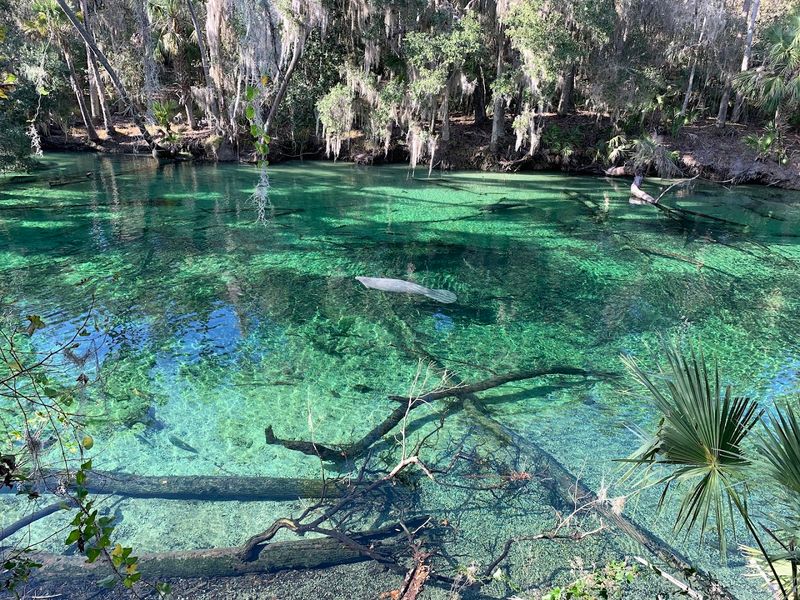
Every winter, one of Florida’s most heartwarming wildlife spectacles unfolds at Blue Spring State Park in Orange City, and it involves hundreds of manatees seeking refuge in warm spring water.
Positioned at 2100 W French Avenue, Orange City, FL 32763, this park protects a first-magnitude spring where water flows at a constant 72 degrees, making it an essential winter gathering spot for West Indian manatees between November and March.
I visited on a cool December morning and counted over 200 manatees clustered near the headspring, their massive, gentle shapes barely moving as they soaked in the warmth just below the surface.
A boardwalk runs along the spring run and gives visitors an elevated view directly into the water, which made for some of the best wildlife photography I have ever managed without any special equipment.
Swimming and snorkeling are permitted in the summer months when the manatees disperse into the St. Johns River, and the water clarity is absolutely stunning during that season.
Blue Spring earns its place on any Florida itinerary by delivering something genuinely rare: a wildlife encounter that feels personal rather than staged.
7. Manatee Springs State Park, Chiefland
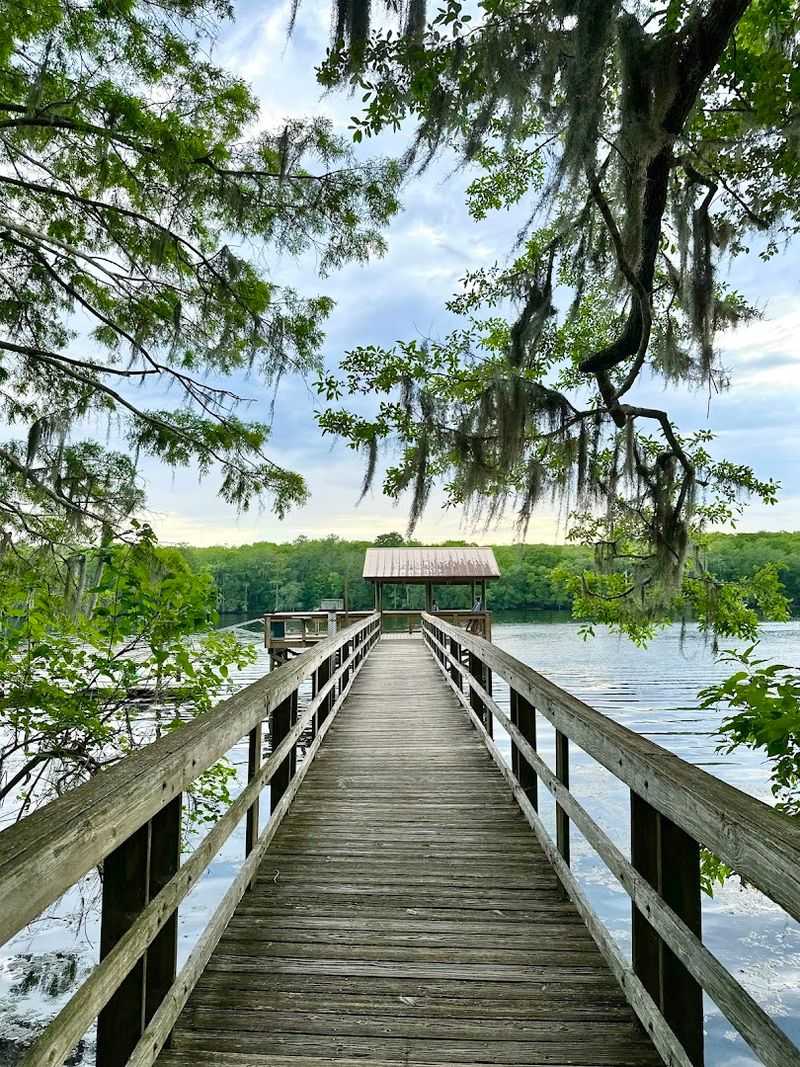
There is something almost meditative about standing at the end of the boardwalk at Manatee Springs State Park and watching the spring boil churn quietly beneath the surface of impossibly clear water.
Situated at 11650 NW 115th Street, Chiefland, FL 32626, this park sits at the point where a powerful first-magnitude spring empties directly into the legendary Suwannee River, creating a dramatic meeting of crystal clarity and dark, tannic river water.
Scuba divers travel from across the country to explore the underwater cave system here, which extends deep into the limestone beneath the park and has been mapped to impressive lengths.
Kayaking down the spring run toward the Suwannee is one of my favorite short paddles in the entire state, passing through cathedral-like tunnels of cypress trees draped in moss.
Manatees do visit the spring during cooler months, though the park’s name comes from early settlers who encountered the creatures here long before the area became a protected space.
Few places in Florida offer this combination of geological drama, wildlife, and a genuine sense of being somewhere truly removed from the modern world.
8. Jonathan Dickinson State Park, Hobe Sound
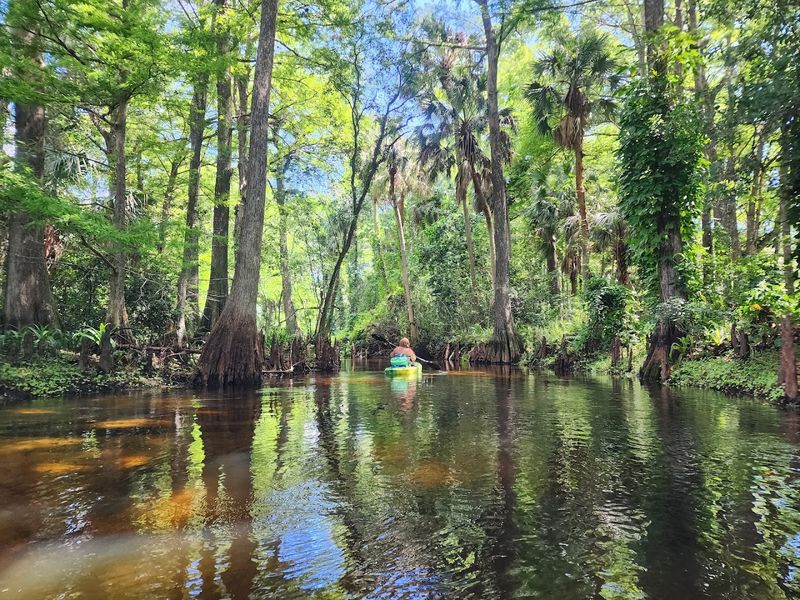
A jungle boat tour through Florida’s only federally designated wild and scenic river is not something you expect to find tucked between the Palm Beach suburbs and the Treasure Coast, but Jonathan Dickinson State Park delivers exactly that.
Spread across 11,500 acres at 16450 SE Federal Highway, Hobe Sound, FL 33455, this park protects one of the most ecologically diverse landscapes in the entire state, covering everything from scrub ridges to mangrove estuaries.
The guided riverboat tours along the Loxahatchee River are genuinely entertaining, with knowledgeable captains pointing out river otters, ospreys, alligators, and the occasional manatee along the dark, tannin-stained water.
I rented a kayak and paddled upstream on my own one afternoon, which felt like exploring a miniature Amazon basin with Florida’s signature subtropical light filtering through the tree canopy.
The park also has a fascinating historical connection to shipwreck survivor Jonathan Dickinson, whose 1696 account of being captured by the Hobe people remains one of Florida’s most dramatic early colonial narratives.
Jonathan Dickinson is the kind of park that makes South Florida feel genuinely wild again.
9. Wekiwa Springs State Park, Apopka
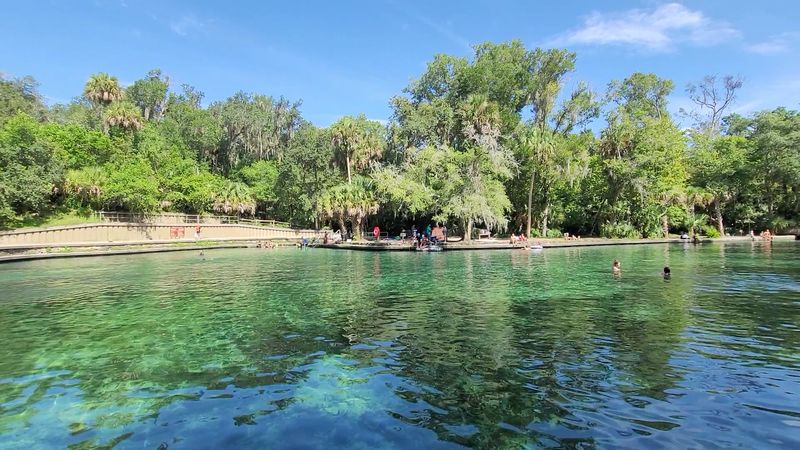
Just a short drive from the relentless tourist machinery of Orlando, Wekiwa Springs State Park in Apopka feels like pressing a reset button on the entire Florida experience.
Located at 1800 Wekiwa Circle, Apopka, FL 32712, this park sits within the Greater Orlando metropolitan area yet manages to feel completely removed from it, thanks to a dense buffer of sand pine scrub and hardwood swamp that muffles the outside world entirely.
The spring itself pumps out millions of gallons of 68-degree water daily, creating a natural swimming hole that locals have treasured for generations and that tourists are only now starting to discover in larger numbers.
Paddling the Wekiva River from the spring is a peaceful, wildlife-rich experience that can stretch into a multi-hour journey through some of the most pristine river corridor in Central Florida.
The park has over 13 miles of hiking trails that wind through habitats rare enough to support black bears, white-tailed deer, and gopher tortoises in numbers you rarely encounter this close to a major city.
Wekiwa is the proof that you do not have to drive far from Orlando to find something genuinely extraordinary.
10. Wakulla Springs State Park, Wakulla Springs
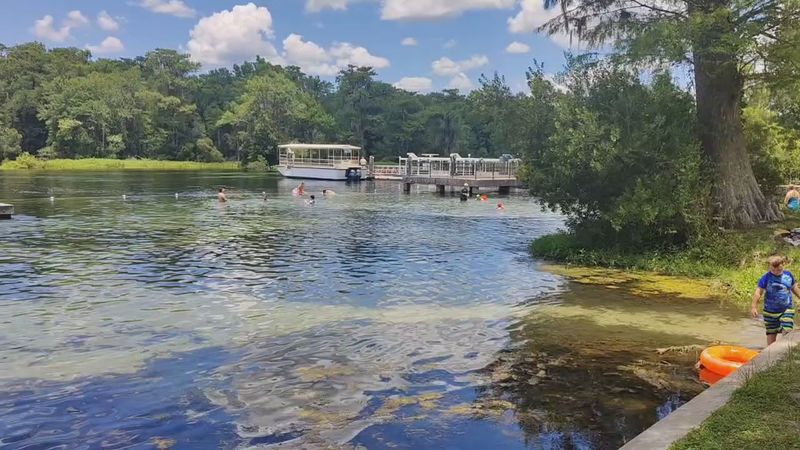
Wakulla Springs holds a record that still catches people off guard: it is one of the world’s largest and deepest freshwater springs, with a main cave passage extending over 300 feet below the surface.
Set at 465 Wakulla Park Drive, Wakulla Springs, FL 32327, this park is located in the Florida Panhandle just south of Tallahassee, and it carries a history as layered as its geology, including mastodon bones discovered in its depths and a starring role in several old Hollywood films.
The glass-bottom boat tours are an institution here, offering a window into a world where enormous alligators rest on sandy ledges and enormous schools of fish drift through the spring boil like living clouds.
Swimming is permitted in a designated area near the spring head, and the 72-degree water is so clear that standing chest-deep feels almost like standing in air.
The historic Wakulla Springs Lodge, built in 1937 with Spanish-Mediterranean architecture and marble floors, adds an unexpected elegance to a park that already has plenty of personality.
Wakulla Springs rewards the traveler who takes time to sit still and simply watch the water breathe.
11. Bok Tower Gardens, Lake Wales
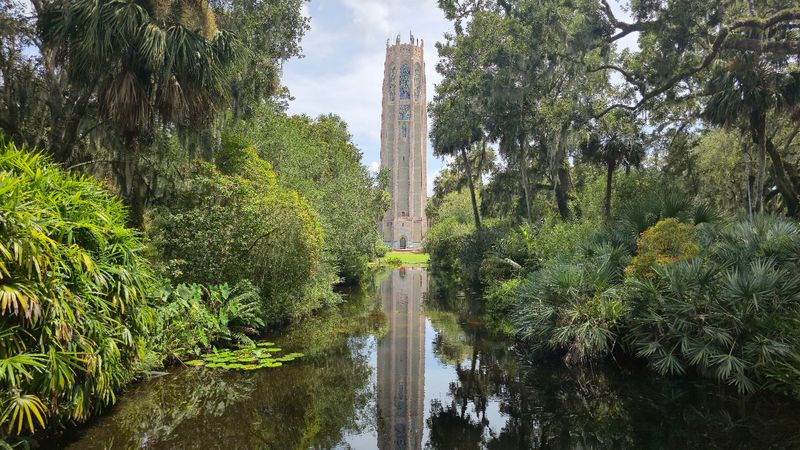
Standing at the highest point on the Florida peninsula, surrounded by azaleas in full bloom while carillon bells pour music down from a 205-foot Gothic tower, is one of those travel moments that sounds almost too poetic to be real.
Bok Tower Gardens at 1151 Tower Boulevard, Lake Wales, FL 33853 was the vision of Dutch immigrant and Pulitzer Prize-winning author Edward Bok, who wanted to create a place of beauty and reflection as a thank-you to his adopted country.
The Singing Tower, completed in 1929, contains a 60-bell carillon that performs recitals twice daily, and the sound carries across the surrounding gardens in waves that feel almost physical.
I wandered the 250 acres of landscape gardens for nearly three hours, moving through pine forests, fern gardens, and wildflower meadows that shift in character with every season.
The 1930s Pinewood Estate on the grounds offers guided tours of a fully furnished Mediterranean Revival mansion that provides a fascinating glimpse into wealthy Florida life during the Depression era.
Bok Tower Gardens is quiet, intentional, and unlike anything else Florida has to offer.
12. Coral Castle Museum, Homestead
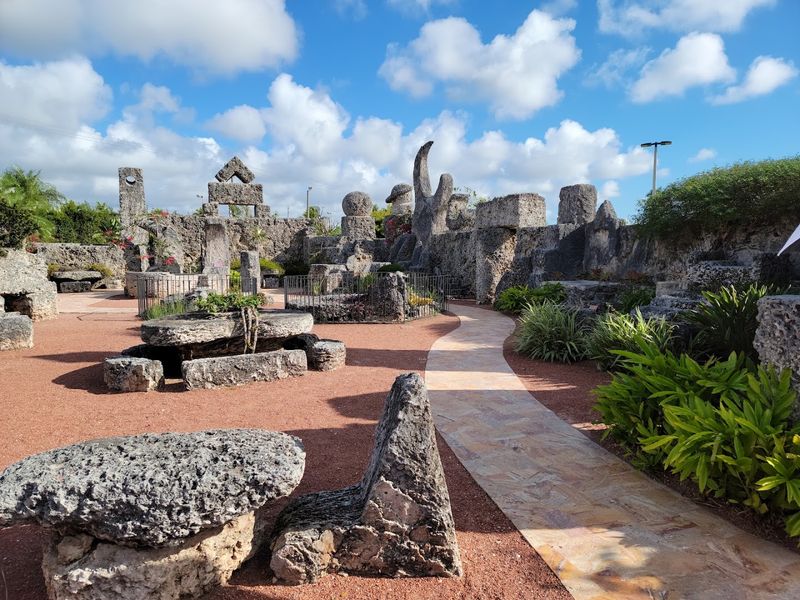
One man, working mostly alone and entirely in secret between 1923 and 1951, carved over 1,100 tons of coral rock by hand to create a monument that engineers and physicists still cannot fully explain.
Coral Castle Museum at 28655 South Dixie Highway, Homestead, FL 33033 is one of the most genuinely mysterious places I have visited anywhere in the world, not just in Florida.
Edward Leedskalnin, a Latvian immigrant standing just five feet tall and weighing barely 100 pounds, built this entire structure using tools he fashioned himself, working only at night so no one could observe his methods.
The site includes a nine-ton gate so perfectly balanced that a single finger can swing it open, a feat that baffled engineers who later studied its mechanism.
Rocking chairs, a sundial, a map of Florida, and even a crescent-shaped table are all carved entirely from solid coral rock with a precision that defies the crude tools Leedskalnin reportedly used.
Coral Castle is the kind of place that leaves you walking back to your car a little slower, turning the questions over in your mind long after the tour is done.